Baltiske hovedstæder
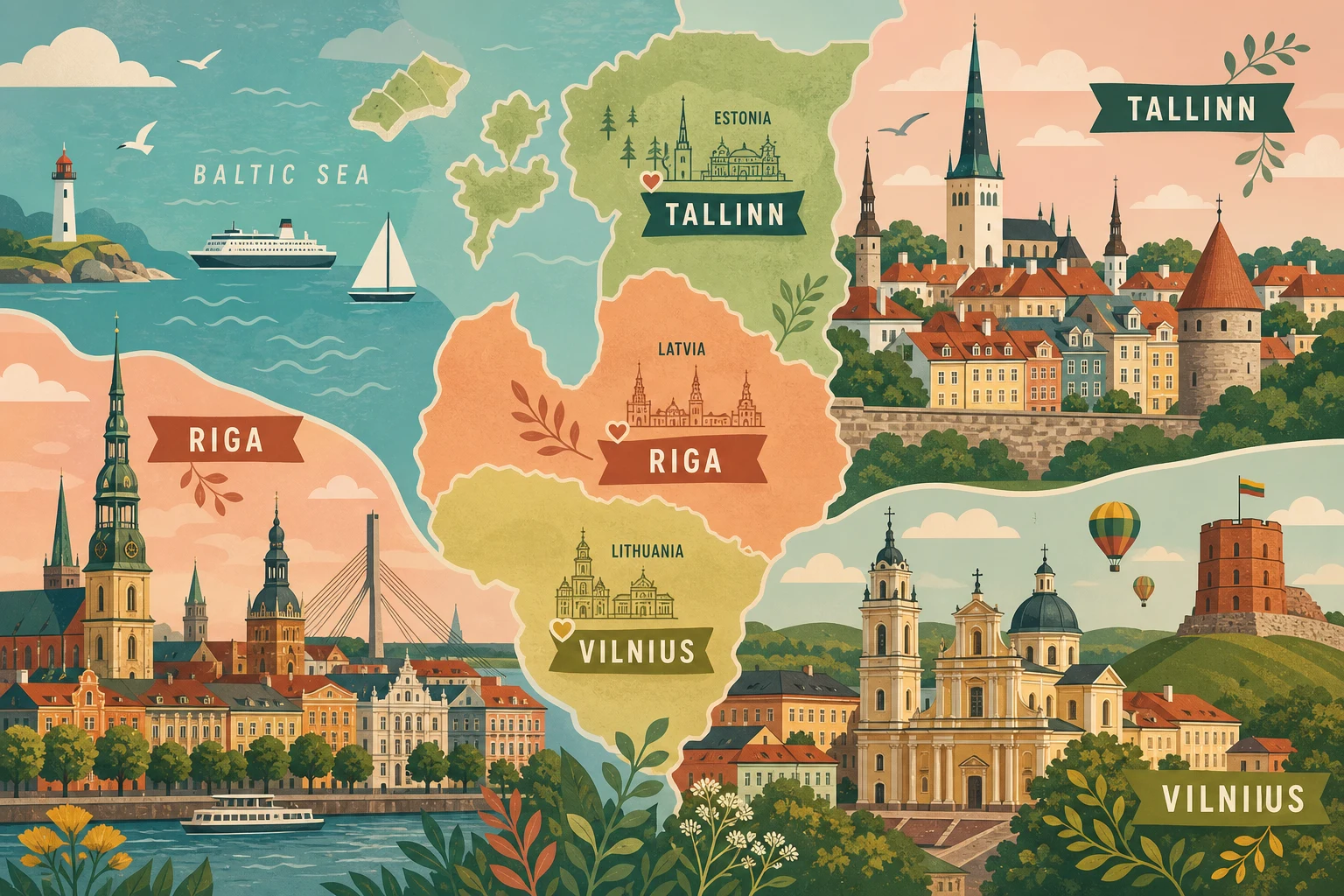
De tre baltiske stater ved Østersøen genindførte uafhængighed i 1991. Deres hovedstæder har velbevarede middelalderbykerner, UNESCO-steder og en blanding af nordisk, tysk og østeuropæisk arv.
Studér hovedstæderne
Tallinn

Estland
Befolkning: 450,000
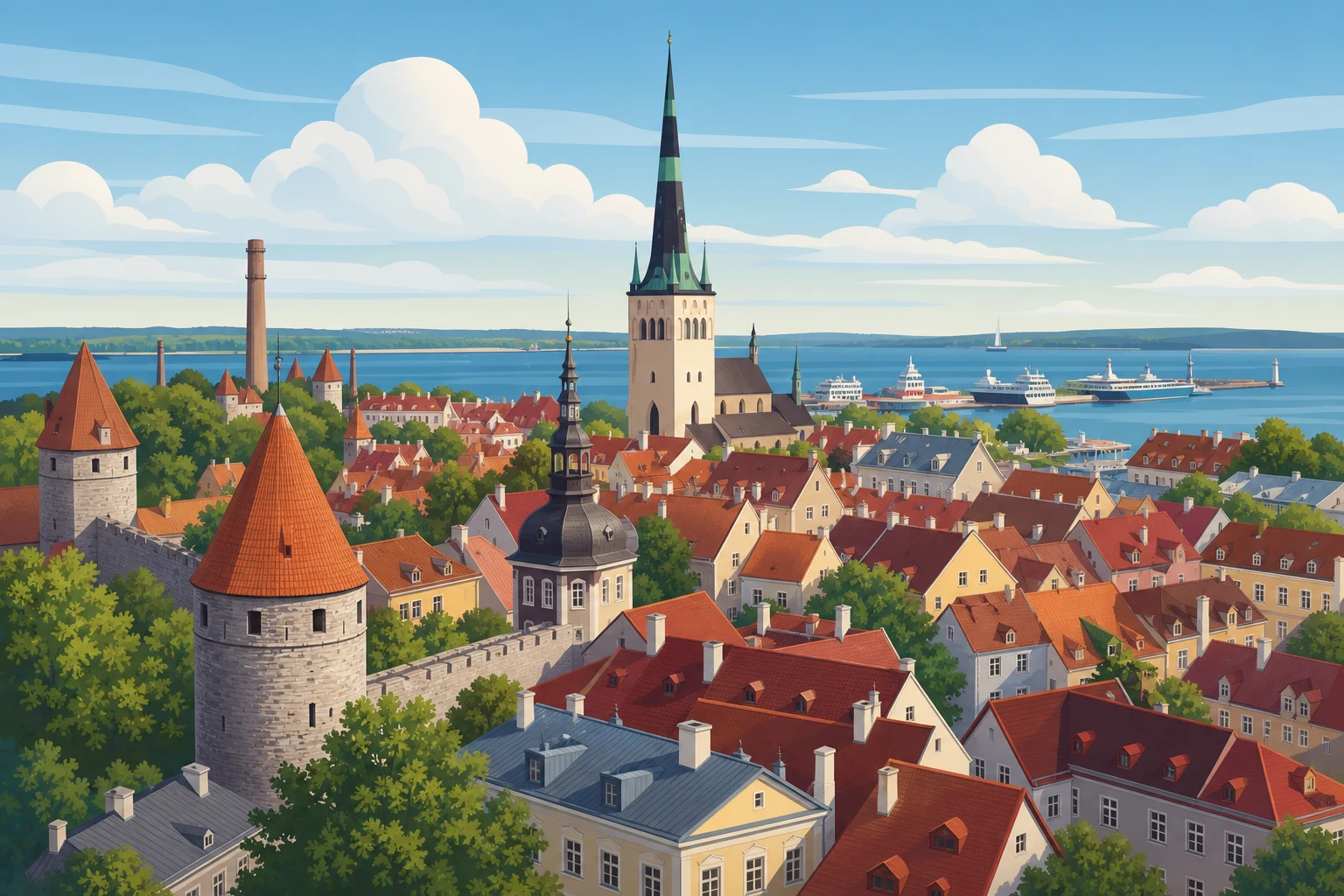
Tallinn is situated on the southern coast of the Gulf of Finland, directly across from Helsinki (only 80 km away). The city's remarkably well-preserved medieval old town dates back to the 13th century, when it was a key trading post in the Hanseatic League. Today Tallinn is known as one of Europe's most digitally advanced capitals - Estonia pioneered e-governance, e-residency, and digital voting.
Vartegn: Tallinn Old Town (UNESCO World Heritage Site), Alexander Nevsky Cathedral, Toompea Castle
Sjove fakta
- Tallinn's Old Town is one of the best-preserved medieval cities in Europe, with intact 13th-century city walls, cobblestone streets, and Gothic architecture.
- Estonia is the world's most digitally advanced society - 99% of government services are available online, and Tallinn is home to the birthplace of Skype.
- Tallinn's Town Hall, built in 1404, is the only surviving Gothic town hall in Northern Europe.
Riga
Letland
Befolkning: 615,000
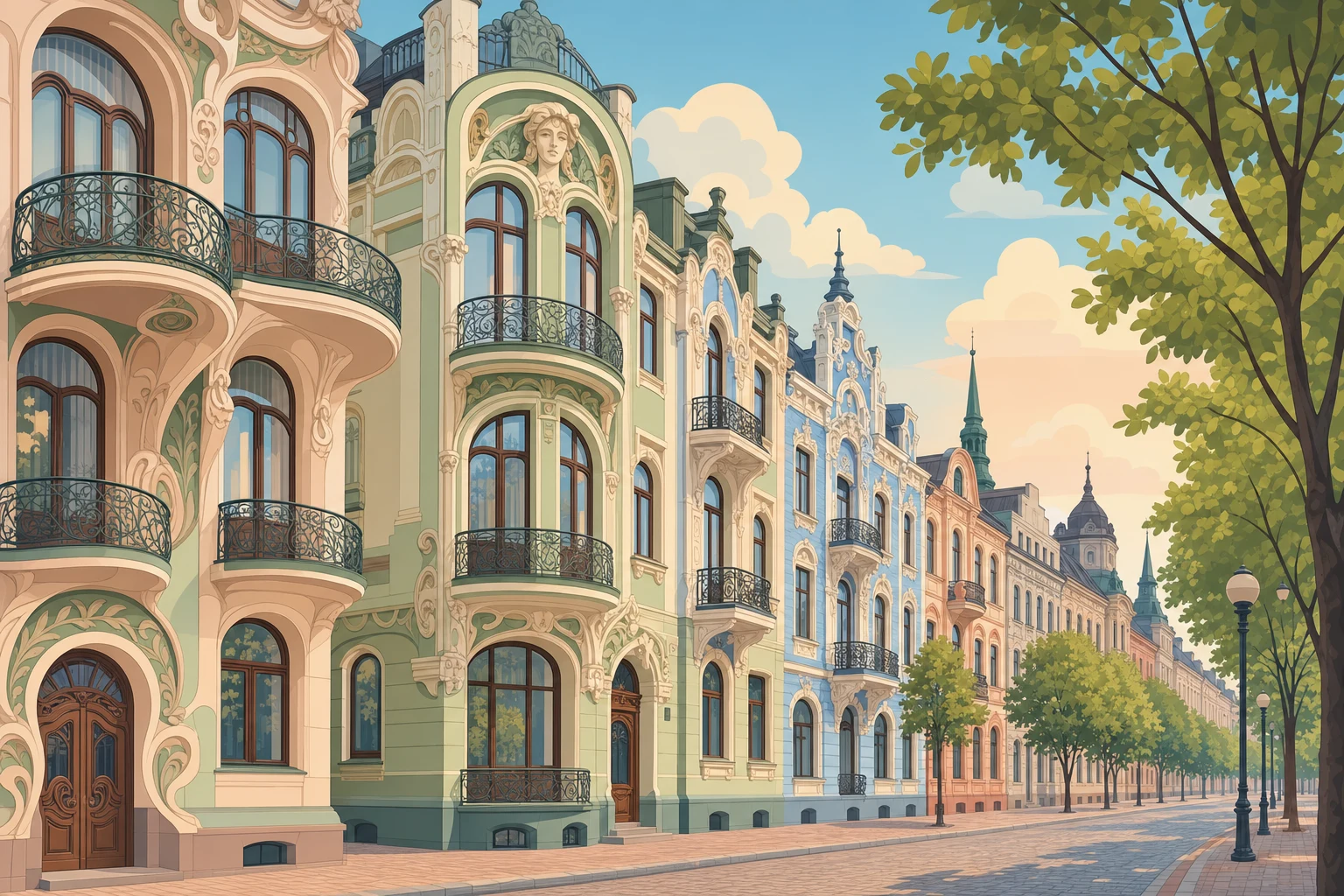
Riga is the largest city in the Baltic states, located where the Daugava River meets the Gulf of Riga. Founded in 1201 by German crusaders, it grew into a major Hanseatic trading center. Riga is world-famous for having the highest concentration of Art Nouveau (Jugendstil) architecture of any city in the world, with over 800 Art Nouveau buildings in its center.
Vartegn: Riga Old Town (UNESCO World Heritage Site), House of the Blackheads, Art Nouveau District
Sjove fakta
- Riga has the largest collection of Art Nouveau architecture in the world - over 800 buildings, mostly concentrated in the city center along Alberta and Elizabetes streets.
- The city claims to have hosted the world's first decorated Christmas tree in 1510, a tradition that began in its Town Hall Square.
- Riga's Central Market is housed in five former Zeppelin hangars from World War I and is the largest market and bazaar in Europe.
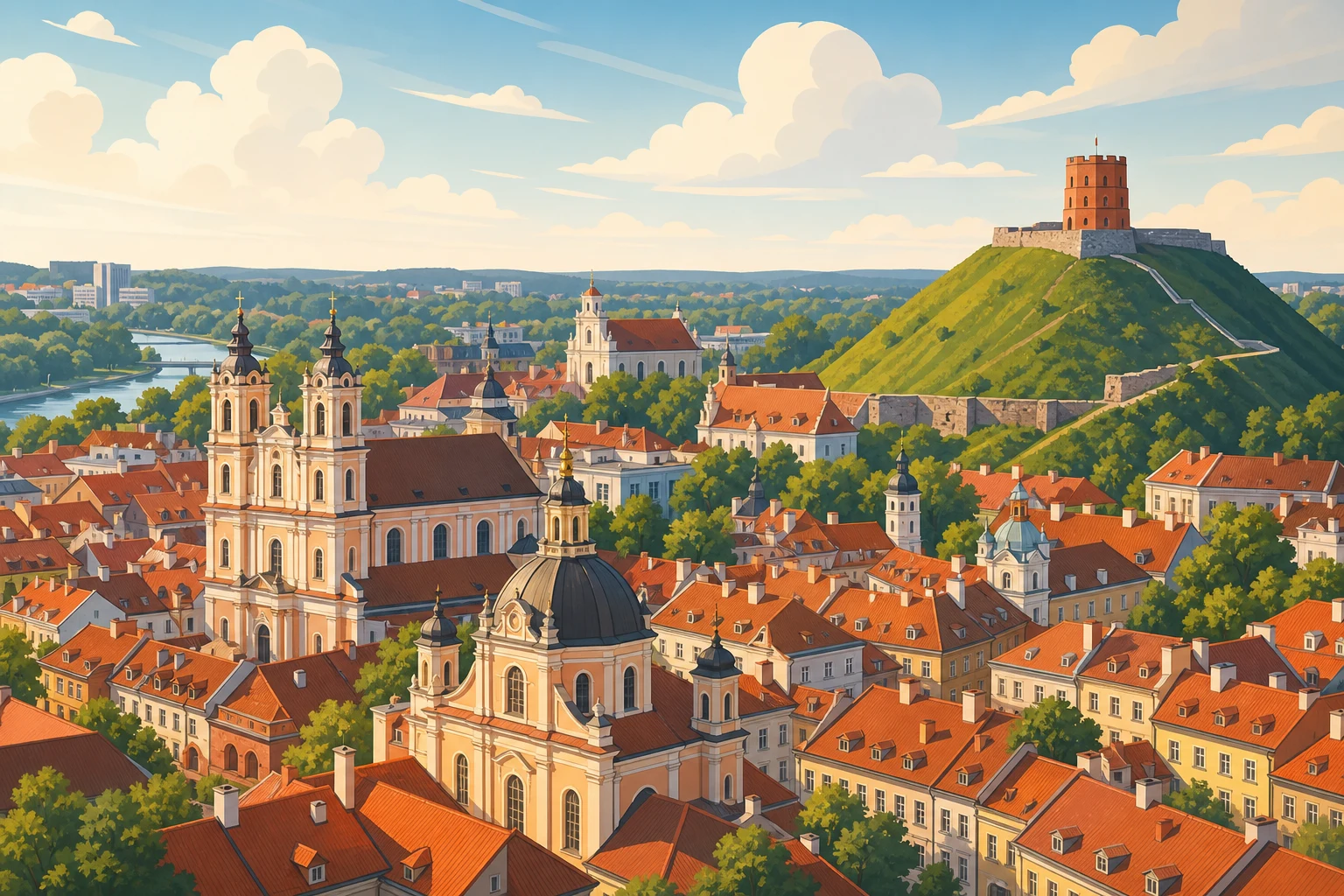
Vilnius
Litauen
Befolkning: 580,000
Vilnius is the southernmost and most inland of the three Baltic capitals, situated at the confluence of the Vilnia and Neris rivers. Founded in the 14th century by Grand Duke Gediminas, it served as the capital of the Grand Duchy of Lithuania, which at its peak was the largest state in Europe. Vilnius has one of the largest surviving medieval old towns in Northern Europe and is known for its Baroque architecture.
Vartegn: Vilnius Old Town (UNESCO World Heritage Site), Gediminas Castle Tower, Gate of Dawn
Sjove fakta
- Vilnius has one of the largest old towns in Northern Europe, spanning 3.6 square kilometers with over 1,500 buildings - its Baroque churches are particularly renowned.
- The city declared a creative micro-republic called "Užupis" in 1997, an artistic neighborhood with its own constitution, president, and even an army of approximately 11 people.
- Vilnius was the capital of the Grand Duchy of Lithuania, which in the 15th century stretched from the Baltic Sea to the Black Sea, making it the largest state in Europe at the time.
Hurtigt overblik
Test din viden
Hvor godt kender du disse hovedstæder? Find ud af det her.
Øv med spil
Klar til at teste det, du har lært? Hop ind i et spil og prøv det af.
Om de baltiske hovedstæder
Tallinn, Riga og Vilnius er kompakte, charmerende hovedstæder med stærk identitet. Hver har sin arkitektoniske signatur og historie fra Hanseforbundet til moderne digital vækst. De er ideelle at lære som en samlet baltisk trio.
Ofte stillede spørgsmål
Hvilken af de tre hovedstæder er størst?
Riga i Letland er den største med omkring 615.000 indbyggere og er også den største by i alle tre lande tilsammen.
Taler de tre lande samme sprog?
Nej. Estisk er finsk-ugrisk og nært finsk; lettisk og litauisk er baltiske sprog og indoeuropæiske, men ikke gensidigt forståelige med estisk.
Er de med i EU?
Ja. Estland, Letland og Litauen er alle EU- og NATO-medlemmer.