Carte de l'Afrique : pays et capitales
L'Afrique est le deuxième plus grand continent du monde, abritant 54 nations souveraines qui s'étendent de la côte méditerranéenne au cap de Bonne-Espérance. Le continent présente une diversité géographique extraordinaire : le désert du Sahara, la forêt tropicale du bassin du Congo, la vallée du Grand Rift et de vastes savanes regorgeant de faune sauvage. Maîtrisez l'ensemble de la carte africaine en étudiant l'emplacement, la forme et les frontières de chaque pays. Vous trouverez ci-dessous la liste complète des pays d'Afrique avec leurs capitales, ainsi qu'une carte interactive et des fiches d'étude pour situer chaque pays.
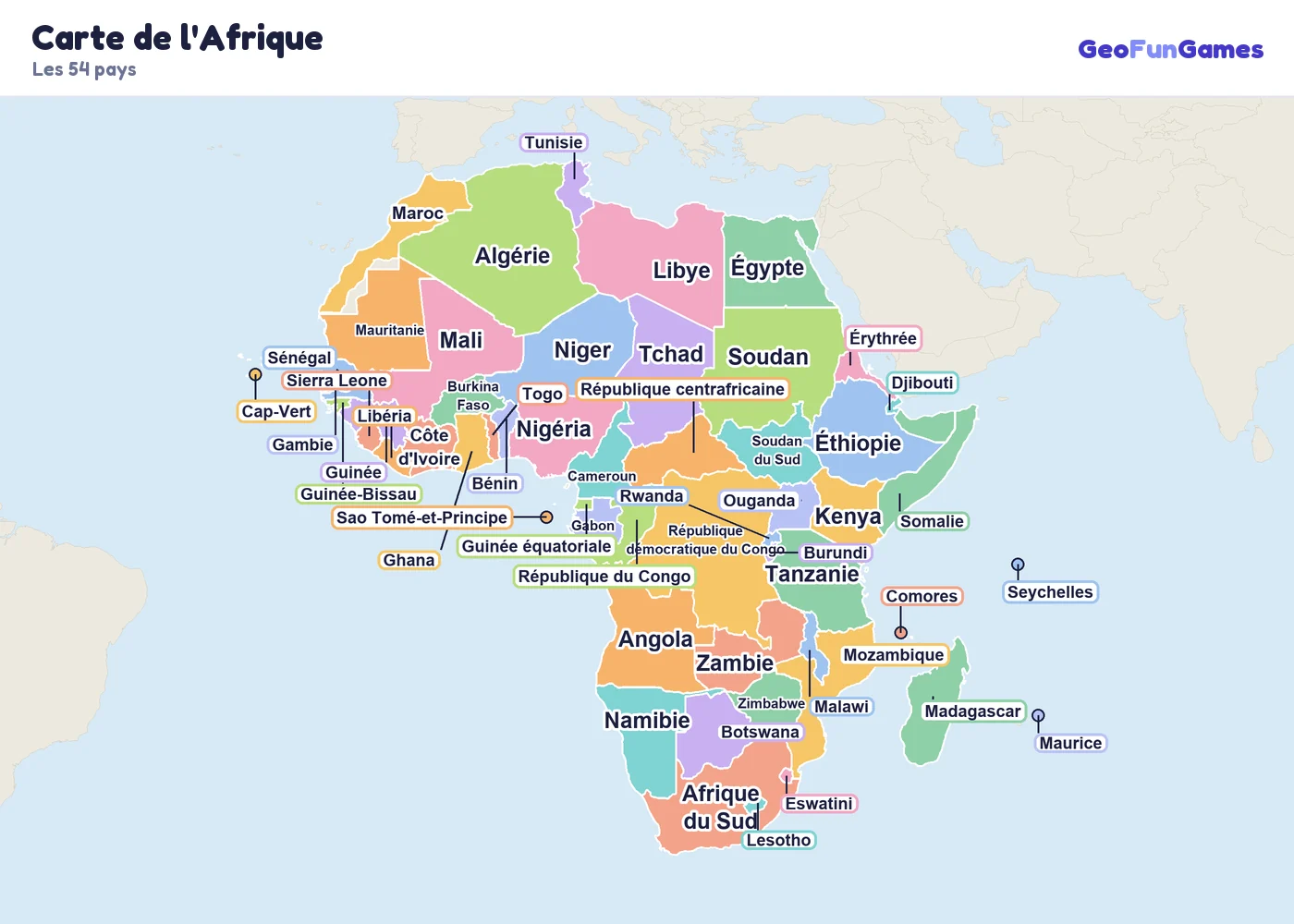
Les pays d'Afrique et leurs capitales
Liste complète des pays d'Afrique avec capitale, population et superficie. Cliquez sur un pays pour accéder à sa fiche d'étude avec carte et informations.
| Pays | Capitale | Population | Superficie |
|---|---|---|---|
 Algérie Algérie | Alger | 46,3 M | 2 381 741 km² |
 Égypte Égypte | Le Caire | 114 M | 1 001 450 km² |
 Libye Libye | Tripoli | 6,9 M | 1 759 540 km² |
 Maroc Maroc | Rabat | 37,5 M | 446 550 km² |
 Tunisie Tunisie | Tunis | 12,3 M | 163 610 km² |
 Mauritanie Mauritanie | Nouakchott | 4,9 M | 1 030 700 km² |
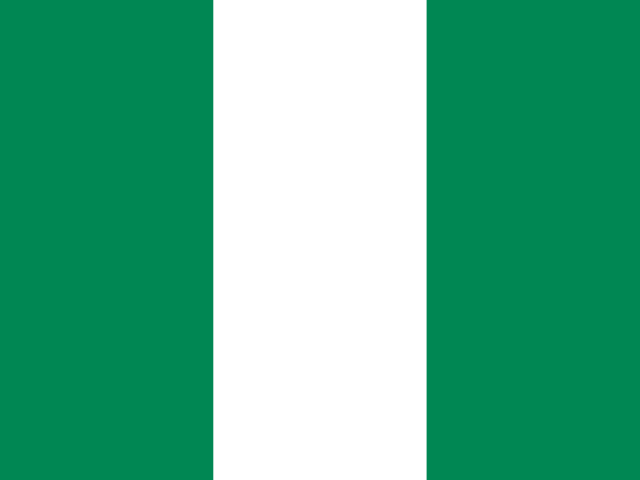 Nigéria Nigéria | Abuja | 227 M | 923 768 km² |
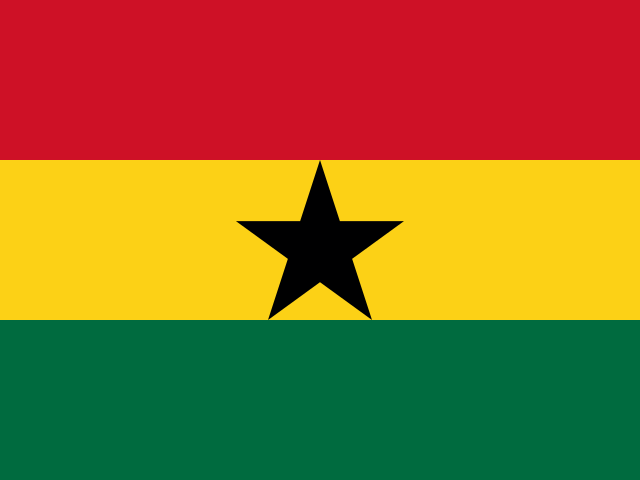 Ghana Ghana | Accra | 34,4 M | 238 533 km² |
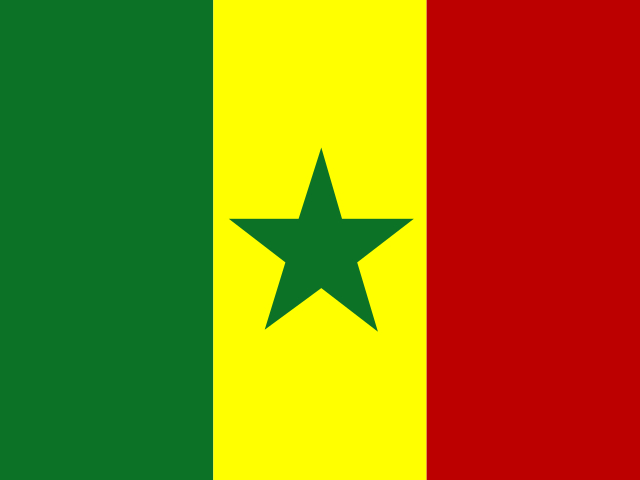 Sénégal Sénégal | Dakar | 18,1 M | 196 722 km² |
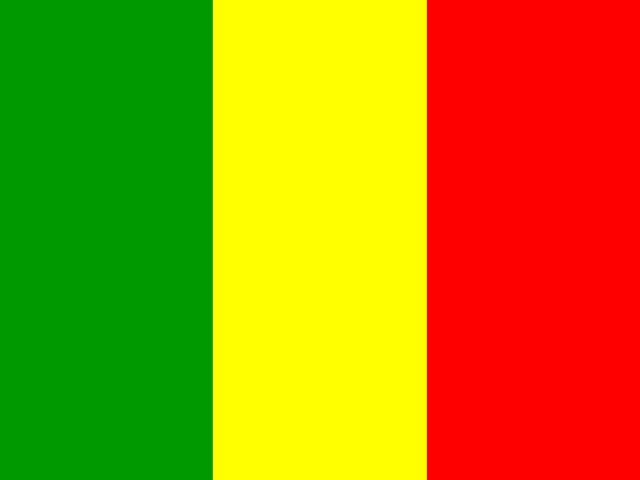 Mali Mali | Bamako | 23,3 M | 1 240 192 km² |
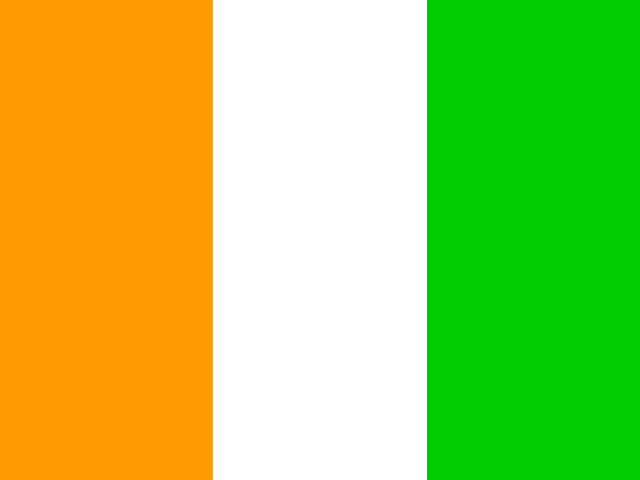 Côte d'Ivoire Côte d'Ivoire | Yamoussoukro | 31,2 M | 322 463 km² |
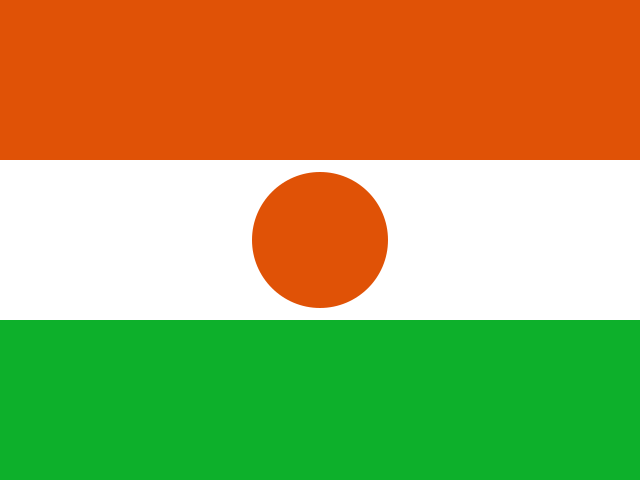 Niger Niger | Niamey | 27,2 M | 1 267 000 km² |
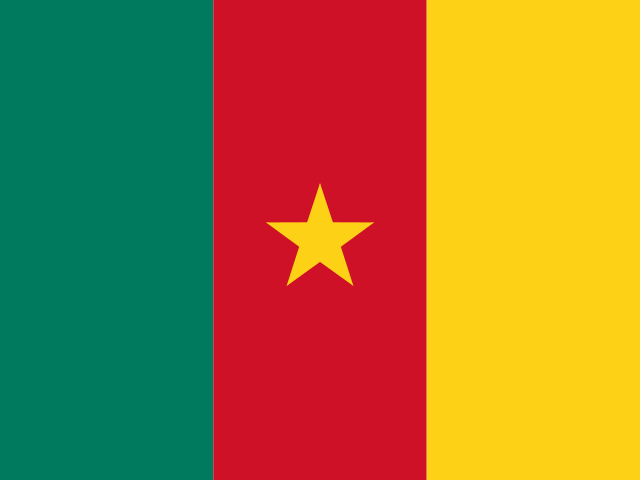 Cameroun Cameroun | Yaoundé | 28,6 M | 475 442 km² |
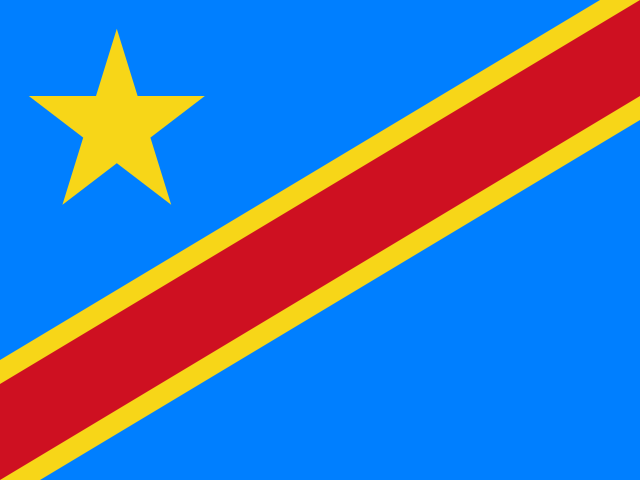 République démocratique du Congo République démocratique du Congo | Kinshasa | 105 M | 2 344 858 km² |
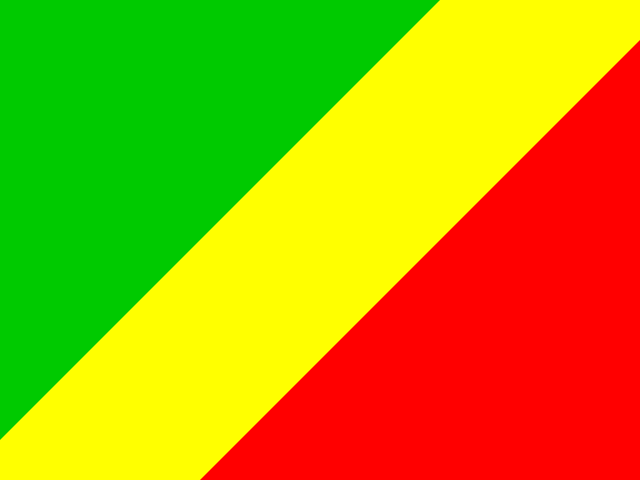 République du Congo République du Congo | Brazzaville | 6,3 M | 342 000 km² |
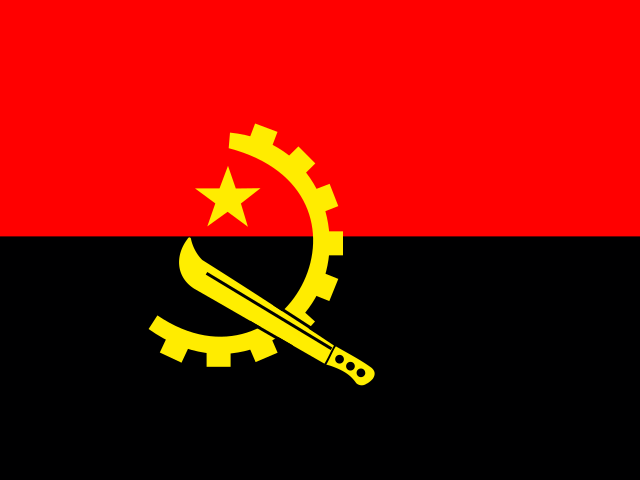 Angola Angola | Luanda | 37,2 M | 1 246 700 km² |
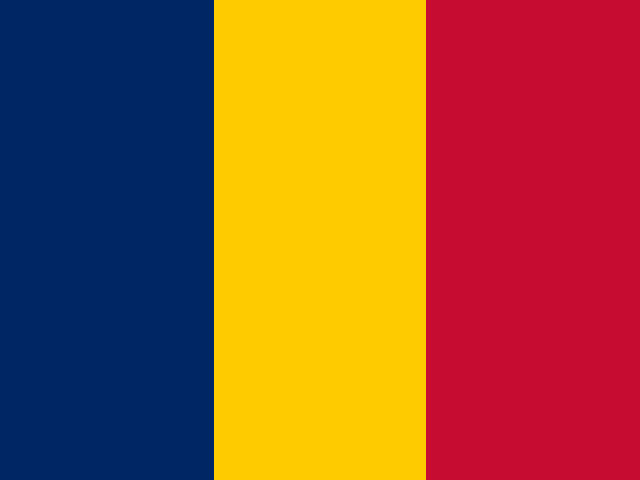 Tchad Tchad | N'Djaména | 18,3 M | 1 284 000 km² |
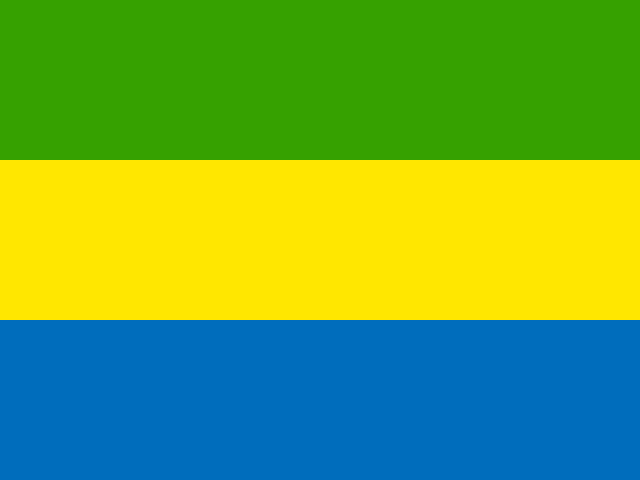 Gabon Gabon | Libreville | 2,5 M | 267 668 km² |
 Éthiopie Éthiopie | Addis-Abeba | 128 M | 1 104 300 km² |
 Kenya Kenya | Nairobi | 55,1 M | 580 367 km² |
 Tanzanie Tanzanie | Dodoma | 65,5 M | 947 303 km² |
 Soudan Soudan | Khartoum | 48,1 M | 1 861 484 km² |
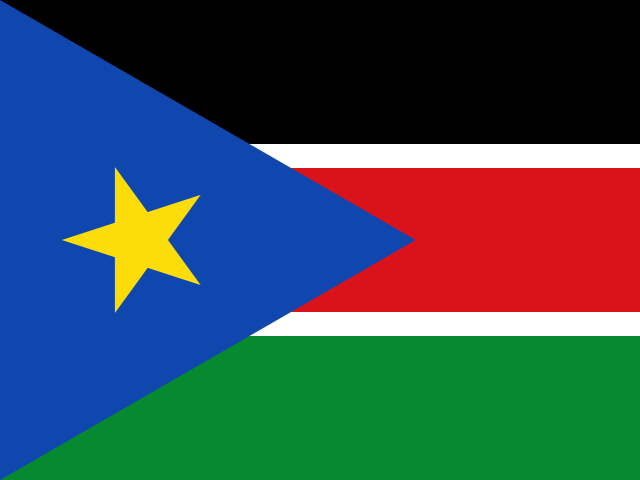 Soudan du Sud Soudan du Sud | Djouba | 11,1 M | 619 745 km² |
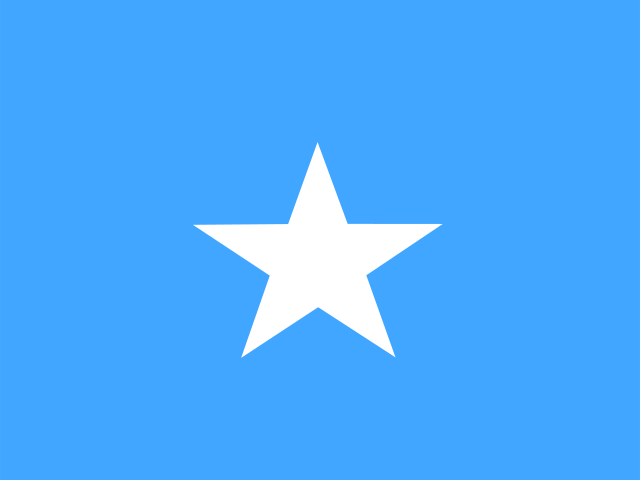 Somalie Somalie | Mogadiscio | 18,1 M | 637 657 km² |
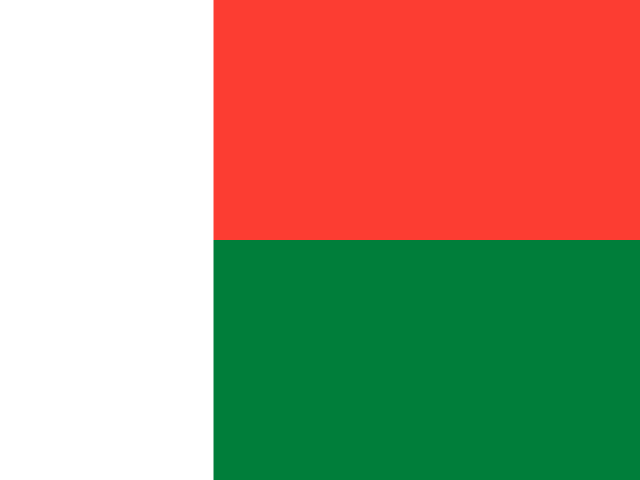 Madagascar Madagascar | Antananarivo | 30,3 M | 587 041 km² |
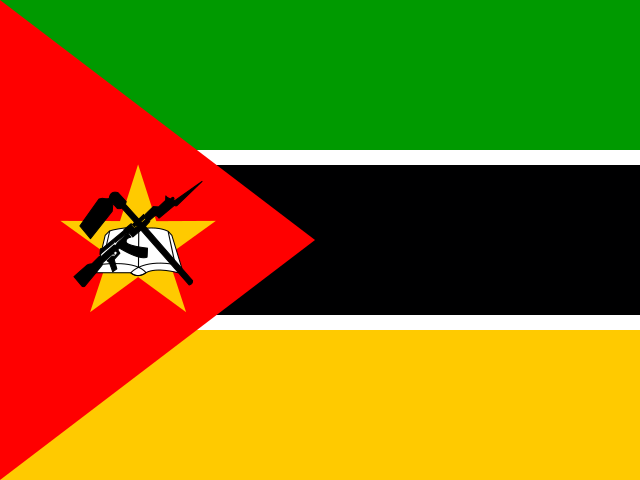 Mozambique Mozambique | Maputo | 34 M | 801 590 km² |
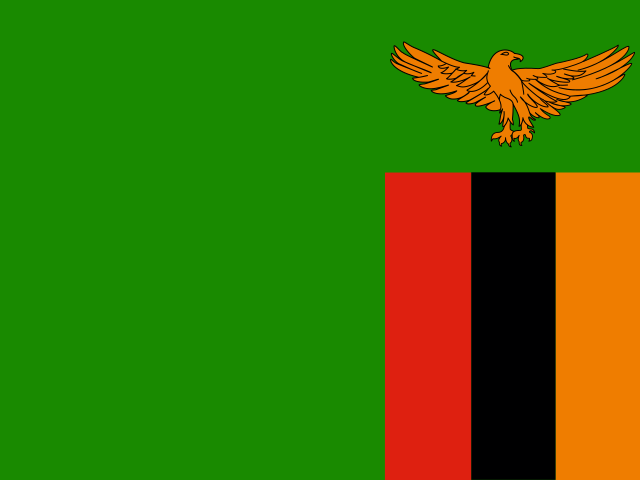 Zambie Zambie | Lusaka | 20,6 M | 752 618 km² |
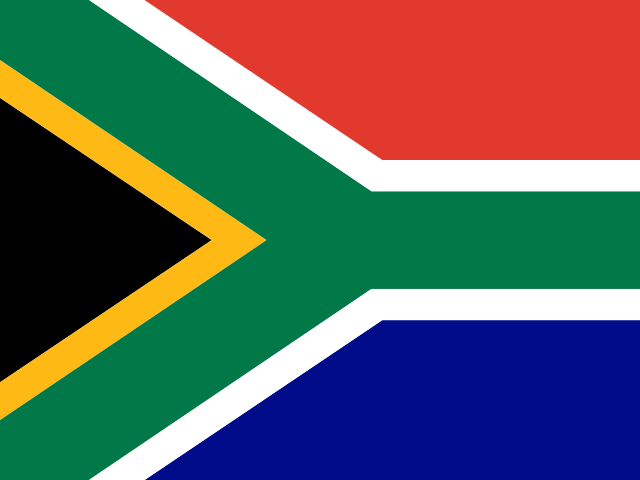 Afrique du Sud Afrique du Sud | Pretoria | 62 M | 1 221 037 km² |
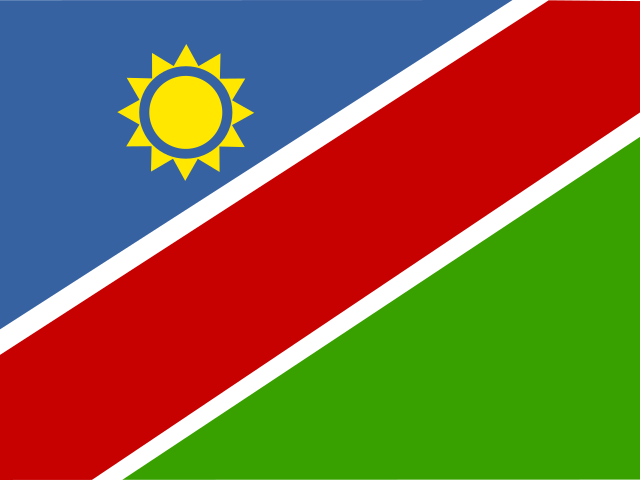 Namibie Namibie | Windhoek | 2,6 M | 824 292 km² |
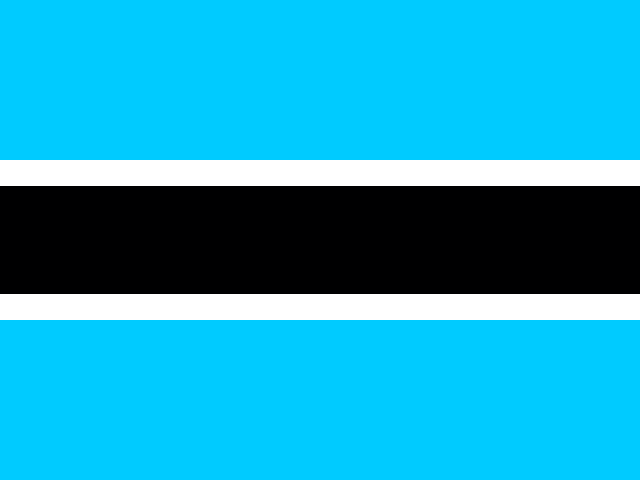 Botswana Botswana | Gaborone | 2,5 M | 581 730 km² |
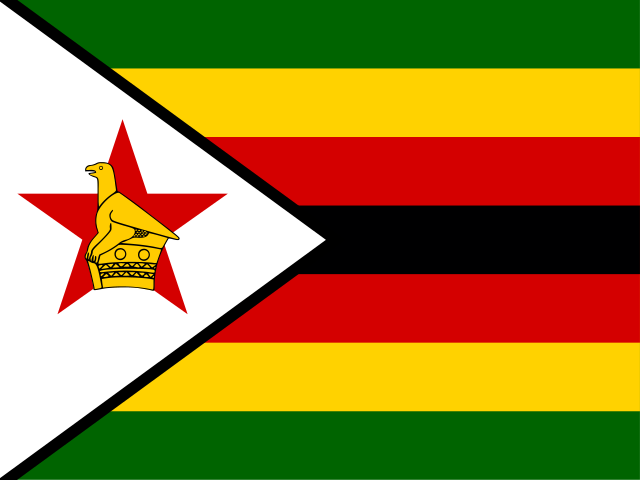 Zimbabwe Zimbabwe | Harare | 16,6 M | 390 757 km² |
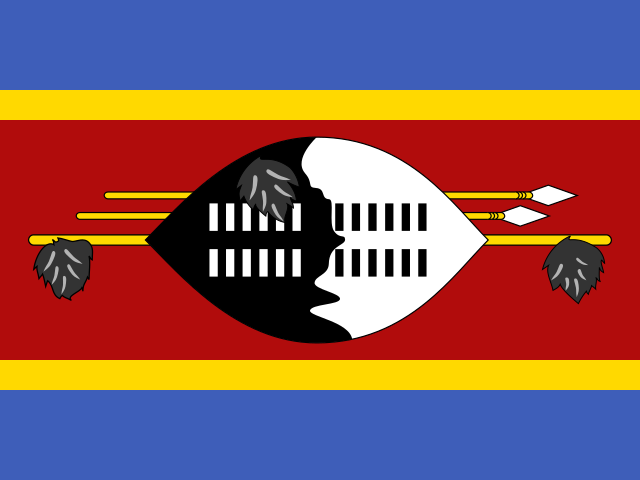 Eswatini Eswatini | Mbabane | 1,2 M | 17 364 km² |
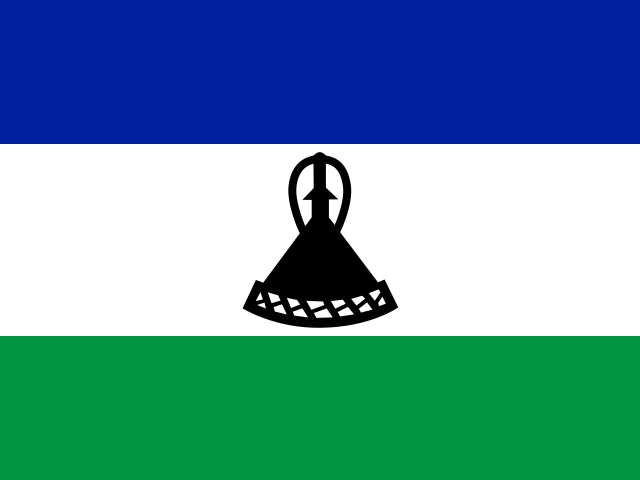 Lesotho Lesotho | Maseru | 2,3 M | 30 355 km² |
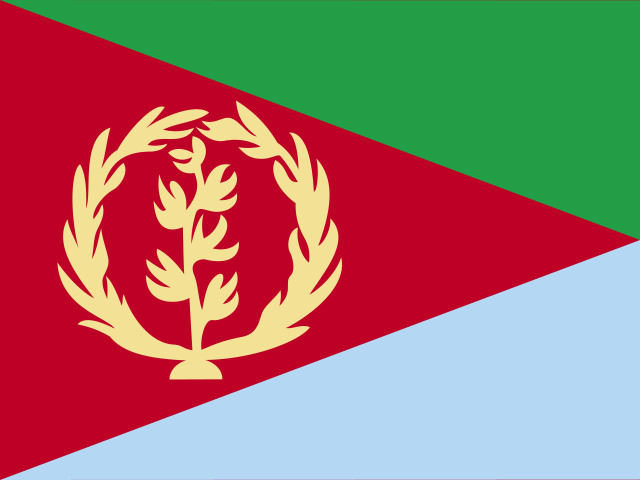 Érythrée Érythrée | Asmara | 3,5 M | 117 600 km² |
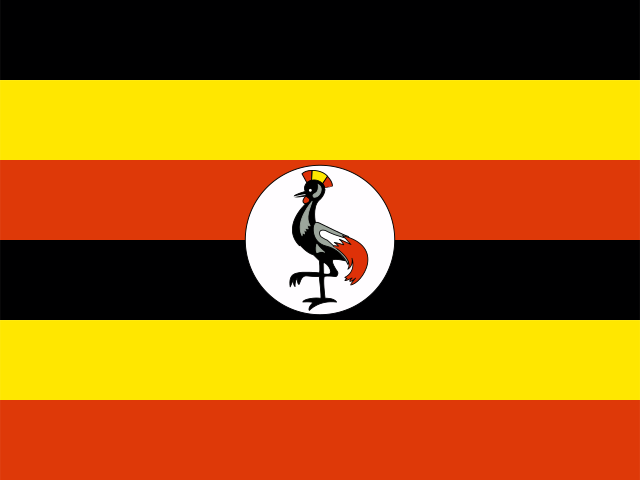 Ouganda Ouganda | Kampala | 48,6 M | 241 038 km² |
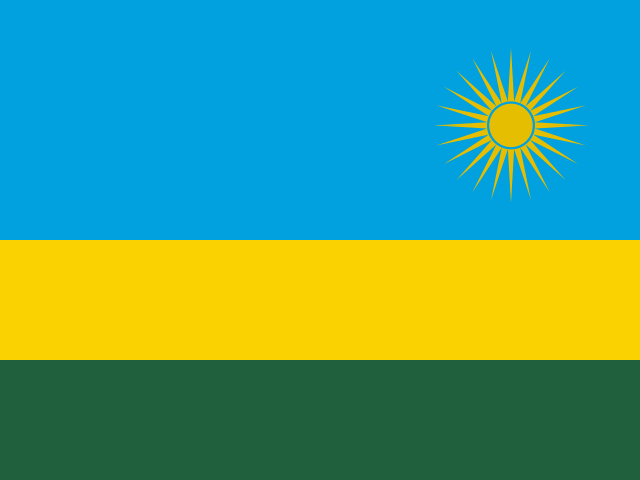 Rwanda Rwanda | Kigali | 14,1 M | 26 338 km² |
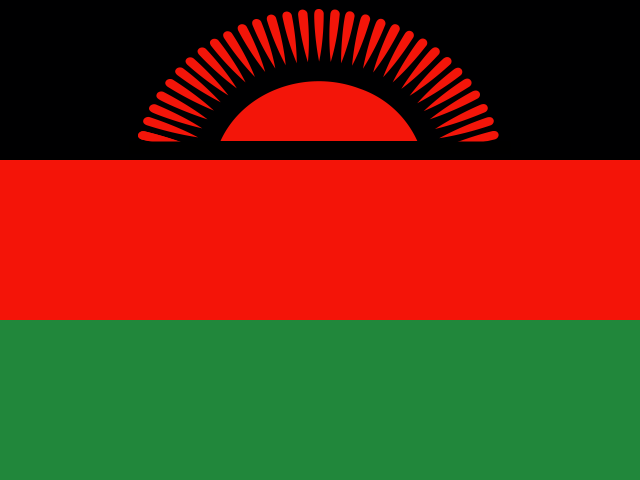 Malawi Malawi | Lilongwe | 21,1 M | 118 484 km² |
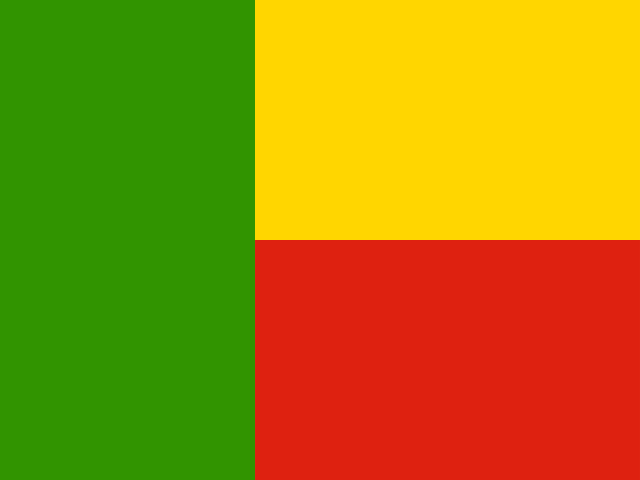 Bénin Bénin | Porto-Novo | 14,1 M | 112 622 km² |
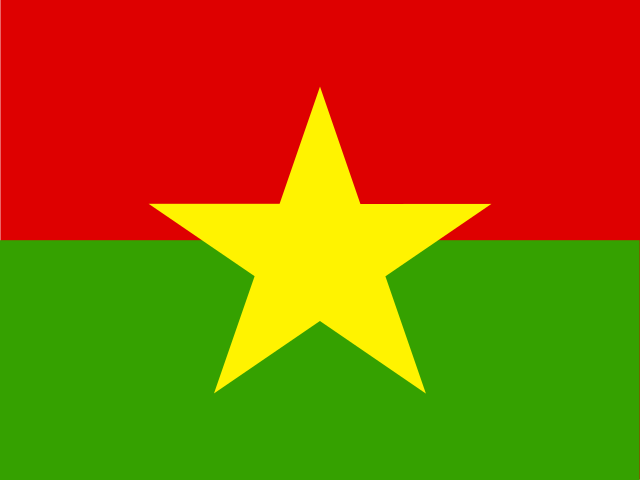 Burkina Faso Burkina Faso | Ouagadougou | 23,5 M | 274 200 km² |
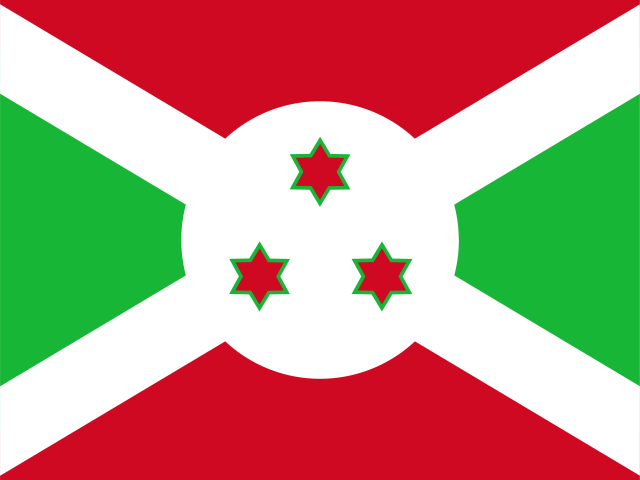 Burundi Burundi | Gitega | 13,7 M | 27 834 km² |
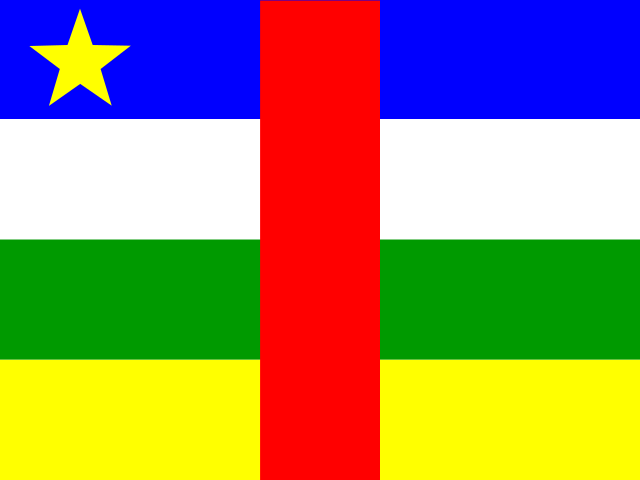 République centrafricaine République centrafricaine | Bangui | 5,7 M | 622 984 km² |
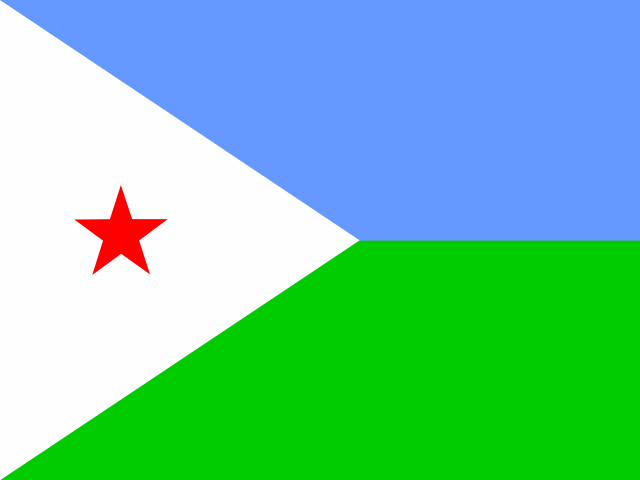 Djibouti Djibouti | Djibouti | 1,1 M | 23 200 km² |
 Guinée équatoriale Guinée équatoriale | Malabo | 1,7 M | 28 051 km² |
 Gambie Gambie | Banjul | 2,8 M | 11 295 km² |
 Guinée Guinée | Conakry | 14,5 M | 245 857 km² |
 Guinée-Bissau Guinée-Bissau | Bissau | 2,2 M | 36 125 km² |
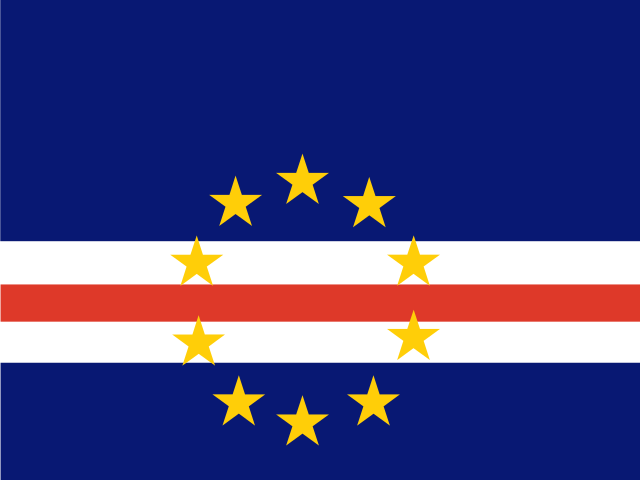 Cap-Vert Cap-Vert | Praia | 0,60 M | 4 033 km² |
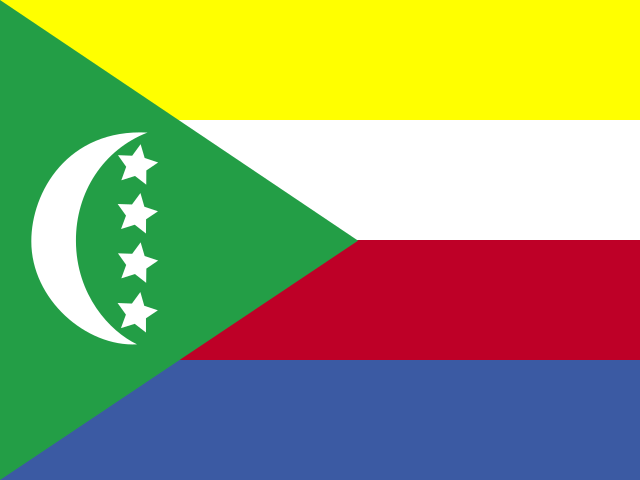 Comores Comores | Moroni | 0,87 M | 2 235 km² |
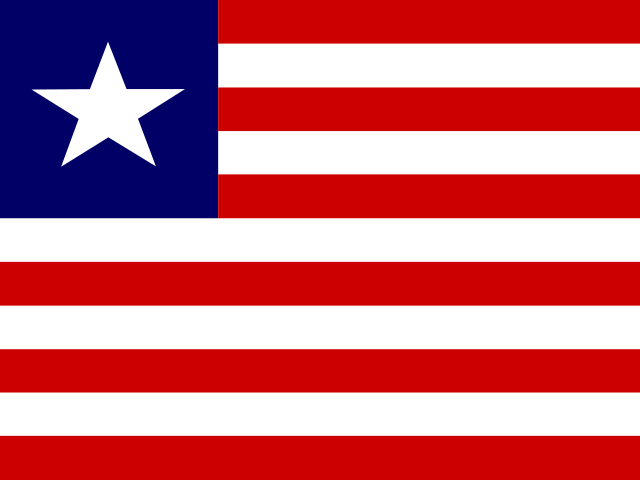 Libéria Libéria | Monrovia | 5,5 M | 111 369 km² |
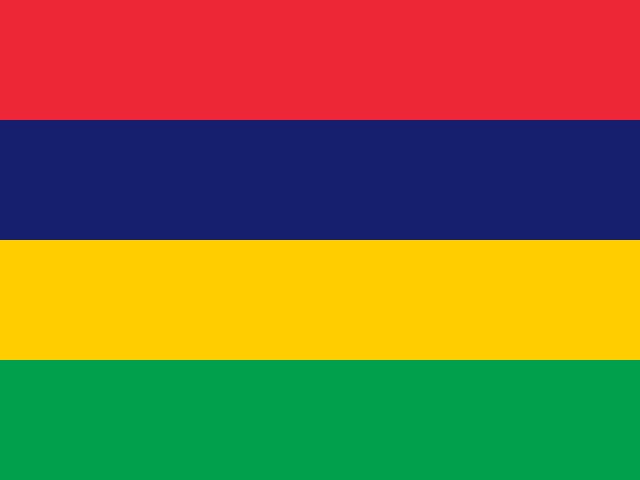 Maurice Maurice | Port-Louis | 1,3 M | 2 040 km² |
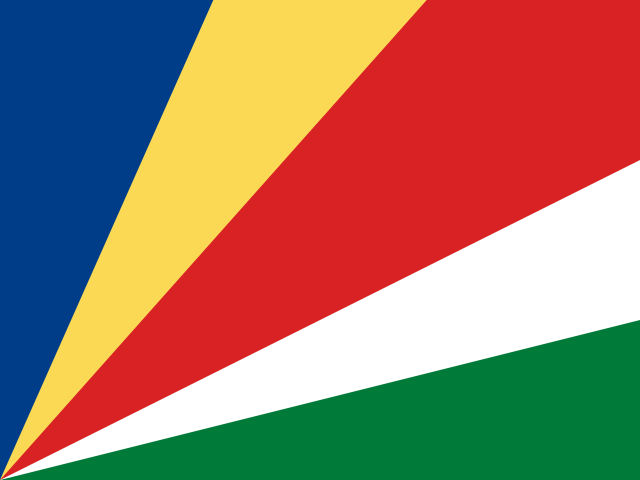 Seychelles Seychelles | Victoria | 0,10 M | 459 km² |
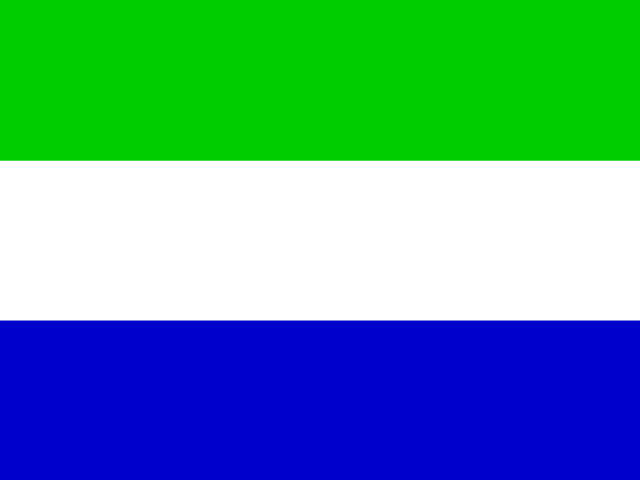 Sierra Leone Sierra Leone | Freetown | 8,6 M | 71 740 km² |
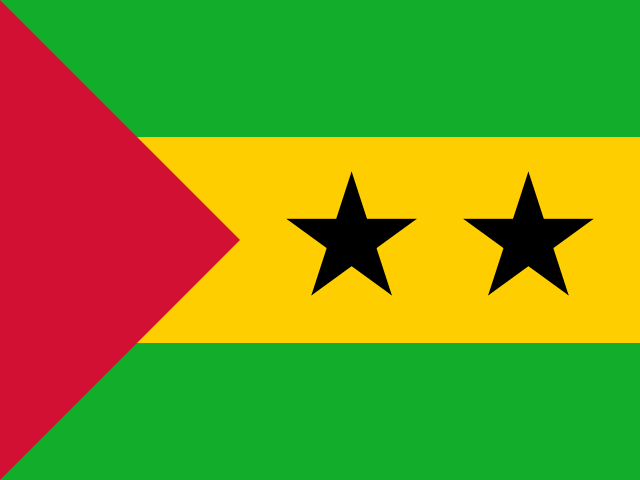 Sao Tomé-et-Principe Sao Tomé-et-Principe | São Tomé | 0,23 M | 964 km² |
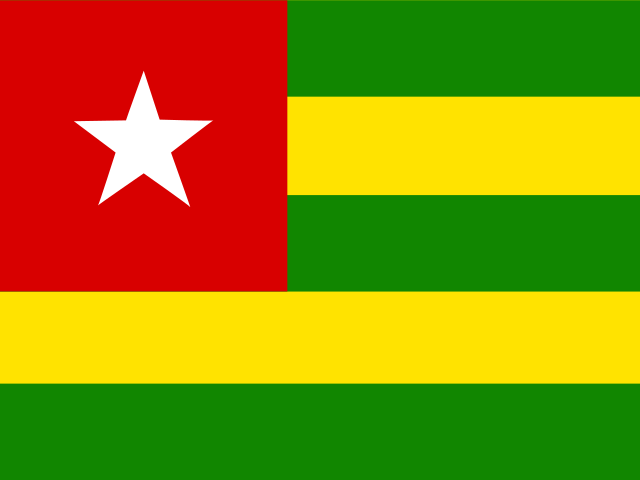 Togo Togo | Lomé | 9 M | 56 785 km² |
Yamoussoukro est la capitale officielle de la Côte d'Ivoire ; Abidjan est la capitale économique. Dodoma est la capitale officielle de la Tanzanie ; Dar es Salam reste la plus grande ville. L'Afrique du Sud a trois capitales : Pretoria (exécutif), Le Cap (législatif) et Bloemfontein (judiciaire).
Survolez un pays pour voir son nom. Cliquez pour accéder à sa carte d'étude.
Étudier les pays
Algérie
Frontières: Maroc, Tunisie, Libye, Niger, Mali, Mauritanie
Superficie: 2,381,741 km² · Côte: 998 km
L'Algérie est le plus grand pays d'Afrique, occupant la partie centrale de l'Afrique du Nord. Elle possède une côte méditerranéenne au nord et s'enfonce profondément dans le désert du Sahara au sud. Les montagnes de l'Atlas séparent les fertiles plaines côtières du vaste intérieur désertique.
Forme: Un très grand pays de forme à peu près rectangulaire qui domine la partie centre-ouest de l'Afrique du Nord.
Anecdotes
- L'Algérie est le plus grand pays d'Afrique par sa superficie, couvrant plus de 2,3 millions de km².
- Environ 80 % du territoire algérien est couvert par le désert du Sahara.
- L'Algérie partage ses frontières avec six pays, soit plus que toute autre nation d'Afrique du Nord.
Égypte
Frontières: Libye, Soudan
Superficie: 1,001,450 km² · Côte: 2,450 km
L'Égypte est située à l'angle nord-est de l'Afrique, la péninsule du Sinaï s'étendant jusqu'en Asie. La vallée et le delta du Nil dominent le pays, tandis que la grande majorité des terres est constituée de désert aride.
Forme: Un pays de forme à peu près carrée à l'angle nord-est de l'Afrique, avec une petite péninsule triangulaire (le Sinaï) s'étendant vers l'est.
Anecdotes
- L'Égypte est le seul pays africain qui s'étend jusqu'en Asie via la péninsule du Sinaï.
- Le Nil traverse l'Égypte sur environ 1 500 km.
- Seuls environ 5 % du territoire égyptien sont habités, concentrés le long de la vallée et du delta du Nil.
Libye
Frontières: Tunisie, Algérie, Niger, Tchad, Soudan, Égypte
Superficie: 1,759,540 km² · Côte: 1,770 km
La Libye est située au centre de l'Afrique du Nord, le long de la côte méditerranéenne. Quatrième plus grand pays d'Afrique, elle est en grande partie couverte par le désert du Sahara et possède une longue côte méditerranéenne marquée par le caractéristique golfe de Syrte.
Forme: Un grand pays au centre de l'Afrique du Nord avec une large côte méditerranéenne présentant une échancrure caractéristique (le golfe de Syrte).
Anecdotes
- La Libye est composée à environ 90 % de désert, ce qui en fait l'un des pays les plus arides du monde.
- Le golfe de Syrte crée une encoche caractéristique dans la côte méditerranéenne de la Libye.
- La Libye partage ses frontières avec six pays et possède la plus longue côte méditerranéenne d'Afrique.
Maroc
Frontières: Algérie, Mauritanie
Superficie: 446,550 km² · Côte: 1,835 km
Le Maroc est situé à l'extrême nord-ouest de l'Afrique, avec des côtes donnant à la fois sur l'océan Atlantique et la mer Méditerranée. Les montagnes de l'Atlas traversent le centre, tandis que le sud du Maroc se fond dans le désert du Sahara.
Forme: Un pays à l'angle nord-ouest de l'Afrique, bordé par l'Atlantique à l'ouest et la Méditerranée au nord.
Anecdotes
- Le Maroc est le seul pays africain à posséder des côtes à la fois sur l'Atlantique et la Méditerranée.
- Le détroit de Gibraltar ne sépare le Maroc de l'Espagne que de 14 km.
- Les montagnes de l'Atlas au Maroc atteignent des hauteurs de plus de 4 000 mètres.
Tunisie
Frontières: Algérie, Libye
Superficie: 163,610 km² · Côte: 1,148 km
La Tunisie est le plus petit pays d'Afrique du Nord, blottie entre l'Algérie et la Libye le long de la côte méditerranéenne. Le nord abrite les montagnes de l'Atlas, tandis que le sud s'étend dans le désert du Sahara.
Forme: Un petit pays en forme de coin au point le plus septentrional de l'Afrique, se rétrécissant vers le sud.
Anecdotes
- La Tunisie abrite le point le plus septentrional de l'Afrique, le cap Angela.
- La Tunisie est le plus petit pays d'Afrique du Nord avec seulement 163 610 km².
- Le désert du Sahara couvre environ 40 % du territoire méridional de la Tunisie.
Mauritanie
Frontières: Maroc, Algérie, Mali, Sénégal
Superficie: 1,030,700 km² · Côte: 754 km
La Mauritanie fait le lien entre l'Afrique du Nord et l'Afrique de l'Ouest, s'étendant de la côte atlantique vers l'intérieur des terres à travers le désert du Sahara. Environ 90 % de son territoire est désertique, l'agriculture étant limitée à une étroite bande le long du fleuve Sénégal.
Forme: Un grand pays sur la côte atlantique du nord-ouest de l'Afrique, formant le pont entre l'Afrique du Nord et l'Afrique de l'Ouest.
Anecdotes
- Environ 90 % de la Mauritanie se trouve dans le désert du Sahara.
- La structure de Richat (« l'OEil du Sahara ») est une formation géologique remarquable visible depuis l'espace.
- La Mauritanie fait le lien entre l'Afrique du Nord et l'Afrique de l'Ouest, partageant des liens culturels avec les deux régions.
Nigéria
Frontières: Bénin, Niger, Tchad, Cameroun
Superficie: 923,768 km² · Côte: 853 km
Le Nigeria est le pays le plus peuplé d'Afrique, situé sur le golfe de Guinée. Les fleuves Niger et Bénoué divisent le pays en trois régions géographiques : le sud tropical, le centre de savane et le nord bordant le Sahel.
Forme: Un grand pays de forme à peu près carrée sur le golfe de Guinée, avec une avancée au sud-est en direction du Cameroun.
Anecdotes
- Le Nigeria est le pays le plus peuplé d'Afrique avec plus de 220 millions d'habitants.
- Le fleuve Niger forme un vaste delta sur la côte du Nigeria, l'un des plus grands du monde.
- Le Nigeria est la plus grande économie d'Afrique en termes de PIB.
Ghana
Frontières: Côte d'Ivoire, Burkina Faso, Togo
Superficie: 238,533 km² · Côte: 539 km
Le Ghana est situé sur le golfe de Guinée, entre la Côte d'Ivoire et le Togo. Le lac Volta, l'un des plus grands lacs artificiels du monde, domine l'intérieur oriental.
Forme: Un pays de forme à peu près rectangulaire sur la côte sud de l'Afrique de l'Ouest, légèrement plus haut que large.
Anecdotes
- Le lac Volta au Ghana est l'un des plus grands lacs artificiels du monde par sa superficie.
- Le Ghana fut le premier pays d'Afrique subsaharienne à accéder à l'indépendance, en 1957.
- Le méridien de Greenwich (0° de longitude) traverse le Ghana.
Sénégal
Frontières: Mauritanie, Mali, Guinée, Guinée-Bissau, Gambie
Superficie: 196,722 km² · Côte: 531 km
Le Sénégal se trouve au point le plus occidental de l'Afrique continentale. Le pays entoure presque entièrement la Gambie, un pays étroit qui s'étend le long du fleuve Gambie. Le terrain est principalement plat, avec des plaines vallonnées.
Forme: Un pays à la pointe la plus occidentale de l'Afrique, avec un creux caractéristique là où la Gambie s'enfonce dans les terres.
Anecdotes
- Le Sénégal entoure presque entièrement la Gambie.
- Le cap Vert au Sénégal est le point le plus occidental de l'Afrique continentale.
- Le fleuve Sénégal forme la frontière nord avec la Mauritanie.
Mali
Frontières: Algérie, Niger, Burkina Faso, Côte d'Ivoire, Guinée, Sénégal, Mauritanie
Superficie: 1,240,192 km² · Pays enclavé
Le Mali est un grand pays enclavé à l'intérieur de l'Afrique de l'Ouest. Sa moitié nord se trouve dans le Sahara, tandis que le sud est arrosé par le fleuve Niger, qui décrit une boucle spectaculaire à travers le pays, créant le fertile delta intérieur du Niger.
Forme: Un grand pays enclavé en forme de noeud papillon, avec un nord et un sud plus larges reliés par une partie centrale plus étroite.
Anecdotes
- Le Mali est le plus grand pays d'Afrique de l'Ouest par sa superficie.
- Le fleuve Niger décrit une boucle spectaculaire à travers le Mali, créant le delta intérieur du Niger.
- Le Mali partage ses frontières avec sept pays, à égalité pour le plus grand nombre en Afrique de l'Ouest.
Côte d'Ivoire
Frontières: Libéria, Guinée, Mali, Burkina Faso, Ghana
Superficie: 322,463 km² · Côte: 515 km
La Côte d'Ivoire se trouve sur la côte du golfe de Guinée, entre le Liberia et le Ghana. Le sud abrite une forêt tropicale humide qui cède la place à la savane dans le nord.
Forme: Un pays de forme à peu près carrée sur la côte sud de l'Afrique de l'Ouest, entre le Liberia et le Ghana.
Anecdotes
- La Côte d'Ivoire est le premier producteur mondial de fèves de cacao.
- Le nom du pays signifie « Ivory Coast » en anglais.
- Yamoussoukro abrite la basilique Notre-Dame-de-la-Paix, le plus grand édifice religieux chrétien du monde.
Niger
Frontières: Algérie, Libye, Tchad, Nigéria, Bénin, Burkina Faso, Mali
Superficie: 1,267,000 km² · Pays enclavé
Le Niger est un grand pays enclavé de la région du Sahel, dont la majeure partie du territoire se trouve dans le désert du Sahara. Seul l'angle sud-ouest, le long du fleuve Niger, et la frontière sud reçoivent suffisamment de précipitations pour l'agriculture.
Forme: Un grand pays enclavé avec une vaste section nord et une partie sud plus étroite bordant le Nigeria.
Anecdotes
- Le Niger est l'un des pays les plus chauds du monde, surnommé « la Poêle à frire du monde ».
- Plus de 80 % du territoire du Niger se trouve dans le désert du Sahara.
- Le Niger partage ses frontières avec sept pays, à égalité avec le Mali pour le plus grand nombre en Afrique de l'Ouest.
Cameroun
Frontières: Nigéria, Tchad, République centrafricaine, République du Congo, Gabon, Guinée équatoriale
Superficie: 475,442 km² · Côte: 402 km
Le Cameroun se situe à la jonction de l'Afrique de l'Ouest et de l'Afrique centrale, sur le golfe de Guinée. Surnommé « l'Afrique en miniature », il présente des plaines côtières, des montagnes, de la savane, de la forêt tropicale et des régions semi-arides. Le mont Cameroun, culminant à 4 095 mètres, est le plus haut sommet de la région.
Forme: Un pays triangulaire qui se rétrécit vers le nord en direction du lac Tchad, avec une base sud plus large le long du golfe de Guinée.
Anecdotes
- Le Cameroun est surnommé « l'Afrique en miniature » pour la diversité de ses paysages.
- Le mont Cameroun, culminant à 4 095 mètres, est le plus haut sommet de l'Afrique centre-ouest et un volcan actif.
- Le Cameroun est frontalier de six pays, faisant le pont entre l'Afrique de l'Ouest et l'Afrique centrale.
République démocratique du Congo
Frontières: République du Congo, République centrafricaine, Soudan du Sud, Ouganda, Rwanda, Burundi, Tanzanie, Zambie, Angola
Superficie: 2,344,858 km² · Côte: 37 km
La RD Congo est le deuxième plus grand pays d'Afrique, dominant le centre du continent. Le vaste bassin du Congo abrite la deuxième plus grande forêt tropicale humide du monde. Le fleuve Congo décrit un arc à travers le pays, et la vallée du Grand Rift forme la frontière orientale avec sa chaîne de grands lacs.
Forme: Un pays immense au coeur de l'Afrique, de forme irrégulière, avec une minuscule côte à l'extrême ouest et les lacs de la vallée du Grand Rift le long de l'est.
Anecdotes
- La RD Congo est le deuxième plus grand pays d'Afrique et le 11e plus grand du monde.
- Le fleuve Congo est le fleuve le plus profond du monde, dépassant 220 mètres.
- Le pays est frontalier de neuf nations, soit plus que tout autre en Afrique.
République du Congo
Frontières: Gabon, Cameroun, République centrafricaine, République démocratique du Congo, Angola
Superficie: 342,000 km² · Côte: 169 km
La République du Congo est à cheval sur l'équateur, dans l'ouest de l'Afrique centrale. Les fleuves Congo et Oubangui forment une grande partie de la frontière orientale. Une dense forêt tropicale humide couvre la région nord, tandis que le sud abrite la savane.
Forme: Un pays allongé orienté nord-ouest/sud-est, avec le fleuve Congo comme frontière orientale et une petite côte au sud-ouest.
Anecdotes
- Brazzaville et Kinshasa, capitales des deux Congos, se font face de part et d'autre du fleuve Congo.
- Environ 65 % du pays est couvert de forêt tropicale humide.
- La République du Congo est à cheval sur l'équateur, s'étendant sur les deux hémisphères.
Angola
Frontières: République du Congo, République démocratique du Congo, Zambie, Namibie
Superficie: 1,246,700 km² · Côte: 1,600 km
L'Angola est un grand pays de la côte atlantique du sud-ouest de l'Afrique. L'enclave de Cabinda est séparée du territoire principal par une étroite bande de la RD Congo. Le relief s'élève d'une plaine côtière vers un vaste plateau intérieur.
Forme: Un grand pays de forme à peu près carrée sur la côte sud-ouest, avec une petite enclave détachée (Cabinda) au nord.
Anecdotes
- La province angolaise de Cabinda est une enclave séparée par une bande de la RD Congo.
- L'Angola est le deuxième plus grand pays lusophone par sa superficie.
- Les chutes de Kalandula comptent parmi les plus grandes chutes d'eau d'Afrique par leur volume.
Tchad
Frontières: Libye, Soudan, République centrafricaine, Cameroun, Nigéria, Niger
Superficie: 1,284,000 km² · Pays enclavé
Le Tchad est un grand pays enclavé du centre-nord de l'Afrique. Le paysage passe du Sahara au nord au Sahel, puis à la savane tropicale au sud. Le lac Tchad, à la frontière occidentale, a considérablement rétréci au cours des dernières décennies.
Forme: Un grand pays enclavé de forme à peu près rectangulaire, orienté nord-sud, avec le lac Tchad à la frontière occidentale.
Anecdotes
- Le lac Tchad a rétréci d'environ 90 % depuis les années 1960.
- Le Tchad s'étend sur trois zones climatiques : le Sahara, le Sahel et la savane tropicale.
- Le massif du Tibesti renferme le plus haut sommet du Sahara, à 3 445 mètres.
Gabon
Frontières: Guinée équatoriale, Cameroun, République du Congo
Superficie: 267,668 km² · Côte: 885 km
Le Gabon se trouve sur la côte atlantique de l'Afrique centrale, à cheval sur l'équateur. Environ 85 % du pays est couvert d'une dense forêt tropicale humide. Le fleuve Ogooué traverse le pays d'est en ouest pour rejoindre l'Atlantique.
Forme: Un pays compact, de forme à peu près rectangulaire, situé sur l'équateur et doté d'une longue côte atlantique.
Anecdotes
- Environ 85 % du Gabon est couvert de forêt tropicale humide.
- Le Gabon est à cheval sur l'équateur, avec un territoire dans les deux hémisphères.
- Le parc national de la Lopé est un site du patrimoine mondial de l'UNESCO associant forêt tropicale et savane.
Éthiopie
Frontières: Érythrée, Djibouti, Somalie, Kenya, Soudan du Sud, Soudan
Superficie: 1,104,300 km² · Pays enclavé
L'Éthiopie est un grand pays enclavé de la Corne de l'Afrique, dominé par les hauts plateaux éthiopiens. La vallée du Grand Rift divise ces hauts plateaux en plateaux nord-ouest et sud-est. La dépression du Danakil est l'un des endroits les plus bas et les plus chauds de la Terre.
Forme: Un grand pays de forme à peu près triangulaire dans la Corne de l'Afrique, avec la région de l'Ogaden s'étendant vers l'est.
Anecdotes
- L'Éthiopie est le pays enclavé le plus peuplé du monde.
- Le Nil Bleu prend sa source dans le lac Tana, sur les hauts plateaux éthiopiens.
- La dépression du Danakil atteint 125 mètres sous le niveau de la mer.
Kenya
Frontières: Éthiopie, Somalie, Tanzanie, Ouganda, Soudan du Sud
Superficie: 580,367 km² · Côte: 536 km
Le Kenya est à cheval sur l'équateur, sur la côte est de l'Afrique. La vallée du Grand Rift traverse l'ouest, flanquée de hauts plateaux. Le mont Kenya, culminant à 5 199 mètres, est le deuxième plus haut sommet d'Afrique.
Forme: Un pays de forme à peu près rectangulaire sur la côte est, coupé en deux par l'équateur, avec une côte sur l'océan Indien.
Anecdotes
- Le mont Kenya est la deuxième plus haute montagne d'Afrique, à 5 199 mètres.
- La vallée du Grand Rift crée une chaîne de lacs à travers l'ouest du Kenya.
- Le Kenya partage le lac Victoria avec la Tanzanie et l'Ouganda.
Tanzanie
Frontières: Kenya, Ouganda, Rwanda, Burundi, République démocratique du Congo, Zambie, Malawi, Mozambique
Superficie: 947,303 km² · Côte: 1,424 km
La Tanzanie est le plus grand pays d'Afrique de l'Est, abritant le mont Kilimandjaro qui, à 5 895 mètres, est le plus haut sommet d'Afrique. Elle est bordée par trois grands lacs : le Victoria, le Tanganyika et le Malawi.
Forme: Un grand pays sur la côte est, de forme à peu près rectangulaire, avec le Kilimandjaro à l'angle nord-est.
Anecdotes
- Le mont Kilimandjaro est le plus haut sommet d'Afrique, à 5 895 mètres.
- La Tanzanie est bordée par trois des grands lacs d'Afrique.
- Le Serengeti accueille la plus grande migration d'animaux terrestres au monde.
Soudan
Frontières: Égypte, Libye, Tchad, République centrafricaine, Soudan du Sud, Éthiopie, Érythrée
Superficie: 1,861,484 km² · Côte: 853 km
Le Soudan est le troisième plus grand pays d'Afrique, situé là où le Nil Bleu et le Nil Blanc se rejoignent à Khartoum. Le nord est dominé par les déserts du Sahara et de Nubie, le sud cède la place à la savane, et la côte de la mer Rouge s'étend au nord-est.
Forme: Un très grand pays du nord-est de l'Afrique, avec une frontière nord rectiligne avec l'Égypte.
Anecdotes
- Le Nil Bleu et le Nil Blanc se rejoignent à Khartoum pour former le Nil.
- Le Soudan est le troisième plus grand pays d'Afrique.
- Le Soudan compte plus de pyramides antiques que l'Égypte.
Soudan du Sud
Frontières: Soudan, Éthiopie, Kenya, Ouganda, République démocratique du Congo, République centrafricaine
Superficie: 619,745 km² · Pays enclavé
Le Soudan du Sud est la plus jeune nation du monde (2011), un pays enclavé du centre-est de l'Afrique. Le Nil Blanc traverse le pays, alimentant le vaste marécage du Sudd, l'un des plus grands marais du monde.
Forme: Un grand pays enclavé de forme à peu près ovale, au sud du Soudan, avec une frontière irrégulière.
Anecdotes
- Le Soudan du Sud est devenu le plus jeune pays du monde le 9 juillet 2011.
- Le Sudd est l'une des plus grandes zones humides du monde.
- Le Soudan du Sud est frontalier de six pays et entièrement enclavé.
Somalie
Frontières: Djibouti, Éthiopie, Kenya
Superficie: 637,657 km² · Côte: 3,025 km
La Somalie occupe la Corne de l'Afrique, le point le plus oriental du continent. Elle possède la plus longue côte de l'Afrique continentale, à la fois le long du golfe d'Aden et de l'océan Indien.
Forme: Un pays caractéristique en forme de corne qui constitue le point le plus oriental de l'Afrique.
Anecdotes
- La Somalie possède la plus longue côte de l'Afrique continentale, soit plus de 3 000 km.
- Le cap Guardafui est le point le plus oriental du continent africain.
- La Somalie occupe la majeure partie de la péninsule de la Corne de l'Afrique.
Madagascar
Superficie: 587,041 km² · Côte: 4,828 km
Madagascar est la quatrième plus grande île du monde, située dans l'océan Indien au large de la côte sud-est de l'Afrique. Un plateau de hautes terres central court sur toute la longueur de l'île, avec une forêt tropicale humide à l'est et une forêt sèche à l'ouest. Son long isolement a engendré une biodiversité extraordinaire.
Forme: Une grande île allongée au large de la côte sud-est de l'Afrique, en forme d'empreinte de pied gauche.
Anecdotes
- Madagascar est la quatrième plus grande île du monde.
- Environ 90 % de sa faune ne se rencontre nulle part ailleurs sur Terre.
- Madagascar s'est séparée du sous-continent indien il y a environ 88 millions d'années.
Mozambique
Frontières: Tanzanie, Malawi, Zambie, Zimbabwe, Afrique du Sud, Eswatini
Superficie: 801,590 km² · Côte: 2,470 km
Le Mozambique s'étend le long de la côte sud-est, sur l'océan Indien. Le fleuve Zambèze coupe le pays en deux, avec un relief montagneux au nord et des plaines basses au sud.
Forme: Un pays long et étroit le long de la côte sud-est, plus large au nord et s'effilant vers le sud.
Anecdotes
- Le Mozambique possède l'une des plus longues côtes d'Afrique, soit 2 470 km.
- Le fleuve Zambèze coupe le pays en deux, le barrage de Cahora Bassa créant un immense réservoir.
- Le canal du Mozambique sépare le continent de Madagascar.
Zambie
Frontières: République démocratique du Congo, Tanzanie, Malawi, Mozambique, Zimbabwe, Botswana, Namibie, Angola
Superficie: 752,618 km² · Pays enclavé
La Zambie est un grand pays enclavé situé sur un haut plateau du centre-sud de l'Afrique. Le fleuve Zambèze longe les frontières sud et ouest, plongeant par-dessus les chutes Victoria à la frontière avec le Zimbabwe. Elle est bordée par huit nations.
Forme: Un grand pays enclavé de forme à peu près papillon, entouré de huit voisins.
Anecdotes
- Les chutes Victoria, à la frontière entre la Zambie et le Zimbabwe, comptent parmi les plus grandes chutes d'eau du monde.
- La Zambie est frontalière de huit pays, l'un des totaux les plus élevés d'Afrique.
- Le fleuve Zambèze a donné son nom à la Zambie.
Afrique du Sud
Frontières: Namibie, Botswana, Zimbabwe, Mozambique, Eswatini, Lesotho
Superficie: 1,221,037 km² · Côte: 2,798 km
L'Afrique du Sud occupe la pointe sud de l'Afrique, avec des côtes sur l'Atlantique et sur l'océan Indien. Elle entoure entièrement le Lesotho et presque entièrement l'Eswatini. Le relief comprend le haut plateau central, les montagnes du Drakensberg et le Karoo semi-aride.
Forme: Un grand pays au bas de l'Afrique avec une côte sud rectiligne et une encoche (le Lesotho) à l'est.
Anecdotes
- L'Afrique du Sud entoure entièrement le Lesotho, l'un des rares pays à enclaver un autre État.
- Le cap de Bonne-Espérance est l'endroit où se rencontrent l'Atlantique et l'océan Indien.
- L'Afrique du Sud a trois capitales : Pretoria, Le Cap et Bloemfontein.
Namibie
Frontières: Angola, Zambie, Botswana, Afrique du Sud
Superficie: 824,292 km² · Côte: 1,572 km
La Namibie se trouve sur la côte sud-ouest, bordée par l'océan Atlantique. Le désert du Namib longe toute la côte, tandis que le Kalahari occupe l'est. La bande de Caprivi, un étroit appendice, s'étend vers le nord-est en direction de la Zambie.
Forme: Un grand pays sur la côte sud-ouest avec un appendice étroit caractéristique (la bande de Caprivi) s'étendant vers le nord-est.
Anecdotes
- La bande de Caprivi mesure environ 450 km de long, créée par des accords coloniaux pour accéder au fleuve Zambèze.
- Le désert du Namib est considéré comme le plus vieux désert du monde, avec environ 55 millions d'années.
- La Namibie fut le premier pays africain à inscrire la protection de l'environnement dans sa constitution.
Botswana
Frontières: Namibie, Afrique du Sud, Zimbabwe, Zambie
Superficie: 581,730 km² · Pays enclavé
Le Botswana est un pays enclavé au centre de l'Afrique australe. Le désert du Kalahari couvre environ 70 % de son territoire, tandis que le delta de l'Okavango, au nord-ouest, est le plus grand delta intérieur du monde.
Forme: Un pays enclavé de forme à peu près circulaire au nord de l'Afrique du Sud, aux frontières relativement rectilignes.
Anecdotes
- Le delta de l'Okavango est le plus grand delta intérieur du monde, n'atteignant jamais la mer.
- Le désert du Kalahari couvre environ 70 % du Botswana.
- Le Botswana possède un quadripoint frontalier où il rejoint la Zambie, le Zimbabwe et la Namibie.
Zimbabwe
Frontières: Zambie, Mozambique, Afrique du Sud, Botswana
Superficie: 390,757 km² · Pays enclavé
Le Zimbabwe est un pays enclavé d'Afrique australe, situé sur un haut plateau entre les fleuves Zambèze et Limpopo. Les chutes Victoria, à la frontière avec la Zambie, comptent parmi les plus grandes chutes d'eau du monde. Le haut veld central forme l'épine dorsale du pays.
Forme: Un pays enclavé de forme à peu près rectangulaire entre le fleuve Zambèze (au nord) et le fleuve Limpopo (au sud).
Anecdotes
- Les chutes Victoria, partagées avec la Zambie, comptent parmi les Sept Merveilles naturelles du monde.
- Les ruines du Grand Zimbabwe sont les plus grandes structures en pierre d'Afrique subsaharienne.
- Le Zimbabwe est entièrement situé sur un haut plateau, en grande partie au-dessus de 1 000 mètres.
Eswatini
Frontières: Afrique du Sud, Mozambique
Superficie: 17,364 km² · Pays enclavé
L'Eswatini (anciennement Swaziland) est un petit pays enclavé du sud-est de l'Afrique, presque entièrement entouré par l'Afrique du Sud, avec une courte frontière orientale avec le Mozambique. Le relief descend des montagnes occidentales vers la savane de basse altitude à l'est.
Forme: Un très petit pays de forme à peu près ovale, niché dans le nord-est de l'Afrique du Sud, près du Mozambique.
Anecdotes
- L'Eswatini est l'un des plus petits pays d'Afrique.
- Le pays a été rebaptisé Swaziland en Eswatini en 2018.
- L'Eswatini est l'une des dernières monarchies absolues du monde.
Lesotho
Frontières: Afrique du Sud
Superficie: 30,355 km² · Pays enclavé
Le Lesotho est entièrement entouré par l'Afrique du Sud, ce qui en fait l'un des rares pays enclavés au monde. C'est le seul pays qui se situe entièrement au-dessus de 1 000 mètres d'altitude, dominé par les montagnes du Drakensberg et du Maluti.
Forme: Un petit pays de forme à peu près ovale entièrement enclavé dans la partie orientale de l'Afrique du Sud.
Anecdotes
- Le Lesotho est le seul pays entièrement situé au-dessus de 1 000 mètres d'altitude.
- Le Lesotho est entièrement entouré par l'Afrique du Sud.
- On l'appelle le « Royaume dans le ciel » en raison de sa haute altitude.
Érythrée
Frontières: Soudan, Éthiopie, Djibouti
Superficie: 117,600 km² · Côte: 2,234 km
L'Érythrée s'étend le long de la côte de la mer Rouge, dans la Corne de l'Afrique. Le relief s'élève d'une étroite plaine côtière vers des hauts plateaux centraux, puis descend vers des basses terres occidentales. L'archipel des Dahlak se trouve au large.
Forme: Un pays étroit et allongé le long de la côte de la mer Rouge, s'élargissant vers le Soudan à l'ouest.
Anecdotes
- L'Érythrée compte plus de 350 îles dans l'archipel des Dahlak.
- La côte le long de la mer Rouge s'étend sur plus de 2 200 km, îles comprises.
- L'Érythrée se trouve à l'endroit où la vallée du Grand Rift rejoint la mer Rouge.
Ouganda
Frontières: Soudan du Sud, Kenya, Tanzanie, Rwanda, République démocratique du Congo
Superficie: 241,038 km² · Pays enclavé
L'Ouganda est un pays enclavé de la région des Grands Lacs. Le lac Victoria forme une grande partie de sa frontière méridionale, et les montagnes du Rwenzori, à la frontière occidentale, atteignent 5 109 mètres. Le Nil Blanc prend naissance à Jinja, là où il sort du lac Victoria.
Forme: Un pays enclavé compact, de forme à peu près carrée, avec le lac Victoria à sa frontière sud.
Anecdotes
- Le Nil Blanc prend naissance à Jinja, en Ouganda, en sortant du lac Victoria.
- Les montagnes du Rwenzori abritent des glaciers près de l'équateur.
- L'Ouganda est surnommé la « Perle de l'Afrique » pour ses paysages luxuriants.
Rwanda
Frontières: Ouganda, Tanzanie, Burundi, République démocratique du Congo
Superficie: 26,338 km² · Pays enclavé
Le Rwanda est un petit pays enclavé surnommé le « Pays des mille collines ». Il se trouve sur la crête de la ligne de partage des eaux Congo-Nil. Le lac Kivu forme une grande partie de la frontière occidentale.
Forme: Un très petit rectangle compact au sud de l'Ouganda, entre le lac Kivu et la Tanzanie.
Anecdotes
- Le Rwanda est surnommé le « Pays des mille collines ».
- Le Rwanda est l'un des pays les plus densément peuplés d'Afrique.
- Les montagnes des Virunga abritent des gorilles de montagne menacés d'extinction.
Malawi
Frontières: Tanzanie, Mozambique, Zambie
Superficie: 118,484 km² · Pays enclavé
Le Malawi est un pays étroit et enclavé dominé par le lac Malawi, qui occupe environ un cinquième du pays. Le lac s'étend le long de presque toute la frontière orientale.
Forme: Un pays étroit et allongé avec le lac Malawi qui longe toute sa frontière orientale.
Anecdotes
- Le lac Malawi est le troisième plus grand lac d'Afrique.
- Le lac Malawi abrite plus d'espèces de poissons que tout autre lac sur Terre.
- Le Malawi est surnommé le « Coeur chaleureux de l'Afrique ».
Référence rapide
Algérie Égypte Libye Maroc Tunisie Mauritanie Nigéria Ghana Sénégal Mali Côte d'Ivoire Niger Cameroun République démocratique du Congo République du Congo Angola Tchad Gabon Éthiopie Kenya Tanzanie Soudan Soudan du Sud Somalie Madagascar Mozambique Zambie Afrique du Sud Namibie Botswana Zimbabwe Eswatini Lesotho Érythrée Ouganda Rwanda Malawi Testez vos connaissances
Pouvez-vous identifier ces pays sur la carte ?
S'entraîner avec des jeux
Prêt à tester ce que vous avez appris ? Lancez un jeu et mettez-le en pratique.
À propos de la géographie de l'Afrique
L'Afrique est le deuxième plus grand et le deuxième plus peuplé continent du monde, couvrant environ 30,3 millions de km² avec 54 nations souveraines. La géographie du continent s'étend du désert du Sahara au nord à la région tempérée du Cap au sud, avec la vallée du Grand Rift, la forêt tropicale du bassin du Congo et d'emblématiques savanes entre les deux. L'Afrique abrite le Nil, le plus long fleuve du monde, et le lac Victoria, le plus grand lac du continent.
Questions fréquentes
Combien de pays compte l'Afrique ?
L'Afrique compte 54 nations souveraines reconnues, ce qui en fait le continent comptant le plus grand nombre de pays. Ils vont de l'Algérie, le plus grand par sa superficie, aux Seychelles, le plus petit.
Quel est le plus grand pays d'Afrique ?
L'Algérie est le plus grand pays africain par sa superficie, avec environ 2,38 millions de km². La République démocratique du Congo est le deuxième plus grand avec 2,34 millions de km², et le Soudan est troisième avec 1,86 million de km².
Quelles sont les principales régions géographiques de l'Afrique ?
L'Afrique est généralement divisée en cinq régions : l'Afrique du Nord (6 pays le long de la Méditerranée), l'Afrique de l'Ouest (16 pays), l'Afrique centrale (9 pays), l'Afrique de l'Est (18 pays) et l'Afrique australe (5 pays). Chaque région possède des caractéristiques géographiques et climatiques distinctes.
Quels sont les principaux pays d'Afrique et leurs capitales ?
Cette leçon couvre 37 des 54 pays d'Afrique. Les voici avec leurs capitales : Algérie (Alger), Égypte (Le Caire), Libye (Tripoli), Maroc (Rabat), Tunisie (Tunis), Mauritanie (Nouakchott), Nigéria (Abuja), Ghana (Accra), Sénégal (Dakar), Mali (Bamako), Côte d'Ivoire (Yamoussoukro), Niger (Niamey), Cameroun (Yaoundé), République démocratique du Congo (Kinshasa), République du Congo (Brazzaville), Angola (Luanda), Tchad (N'Djaména), Gabon (Libreville), Éthiopie (Addis-Abeba), Kenya (Nairobi), Tanzanie (Dodoma), Soudan (Khartoum), Soudan du Sud (Djouba), Somalie (Mogadiscio), Madagascar (Antananarivo), Mozambique (Maputo), Zambie (Lusaka), Afrique du Sud (Pretoria), Namibie (Windhoek), Botswana (Gaborone), Zimbabwe (Harare), Eswatini (Mbabane), Lesotho (Maseru), Érythrée (Asmara), Ouganda (Kampala), Rwanda (Kigali), Malawi (Lilongwe).
Quels pays d'Afrique sont des îles ?
Six pays africains sont des États insulaires : Madagascar, les Comores, Maurice, les Seychelles, le Cap-Vert et São Tomé-et-Principe.