Southern African Capitals
Explore the capital cities of Southern Africa, a region of dramatic landscapes from the Kalahari Desert to the Drakensberg mountains. Learn about the capitals of these five diverse nations.
Study the Capitals
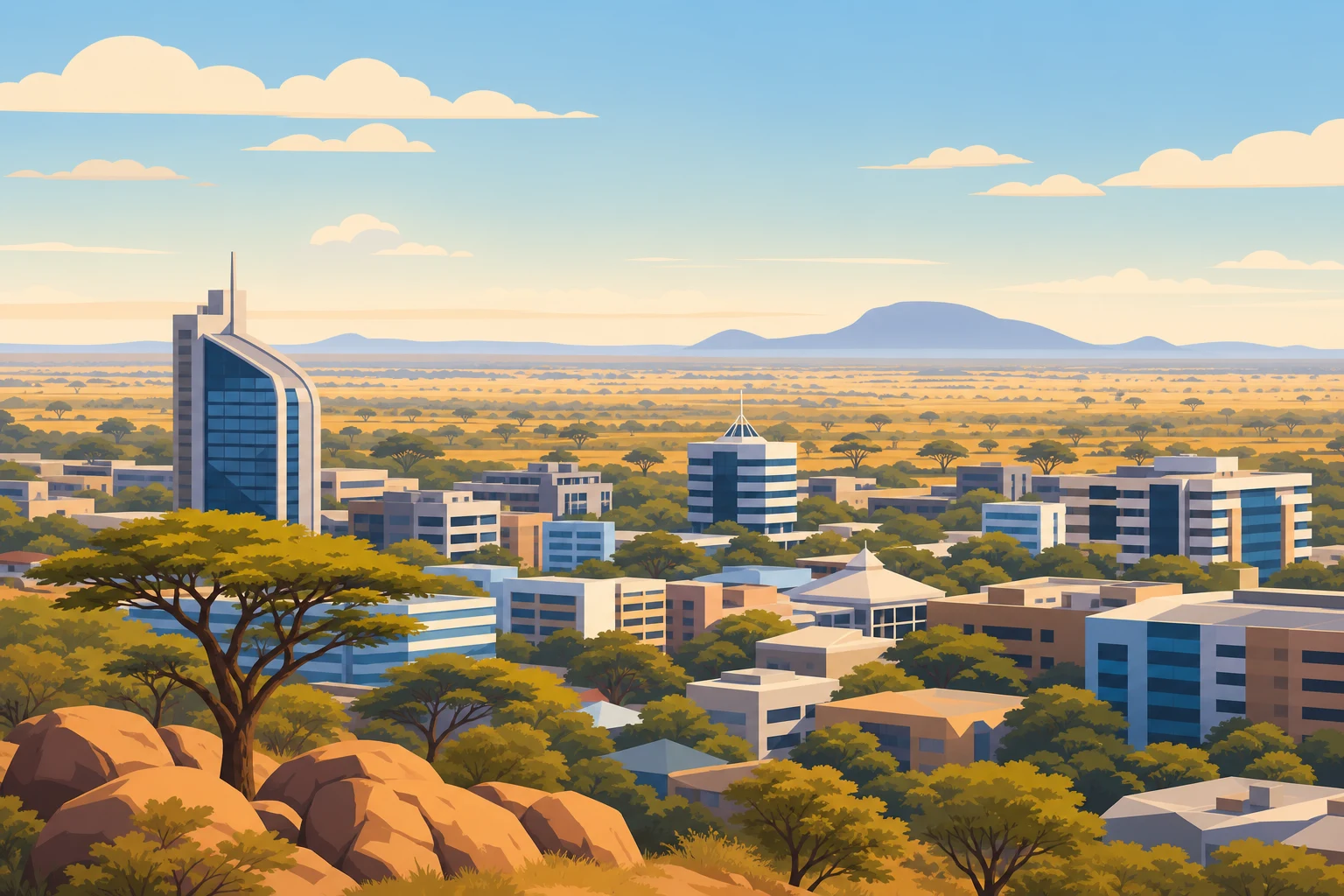
Gaborone
Botswana
Population: 232,000
Gaborone is the capital and largest city of Botswana, located in the southeastern corner of the country near the border with South Africa. It has grown rapidly since independence in 1966.
Landmarks: Three Dikgosi Monument, Gaborone Game Reserve, National Museum and Art Gallery
Fun Facts
- Gaborone is named after Chief Gaborone of the Tlokwa people who once inhabited the area.
- Botswana transformed from one of the poorest countries in Africa to an upper-middle-income nation thanks to diamond mining.
- The city has grown from a population of just 17,000 at independence in 1966 to over 230,000 today.
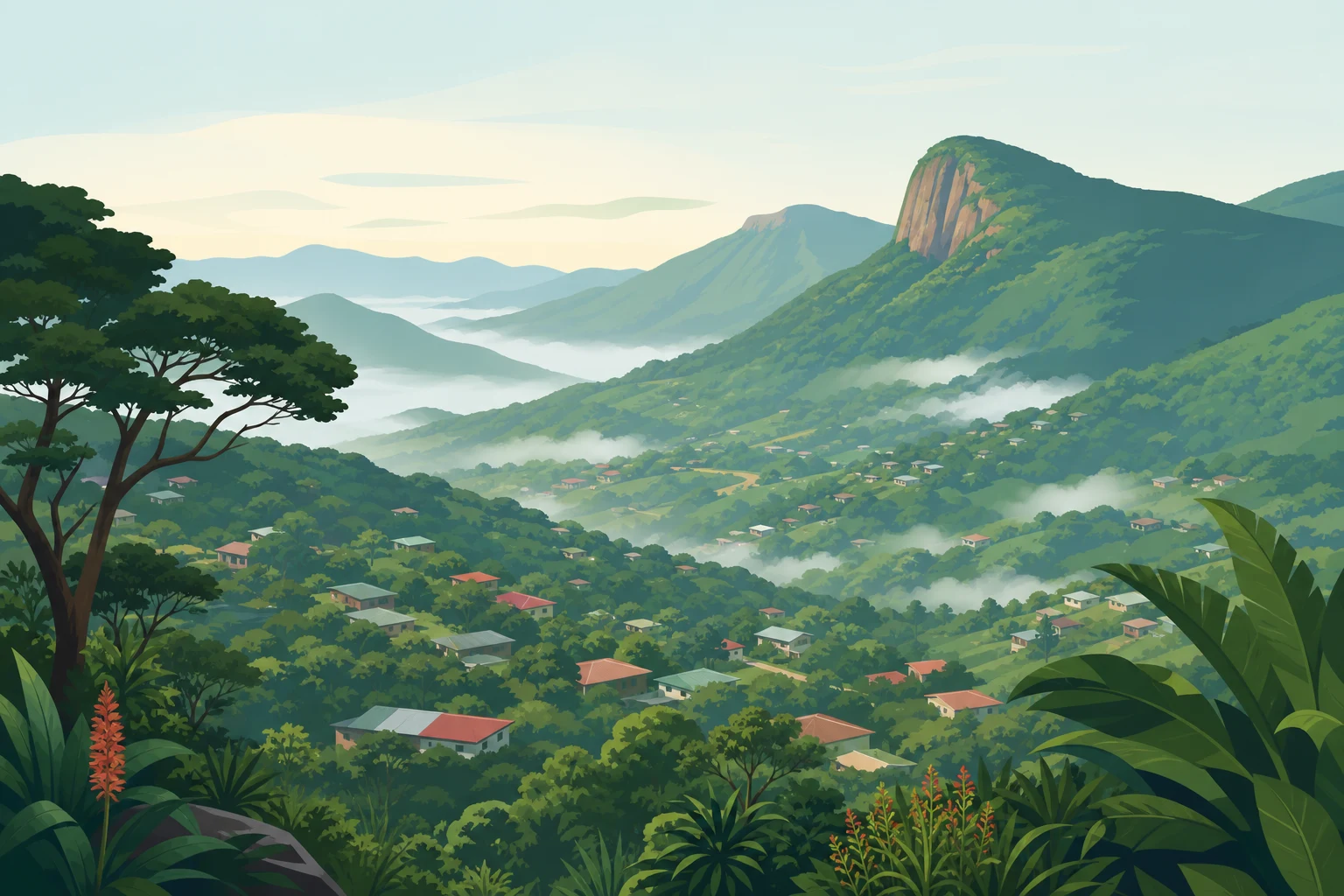
Mbabane
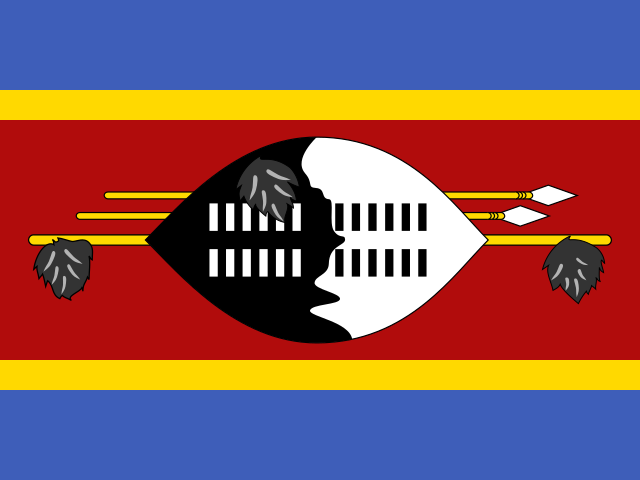
Eswatini
Population: 95,000
Mbabane is the administrative capital of Eswatini (formerly Swaziland), nestled in the Dlangeni Hills of the Highveld at an elevation of about 1,243 meters.
Landmarks: Sibebe Rock, Swazi Market, Mantenga Nature Reserve
Fun Facts
- Eswatini changed its name from Swaziland in 2018 to reflect the local Swazi language name for the country.
- Mbabane shares capital duties with Lobamba, which serves as the legislative and royal capital.
- Eswatini is one of the last absolute monarchies in the world, ruled by King Mswati III.
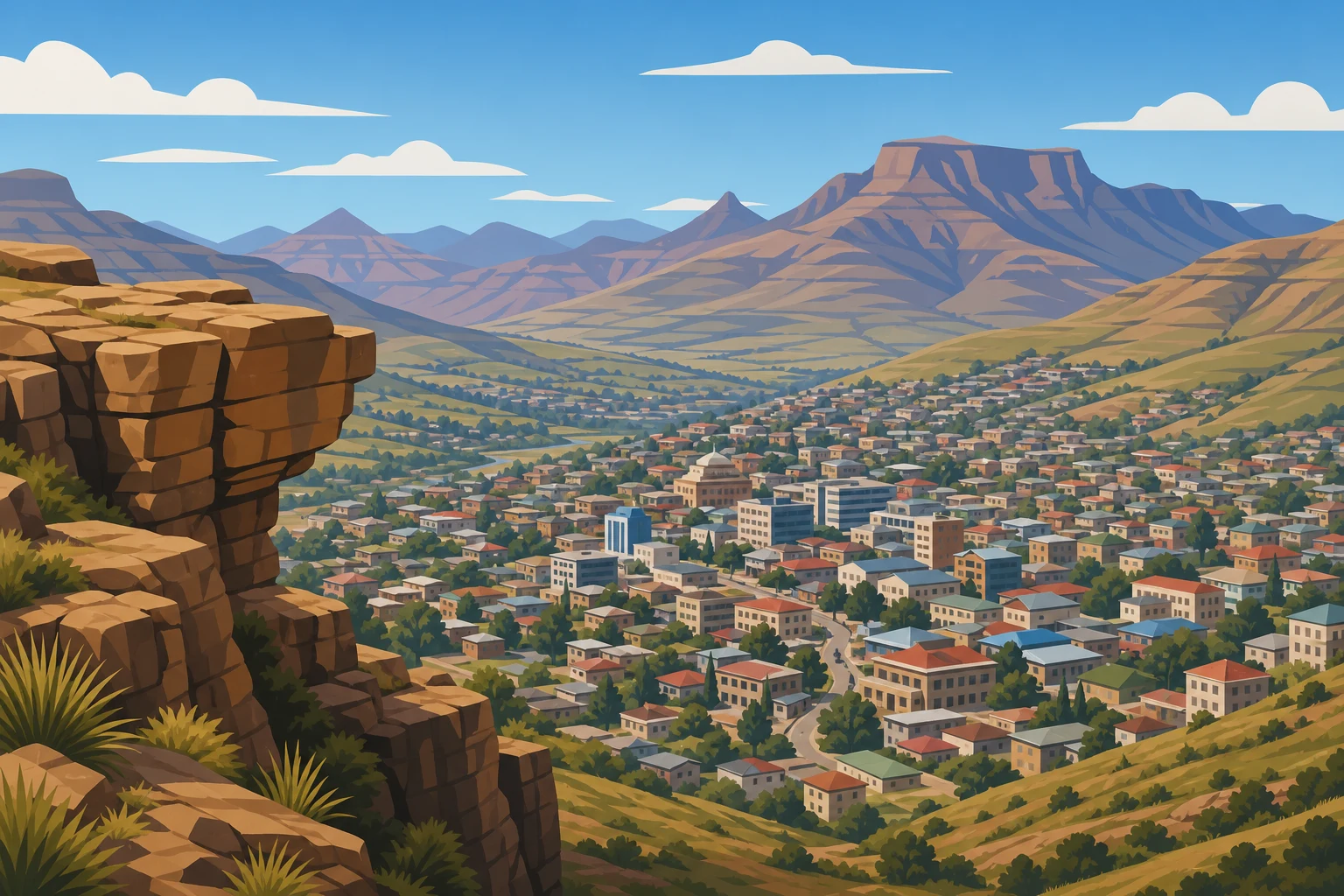
Maseru
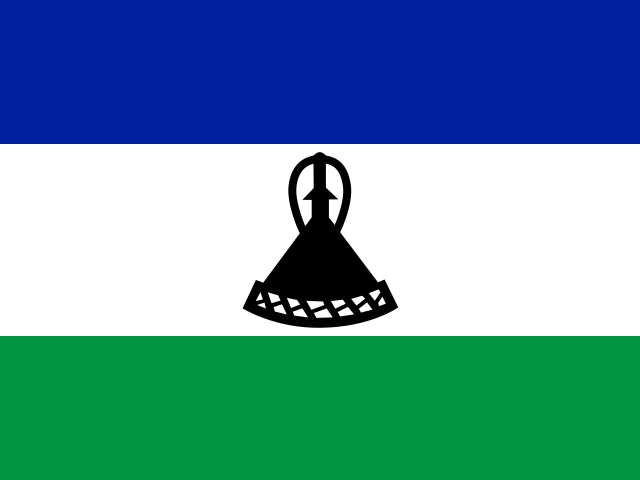
Lesotho
Population: 330,000
Maseru is the capital and largest city of Lesotho, located on the Caledon River on the country's western border with South Africa. It is the economic hub of this mountainous kingdom.
Landmarks: Royal Palace, Our Lady of Victories Cathedral, Thaba Bosiu
Fun Facts
- Lesotho is the only country in the world that lies entirely above 1,000 meters in elevation.
- Maseru means "place of the red sandstones" in the Sesotho language.
- Lesotho is completely surrounded by South Africa, making it one of only three countries entirely enclosed by another country.
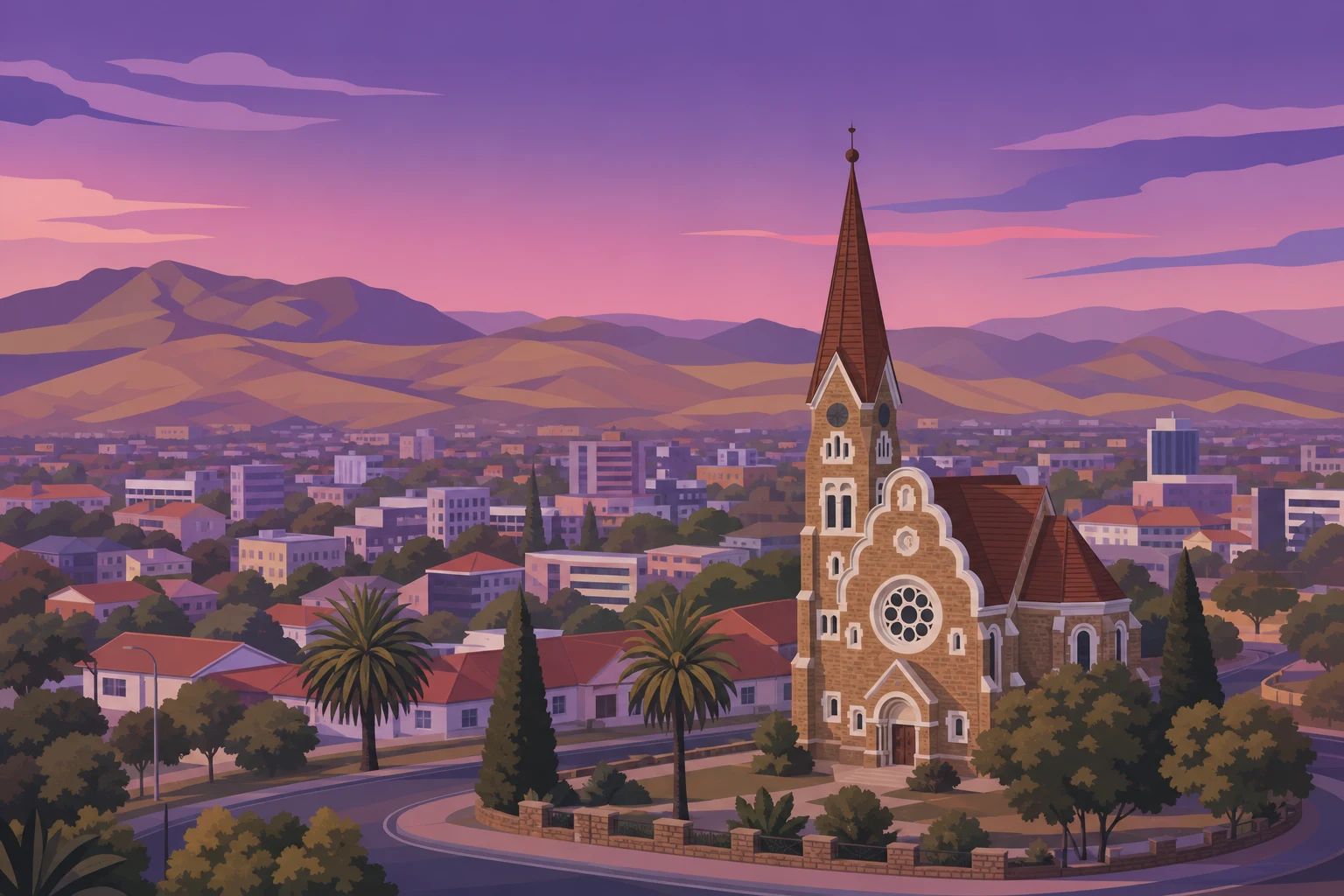
Windhoek
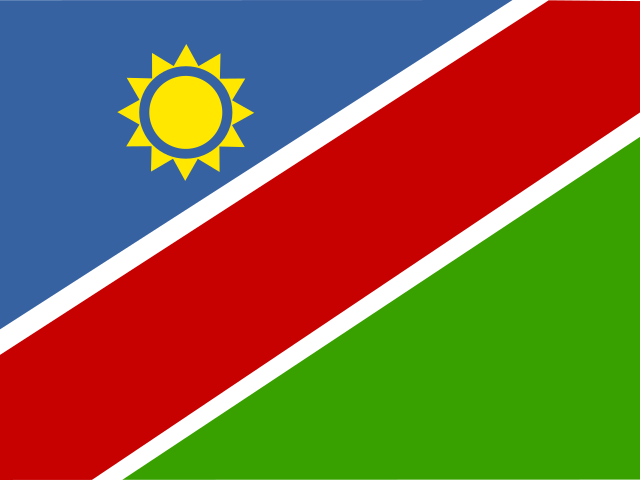
Namibia
Population: 431,000
Windhoek is the capital and largest city of Namibia, situated in the central highlands at an elevation of 1,700 meters. It blends German colonial architecture with modern African culture.
Landmarks: Christuskirche, Independence Memorial Museum, Tintenpalast (Parliament)
Fun Facts
- Windhoek's name comes from the Afrikaans word for "windy corner" due to the hot wind funneled through the surrounding mountains.
- Namibia was a German colony until 1915, and German architectural influence is still visible throughout Windhoek.
- Windhoek has its own brewery, Windhoek Lager, which follows the German Reinheitsgebot (beer purity law).
Pretoria
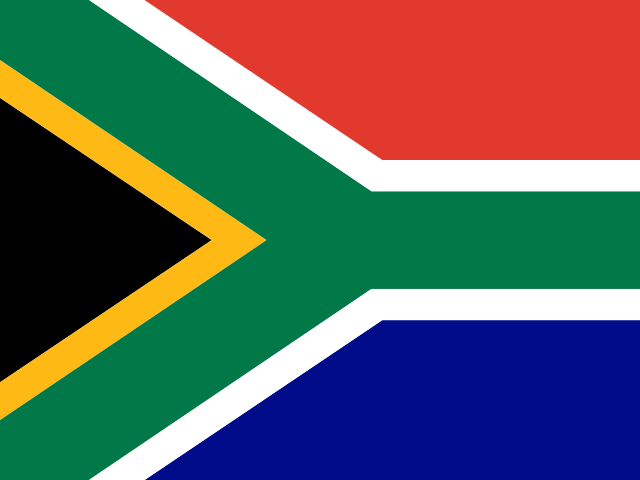
South Africa
Population: 2.6 million
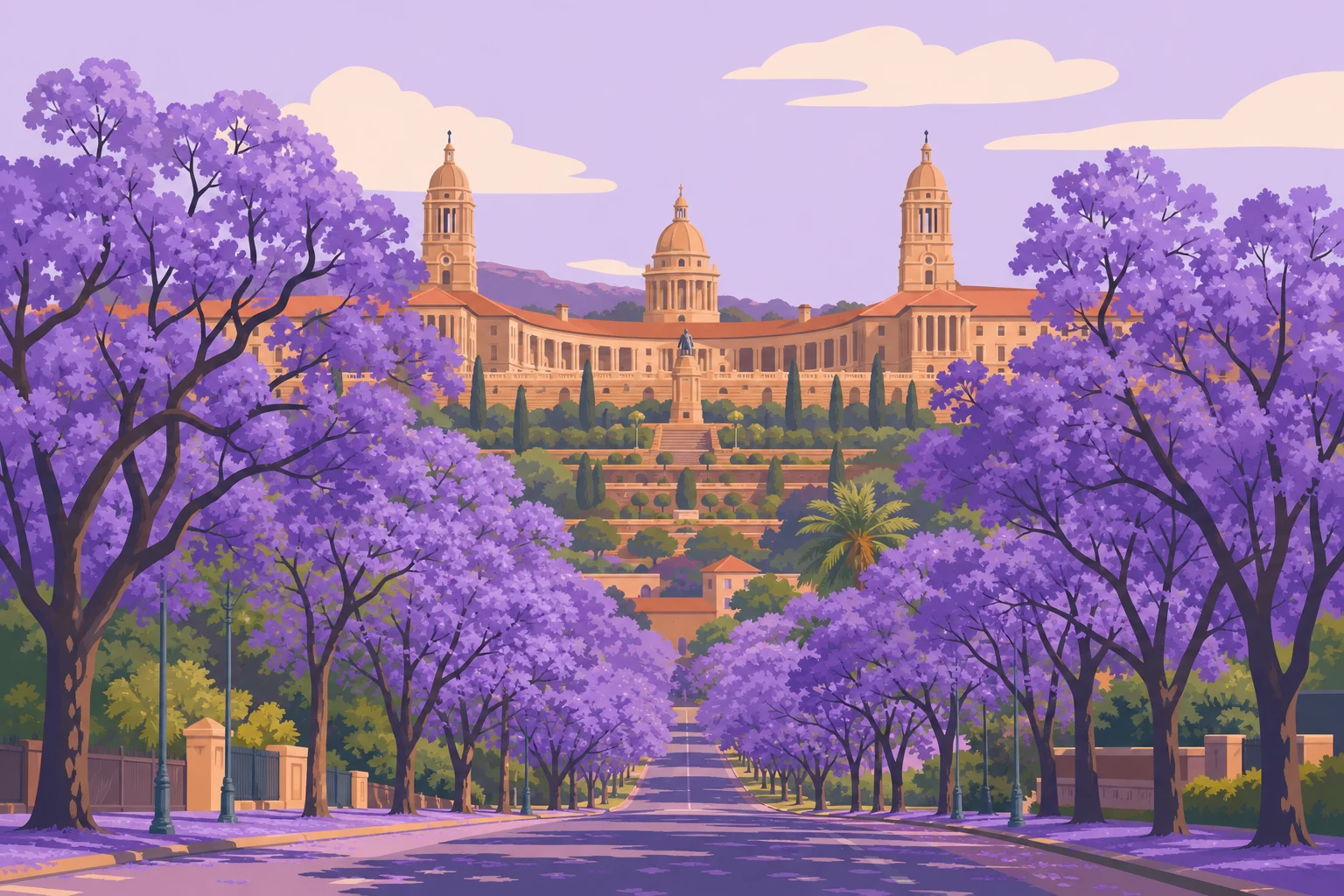
Pretoria is the executive (administrative) capital of South Africa, located in the northern part of Gauteng province. Known as the "Jacaranda City" for its thousands of purple-flowering trees.
Landmarks: Union Buildings, Voortrekker Monument, Church Square
Fun Facts
- South Africa has three capital cities: Pretoria (executive), Cape Town (legislative), and Bloemfontein (judicial).
- Pretoria is nicknamed the "Jacaranda City" because over 70,000 jacaranda trees bloom purple every October.
- The Union Buildings in Pretoria, designed by Sir Herbert Baker, serve as the official seat of the South African government.
Quick Reference
Test Your Knowledge
How well do you know these capitals? Find out here.
Practice with Games
Ready to test what you learned? Jump into a game and put it into practice.
About Southern African Capitals
Southern Africa is a region of extraordinary geographic and cultural diversity, home to vast deserts, lush savannas, towering mountains, and dramatic coastlines. The five nations covered in this lesson - Botswana, Eswatini, Lesotho, Namibia, and South Africa - showcase the region's rich tapestry of indigenous cultures, colonial histories, and modern development. From Pretoria's jacaranda-lined avenues to the highland kingdom of Lesotho, these capitals offer windows into some of Africa's most fascinating stories of resilience and transformation.
Frequently Asked Questions
Why does South Africa have three capitals?
South Africa has three capitals as a compromise from the formation of the Union of South Africa in 1910: Pretoria (executive), Cape Town (legislative/parliament), and Bloemfontein (judicial/Supreme Court). This distributed power among the former colonies.
What is the difference between Mbabane and Lobamba in Eswatini?
Mbabane serves as the administrative capital where government offices are located, while Lobamba is the traditional, legislative, and royal capital where the Parliament and the Queen Mother's royal residence are situated.
Why is Lesotho completely surrounded by South Africa?
Lesotho exists as an enclave because the Basotho people, led by King Moshoeshoe I, sought British protection in the 1860s to avoid being absorbed by Boer settlers. When South Africa unified in 1910, Lesotho (then Basutoland) remained a separate British protectorate and gained independence in 1966.