Hovedstæder i Caribien
Caribien er et bånd af ø-nationer mellem Nord- og Sydamerika, formet af kolonihistorie, plantageøkonomi og i dag turisme. Hovedstæderne spejler afrikansk, europæisk og indfødt kulturarv.
Studér hovedstæderne
St. John's
Antigua og Barbuda
Befolkning: 22,000
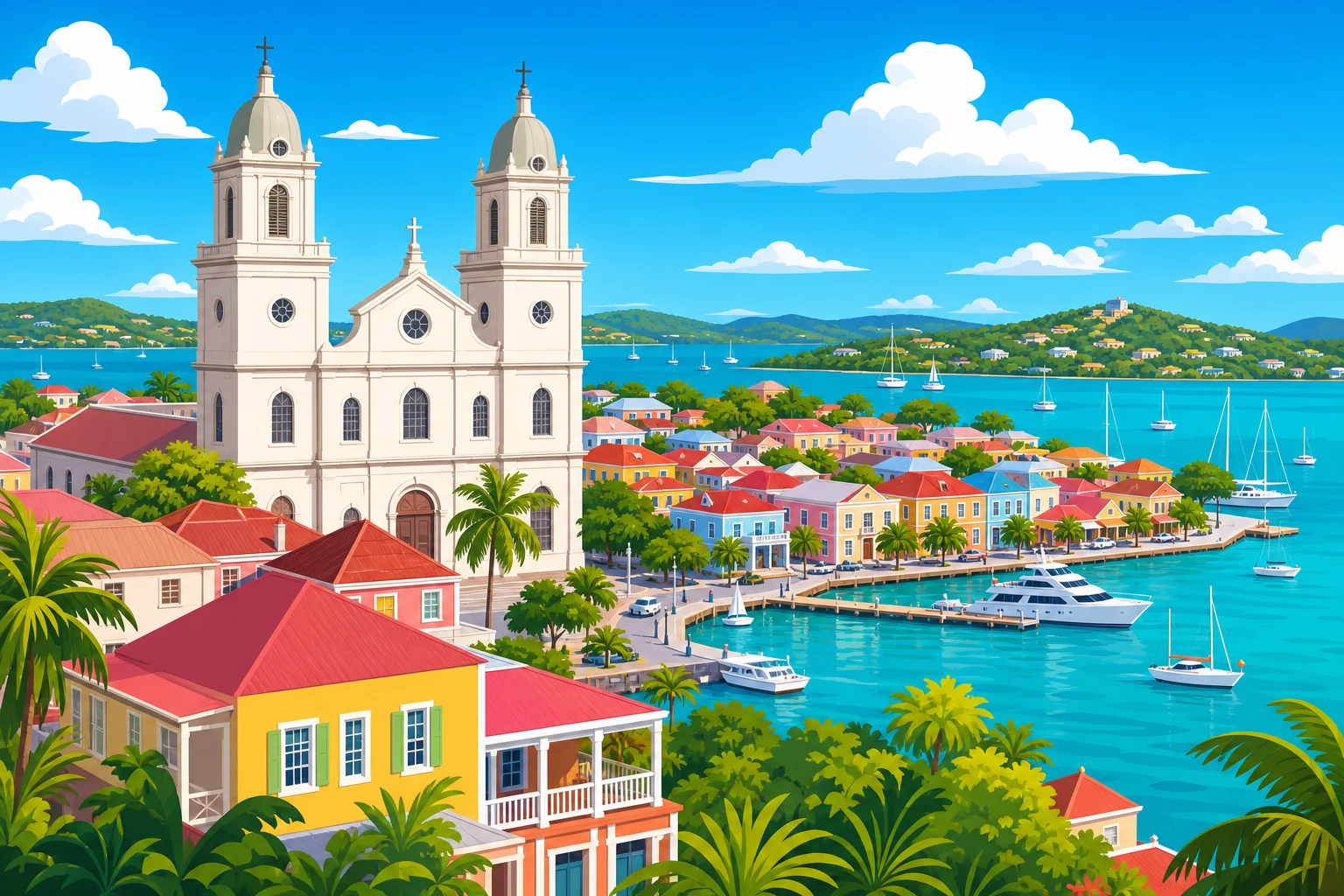
St. John's is the capital of Antigua and Barbuda, located on the northwest coast of Antigua island. The colourful harbour town is the commercial centre of the twin-island nation and a popular cruise ship destination.
Vartegn: St. John's Cathedral, Heritage Quay, Fort James
Sjove fakta
- St. John's Cathedral, with its distinctive twin towers, has been rebuilt twice after earthquakes - the current structure dates from 1845.
- Antigua has 365 beaches - one for every day of the year - and St. John's is the gateway to many of them.
- The city's Heritage Quay and Redcliffe Quay were once the centre of the Caribbean sugar trade.
Nassau
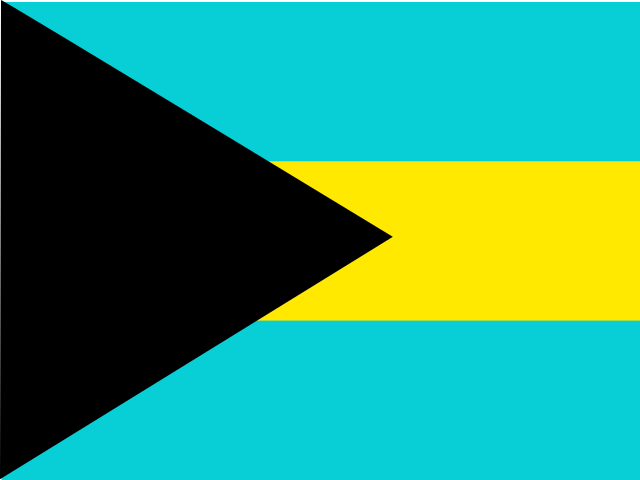
Bahamas
Befolkning: 275,000
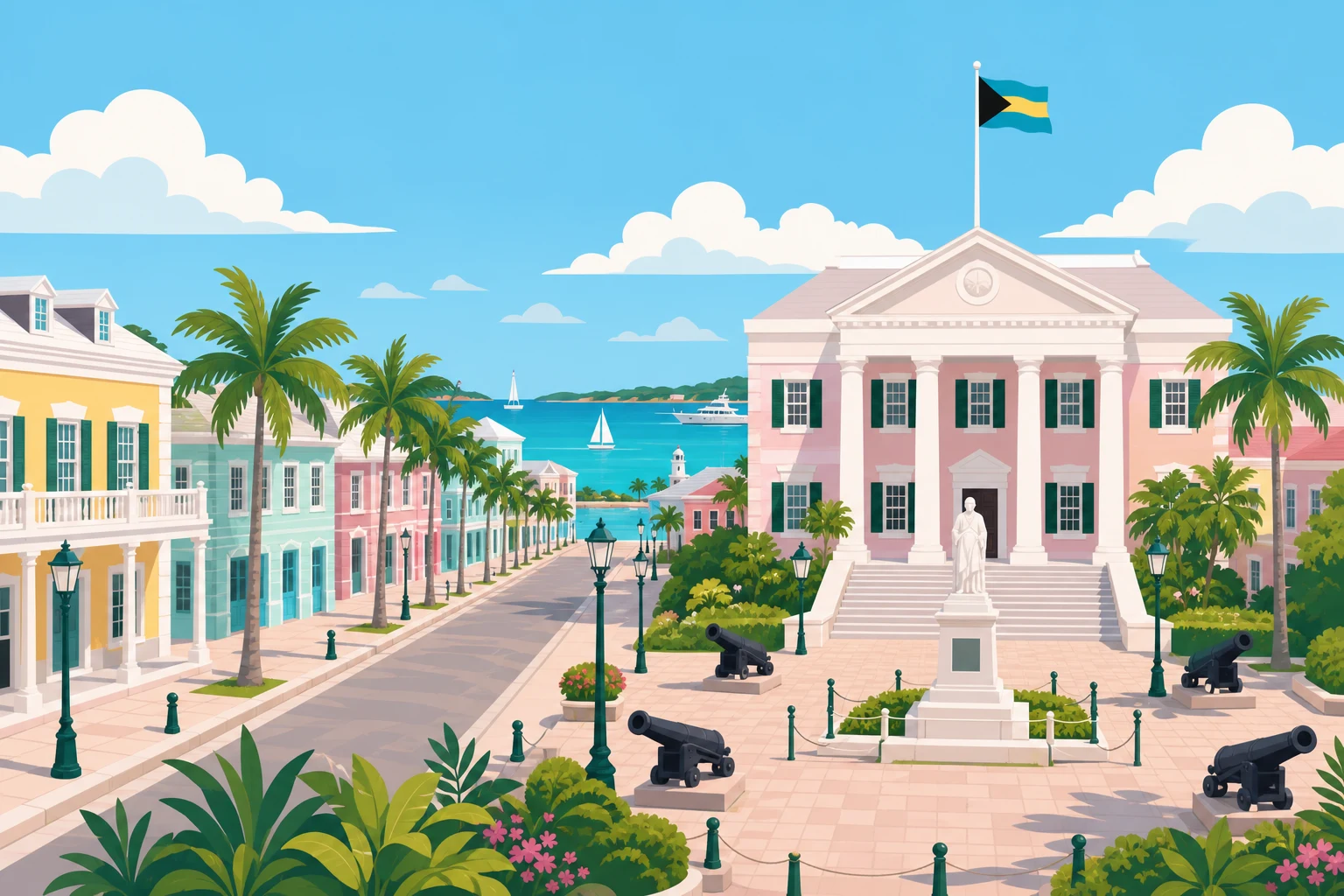
Nassau is the capital of the Bahamas, located on the island of New Providence. The city combines colonial British architecture with a vibrant Caribbean atmosphere and serves as one of the busiest cruise ports in the world.
Vartegn: Fort Charlotte, Queen's Staircase, Parliament Square
Sjove fakta
- Nassau was originally named Charles Town but was renamed in 1695 in honour of William III of England, who was from the House of Nassau.
- Pirates like Blackbeard once used Nassau as their base, and the city has a dedicated Pirates of Nassau museum.
- Over 3.5 million cruise ship passengers visit Nassau each year, making tourism the backbone of the economy.
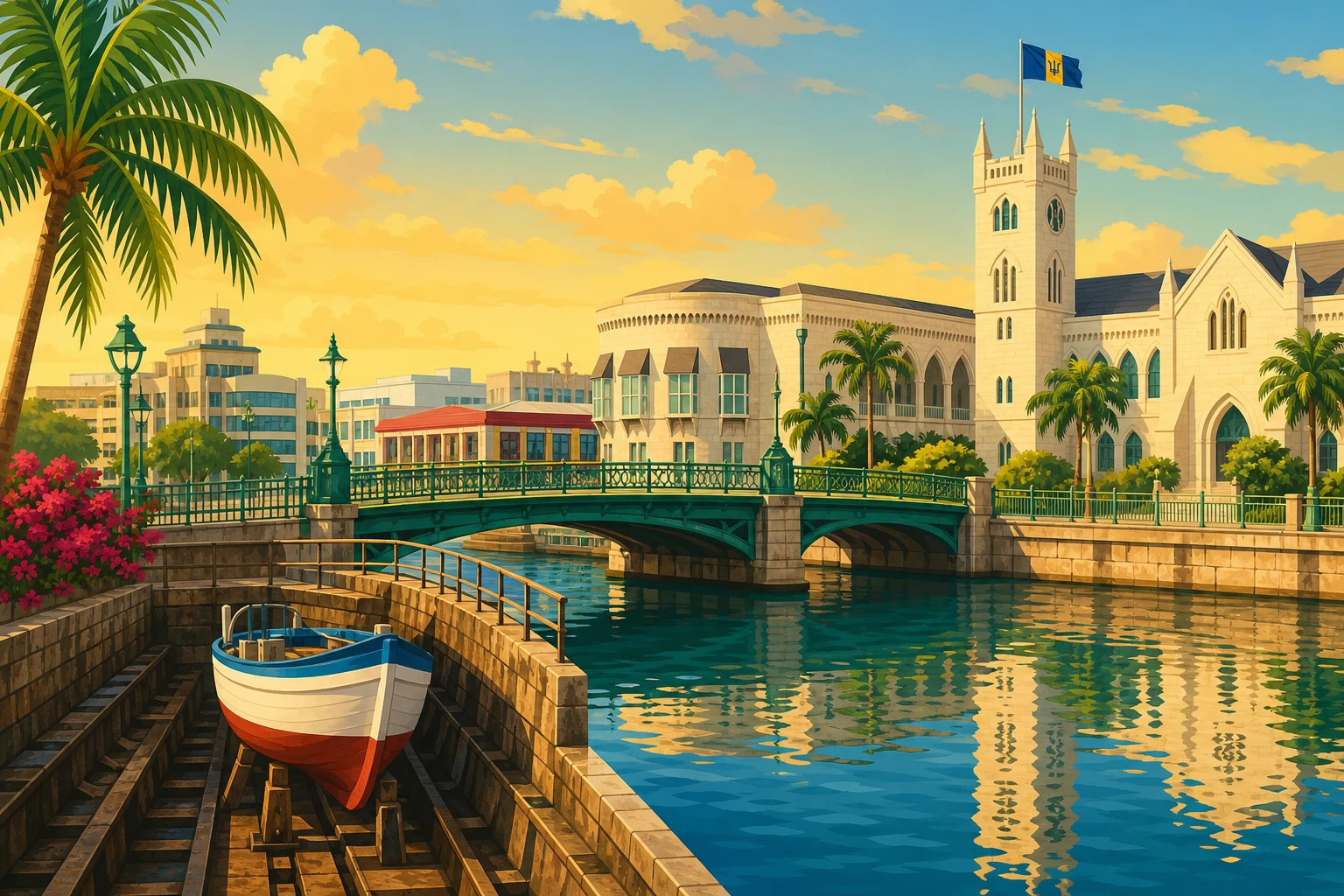
Bridgetown
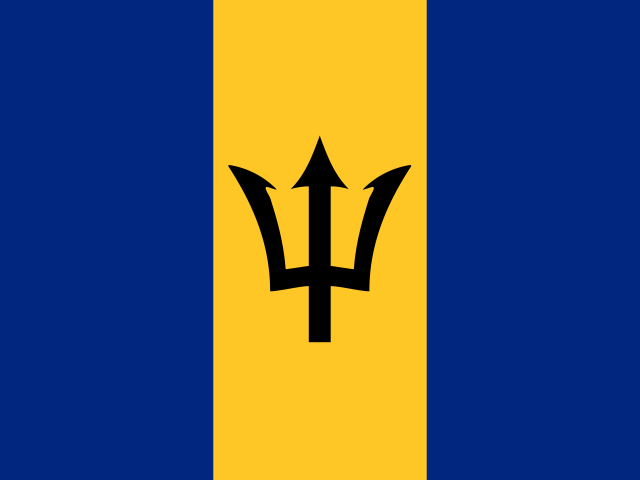
Barbados
Befolkning: 110,000
Bridgetown is the capital of Barbados, located on the southwestern coast of the island. The historic city centre and its garrison are a UNESCO World Heritage Site, reflecting the city's importance in British colonial maritime history.
Vartegn: Barbados Parliament Buildings, The Garrison, Chamberlain Bridge
Sjove fakta
- Bridgetown and its Garrison became a UNESCO World Heritage Site in 2011, recognized for its outstanding colonial architecture.
- The city is named after an indigenous bridge that crossed the swampy Careenage harbour when English settlers arrived in 1628.
- Barbados is the birthplace of rum, and the nearby Mount Gay distillery has been producing rum since 1703.
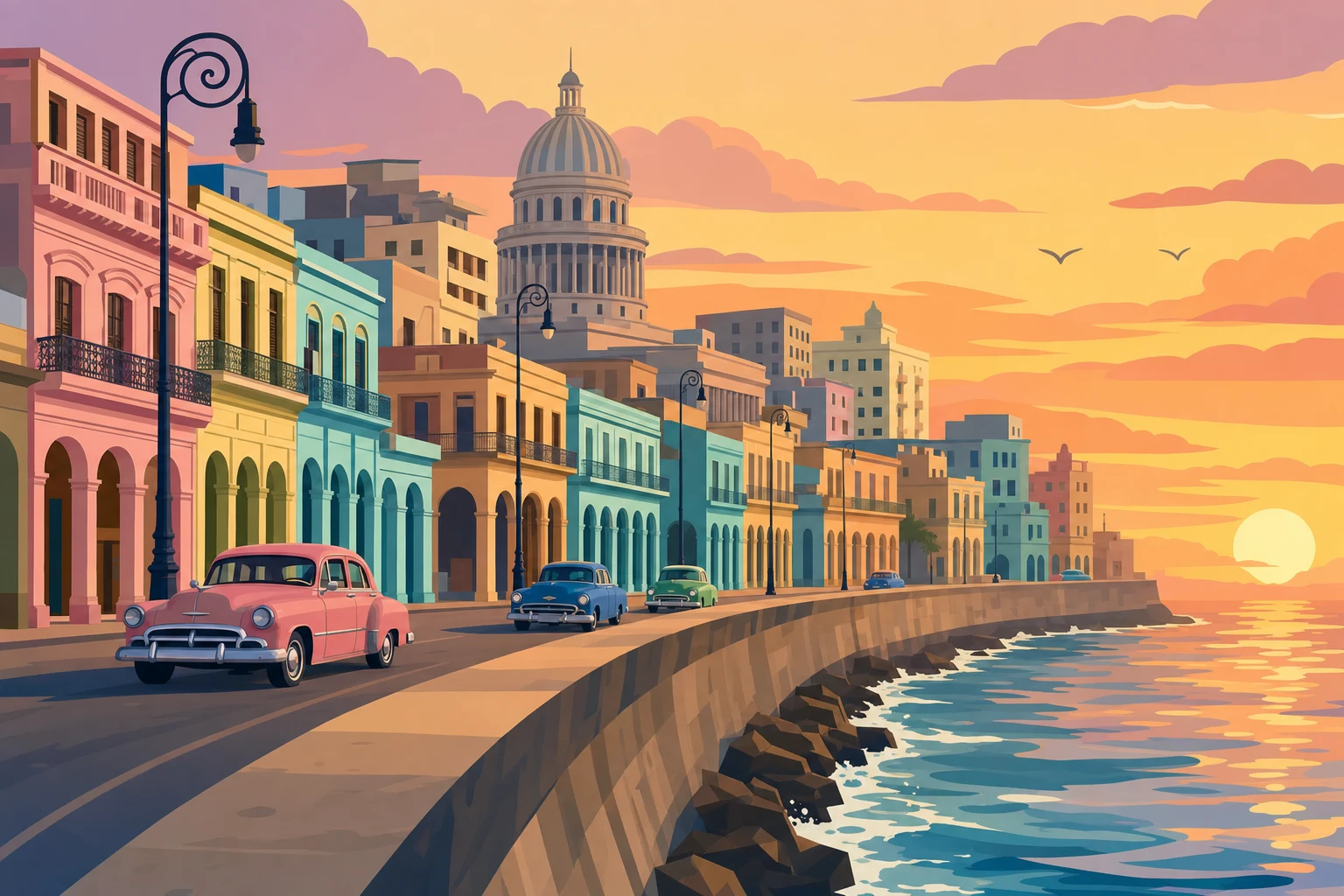
Havana
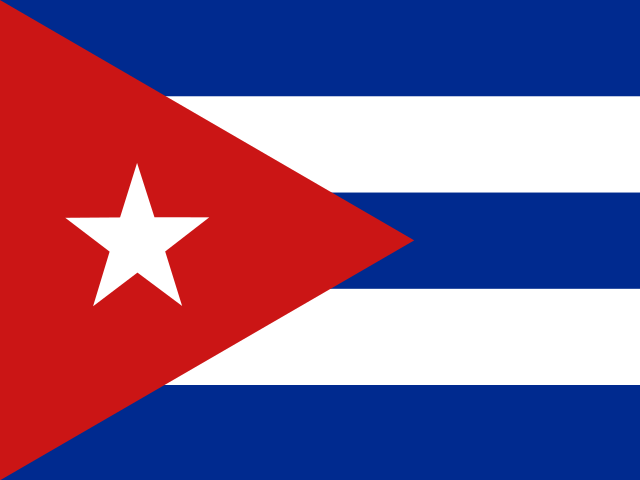
Cuba
Befolkning: 2.1 million
Havana is the capital of Cuba and the largest city in the Caribbean. Famous for its well-preserved Spanish colonial architecture, classic American cars, vibrant music scene, and the Malecon waterfront promenade along the coast.
Vartegn: El Capitolio, Malecon, Plaza de la Catedral
Sjove fakta
- Old Havana (Habana Vieja) is a UNESCO World Heritage Site with over 900 historically significant buildings spanning five centuries.
- Havana is famous for its vintage American cars from the 1950s, still in daily use due to decades of trade embargoes.
- The city's El Floridita bar claims to be the birthplace of the daiquiri and was a favourite haunt of Ernest Hemingway.
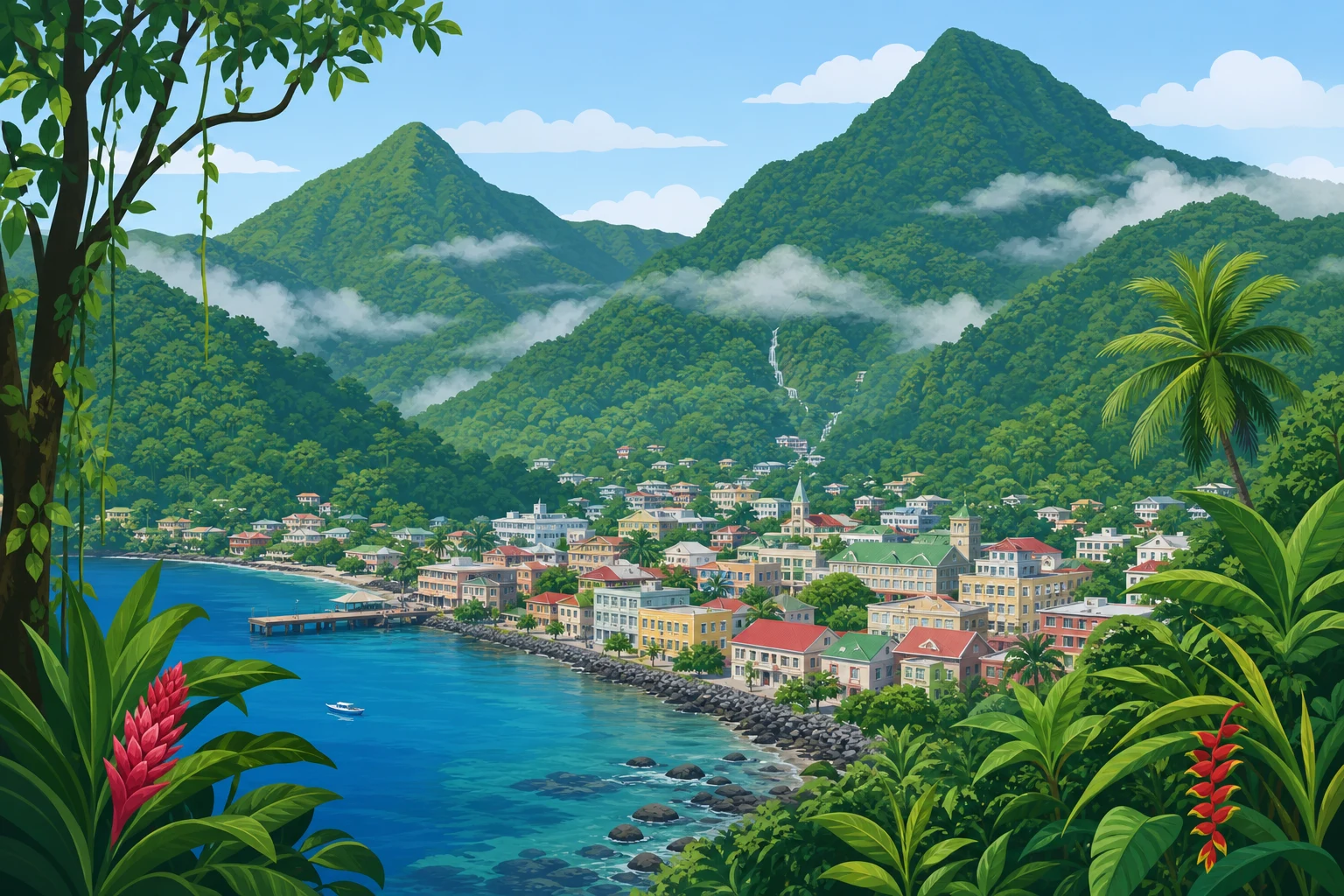
Roseau
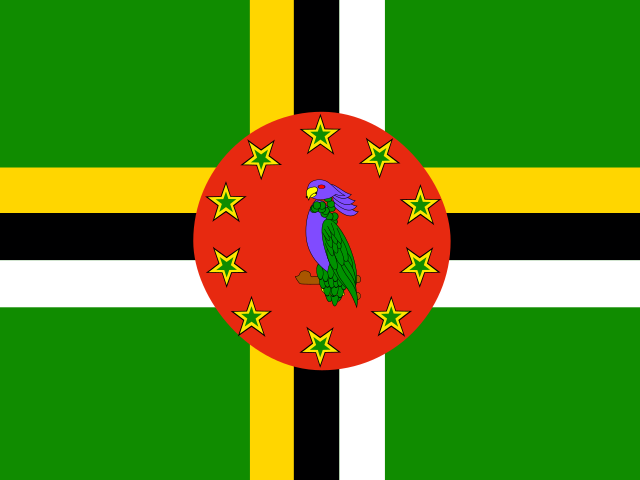
Dominica
Befolkning: 15,000
Roseau is the capital of Dominica, nestled between the Caribbean Sea and the lush volcanic mountains of the "Nature Isle." The small city is the oldest and largest settlement on the island, founded by the French in the 18th century.
Vartegn: Dominica Museum, Roseau Cathedral, Old Market Square
Sjove fakta
- Dominica is known as the "Nature Isle of the Caribbean" and Roseau serves as the gateway to nine active volcanoes and the world's second-largest hot spring.
- Roseau is one of the smallest capital cities in the Caribbean, with a population of only about 15,000.
- The city's name comes from the French word for "reeds," referring to the river reeds that grew along the banks where the city was founded.
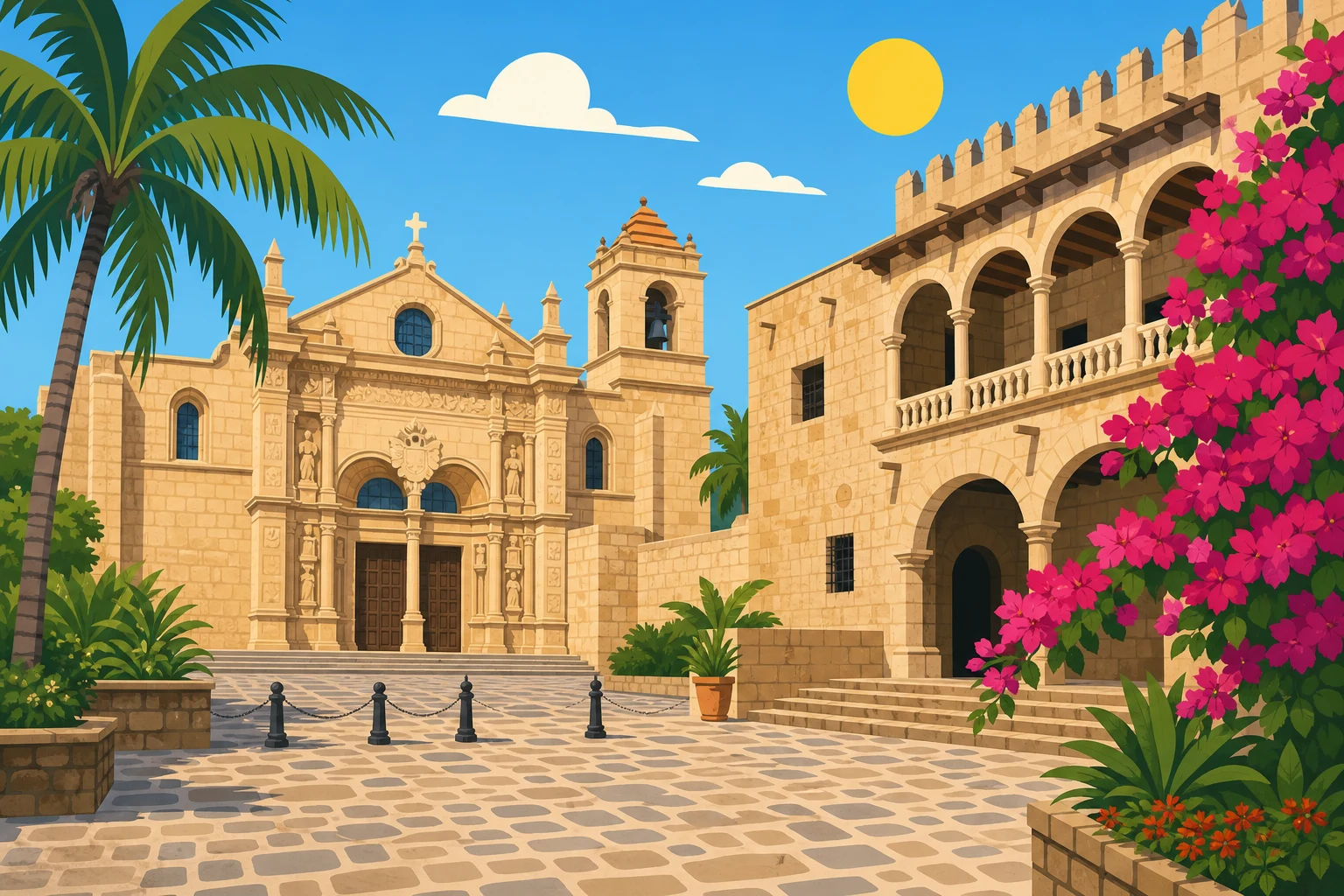
Santo Domingo
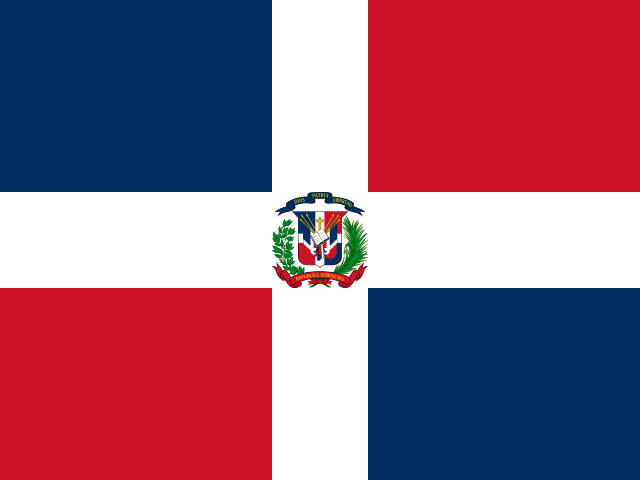
Den Dominikanske Republik
Befolkning: 3.4 million
Santo Domingo is the capital of the Dominican Republic and the oldest continuously inhabited European settlement in the Americas, founded by Bartholomew Columbus in 1496. The Colonial Zone is a UNESCO World Heritage Site with many "firsts" of the New World.
Vartegn: Colonial Zone, Alcazar de Colon, Cathedral of Santa Maria la Menor
Sjove fakta
- Santo Domingo's Colonial Zone contains the first cathedral, first hospital, first university, and first paved road built by Europeans in the Americas.
- The city was founded in 1496 by Bartholomew Columbus, brother of Christopher Columbus, making it over 500 years old.
- The Columbus Lighthouse (Faro a Colon) projects a cross-shaped beam of light visible for miles and reportedly contains Columbus's remains.
St. George's
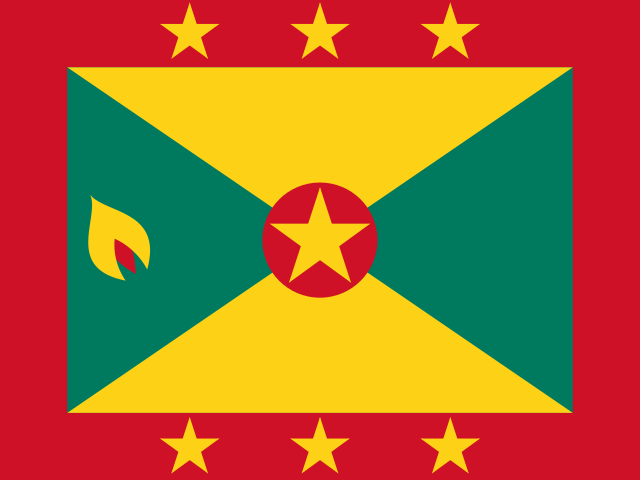
Grenada
Befolkning: 33,000
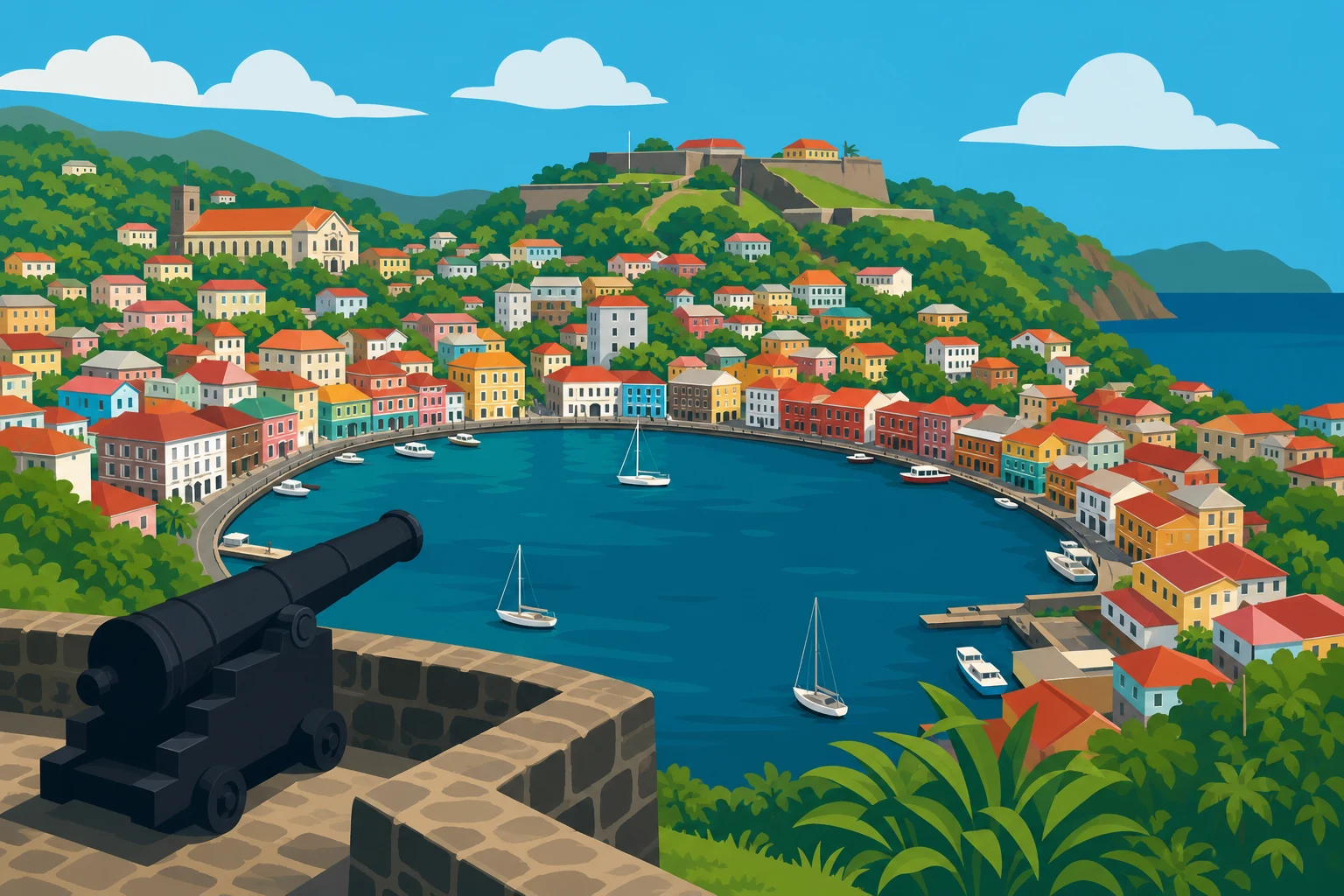
St. George's is the capital of Grenada, dramatically set around a horseshoe-shaped harbour surrounded by a volcanic crater ridge. Often called one of the most picturesque capitals in the Caribbean, it is known for colourful hillside buildings and the fragrance of nutmeg and spices.
Vartegn: Fort George, The Carenage, St. George's Market Square
Sjove fakta
- Grenada is known as the "Spice Isle" and St. George's is a centre for nutmeg, mace, cinnamon, and cocoa exports.
- The city's harbour, The Carenage, is a natural crater that provides one of the safest anchorages in the Caribbean.
- Fort George, built by the French in 1705, offers panoramic views of the city and still has its original cannons in place.
Port-au-Prince
Haiti
Befolkning: 2.8 million
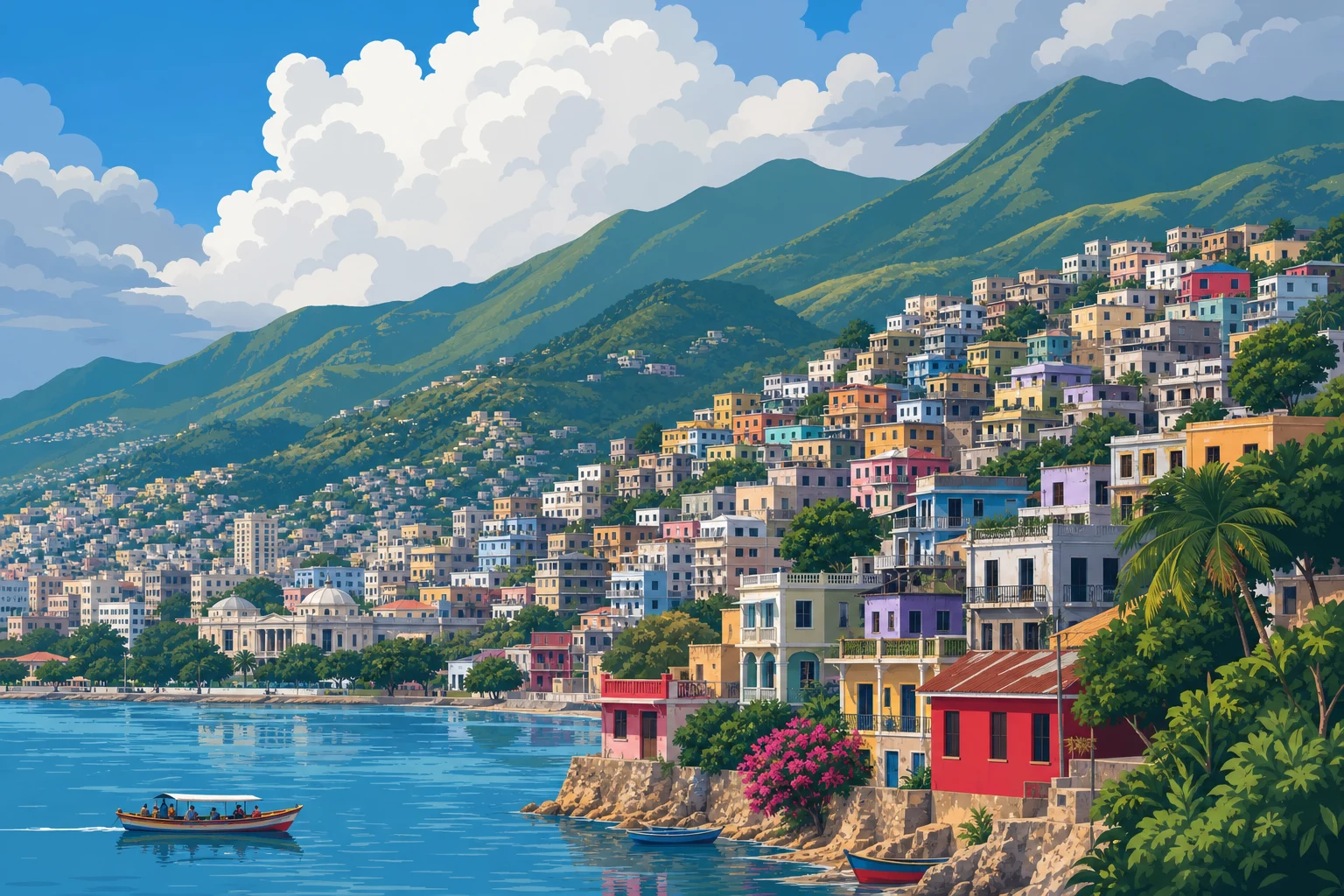
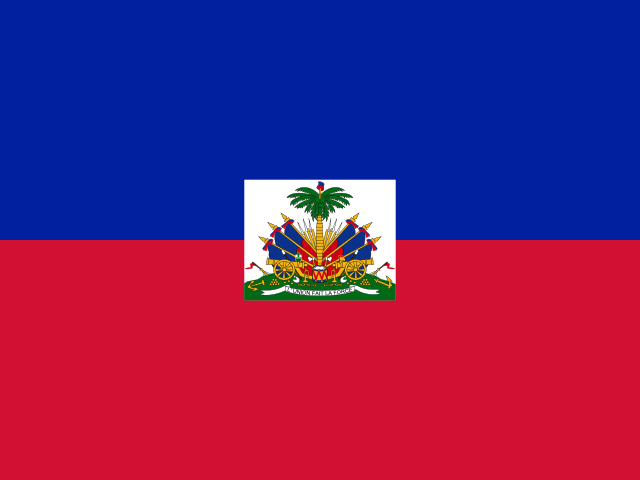
Port-au-Prince is the capital of Haiti, situated on the Gulf of Gonave on a natural harbour. The city climbs steep hillsides from the waterfront and is the political, economic, and cultural centre of Haiti, the first Black republic in the world.
Vartegn: Iron Market, National Palace ruins, Cathedral of Our Lady of the Assumption
Sjove fakta
- Haiti was the first country in Latin America and the Caribbean to gain independence (1804) and the first to abolish slavery through revolution.
- Port-au-Prince was devastated by a catastrophic 7.0 magnitude earthquake in 2010 that killed over 200,000 people.
- The city's Iron Market (Marche en Fer) was designed by Gustave Eiffel's workshop and shipped from France in the 1890s.
Kingston
Jamaica
Befolkning: 1.2 million
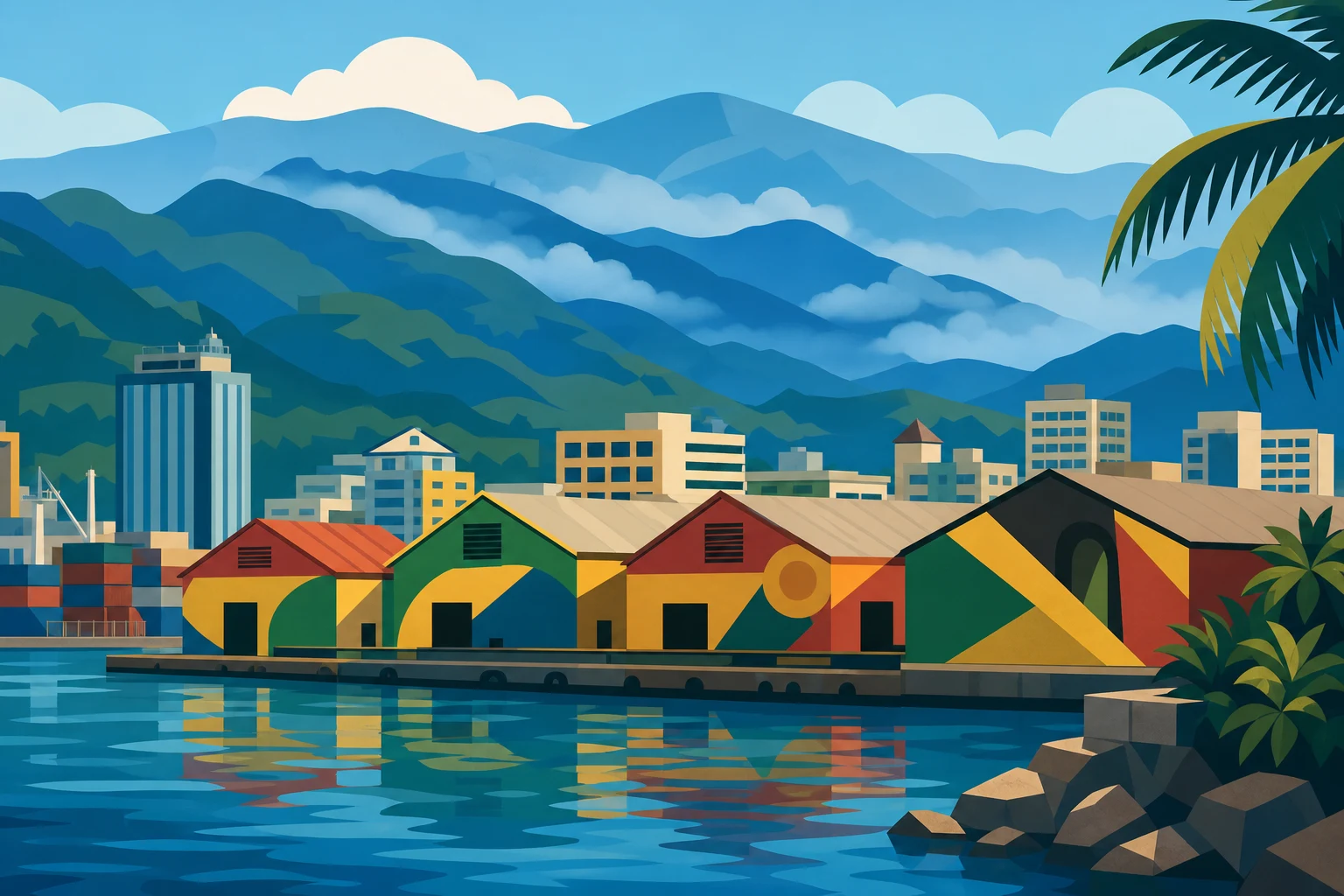
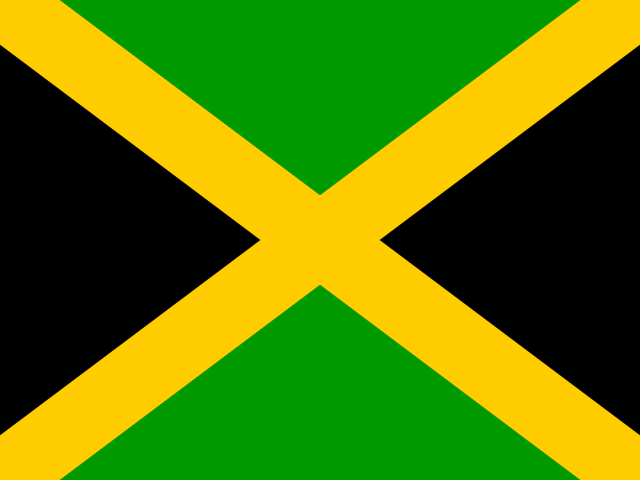
Kingston is the capital of Jamaica, located on the southeastern coast facing the world's seventh-largest natural harbour. The city is a cultural powerhouse and the birthplace of reggae, ska, and dancehall music.
Vartegn: Bob Marley Museum, Devon House, Port Royal
Sjove fakta
- Kingston is the birthplace of reggae music and home to the Bob Marley Museum, set in Marley's former residence on Hope Road.
- Kingston Harbour is the seventh-largest natural harbour in the world, protected by the Palisadoes sand spit.
- Port Royal, now part of greater Kingston, was once called "the wickedest city on Earth" when it served as a pirate haven in the 17th century.
Basseterre
Saint Kitts og Nevis
Befolkning: 14,000
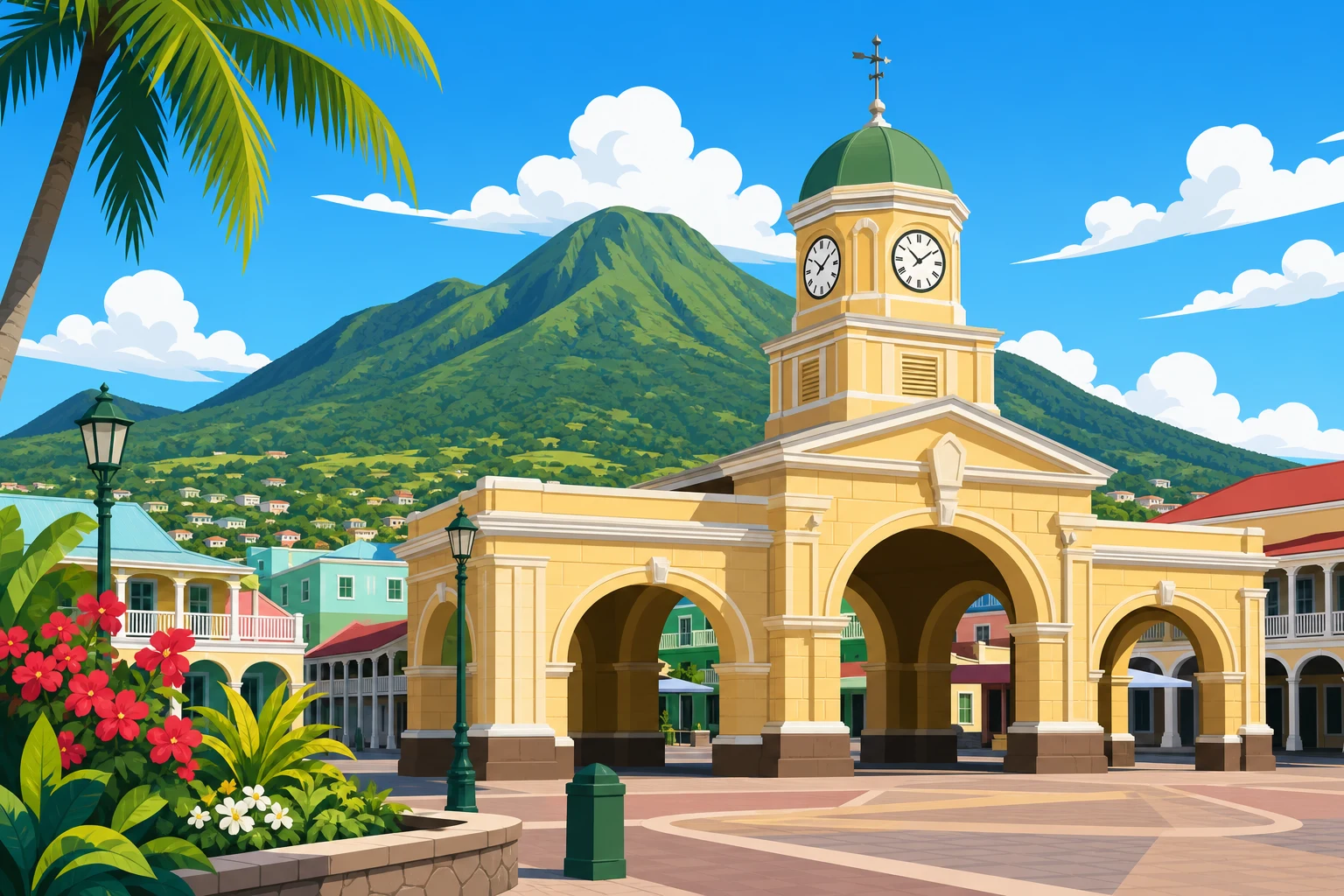
Basseterre is the capital of Saint Kitts and Nevis, located on the southwestern coast of Saint Kitts island. Founded by the French in 1627, it is one of the oldest towns in the Eastern Caribbean and the smallest capital in the Americas by area.
Vartegn: Brimstone Hill Fortress, Independence Square, Berkeley Memorial Clock
Sjove fakta
- Saint Kitts and Nevis is the smallest sovereign state in the Western Hemisphere, both in area and population.
- Basseterre means "low ground" in French, referring to its flat coastal location beneath the surrounding volcanic mountains.
- The Brimstone Hill Fortress near Basseterre is a UNESCO World Heritage Site and one of the best-preserved military fortifications in the Americas.
Castries
Saint Lucia
Befolkning: 22,000
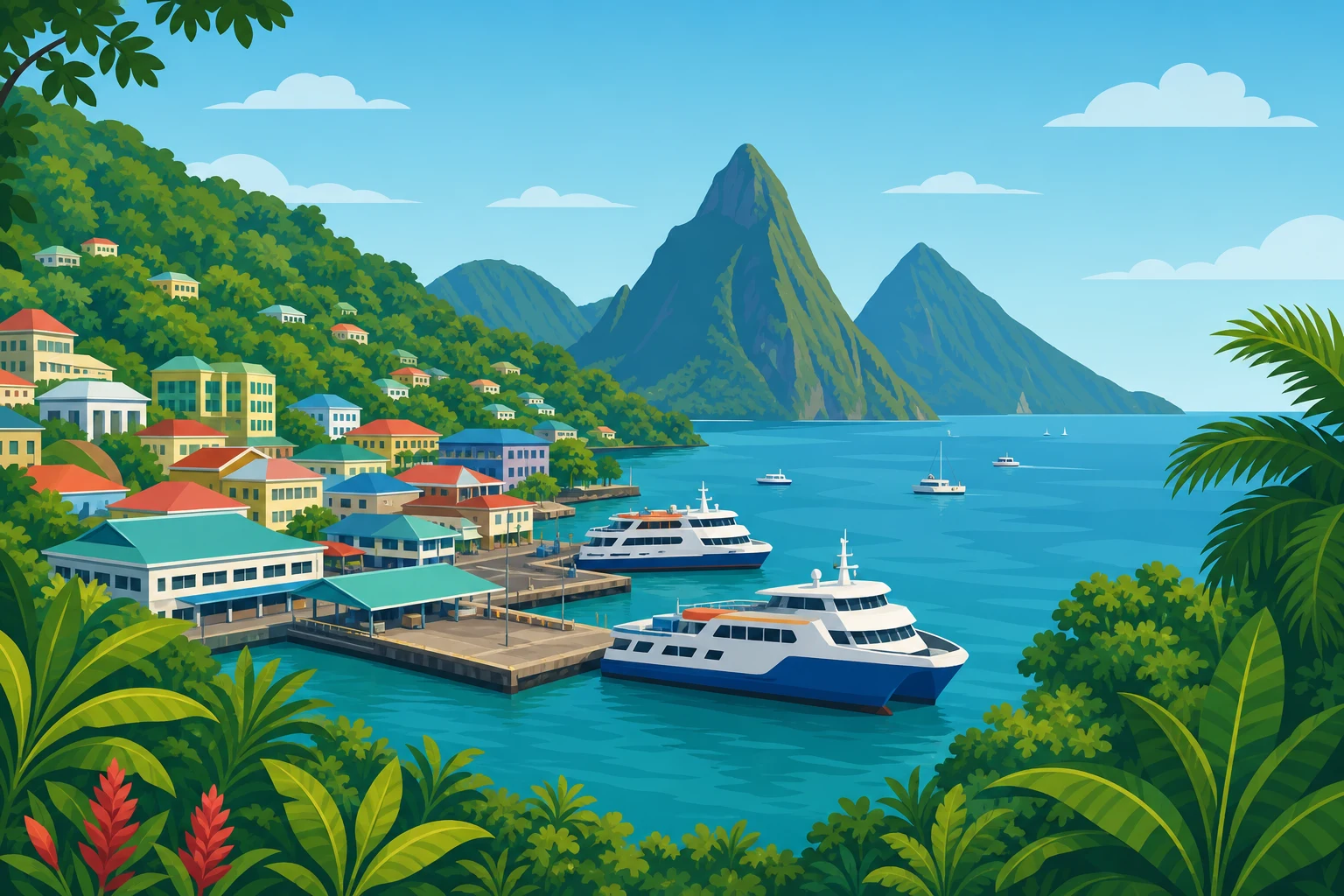
Castries is the capital of Saint Lucia, nestled in a sheltered harbour on the northwestern coast of the island. The city serves as the main port and commercial centre, with the iconic Pitons volcanic peaks visible in the distance.
Vartegn: Cathedral of the Immaculate Conception, Derek Walcott Square, La Place Carenage
Sjove fakta
- Saint Lucia is the only country in the world named after a woman - Saint Lucy of Syracuse.
- Castries has been destroyed by fire four times in its history, most recently in 1948, which is why most buildings are relatively modern.
- The city was originally named Carenage by the French, and was renamed Castries after the Marquis de Castries, a French naval minister.
Kingstown
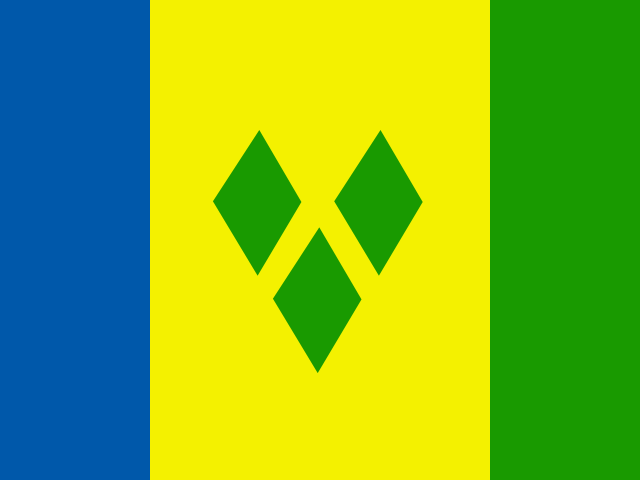
Saint Vincent og Grenadinerne
Befolkning: 16,000
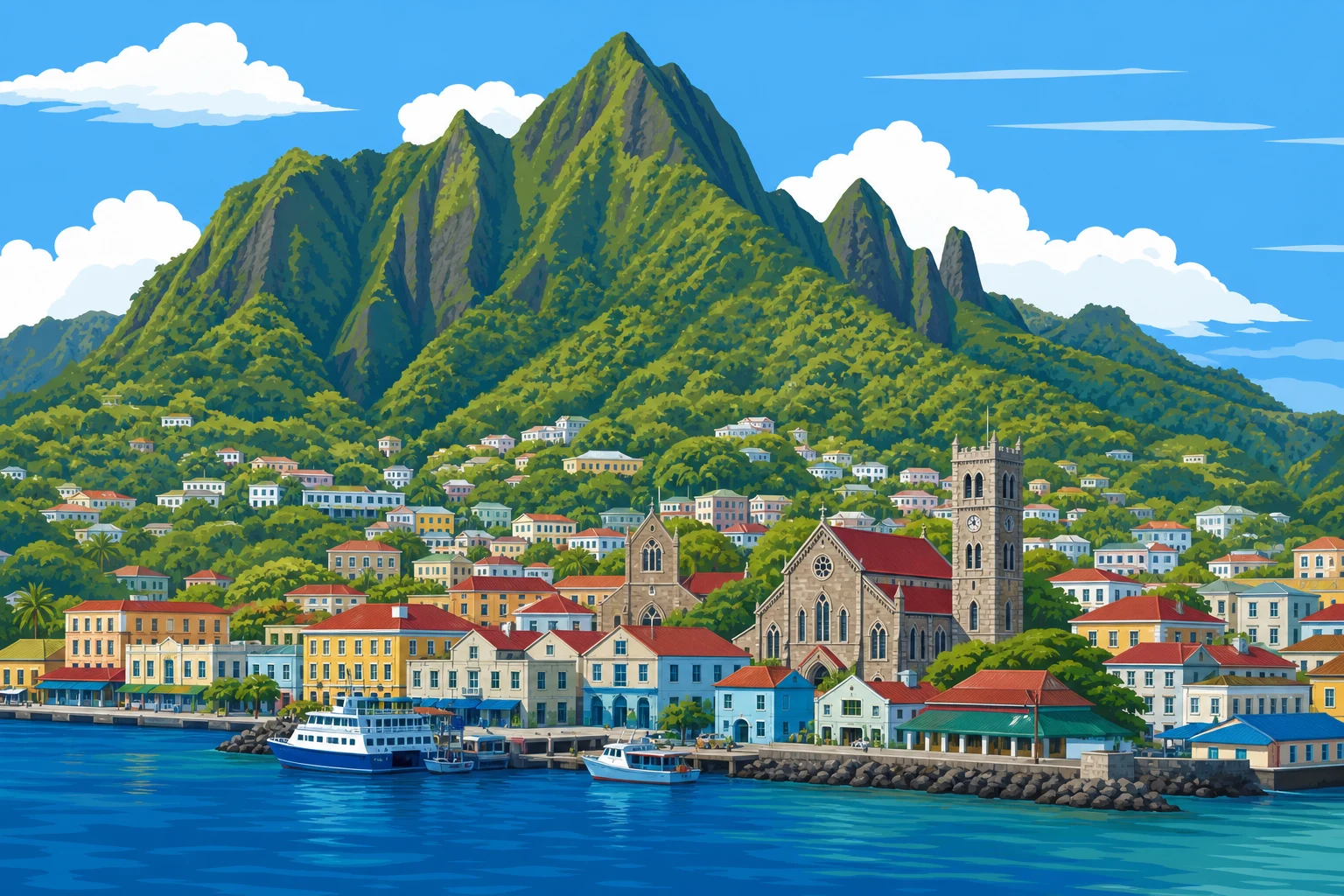
Kingstown is the capital of Saint Vincent and the Grenadines, situated on the southwestern coast of Saint Vincent island. The compact city features a mix of colonial-era stone buildings, churches, and a busy harbour serving the Grenadine islands.
Vartegn: St. Vincent Botanical Gardens, Fort Charlotte, St. Mary's Cathedral
Sjove fakta
- Kingstown's botanical garden, established in 1765, is the oldest in the Western Hemisphere and houses a breadfruit tree descended from those brought by Captain Bligh.
- Saint Vincent's La Soufriere volcano last erupted in 2021, causing major evacuations on the island.
- The Grenadines, a chain of 32 islands and cays, stretch southward from Saint Vincent toward Grenada.
Port of Spain
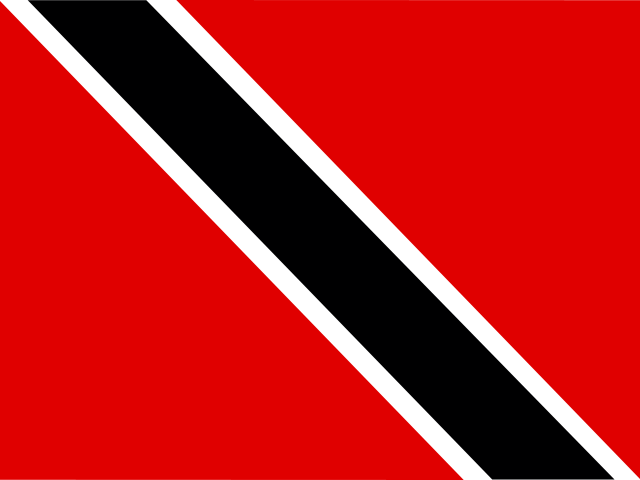
Trinidad og Tobago
Befolkning: 37,000
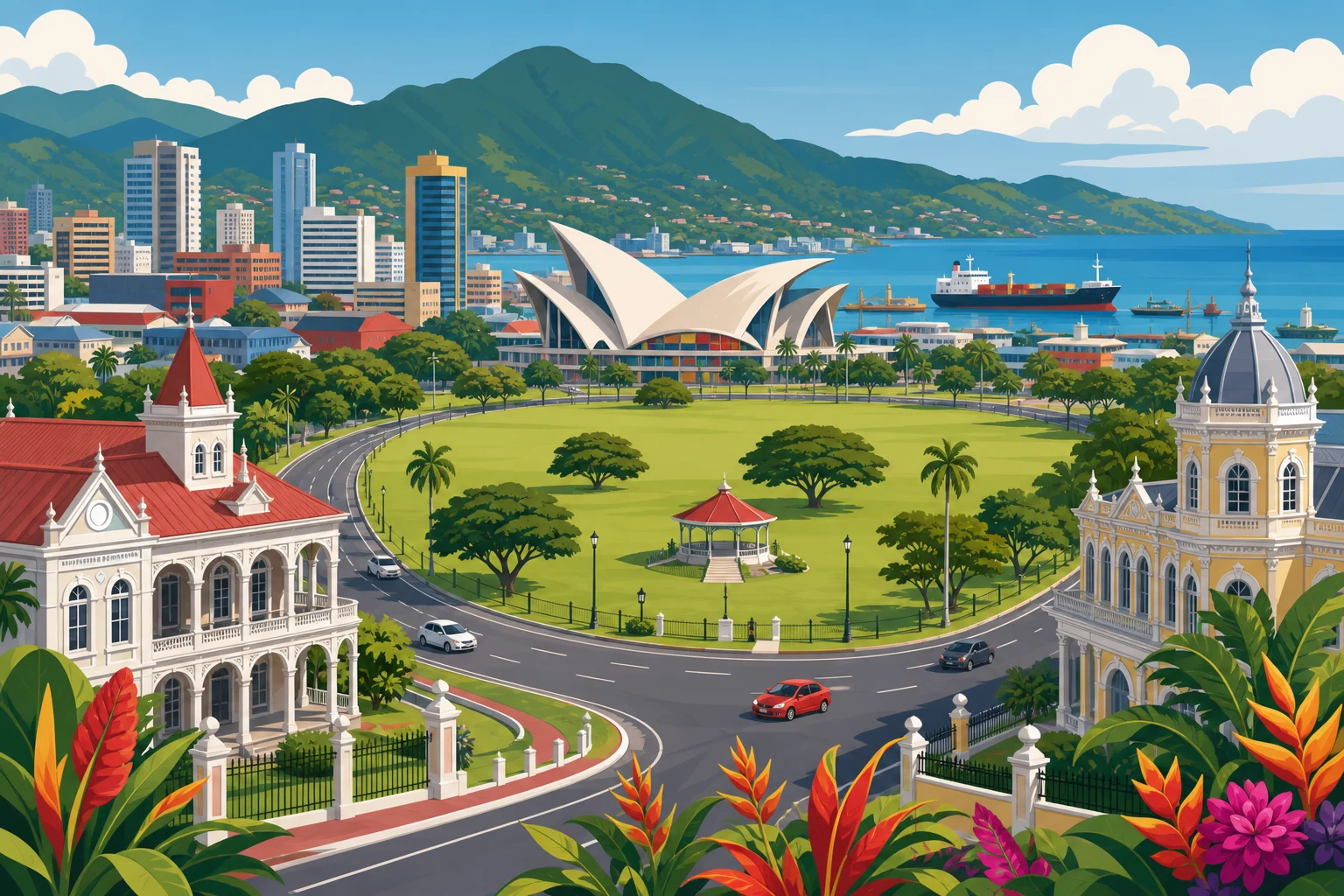
Port of Spain is the capital of Trinidad and Tobago, located on the northwestern coast of Trinidad island. The city is the birthplace of calypso, soca, and steelpan music, and hosts one of the world's largest and most vibrant Carnival celebrations.
Vartegn: Queen's Park Savannah, Magnificent Seven mansions, National Academy for the Performing Arts
Sjove fakta
- Trinidad and Tobago's Carnival is one of the largest street festivals in the world, attracting over 40,000 costumed participants annually.
- The steelpan (steel drum) was invented in Port of Spain in the 1930s and is the only acoustic musical instrument invented in the 20th century.
- Despite being the capital, Port of Spain is not the largest city - that distinction goes to Chaguanas in central Trinidad.
Hurtigt overblik
Test din viden
Hvor godt kender du disse hovedstæder? Find ud af det her.
Øv med spil
Klar til at teste det, du har lært? Hop ind i et spil og prøv det af.
Om caribiske hovedstæder
Fra Havana til Port of Spain knytter caribiske hovedstæder regionen til verdenshandel og musik. Mange var befæstede kolonihavne; i dag er de ofte politiske og kulturelle centre på hver sin ø.
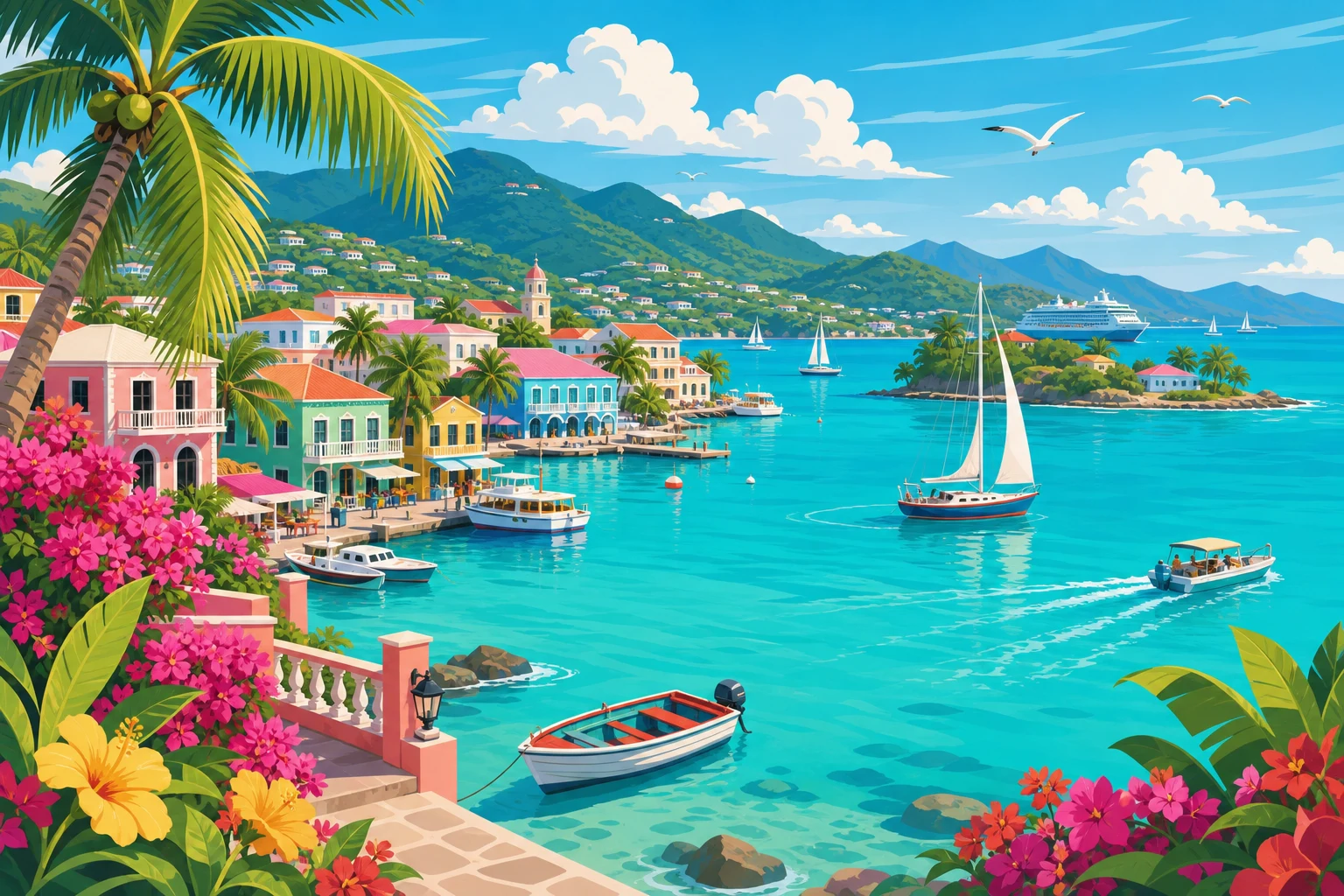
Ofte stillede spørgsmål
Hvad er den største caribiske hovedstad?
Havana på Cuba er befolkningsmæssigt blandt de største hovedstæder i den caribiske øgruppe, selv om metropolområder varierer over tid og definition.
Er Puerto Rico med?
Nej, denne lektion følger 13 uafhængige suveræne stater; territorier som Puerto Rico er ikke med i samme liste.
Hvorfor er så mange hovedstæder ved kysten?
Historisk handel, forsyning og forsvar – og begrænset areal på mange øer – placerede magtcentre ved havnene.