Map of Europe: Countries and Capitals
Europe stretches from Iceland in the North Atlantic to the Ural Mountains in Russia, and from the Arctic Ocean to the Mediterranean Sea. This continent contains 44 countries with extraordinary geographic diversity - from Scandinavian fjords to Mediterranean islands, from the vast plains of Russia to the peaks of the Alps and Caucasus. Below the interactive map you will find a complete list of the 43 countries on this map with their capitals, plus study cards to help you learn each one.
Hover a country to see its name. Click to jump to its study card.
Countries of Europe and Their Capitals
List of the 43 European countries covered in this lesson with capital, population and area. Click a country to jump to its study card with map and facts.
| Country | Capital | Population | Area |
|---|---|---|---|
 Albania Albania | Tirana | 2.7M | 28,748 km² |
 Austria Austria | Vienna | 9.1M | 83,871 km² |
 Armenia Armenia | Yerevan | 3.0M | 29,743 km² |
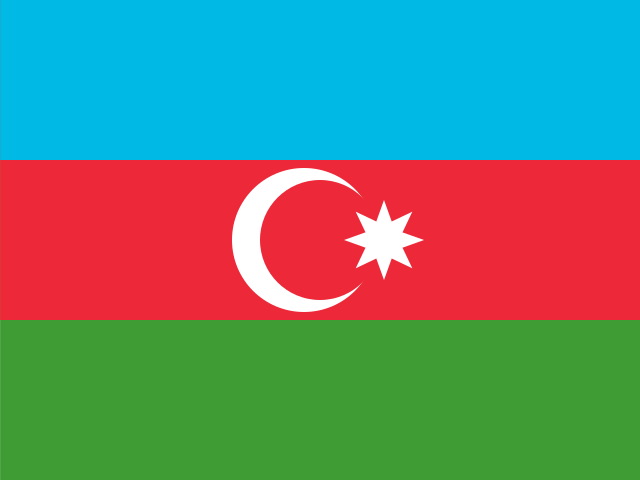 Azerbaijan Azerbaijan | Baku | 10.2M | 86,600 km² |
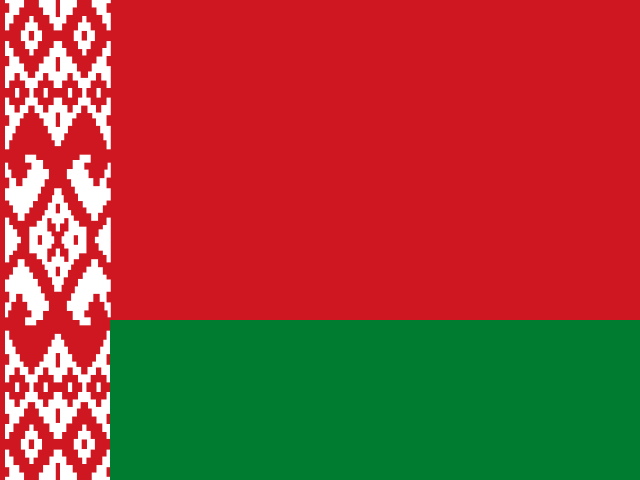 Belarus Belarus | Minsk | 9.1M | 207,600 km² |
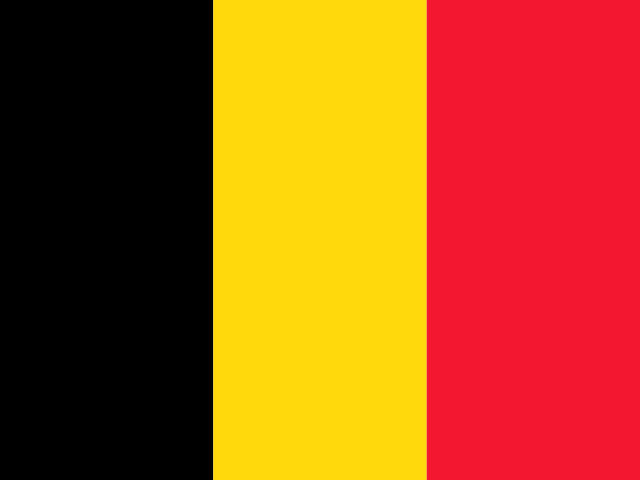 Belgium Belgium | Brussels | 11.8M | 30,689 km² |
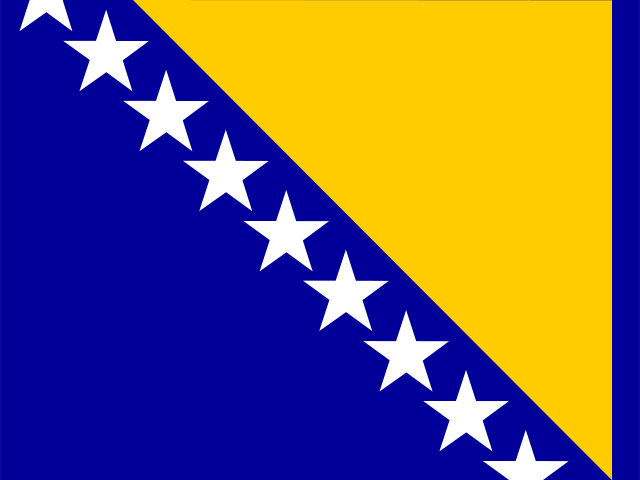 Bosnia and Herzegovina Bosnia and Herzegovina | Sarajevo | 3.2M | 51,197 km² |
 Bulgaria Bulgaria | Sofia | 6.4M | 110,879 km² |
 Croatia Croatia | Zagreb | 3.9M | 56,594 km² |
 Cyprus Cyprus | Nicosia | 1.3M | 9,251 km² |
 Czechia Czechia | Prague | 10.9M | 78,871 km² |
 Denmark Denmark | Copenhagen | 6.0M | 43,094 km² |
 Estonia Estonia | Tallinn | 1.4M | 45,228 km² |
 Finland Finland | Helsinki | 5.6M | 338,455 km² |
 France France | Paris | 68.4M | 643,801 km² |
 Georgia Georgia | Tbilisi | 3.7M | 69,700 km² |
 Germany Germany | Berlin | 84.5M | 357,022 km² |
 Greece Greece | Athens | 10.4M | 131,957 km² |
 Hungary Hungary | Budapest | 9.6M | 93,028 km² |
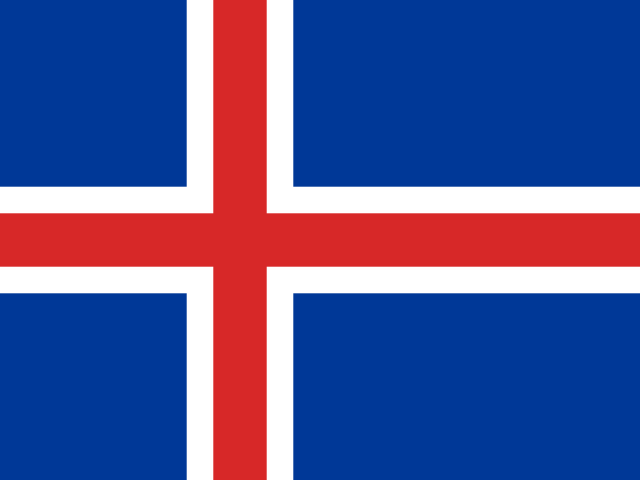 Iceland Iceland | Reykjavik | 0.39M | 103,000 km² |
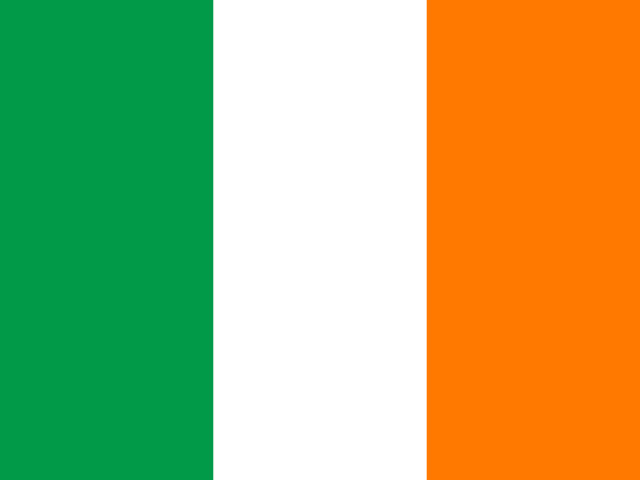 Ireland Ireland | Dublin | 5.3M | 70,273 km² |
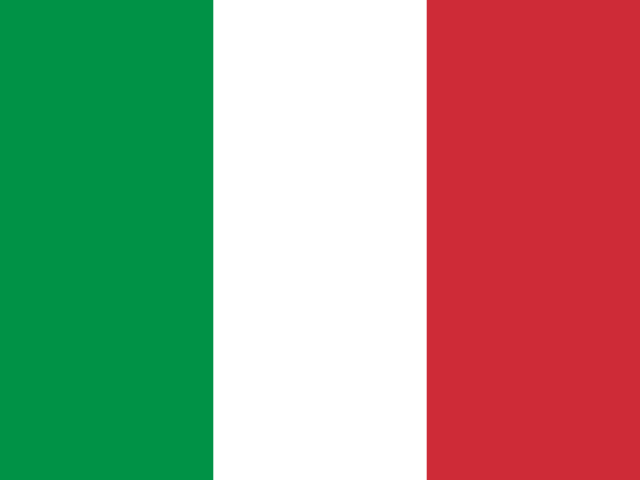 Italy Italy | Rome | 58.9M | 301,340 km² |
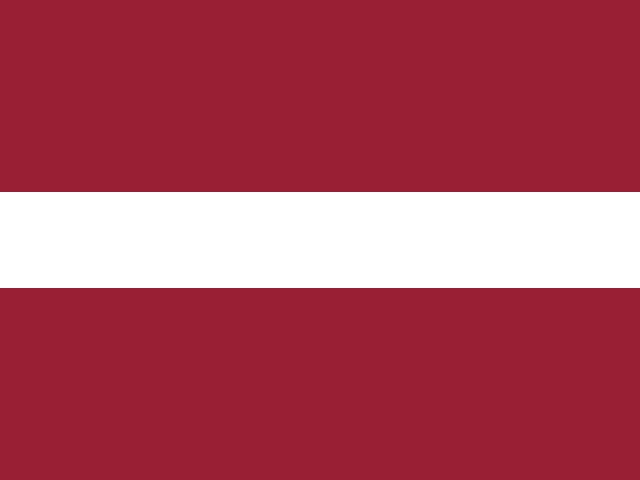 Latvia Latvia | Riga | 1.9M | 64,589 km² |
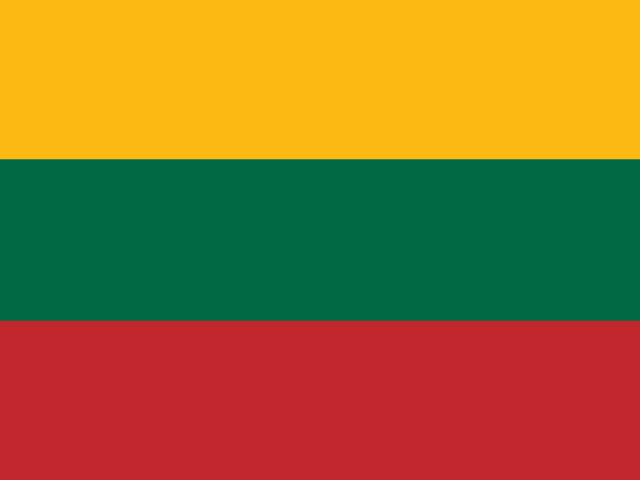 Lithuania Lithuania | Vilnius | 2.9M | 65,300 km² |
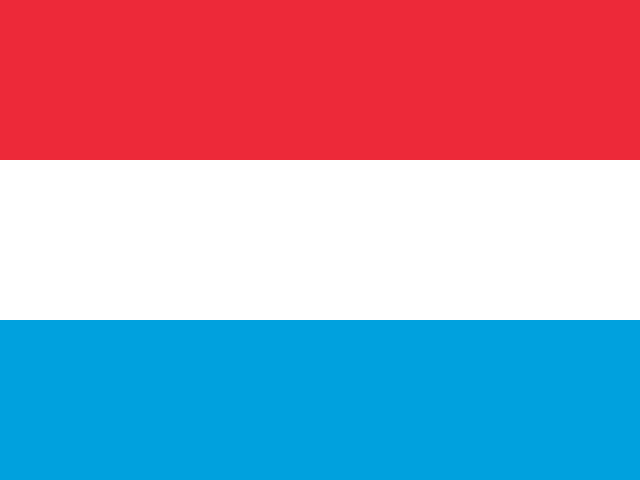 Luxembourg Luxembourg | Luxembourg City | 0.67M | 2,586 km² |
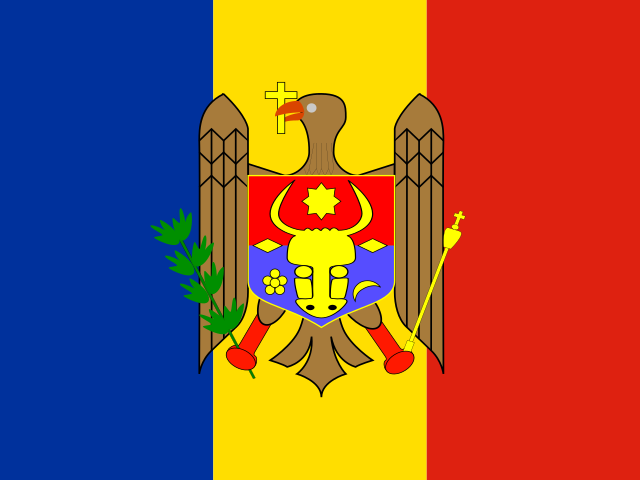 Moldova Moldova | Chișinău | 2.5M | 33,846 km² |
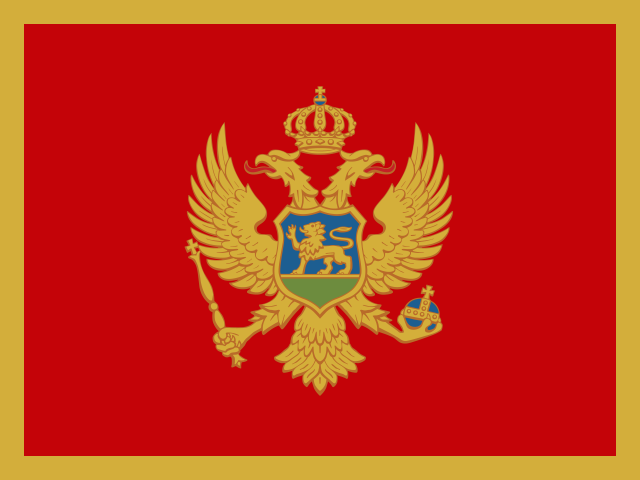 Montenegro Montenegro | Podgorica | 0.62M | 13,812 km² |
 Netherlands Netherlands | Amsterdam | 17.9M | 41,543 km² |
 North Macedonia North Macedonia | Skopje | 1.8M | 25,713 km² |
 Norway Norway | Oslo | 5.6M | 385,207 km² |
 Poland Poland | Warsaw | 36.7M | 312,696 km² |
 Portugal Portugal | Lisbon | 10.6M | 92,212 km² |
 Romania Romania | Bucharest | 19.0M | 238,397 km² |
 Russia Russia | Moscow | 144M | 17,098,242 km² |
 Serbia Serbia | Belgrade | 6.6M | 77,474 km² |
 Slovakia Slovakia | Bratislava | 5.4M | 49,035 km² |
 Slovenia Slovenia | Ljubljana | 2.1M | 20,273 km² |
 Spain Spain | Madrid | 48.6M | 505,990 km² |
 Sweden Sweden | Stockholm | 10.6M | 450,295 km² |
 Switzerland Switzerland | Bern | 8.9M | 41,285 km² |
 Turkey Turkey | Ankara | 85.3M | 783,356 km² |
 Ukraine Ukraine | Kyiv | 37.0M | 603,550 km² |
 United Kingdom United Kingdom | London | 68.3M | 243,610 km² |
Netherlands: The Hague is the seat of government; Switzerland: Bern is the de facto capital (federal city).
Study the Countries
Albania
Borders: Montenegro, North Macedonia, Greece, Kosovo
Area: 28,748 km² · Coastline: 362 km
Albania lies on the southeastern coast of the Adriatic Sea in the western Balkans. It is bordered by Montenegro to the northwest, Kosovo to the northeast, North Macedonia to the east, and Greece to the south. The terrain is mostly mountainous with a narrow coastal plain along the Adriatic and Ionian coasts.
Shape: A small, narrow country on the western Balkans coast, roughly rectangular and oriented north-south along the Adriatic Sea.
Fun Facts
- Albania has over 750 km of coastline along both the Adriatic and Ionian seas.
- About 70% of Albania is mountainous terrain.
- Albania is located directly across the Strait of Otranto from Italy, just 72 km away.
Austria
Borders: Germany, Czechia, Slovakia, Hungary, Slovenia, Italy, Switzerland, Liechtenstein
Area: 83,871 km² · Landlocked
Austria is a landlocked Alpine country in Central Europe, bordered by eight countries. The eastern Alps dominate the western and southern parts, while the Danube valley and the Pannonian lowland occupy the east. The country stretches east-west with its narrowest point in the west at Vorarlberg.
Shape: An elongated country stretching east-west through the Alps, significantly wider in the east than in the narrow western end.
Fun Facts
- Austria borders eight countries - the joint-most of any European country along with Germany.
- About 62% of Austria is covered by the Alps.
- The Danube River flows through the northern part of Austria for about 350 km.
Armenia
Borders: Georgia, Azerbaijan, Turkey, Iran
Area: 29,743 km² · Landlocked
Armenia is a landlocked mountainous country in the South Caucasus, bordered by Georgia to the north, Azerbaijan to the east, Turkey to the west, and Iran to the south. The terrain is dominated by the Armenian Highlands with elevations mostly above 1,000 meters.
Shape: A small, compact landlocked country in the southern Caucasus, located south of Georgia and west of Azerbaijan.
Fun Facts
- Armenia is one of the most mountainous countries in the world, with 90% above 1,000 meters.
- Mount Ararat, Armenia's national symbol, is visible from the capital but lies across the border in Turkey.
- Armenia is landlocked and borders four countries.
Azerbaijan
Borders: Russia, Georgia, Armenia, Turkey, Iran
Area: 86,600 km² · Coastline: 713 km
Azerbaijan is the largest South Caucasus country, on the western shore of the Caspian Sea. It is bordered by Russia to the north, Georgia to the northwest, Armenia to the west, Iran to the south, and Turkey via the Nakhchivan exclave. The terrain varies from Caucasus peaks in the north to lowland plains in the center.
Shape: The easternmost Caucasus country, with the Caspian Sea forming its entire eastern border and the Absheron Peninsula jutting out.
Fun Facts
- Azerbaijan has over 700 km of Caspian Sea coastline.
- The Nakhchivan exclave is separated from the main territory by Armenia.
- Azerbaijan is the largest of the three South Caucasus nations.
Belarus
Borders: Russia, Ukraine, Poland, Lithuania, Latvia
Area: 207,600 km² · Landlocked
Belarus is a large landlocked country in Eastern Europe, bordered by Russia to the east, Ukraine to the south, Poland to the west, and Lithuania and Latvia to the northwest. The terrain is predominantly flat with extensive forests, marshes, and numerous rivers and lakes. The Pripyat Marshes in the south are among the largest wetland areas in Europe.
Shape: A large, roughly rectangular country east of Poland and south of the Baltic states, entirely landlocked.
Fun Facts
- About 40% of Belarus is covered by forests, earning it the nickname "Lungs of Europe."
- Belarus is one of the flattest countries in Europe with its highest point at only 346 meters.
- The Pripyat Marshes in southern Belarus are Europe's largest natural wetland.
Belgium
Borders: Netherlands, Germany, Luxembourg, France
Area: 30,689 km² · Coastline: 67 km
Belgium is in western Europe, bordered by the Netherlands to the north, Germany to the east, Luxembourg to the southeast, and France to the south and west. It has a short North Sea coastline. The terrain rises from coastal plains through a central plateau to the forested Ardennes hills in the southeast.
Shape: A compact, roughly trapezoidal country between France and the Netherlands, wider in the east.
Fun Facts
- Belgium borders four countries despite being one of Europe's smallest nations.
- Brussels serves as the de facto capital of the European Union.
- Belgium has the highest population density of any large European country.
Bosnia and Herzegovina
Borders: Croatia, Serbia, Montenegro
Area: 51,197 km² · Coastline: 20 km
Bosnia and Herzegovina is in the western Balkans, bordered by Croatia to the north, west, and south, Serbia to the east, and Montenegro to the southeast. The country is predominantly mountainous with dense forests. It has a tiny 20 km coastline on the Adriatic Sea at Neum.
Shape: A roughly triangular country in the western Balkans, almost entirely enclosed by Croatia, with the triangle pointing south.
Fun Facts
- Bosnia and Herzegovina has only 20 km of coastline - the shortest of any coastal European country.
- About 50% of the country is covered by forest.
- The country is almost entirely surrounded by Croatia, which wraps around its northern and western borders.
Bulgaria
Borders: Romania, Serbia, North Macedonia, Greece, Turkey
Area: 110,879 km² · Coastline: 354 km
Bulgaria is located in southeastern Europe on the Balkan Peninsula, bordered by Romania to the north, Serbia and North Macedonia to the west, Greece and Turkey to the south, and the Black Sea to the east. The Balkan Mountains run east-west through the center of the country, dividing the Danubian Plain in the north from the Thracian Plain in the south.
Shape: A roughly rectangular country in the eastern Balkans, with the Black Sea forming its eastern edge.
Fun Facts
- Bulgaria borders five countries and the Black Sea.
- The Danube River forms most of Bulgaria's northern border with Romania.
- Bulgaria has diverse terrain from Black Sea beaches to mountains over 2,900 meters.
Croatia
Borders: Slovenia, Hungary, Serbia, Bosnia and Herzegovina, Montenegro
Area: 56,594 km² · Coastline: 5,835 km
Croatia has one of Europe's most distinctive shapes, forming a crescent around Bosnia and Herzegovina. It is bordered by Slovenia to the northwest, Hungary to the northeast, Serbia to the east, Bosnia and Herzegovina to the south and east, and Montenegro to the far south. The long Adriatic coastline is famous for its islands and clear waters.
Shape: A uniquely shaped country forming a crescent or boomerang - a flat northern portion and a long thin coastal strip along the Adriatic wrapping around Bosnia.
Fun Facts
- Croatia has over 1,200 islands along its Adriatic coast.
- Croatia's unusual crescent shape wraps almost entirely around Bosnia and Herzegovina.
- The Adriatic coastline stretches over 5,800 km including islands.
Cyprus
Area: 9,251 km² · Coastline: 648 km
Cyprus is an island nation in the eastern Mediterranean Sea, south of Turkey and west of Syria and Lebanon. It is the third-largest Mediterranean island. The terrain features two mountain ranges - the Troodos in the center and the Kyrenia range in the north - separated by a fertile central plain.
Shape: An island in the eastern Mediterranean with a distinctive rectangular shape and a pointed peninsula extending to the northeast.
Fun Facts
- Cyprus is the third-largest island in the Mediterranean after Sicily and Sardinia.
- Cyprus has no land borders - its nearest neighbor is Turkey, about 75 km to the north.
- The island sits at the crossroads of Europe, Asia, and Africa.
Czechia
Borders: Germany, Poland, Slovakia, Austria
Area: 78,871 km² · Landlocked
Czechia is a landlocked country in Central Europe, bordered by Germany to the west, Poland to the northeast, Slovakia to the east, and Austria to the south. The western part (Bohemia) is a basin ringed by low mountains, while the eastern part (Moravia) features rolling hills and the western Carpathians.
Shape: A distinctive shape resembling a pointing hand or arrowhead, wider in the west (Bohemia) and tapering eastward.
Fun Facts
- Czechia is almost entirely enclosed by mountain ranges forming natural borders.
- The country sits at the watershed of three seas: the North Sea, Baltic Sea, and Black Sea.
- Czechia officially adopted its short name in 2016 alongside "Czech Republic."
Denmark
Borders: Germany
Area: 43,094 km² · Coastline: 7,314 km
Denmark is the southernmost Nordic country, consisting of the Jutland Peninsula and over 400 islands. It is bordered by Germany to the south and surrounded by the North Sea and Baltic Sea. The terrain is mostly flat with gently rolling plains and no point is more than 52 km from the sea.
Shape: A small peninsula extending northward from Germany with several large islands to the east.
Fun Facts
- Denmark consists of the Jutland Peninsula and over 400 islands.
- No point in Denmark is more than 52 km from the sea.
- Denmark connects to Sweden via the 16 km Oresund Bridge.
Estonia
Borders: Latvia, Russia
Area: 45,228 km² · Coastline: 3,794 km
Estonia is the northernmost Baltic state, bordered by Latvia to the south, Russia to the east, and the Gulf of Finland to the north. The terrain is mostly flat with many lakes and forests. Over 2,200 islands dot its western and northern coasts.
Shape: A compact, roughly rectangular country at the top of the three Baltic states, with many islands to the west.
Fun Facts
- Estonia has over 2,200 islands along its coast.
- Estonia is just 80 km from Finland across the Gulf of Finland.
- About 50% of Estonia is covered by forest.
Finland
Borders: Sweden, Norway, Russia
Area: 338,455 km² · Coastline: 1,250 km
Finland is in northeastern Europe between Sweden, Norway, and Russia. Known as the "Land of a Thousand Lakes," it actually has about 188,000 lakes. The terrain is mostly flat with thick boreal forests covering about 75% of the land. It extends well above the Arctic Circle in the north.
Shape: An elongated country shaped like a raised arm, stretching north from the Gulf of Finland.
Fun Facts
- Finland has approximately 188,000 lakes.
- About 75% of Finland is forested - the most in Europe.
- Finland shares a 1,340 km border with Russia, its longest.
France
Borders: Belgium, Luxembourg, Germany, Switzerland, Italy, Spain, Andorra, Monaco
Area: 643,801 km² · Coastline: 3,427 km
France is the largest country in Western Europe, bordered by Belgium and Luxembourg to the north, Germany and Switzerland to the east, Italy and Monaco to the southeast, Spain and Andorra to the southwest. It has coastlines on the English Channel, the Atlantic Ocean, and the Mediterranean Sea. The terrain ranges from northern plains to the Alps and Pyrenees mountains.
Shape: A large hexagonal country (nicknamed "l'Hexagone") in western Europe, with distinctive coastlines on three sides.
Fun Facts
- France is the largest country in the EU by area and is often called "l'Hexagone" for its shape.
- France borders eight countries - tied with Germany for the most in Europe.
- France has coastlines on three bodies of water: the English Channel, Atlantic, and Mediterranean.
Georgia
Borders: Russia, Azerbaijan, Armenia, Turkey
Area: 69,700 km² · Coastline: 310 km
Georgia sits in the northwestern South Caucasus, with a Black Sea coastline to the west. It is bordered by Russia to the north along the Greater Caucasus range, Azerbaijan to the east, Armenia to the south, and Turkey to the southwest. The Greater Caucasus Mountains form a dramatic northern wall.
Shape: The northwesternmost Caucasus country, facing the Black Sea, with mountain ranges along the northern border.
Fun Facts
- Georgia is the only South Caucasus country with a Black Sea coast.
- The Greater Caucasus along Georgia's northern border includes peaks over 5,000 meters.
- Georgia sits at the crossroads of Europe and Asia.
Germany
Borders: Denmark, Poland, Czechia, Austria, Switzerland, France, Luxembourg, Belgium, Netherlands
Area: 357,022 km² · Coastline: 2,389 km
Germany is the most populous country in the EU, located in Central Europe. It borders nine countries and has coastlines on both the North Sea and Baltic Sea. The terrain rises from the North German Plain in the north through central uplands to the Bavarian Alps in the south. Major rivers include the Rhine, Elbe, and Danube.
Shape: A large country in the center of Europe, wider in the south and tapering to the north where it meets the sea.
Fun Facts
- Germany borders nine countries - the most of any European nation.
- Germany has coastlines on both the North Sea and the Baltic Sea.
- The Rhine River forms much of Germany's western border with France.
Greece
Borders: Albania, North Macedonia, Bulgaria, Turkey
Area: 131,957 km² · Coastline: 13,676 km
Greece occupies the southern tip of the Balkan Peninsula and includes over 6,000 islands in the Aegean, Ionian, and Mediterranean seas. It is bordered by Albania, North Macedonia, and Bulgaria to the north, and Turkey to the northeast. About 80% of the mainland is mountainous.
Shape: A country at the southern tip of the Balkans with a very irregular coastline and a distinctive peninsular shape (Peloponnese) connected by an isthmus.
Fun Facts
- Greece has over 6,000 islands, of which about 227 are inhabited.
- Greece has the longest coastline in Europe and one of the longest in the world.
- About 80% of Greece is mountainous.
Hungary
Borders: Slovakia, Ukraine, Romania, Serbia, Croatia, Slovenia, Austria
Area: 93,028 km² · Landlocked
Hungary is a landlocked country in the Carpathian Basin, bordered by seven countries. The country is predominantly flat, dominated by the Great Hungarian Plain in the east and the Transdanubian Hills in the west, bisected by the Danube River flowing north to south.
Shape: A roughly oval country in the center of the Carpathian Basin, wider east to west.
Fun Facts
- Hungary borders seven countries - more than any other in the Visegrad group.
- Lake Balaton is the largest lake in Central Europe.
- The Danube flows through Hungary for about 417 km.
Iceland
Area: 103,000 km² · Coastline: 4,970 km
Iceland is an island nation in the North Atlantic on the Mid-Atlantic Ridge, between Greenland and Norway. It has no land borders. The landscape is shaped by volcanic activity and glaciation, with geysers, lava fields, hot springs, and glaciers covering about 11% of the surface.
Shape: A compact, roughly oval island in the North Atlantic, clearly separated from mainland Europe.
Fun Facts
- Iceland sits on the Mid-Atlantic Ridge where two tectonic plates pull apart.
- About 11% of Iceland is covered by glaciers.
- Iceland averages a volcanic eruption every 4-5 years.
Ireland
Borders: United Kingdom
Area: 70,273 km² · Coastline: 1,448 km
Ireland occupies most of the island of Ireland in the North Atlantic, west of Great Britain. It shares the island with Northern Ireland (part of the United Kingdom). The terrain features a central lowland plain surrounded by coastal mountains, with many rivers and lakes.
Shape: An island west of Great Britain, roughly diamond-shaped with an irregular coastline.
Fun Facts
- Ireland's only land border is with the United Kingdom (Northern Ireland).
- The Shannon is the longest river in Ireland and the British Isles at 360 km.
- Ireland is known as the "Emerald Isle" due to its lush green landscape.
Italy
Borders: France, Switzerland, Austria, Slovenia, San Marino, Vatican City
Area: 301,340 km² · Coastline: 7,600 km
Italy is a boot-shaped peninsula extending into the Mediterranean Sea, bordered by France to the northwest, Switzerland and Austria to the north, and Slovenia to the northeast. The Alps form the northern border, while the Apennine Mountains run the length of the peninsula. Italy includes the islands of Sicily and Sardinia.
Shape: One of the most recognizable shapes in the world - a boot kicking a ball (Sicily) into the Mediterranean.
Fun Facts
- Italy's boot shape makes it one of the most recognizable countries on any map.
- Italy contains two independent microstates: Vatican City and San Marino.
- The Alps form Italy's entire northern border.
Latvia
Borders: Estonia, Lithuania, Belarus, Russia
Area: 64,589 km² · Coastline: 498 km
Latvia is the middle Baltic state, bordered by Estonia to the north, Lithuania to the south, Belarus to the southeast, and Russia to the east. Its coastline faces the Baltic Sea and the Gulf of Riga. The landscape is mostly flat lowland plains with gentle hills in the east.
Shape: The middle of the three Baltic states, with the Gulf of Riga indenting the western coast.
Fun Facts
- Latvia has four neighbors, making it the most-bordered Baltic state.
- The Gulf of Riga is almost entirely enclosed by Latvian and Estonian territory.
- About 54% of Latvia is covered by forests.
Lithuania
Borders: Latvia, Belarus, Poland, Russia
Area: 65,300 km² · Coastline: 90 km
Lithuania is the southernmost and largest Baltic state, bordered by Latvia to the north, Belarus to the east, Poland to the south, and the Russian exclave of Kaliningrad to the southwest. The terrain is predominantly flat with gentle hills and numerous lakes.
Shape: The southernmost Baltic state, roughly diamond-shaped, slightly larger than its neighbors.
Fun Facts
- Lithuania is the largest and most populated Baltic state.
- Lithuania borders the Russian exclave of Kaliningrad.
- The geographic center of Europe is claimed to be near Vilnius.
Luxembourg
Borders: Belgium, Germany, France
Area: 2,586 km² · Landlocked
Luxembourg is a tiny landlocked country in western Europe, bordered by Belgium to the west, Germany to the east, and France to the south. The northern third is part of the Ardennes plateau, while the southern two-thirds features rolling farmland.
Shape: A very small, roughly triangular country wedged between Belgium, Germany, and France.
Fun Facts
- Luxembourg is one of the smallest sovereign nations in Europe.
- Despite its tiny size, Luxembourg borders three countries.
- Luxembourg is a founding member of the EU, NATO, and the United Nations.
Moldova
Borders: Romania, Ukraine
Area: 33,846 km² · Landlocked
Moldova is a small landlocked country in Eastern Europe, bordered by Romania to the west and Ukraine to the north, east, and south. The terrain is predominantly rolling steppe with fertile black soil. The Dniester and Prut rivers define much of its borders.
Shape: A small, elongated country between Romania and Ukraine, oriented roughly north-south.
Fun Facts
- Moldova is almost entirely enclosed by Romania and Ukraine.
- The Prut River forms Moldova's entire western border with Romania.
- Moldova is one of the smallest and least-visited countries in Europe.
Montenegro
Borders: Croatia, Bosnia and Herzegovina, Serbia, Albania, Kosovo
Area: 13,812 km² · Coastline: 294 km
Montenegro is a small Adriatic country in the western Balkans, bordered by Croatia and Bosnia to the north, Serbia to the east, Kosovo to the east, and Albania to the south. Despite its small size, it has dramatic landscapes from the Adriatic coast to mountain peaks over 2,500 meters.
Shape: A small, compact country on the Adriatic coast in the central Balkans, south of Bosnia and Herzegovina.
Fun Facts
- Montenegro's name means "Black Mountain" in Venetian Italian.
- The Bay of Kotor is the deepest natural fjord-like bay in the Mediterranean.
- Montenegro is one of Europe's newest independent nations (2006).
Netherlands
Borders: Belgium, Germany
Area: 41,543 km² · Coastline: 451 km
The Netherlands is in northwestern Europe, bordered by Belgium to the south, Germany to the east, and the North Sea to the north and west. About one-third of the country lies below sea level, protected by dikes and dams. The Rhine, Meuse, and Scheldt rivers flow to the sea through its territory.
Shape: A compact country at the mouth of the Rhine with a curved North Sea coastline, widening from south to north.
Fun Facts
- About one-third of the Netherlands lies below sea level.
- The Dutch have reclaimed vast areas of land from the sea.
- The Netherlands has over 6,000 km of navigable waterways.
North Macedonia
Borders: Serbia, Bulgaria, Greece, Albania, Kosovo
Area: 25,713 km² · Landlocked
North Macedonia is a landlocked country in the central Balkans, bordered by Serbia to the north, Bulgaria to the east, Greece to the south, and Albania to the west. The terrain is mostly mountainous with deep valleys and basins. Lake Ohrid on the Albanian border is one of Europe's oldest and deepest lakes.
Shape: A compact, roughly square landlocked country in the central Balkans, south of Serbia and north of Greece.
Fun Facts
- Lake Ohrid on the Albanian border is one of Europe's oldest lakes, over 1 million years old.
- North Macedonia is entirely landlocked and surrounded by five territories.
- The country changed its name from "Macedonia" to "North Macedonia" in 2019.
Norway
Borders: Sweden, Finland, Russia
Area: 385,207 km² · Coastline: 25,148 km
Norway occupies the western portion of the Scandinavian Peninsula, stretching from the North Sea well above the Arctic Circle. It is bordered by Sweden along its entire eastern edge, and Finland and Russia in the far northeast. The western coastline is deeply indented with thousands of fjords.
Shape: A very long, narrow country along the western Scandinavian coast, wider in the south and tapering northward.
Fun Facts
- Norway's coastline stretches over 25,000 km - one of the world's longest.
- Norway extends further north than most of Iceland.
- Norway shares its longest border with Sweden at about 1,630 km.
Poland
Borders: Germany, Czechia, Slovakia, Ukraine, Belarus, Lithuania, Russia
Area: 312,696 km² · Coastline: 440 km
Poland is a large Central European country bordering the Baltic Sea to the north, Germany to the west, Czechia and Slovakia to the south, and Ukraine, Belarus, Lithuania, and Russia (Kaliningrad) to the east and northeast. The terrain is mostly flat in the north and center, rising to the Carpathians and Sudeten mountains in the south.
Shape: A large, roughly square country with a Baltic Sea coast along the top and Carpathian Mountains along the southern border.
Fun Facts
- Poland borders seven countries including Russia's Kaliningrad exclave.
- Poland is the sixth-largest country in the EU.
- The Vistula River, Poland's longest, flows from the Carpathians to the Baltic.
Portugal
Borders: Spain
Area: 92,212 km² · Coastline: 1,794 km
Portugal occupies the western edge of the Iberian Peninsula, bordered by Spain to the north and east, and the Atlantic Ocean to the south and west. The terrain is varied: mountainous in the north, rolling plains in the south (Alentejo), and dramatic cliffs along the Algarve coast.
Shape: A narrow, elongated country on the western coast of the Iberian Peninsula, running north-south along the Atlantic.
Fun Facts
- Portugal has only one land neighbor: Spain.
- Cape Roca in Portugal is the westernmost point of mainland Europe.
- The Tagus River, shared with Spain, divides Portugal roughly in half.
Romania
Borders: Ukraine, Moldova, Bulgaria, Serbia, Hungary
Area: 238,397 km² · Coastline: 225 km
Romania is located in southeastern Europe, bordered by Ukraine to the north, Moldova to the northeast, Bulgaria to the south, Serbia to the southwest, and Hungary to the west. The Carpathian Mountains arc through the center of the country, surrounded by hills, plains, and the Danube Delta on the Black Sea coast.
Shape: A large, roughly circular country in southeastern Europe with the Carpathian arc curving through its center.
Fun Facts
- The Carpathian Mountains form an arc through Romania covering about one-third of the country.
- The Danube Delta, where the river meets the Black Sea, is Europe's best-preserved river delta.
- Romania borders five countries and the Black Sea.
Russia
Borders: Norway, Finland, Estonia, Latvia, Lithuania, Poland, Belarus, Ukraine, Georgia, Azerbaijan, Kazakhstan
Area: 17,098,242 km² · Coastline: 37,653 km
Russia is by far the world's largest country, spanning Europe and Asia. In Europe, its western portion extends from the Arctic Ocean to the Black and Caspian seas. The European part includes the vast East European Plain, bound by the Ural Mountains in the east. The Kaliningrad exclave sits between Poland and Lithuania on the Baltic.
Shape: An enormous country dominating the eastern portion of the European map, extending far to the east with the Kaliningrad exclave on the Baltic.
Fun Facts
- Russia is the largest country in the world, spanning 11 time zones.
- European Russia alone is larger than any other European country.
- The Kaliningrad exclave on the Baltic is separated from mainland Russia by other countries.
Serbia
Borders: Hungary, Romania, Bulgaria, North Macedonia, Albania, Montenegro, Bosnia and Herzegovina, Croatia
Area: 77,474 km² · Landlocked
Serbia is a landlocked country in the central Balkans, bordered by eight countries and territories. The northern third (Vojvodina) is flat and fertile, part of the Pannonian Plain, while the south is mountainous. The Danube and Sava rivers converge at Belgrade.
Shape: A medium-sized country in the central Balkans, roughly heart-shaped, with flat northern plains and mountainous south.
Fun Facts
- Serbia borders eight countries or territories - more than any other Balkan nation.
- The Danube and Sava rivers meet at Belgrade, Serbia's capital.
- Northern Serbia (Vojvodina) is one of Europe's most fertile agricultural regions.
Slovakia
Borders: Poland, Ukraine, Hungary, Austria, Czechia
Area: 49,035 km² · Landlocked
Slovakia is a landlocked Central European country bordered by Poland to the north, Ukraine to the east, Hungary to the south, Austria to the southwest, and Czechia to the west. The Carpathian Mountains dominate the north, while the Danubian Lowland lies in the south.
Shape: An elongated country stretching east-west, narrower in the middle, south of Poland and north of Hungary.
Fun Facts
- Slovakia has the highest number of castles per capita in the world.
- The Tatra Mountains on the Polish-Slovak border are the highest in the Carpathians.
- Slovakia borders five countries.
Slovenia
Borders: Italy, Austria, Hungary, Croatia
Area: 20,273 km² · Coastline: 47 km
Slovenia is a small country at the crossroads of Central and Southern Europe, bordered by Italy to the west, Austria to the north, Hungary to the northeast, and Croatia to the south and east. It has a tiny Adriatic coastline of just 47 km. The Julian Alps dominate the northwest, including Mount Triglav, the country's symbol.
Shape: A small, compact country shaped like a chicken, wedged between the Alps and the Adriatic, north of Croatia.
Fun Facts
- Slovenia has only 47 km of Adriatic coastline.
- Over 60% of Slovenia is covered by forest.
- Slovenia is the only country that has "love" in its English name.
Spain
Borders: Portugal, France, Andorra
Area: 505,990 km² · Coastline: 4,964 km
Spain occupies most of the Iberian Peninsula in southwestern Europe, bordered by Portugal to the west, France to the northeast, and Andorra in the Pyrenees. It has coastlines on the Mediterranean Sea, the Atlantic Ocean, and the Bay of Biscay. The interior is dominated by the Meseta Central, a high plateau.
Shape: A large, roughly square country forming most of the Iberian Peninsula, with coasts on the Mediterranean and Atlantic.
Fun Facts
- Spain is the second-largest country in the EU by area.
- The Pyrenees form a natural wall along Spain's entire border with France.
- Spain has more surface area above 500 meters than any other European country except Switzerland.
Sweden
Borders: Norway, Finland
Area: 450,295 km² · Coastline: 3,218 km
Sweden is the largest Nordic country, occupying the eastern side of the Scandinavian Peninsula. It is bordered by Norway to the west and Finland to the northeast, with a long Baltic Sea coastline to the east. The country stretches from temperate farmland in the south to subarctic wilderness above the Arctic Circle.
Shape: A long, elongated country forming the eastern half of the Scandinavian Peninsula, wider in the south.
Fun Facts
- Sweden is the largest Nordic country and fifth-largest in Europe.
- About 65% of Sweden is covered by forest.
- Sweden has about 100,000 lakes.
Switzerland
Borders: Germany, France, Italy, Austria, Liechtenstein
Area: 41,285 km² · Landlocked
Switzerland is a landlocked country in the heart of Western Europe, bordered by Germany to the north, France to the west, Italy to the south, and Austria and Liechtenstein to the east. The Alps cover about 60% of the country in the south, while the Jura Mountains form the northwestern border. The Swiss Plateau between them holds most of the population.
Shape: A compact, roughly rectangular country in the Alps, located between Germany, France, Italy, and Austria.
Fun Facts
- Switzerland has four official languages: German, French, Italian, and Romansh.
- The Alps cover about 60% of Switzerland's territory.
- Switzerland borders five countries despite being a small country.
Turkey
Borders: Greece, Bulgaria, Georgia, Armenia, Azerbaijan, Iran, Iraq, Syria
Area: 783,356 km² · Coastline: 7,200 km
Turkey straddles Europe and Asia, with its small European portion (East Thrace) bordered by Greece and Bulgaria. The much larger Asian portion (Anatolia) is bounded by the Black Sea to the north, the Mediterranean to the south, and the Aegean to the west. The terrain features a high central plateau flanked by mountain ranges.
Shape: A large, roughly rectangular country bridging Europe and Asia, with a small portion west of the Bosporus in Europe.
Fun Facts
- Turkey spans two continents, with about 3% of its territory in Europe.
- The Bosporus Strait at Istanbul separates Europe from Asia.
- Turkey has coastlines on four seas: the Black Sea, Mediterranean, Aegean, and Sea of Marmara.
Ukraine
Borders: Russia, Belarus, Poland, Slovakia, Hungary, Romania, Moldova
Area: 603,550 km² · Coastline: 2,782 km
Ukraine is the largest country entirely within Europe, located in Eastern Europe. It is bordered by Russia to the east, Belarus to the north, Poland, Slovakia, and Hungary to the west, Romania and Moldova to the southwest. The terrain is predominantly flat steppe with fertile black soil, with the Carpathians in the west and coastline on the Black Sea and Sea of Azov.
Shape: A large, irregularly shaped country in Eastern Europe, wider in the south with a Black Sea coastline.
Fun Facts
- Ukraine is the largest country entirely within Europe by area.
- Ukraine borders seven countries.
- The Ukrainian steppe contains some of the world's most fertile soil (chernozem).
United Kingdom
Borders: Ireland
Area: 243,610 km² · Coastline: 12,429 km
The United Kingdom is an island nation off the northwestern coast of mainland Europe, comprising Great Britain (England, Scotland, Wales) and Northern Ireland. It is separated from France by the English Channel (34 km at its narrowest). The terrain varies from the Scottish Highlands to the lowland plains of England.
Shape: A distinctive island group northwest of France - Great Britain is one of the most recognizable shapes on any world map.
Fun Facts
- The UK's only land border is between Northern Ireland and the Republic of Ireland.
- Great Britain is the largest island in Europe.
- The English Channel separates the UK from France by just 34 km at its narrowest.
Quick Reference
Albania Austria Armenia Azerbaijan Belarus Belgium Bosnia and Herzegovina Bulgaria Croatia Cyprus Czechia Denmark Estonia Finland France Georgia Germany Greece Hungary Iceland Ireland Italy Latvia Lithuania Luxembourg Moldova Montenegro Netherlands North Macedonia Norway Poland Portugal Romania Russia Serbia Slovakia Slovenia Spain Sweden Switzerland Turkey Ukraine United Kingdom Test Your Knowledge
Can you identify these countries on the map?
Practice with Games
Ready to test what you learned? Jump into a game and put it into practice.
About Europe Geography
Europe is the world's second-smallest continent by area but third-most populous, home to 44 countries with extraordinary geographic diversity. From the Arctic tundra of Scandinavia to the Mediterranean warmth of Greece, and from the Atlantic shores of Portugal to the Ural Mountains of Russia, Europe's compact size belies its remarkable variety of landscapes, climates, and cultures.
Frequently Asked Questions
How many countries are in Europe?
Europe has 44 internationally recognized countries (or more depending on how transcontinental nations like Turkey, Russia, and the Caucasus states are counted). This lesson covers 44 countries that appear on the Europe SVG map.
Which is the largest country in Europe?
Russia is the largest country that spans Europe (and Asia). Ukraine is the largest country entirely within Europe at 603,550 km², followed by France at 643,801 km² (including overseas territories).
Which European country borders the most other countries?
Germany borders nine countries (Denmark, Poland, Czechia, Austria, Switzerland, France, Luxembourg, Belgium, Netherlands), making it the most-bordered nation in Europe.
Which countries and capitals are in Europe?
The 43 countries covered in this lesson and their capitals are: Albania (Tirana), Austria (Vienna), Armenia (Yerevan), Azerbaijan (Baku), Belarus (Minsk), Belgium (Brussels), Bosnia and Herzegovina (Sarajevo), Bulgaria (Sofia), Croatia (Zagreb), Cyprus (Nicosia), Czechia (Prague), Denmark (Copenhagen), Estonia (Tallinn), Finland (Helsinki), France (Paris), Georgia (Tbilisi), Germany (Berlin), Greece (Athens), Hungary (Budapest), Iceland (Reykjavik), Ireland (Dublin), Italy (Rome), Latvia (Riga), Lithuania (Vilnius), Luxembourg (Luxembourg City), Moldova (Chișinău), Montenegro (Podgorica), Netherlands (Amsterdam), North Macedonia (Skopje), Norway (Oslo), Poland (Warsaw), Portugal (Lisbon), Romania (Bucharest), Russia (Moscow), Serbia (Belgrade), Slovakia (Bratislava), Slovenia (Ljubljana), Spain (Madrid), Sweden (Stockholm), Switzerland (Bern), Turkey (Ankara), Ukraine (Kyiv), United Kingdom (London).
Is Russia in Europe or Asia?
Russia is transcontinental: about a quarter of its land and three quarters of its population are in Europe, so it is usually listed as a European country - and it appears in this lesson as Europe's largest country.