Map of Oceania: All 14 Countries and Capitals
Oceania spans the vast Pacific Ocean, encompassing Australia, New Zealand, and thousands of islands across Melanesia, Micronesia, and Polynesia. This lesson covers all 14 sovereign nations of the region, from the world's smallest republic to its largest island country. Below the interactive map you will find a complete list of all 14 countries with their capitals, plus study cards to help you learn each one.
Hover a country to see its name. Click to jump to its study card.
The 14 Countries of Oceania and Their Capitals
Complete list of all countries in Oceania with capital, population and area. Click a country to jump to its study card with map and facts.
| Country | Capital | Population | Area |
|---|---|---|---|
 Australia Australia | Canberra | 26.8M | 7,692,024 km² |
 Fiji Fiji | Suva | 0.94M | 18,274 km² |
 Kiribati Kiribati | South Tarawa | 0.13M | 811 km² |
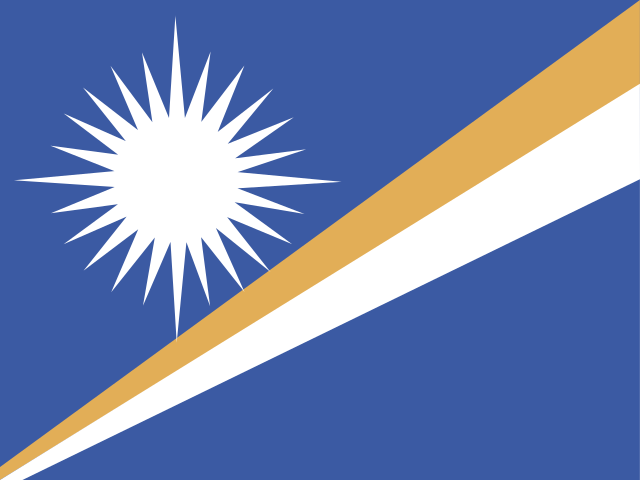 Marshall Islands Marshall Islands | Majuro | 0.04M | 181 km² |
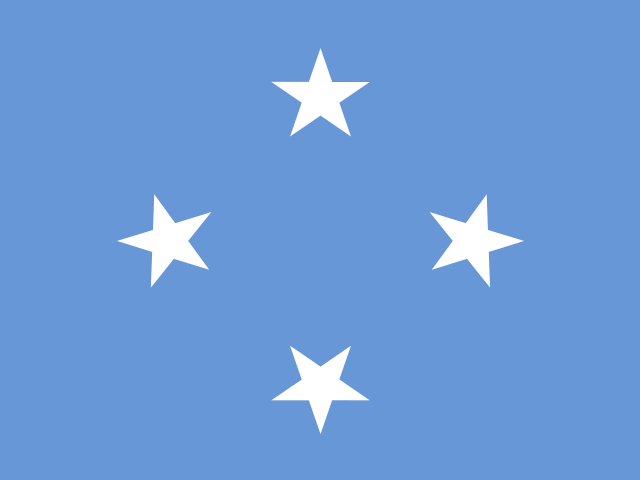 Federated States of Micronesia Federated States of Micronesia | Palikir | 0.11M | 702 km² |
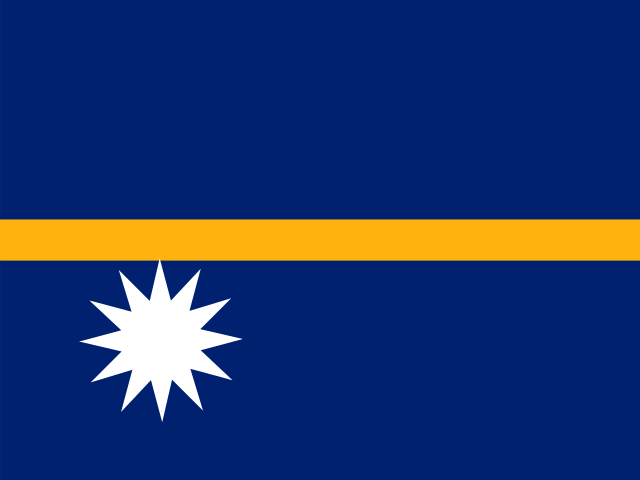 Nauru Nauru | Yaren | 0.01M | 21 km² |
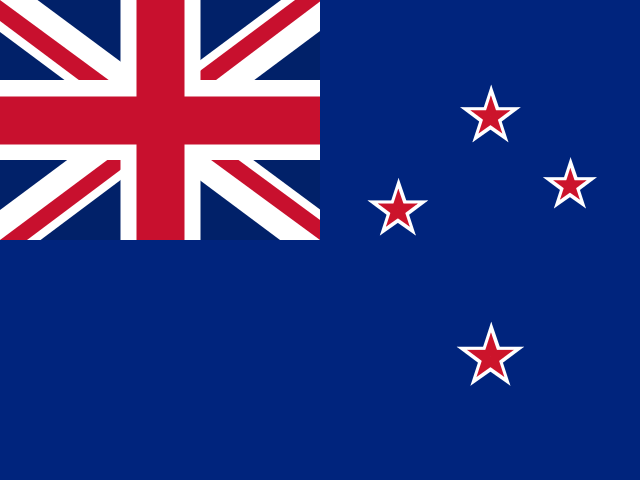 New Zealand New Zealand | Wellington | 5.3M | 268,021 km² |
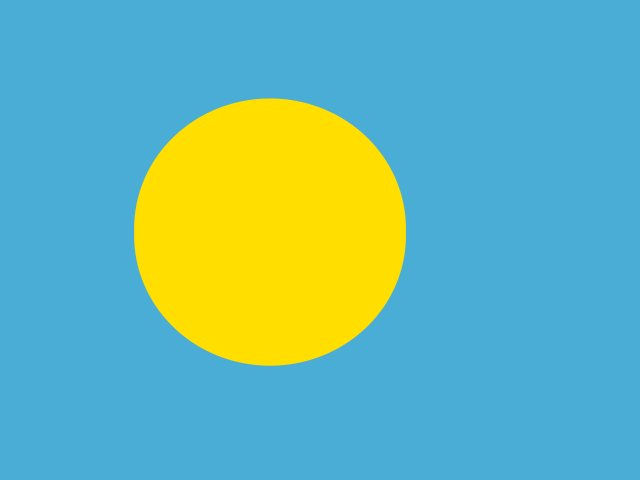 Palau Palau | Ngerulmud | 0.02M | 459 km² |
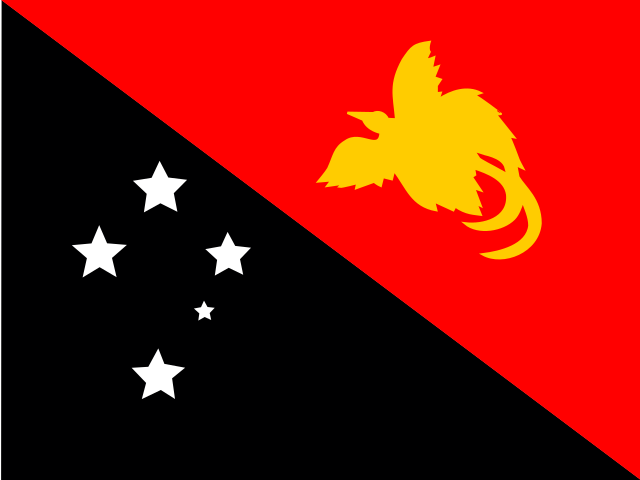 Papua New Guinea Papua New Guinea | Port Moresby | 10.3M | 462,840 km² |
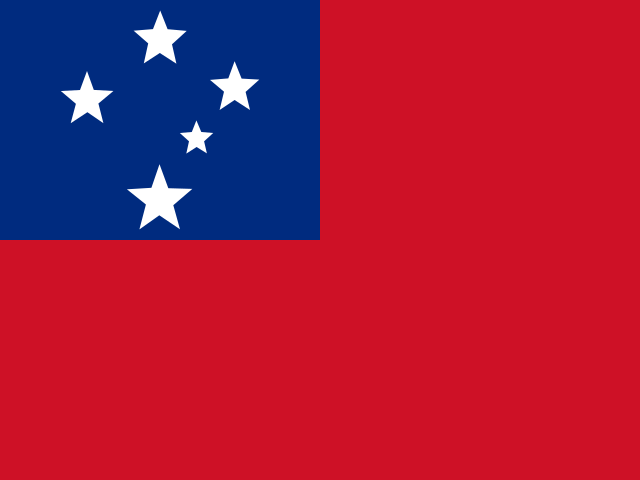 Samoa Samoa | Apia | 0.22M | 2,842 km² |
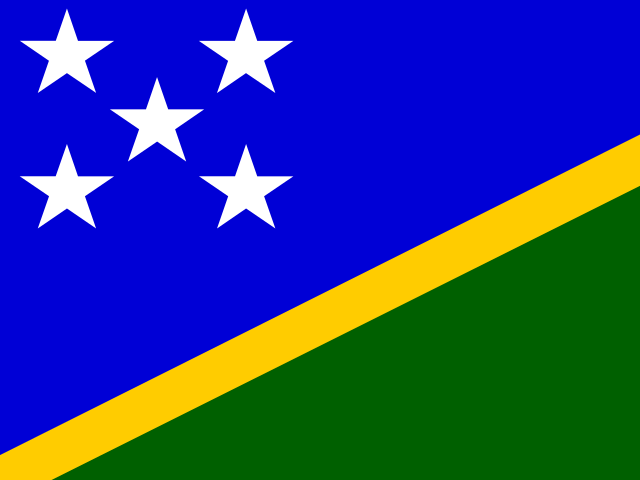 Solomon Islands Solomon Islands | Honiara | 0.74M | 28,896 km² |
 Tonga Tonga | Nuku'alofa | 0.11M | 747 km² |
 Tuvalu Tuvalu | Funafuti | 0.01M | 26 km² |
 Vanuatu Vanuatu | Port Vila | 0.33M | 12,189 km² |
Nauru: Yaren is the de facto capital; Nauru has no official capital city.
Study the Countries
Australia
Area: 7,692,024 km² · Coastline: 25,760 km
Australia is the world's sixth-largest country and the only nation to occupy an entire continent. It lies between the Indian and Pacific Oceans, south of Southeast Asia. The interior is dominated by vast arid deserts, while coastal regions feature tropical rainforests, fertile plains, and the Great Barrier Reef.
Shape: A large, roughly rectangular landmass with a distinctive bite taken out of the northern coast (Gulf of Carpentaria) and the island of Tasmania to the southeast.
Fun Facts
- Australia is both a country and a continent, making it the world's largest island.
- The Great Barrier Reef stretches over 2,300 km along the northeast coast and is visible from space.
- Over 80% of Australia's plants and animals are found nowhere else on Earth.
Fiji
Area: 18,274 km² · Coastline: 1,129 km
Fiji is an archipelago of more than 330 islands in the South Pacific, about two-thirds of which are uninhabited. The two largest islands, Viti Levu and Vanua Levu, account for most of the land area. The terrain is mostly mountainous with volcanic origins, surrounded by coral reefs.
Shape: A scattered cluster of islands in the South Pacific, with two large main islands oriented roughly northwest to southeast.
Fun Facts
- Fiji sits on the International Date Line and was one of the first places to welcome each new day.
- The islands have over 1,500 species of fish and 300 species of coral in their surrounding waters.
- Fiji's largest island, Viti Levu, contains the capital Suva and about 70% of the population.
Kiribati
Area: 811 km² · Coastline: 1,143 km
Kiribati is a nation of 33 coral atolls and reef islands straddling the equator in the central Pacific Ocean. The islands are spread across 3.5 million square kilometers of ocean, making it one of the most geographically dispersed countries. Most islands rise only a few meters above sea level.
Shape: Tiny scattered atolls spread across three island groups (Gilbert, Phoenix, and Line Islands) spanning a vast area of the central Pacific.
Fun Facts
- Kiribati is the only country in the world situated in all four hemispheres (north, south, east, and west).
- The country's highest point is only 81 meters above sea level, making it extremely vulnerable to rising seas.
- Kiribati's exclusive economic zone covers about 3.5 million km², one of the largest in the Pacific.
Marshall Islands
Area: 181 km² · Coastline: 370 km
The Marshall Islands is a chain of 29 coral atolls and 5 isolated islands in the central Pacific Ocean, between Hawaii and Australia. The atolls form two parallel chains: the Ratak (Sunrise) and Ralik (Sunset) chains. The terrain is flat and low-lying, with the highest point just 10 meters above sea level.
Shape: Two parallel chains of tiny atolls running roughly north-south in the central Pacific, each atoll appearing as a ring of small islets.
Fun Facts
- Bikini Atoll in the Marshall Islands was the site of 23 nuclear tests between 1946 and 1958.
- The Kwajalein Atoll has the largest lagoon in the world, covering about 2,174 km².
- The Marshall Islands has one of the highest percentages of ocean territory relative to land area of any nation.
Federated States of Micronesia
Area: 702 km² · Coastline: 6,112 km
The Federated States of Micronesia consists of 607 islands spread across the western Pacific Ocean. The four states - Yap, Chuuk, Pohnpei, and Kosrae - include a mix of high volcanic islands and low coral atolls. The islands are scattered over nearly 2.6 million km² of ocean.
Shape: A widely scattered chain of small islands and atolls stretching east to west across the western Pacific, with four main island clusters.
Fun Facts
- Pohnpei island receives about 7,600 mm of rain annually, making it one of the wettest places on Earth.
- The ancient city of Nan Madol, built on 92 artificial islands, is sometimes called the Venice of the Pacific.
- Yap is famous for its traditional stone money - large circular limestone discs up to 4 meters in diameter.
Nauru
Area: 21 km² · Coastline: 30 km
Nauru is a tiny oval-shaped coral island in the central Pacific, just south of the equator. It is the world's third-smallest country by area and the smallest republic. The interior consists of a raised limestone plateau that was heavily mined for phosphate, surrounded by a narrow coastal strip.
Shape: A single tiny oval island, roughly 6 km long and 4 km wide, with a distinctive raised central plateau.
Fun Facts
- Nauru is the smallest island nation and the smallest republic in the world at just 21 km².
- Phosphate mining has left about 80% of the island's interior barren and unusable.
- Nauru has no official capital city; government offices are located in the Yaren district.
New Zealand
Area: 268,021 km² · Coastline: 15,134 km
New Zealand lies in the southwestern Pacific Ocean, about 2,000 km southeast of Australia. It consists of two main islands - the North Island and South Island - plus numerous smaller islands. The South Island features the Southern Alps, while the North Island has active volcanic and geothermal areas.
Shape: Two elongated islands running roughly northeast to southwest, with the narrow Cook Strait separating them. The South Island is slightly larger and more rectangular.
Fun Facts
- New Zealand was the last major landmass to be settled by humans, around 1280 CE.
- The country sits on the boundary of the Pacific and Australian tectonic plates, creating dramatic mountain ranges and geothermal activity.
- New Zealand has more sheep than people, with roughly 26 million sheep compared to 5 million people.
Palau
Area: 459 km² · Coastline: 1,519 km
Palau is an archipelago of over 500 islands in the western Pacific Ocean, part of the Caroline Islands chain in Micronesia. The islands range from the large volcanic island of Babeldaob to tiny limestone Rock Islands. The country is renowned for its pristine marine environments and coral reefs.
Shape: A north-south chain of islands with one large volcanic island (Babeldaob) in the north and hundreds of small mushroom-shaped Rock Islands to the south.
Fun Facts
- Palau's Jellyfish Lake contains millions of golden jellyfish that have lost their sting after evolving in isolation.
- Palau created one of the world's first shark sanctuaries, banning commercial shark fishing in its waters.
- The Rock Islands Southern Lagoon is a UNESCO World Heritage Site with over 445 limestone islands.
Papua New Guinea
Area: 462,840 km² · Coastline: 5,152 km
Papua New Guinea occupies the eastern half of the island of New Guinea and numerous offshore islands in the southwestern Pacific. The terrain is extremely rugged, dominated by a central mountain spine rising to over 4,500 meters, dense tropical rainforests, and active volcanoes. It is one of the most geographically diverse countries on Earth.
Shape: The eastern half of a large bird-shaped island (New Guinea), with a long "tail" peninsula extending to the southeast and many offshore islands.
Fun Facts
- Papua New Guinea is the most linguistically diverse country on Earth, with over 840 living languages.
- Mount Wilhelm at 4,509 meters is the highest peak in Oceania outside of Indonesia.
- The country contains the world's third-largest tropical rainforest after the Amazon and Congo.
Samoa
Area: 2,842 km² · Coastline: 403 km
Samoa is an island nation in the central South Pacific, consisting of two main islands (Upolu and Savai'i) and several smaller ones. The islands are volcanic in origin with rugged mountainous interiors, narrow coastal plains, and lush tropical vegetation. Savai'i contains one of the world's most active shield volcanoes.
Shape: Two main oval-shaped volcanic islands positioned side by side in an east-west orientation, with Savai'i being the larger western island.
Fun Facts
- Samoa was the first Pacific Island nation to gain independence, in 1962.
- In 2011, Samoa skipped an entire day by moving across the International Date Line to align with Australia and New Zealand.
- Savai'i island has lava fields from eruptions as recent as the early 1900s that cover large areas.
Solomon Islands
Area: 28,896 km² · Coastline: 5,313 km
The Solomon Islands is a scattered archipelago of nearly 1,000 islands in the southwestern Pacific, east of Papua New Guinea. The six main islands are large and rugged with mountainous interiors, volcanic peaks, and dense tropical rainforests. The islands are part of the Pacific Ring of Fire with active volcanoes and frequent earthquakes.
Shape: A double chain of islands stretching northwest to southeast, with six large mountainous islands forming the core of the archipelago.
Fun Facts
- The Solomon Islands contain some of the most pristine coral reefs in the world, within the Coral Triangle.
- Guadalcanal in the Solomon Islands was the site of one of the most significant battles of World War II.
- The islands are home to the world's largest saltwater lagoon, Marovo Lagoon.
Tonga
Area: 747 km² · Coastline: 419 km
Tonga is a Polynesian archipelago of 169 islands (36 inhabited) in the South Pacific, east of Fiji. The islands are divided into three main groups: Tongatapu in the south, Ha'apai in the center, and Vava'u in the north. The western islands are volcanic and mountainous, while eastern islands are flat coral limestone.
Shape: A north-south chain of small island groups spanning about 800 km, with the main inhabited island (Tongatapu) being a flat coral island in the south.
Fun Facts
- Tonga is the only Pacific Island nation that was never formally colonized by a European power.
- The Hunga Tonga-Hunga Ha'apai underwater volcano erupted spectacularly in January 2022, creating a shockwave that circled the globe.
- Tonga's Royal Palace in Nuku'alofa is the only royal palace in the Pacific Islands.
Tuvalu
Area: 26 km² · Coastline: 24 km
Tuvalu is a tiny Polynesian island nation midway between Hawaii and Australia, consisting of nine low-lying coral atolls and reef islands. It is the fourth-smallest country in the world by area and the least populated UN member state. The highest elevation is only 4.6 meters above sea level.
Shape: Nine tiny scattered atolls and islands forming a chain running northwest to southeast over about 676 km of ocean.
Fun Facts
- Tuvalu is one of the nations most threatened by climate change and rising sea levels, with its highest point at just 4.6 meters.
- The country earns significant revenue from licensing its ".tv" internet domain to television and streaming companies.
- Tuvalu has a total land area of just 26 km², making it the fourth-smallest country in the world.
Vanuatu
Area: 12,189 km² · Coastline: 2,528 km
Vanuatu is a Y-shaped archipelago of 83 islands in the South Pacific, located between New Caledonia and Fiji. The islands are volcanic in origin with mountainous terrain, dense tropical forests, and active volcanoes. The country lies within the Pacific Ring of Fire and experiences frequent seismic and volcanic activity.
Shape: A Y-shaped chain of islands stretching roughly 1,300 km from north to south in the southwestern Pacific.
Fun Facts
- Mount Yasur on Tanna Island is one of the world's most accessible active volcanoes, erupting almost continuously for over 800 years.
- Vanuatu is consistently ranked as one of the most disaster-prone countries on Earth due to earthquakes, cyclones, and volcanoes.
- The country is home to the world's only underwater post office, located off Hideaway Island.
Quick Reference
Test Your Knowledge
Can you identify these countries on the map?
Practice with Games
Ready to test what you learned? Jump into a game and put it into practice.
About Oceania Geography
Oceania is the geographic region comprising Australia, Melanesia, Micronesia, and Polynesia. It spans the Pacific Ocean from Southeast Asia to the Americas, encompassing 14 sovereign nations with extraordinary geographic diversity - from the vast Australian continent to tiny coral atolls barely rising above sea level.
Frequently Asked Questions
How many countries are in Oceania?
Oceania contains 14 sovereign nations: Australia, Fiji, Kiribati, Marshall Islands, Federated States of Micronesia, Nauru, New Zealand, Palau, Papua New Guinea, Samoa, Solomon Islands, Tonga, Tuvalu, and Vanuatu.
What is the largest country in Oceania?
Australia is by far the largest country in Oceania, covering 7,692,024 km². It is also the world's sixth-largest country and the only one to occupy an entire continent.
What is the smallest country in Oceania?
Nauru is the smallest country in Oceania at just 21 km², making it the world's third-smallest country and the smallest republic.
Which countries and capitals are in Oceania?
The 14 countries of Oceania and their capitals are: Australia (Canberra), Fiji (Suva), Kiribati (South Tarawa), Marshall Islands (Majuro), Federated States of Micronesia (Palikir), Nauru (Yaren), New Zealand (Wellington), Palau (Ngerulmud), Papua New Guinea (Port Moresby), Samoa (Apia), Solomon Islands (Honiara), Tonga (Nuku'alofa), Tuvalu (Funafuti), Vanuatu (Port Vila).
What is the difference between Australia and Oceania?
Australia is both a country and a continent, while Oceania is the wider region that also includes New Zealand, Papua New Guinea and the Pacific island nations of Melanesia, Micronesia and Polynesia.