Afrikas huvudstäder
Utforska Afrikas huvudstäder - världens näst största kontinent med 54 olika nationer. Från historiska handelsnav till snabbväxande metropoler: varje kort ger minnesvärda fakta om staden.
Studera huvudstäderna
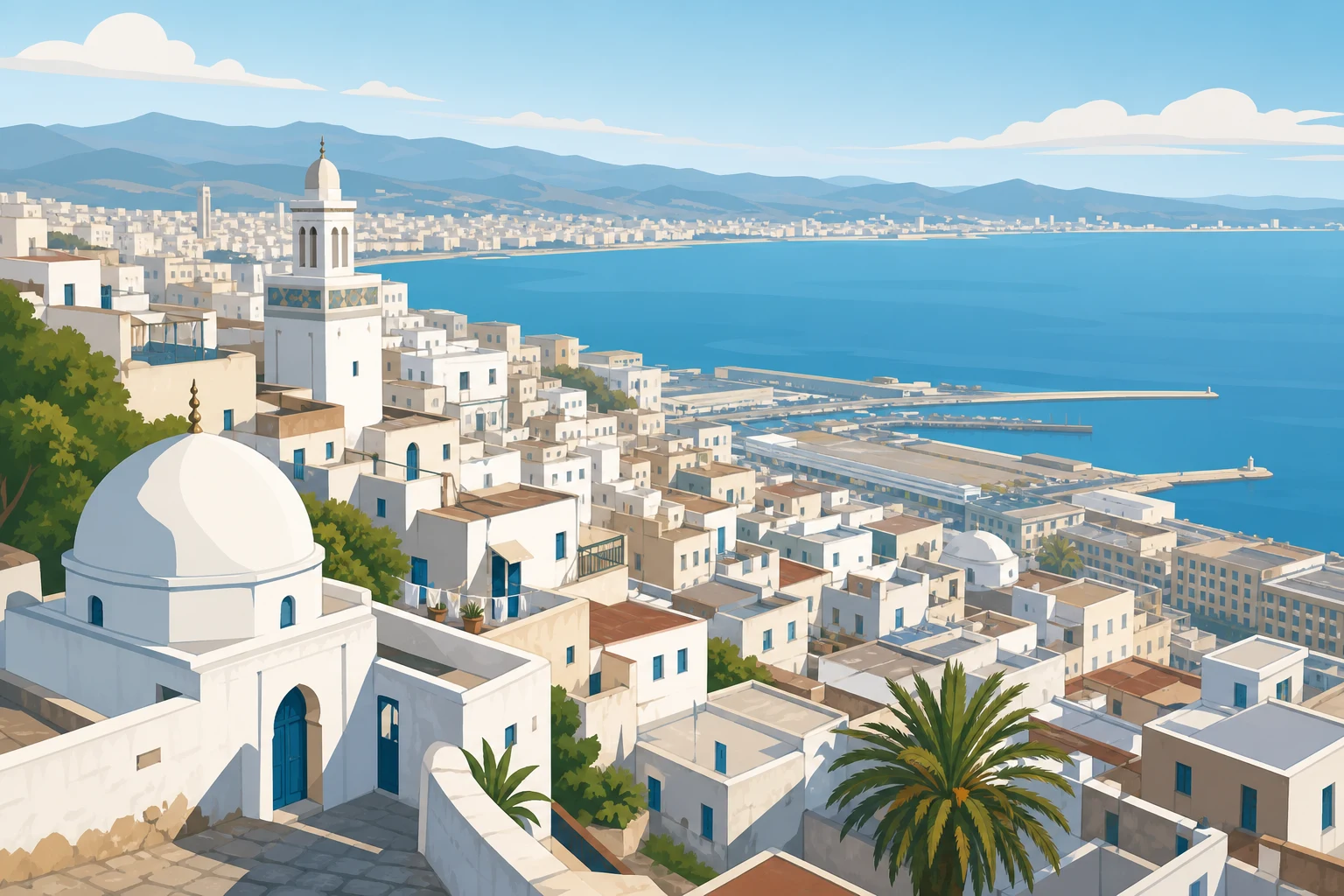
Algiers
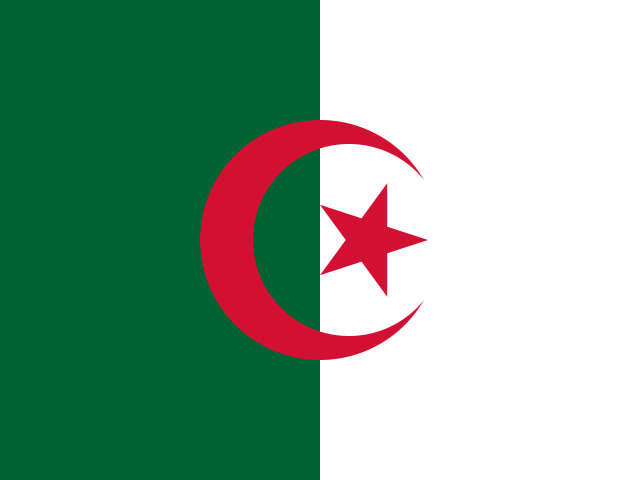
Algeriet
Befolkning: 3.9 million
Algiers is the capital of Algeria, a Mediterranean port city built on hillsides with a historic Casbah quarter that is a UNESCO World Heritage Site.
Landmärken: Casbah of Algiers, Notre Dame d'Afrique
Roliga fakta
- The Casbah of Algiers is a UNESCO World Heritage Site with a maze of narrow streets dating to the Ottoman period.
- Algiers is nicknamed "Alger la Blanche" (Algiers the White) for its gleaming white buildings visible from the sea.
- The city served as the headquarters of the Allied Forces in North Africa during World War II.
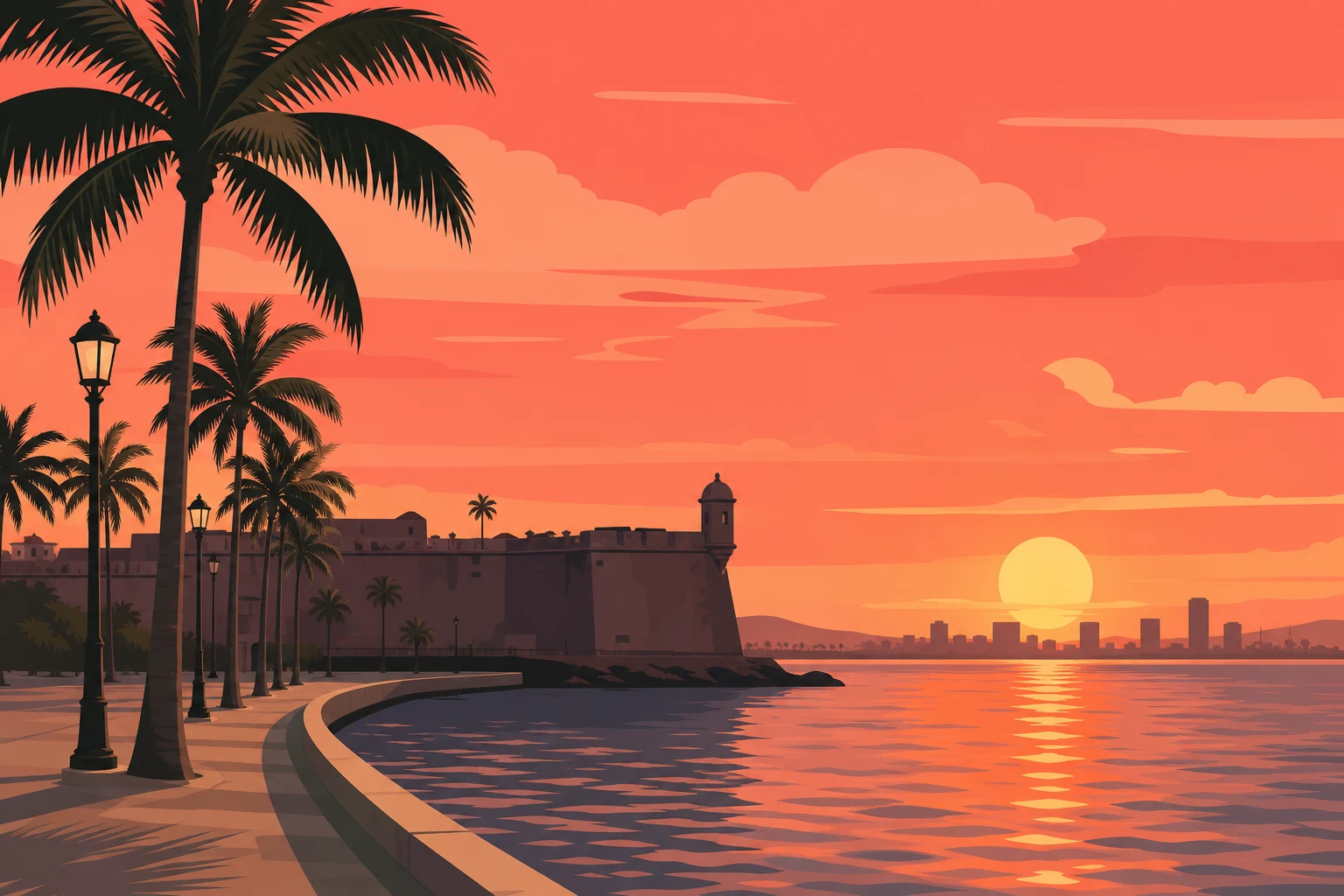
Luanda
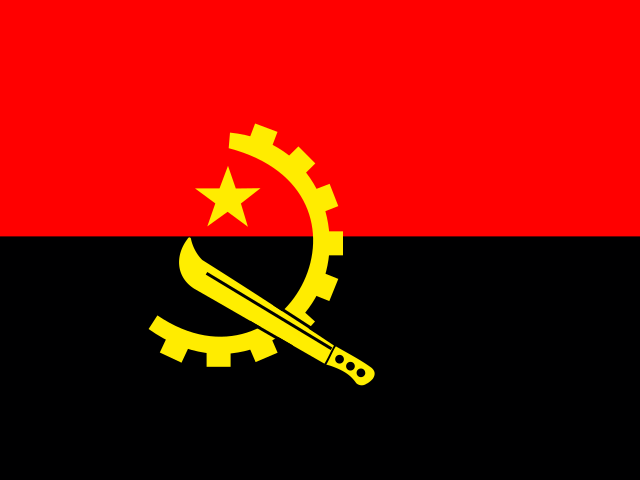
Angola
Befolkning: 8.3 million
Luanda is the capital of Angola, a major Atlantic port city that has experienced rapid growth driven by the country's oil wealth.
Landmärken: Fortaleza de São Miguel, Iron Palace
Roliga fakta
- Luanda was repeatedly ranked as the most expensive city in the world for expatriates due to its oil boom.
- The city was founded by the Portuguese in 1575 as São Paulo da Assunção de Loanda.
- Angola is Africa's second-largest oil producer, and Luanda is the center of its petroleum industry.
Porto-Novo
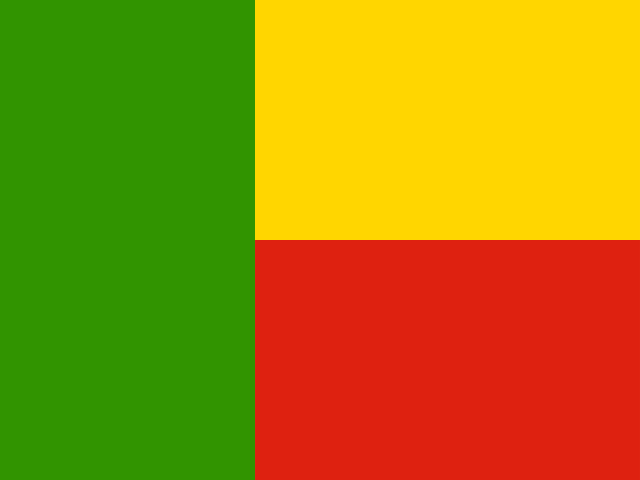
Benin
Befolkning: 270,000
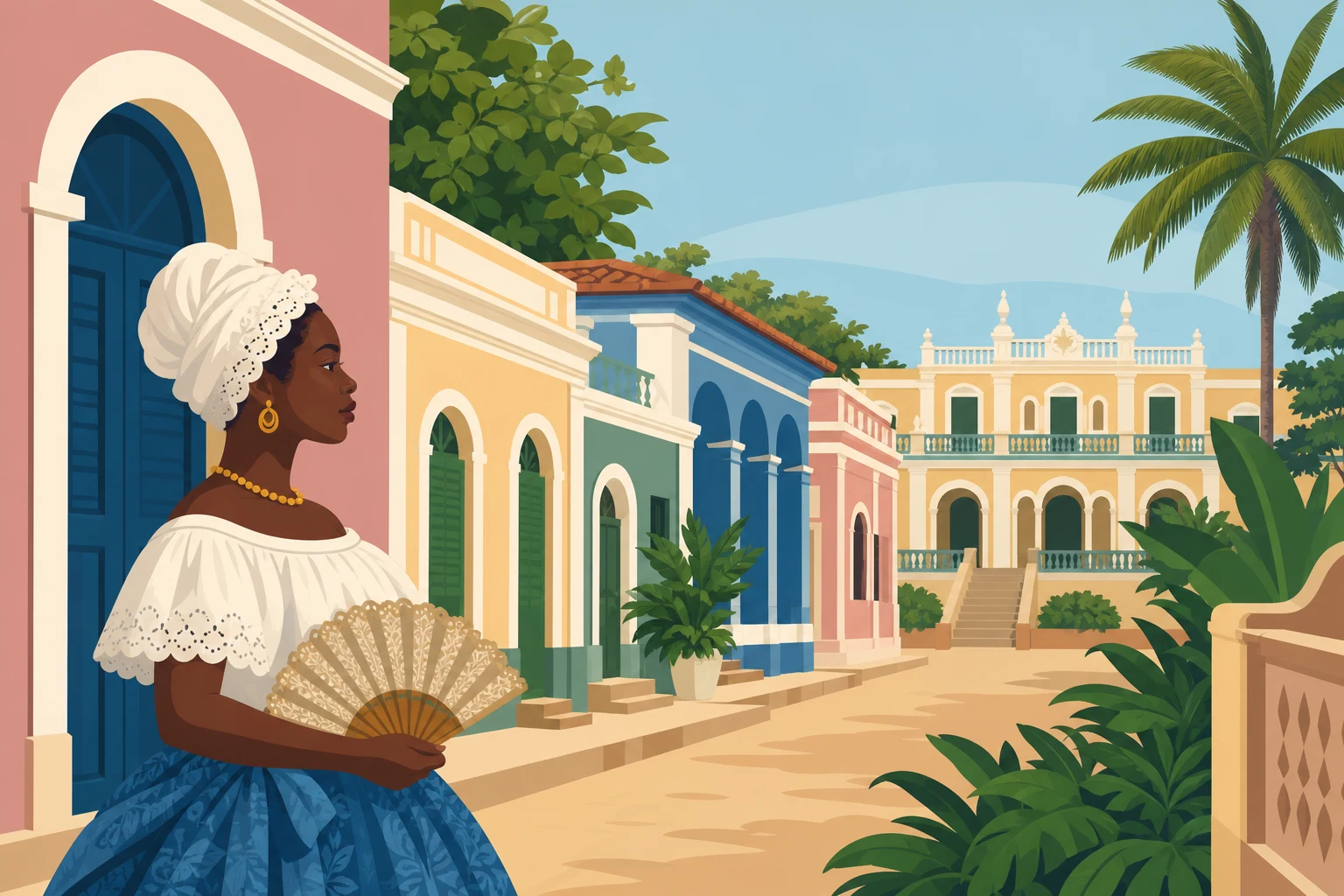
Porto-Novo is the official capital of Benin, a city with Afro-Brazilian architecture reflecting the heritage of freed slaves who returned from Brazil.
Landmärken: Royal Palace of Porto-Novo, Grande Mosquée de Porto-Novo
Roliga fakta
- Porto-Novo is the official capital, but Cotonou serves as the seat of government and economic capital.
- The city has distinctive Afro-Brazilian architecture built by formerly enslaved people who returned from Brazil.
- Porto-Novo was a major center of the Dahomey Kingdom before French colonization.
Gaborone
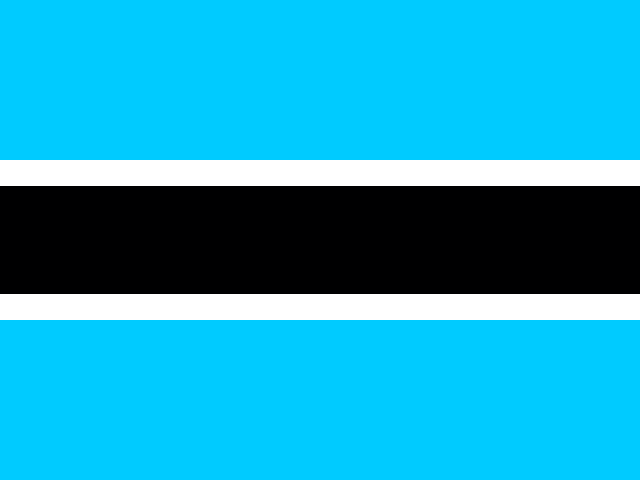
Botswana
Befolkning: 280,000
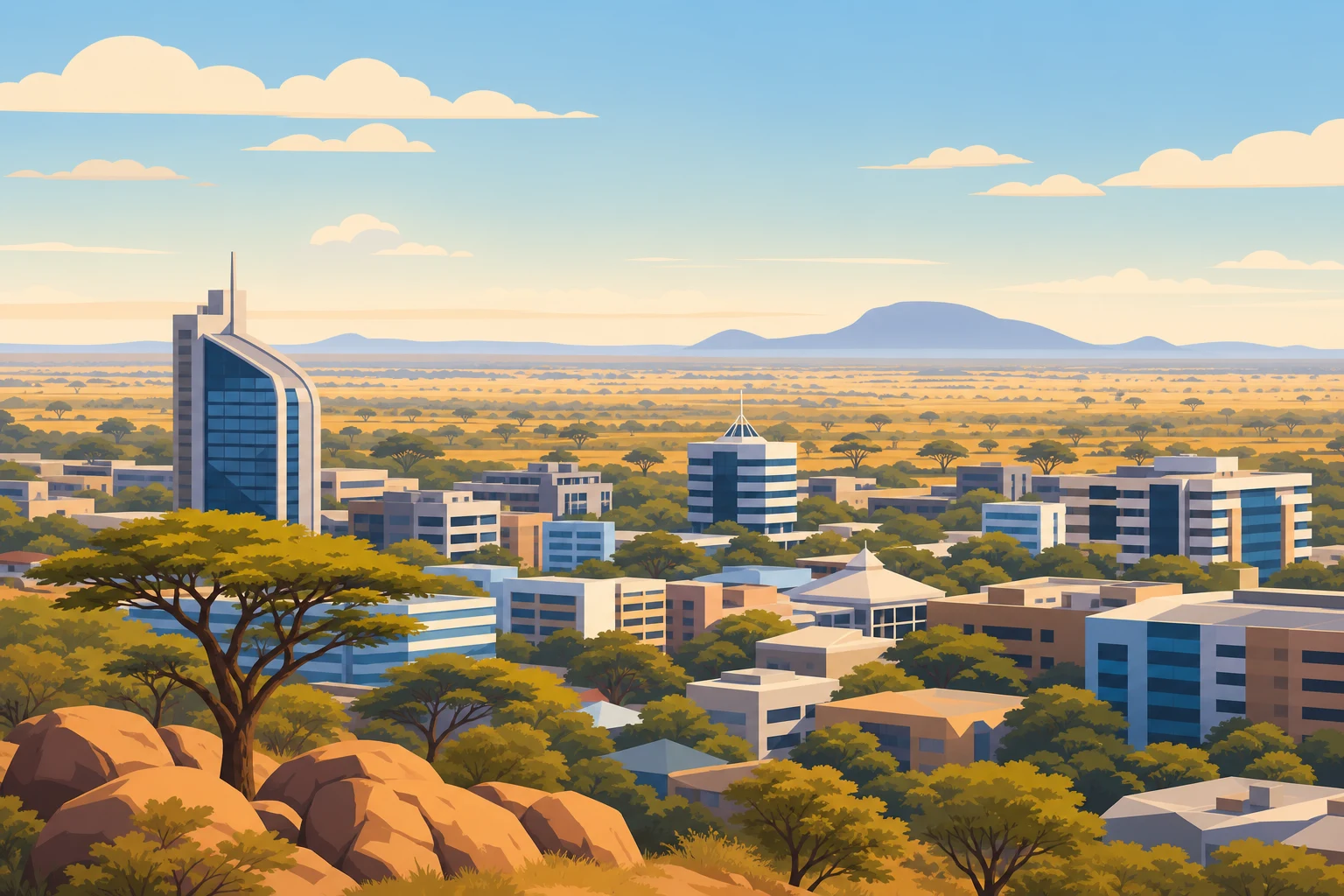
Gaborone is the capital of Botswana, a modern city that grew rapidly after independence in 1966, located near the South African border.
Landmärken: Three Dikgosi Monument, Gaborone Game Reserve
Roliga fakta
- Gaborone was a small village of just 12,000 people when it became the capital at independence in 1966.
- Botswana transformed from one of the world's poorest countries to an upper-middle-income nation thanks to diamond mining.
- The city is named after Chief Gaborone of the Tlokwa people who settled the area in the 1880s.
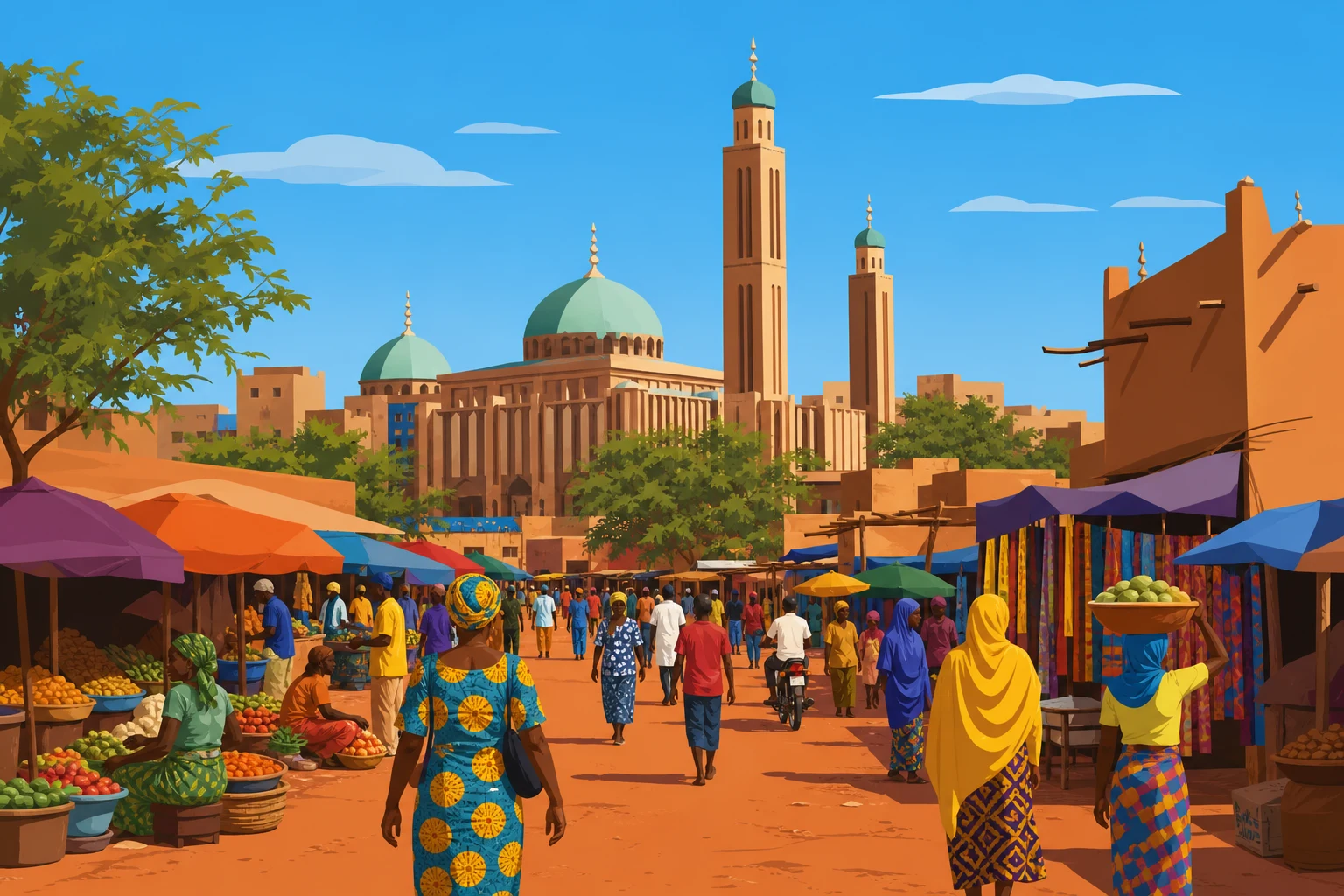
Ouagadougou
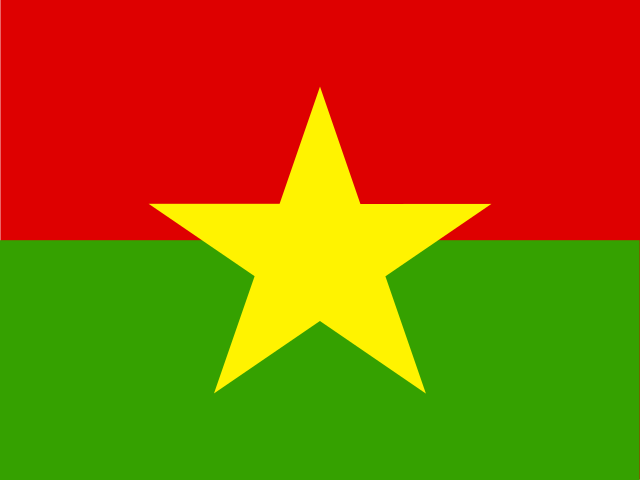
Burkina Faso
Befolkning: 2.8 million
Ouagadougou is the capital of Burkina Faso, a cultural hub in West Africa known for hosting FESPACO, Africa's largest film festival.
Landmärken: Grand Mosque of Ouagadougou, Bangr-Weoogo Urban Park
Roliga fakta
- Ouagadougou hosts FESPACO, the largest African film festival, held biennially since 1969.
- The city's name is often shortened to "Ouaga" and means "where people get honor and respect."
- Burkina Faso means "Land of Incorruptible People" in the Mooré and Dyula languages.
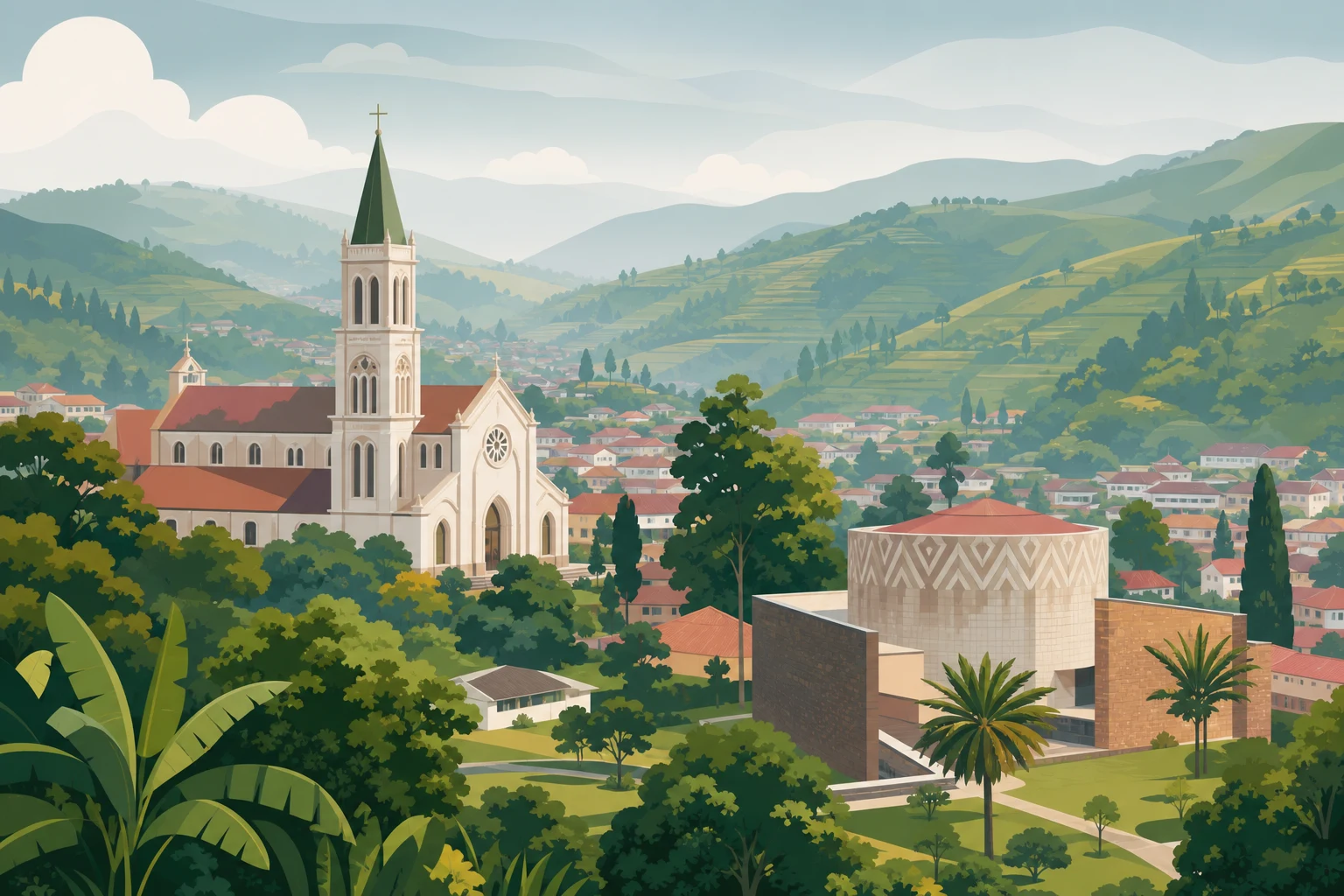
Gitega
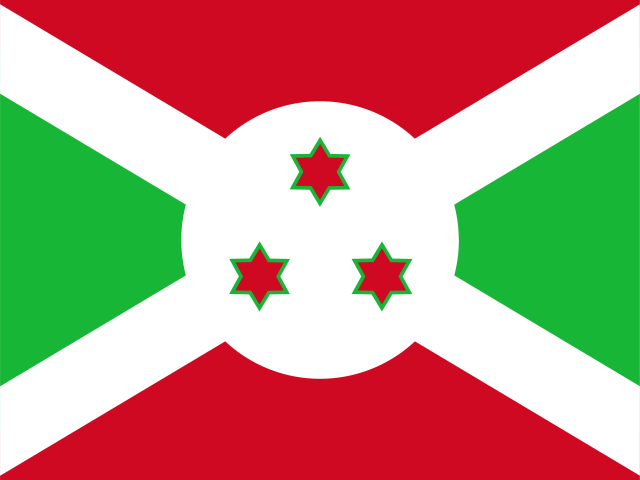
Burundi
Befolkning: 135,000
Gitega is the political capital of Burundi since 2019, a central highland city that replaced Bujumbura as the official capital.
Landmärken: Gitega National Museum, Gitega Cathedral
Roliga fakta
- Gitega replaced Bujumbura as the political capital in 2019, though Bujumbura remains the economic capital.
- The city was the seat of the Burundian monarchy before colonization.
- Gitega sits at an elevation of about 1,645 meters in the central highlands of Burundi.
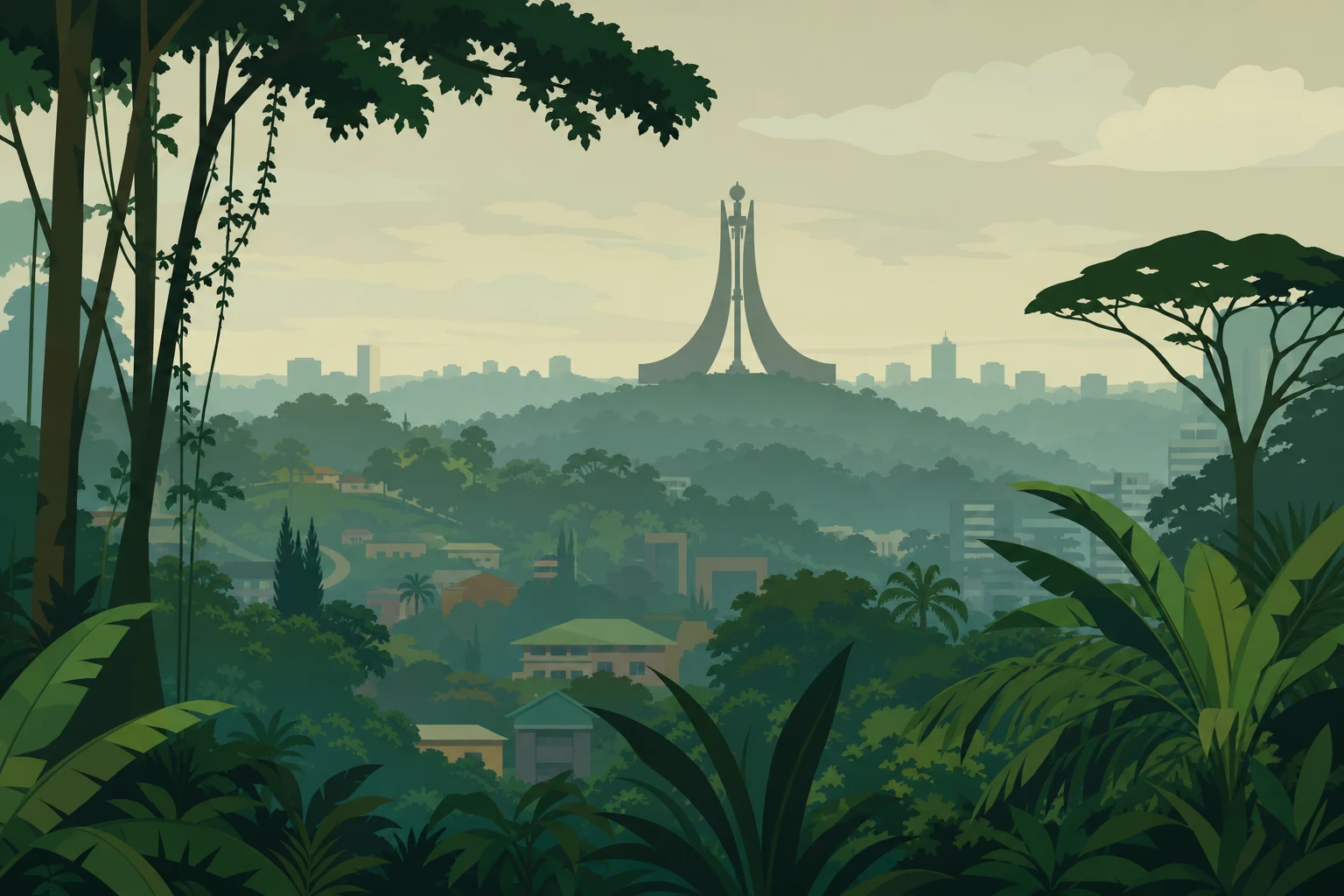
Yaoundé
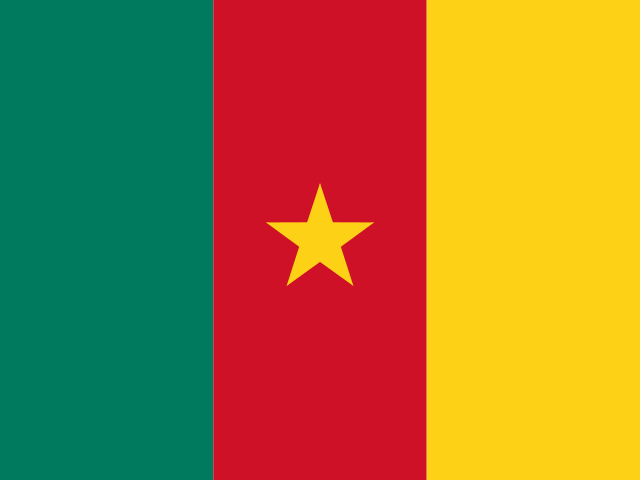
Kamerun
Befolkning: 4.1 million
Yaoundé is the capital of Cameroon, a city of seven hills in the south-central part of the country surrounded by tropical rainforest.
Landmärken: Reunification Monument, National Museum of Yaoundé
Roliga fakta
- Yaoundé is built on seven hills and is sometimes called the "City of Seven Hills."
- Cameroon is known as "Africa in miniature" because it has all of Africa's major climate zones and landscapes.
- The city was established as a German colonial trading post in 1889.
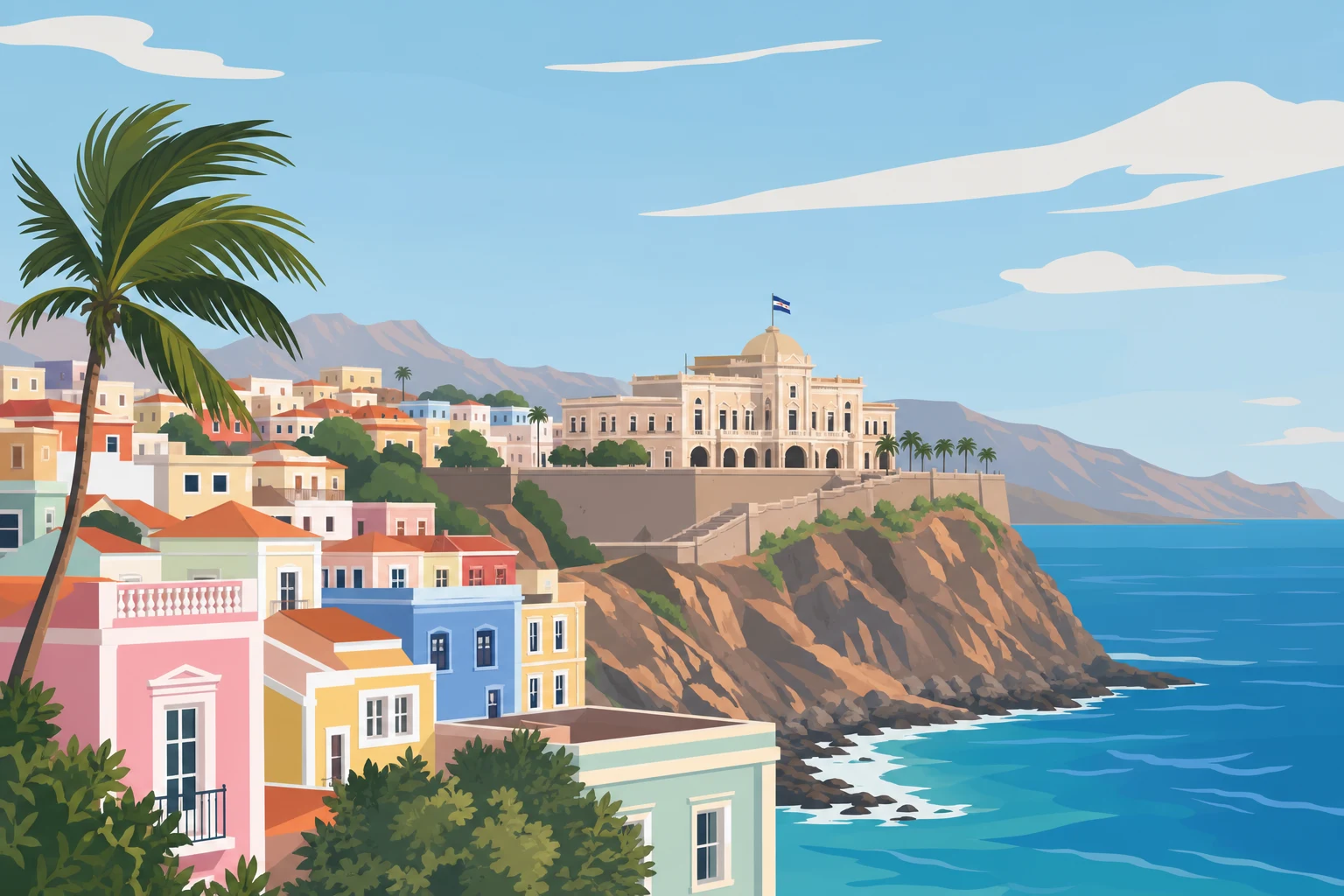
Praia
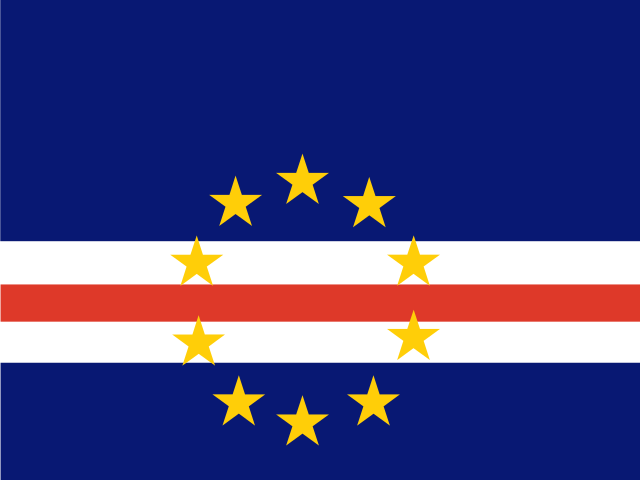
Kap Verde
Befolkning: 160,000
Praia is the capital of Cape Verde, a port city on the southern tip of Santiago Island in the Atlantic Ocean.
Landmärken: Praia Presidential Palace, Plateau District
Roliga fakta
- Cape Verde is an archipelago of 10 volcanic islands located 570 km off the west coast of Africa.
- Praia sits on a plateau overlooking the ocean and was founded by Portuguese settlers in the 1460s.
- Cape Verde has one of the highest literacy rates in Africa at over 87%.
Bangui
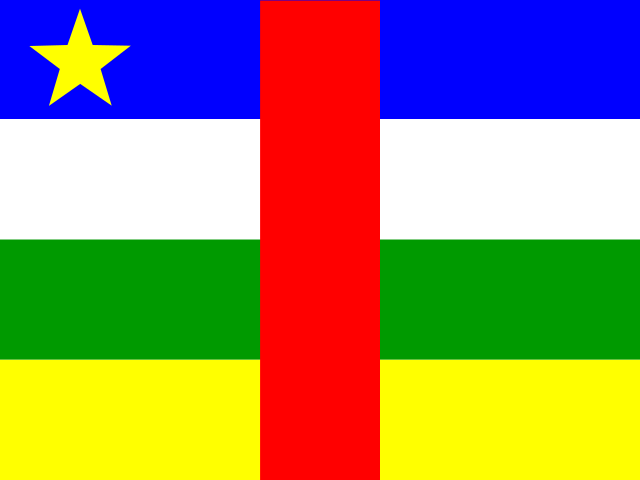
Centralafrikanska republiken
Befolkning: 900,000
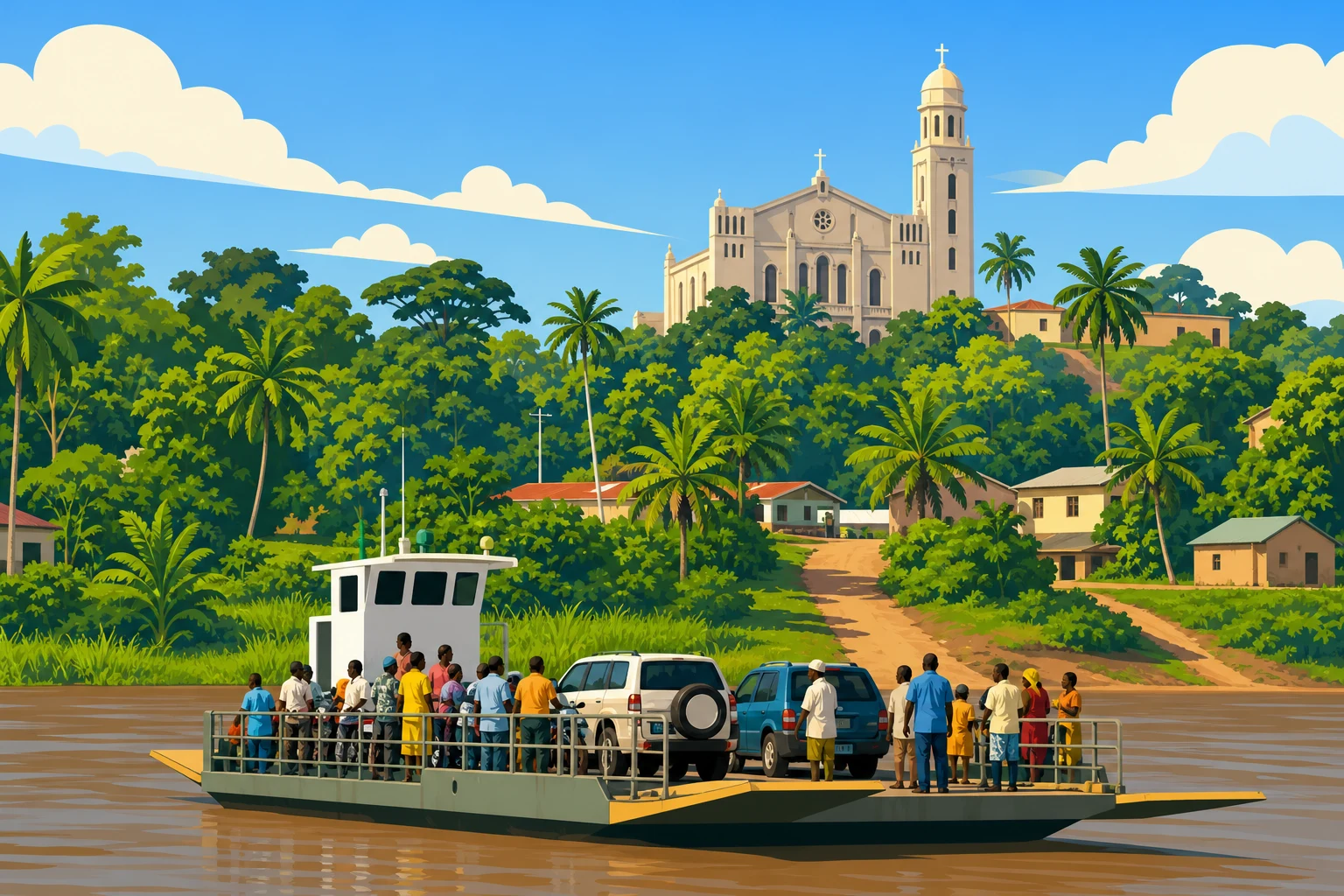
Bangui is the capital of the Central African Republic, located on the northern bank of the Ubangi River near the border with the Democratic Republic of the Congo.
Landmärken: Notre-Dame Cathedral of Bangui, Boganda National Museum
Roliga fakta
- Bangui sits on the banks of the Ubangi River, which forms the border with the Democratic Republic of the Congo.
- The Bangui Magnetic Anomaly is one of the largest magnetic anomalies on Earth, detectable even from space.
- The city was founded as a French colonial outpost in 1889.
N'Djamena
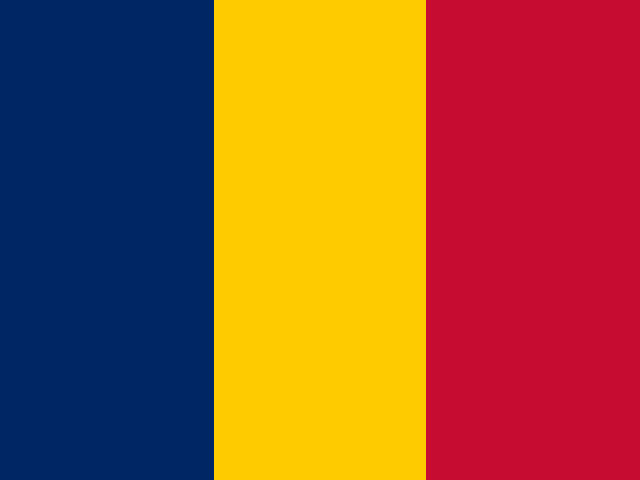
Tchad
Befolkning: 1.6 million
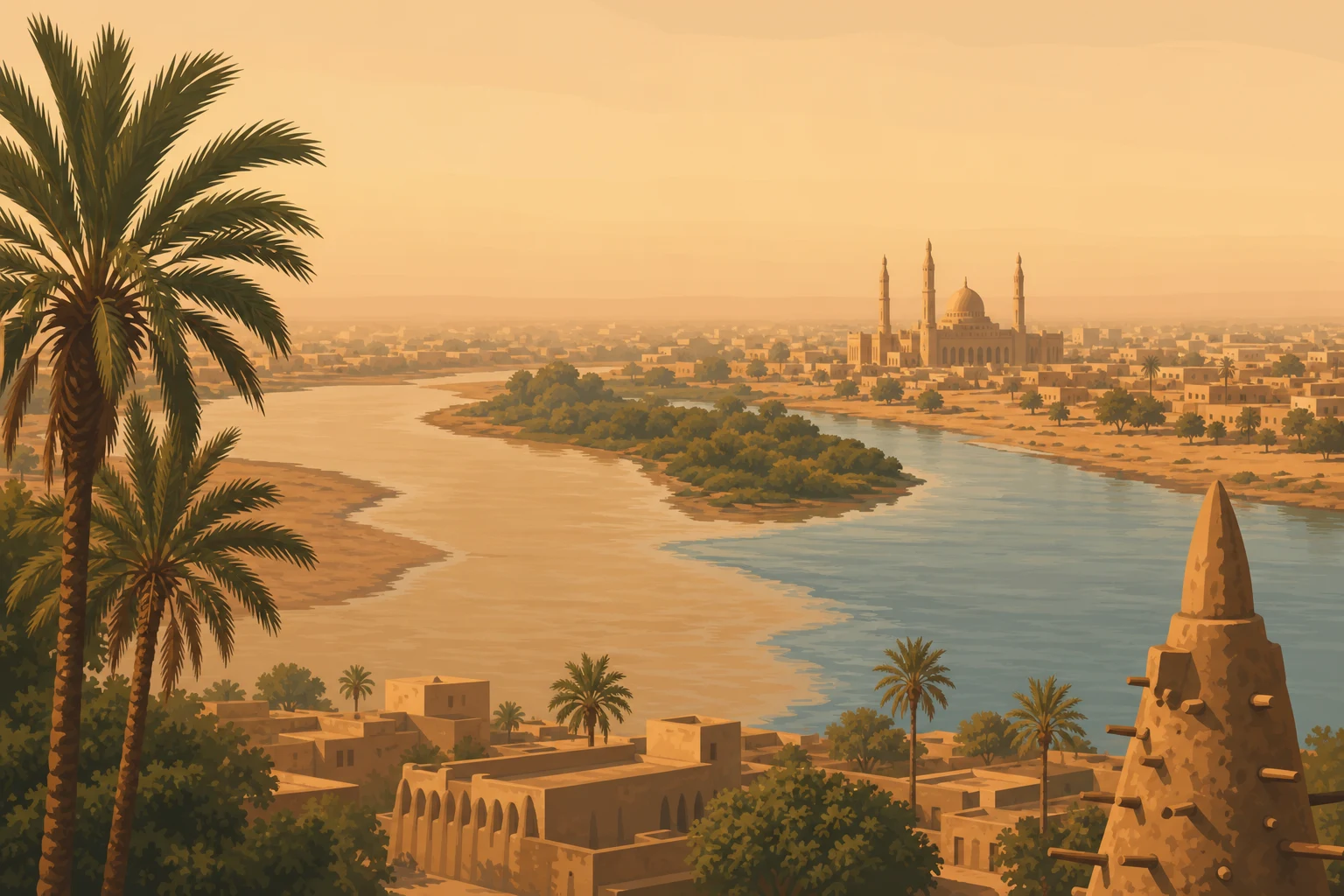
N'Djamena is the capital of Chad, located at the confluence of the Chari and Logone rivers near the border with Cameroon.
Landmärken: Grand Mosque of N'Djamena, National Museum of Chad
Roliga fakta
- N'Djamena was originally named Fort-Lamy by the French and was renamed in 1973 from an Arabic word meaning "place of rest."
- The city sits at the confluence of the Chari and Logone rivers near Lake Chad.
- Chad is named after Lake Chad, which has shrunk by 90% since the 1960s due to climate change and irrigation.
Moroni
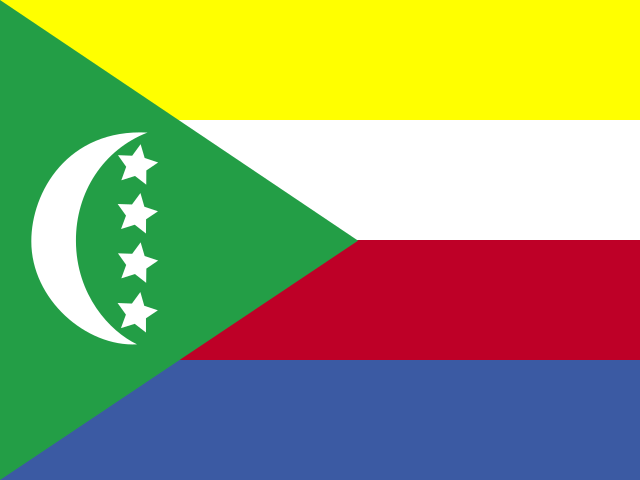
Komorerna
Befolkning: 55,000
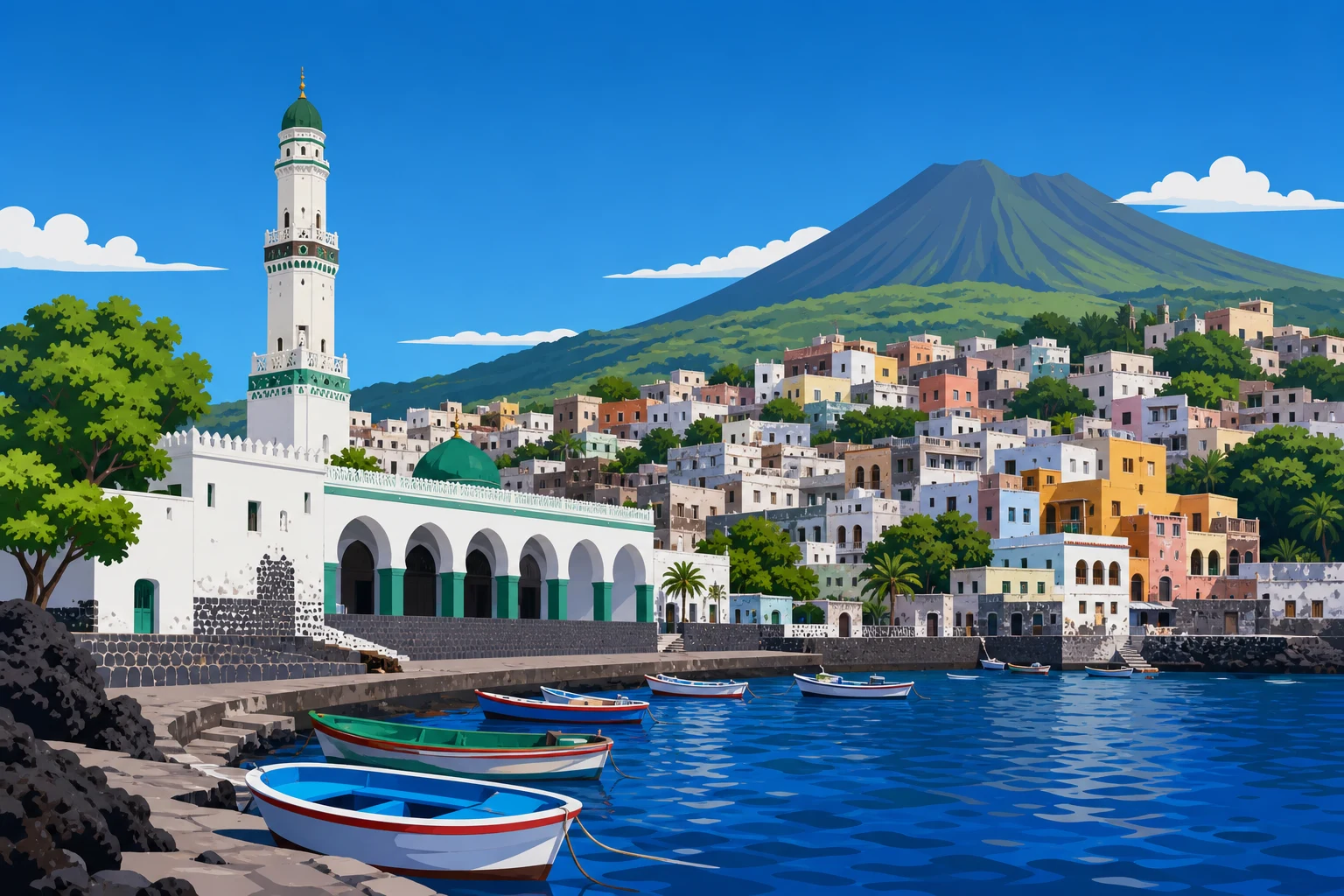
Moroni is the capital of Comoros, a small port city on the western coast of Grande Comore island at the foot of Mount Karthala volcano.
Landmärken: Ancienne Mosquée de Vendredi, Medina of Moroni
Roliga fakta
- Moroni sits at the foot of Mount Karthala, one of the world's largest active volcanoes.
- The Comoros archipelago is located in the Mozambique Channel between Madagascar and mainland Africa.
- Comoros is one of the world's largest producers of ylang-ylang, used in luxury perfumes.
Brazzaville
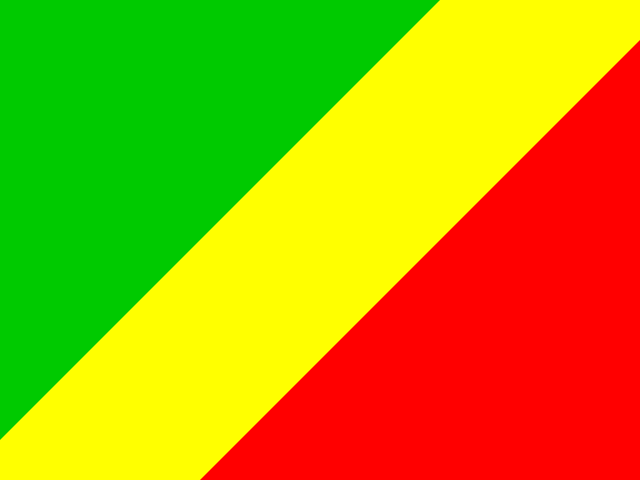
Republiken Kongo
Befolkning: 2.4 million
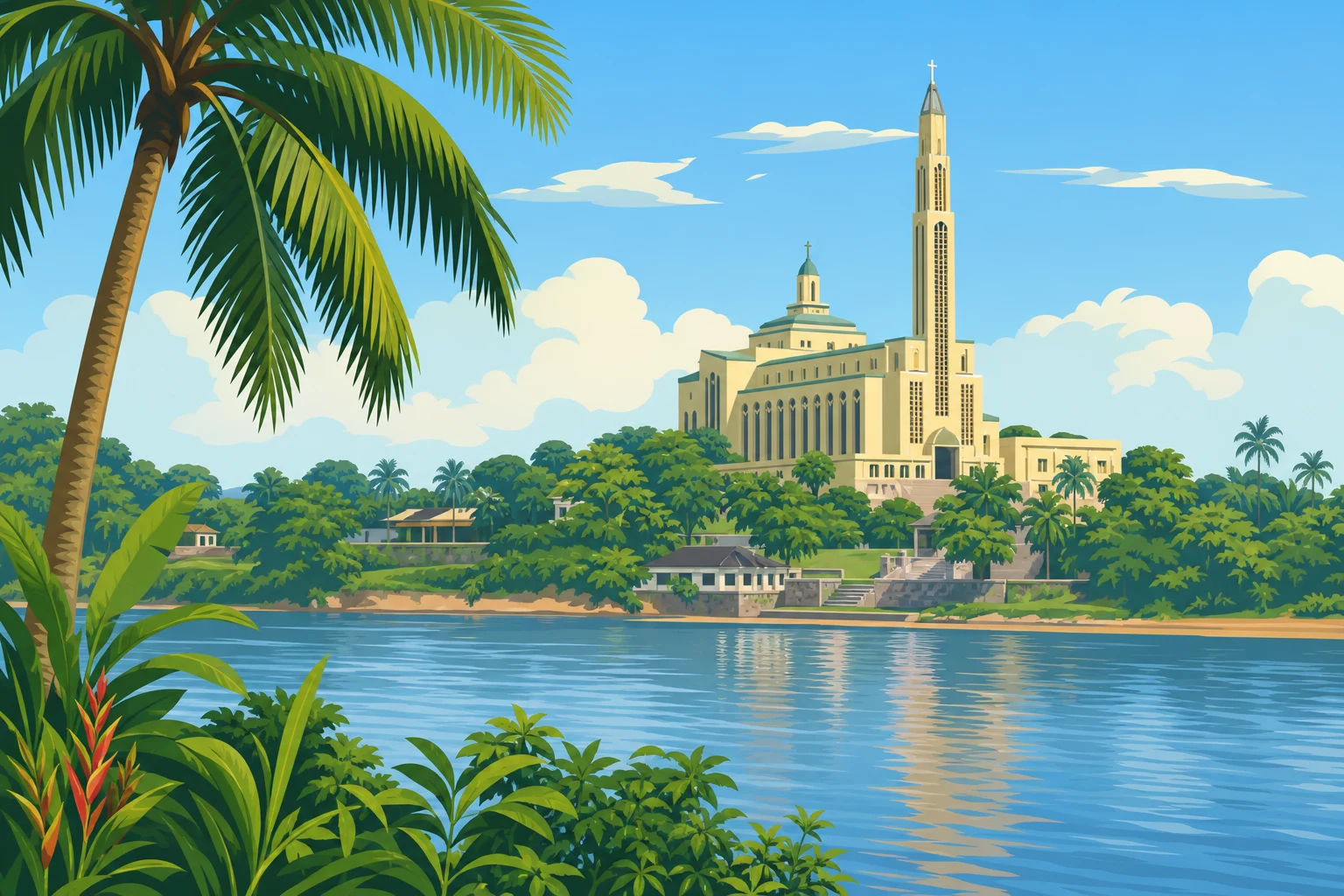
Brazzaville is the capital of the Republic of the Congo, located directly across the Congo River from Kinshasa, making them the world's closest pair of capital cities.
Landmärken: Basilique Sainte-Anne, Pierre Savorgnan de Brazza Memorial
Roliga fakta
- Brazzaville and Kinshasa are the closest pair of capital cities in the world, separated only by the Congo River.
- The city is named after Italian-French explorer Pierre Savorgnan de Brazza.
- Brazzaville served as the capital of Free France during World War II from 1940 to 1943.
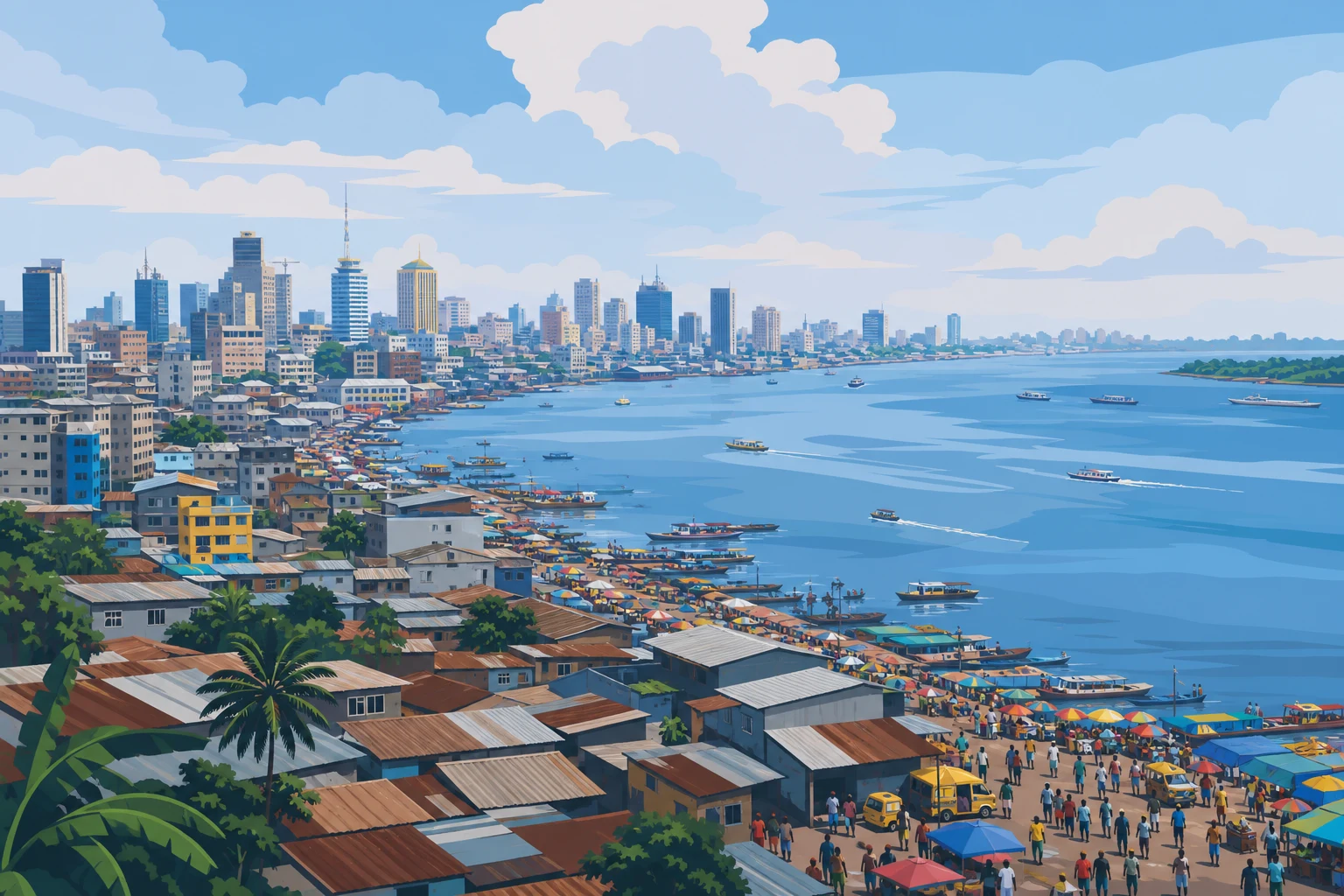
Kinshasa
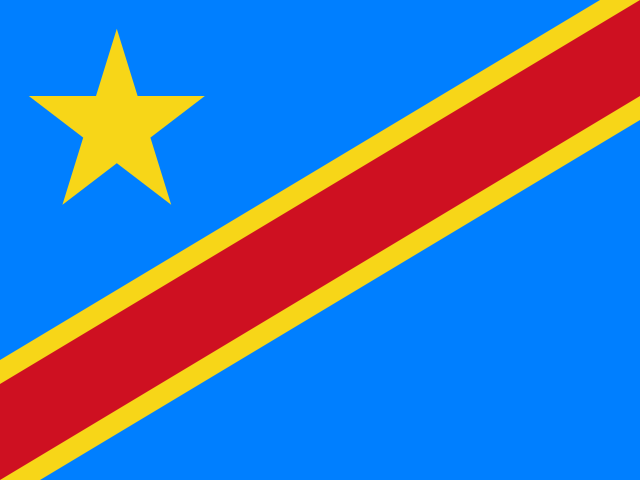
Demokratiska republiken Kongo
Befolkning: 17.1 million
Kinshasa is the capital of the Democratic Republic of the Congo, the third-largest city in Africa and the most populous Francophone city in the world.
Landmärken: Palais de la Nation, Académie des Beaux-Arts
Roliga fakta
- Kinshasa is the largest Francophone city in the world, surpassing Paris in population.
- The city faces Brazzaville across the Congo River, making them the world's two closest capital cities.
- Kinshasa was founded in 1881 by Henry Morton Stanley and originally named Léopoldville.
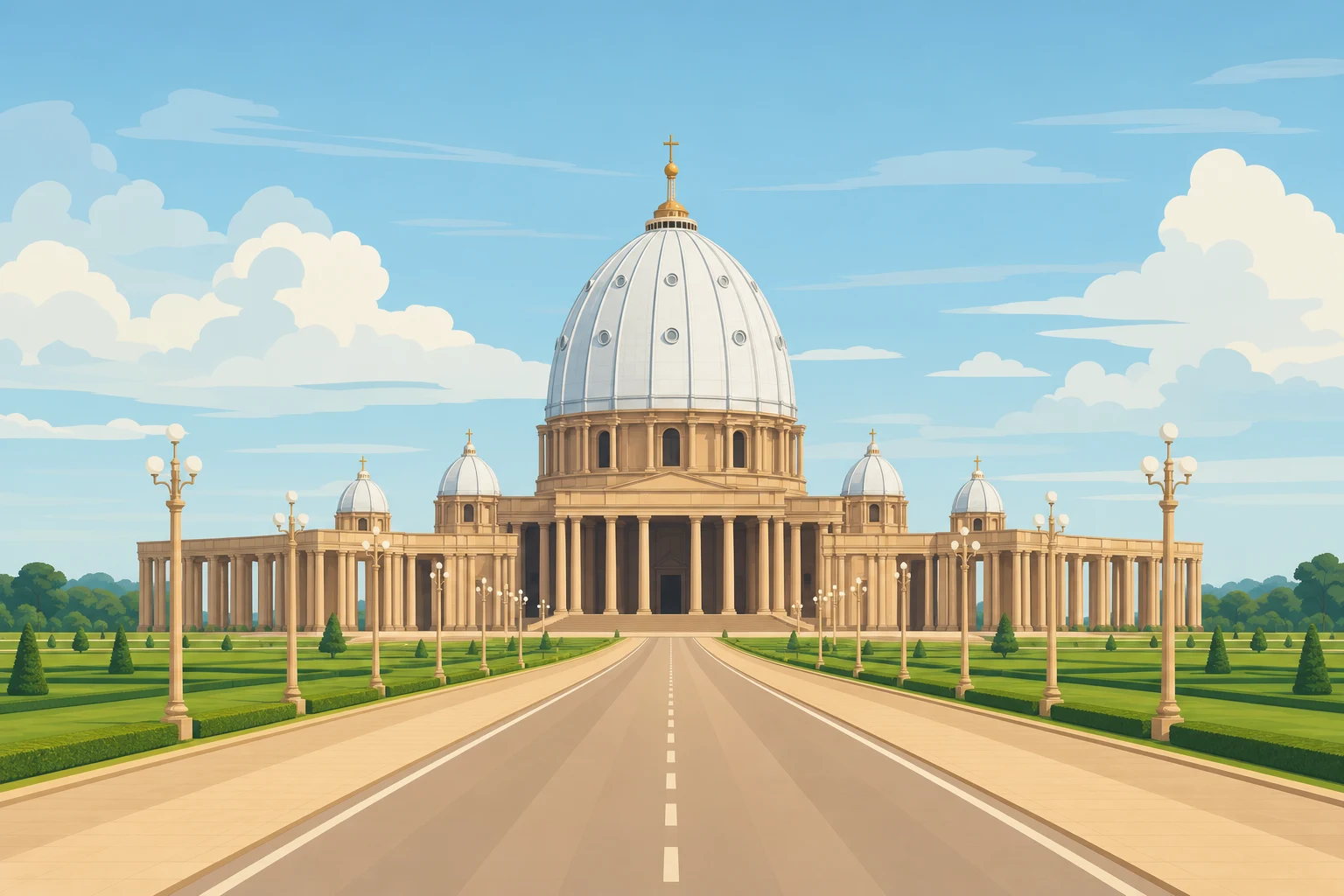
Yamoussoukro
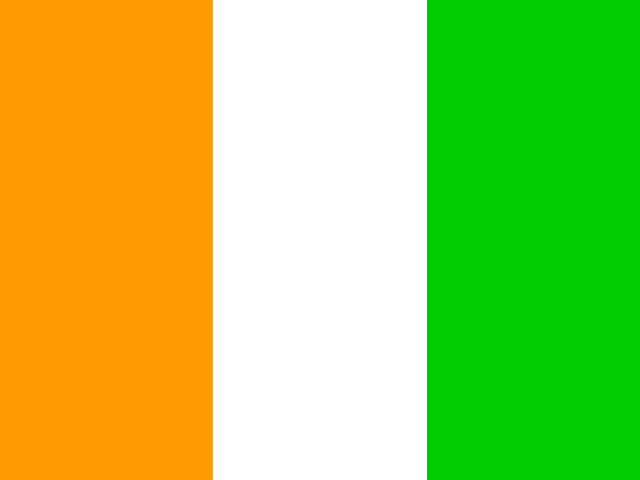
Côte d'Ivoire
Befolkning: 360,000
Yamoussoukro is the official capital of Côte d'Ivoire, known for the enormous Basilica of Our Lady of Peace, the largest church in the world.
Landmärken: Basilica of Our Lady of Peace, Fondation Félix Houphouët-Boigny
Roliga fakta
- The Basilica of Our Lady of Peace in Yamoussoukro is the largest church in the world, larger than St. Peter's in Rome.
- Yamoussoukro became the capital in 1983 because it was the hometown of President Félix Houphouët-Boigny.
- Abidjan remains the economic capital and largest city, where most government functions still operate.
Djibouti
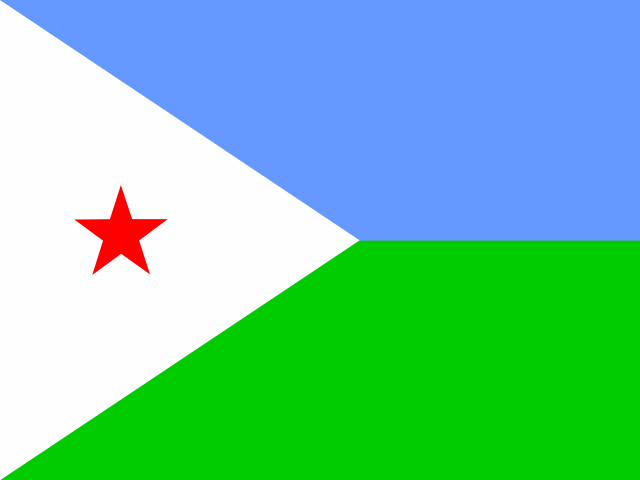
Djibouti
Befolkning: 600,000
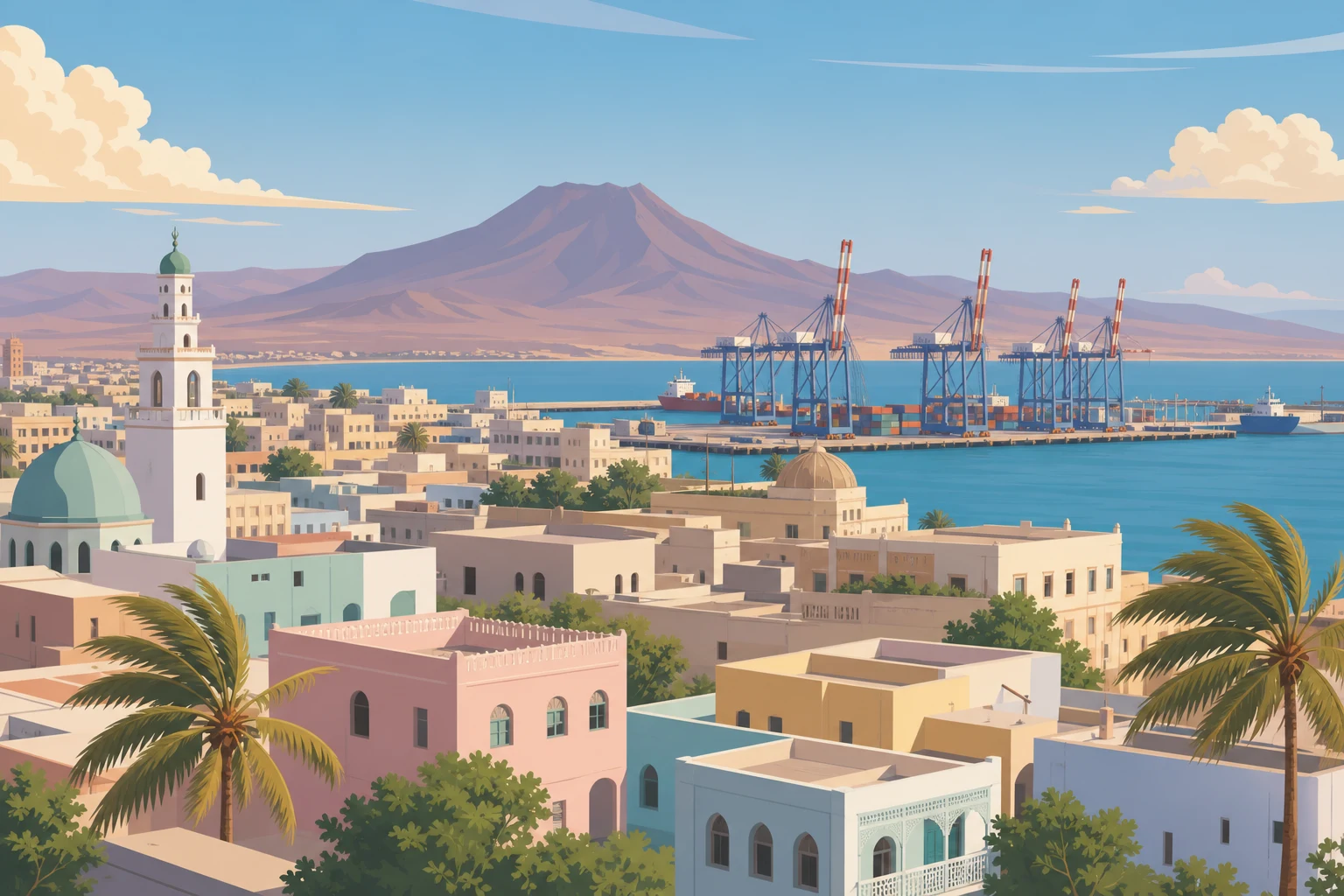
Djibouti is the capital of the Republic of Djibouti, a strategically located port city at the southern entrance to the Red Sea.
Landmärken: Hamoudi Mosque, Presidential Palace
Roliga fakta
- Djibouti hosts military bases from the United States, France, China, Japan, and Italy due to its strategic location.
- The country sits at the Bab-el-Mandeb strait, through which 30% of global shipping passes.
- Lake Assal in Djibouti is the lowest point in Africa at 155 meters below sea level and the saltiest body of water outside Antarctica.
Cairo
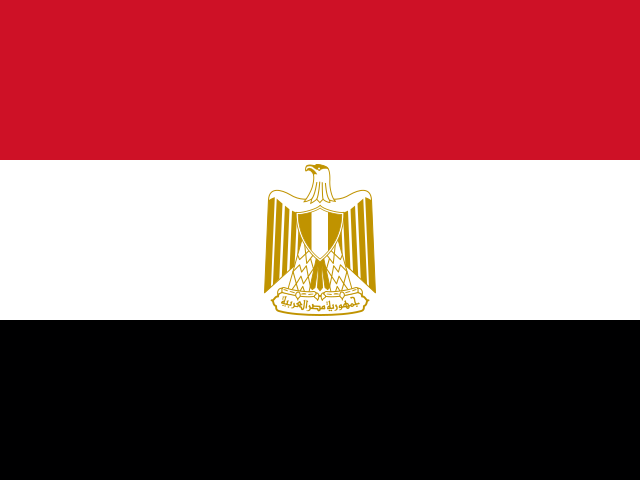
Egypten
Befolkning: 10.1 million
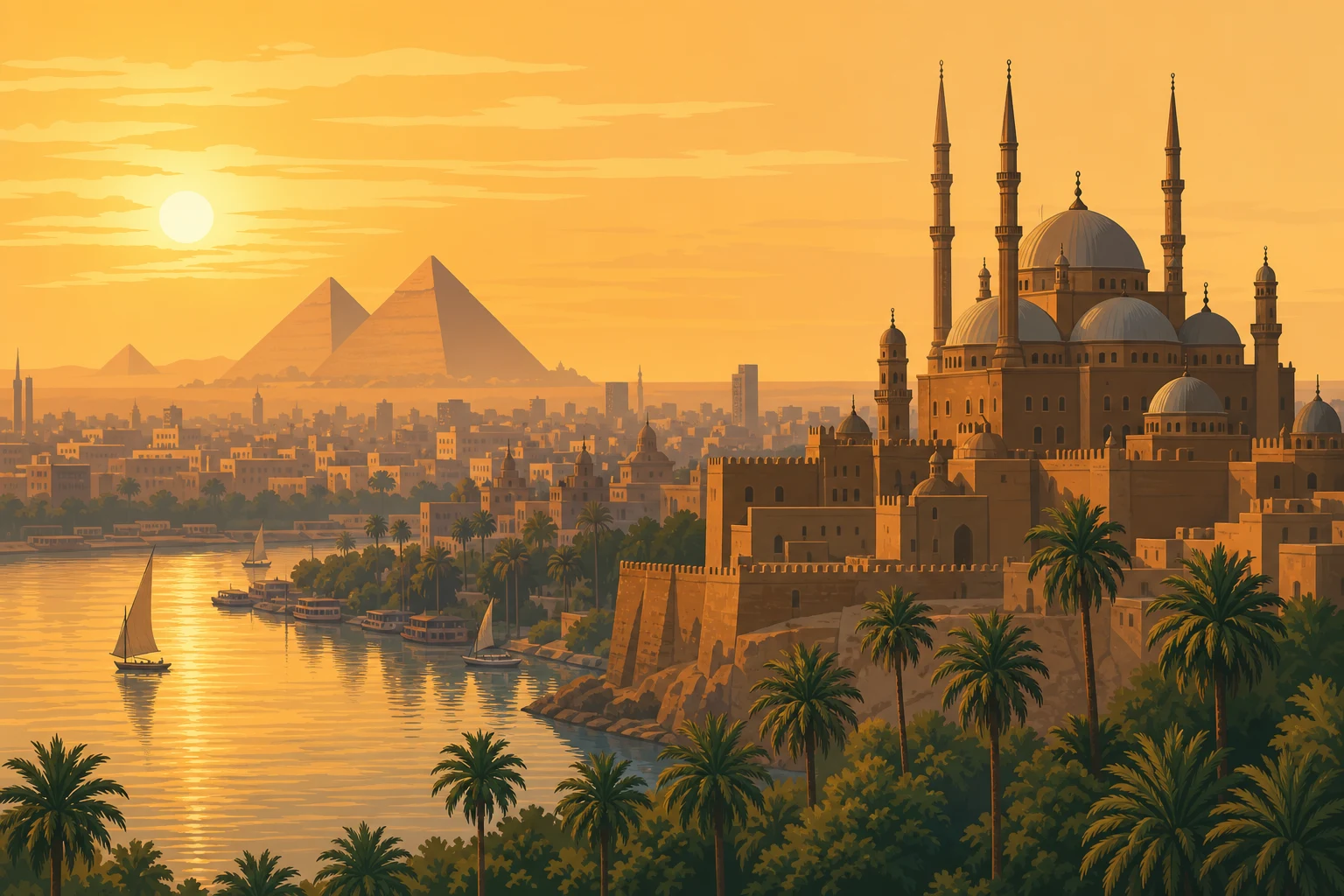
Cairo is the capital of Egypt, the largest city in Africa and the Arab world, located near the ancient Pyramids of Giza on the Nile River.
Landmärken: Pyramids of Giza, Egyptian Museum
Roliga fakta
- Cairo is the largest city in Africa and the Arab world with a metropolitan population exceeding 21 million.
- The Great Pyramid of Giza, the last surviving Wonder of the Ancient World, is on Cairo's outskirts.
- Cairo is known as "The City of a Thousand Minarets" for its abundance of Islamic architecture.
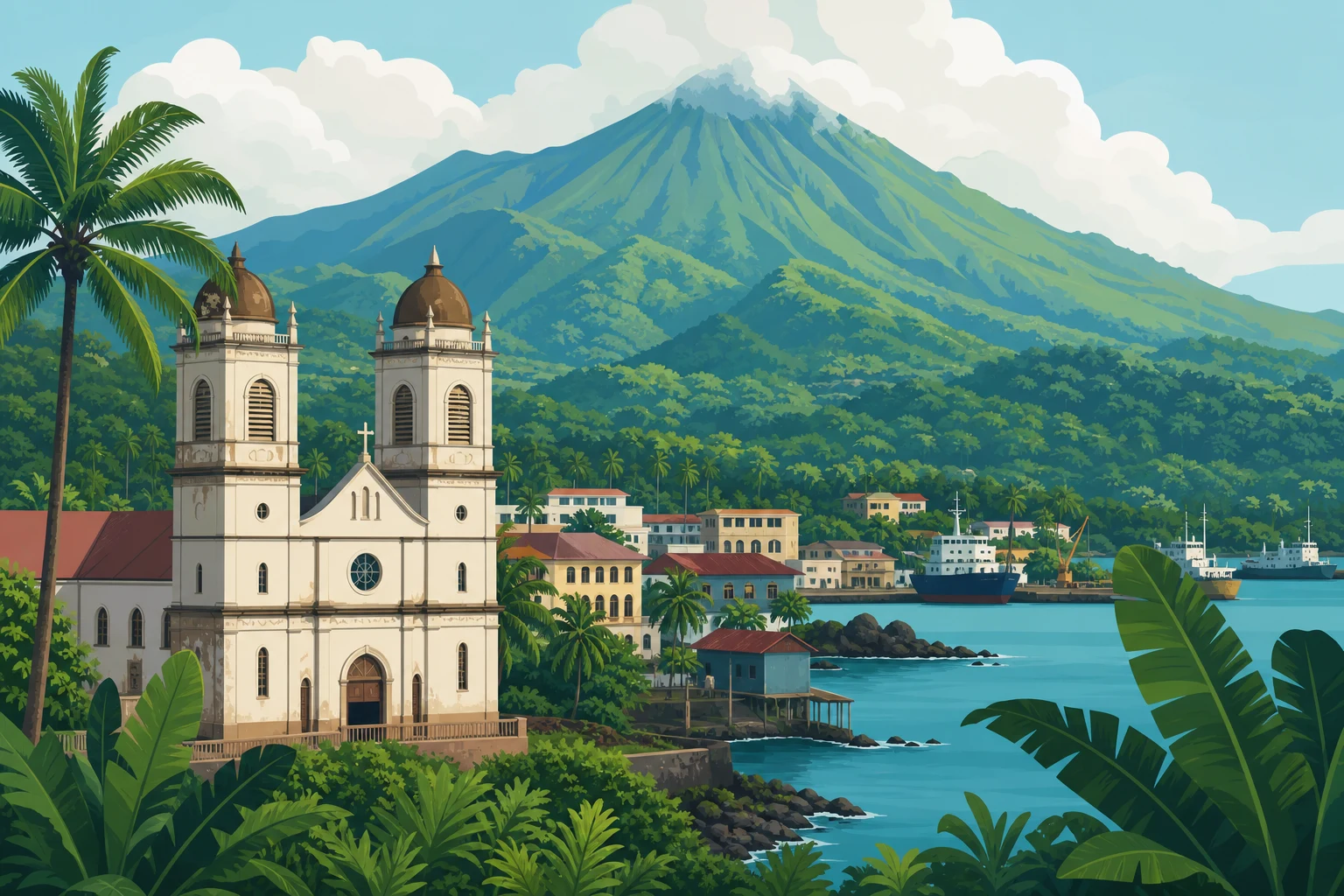
Ciudad de la Paz
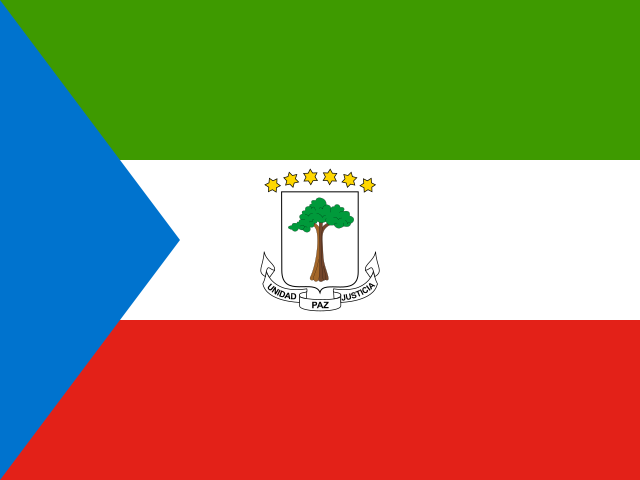
Ekvatorialguinea
Befolkning: 70,000
Ciudad de la Paz (formerly Oyala) is the capital of Equatorial Guinea, a purpose-built city in the mainland interior that replaced Malabo on Bioko Island as the official capital in 2024.
Landmärken: Sipopo Congress Centre, Oyala Stadium
Roliga fakta
- Ciudad de la Paz is a purpose-built capital constructed in the dense equatorial rainforest of the mainland.
- Equatorial Guinea is the only country in Africa with Spanish as an official language.
- The former capital, Malabo, is on Bioko Island off the coast of Cameroon.
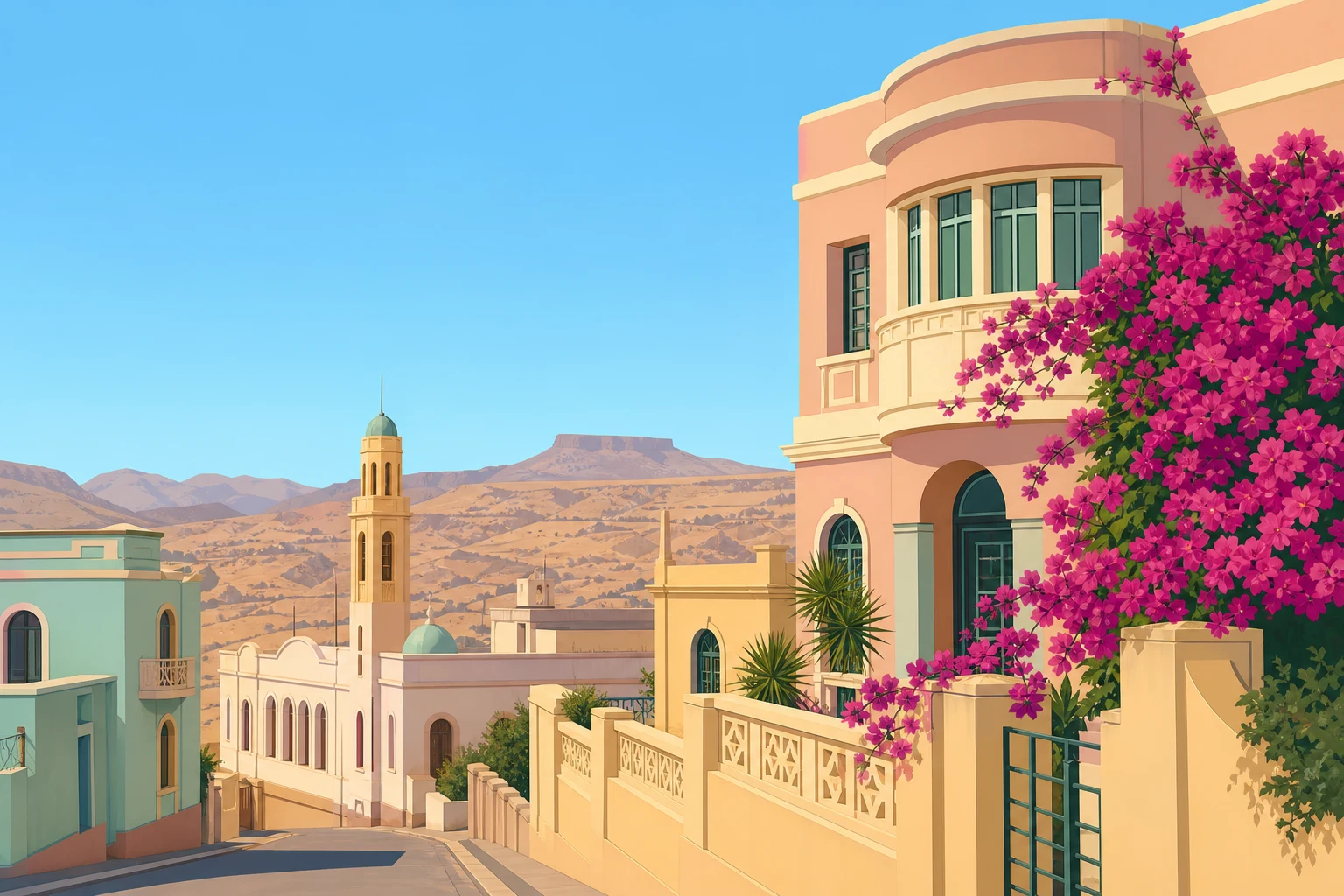
Asmara
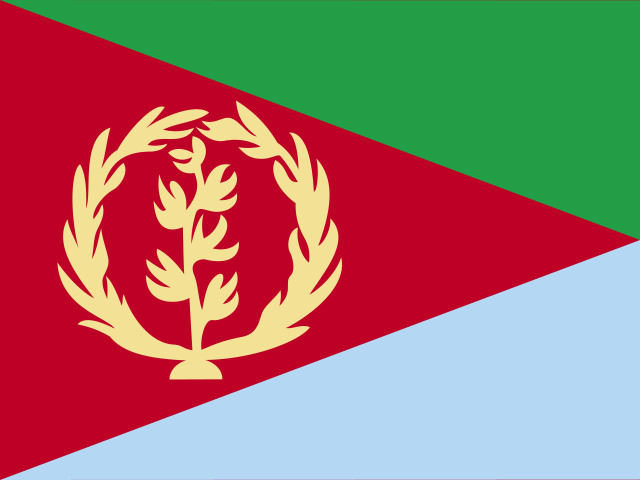
Eritrea
Befolkning: 960,000
Asmara is the capital of Eritrea, a highland city at 2,325 meters elevation known for its remarkably well-preserved Italian modernist architecture.
Landmärken: Fiat Tagliero Building, Cathedral of Asmara
Roliga fakta
- Asmara is a UNESCO World Heritage Site for its exceptional collection of Italian Modernist architecture from the 1930s.
- The city was used by Italy as a laboratory for modernist architecture during its colonial period.
- Asmara sits at 2,325 meters above sea level, giving it a pleasant year-round climate despite being near the equator.
Mbabane
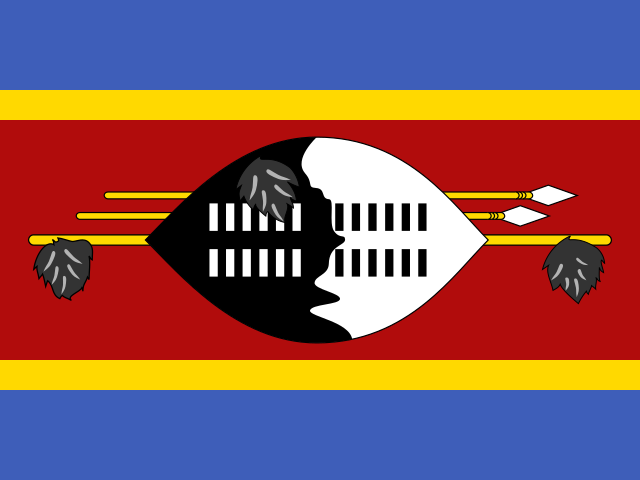
Eswatini
Befolkning: 95,000
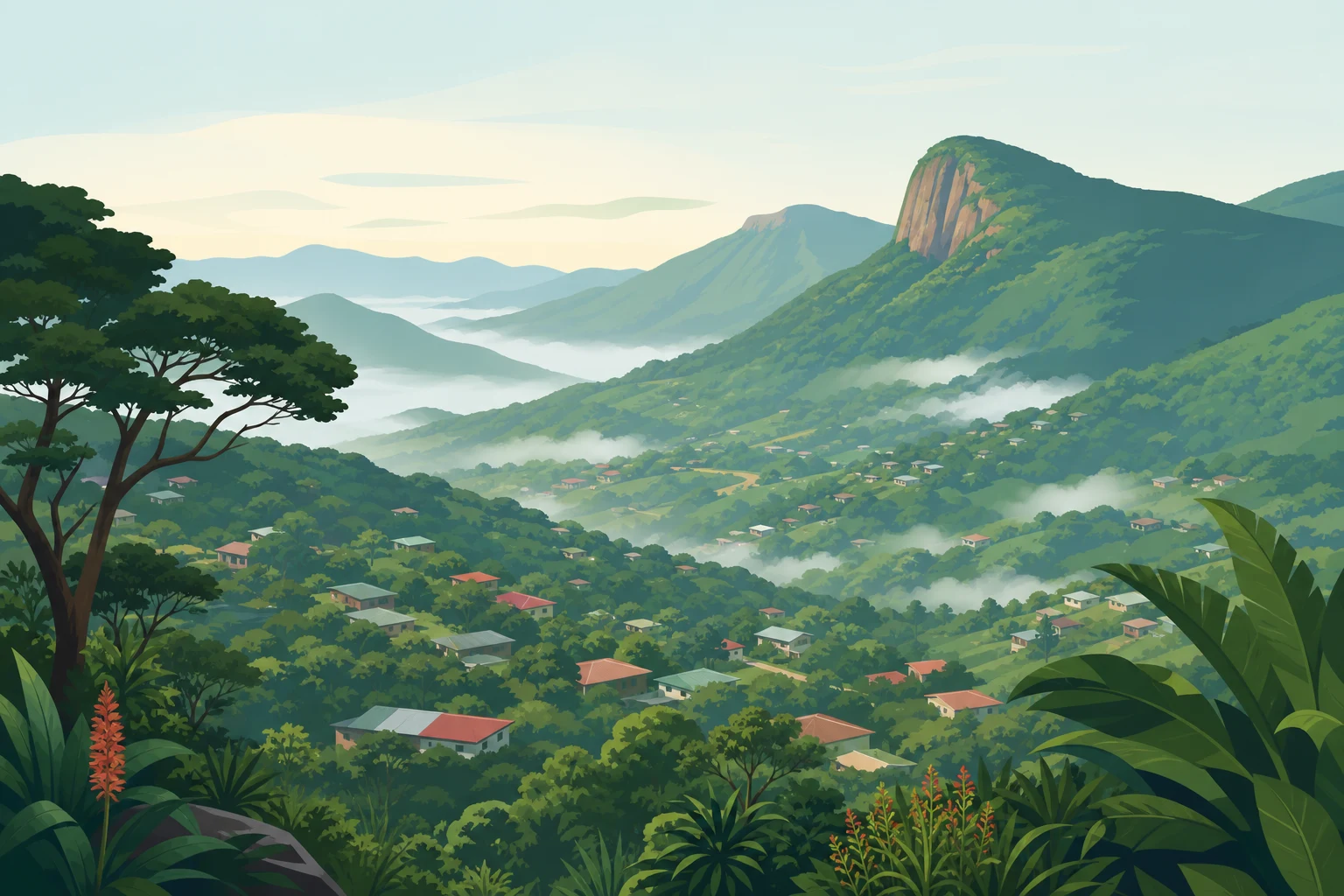
Mbabane is the administrative capital of Eswatini (formerly Swaziland), a small city in the Mdimba Mountains of western Eswatini.
Landmärken: Sibebe Rock, Swazi National Museum
Roliga fakta
- Eswatini is one of the last absolute monarchies in the world, ruled by King Mswati III.
- The country changed its name from Swaziland to Eswatini in 2018 to mark 50 years of independence.
- Lobamba serves as the traditional and legislative capital, while Mbabane is the administrative capital.
Addis Ababa
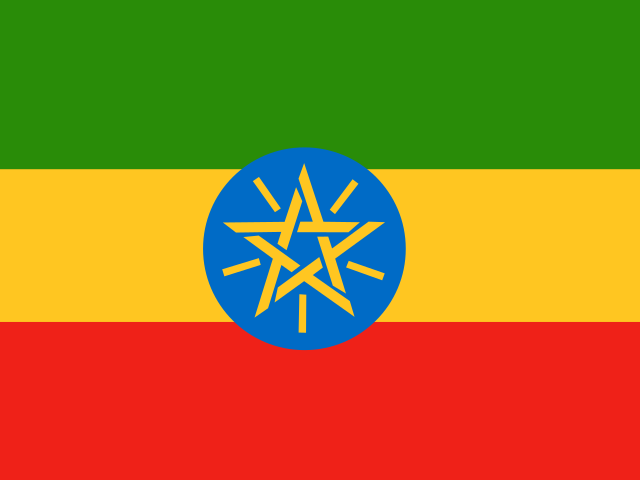
Etiopien
Befolkning: 5.5 million
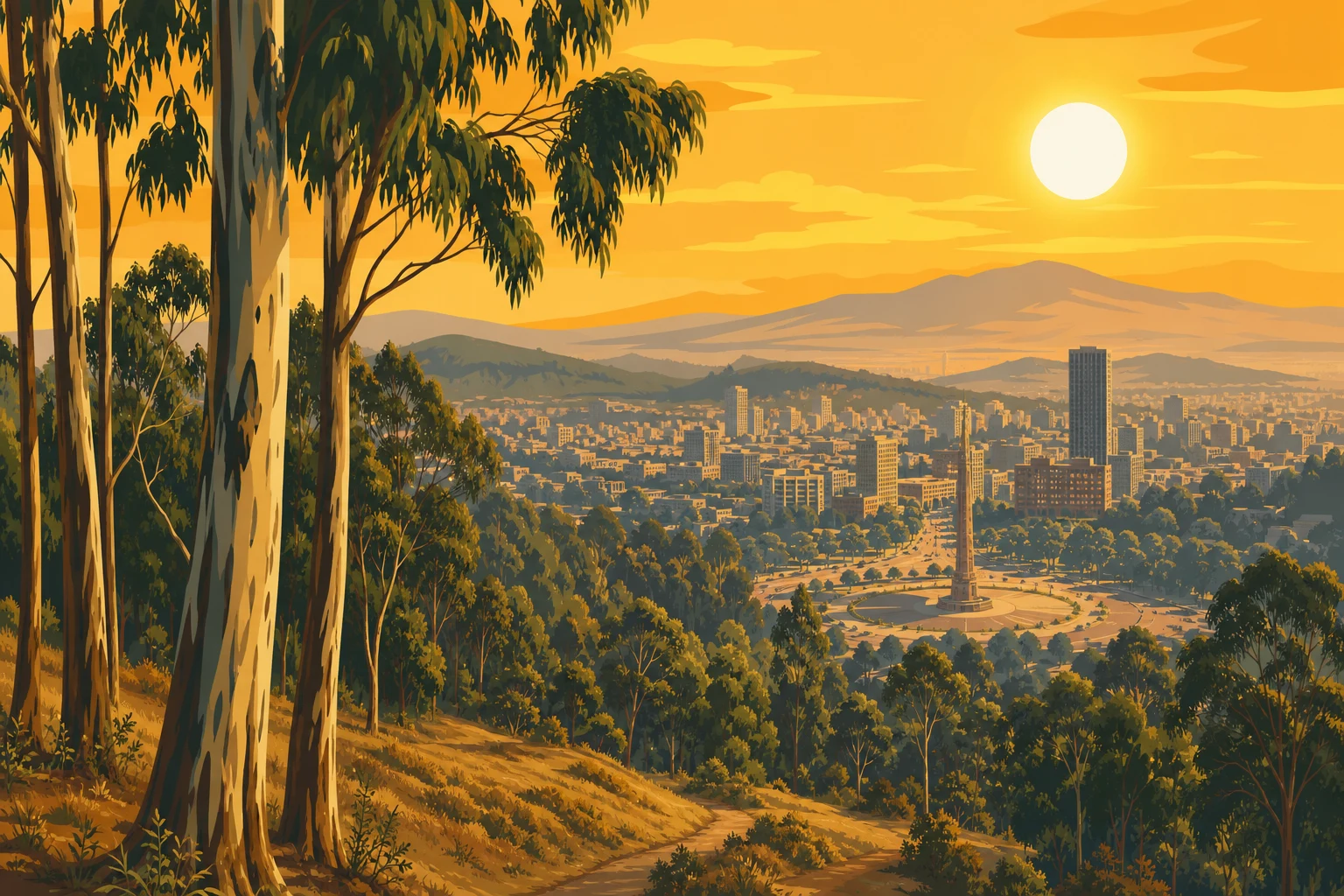
Addis Ababa is the capital of Ethiopia and the diplomatic capital of Africa, serving as headquarters for the African Union.
Landmärken: African Union Headquarters, Holy Trinity Cathedral
Roliga fakta
- Addis Ababa means "New Flower" in Amharic and was founded by Emperor Menelik II in 1886.
- The city serves as the headquarters of the African Union and is often called the "political capital of Africa."
- Ethiopia is the only African country that was never colonized, maintaining its independence except for a brief Italian occupation.
Libreville
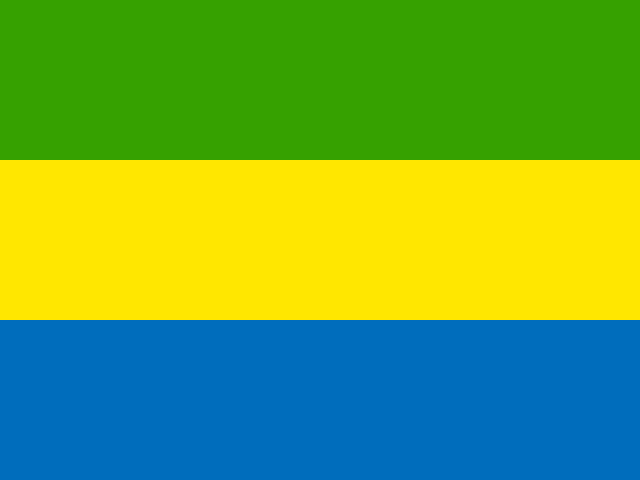
Gabon
Befolkning: 850,000
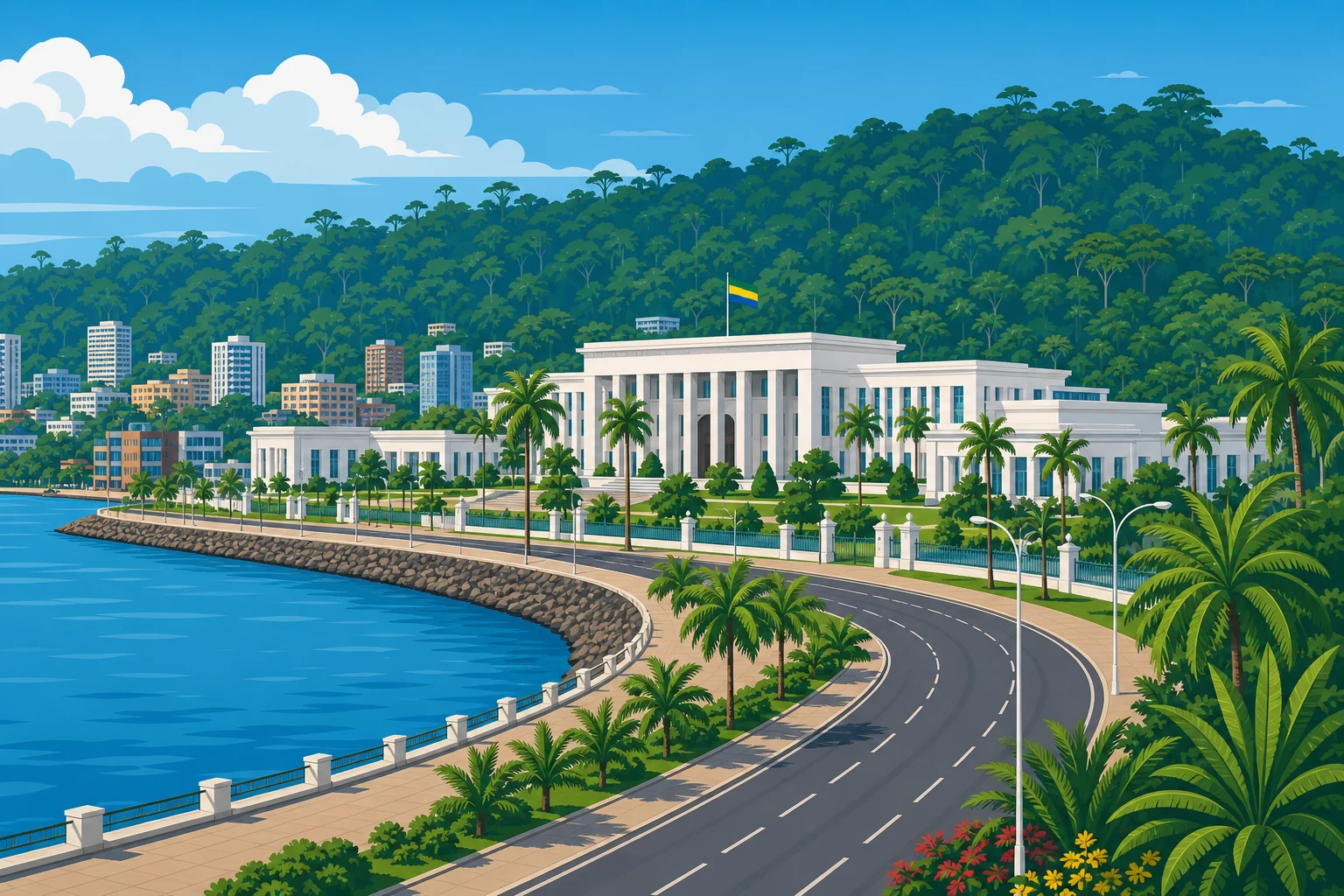
Libreville is the capital of Gabon, a port city on the estuary of the Komo River named by freed slaves in 1849.
Landmärken: St. Marie Cathedral, Arboretum de Sibang
Roliga fakta
- Libreville means "Free Town" in French, named by freed slaves who settled there in 1849.
- Gabon is one of the most urbanized countries in Africa with over 87% of its population living in cities.
- Despite its small population, Gabon is one of Africa's wealthiest countries per capita due to oil exports.
Banjul
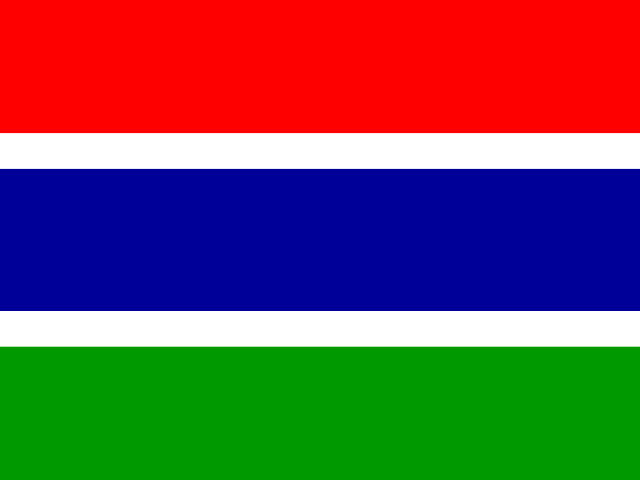
Gambia
Befolkning: 35,000
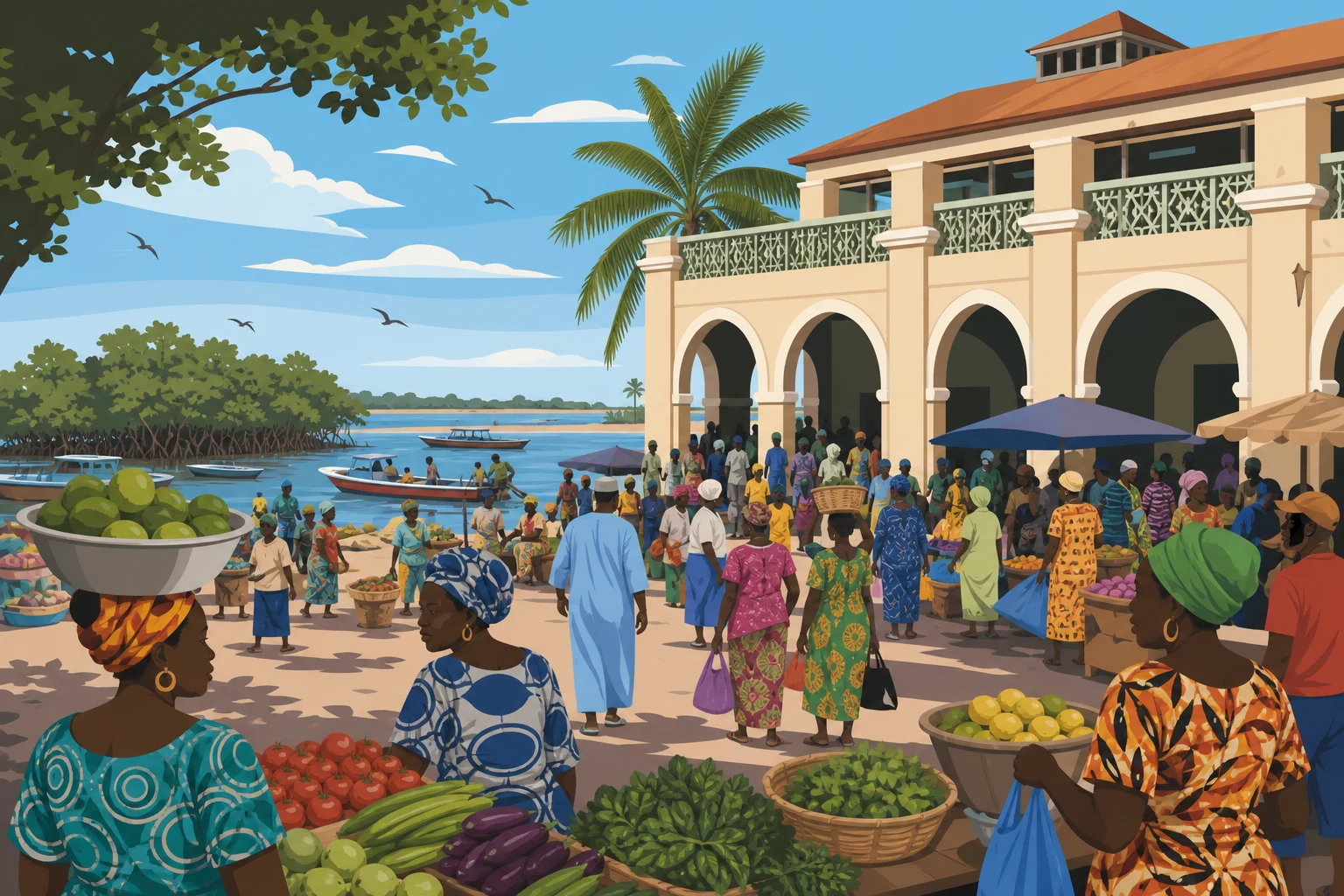
Banjul is the capital of The Gambia, located on St. Mary's Island where the Gambia River meets the Atlantic Ocean.
Landmärken: Arch 22, Albert Market
Roliga fakta
- The Gambia is the smallest country in mainland Africa, essentially a narrow strip of land along the Gambia River.
- Banjul is one of Africa's smallest capitals with only about 35,000 residents.
- The country is almost entirely surrounded by Senegal, except for its short Atlantic coastline.
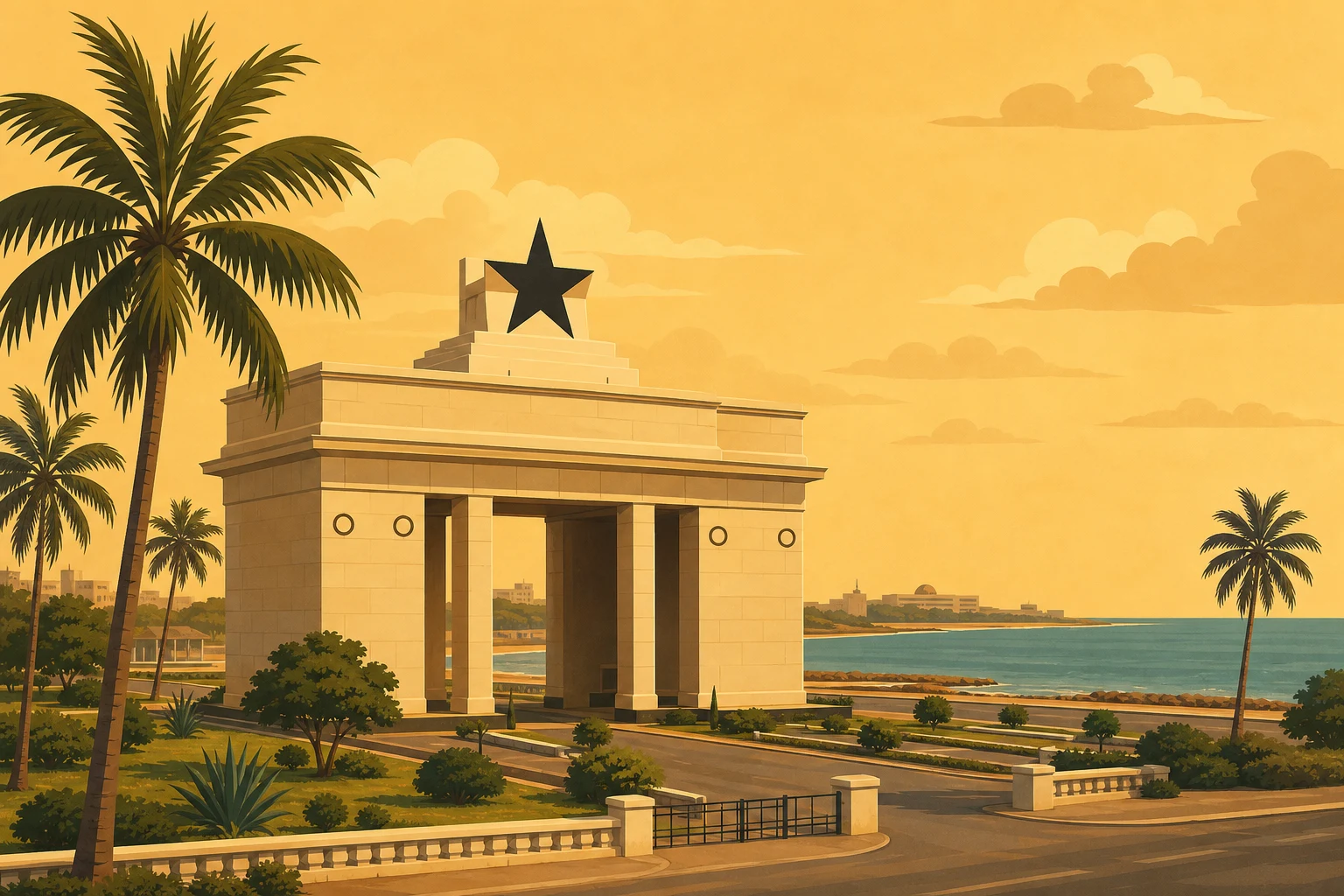
Accra
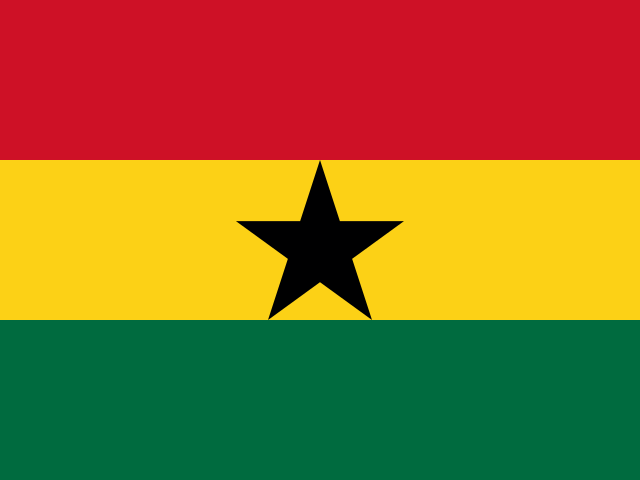
Ghana
Befolkning: 4.0 million
Accra is the capital of Ghana, a vibrant coastal city on the Gulf of Guinea known for its mix of colonial architecture and modern development.
Landmärken: Kwame Nkrumah Mausoleum, Independence Square
Roliga fakta
- Ghana was the first sub-Saharan African country to gain independence from a European colonial power in 1957.
- Accra's Makola Market is one of the largest open-air markets in West Africa.
- The city was built around several historic European trading forts and castles from the 17th century.
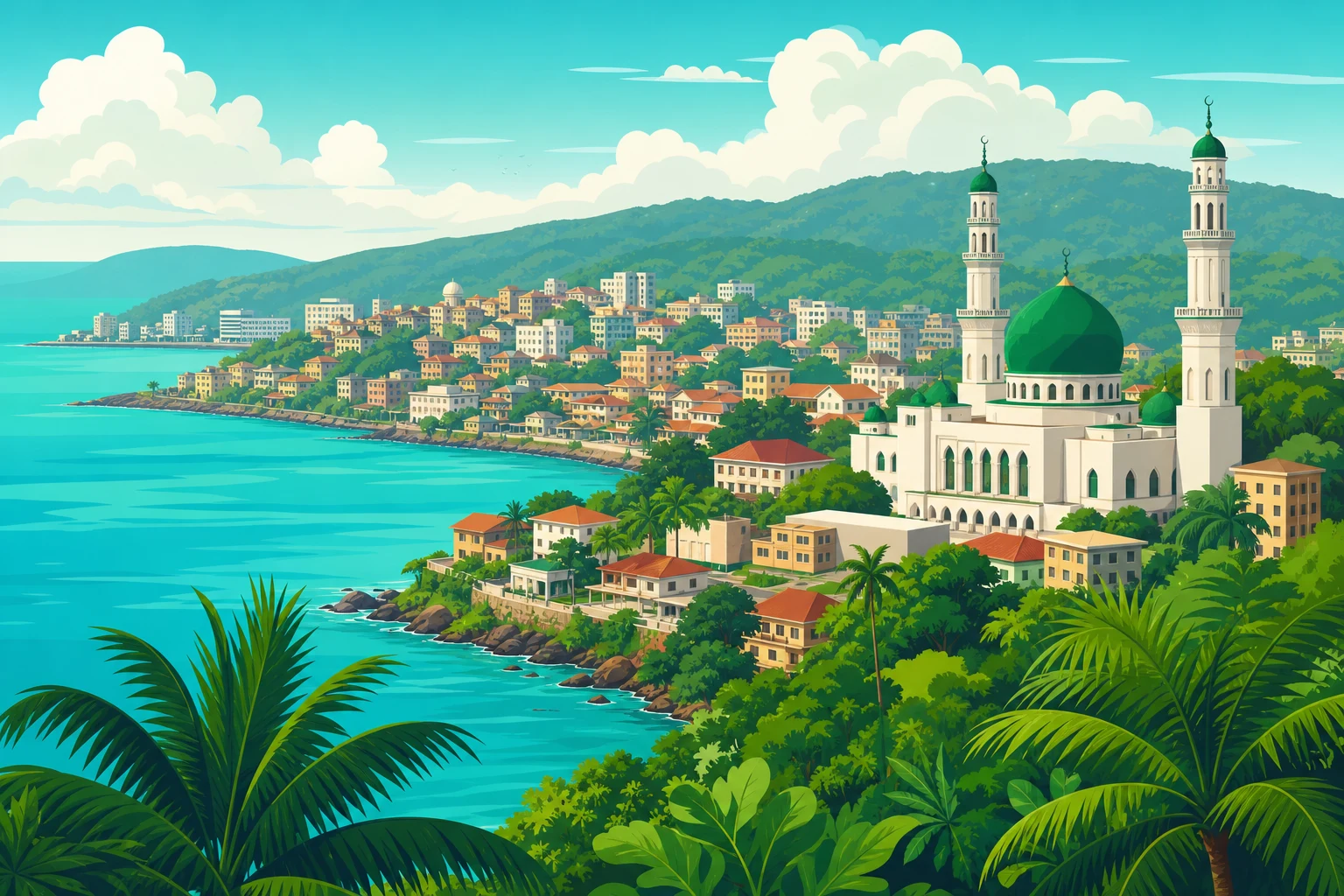
Conakry
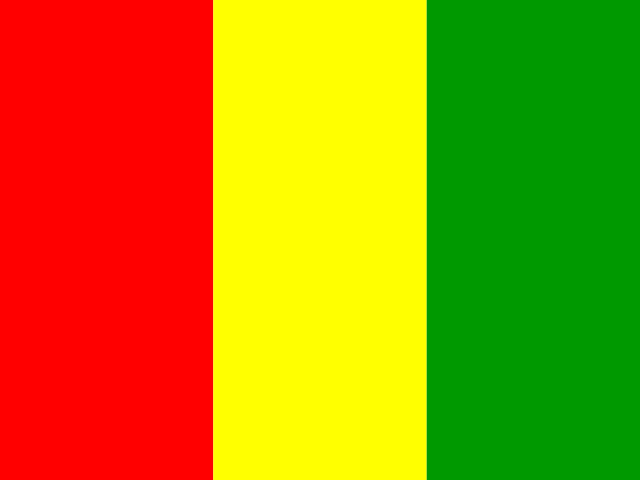
Guinea
Befolkning: 2.0 million
Conakry is the capital of Guinea, a port city on the Atlantic coast built on Tombo Island and the Kaloum Peninsula.
Landmärken: Grand Mosque of Conakry, Guinea National Museum
Roliga fakta
- Conakry was originally built on Tombo Island and expanded onto the Kaloum Peninsula.
- Guinea has the world's largest reserves of bauxite, the ore used to produce aluminum.
- The city's Grand Mosque, built in 1982, is one of the largest mosques in West Africa.
Bissau
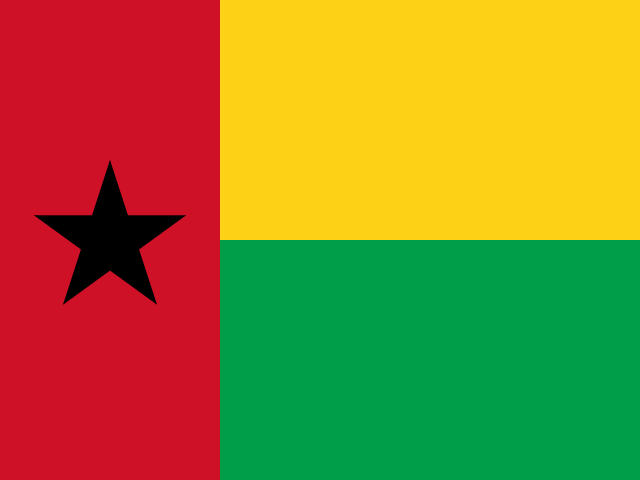
Guinea-Bissau
Befolkning: 500,000
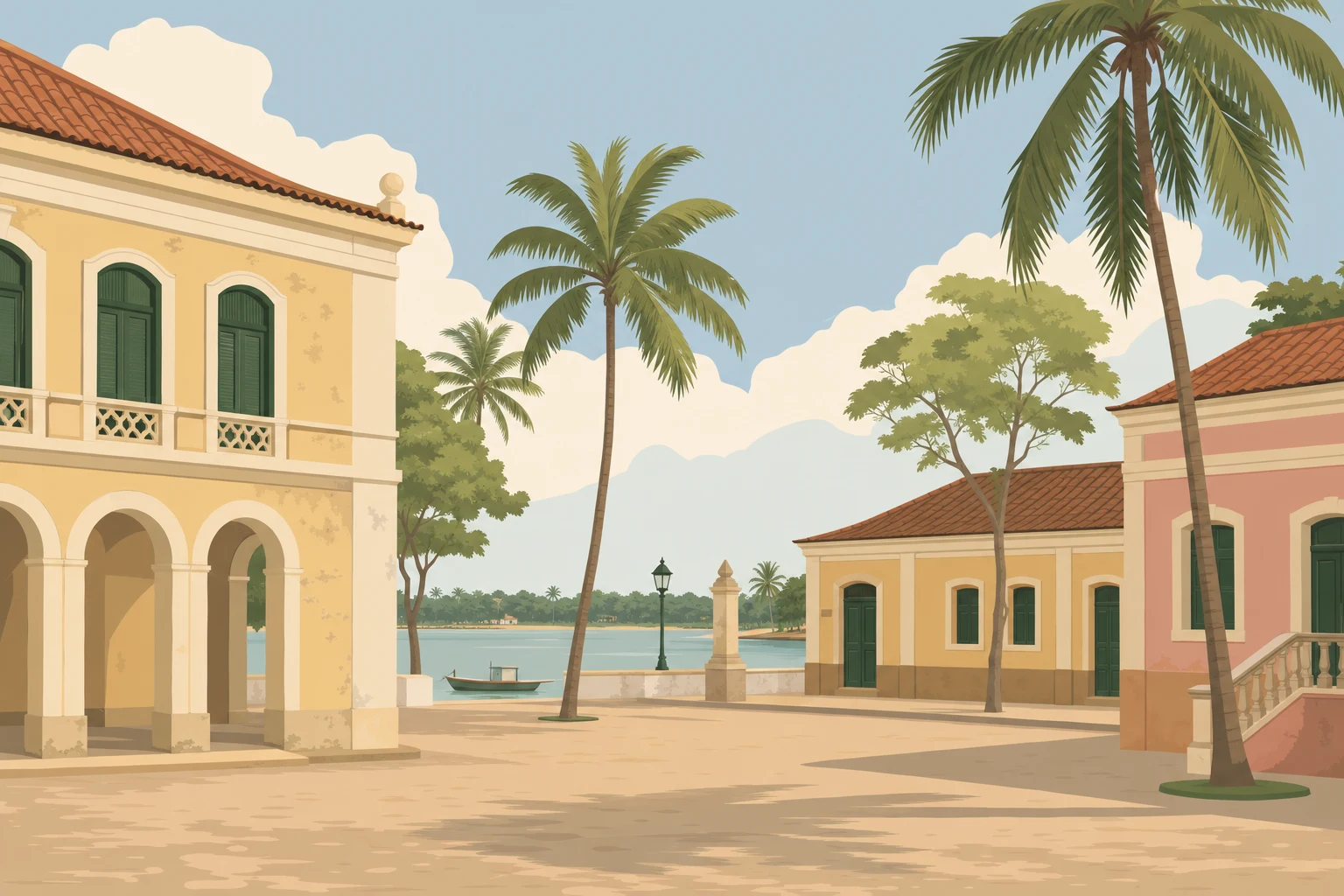
Bissau is the capital of Guinea-Bissau, a port city on the Geba River estuary on the Atlantic coast of West Africa.
Landmärken: Fortaleza de São José da Amura, Bissau Cathedral
Roliga fakta
- Guinea-Bissau was a Portuguese colony until 1974 and Portuguese remains the official language.
- The Bijagós Archipelago off the coast is a UNESCO Biosphere Reserve with unique wildlife.
- Bissau was founded in 1687 as a Portuguese fortified trading post.
Nairobi
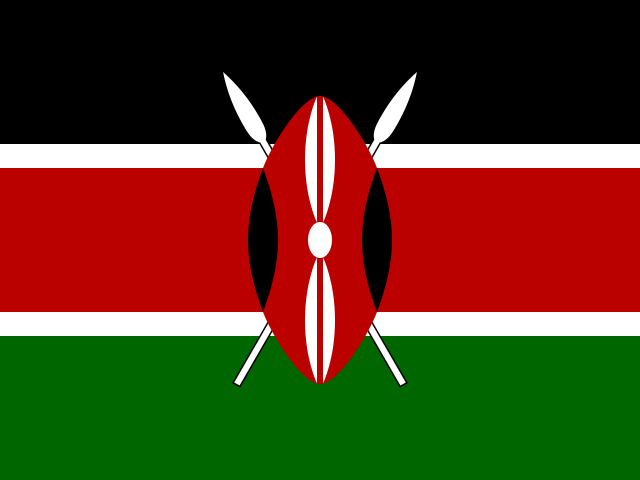
Kenya
Befolkning: 4.9 million
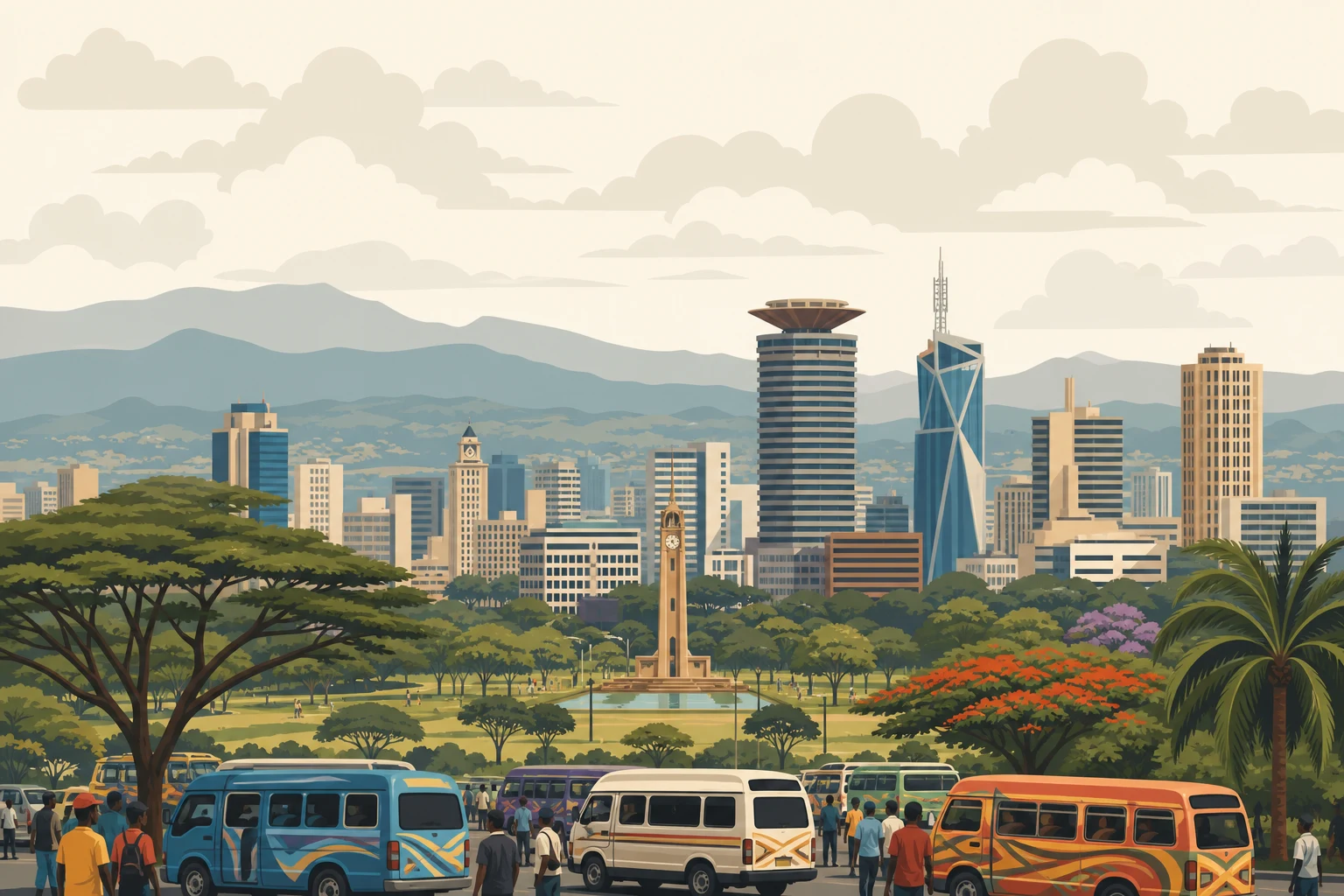
Nairobi is the capital of Kenya, a modern East African hub that is the only capital city in the world with a national park within its borders.
Landmärken: Kenyatta International Convention Centre, Nairobi National Park
Roliga fakta
- Nairobi National Park is the only national park in the world located within a capital city, home to lions, rhinos, and giraffes.
- Nairobi means "cool water" in the Maasai language, referring to the Nairobi River.
- The city serves as the headquarters for the United Nations Environment Programme (UNEP).
Maseru
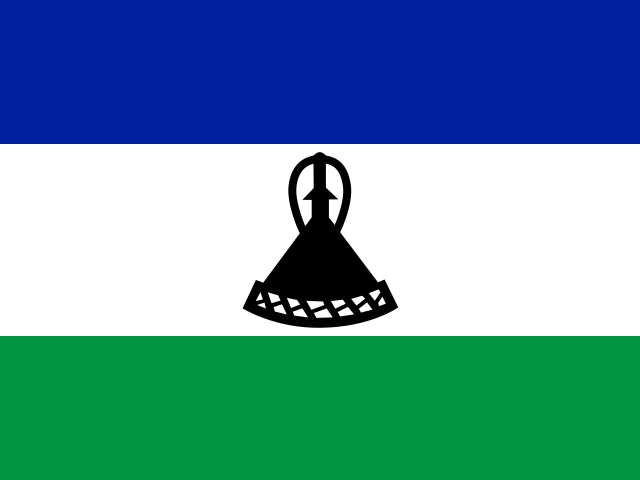
Lesotho
Befolkning: 330,000
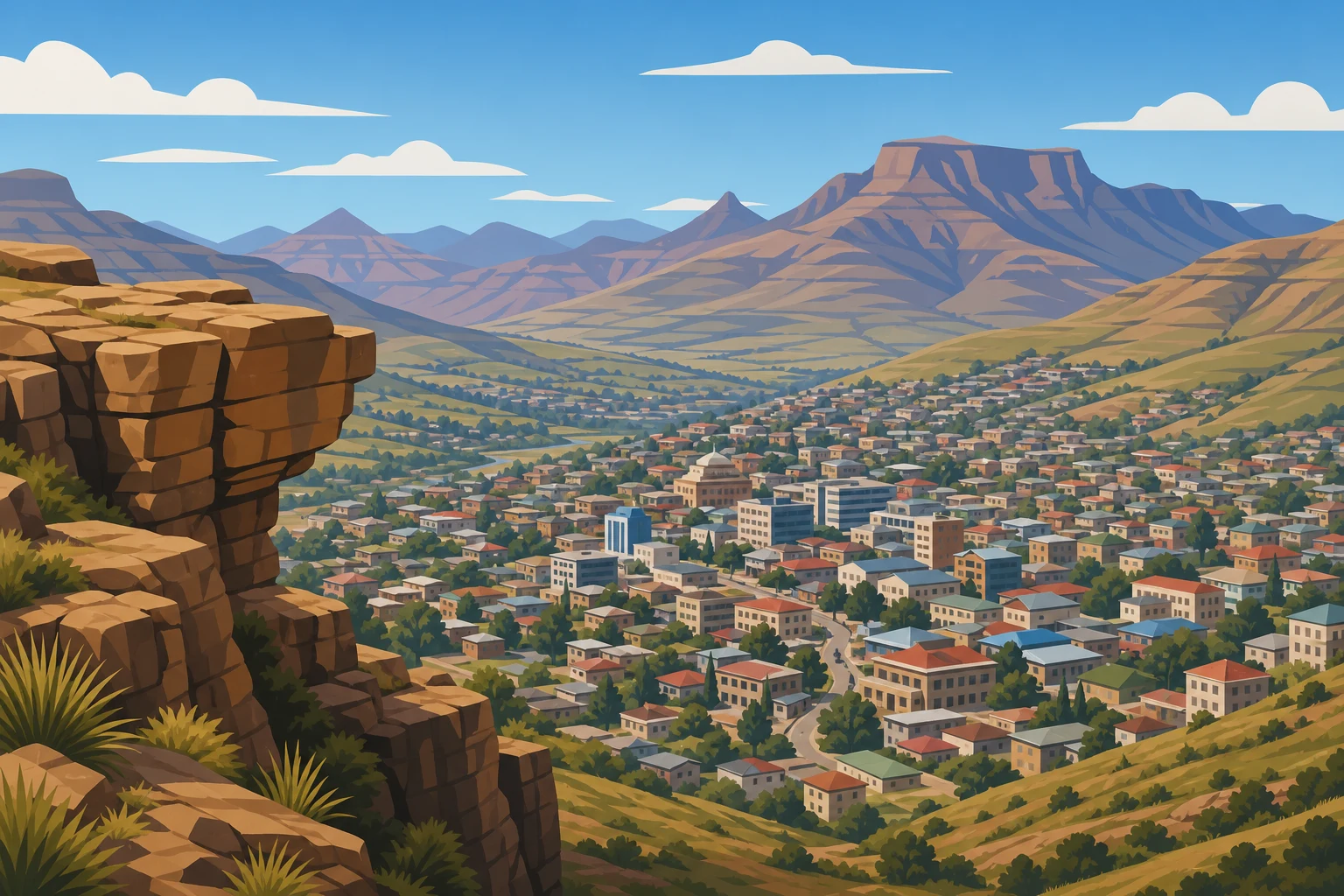
Maseru is the capital of Lesotho, located on the Caledon River at the border with South Africa.
Landmärken: Royal Palace of Lesotho, Our Lady of Victory Cathedral
Roliga fakta
- Lesotho is the only country in the world that lies entirely above 1,000 meters in elevation.
- The country is completely surrounded by South Africa, making it one of only three enclave nations.
- Maseru means "place of the red sandstones" in the Sesotho language.
Monrovia
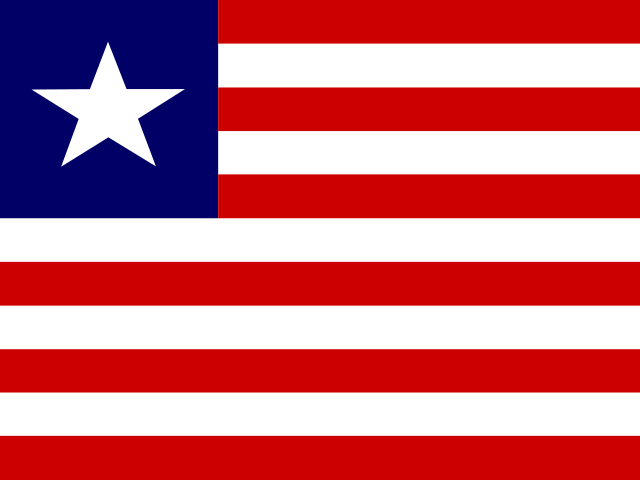
Liberia
Befolkning: 1.6 million
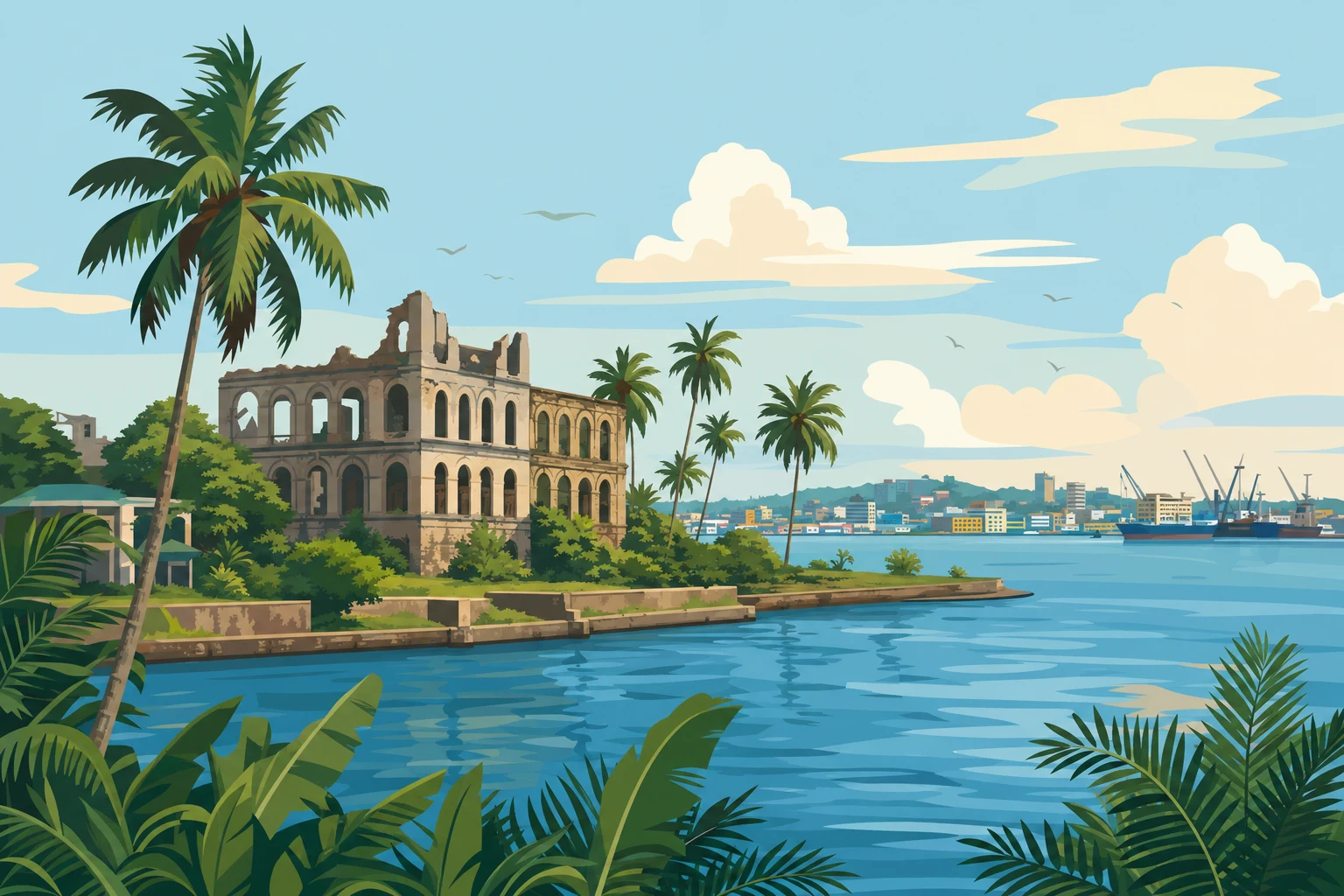
Monrovia is the capital of Liberia, named after U.S. President James Monroe and founded by freed American slaves in 1822.
Landmärken: Centennial Memorial Pavilion, Providence Island
Roliga fakta
- Monrovia is named after U.S. President James Monroe, who supported the colonization of Liberia by freed American slaves.
- Liberia is Africa's oldest republic, established in 1847 by freed American slaves.
- Monrovia is one of the wettest capitals in the world, receiving over 5,000 mm of rainfall annually.
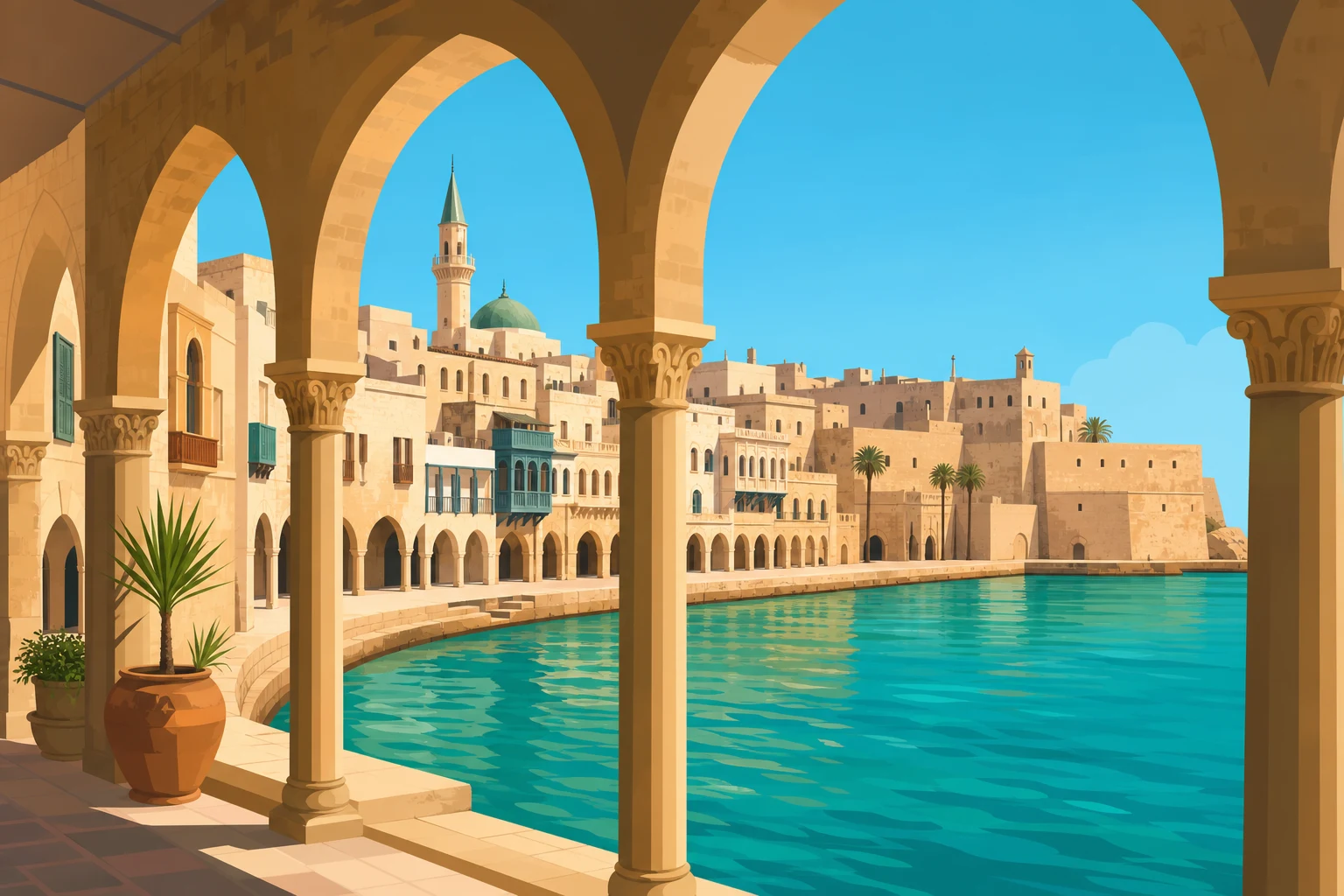
Tripoli
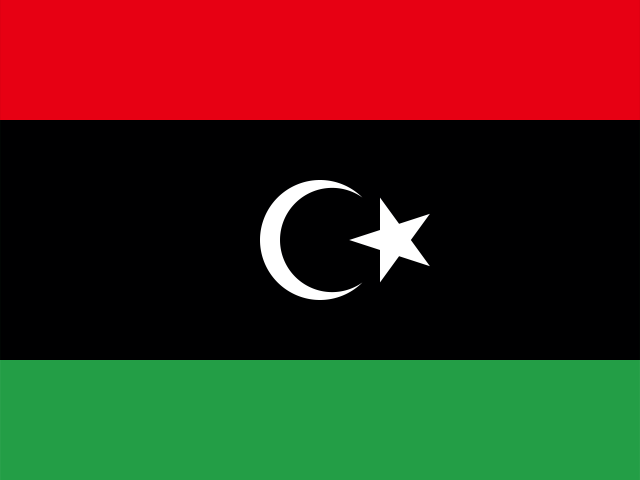
Libyen
Befolkning: 1.2 million
Tripoli is the capital of Libya, a Mediterranean port city with a history spanning over 2,700 years as a Phoenician, Roman, and Ottoman center.
Landmärken: Red Castle Museum, Marcus Aurelius Arch
Roliga fakta
- Tripoli was founded by Phoenicians in the 7th century BC and its old city features well-preserved Roman and Ottoman architecture.
- The city's name comes from the Greek "Tri Polis" meaning "Three Cities."
- The Red Castle (Assaraya al-Hamra) is a massive citadel complex overlooking the medina.
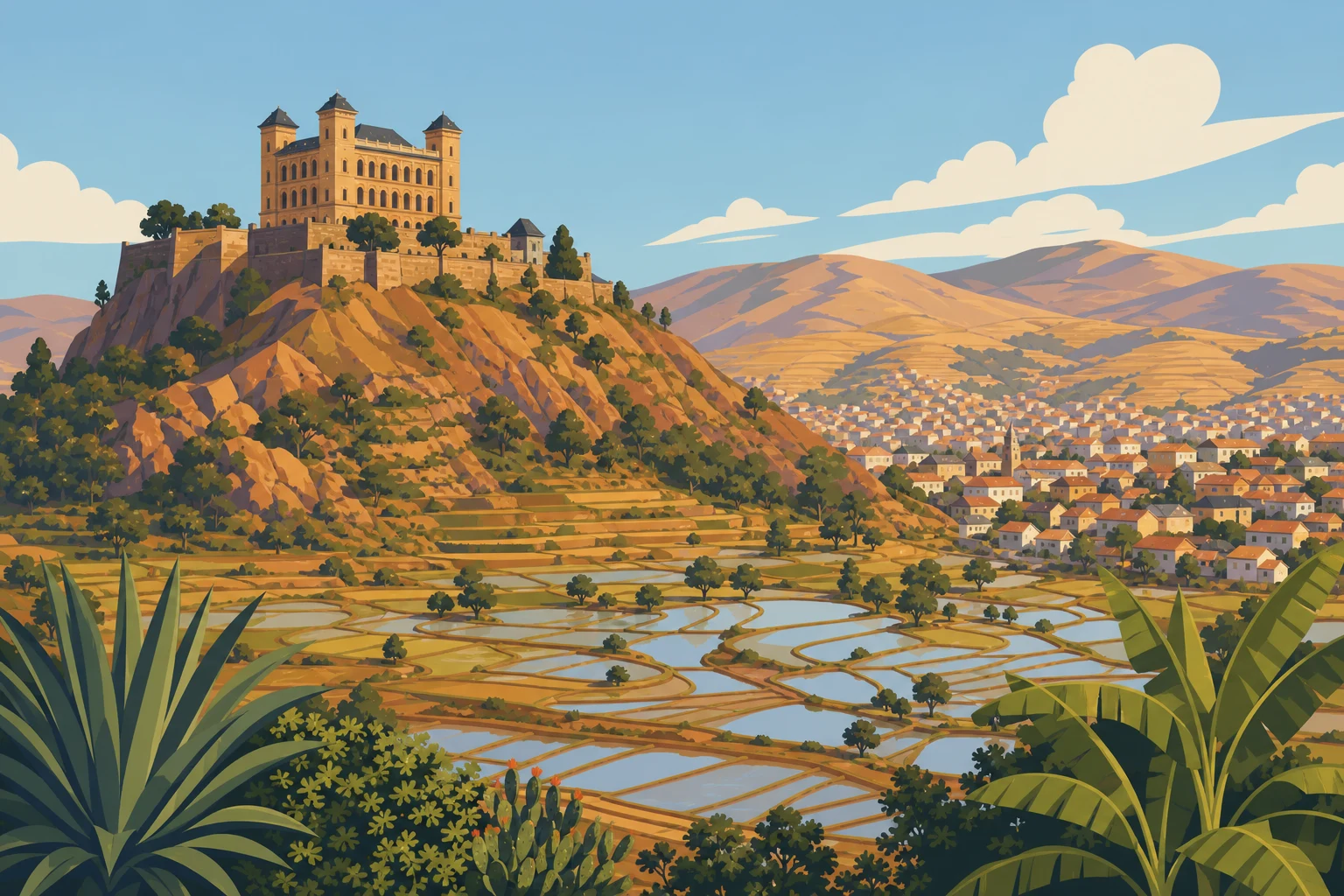
Antananarivo
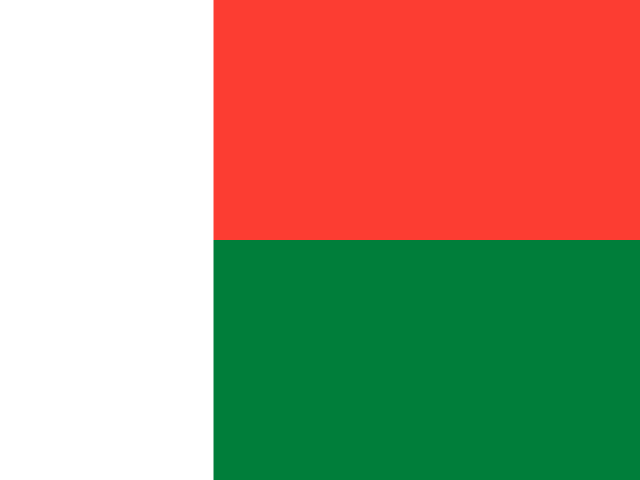
Madagaskar
Befolkning: 3.2 million
Antananarivo is the capital of Madagascar, a highland city built across several ridges and valleys at 1,280 meters elevation.
Landmärken: Rova of Antananarivo, Tsimbazaza Zoo and Botanical Garden
Roliga fakta
- Antananarivo means "City of a Thousand" referring to the thousand warriors who guarded the city for King Andrianjaka.
- Madagascar is the world's fourth-largest island and over 90% of its wildlife is found nowhere else on Earth.
- The city spreads across 12 hills in the central highlands of Madagascar.
Lilongwe
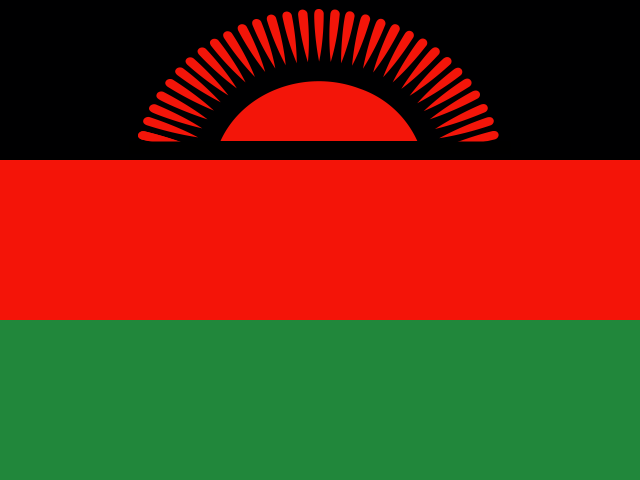
Malawi
Befolkning: 1.1 million
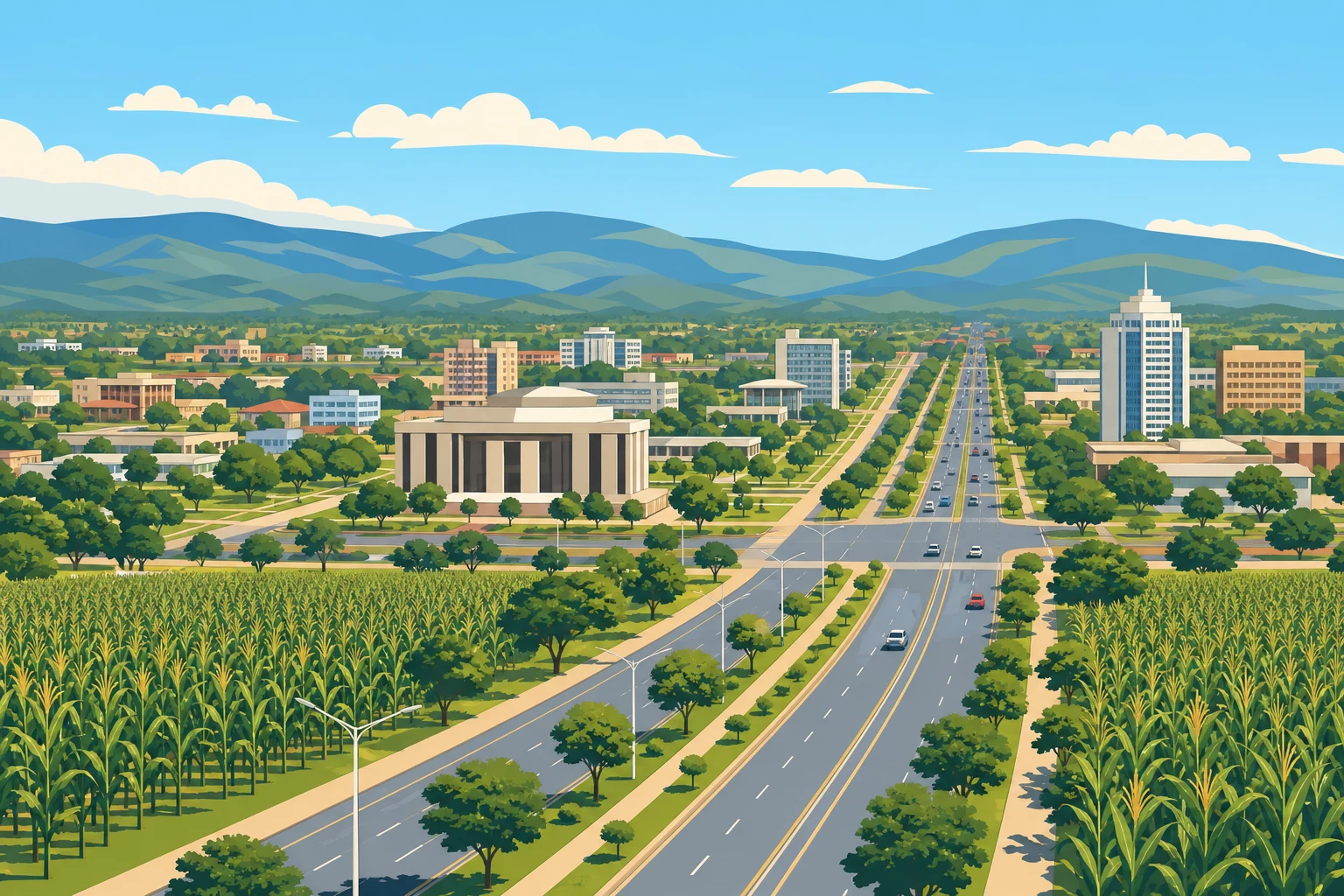
Lilongwe is the capital of Malawi, a planned city that replaced Zomba as the capital in 1975, situated in the central region of the country.
Landmärken: Lilongwe Wildlife Centre, Kamuzu Mausoleum
Roliga fakta
- Lilongwe replaced Zomba as Malawi's capital in 1975 due to its more central location.
- Lake Malawi, the third-largest lake in Africa, contains more fish species than any other lake in the world.
- Malawi is known as "The Warm Heart of Africa" for the friendliness of its people.
Bamako
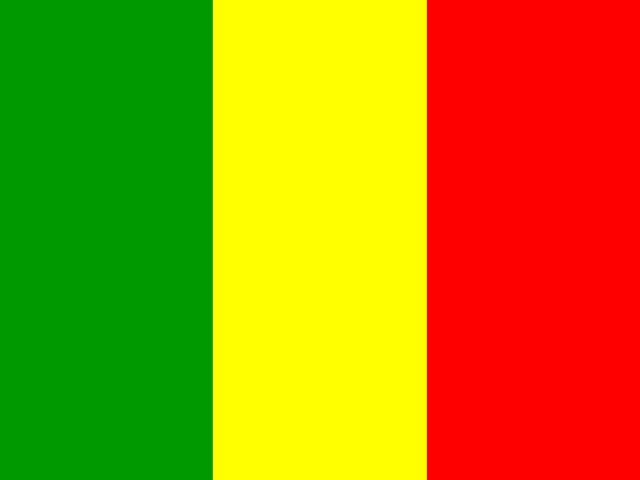
Mali
Befolkning: 4.0 million
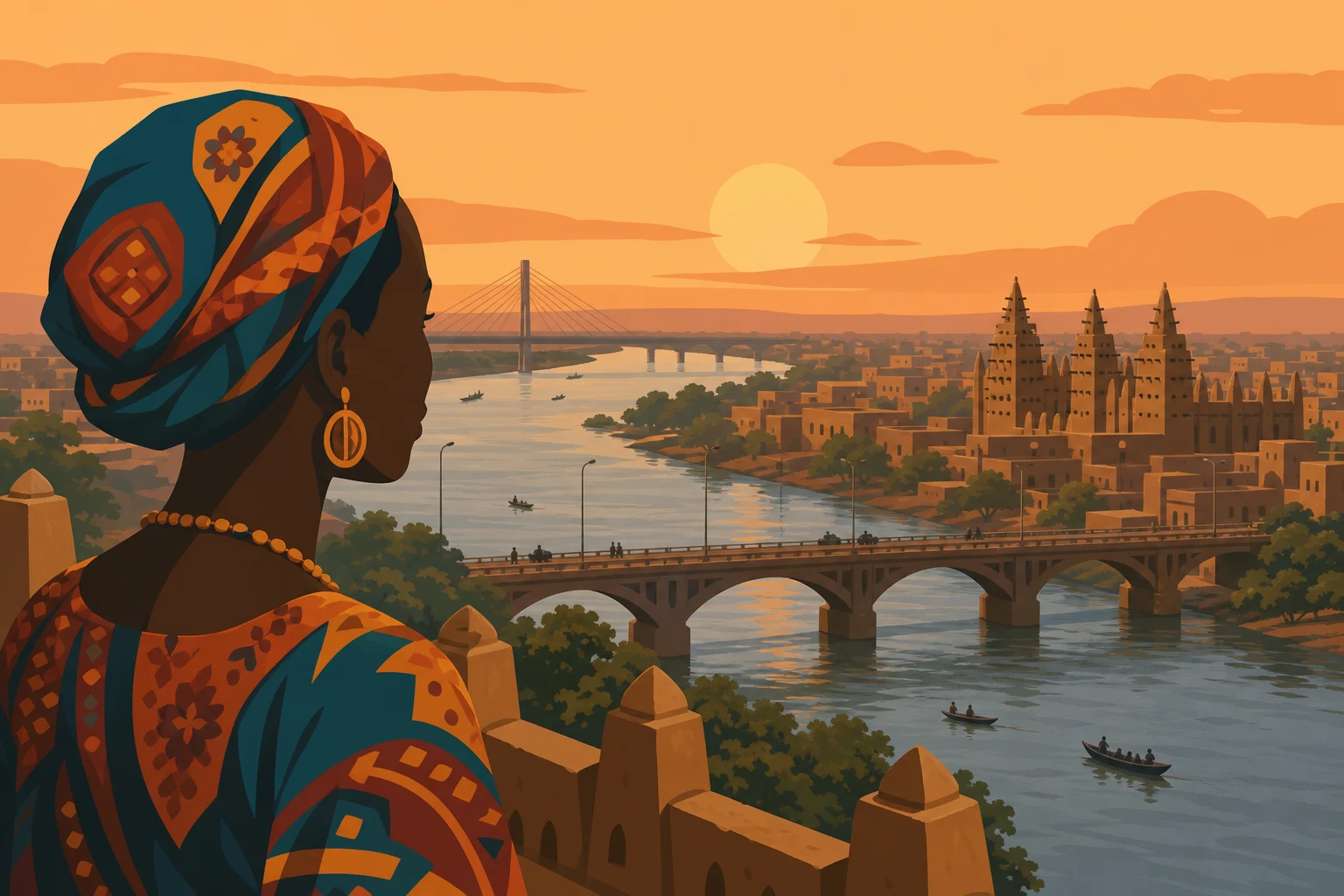
Bamako is the capital of Mali, a rapidly growing city on the Niger River that was once part of the great Mali Empire.
Landmärken: National Museum of Mali, Bamako Grand Mosque
Roliga fakta
- Bamako is one of the fastest-growing cities in Africa, having grown from 100,000 in 1960 to over 4 million today.
- The ancient city of Timbuktu in Mali was once one of the world's greatest centers of learning and trade.
- Bamako means "crocodile river" in the Bambara language.
Nouakchott
Mauretanien
Befolkning: 1.3 million
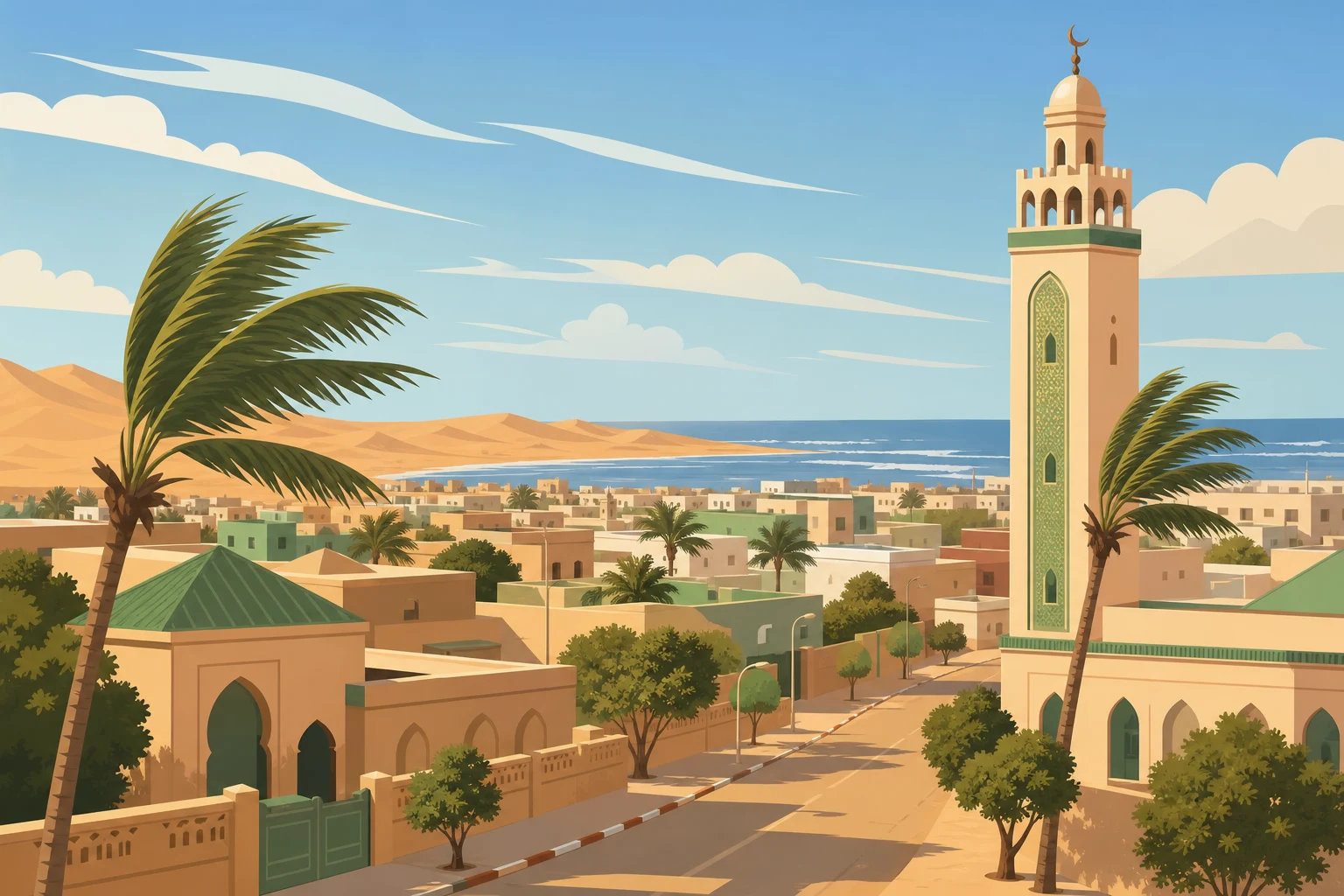
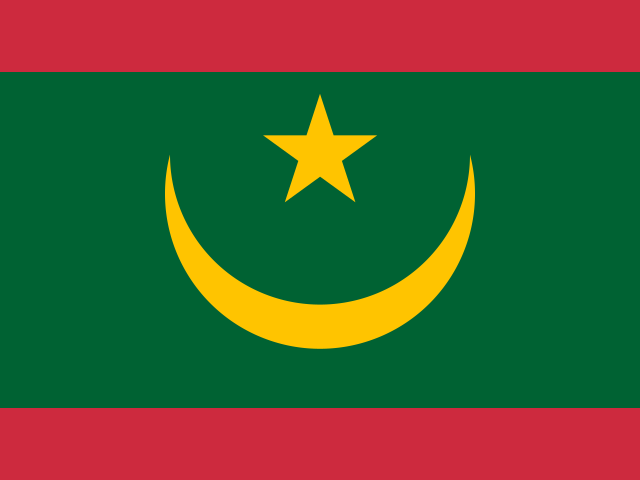
Nouakchott is the capital of Mauritania, a Saharan coastal city that was just a small fishing village before becoming the capital at independence in 1960.
Landmärken: Saudi Mosque, National Museum of Mauritania
Roliga fakta
- Nouakchott was a small village of only 200 people when it was chosen as the capital in 1958.
- The city lies at the edge of the Sahara Desert, with sand dunes encroaching on some neighborhoods.
- Mauritania is one of the most sparsely populated countries in the world.
Port Louis
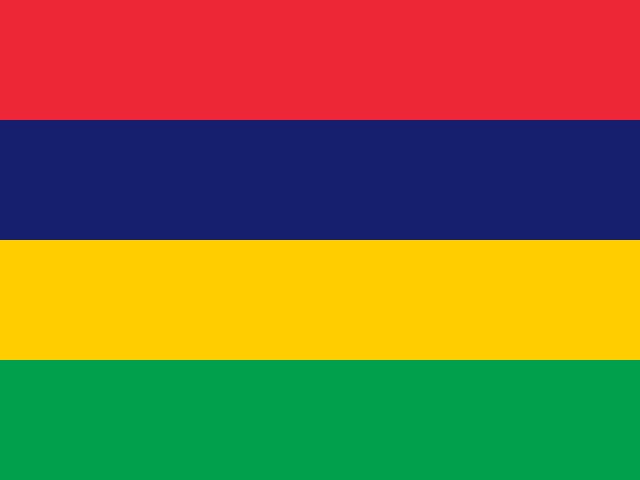
Mauritius
Befolkning: 150,000
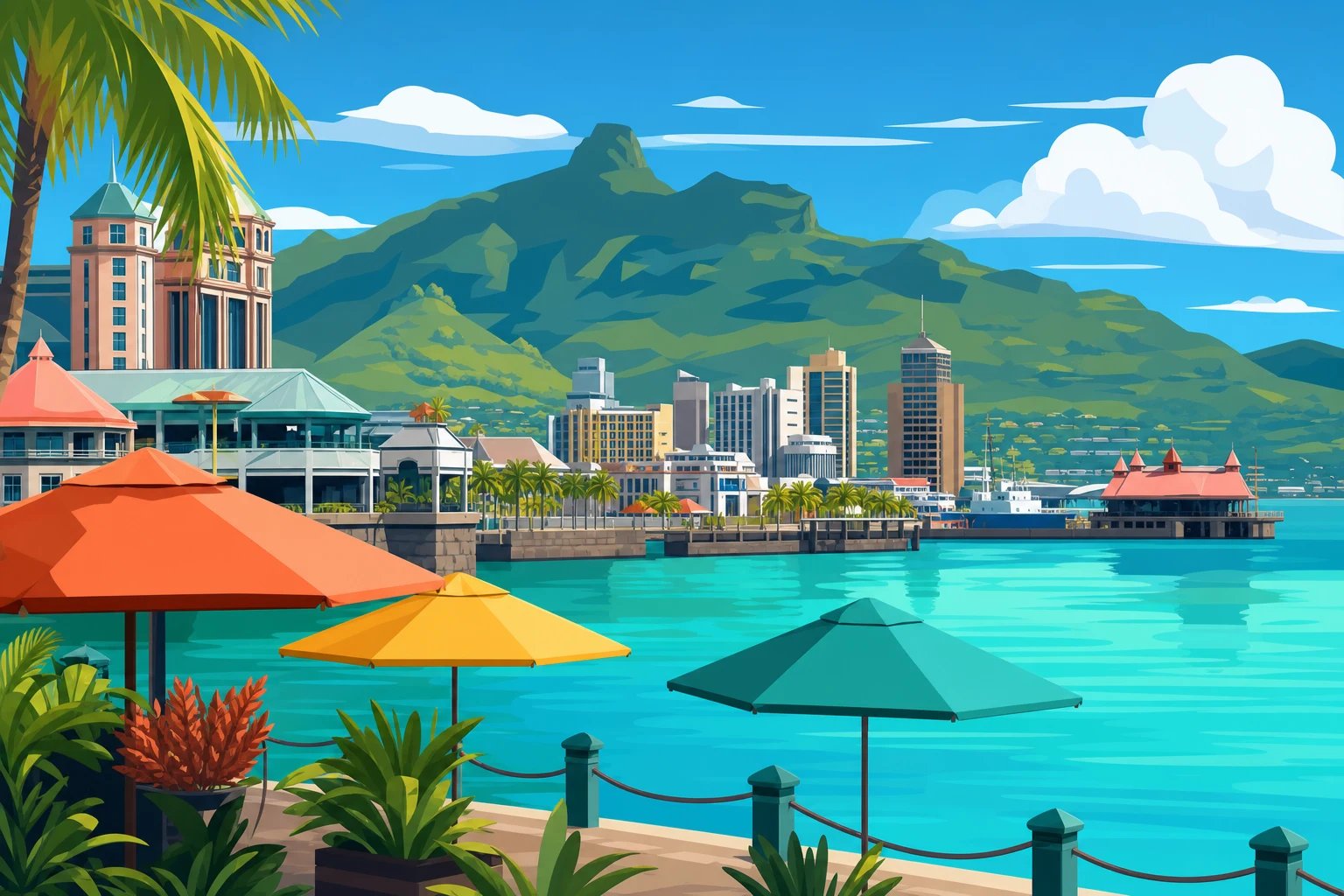
Port Louis is the capital of Mauritius, a multicultural port city on the Indian Ocean island nation known for its diverse cultural heritage.
Landmärken: Aapravasi Ghat, Caudan Waterfront
Roliga fakta
- Mauritius is home to one of the rarest stamps in the world, the 1847 "Post Office" stamps worth millions.
- The dodo bird, now extinct, was endemic to Mauritius and went extinct in the 17th century.
- Port Louis was founded by the French in 1735 and named after King Louis XV.
Rabat
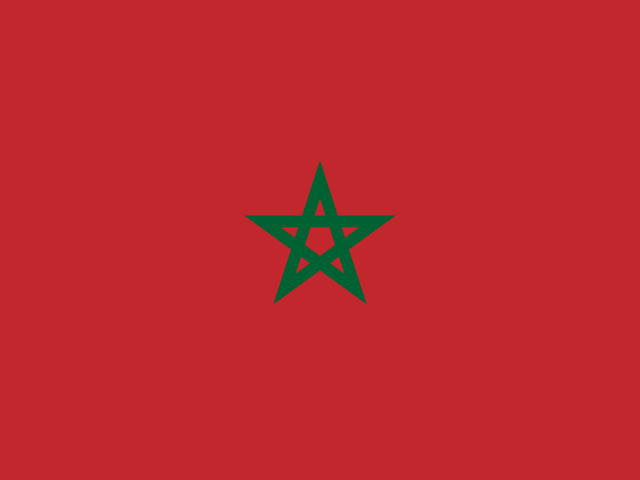
Marocko
Befolkning: 1.9 million
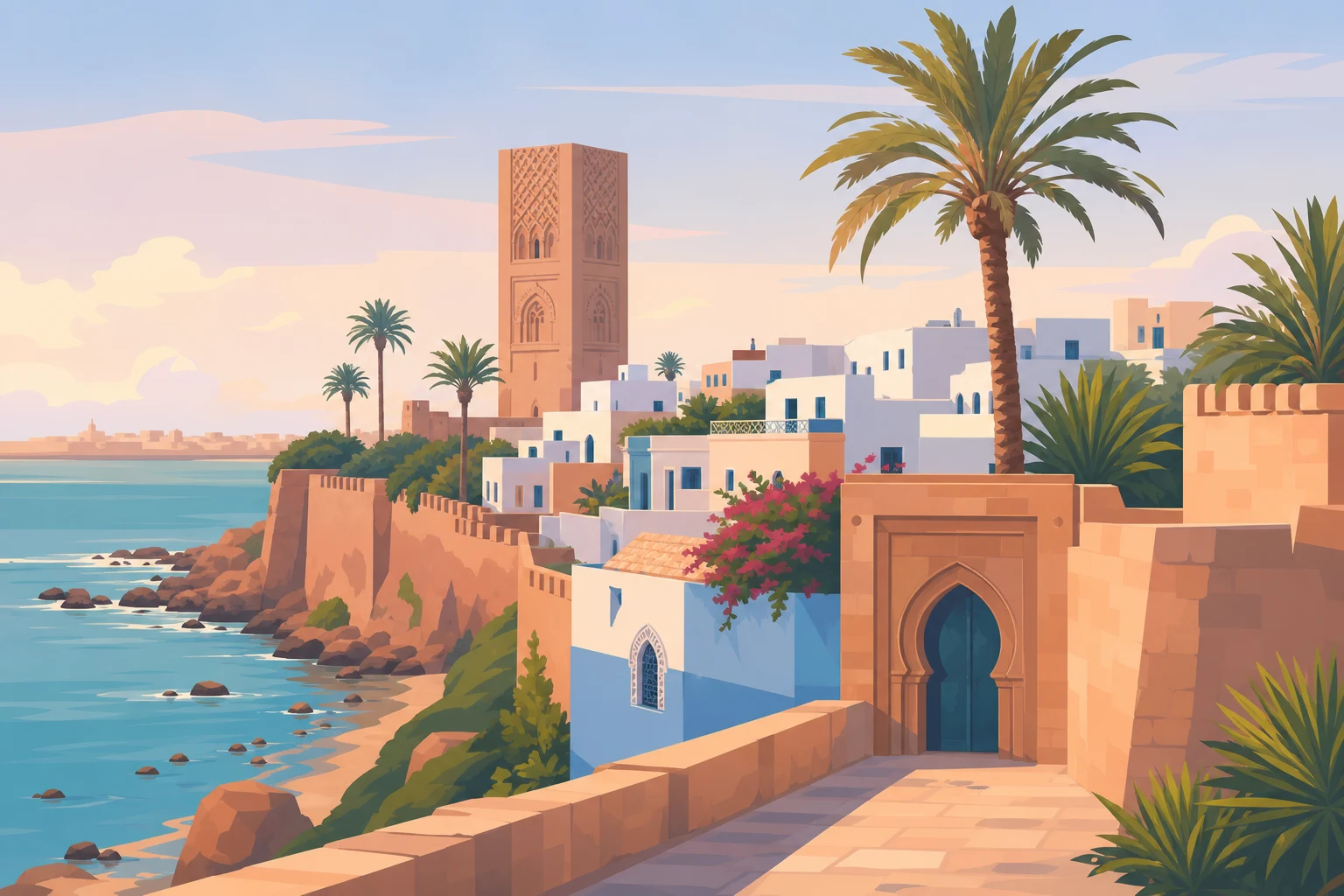
Rabat is the capital of Morocco, a coastal city at the mouth of the Bou Regreg River with a medina that is a UNESCO World Heritage Site.
Landmärken: Hassan Tower, Kasbah of the Udayas
Roliga fakta
- Rabat's Kasbah of the Udayas is a 12th-century fortified neighborhood overlooking the Atlantic Ocean.
- The Hassan Tower, an unfinished minaret from 1195, was intended to be the world's largest minaret.
- Rabat became Morocco's capital under the French protectorate in 1912, replacing Fez.
Maputo
Moçambique
Befolkning: 1.1 million
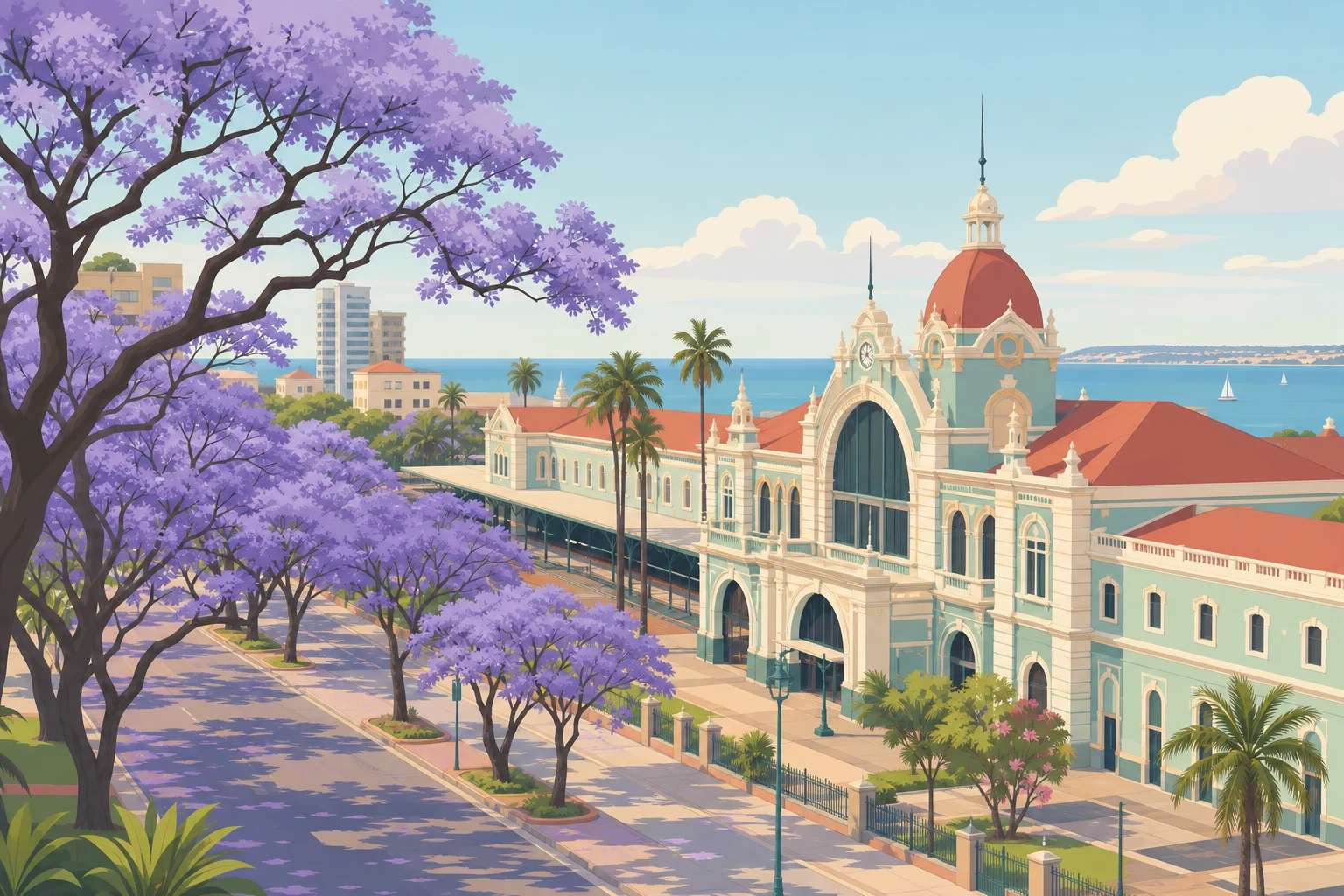
Maputo is the capital of Mozambique, a port city on the Indian Ocean known for its Portuguese colonial architecture and vibrant cultural scene.
Landmärken: Maputo Central Train Station, Fortaleza de Maputo
Roliga fakta
- Maputo's central train station, designed by an associate of Gustave Eiffel, is one of the most beautiful in Africa.
- The city was called Lourenço Marques during Portuguese colonial rule until independence in 1975.
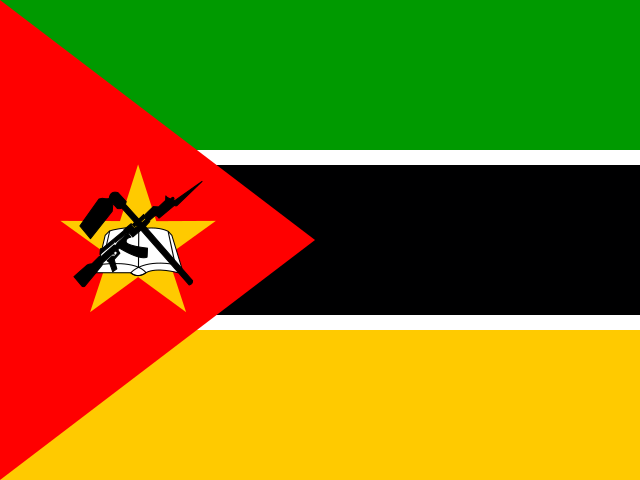
- Mozambique's flag features an AK-47 rifle, one of the few national flags to depict a modern firearm.
Windhoek
Namibia
Befolkning: 430,000
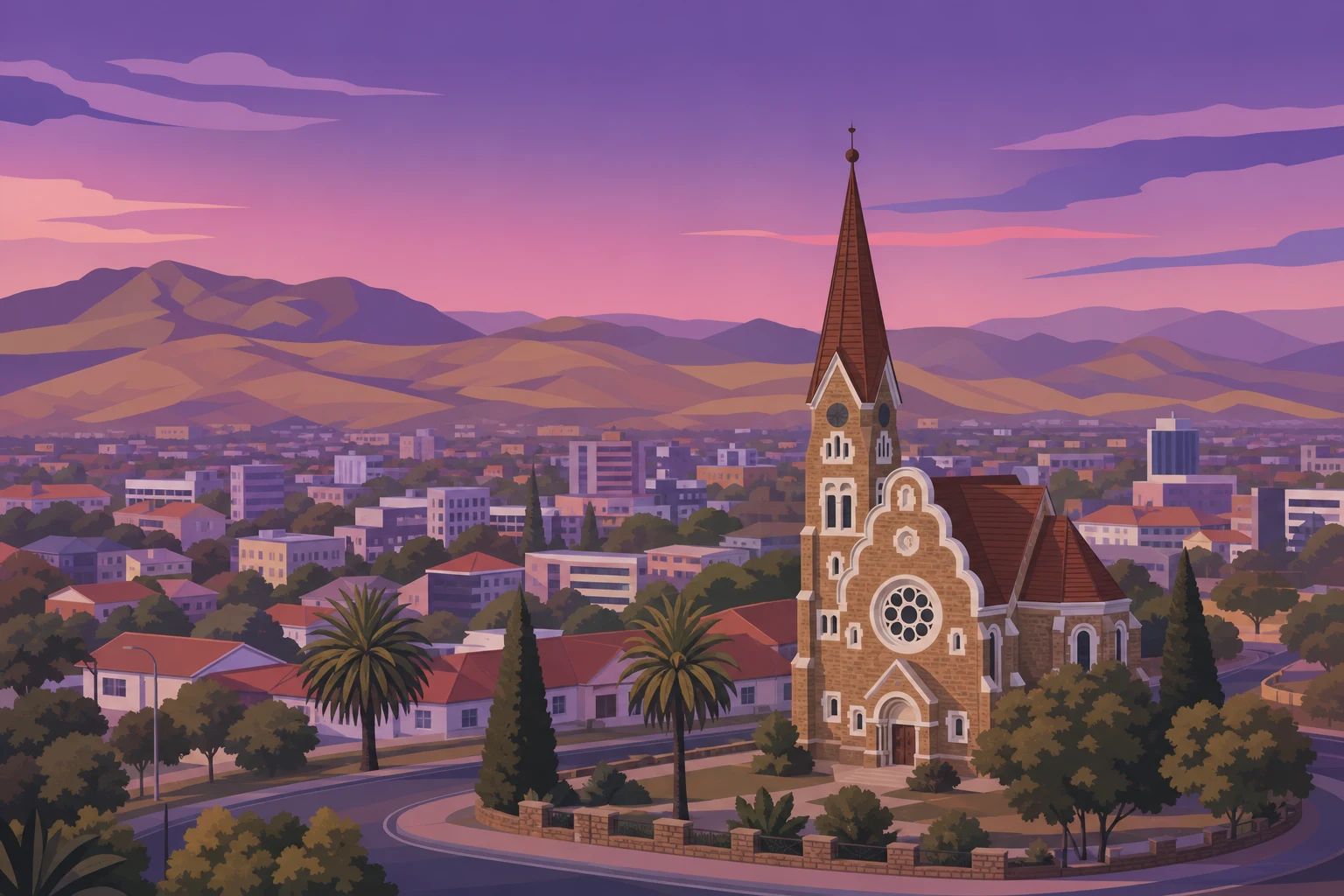
Windhoek is the capital of Namibia, a clean and orderly city at 1,700 meters elevation that blends German colonial architecture with African culture.
Landmärken: Christuskirche, Independence Memorial Museum
Roliga fakta
- Windhoek has a strong German colonial heritage with German-style architecture, a brewery, and a tradition of Oktoberfest.
- Namibia is one of the least densely populated countries in the world with only about 3 people per square kilometer.
- The city's name comes from the Afrikaans for "wind corner" referring to the hot winds funneling through the mountains.
Niamey
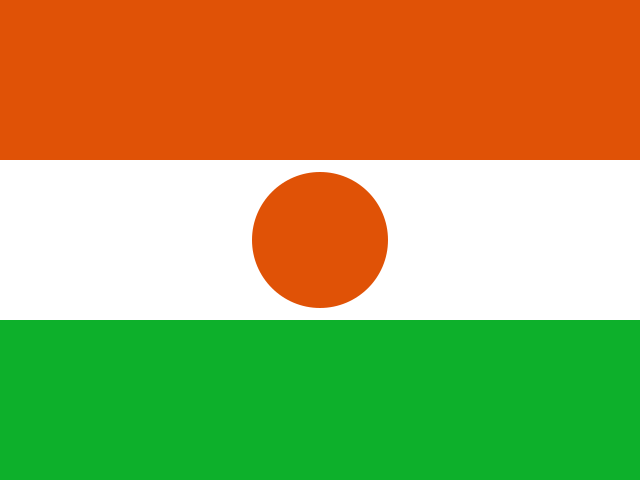
Niger
Befolkning: 1.3 million
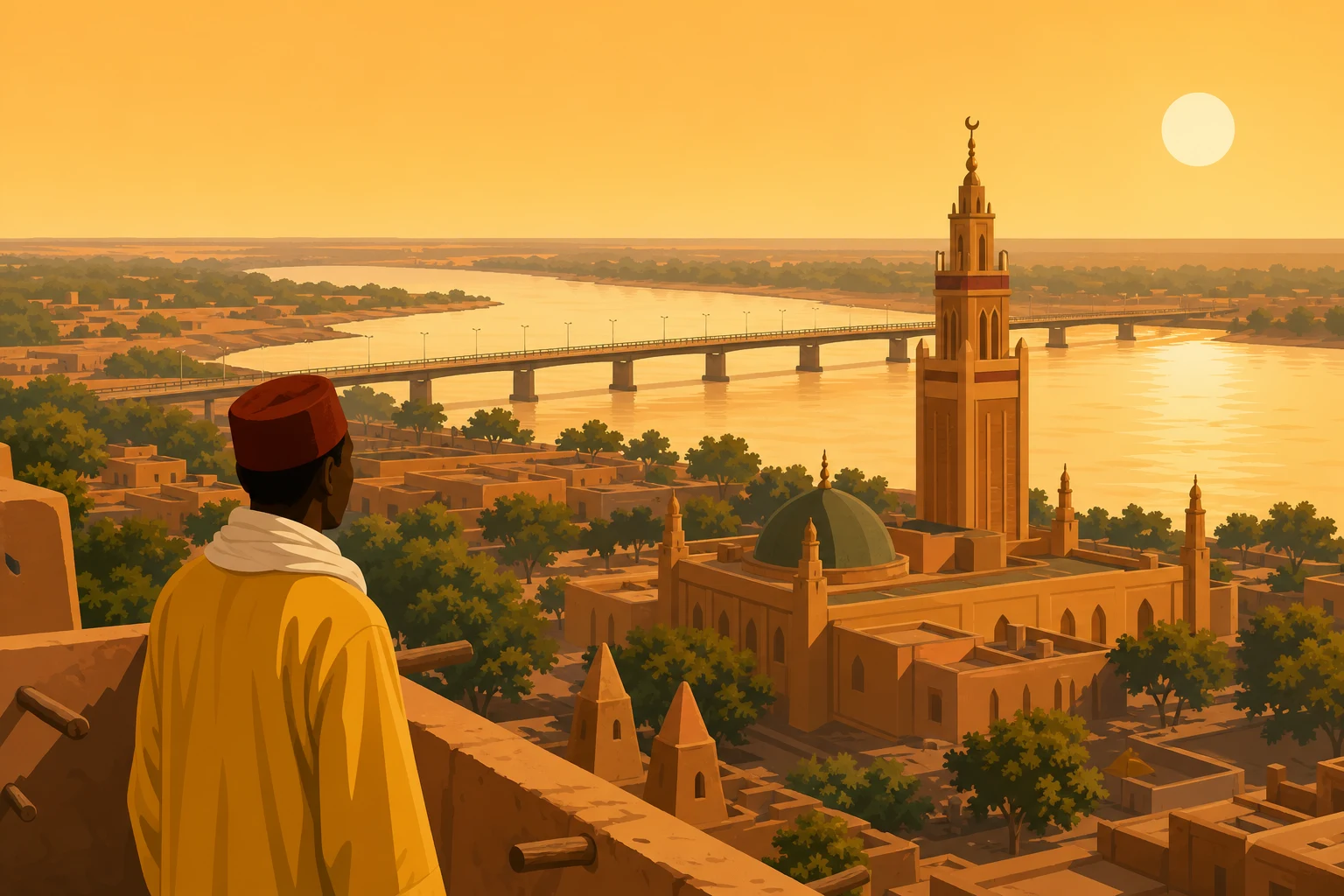
Niamey is the capital of Niger, a city on the banks of the Niger River in the southwestern corner of this vast Saharan nation.
Landmärken: Grand Mosque of Niamey, National Museum of Niger
Roliga fakta
- Niamey straddles the Niger River, which is the lifeblood of the city in an otherwise semi-arid landscape.
- Niger is named after the Niger River, Africa's third-longest river.
- The Grand Mosque of Niamey, built with Libyan funding in the 1970s, dominates the city skyline.
Abuja
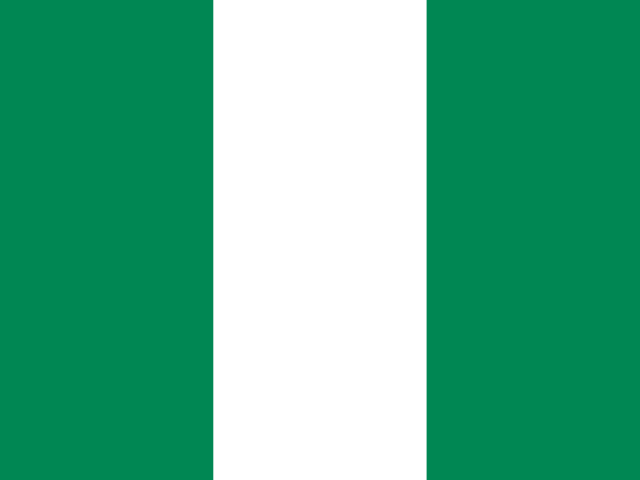
Nigeria
Befolkning: 3.6 million
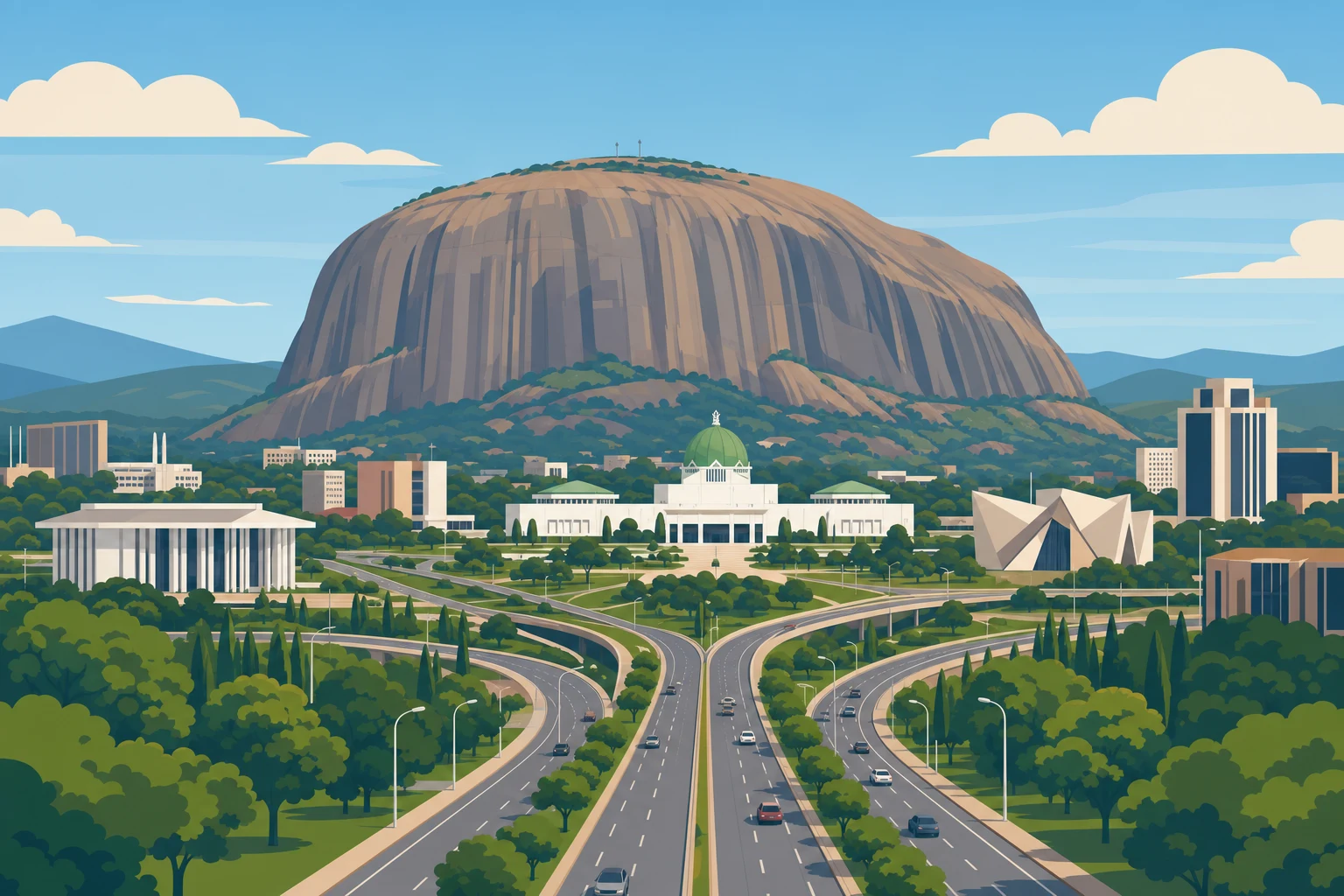
Abuja is the capital of Nigeria, a purpose-built city that replaced Lagos as capital in 1991 due to its central location.
Landmärken: Aso Rock, Nigerian National Mosque
Roliga fakta
- Abuja replaced Lagos as Nigeria's capital in 1991 because of Lagos's overcrowding and its location in Yoruba territory.
- The city was designed by a Japanese architect, Kenzo Tange, and construction began in the late 1970s.
- Aso Rock, a 400-meter monolith, dominates the city skyline and gives its name to the presidential villa.
Kigali
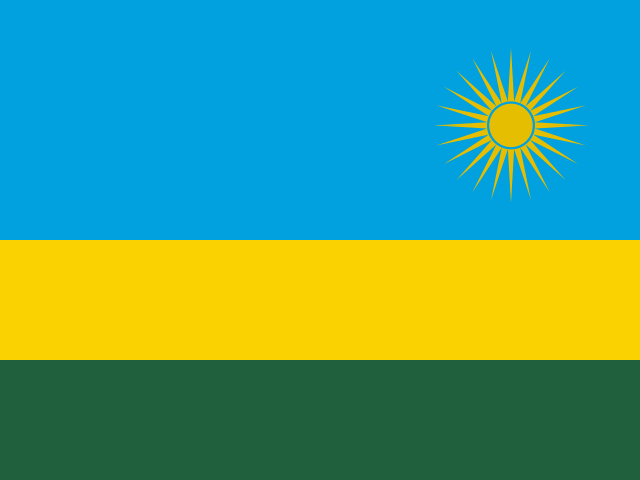
Rwanda
Befolkning: 1.7 million
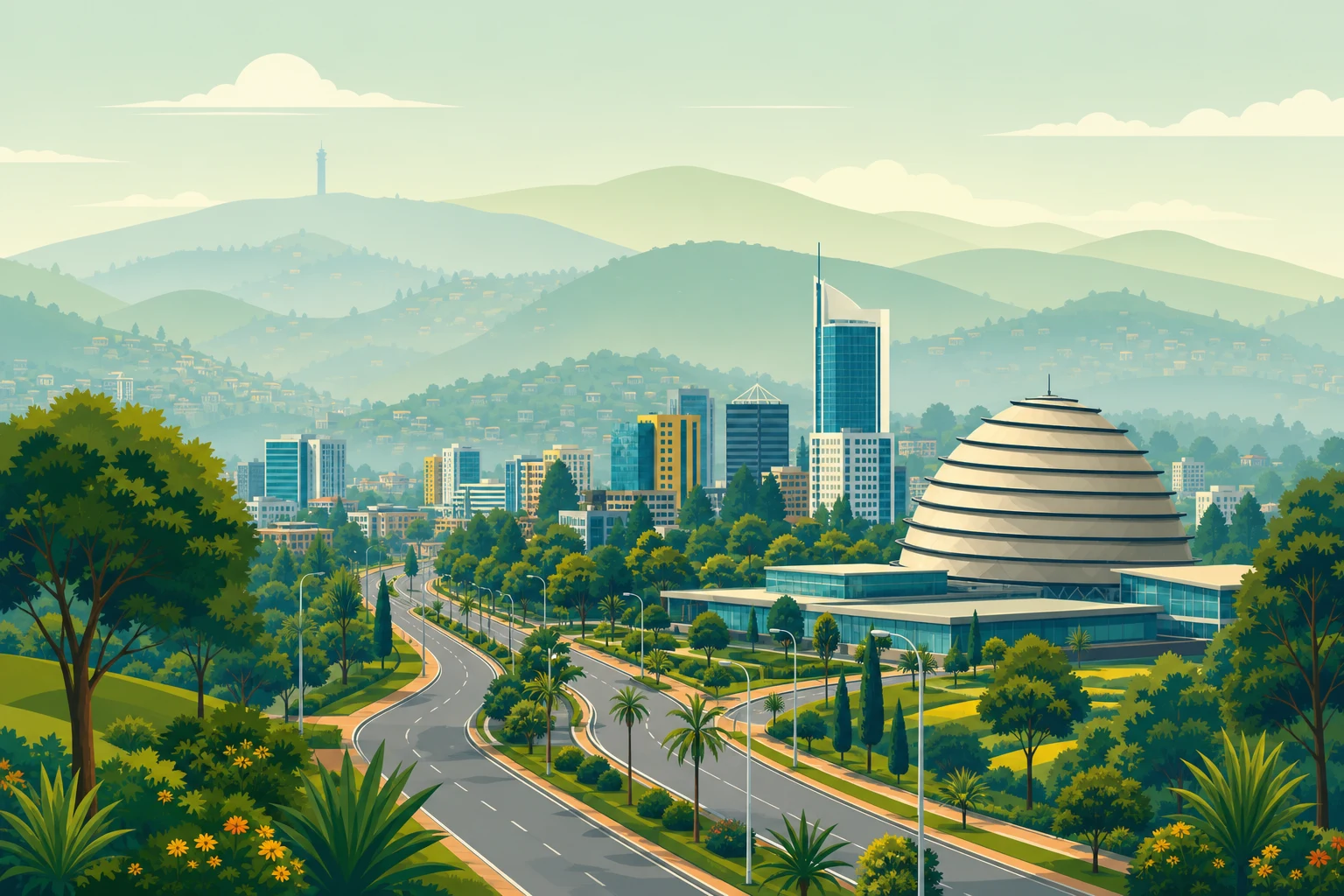
Kigali is the capital of Rwanda, widely considered the cleanest city in Africa, built across several hills in the heart of the country.
Landmärken: Kigali Genocide Memorial, Kigali Convention Centre
Roliga fakta
- Kigali is often called the cleanest city in Africa, thanks to monthly community clean-up days and a ban on plastic bags.
- Rwanda banned single-use plastic bags in 2008, one of the first countries in the world to do so.
- The Kigali Genocide Memorial commemorates the over 800,000 victims of the 1994 genocide.
São Tomé
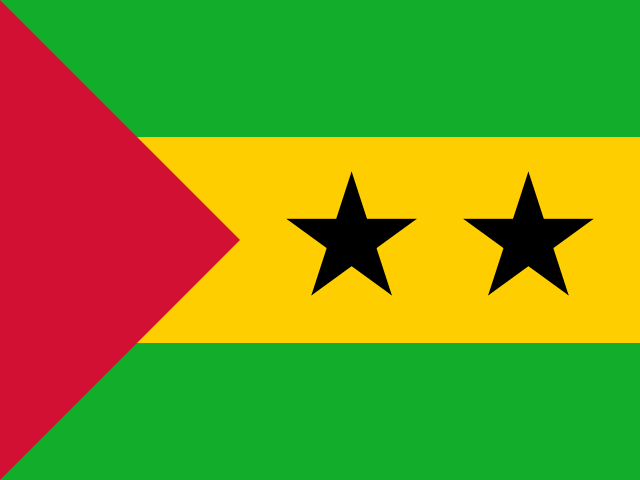
São Tomé och Príncipe
Befolkning: 80,000
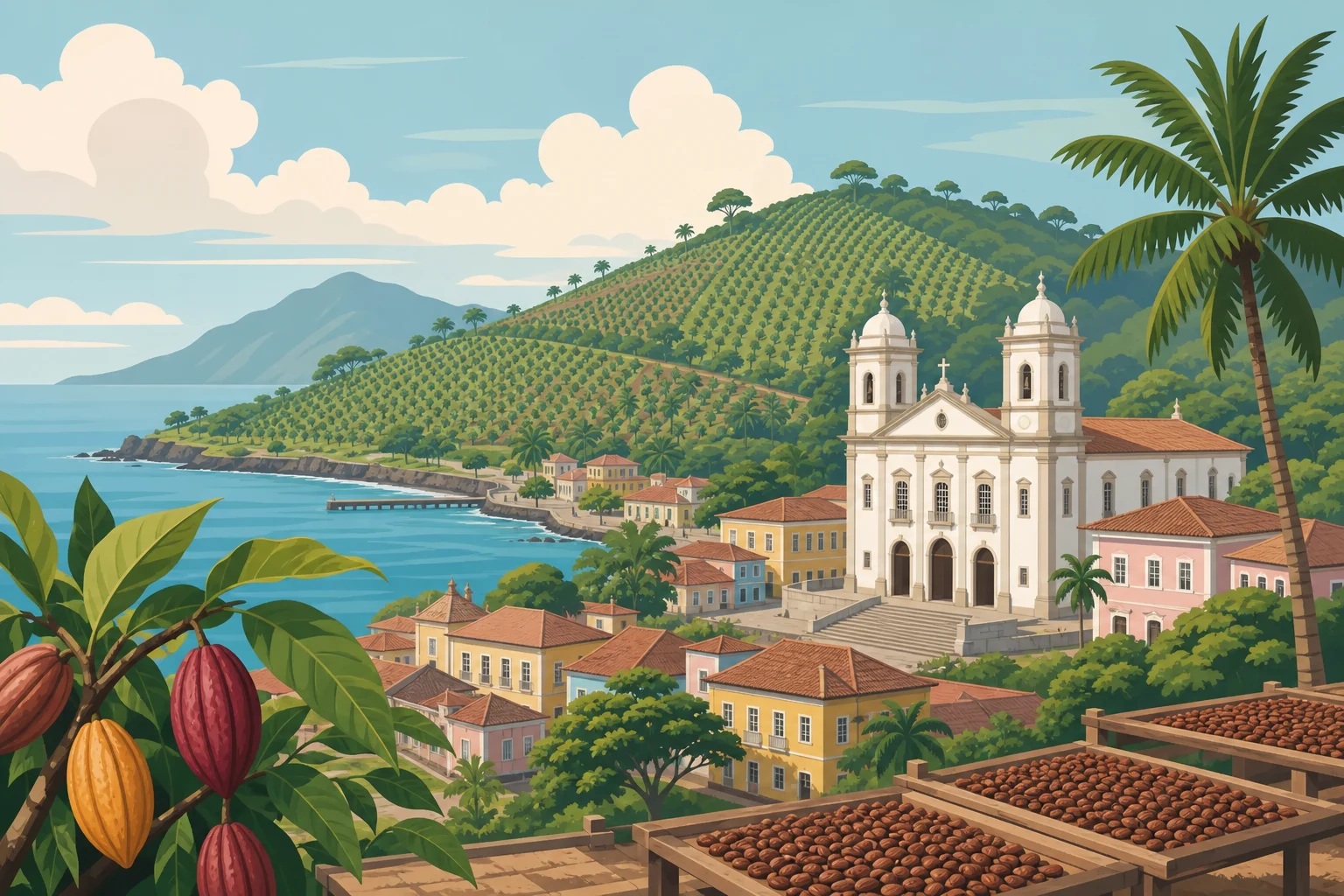
São Tomé is the capital of São Tomé and Príncipe, a small equatorial island nation in the Gulf of Guinea.
Landmärken: São Sebastião Museum, Presidential Palace of São Tomé
Roliga fakta
- São Tomé and Príncipe is the second-smallest African country by population.
- The islands were uninhabited until discovered by Portuguese explorers in the 1470s.
- The country was once the world's largest producer of cocoa in the early 20th century.
Dakar
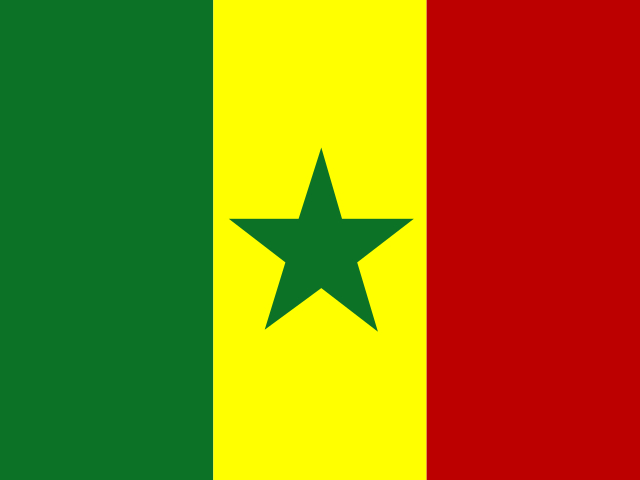
Senegal
Befolkning: 3.9 million
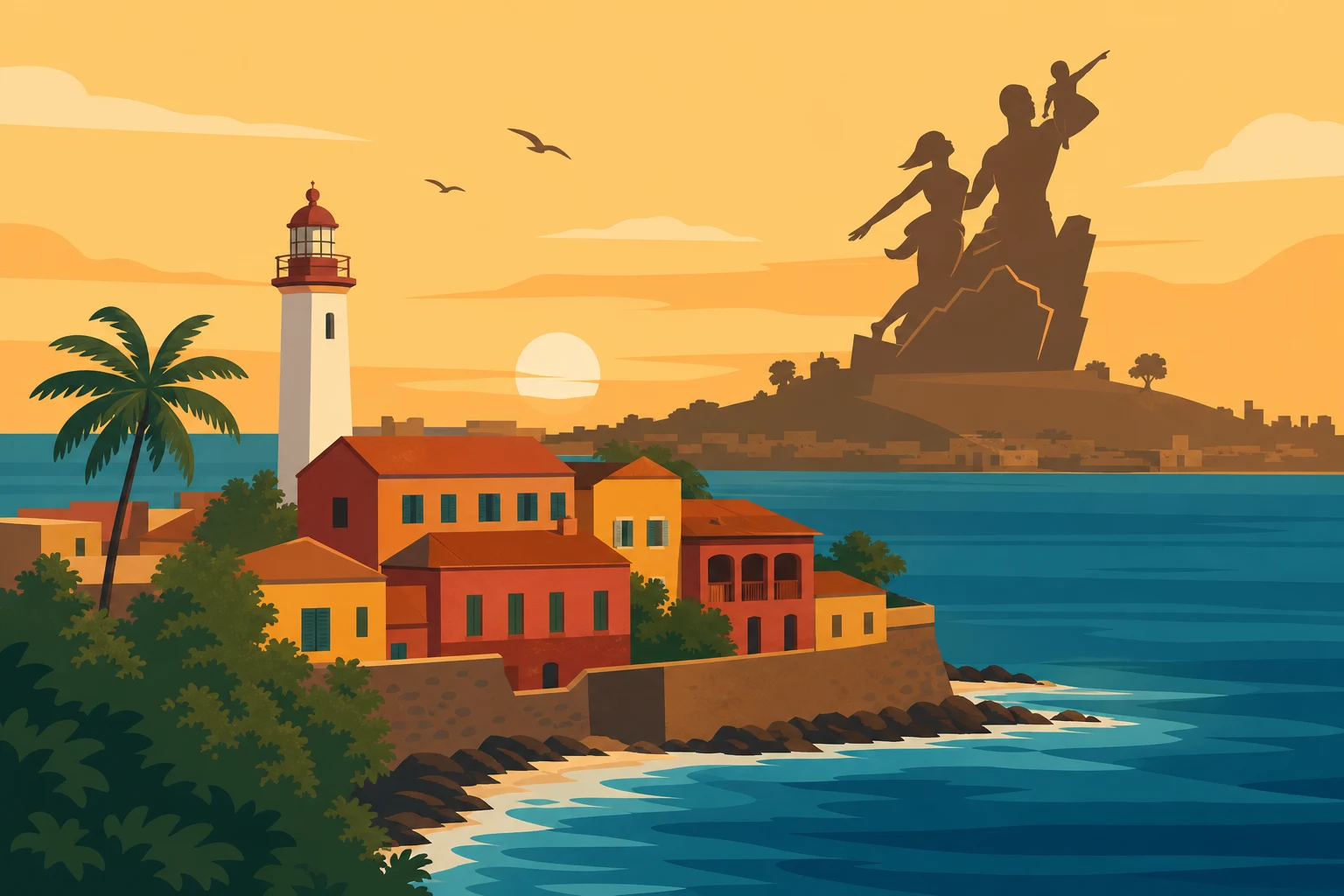
Dakar is the capital of Senegal, the westernmost city on the African mainland located on the Cap-Vert Peninsula.
Landmärken: African Renaissance Monument, Gorée Island
Roliga fakta
- Dakar is the westernmost point of mainland Africa, located on the Cap-Vert Peninsula.
- The city was the endpoint of the famous Paris-Dakar Rally from 1979 to 2007.
- Gorée Island, just off Dakar, was a major center of the Atlantic slave trade and is now a UNESCO World Heritage Site.
Victoria
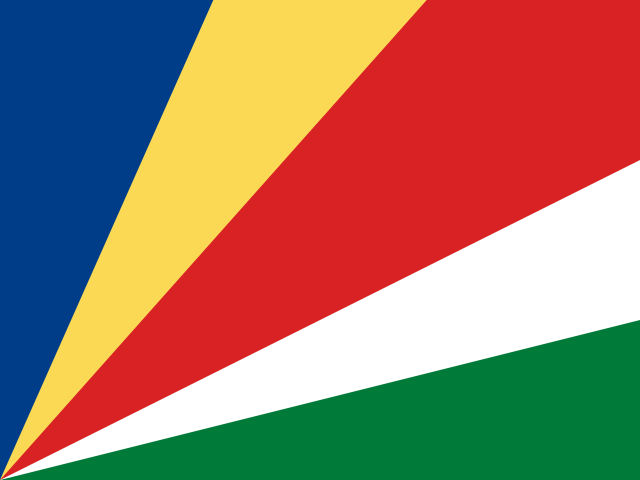
Seychellerna
Befolkning: 28,000
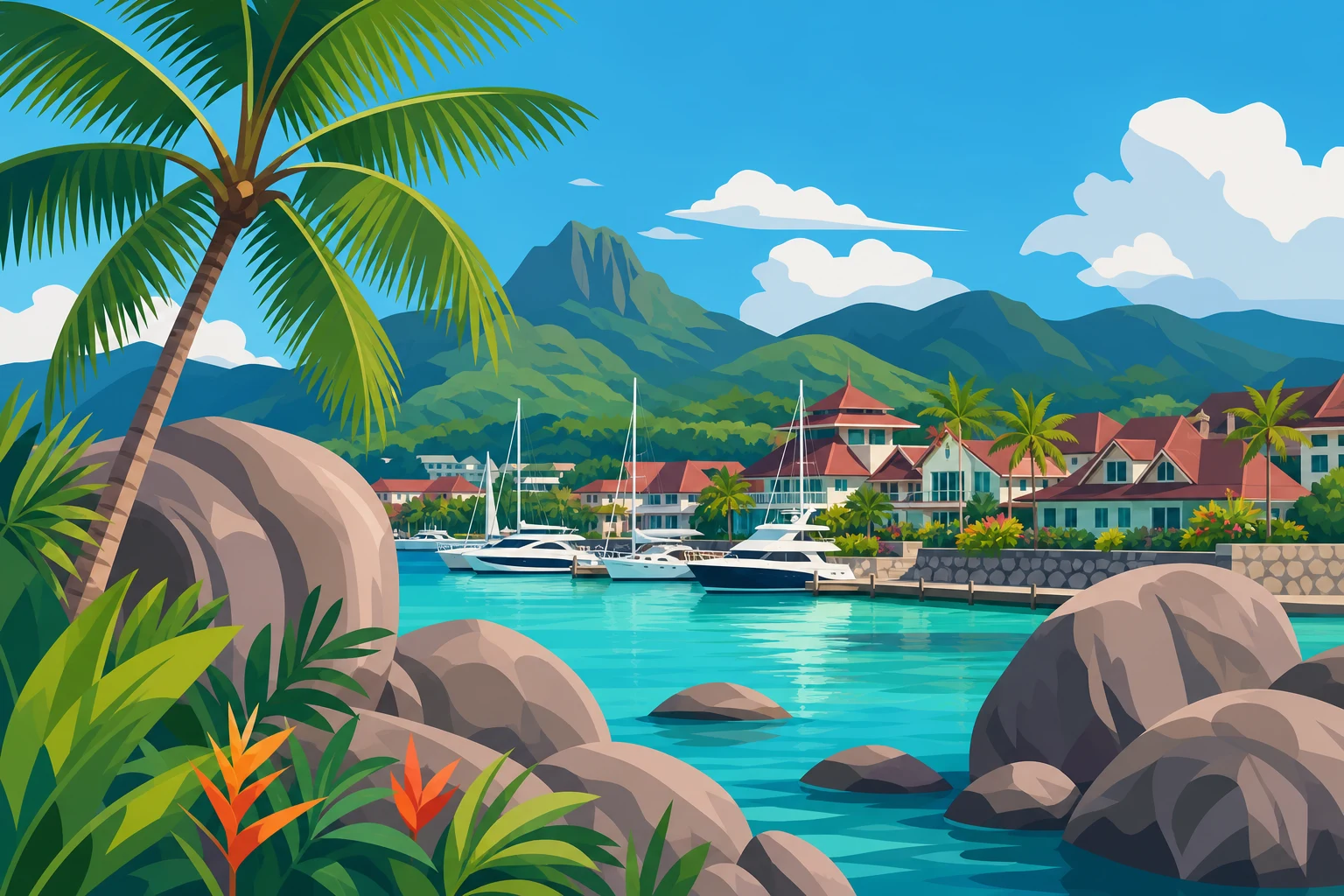
Victoria is the capital of Seychelles, one of the smallest capital cities in the world located on the island of Mahé.
Landmärken: Victoria Clock Tower, Sir Selwyn Selwyn-Clarke Market
Roliga fakta
- Victoria is one of the smallest capital cities in the world by population.
- Seychelles has the smallest population of any sovereign African nation with about 100,000 people.
- The city has a miniature replica of London's Big Ben clock tower, a remnant of British colonial rule.
Freetown
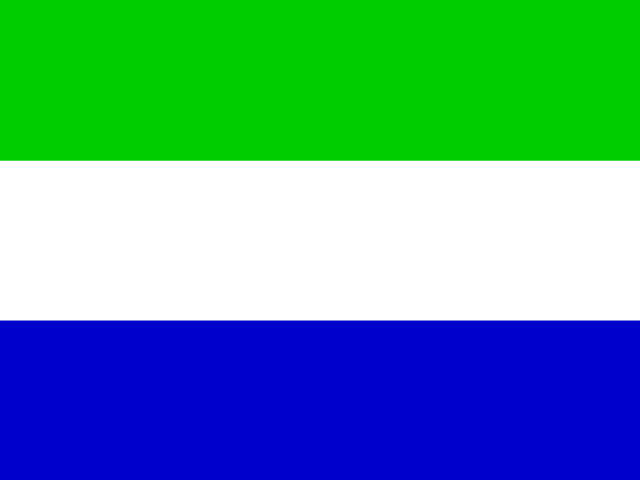
Sierra Leone
Befolkning: 1.2 million
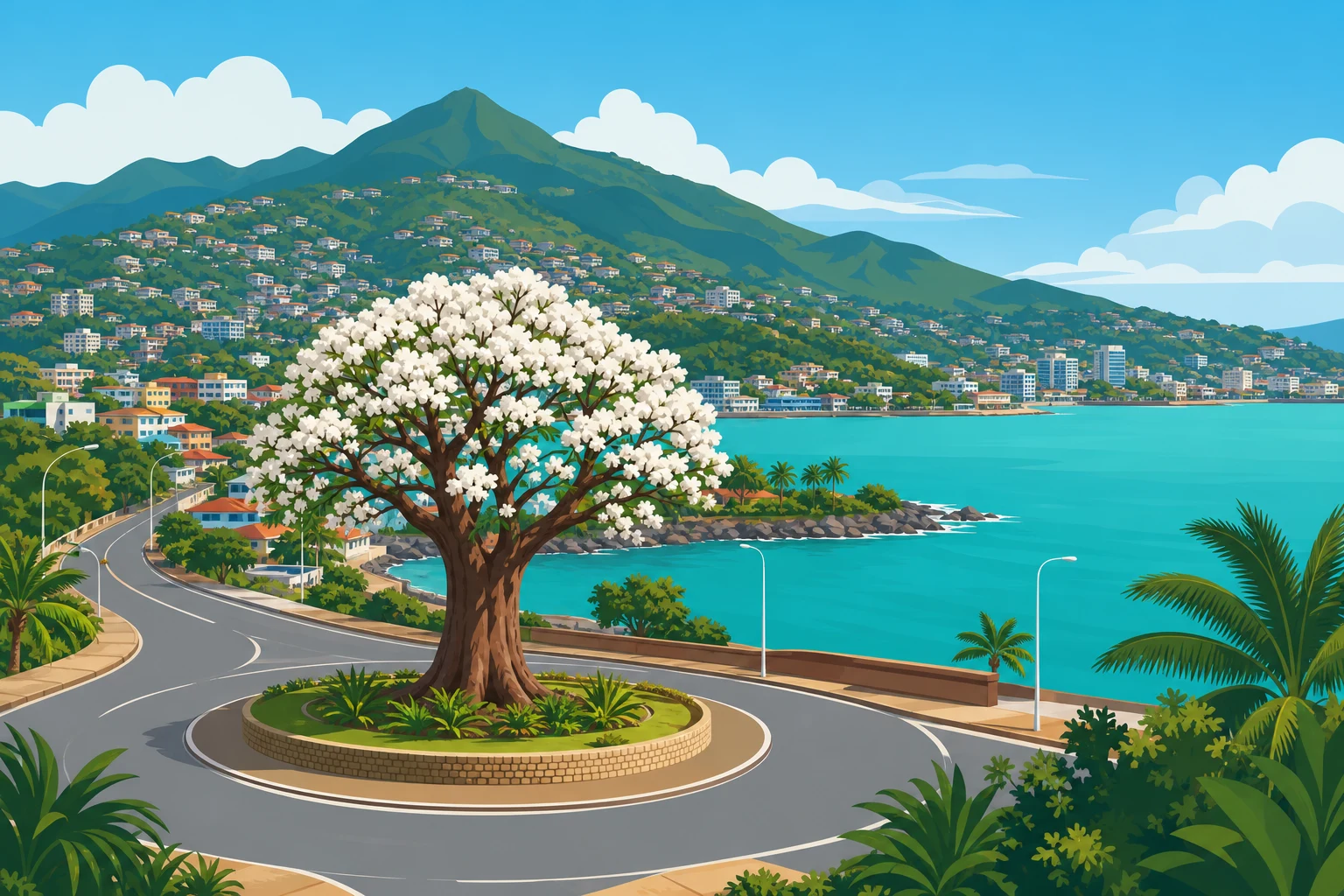
Freetown is the capital of Sierra Leone, founded in 1792 as a settlement for freed slaves and located on a mountainous peninsula.
Landmärken: Cotton Tree, National Museum of Sierra Leone
Roliga fakta
- Freetown was founded in 1792 by freed African American slaves who had fought for the British in the American Revolution.
- The Cotton Tree in downtown Freetown is believed to be where freed slaves first prayed upon arrival in 1792.
- Sierra Leone means "Lion Mountain" in Portuguese, named by explorer Pedro de Sintra in 1462.
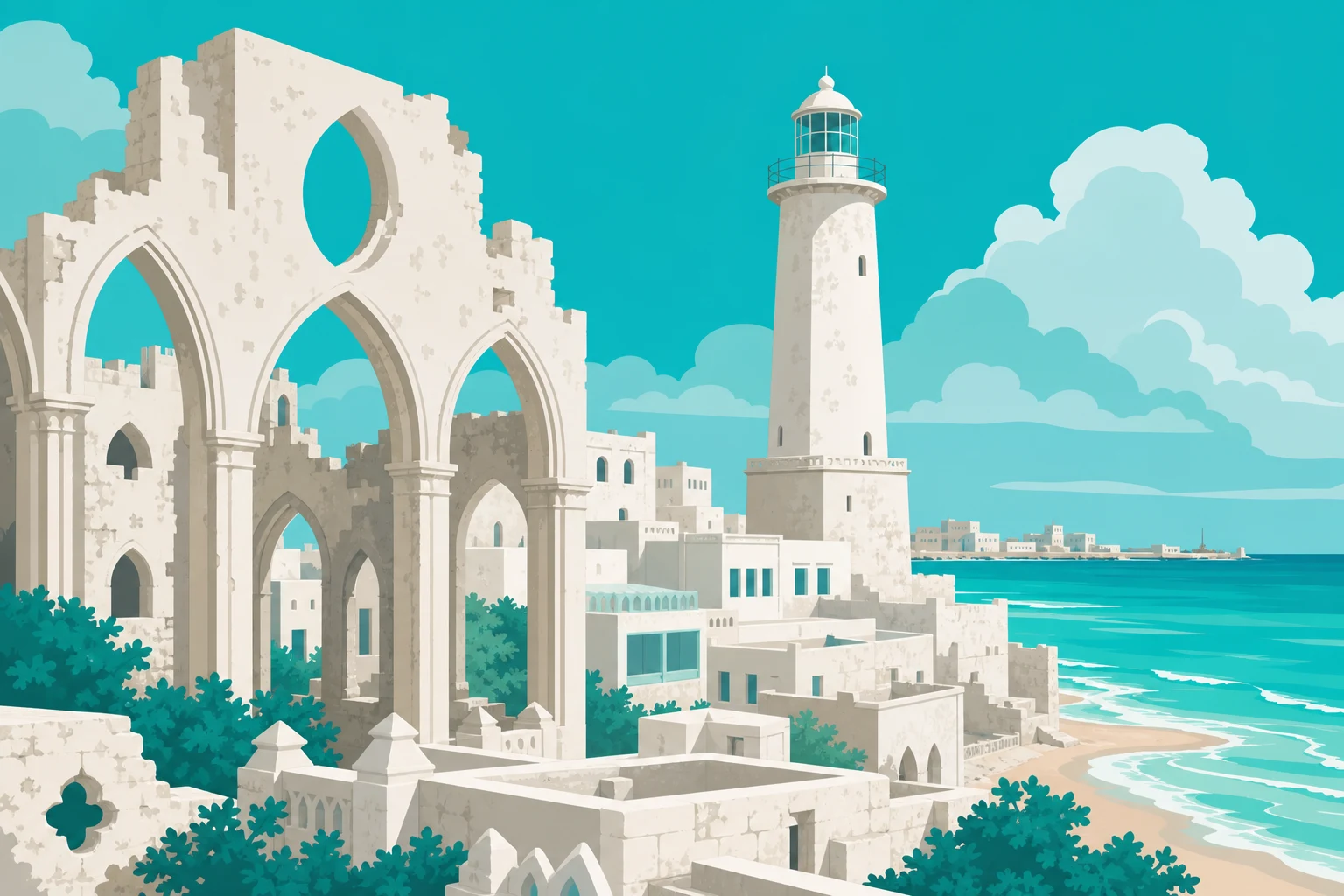
Mogadishu
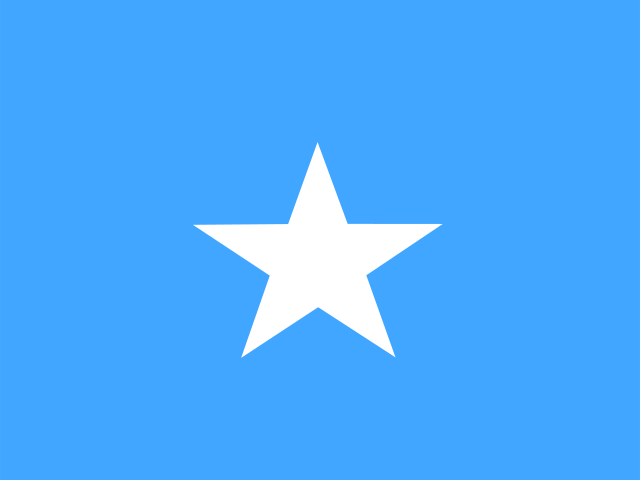
Somalia
Befolkning: 2.6 million
Mogadishu is the capital of Somalia, an ancient Indian Ocean port city with a history of trade dating back over 1,000 years.
Landmärken: Mogadishu Cathedral (ruins), Arba Rucun Mosque
Roliga fakta
- Mogadishu was once called the "White Pearl of the Indian Ocean" for its white coral stone buildings along the coast.
- The city was an important trading center connecting Africa to Arabia, Persia, and India for over a millennium.
- Somalia has the longest coastline of any African mainland country at over 3,300 km.
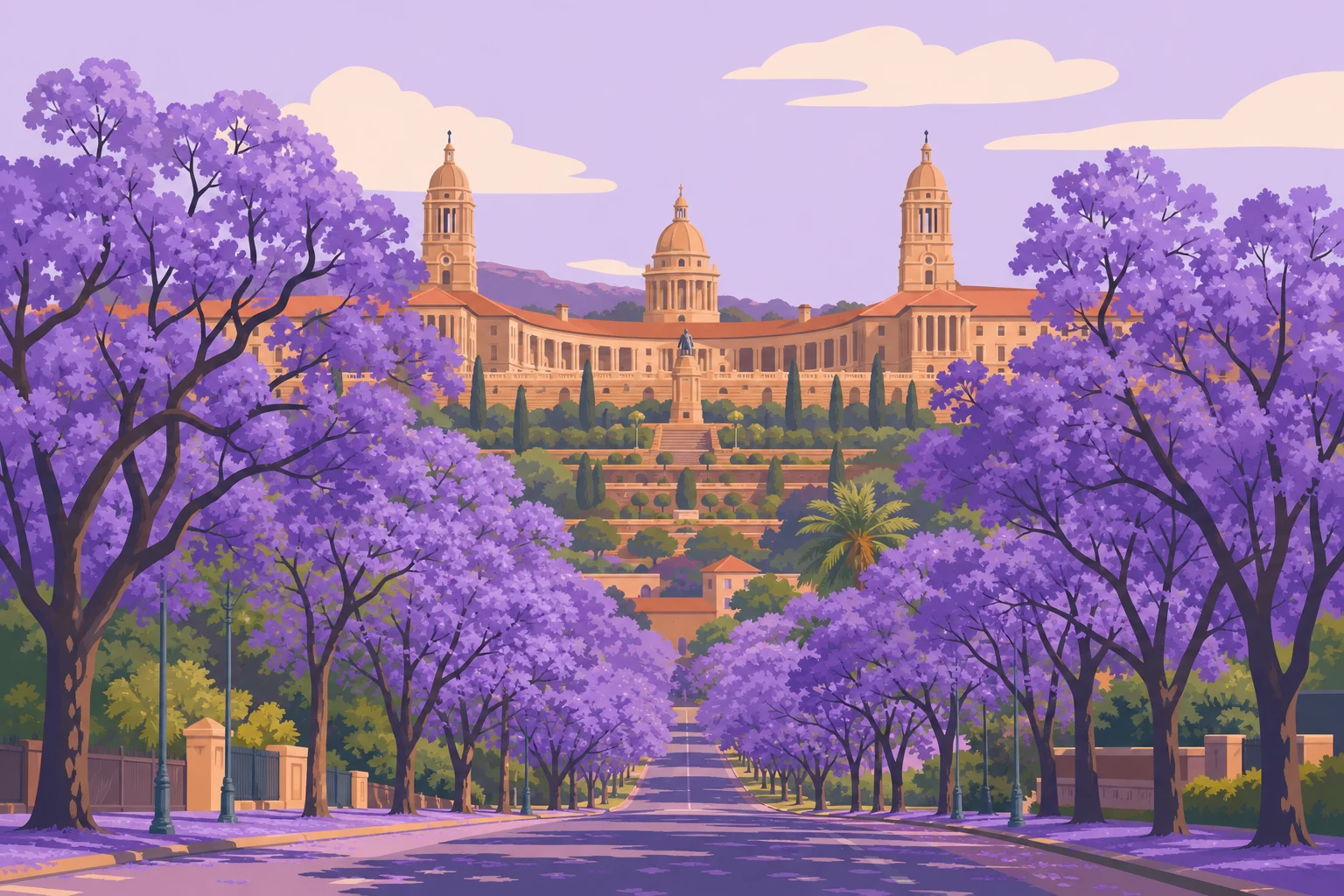
Pretoria
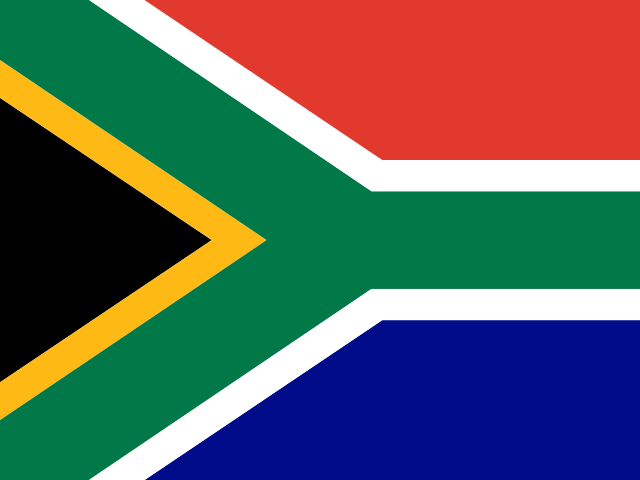
Sydafrika
Befolkning: 2.6 million
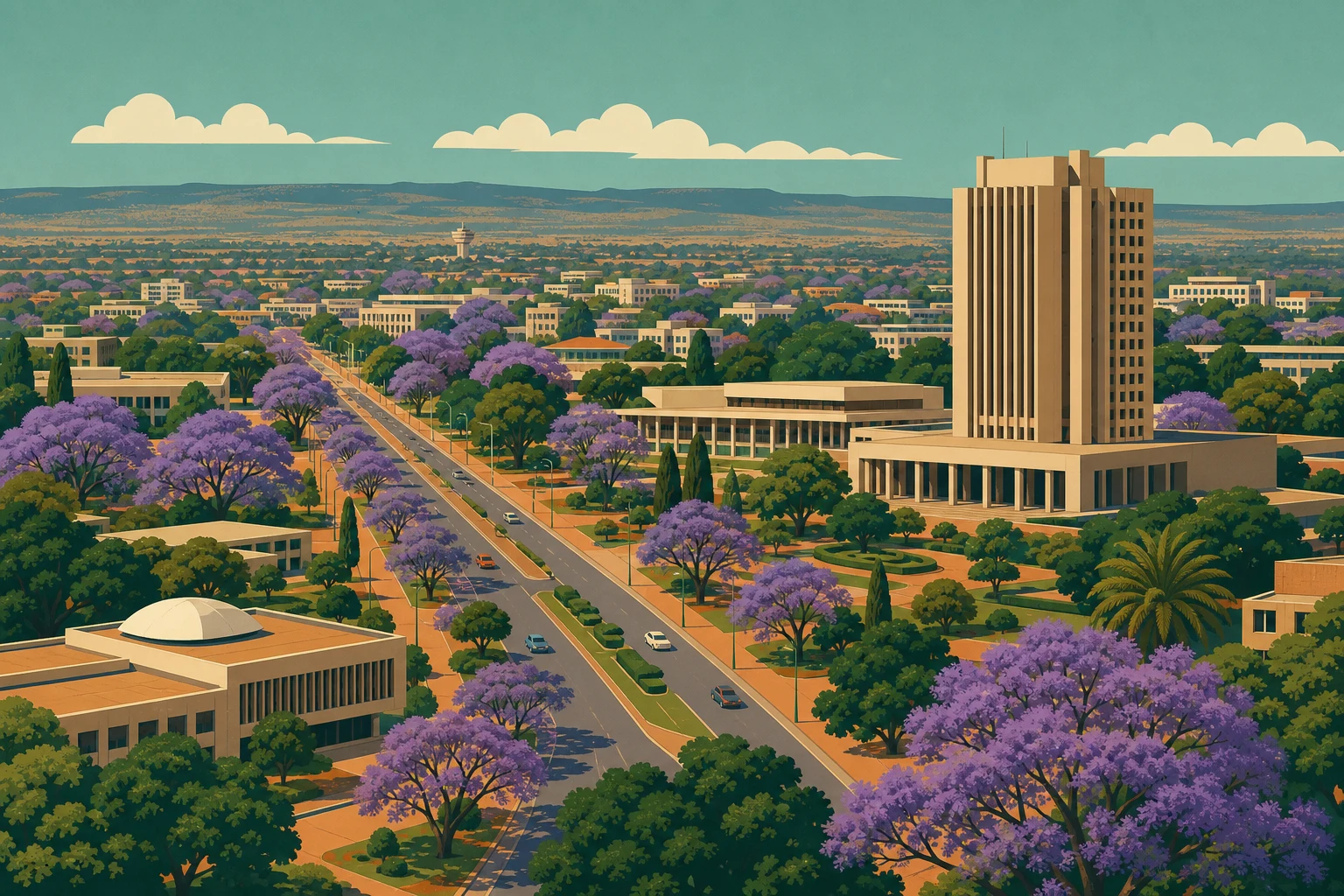
Pretoria is the administrative capital of South Africa, known as the "Jacaranda City" for the thousands of jacaranda trees lining its streets.
Landmärken: Union Buildings, Voortrekker Monument
Roliga fakta
- South Africa has three capitals: Pretoria (administrative), Cape Town (legislative), and Bloemfontein (judicial).
- Over 70,000 jacaranda trees bloom purple every October, earning it the nickname "Jacaranda City."
- The Union Buildings, seat of government, are among the largest buildings in the Southern Hemisphere.
Juba
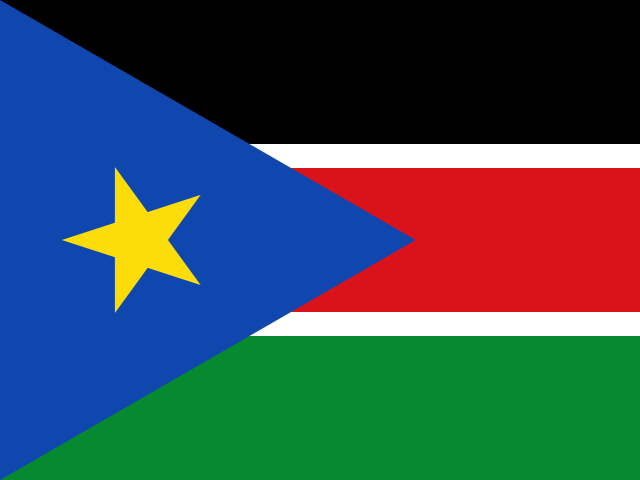
Sydsudan
Befolkning: 530,000
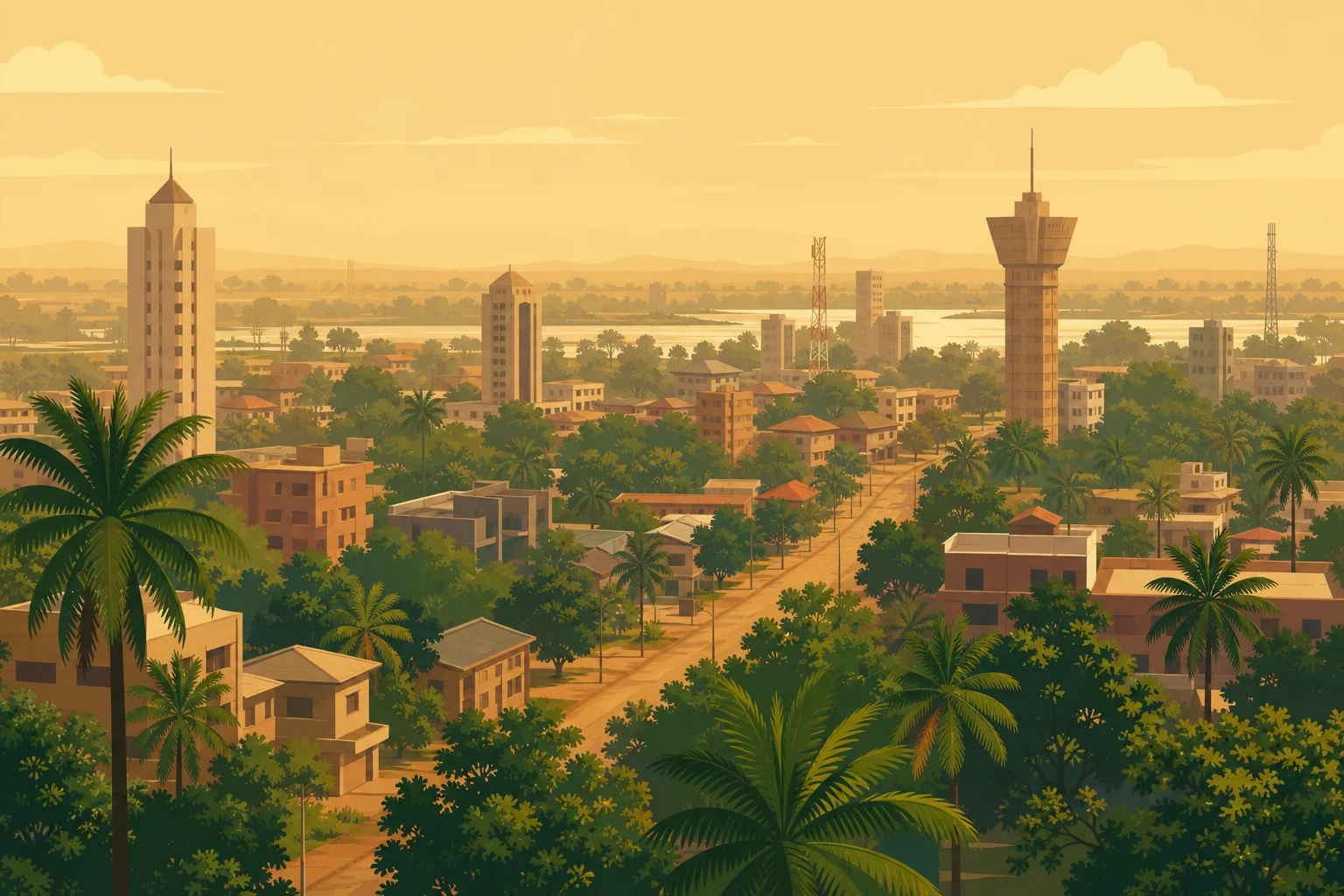
Juba is the capital of South Sudan, the world's newest country which gained independence in 2011, located on the White Nile.
Landmärken: John Garang Mausoleum, Juba Bridge
Roliga fakta
- South Sudan is the world's newest country, having gained independence from Sudan on July 9, 2011.
- Juba sits on the banks of the White Nile, which eventually flows north to join the Blue Nile at Khartoum.
- The country voted for independence with 98.83% in favor in a 2011 referendum.
Khartoum
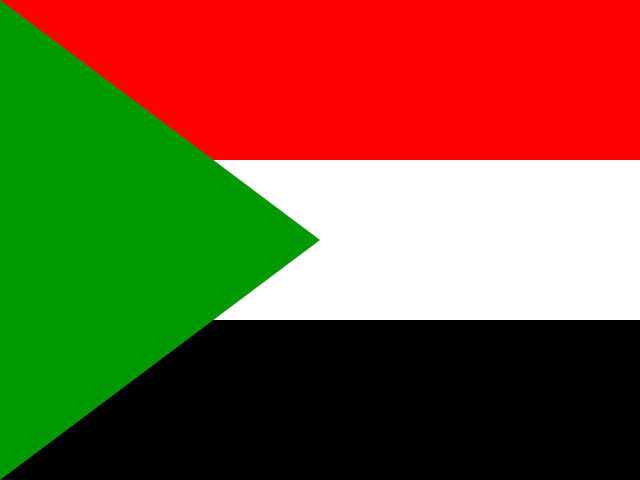
Sudan
Befolkning: 5.3 million
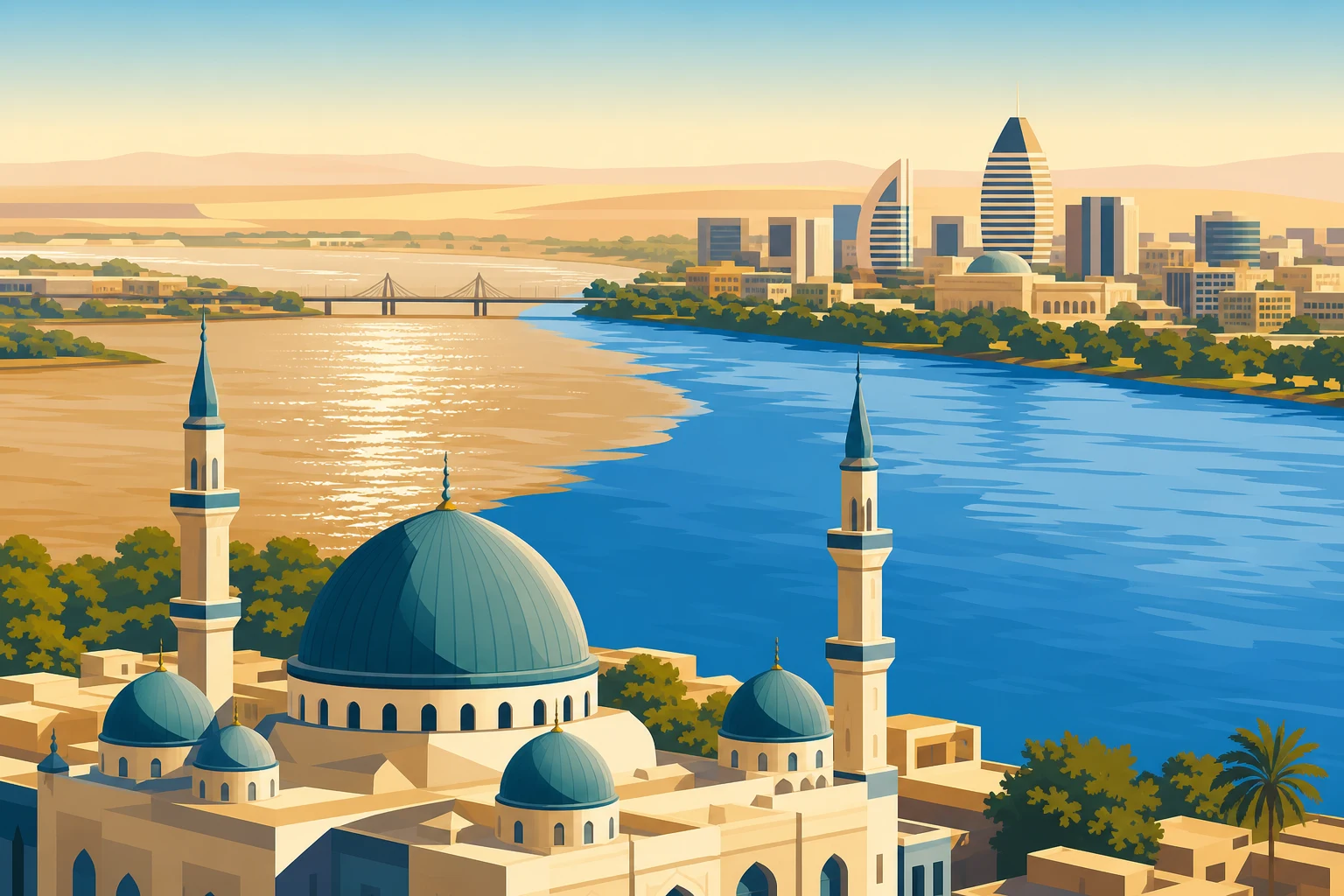
Khartoum is the capital of Sudan, located at the strategic confluence of the White Nile and Blue Nile rivers.
Landmärken: Confluence of the Niles, National Museum of Sudan
Roliga fakta
- Khartoum sits at the exact point where the White Nile and Blue Nile converge to form the main Nile River.
- The city's name comes from the Arabic for "elephant's trunk," describing the narrow strip of land between the two rivers.
- Sudan has more pyramids than Egypt, with over 200 ancient pyramids in the Meroë region.
Dodoma
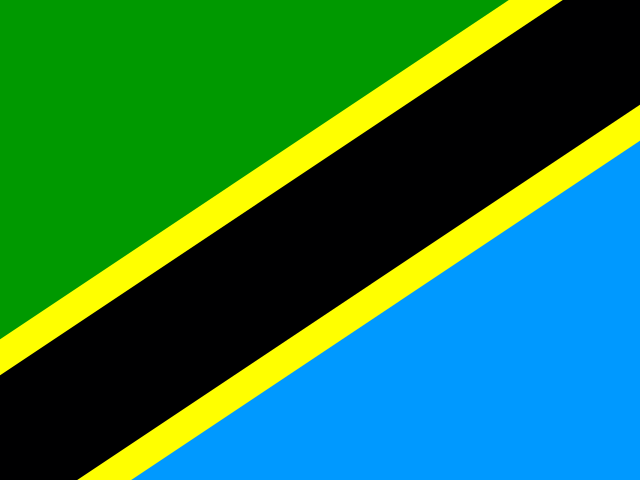
Tanzania
Befolkning: 450,000
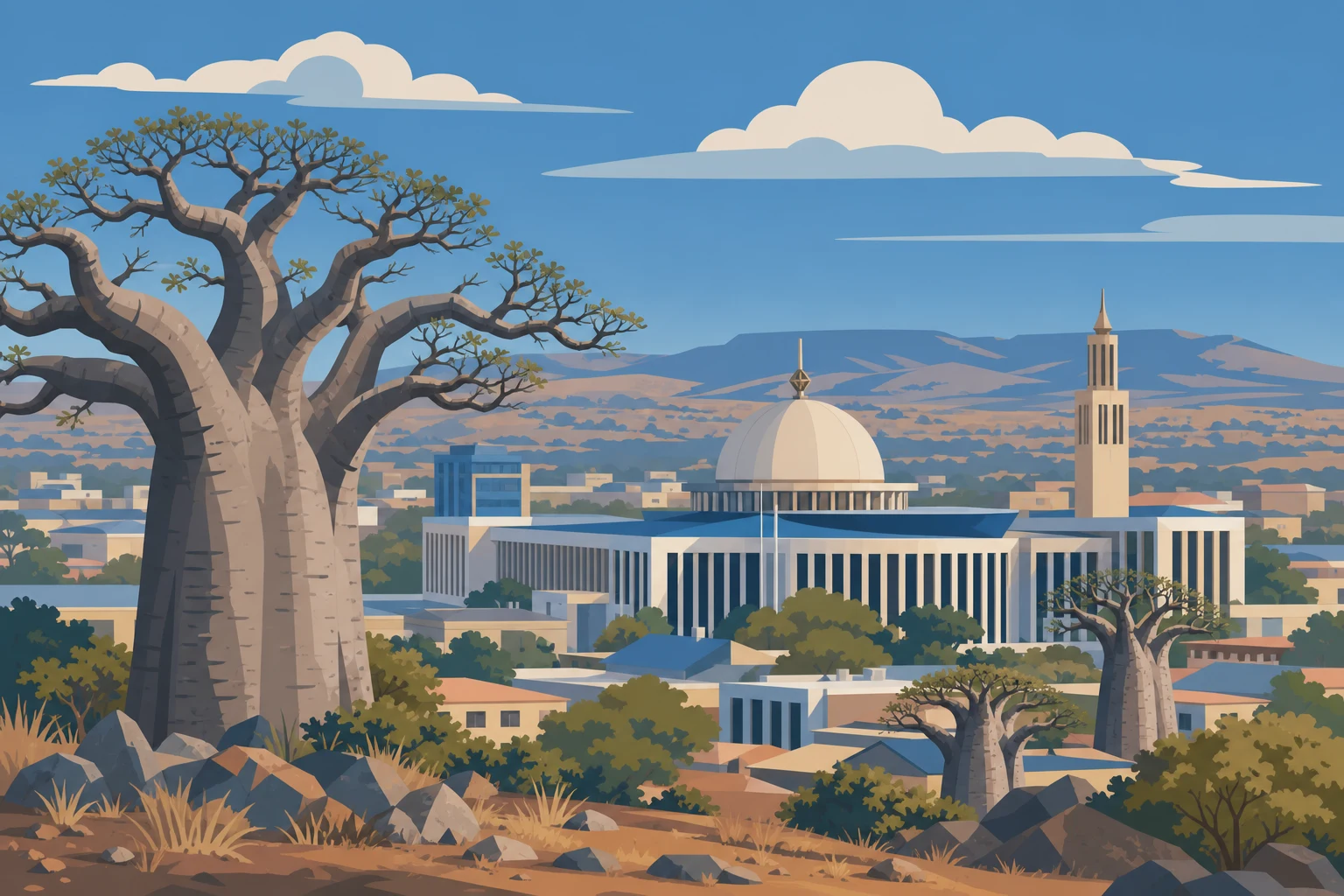
Dodoma is the official capital of Tanzania, designated to replace Dar es Salaam in 1974 due to its more central location.
Landmärken: Bunge (National Assembly), Gaddafi Mosque
Roliga fakta
- Dodoma was designated the capital in 1974 but the transfer from Dar es Salaam has been very gradual over decades.
- Tanzania is home to Mount Kilimanjaro, Africa's highest peak at 5,895 meters.
- The name Dodoma comes from the Gogo language meaning "it has sunk," referring to an elephant that got stuck in mud.
Lomé
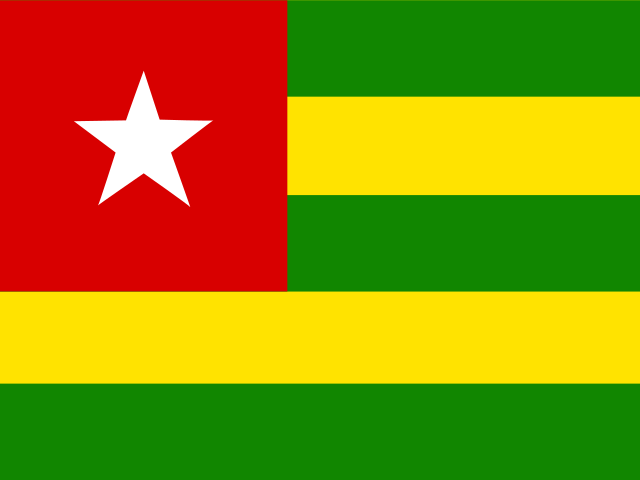
Togo
Befolkning: 2.0 million
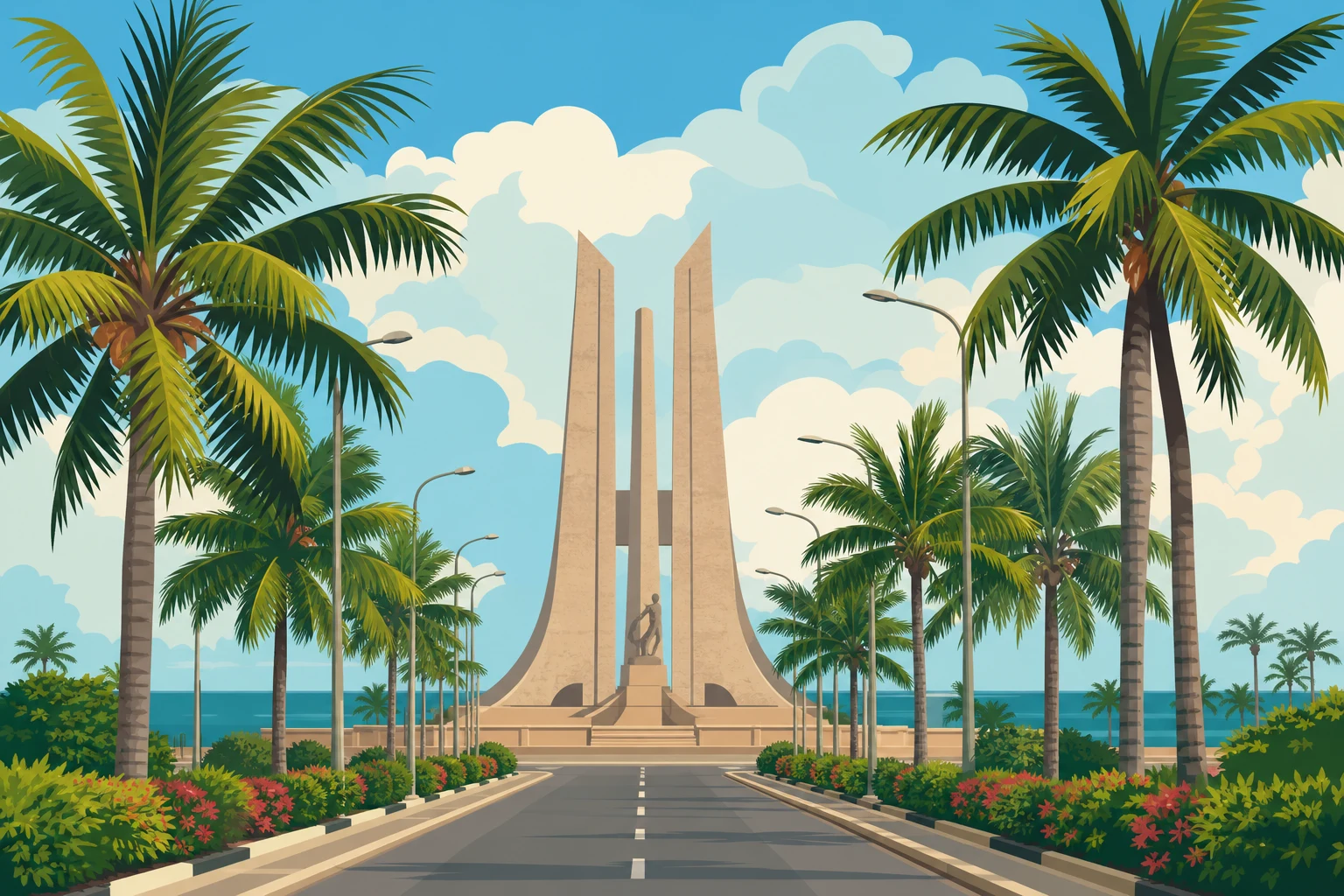
Lomé is the capital of Togo, the only capital city in the world that directly borders another country, sitting right on the Ghana border.
Landmärken: Grand Marché, Independence Monument
Roliga fakta
- Lomé is the only capital city in the world that sits directly on an international border (with Ghana).
- The Grand Marché (Grand Market) is one of West Africa's most important trading centers.
- Togo is one of the narrowest countries in the world, stretching only 160 km at its widest point.
Tunis
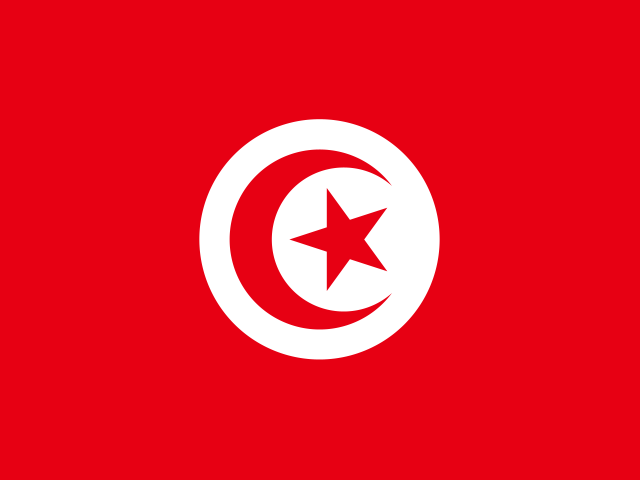
Tunisien
Befolkning: 2.7 million
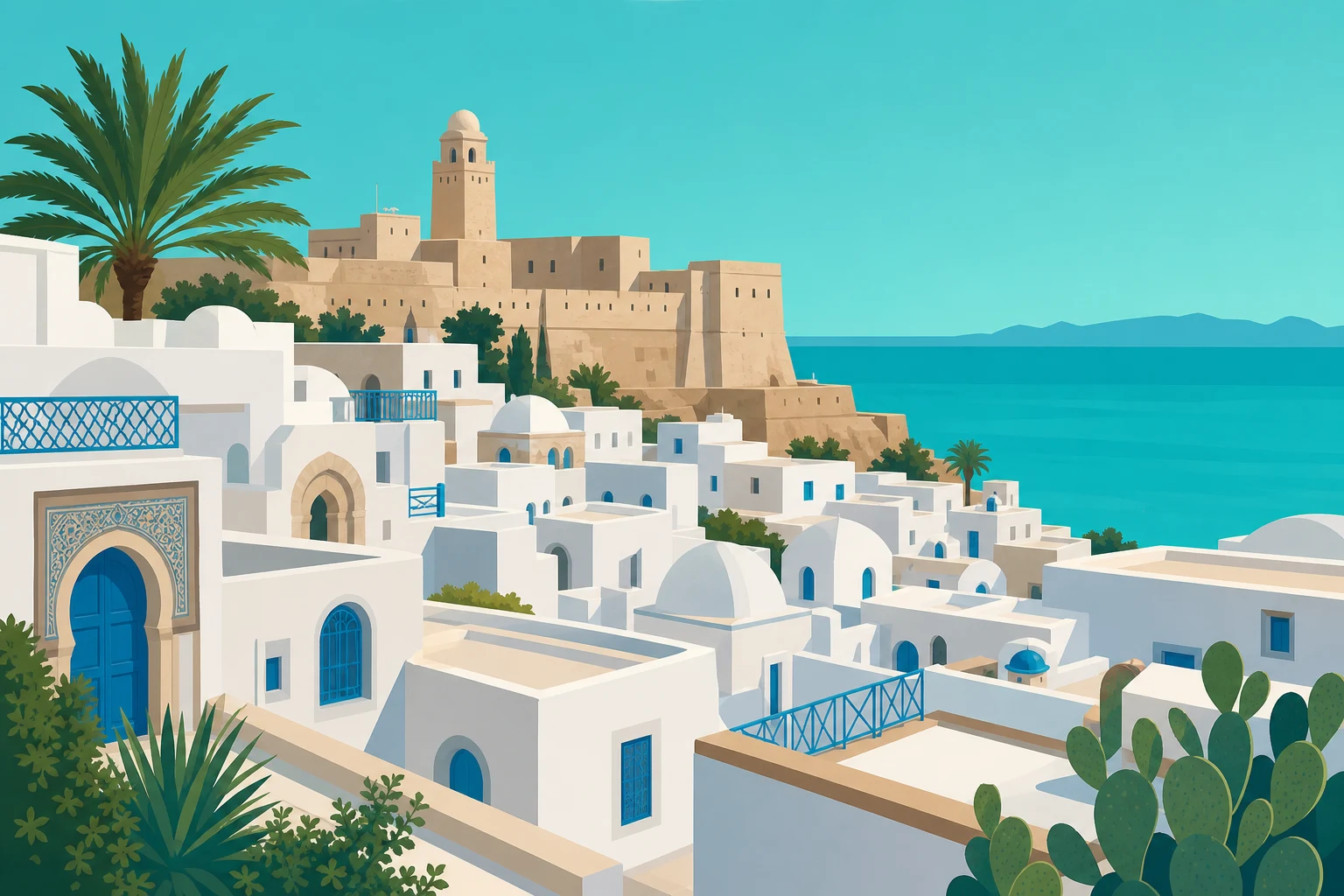
Tunis is the capital of Tunisia, a Mediterranean city built near the ruins of ancient Carthage with a UNESCO-listed medieval medina.
Landmärken: Medina of Tunis, Carthage Ruins
Roliga fakta
- The ruins of Carthage, the ancient rival of Rome, are located in a suburb of modern Tunis.
- The medina of Tunis is a UNESCO World Heritage Site with over 700 monuments from its history.
- Tunisia sparked the Arab Spring in 2010-2011, which spread across the Middle East and North Africa.
Kampala
Uganda
Befolkning: 3.7 million
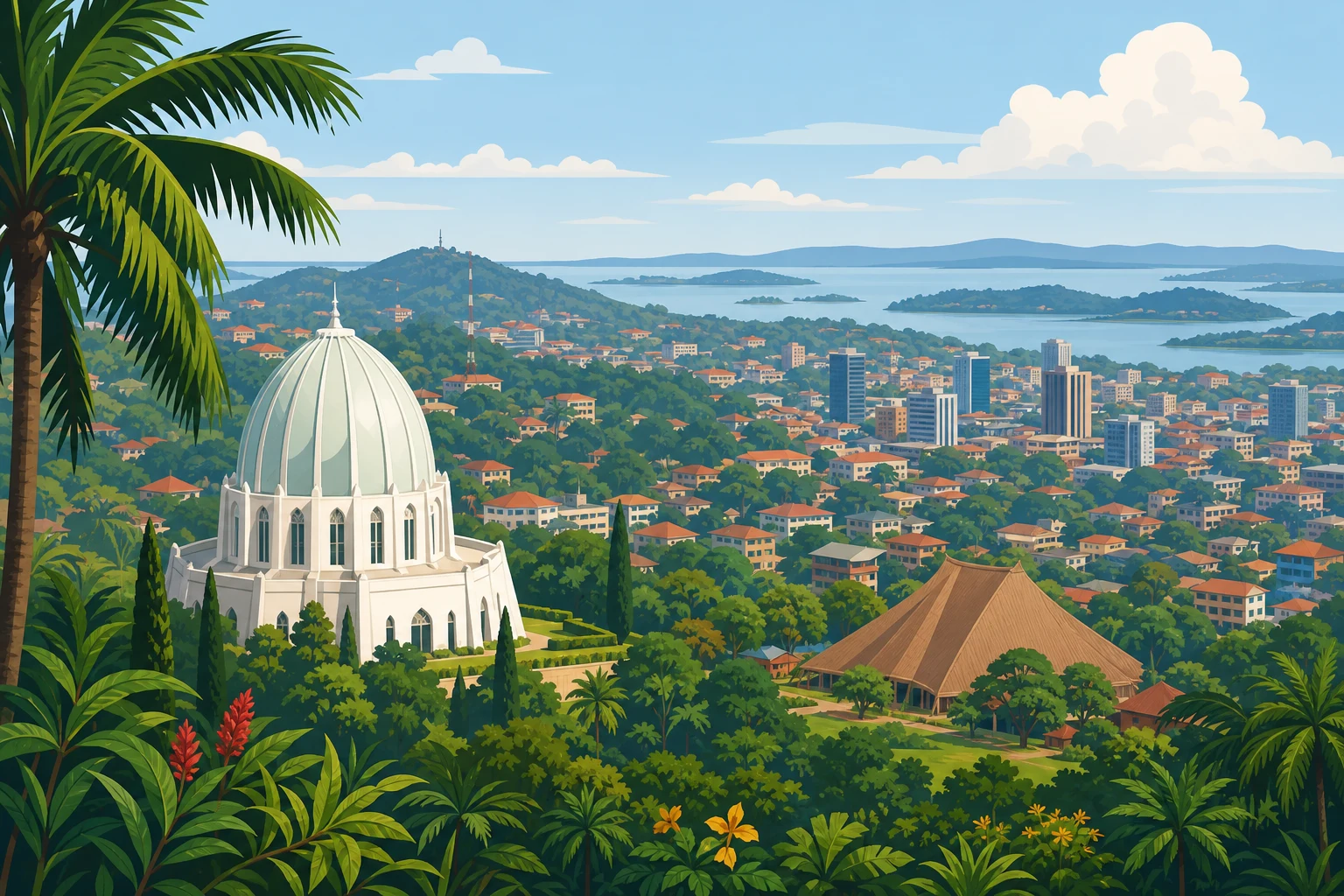
Kampala is the capital of Uganda, a city built on seven hills near the shores of Lake Victoria, Africa's largest lake.
Landmärken: Kasubi Royal Tombs, Uganda National Mosque
Roliga fakta
- Kampala was built on seven hills, similar to Rome, and has since expanded to cover over twenty hills.
- The name Kampala comes from "Impala," as the hills were once grazing grounds for these antelopes.
- Uganda is home to about half of the world's remaining mountain gorillas in the Bwindi Impenetrable Forest.
Lusaka
Zambia
Befolkning: 3.3 million
Lusaka is the capital of Zambia, a modern city in the south-central part of the country that grew from a small colonial railway village.
Landmärken: Freedom Statue, Lusaka National Museum
Roliga fakta
- Lusaka is named after a village headman, Chief Lusaka, who originally lived in the area.
- Zambia is home to Victoria Falls (Mosi-oa-Tunya), one of the largest waterfalls in the world.
- The city sits at 1,280 meters above sea level on a limestone plateau.
Harare
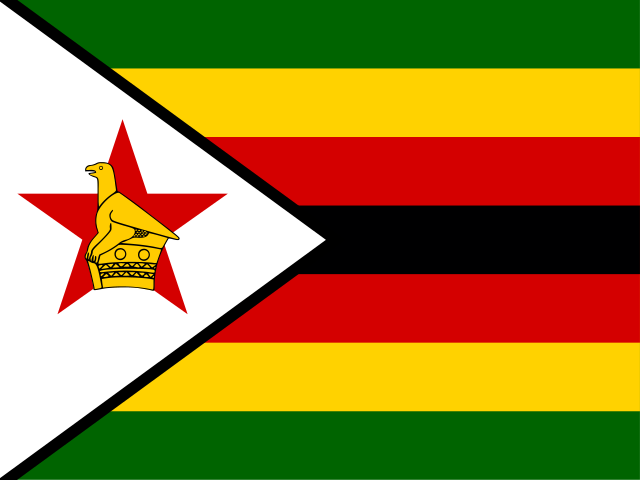
Zimbabwe
Befolkning: 2.9 million
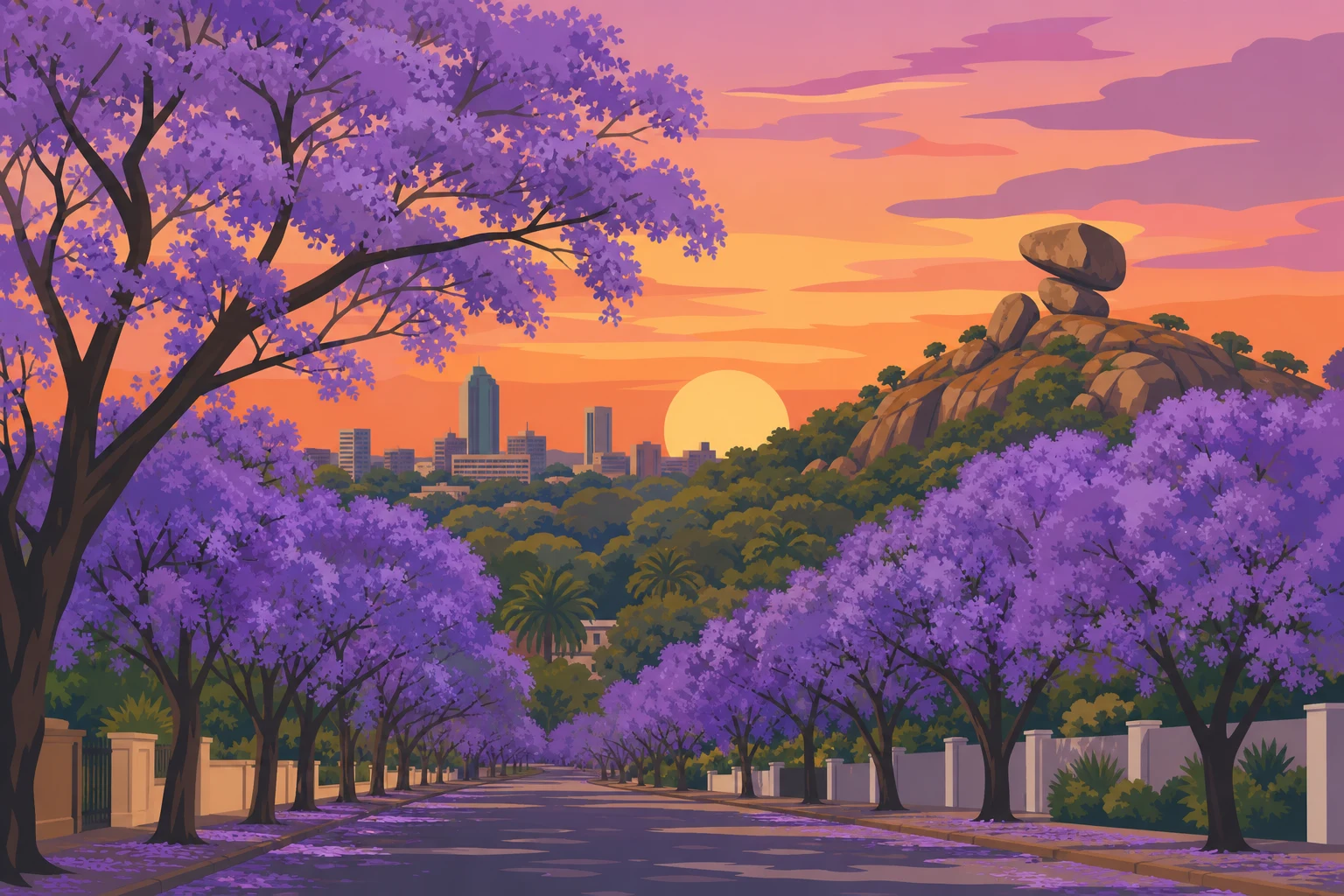
Harare is the capital of Zimbabwe, a city at 1,490 meters elevation known for its parks, gardens, and pleasant highland climate.
Landmärken: National Heroes Acre, Harare Gardens
Roliga fakta
- Harare was originally named Salisbury by British colonialists and was renamed at independence in 1982.
- Zimbabwe is named after the Great Zimbabwe ruins, a medieval stone city that was once the capital of a powerful kingdom.
- Harare sits at 1,490 meters elevation, giving it a mild subtropical highland climate.
Snabböversikt
Algiers Luanda Porto-Novo Gaborone Ouagadougou Gitega Yaoundé Praia Bangui N'Djamena Moroni Brazzaville Kinshasa Yamoussoukro Djibouti Cairo Ciudad de la Paz Asmara Mbabane Addis Ababa Libreville Banjul Accra Conakry Bissau Nairobi Maseru Monrovia Tripoli Antananarivo Lilongwe Bamako Nouakchott Port Louis Rabat Maputo Windhoek Niamey Abuja Kigali São Tomé Dakar Victoria Freetown Mogadishu Pretoria Juba Khartoum Dodoma Lomé Tunis Kampala Lusaka Harare Testa dina kunskaper
Hur väl känner du till dessa huvudstäder? Testa dig här.
Öva med spel
Redo att testa det du lärt dig? Hoppa in i ett spel och sätt det i praktiken.
Om Afrikas huvudstäder
Afrika omfattar en enorm geografisk och kulturell mångfald. Huvudstäderna speglar allt från historiska kusthandelsstäder till planerade administrativa centrum. Att känna igen dem stärker både resor och nyhetsförståelse.
Vanliga frågor
Hur många huvudstäder täcker lektionen?
54 - enligt FN:s medlemsländer på kontinenten (ordningen på korten följer kursmaterialet).
Var ligger Pretoria jämfört med Kapstaden för Sydafrika?
Pretoria är en av Sydafrikas huvudstäder (executiv); många kurser nämner också Kapstaden och Bloemfontein.
Är fakta på svenska?
Själva korten och quizet är på engelska för att matcha databas och internationellt namnet; rubriker och SEO är på svenska.