Nordafrikas huvudstäder
Atlas, Sahara och Medelhavet ramar nordafrikanska storstäder där historia från antiken möter modern islamisk kultur.
Studera huvudstäderna
Algiers
Algeriet
Befolkning: 3.9 million
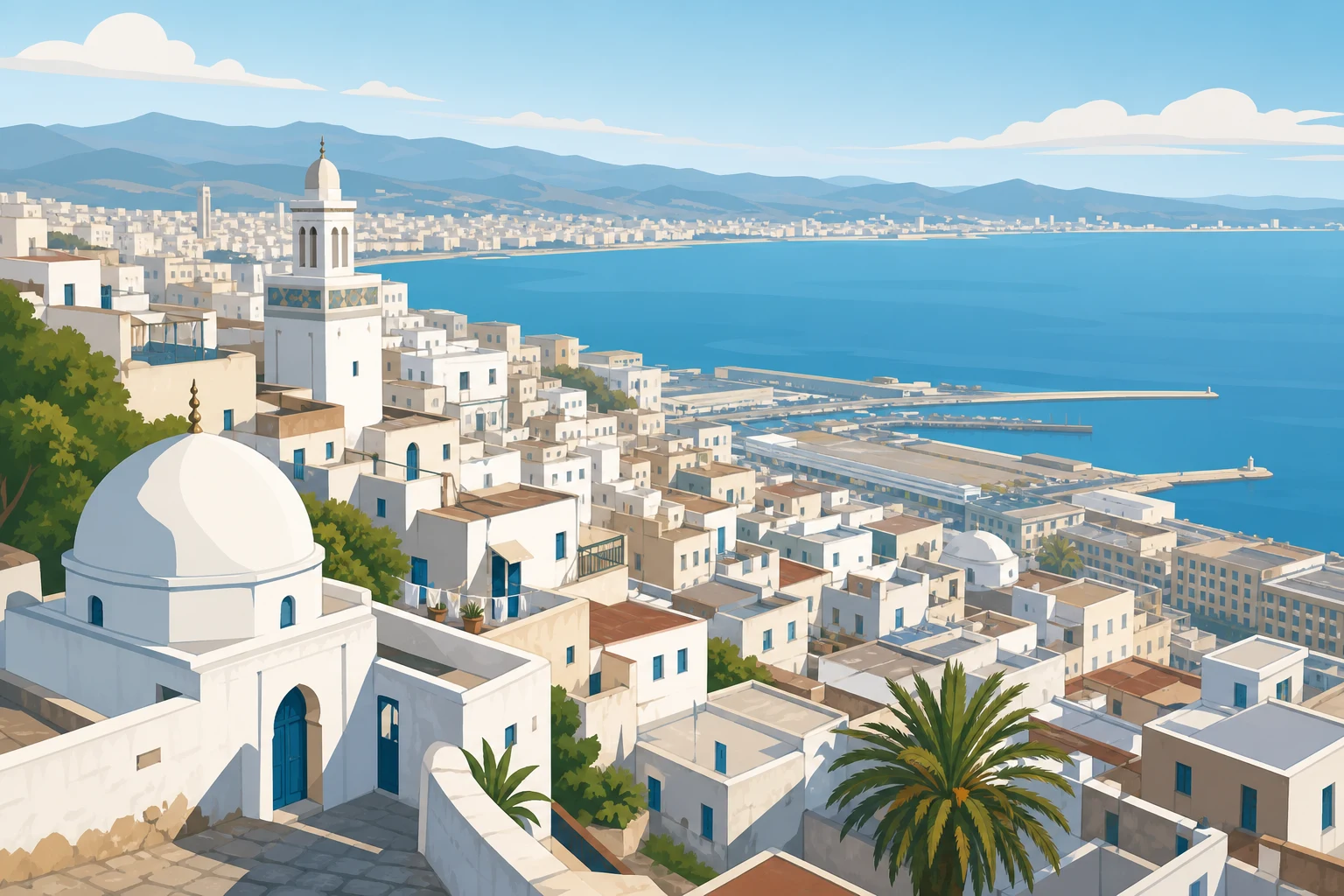
Algiers is the capital and largest city of Algeria, built on a hillside overlooking the Mediterranean Sea. Its historic Casbah quarter is a UNESCO World Heritage Site.
Landmärken: Casbah of Algiers, Notre-Dame d'Afrique, Martyrs' Memorial (Maqam Echahid)
Roliga fakta
- The Casbah of Algiers is a UNESCO World Heritage Site featuring Ottoman-era palaces, mosques, and traditional houses.
- Algiers is known as "El-Bahdja" (The Joyous) and "Algiers the White" for its gleaming white buildings.
- Algeria is the largest country in Africa by area, and Algiers has been its capital since independence in 1962.
Cairo
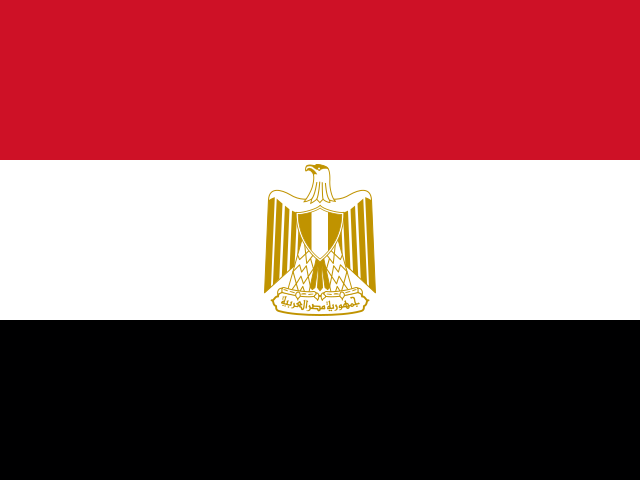
Egypten
Befolkning: 10.1 million
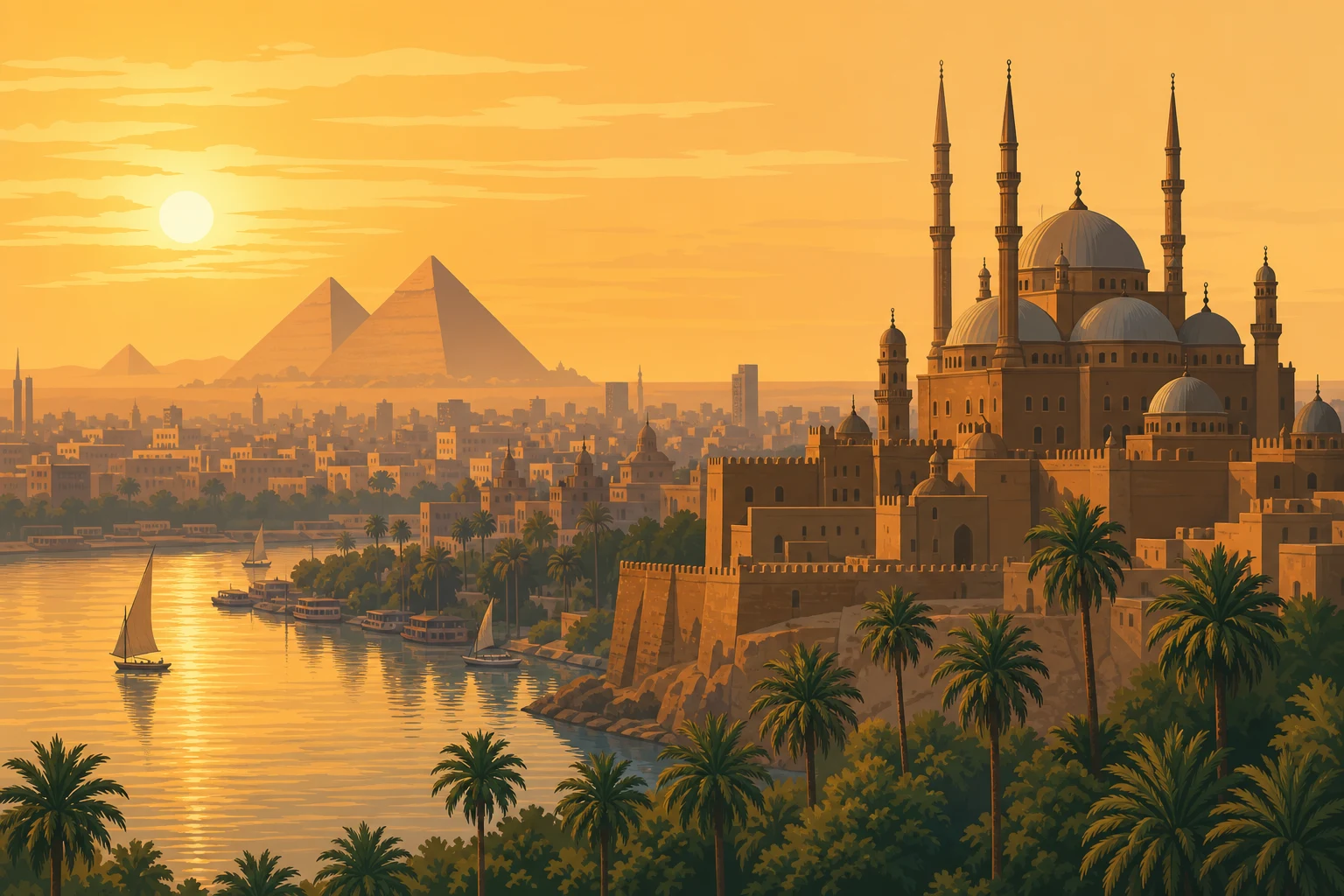
Cairo is the capital of Egypt and the largest city in the Arab world, sprawling along the banks of the Nile River. It is a city where ancient pharaonic monuments stand alongside medieval Islamic architecture and modern skyscrapers.
Landmärken: Pyramids of Giza, Egyptian Museum, Cairo Citadel
Roliga fakta
- Cairo is called "The City of a Thousand Minarets" for its abundance of Islamic architecture.
- The Great Pyramid of Giza, the last surviving Wonder of the Ancient World, stands on Cairo's southwestern outskirts.
- Cairo's Al-Azhar University, founded in 970 AD, is one of the oldest continuously operating universities in the world.
Tripoli
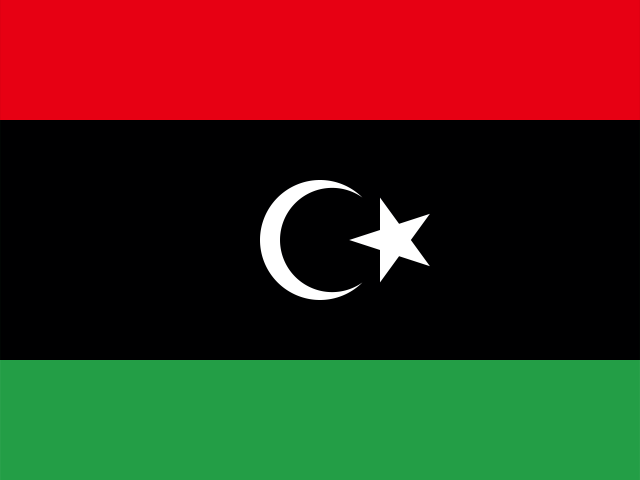
Libyen
Befolkning: 1.2 million
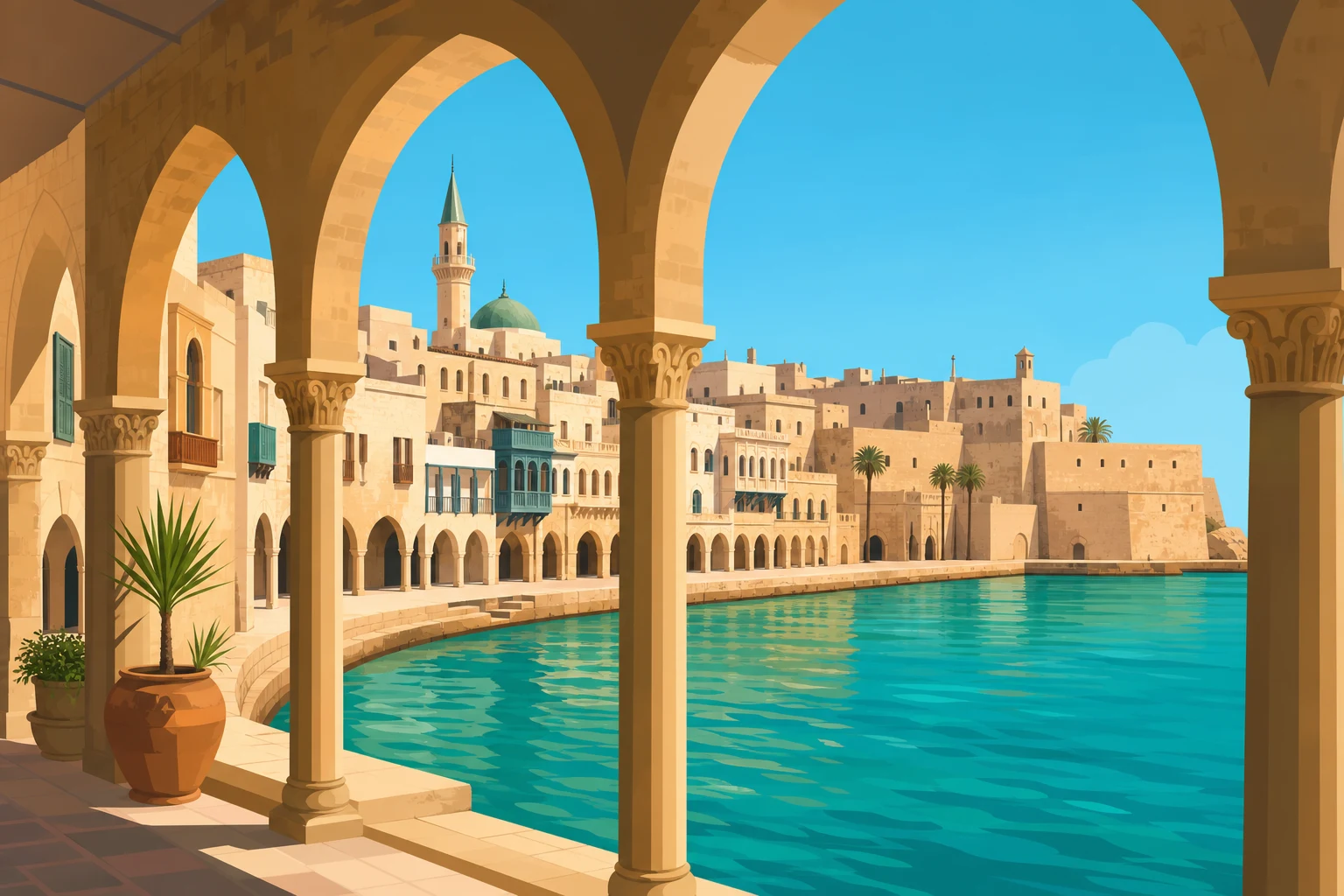
Tripoli is the capital and largest city of Libya, located on the Mediterranean coast in the northwestern part of the country. Founded by the Phoenicians, it has over 2,700 years of history.
Landmärken: Red Castle Museum, Arch of Marcus Aurelius, Gurgi Mosque
Roliga fakta
- Tripoli was founded by the Phoenicians in the 7th century BC and originally named Oea.
- The city's name means "Three Cities" in Greek, referring to the ancient cities of Oea, Sabratha, and Leptis Magna.
- Tripoli's Red Castle (Assaraya al-Hamra) is a vast palace complex with roots dating to the 2nd century AD.
Rabat
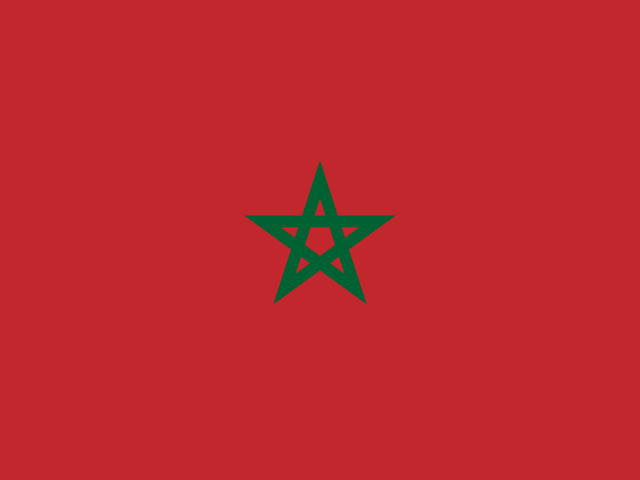
Marocko
Befolkning: 580,000
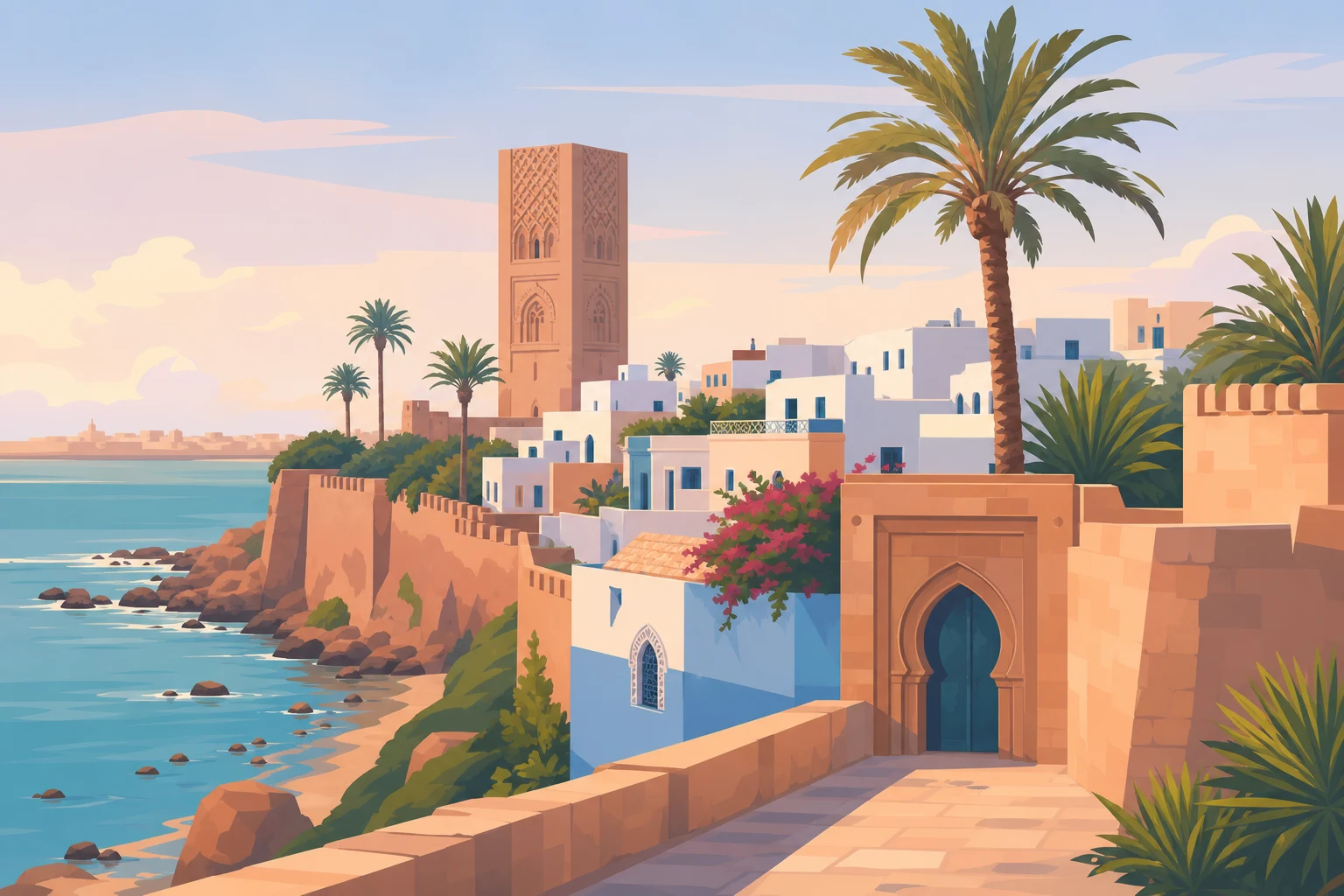
Rabat is the capital of Morocco, located on the Atlantic coast at the mouth of the Bou Regreg river. It is a UNESCO World Heritage Site known for its blend of historic and modern landmarks.
Landmärken: Hassan Tower, Kasbah of the Udayas, Mausoleum of Mohammed V
Roliga fakta
- Many people mistakenly think Casablanca or Marrakech is Morocco's capital, but Rabat has held the title since 1912.
- Rabat's Chellah necropolis contains both Roman ruins and a medieval Islamic burial ground.
- The Hassan Tower, an incomplete minaret from 1195, was intended to be the tallest in the world at 86 meters but was never finished.
Khartoum
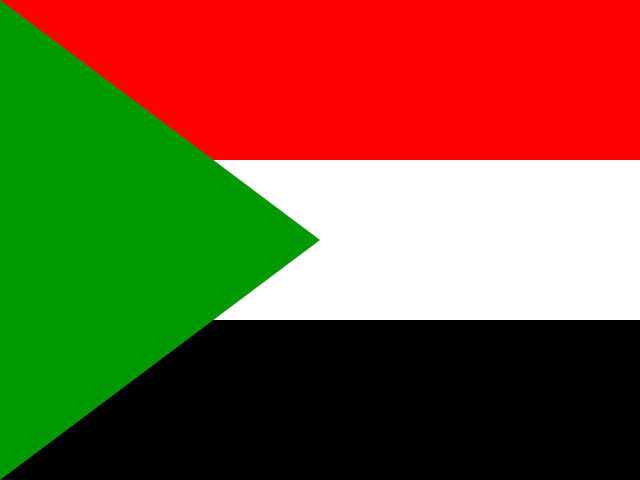
Sudan
Befolkning: 5.3 million
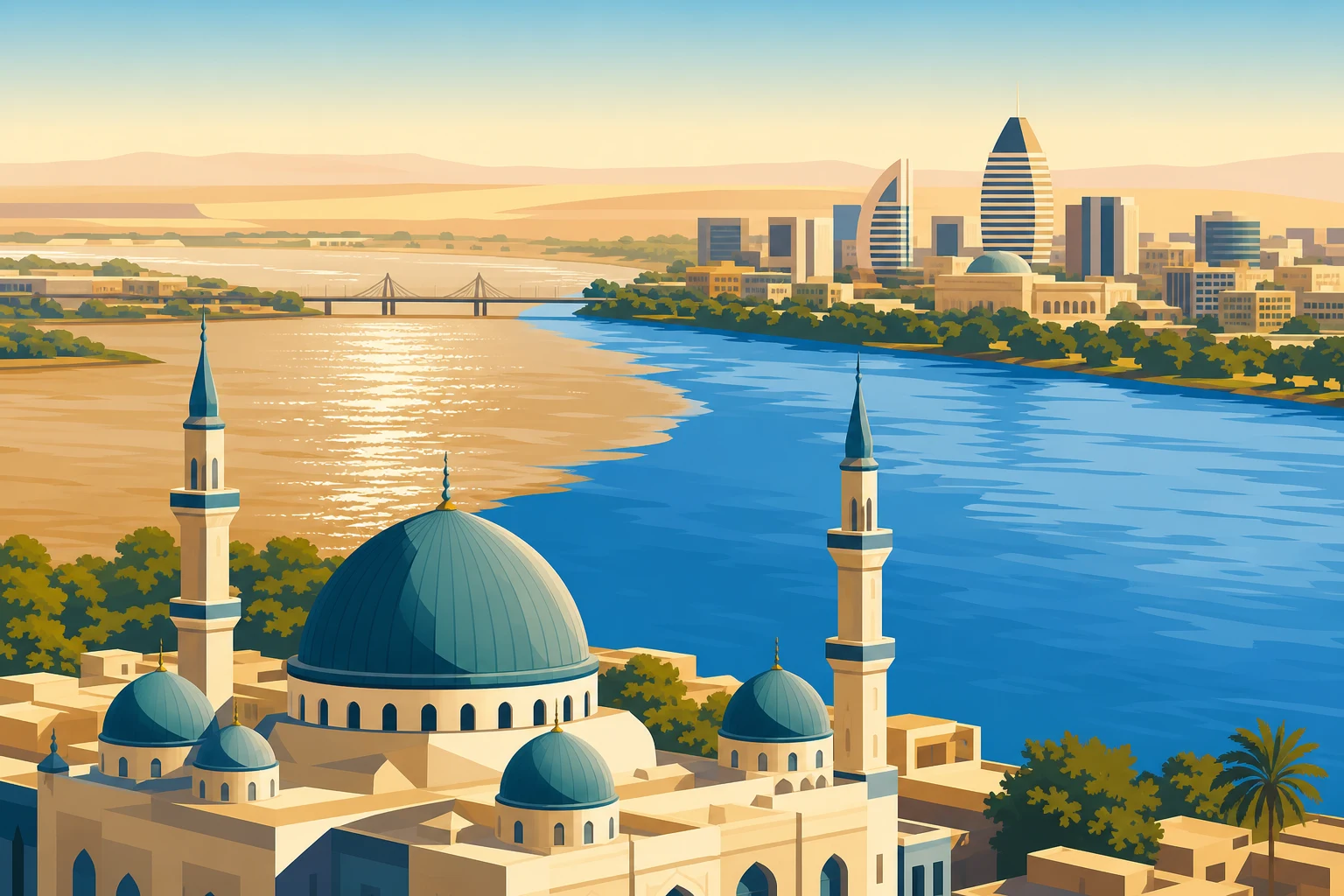
Khartoum is the capital of Sudan, famously located at the confluence of the Blue Nile and White Nile rivers, which merge to form the main Nile flowing north to Egypt.
Landmärken: Nile Confluence Point, Sudan National Museum, Al-Mogran Family Park
Roliga fakta
- Khartoum sits at the exact point where the Blue Nile and White Nile merge - you can see the two different-colored waters meeting.
- The city's name is believed to come from the Arabic word for "elephant trunk," describing the narrow strip of land between the two rivers.
- Khartoum forms a metropolitan area with its sister cities Omdurman and Khartoum North (Bahri).
Tunis
Tunisien
Befolkning: 693,000
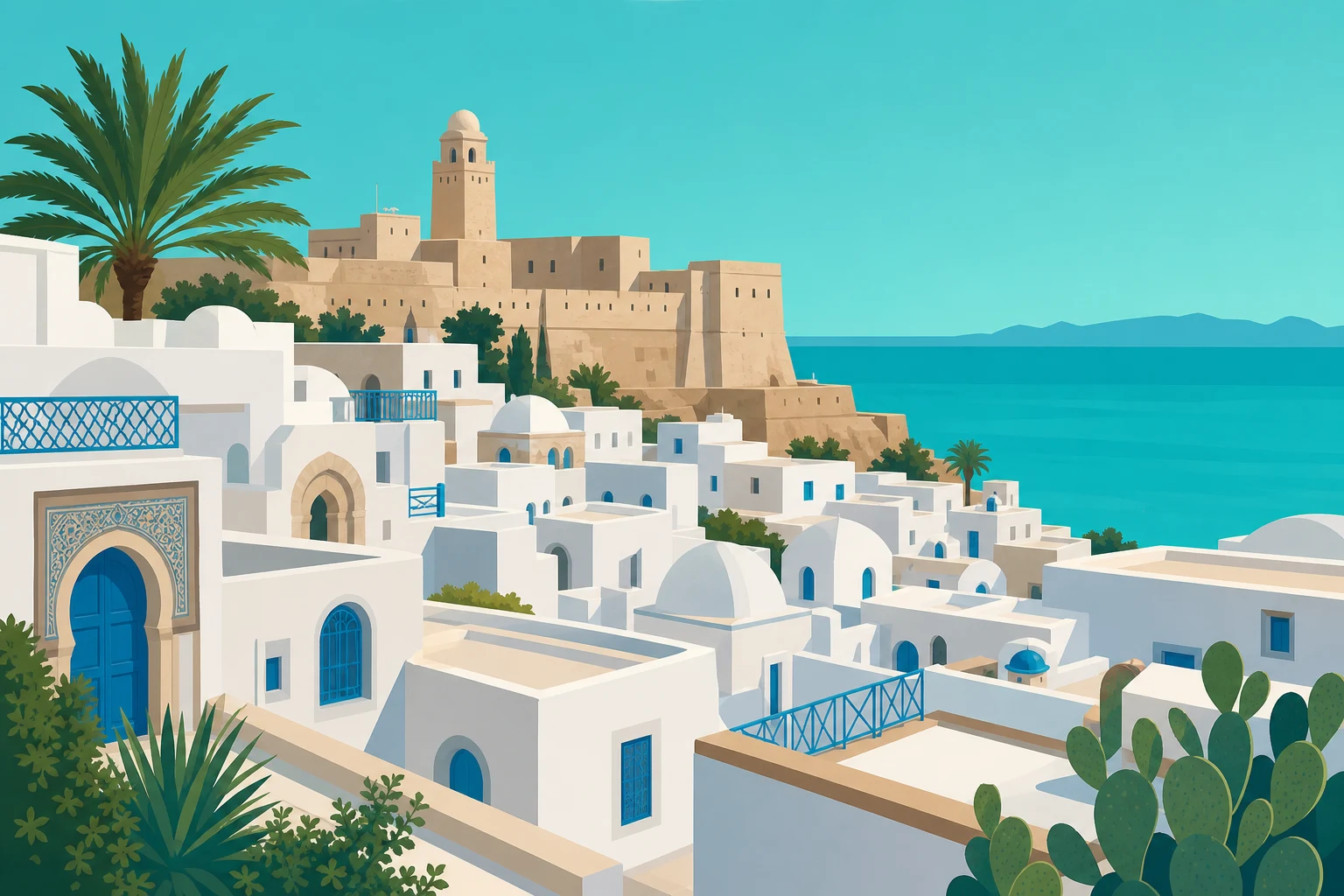
Tunis is the capital of Tunisia, located near the ruins of ancient Carthage on the Mediterranean coast. Its medina is a UNESCO World Heritage Site with hundreds of historic monuments.
Landmärken: Medina of Tunis, Bardo National Museum, Carthage Archaeological Site
Roliga fakta
- The ancient city of Carthage, once Rome's greatest rival, lies just 15 km from central Tunis.
- The Medina of Tunis contains over 700 monuments including palaces, mosques, and fountains dating from the Almohad and Hafsid periods.
- Tunisia was the birthplace of the Arab Spring in 2010-2011, with protests beginning in the town of Sidi Bouzid.
Snabböversikt
Testa dina kunskaper
Hur väl känner du till dessa huvudstäder? Testa dig här.
Öva med spel
Redo att testa det du lärt dig? Hoppa in i ett spel och sätt det i praktiken.
Om Nordafrikas huvudstäder
Sex huvudstäder gör regionen lämplig för en snabb session innan västra eller östra Afrika.
Vanliga frågor
Är Sudan med?
Om countrylistan säger Khartoum följer vi den.
Nybörjare?
Ja.
Relaterad lektion?
Hela Afrika.