Mellanösterns huvudstäder
Mellanöstern binds samman av öken, historia och stadsliv vid Persiska viken och östra Medelhavet - huvudstäderna är både urgamla och ultramoderna.
Studera huvudstäderna
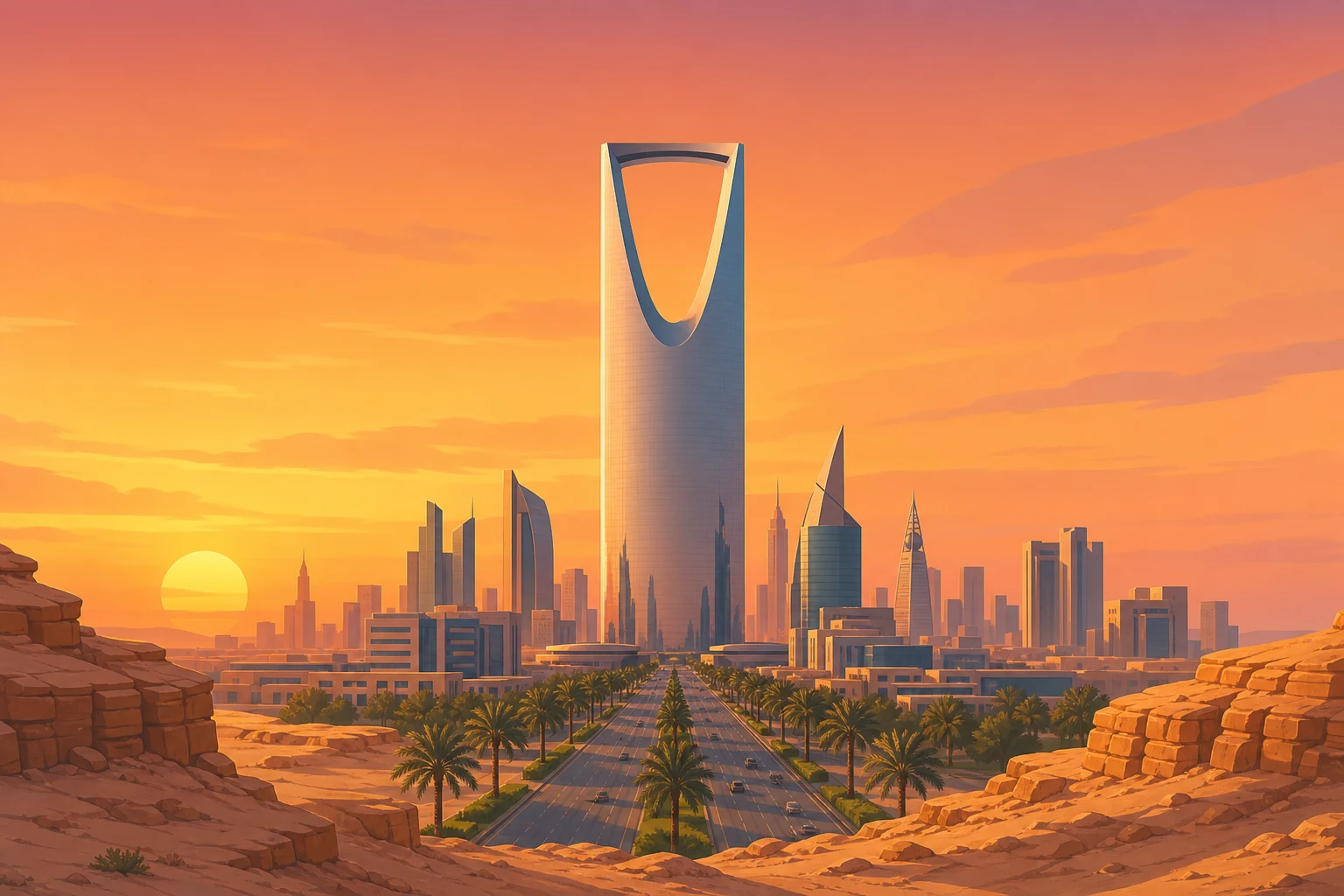
Riyadh
Saudiarabien
Befolkning: 7.6 million
Riyadh is the political and administrative capital of Saudi Arabia, located in the heart of the Arabian Peninsula. The city has transformed from a walled desert settlement into a sprawling modern metropolis with towering skyscrapers and ambitious development projects.
Landmärken: Kingdom Centre Tower, Masmak Fortress, King Abdullah Financial District
Roliga fakta
- Riyadh means "gardens" in Arabic, referring to the fertile area at the confluence of ancient wadis.
- The Kingdom Centre Tower features a sky bridge at 300 metres that offers panoramic views of the city.
- Riyadh has grown from a population of about 150,000 in 1960 to over 7 million today.
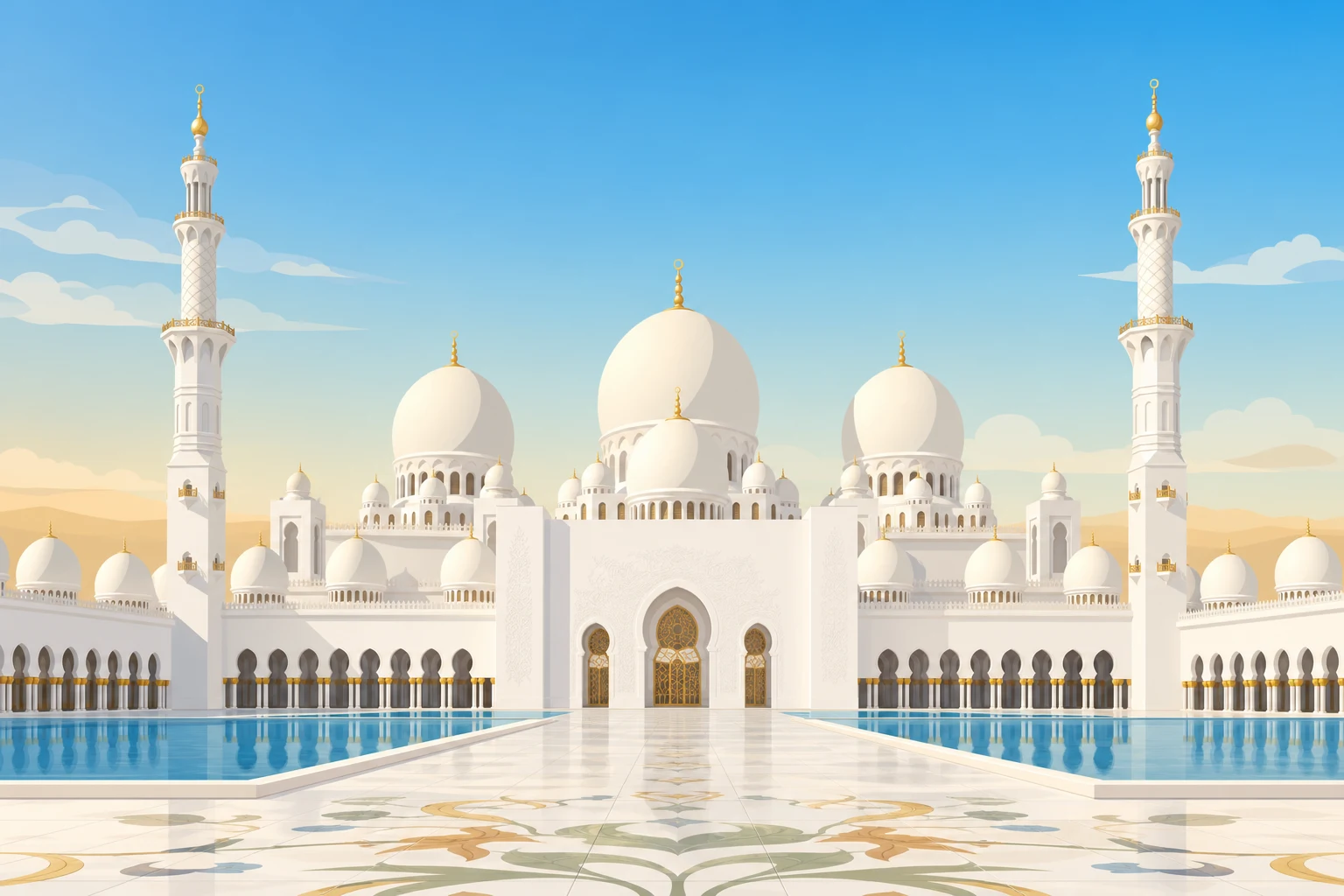
Abu Dhabi
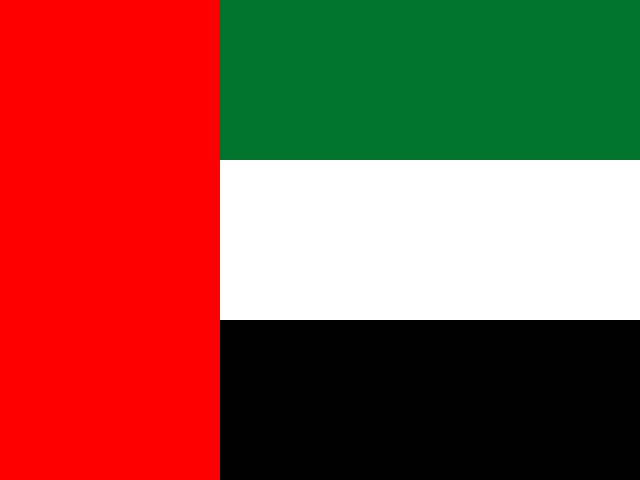
Förenade Arabemiraten
Befolkning: 1.5 million
Abu Dhabi is the capital and second-most populous city of the UAE, situated on an island in the Persian Gulf. It is the wealthiest of the seven emirates and home to major cultural institutions and vast oil reserves.
Landmärken: Sheikh Zayed Grand Mosque, Louvre Abu Dhabi, Emirates Palace
Roliga fakta
- Abu Dhabi holds nearly 9% of the world's proven oil reserves and over 5% of global natural gas.
- The Sheikh Zayed Grand Mosque can accommodate over 40,000 worshippers and features the world's largest hand-knotted carpet.
- Abu Dhabi means "Father of the Gazelle" in Arabic, named after the gazelles that once roamed the area.
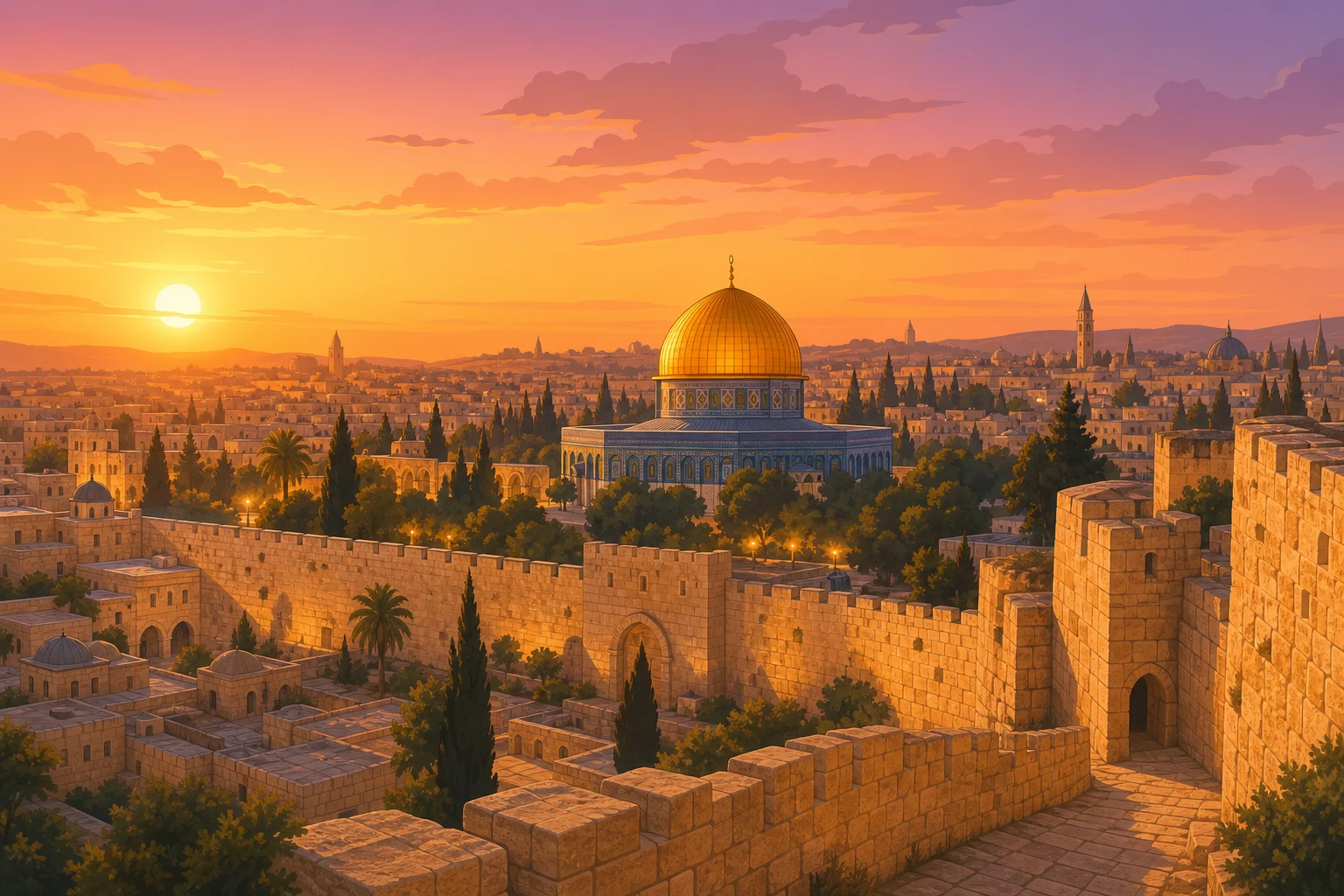
Jerusalem
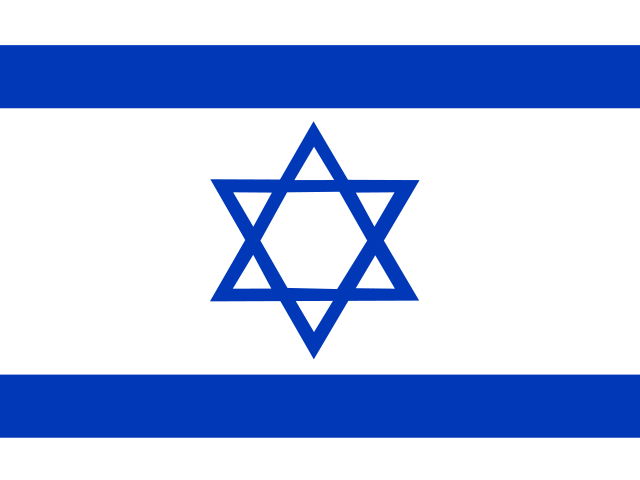
Israel
Befolkning: 983,000
Jerusalem is one of the oldest cities in the world and holds profound religious significance for Judaism, Christianity, and Islam.
Landmärken: Western Wall, Dome of the Rock, Church of the Holy Sepulchre
Roliga fakta
- Jerusalem's Old City contains sacred sites for three major religions within an area of just 0.9 square kilometres.
- The Old City of Jerusalem and its walls were inscribed as a UNESCO World Heritage Site in 1981.
- The Western Wall receives over one million written prayers placed in its cracks each year.
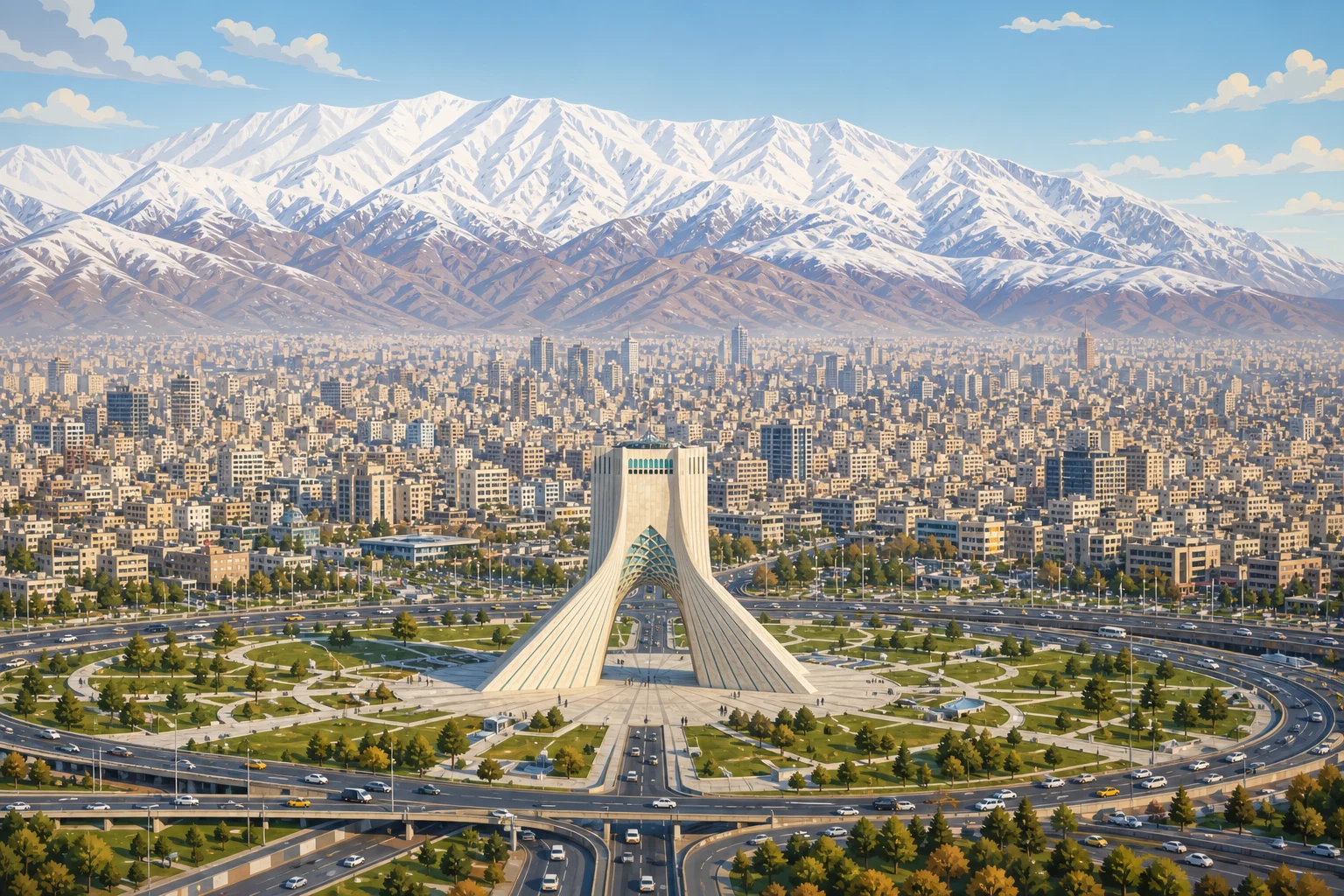
Tehran
Iran
Befolkning: 9.5 million
Tehran is the sprawling capital of Iran, nestled at the foot of the Alborz mountain range. It serves as the country's cultural, economic, and political centre, housing world-class museums and a vibrant bazaar culture.
Landmärken: Milad Tower, Golestan Palace, Tehran Grand Bazaar
Roliga fakta
- Tehran sits at elevations ranging from 900 metres in the south to 1,800 metres in the north, giving the city dramatic mountain backdrops.
- The Milad Tower is the sixth-tallest tower in the world at 435 metres.
- Tehran's Grand Bazaar covers over 10 kilometres of corridors and has been a trading hub for centuries.
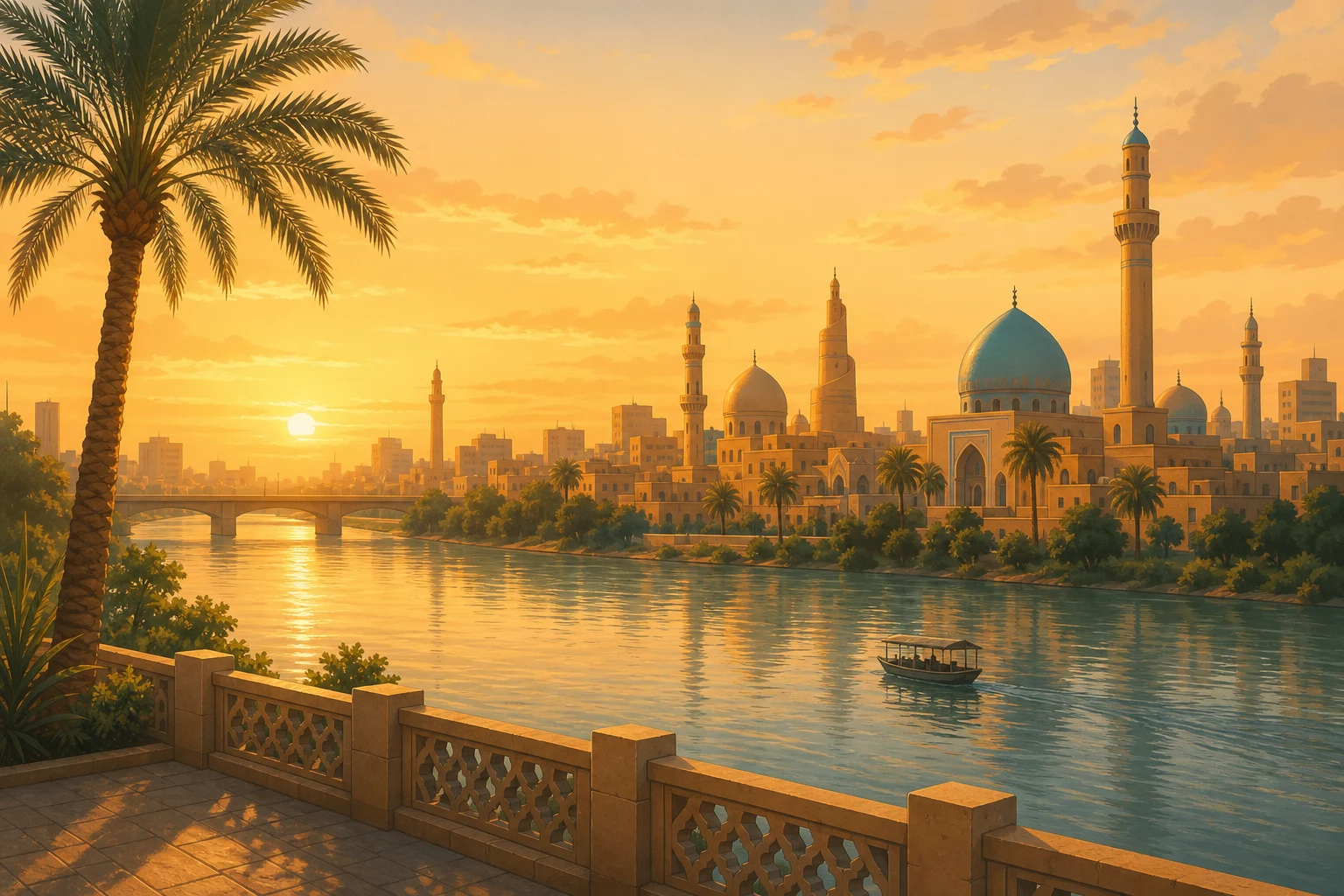
Baghdad
Irak
Befolkning: 8.1 million
Baghdad is the capital of Iraq, straddling the Tigris River in the heart of Mesopotamia. Founded in 762 AD, it became the centre of the Islamic Golden Age and one of the largest cities in the medieval world.
Landmärken: Al-Mustansiriya University, Al-Kadhimiya Mosque, Baghdad Tower
Roliga fakta
- During the Islamic Golden Age, Baghdad's House of Wisdom was the world's greatest centre of learning, translating and preserving Greek, Persian, and Indian texts.
- Baghdad was designed as a perfectly round city when it was founded by Caliph al-Mansur in 762 AD.
- The city's name likely derives from a pre-Islamic Persian phrase meaning "God-given" or "bestowed by God."
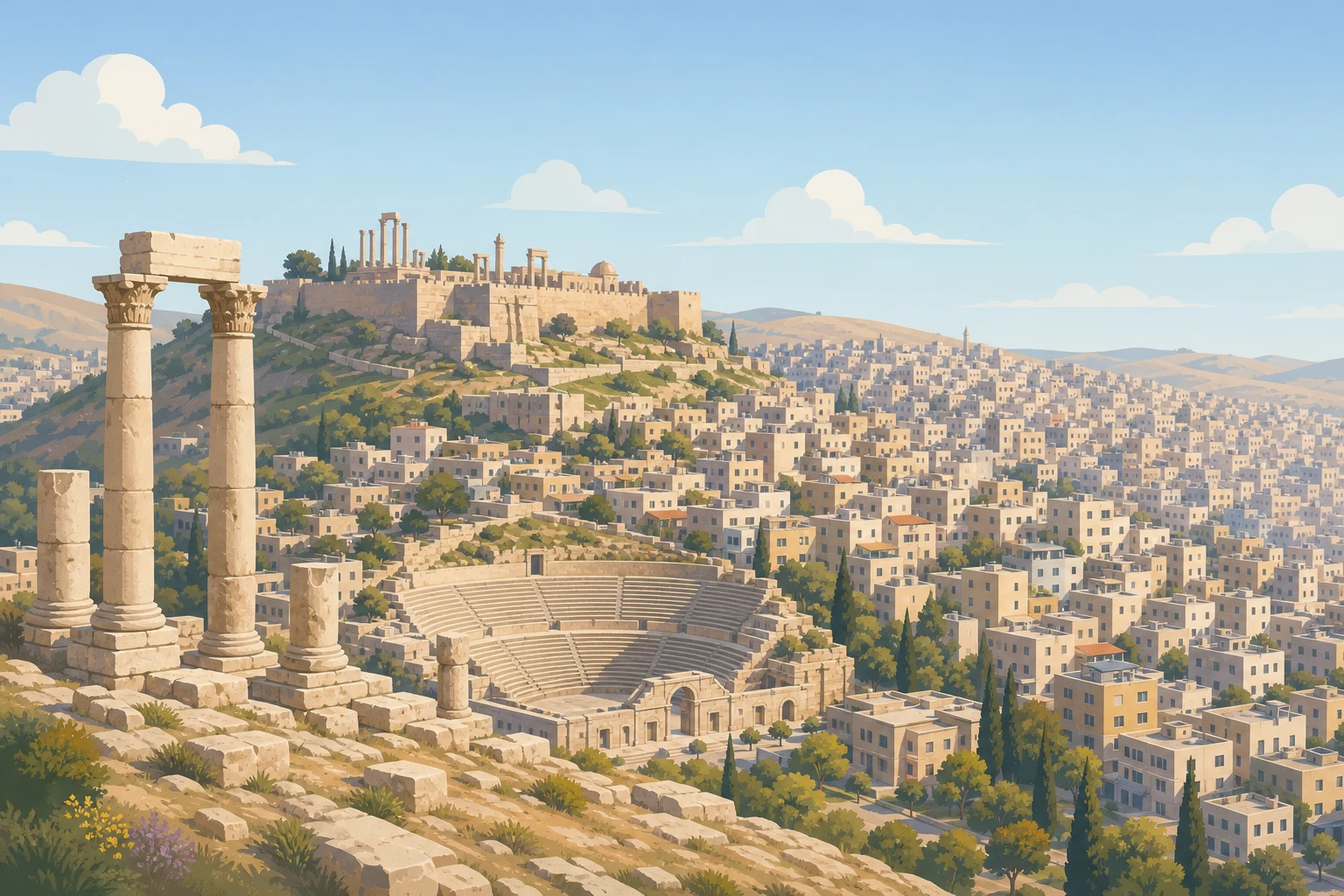
Amman
Jordanien
Befolkning: 4.2 million
Amman is the capital of Jordan, built across a series of hills (originally seven, now many more) in the northwestern part of the country. The city blends ancient Roman ruins with modern urban development and serves as a gateway to Petra and the Dead Sea.
Landmärken: Amman Citadel, Roman Theatre, King Abdullah I Mosque
Roliga fakta
- Amman was originally built on seven hills, like Rome, and was known in antiquity as Philadelphia.
- The Citadel of Amman contains ruins spanning the Bronze Age through the Islamic era, including the Temple of Hercules.
- Amman is one of the most welcoming cities in the Middle East, hosting millions of refugees from neighbouring conflicts.
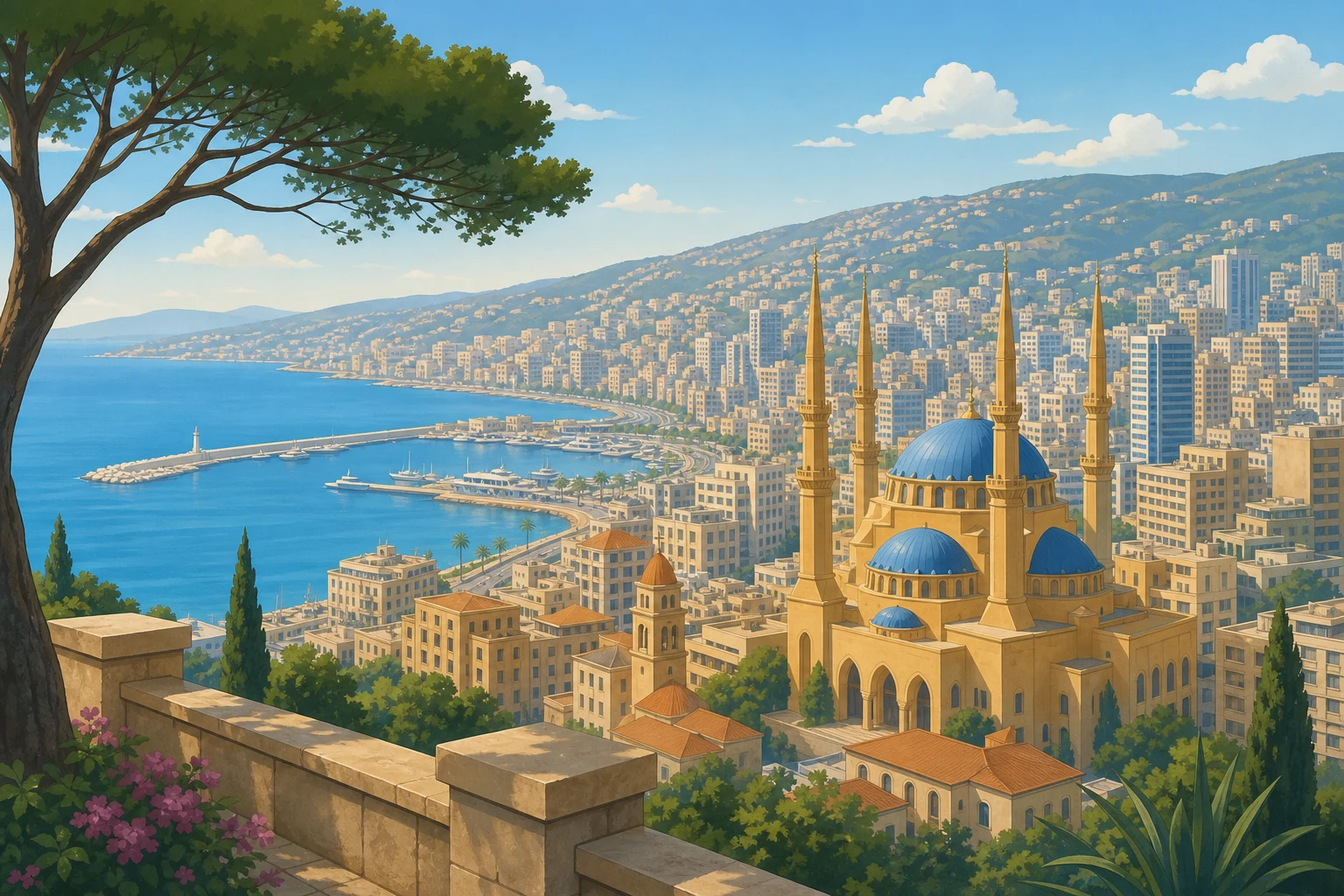
Beirut
Libanon
Befolkning: 2.4 million
Beirut is the capital and largest city of Lebanon, situated on a peninsula along the eastern Mediterranean coast. Known as the "Paris of the Middle East," Beirut is a cultural melting pot with a rich history spanning over 5,000 years.
Landmärken: Mohammad Al-Amin Mosque, Pigeon Rocks, National Museum of Beirut
Roliga fakta
- Beirut has been destroyed and rebuilt seven times throughout its long history.
- The city is home to one of the oldest law schools in the world, dating back to Roman times.
- Lebanon's capital is one of the few cities in the world where you can ski in the mountains and swim in the sea on the same day.
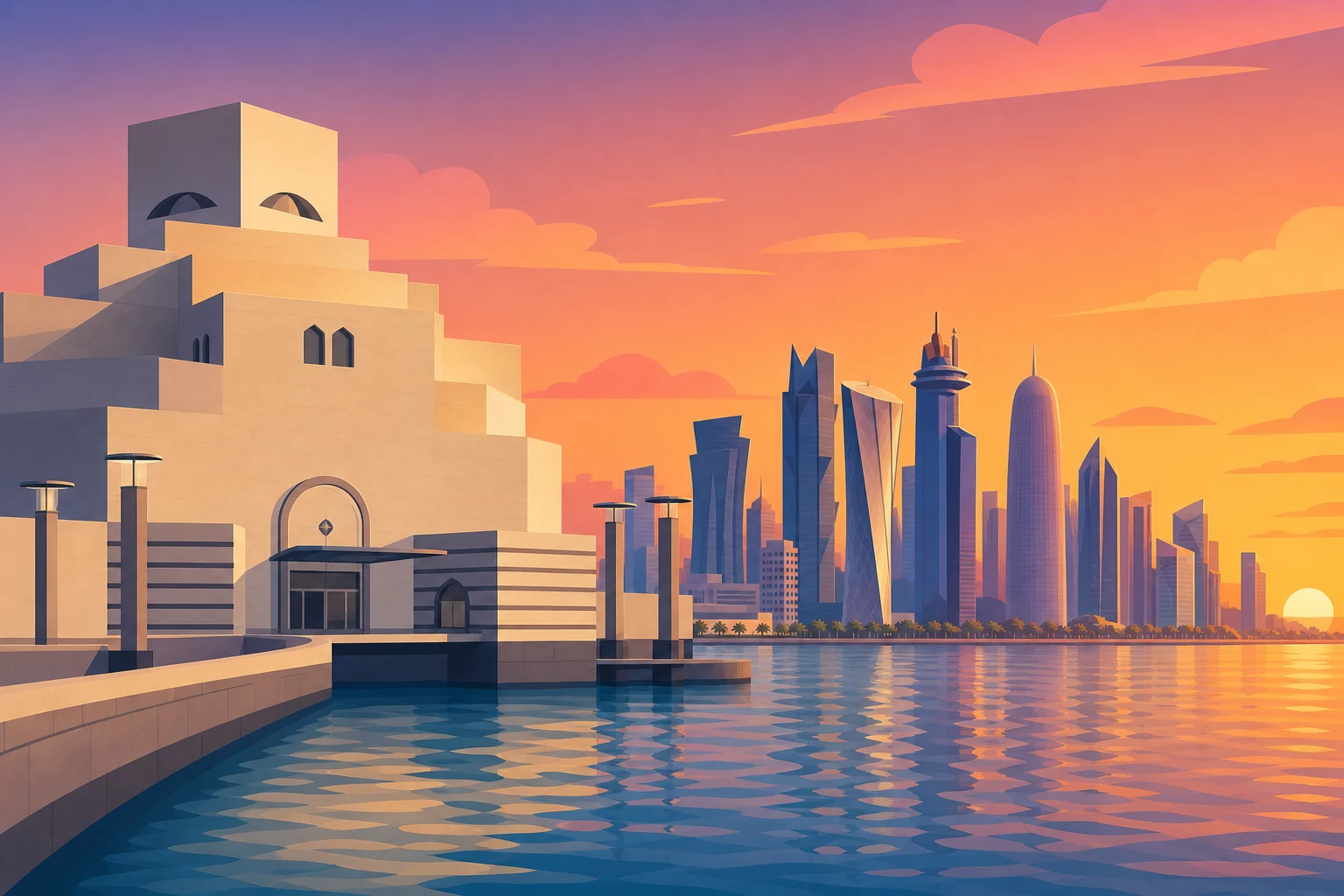
Doha
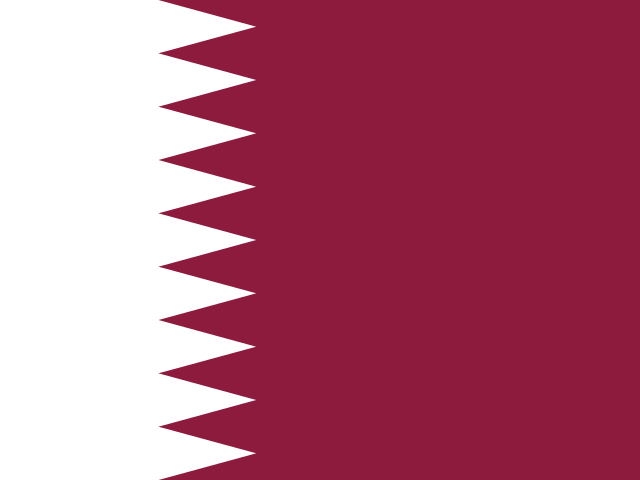
Qatar
Befolkning: 1.2 million
Doha is the capital of Qatar, located on the coast of the Persian Gulf. The city has undergone a dramatic transformation from a small fishing village into a gleaming modern metropolis, hosting the 2022 FIFA World Cup.
Landmärken: Museum of Islamic Art, The Pearl-Qatar, Souq Waqif
Roliga fakta
- Qatar has the highest GDP per capita in the world, and much of that wealth is concentrated in Doha.
- Doha's Museum of Islamic Art was designed by I.M. Pei, who came out of retirement specifically for the project.
- The city hosted the 2022 FIFA World Cup, becoming the first Middle Eastern city to do so.
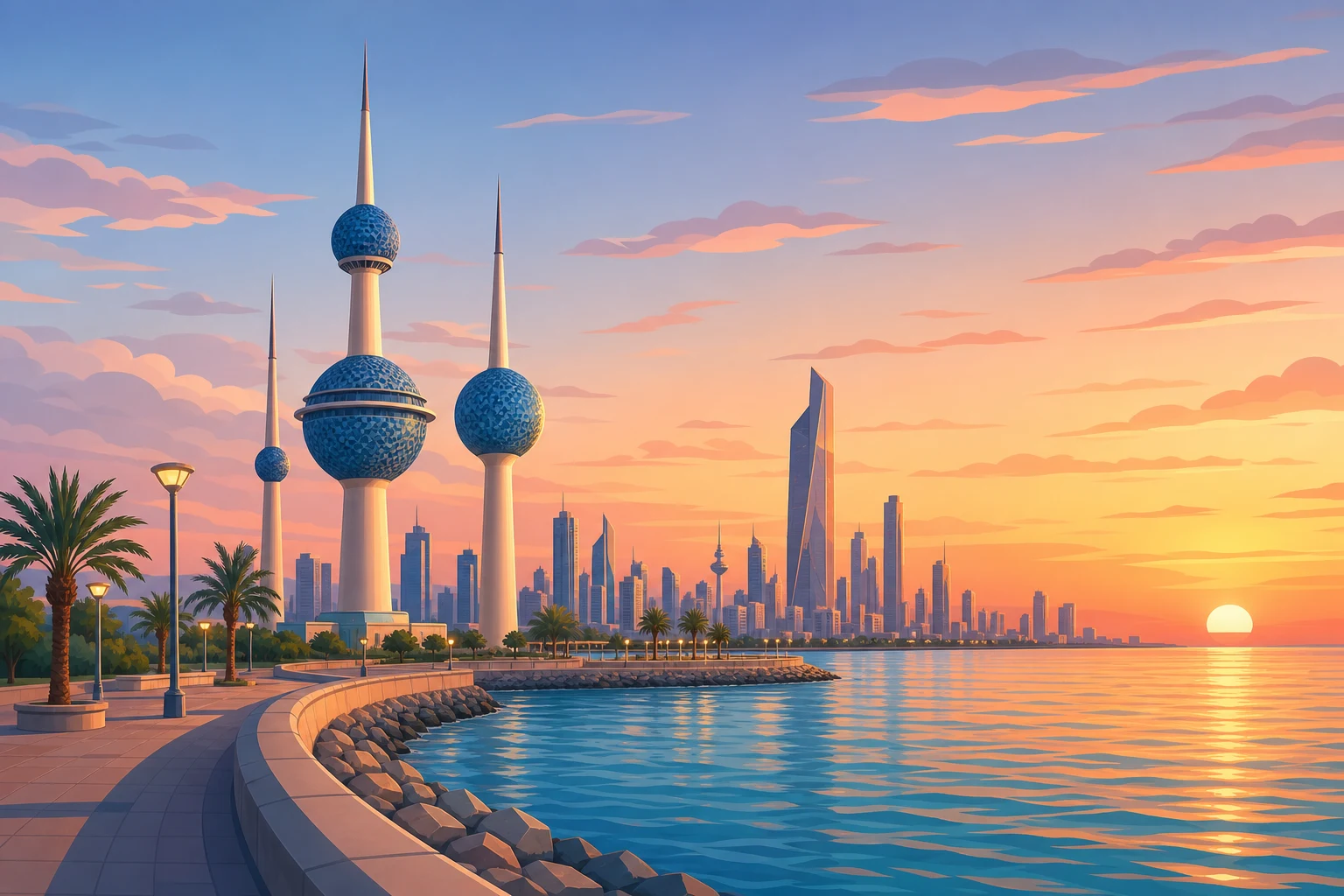
Kuwait City
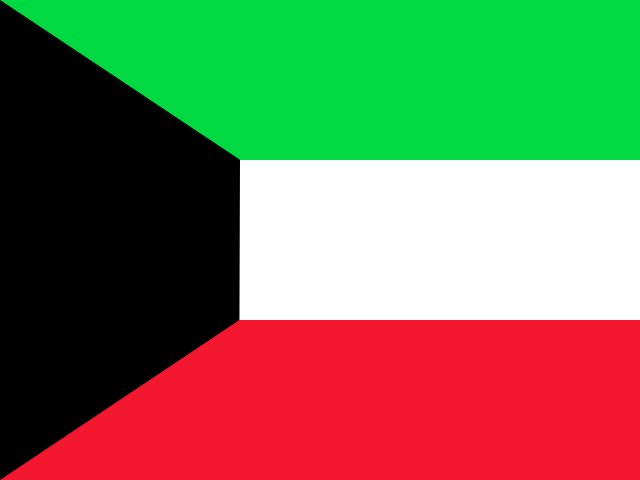
Kuwait
Befolkning: 3.1 million
Kuwait City is the capital and largest city of Kuwait, situated on the southern shore of Kuwait Bay along the Persian Gulf. The city is the political, cultural, and economic centre of the oil-rich emirate.
Landmärken: Kuwait Towers, Liberation Tower, Grand Mosque of Kuwait
Roliga fakta
- The Kuwait Towers, built in 1979, are the most recognisable landmark and can hold 4.5 million litres of water.
- Kuwait City was one of the first Gulf cities to develop a modern infrastructure using oil wealth in the 1950s.
- The city's Liberation Tower was built to commemorate Kuwait's liberation from Iraqi occupation in 1991.
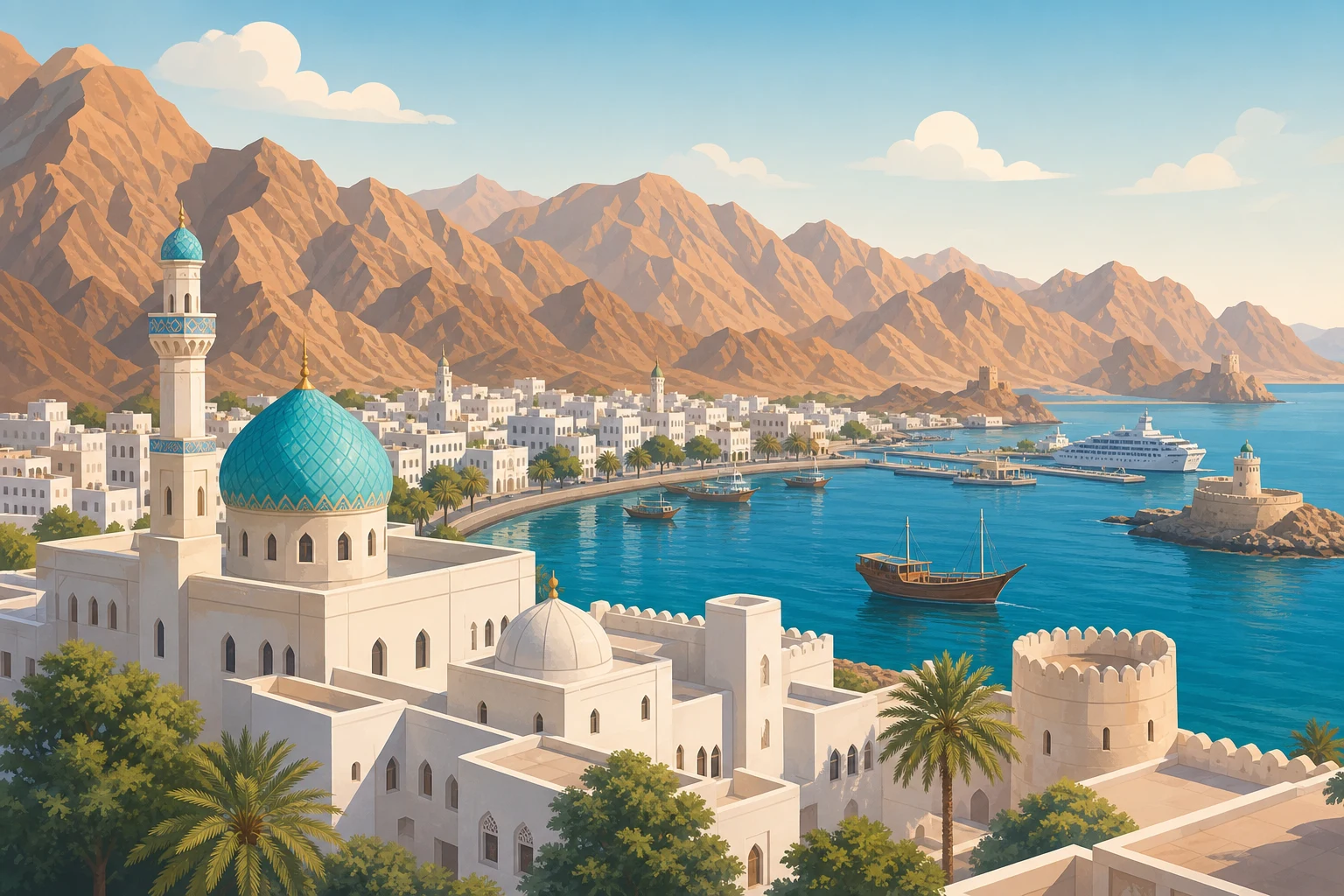
Muscat
Oman
Befolkning: 1.4 million
Muscat is the capital of Oman, nestled between the Al Hajar Mountains and the Gulf of Oman. The city is known for its pristine coastline, traditional architecture, and a deliberate preservation of Omani heritage alongside modern development.
Landmärken: Sultan Qaboos Grand Mosque, Royal Opera House Muscat, Mutrah Souq
Roliga fakta
- Muscat has strict building codes that limit building heights and require traditional Arabian architectural styles.
- The Sultan Qaboos Grand Mosque features a prayer carpet that took 600 women four years to weave and weighs 21 tonnes.
- Muscat means "anchorage" or "place of dropping anchor," reflecting its ancient role as a maritime trading port.
Manama
Bahrain
Befolkning: 460,000
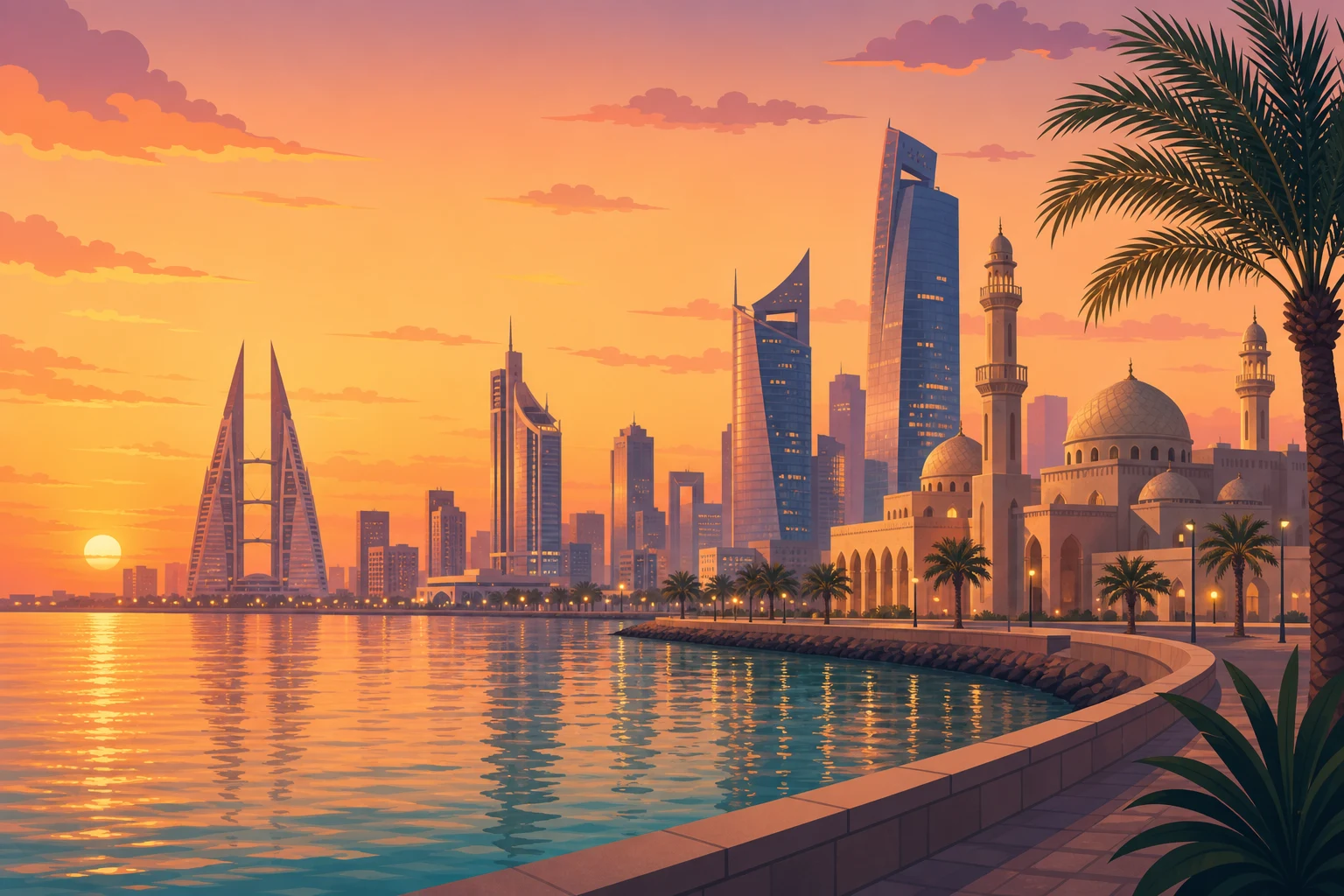
Manama is the capital of Bahrain, an island nation in the Persian Gulf connected to Saudi Arabia by the King Fahd Causeway. The city is a major financial hub and has been a centre of trade since ancient Dilmun civilization.
Landmärken: Bahrain World Trade Center, Al-Fateh Grand Mosque, Bahrain National Museum
Roliga fakta
- Bahrain was home to the ancient Dilmun civilization, and archaeological sites in Manama date back over 4,000 years.
- The Bahrain World Trade Center was the first skyscraper in the world to integrate wind turbines into its design.
- Manama hosts a Formula 1 Grand Prix, with the Bahrain International Circuit located just south of the city.
Damascus
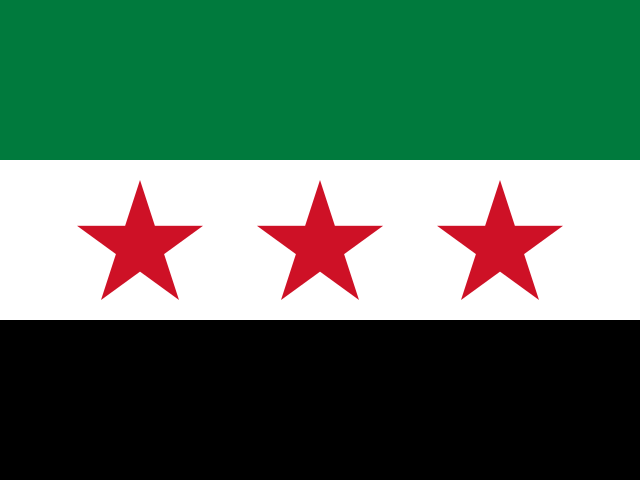
Syrien
Befolkning: 2.5 million
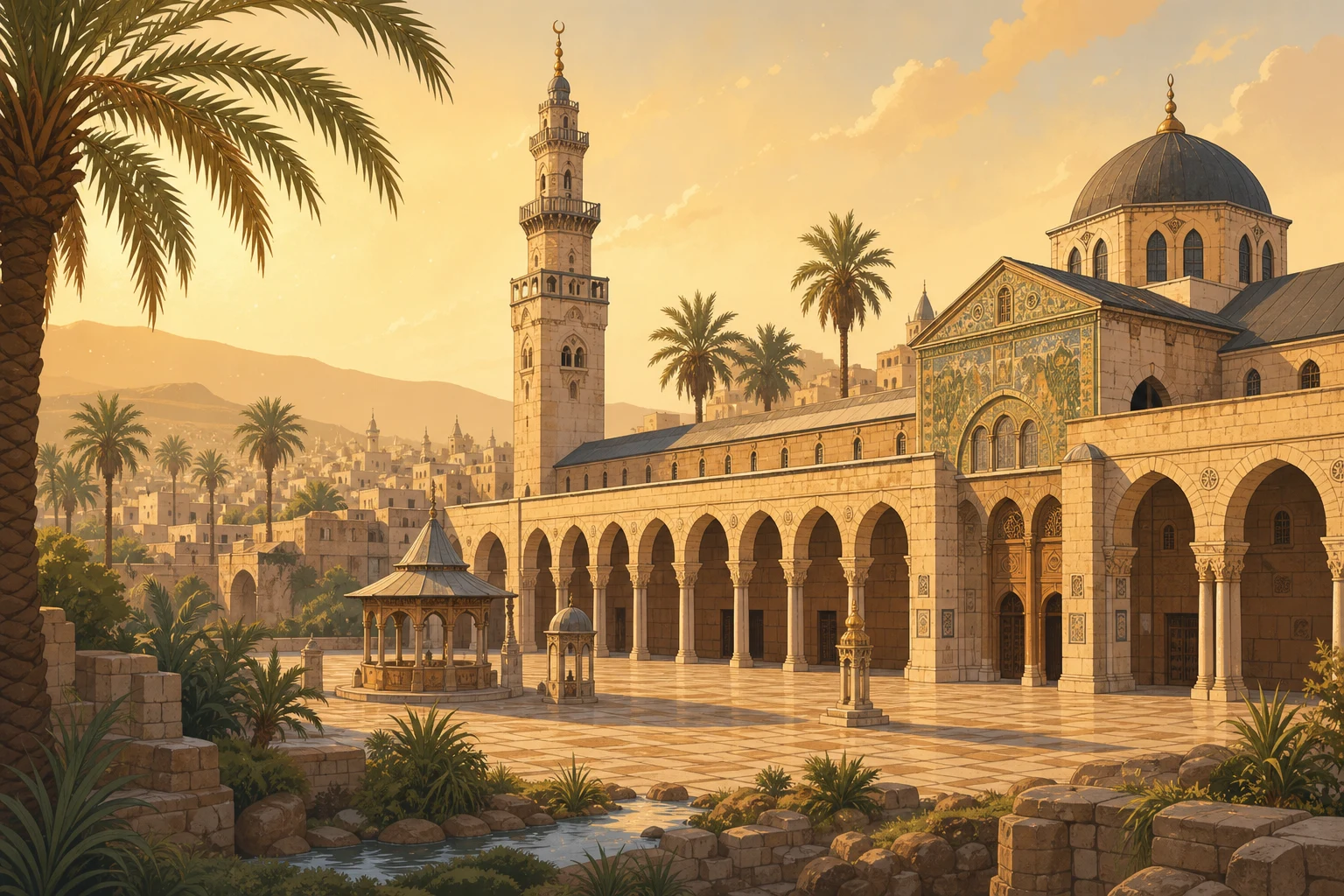
Damascus is the capital of Syria and one of the oldest continuously inhabited cities in the world, with evidence of settlement dating back to 10,000 BC. The ancient walled city sits at the foot of Mount Qasioun along the Barada River.
Landmärken: Umayyad Mosque, Damascus Citadel, Azm Palace
Roliga fakta
- Damascus is widely considered one of the oldest continuously inhabited cities in the world, with a history spanning over 11,000 years.
- The Umayyad Mosque, built in 715 AD, is one of the largest and oldest mosques in the world and contains a shrine believed to hold the head of John the Baptist.
- Damascene steel and Damask rose are both named after the city, reflecting its centuries-old reputation for craftsmanship.
Ankara
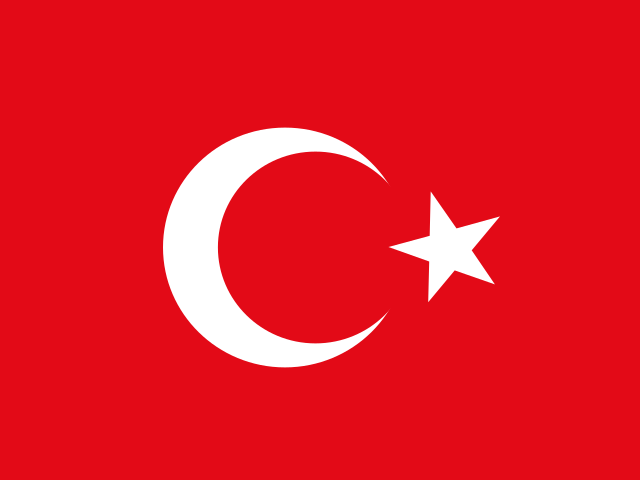
Turkiet
Befolkning: 5.7 million
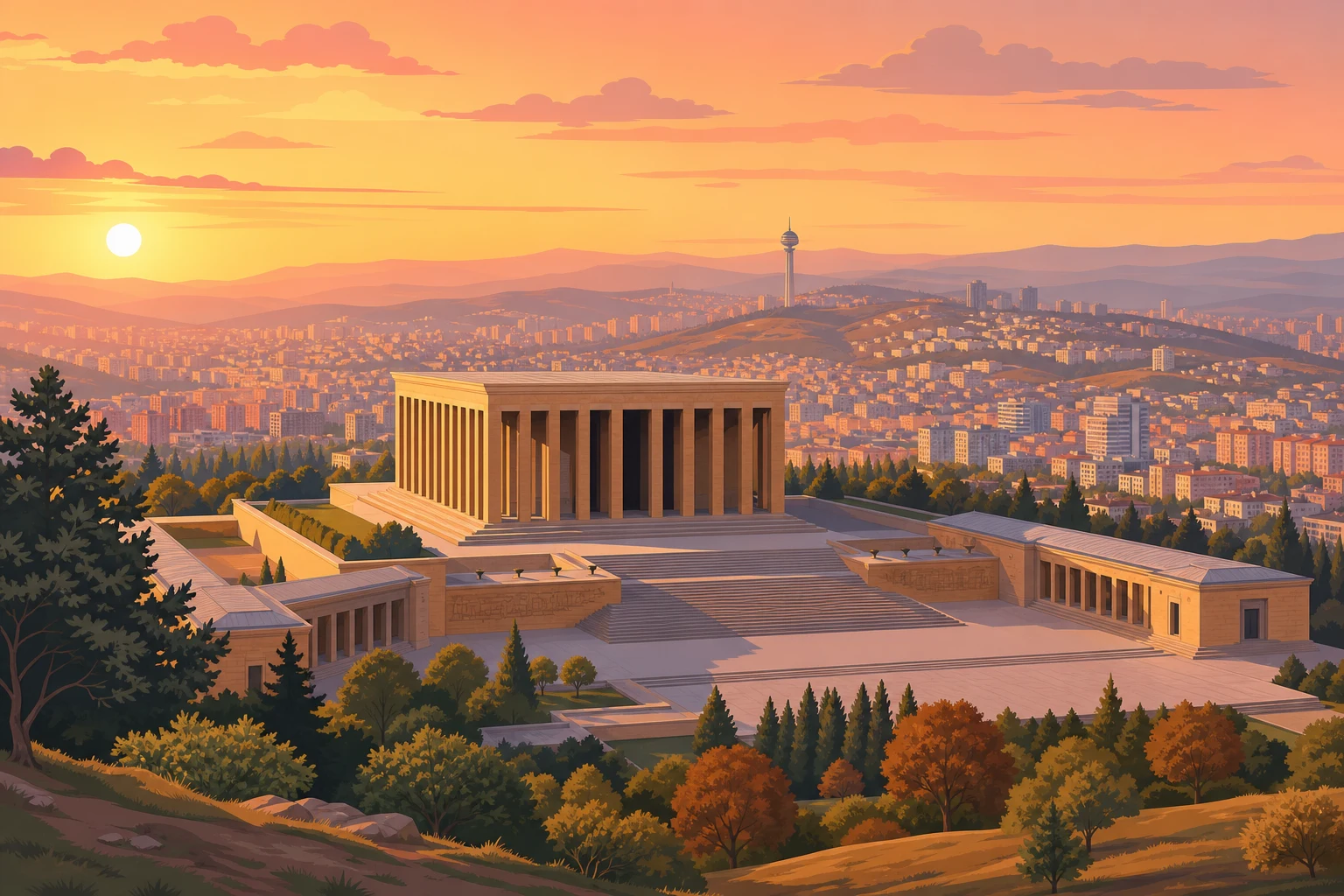
Ankara is the capital of Turkey, located in the central Anatolian plateau. Chosen by Mustafa Kemal Ataturk as the new capital in 1923 to replace Istanbul, the city represents the modern Turkish republic and houses all government institutions.
Landmärken: Anitkabir, Kocatepe Mosque, Ankara Castle
Roliga fakta
- Ankara replaced Istanbul as capital in 1923 because Ataturk wanted a centrally located city free from the imperial associations of Constantinople.
- The Anitkabir, Ataturk's mausoleum, receives millions of visitors each year and is one of Turkey's most important monuments.
- Ankara was known as Ancyra in ancient times and was an important centre for the Hittites, Phrygians, and Romans.
Sanaa
Jemen
Befolkning: 3.9 million
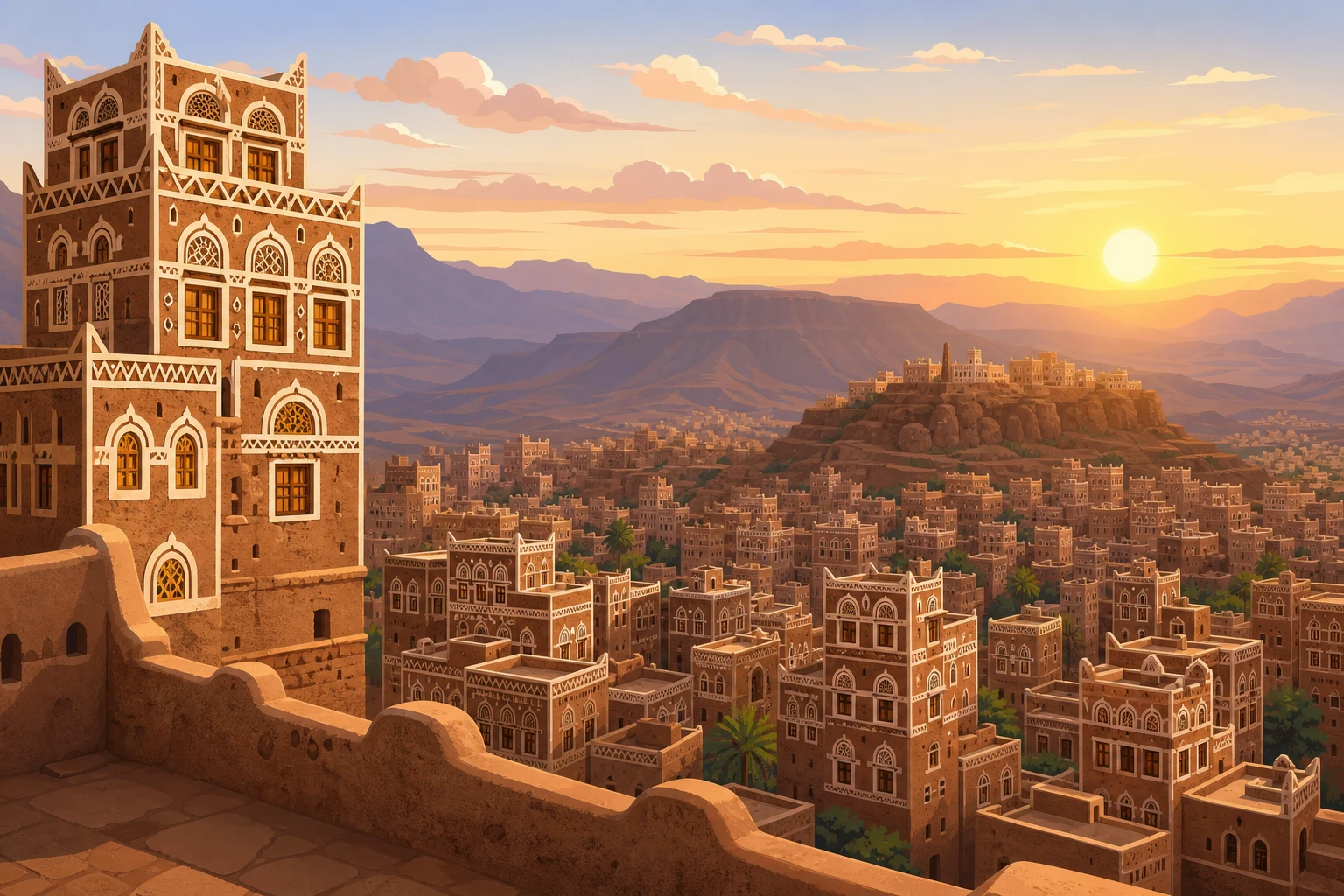
Sanaa is the capital of Yemen and one of the oldest continuously inhabited cities in the world, situated at an altitude of 2,300 metres in the Yemen Highlands. Its Old City is a UNESCO World Heritage Site famous for distinctive multi-storey rammed earth buildings.
Landmärken: Old City of Sanaa, Bab al-Yemen, Great Mosque of Sanaa
Roliga fakta
- Sanaa's Old City contains over 6,000 houses built before the 11th century, many decorated with intricate geometric patterns.
- According to legend, Sanaa was founded by Shem, one of the three sons of Noah.
- At 2,300 metres elevation, Sanaa is one of the highest capital cities in the world.
Snabböversikt
Testa dina kunskaper
Hur väl känner du till dessa huvudstäder? Testa dig här.
Öva med spel
Redo att testa det du lärt dig? Hoppa in i ett spel och sätt det i praktiken.
Om Mellanösterns huvudstäder
Förstå Abu Dhabi jämfört med Dubai eller Ankara jämfört med Istanbul hjälper både resenärer och nyhetskonsumenter - quizet befäster kopplingarna.
Vanliga frågor
Är UAE:s huvudstad Dubai?
Nej - Abu Dhabi är huvudstad (ämne i quiz).
Turkiets huvudstad?
Ankara enligt lektion.
Vilket land har Bagdad som huvudstad?
Irak (enligt lektionen).