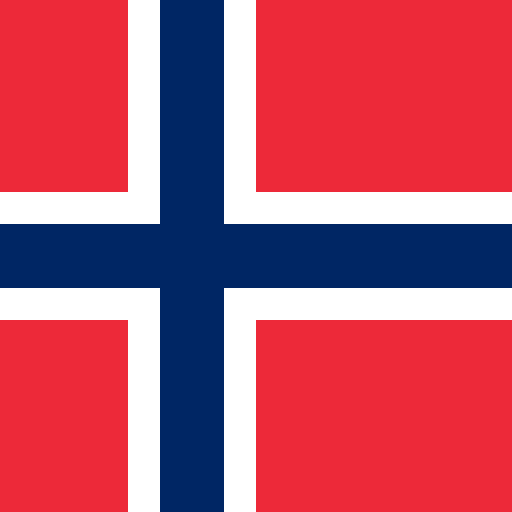
Flags of Central Europe
Poland, the Czech Republic, Slovakia, and Hungary anchor quiz-heavy Central European geography-Carpathian neighbors tied by EU borders and intertwined histories from royal Hungary through Warsaw Pact-era echoes and NATO memberships today.
Study the Flags
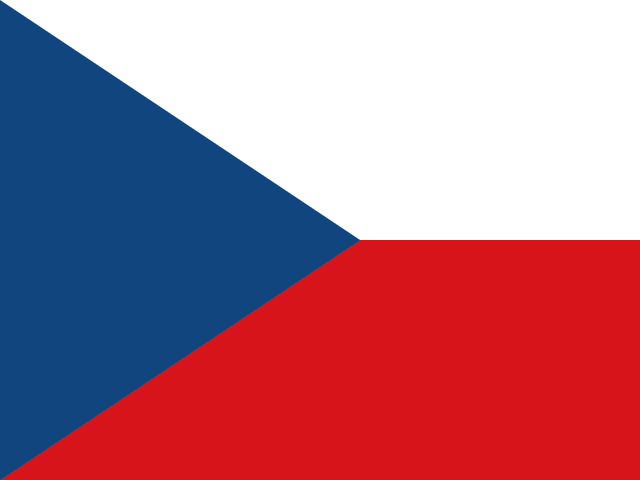
Czech Republic
Capital: Prague
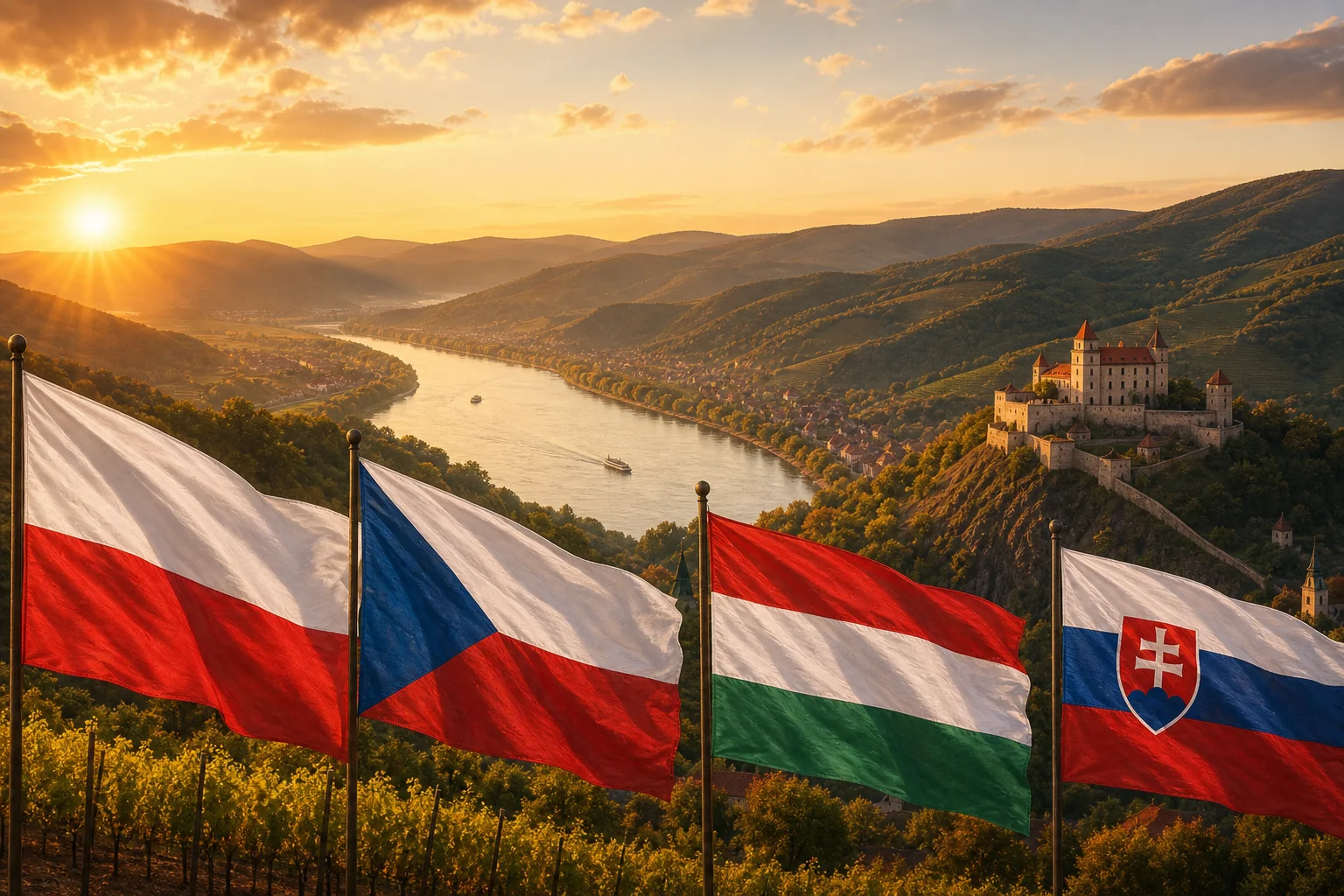
Blue triangle at the hoist, with white on top and red on the bottom.
Adopted: 1920
Fun Facts
- Blue and white recall Bohemian heraldry; red Moravian tradition often cited
- Former Czechoslovakia split peacefully with Slovakia in 1993
- Prague Castle quarter hosts one of Europe's oldest surviving royal complexes
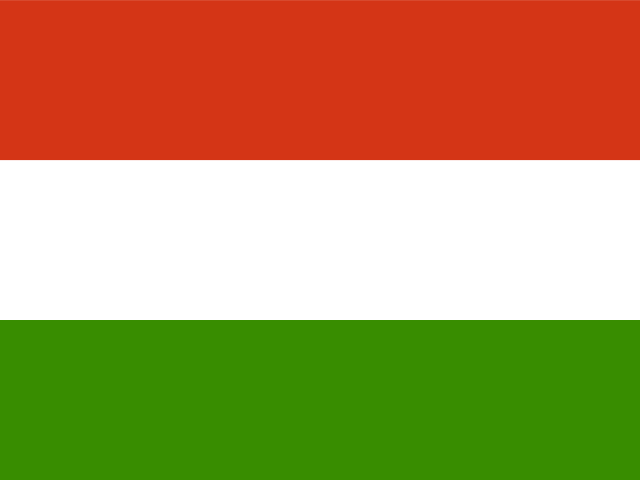
Hungary
Capital: Budapest
Three horizontal stripes: red, white, green.
Adopted: 1957
Fun Facts
- Green hope; white fidelity; red strength or blood defending nation
- Tricolor rooted in 1848 revolutionary banners
- Magyar language unrelated to Slavic neighbors east and north
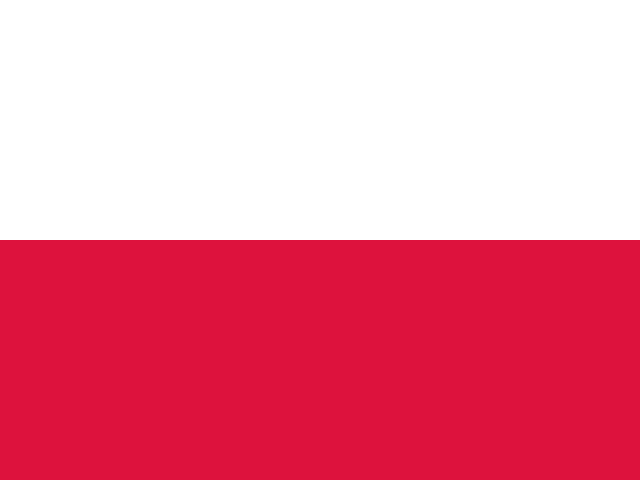
Poland
Capital: Warsaw
Two horizontal stripes: white (top), red (bottom).
Adopted: 1919
Fun Facts
- White represents the white eagle (Poland's national symbol), red the sunset glow
- Poland's flag is often confused with Indonesia's and Monaco's (which are red over white)
- The flag colors come from the Polish coat of arms dating back to the 13th century
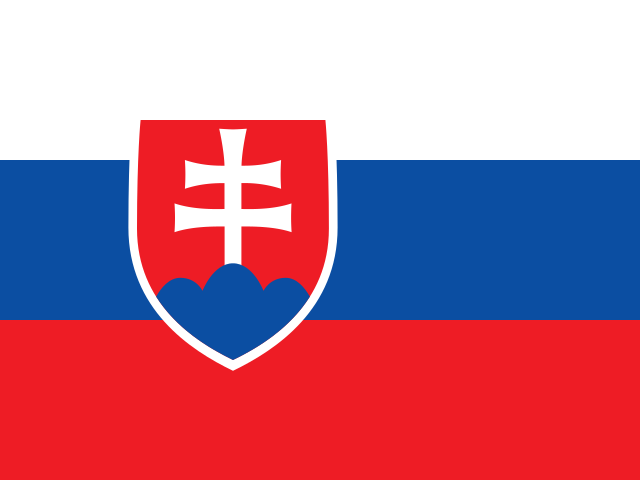
Slovakia
Capital: Bratislava
Horizontal white, blue, red with coat of arms shield left of center.
Adopted: 1992
Fun Facts
- Double-cross atop triple hill emblem distinguishes Slovakia from Slovenia hues
- Capital sits meters from Austrian border bridging Danube plain
- Carpathian peaks shelter boreal wildlife corridors
Quick Reference
Test Your Knowledge
White eagle reds versus Slovak shields-four classics.
Practice with Games
Ready to test what you learned? Jump into a game and put it into practice.
About Central European Flags
This quartet tracks tournaments labeled Central Europe or Visegrad in many curricula-not exhaustive for scholars debating Mitteldeuropa borders but ideal for learners separating Warsaw from Bratislava palettes. Poland stays minimalist; Czechia foregrounds the Bohemian wedge; Slovakia badges Pan-Slavic stripes; Hungary carries Magyar tricolor DNA distinct from neighbors.
Frequently Asked Questions
Why not Austria or Germany?
Neighboring giants appear in the full Europe lesson; here we spotlight four flags commonly drilled together in Baltic-to-Danube quizzes.
Is Czechia different from Czech Republic?
Same sovereign state-study cards keep Czech Republic wording familiar to classrooms.
Are these only Visegrad Group members?
Yes-the four countries align with the informal Visegrad cooperation circle though lesson scope stays flags-only.