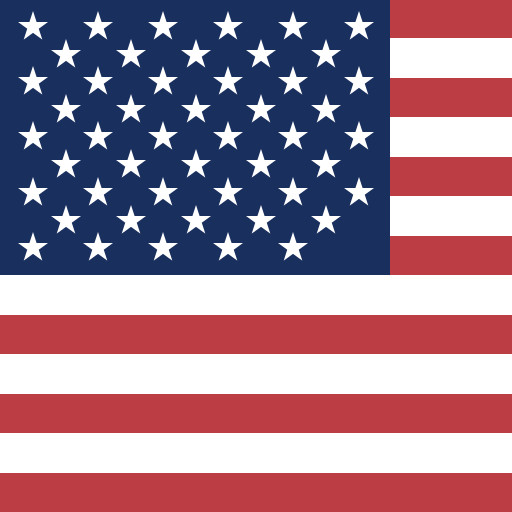
Flags of Europe
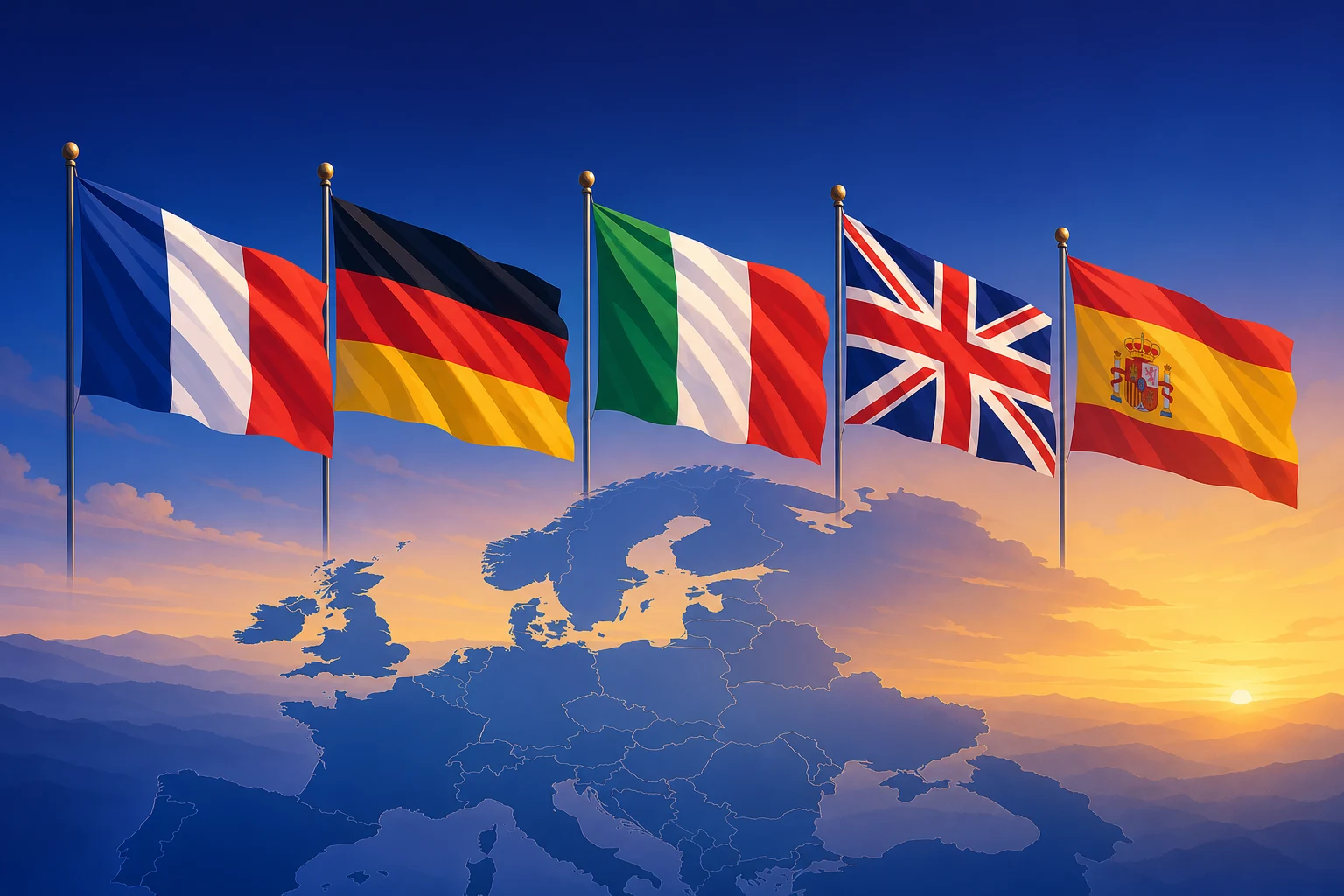
Europe is home to 44 countries with incredibly diverse flag designs. You'll find iconic tricolors (France, Italy, Ireland), Scandinavian crosses (covered in our Nordic lesson), and unique designs like Switzerland's square flag or Central European heraldic traditions. Many European flags date back centuries and tell stories of revolution, unity, and national identity.
Study the Flags
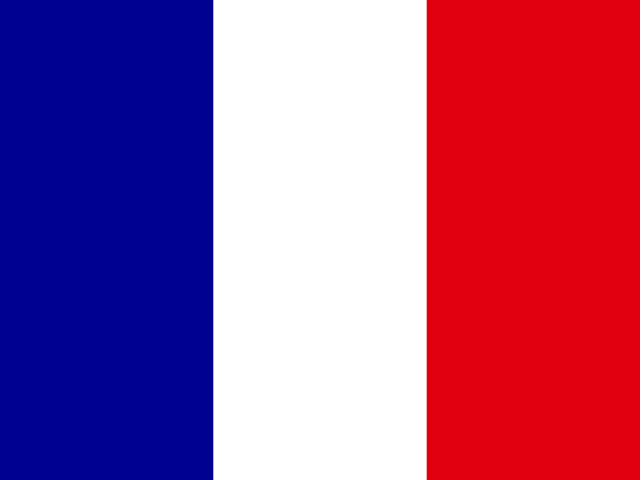
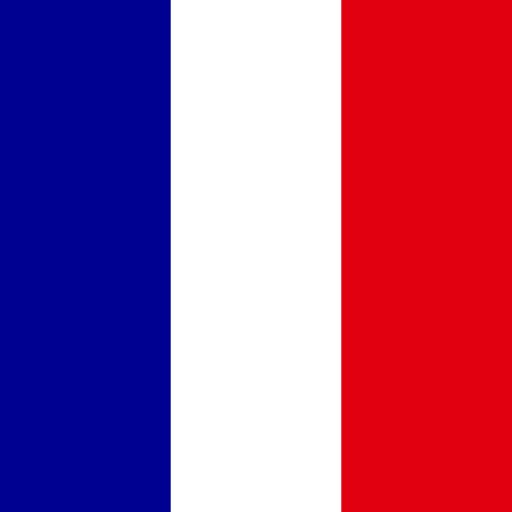
France
Capital: Paris
Three vertical stripes: blue, white, red (the French Tricolor).
Adopted: 1794
Fun Facts
- The tricolor originated during the French Revolution in 1789
- Blue and red are the colors of Paris; white represents the monarchy
- France's flag inspired many other nations' tricolor designs
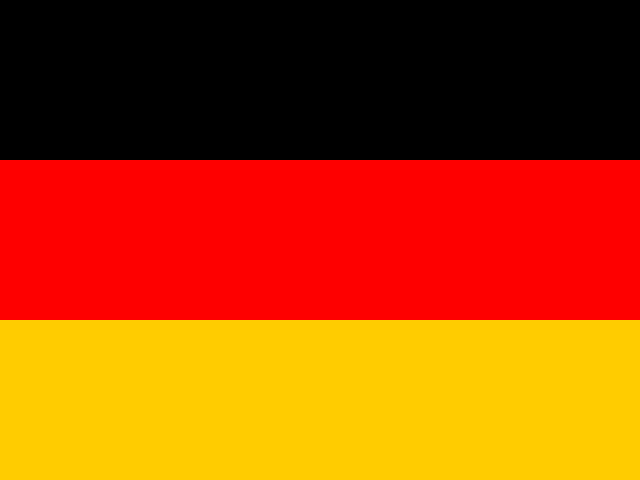
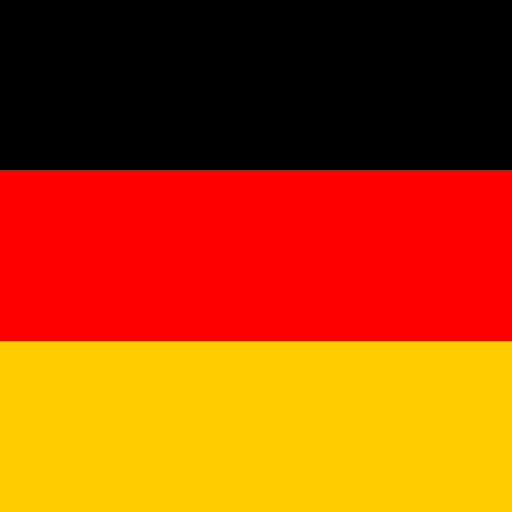
Germany
Capital: Berlin
Three horizontal stripes: black, red, gold.
Adopted: 1949
Fun Facts
- The colors come from the uniforms of German soldiers during the Napoleonic Wars
- Black-red-gold represents the struggle from darkness (black) through blood (red) to sunlight (gold)
- The flag was banned during the Nazi era and restored in 1949
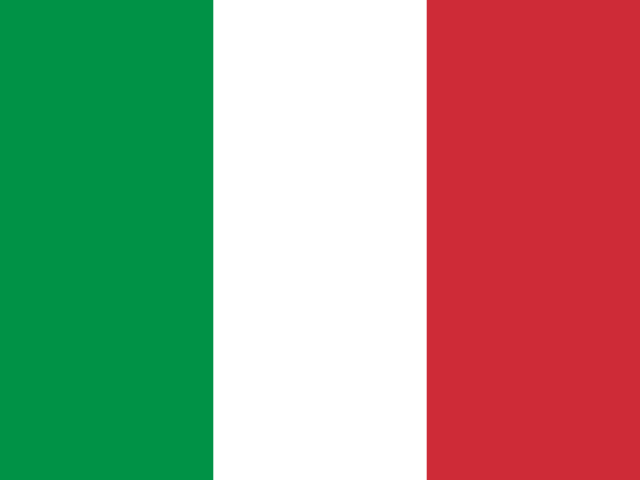
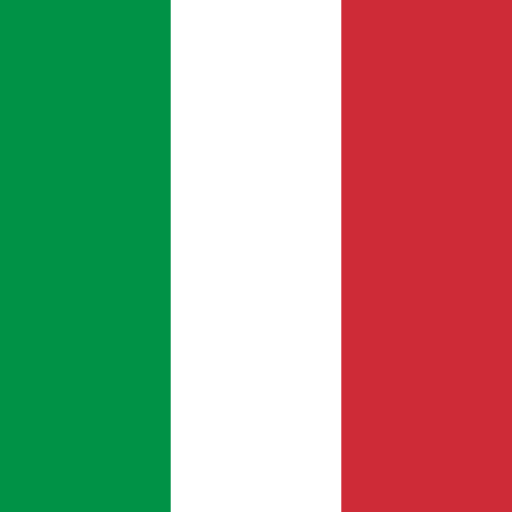
Italy
Capital: Rome
Three vertical stripes: green, white, red.
Adopted: 1948
Fun Facts
- Green represents hope, white faith, and red charity (or alternatively the Italian landscape)
- The Italian tricolor was inspired by the French flag during Napoleon's campaigns
- Italy's flag dates back to 1797 during the Cispadane Republic
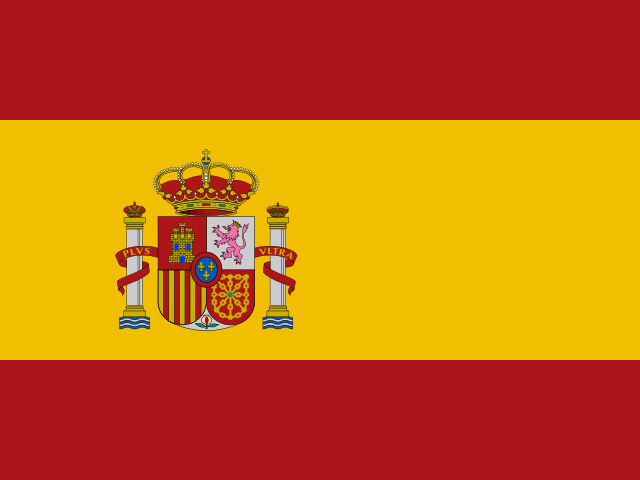
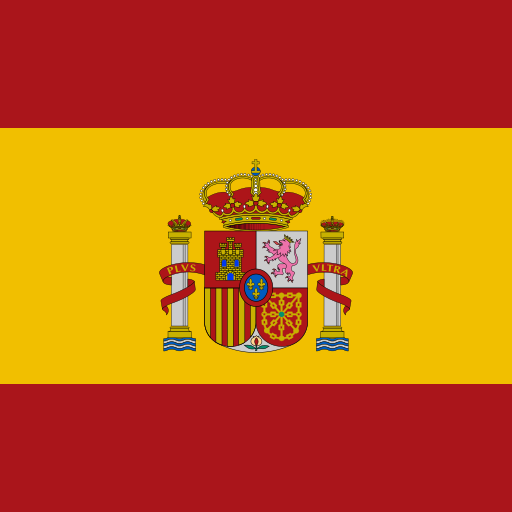
Spain
Capital: Madrid
Three horizontal stripes: red, yellow (double width), red. The coat of arms is offset to the left on the yellow stripe.
Adopted: 1981
Fun Facts
- The red and yellow colors were chosen to be visible at sea against the sky
- Spain's coat of arms includes symbols from the historical kingdoms: Castile, Leon, Aragon, and Navarre
- The flag is known as "la Rojigualda" (the red and yellow)
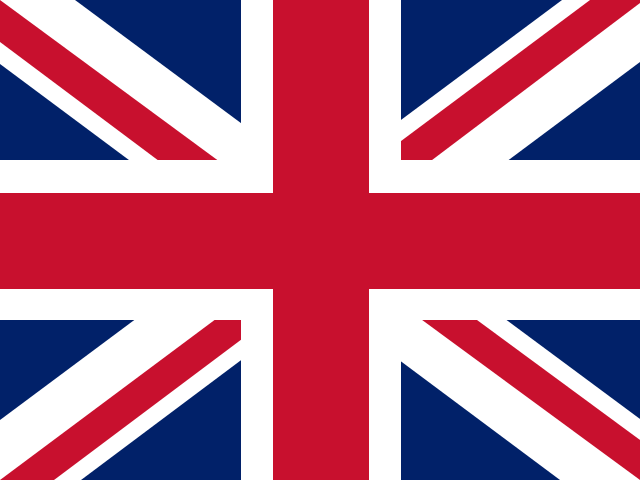
United Kingdom
Capital: London
Blue field with the red and white crosses of St. George, St. Andrew, and St. Patrick combined.
Adopted: 1801
Fun Facts
- The Union Jack combines three crosses: St. George (England), St. Andrew (Scotland), and St. Patrick (Ireland)
- The flag is NOT symmetrical - the red diagonals are offset to show precedence
- Wales is not represented on the Union Jack because it was already united with England when the flag was designed
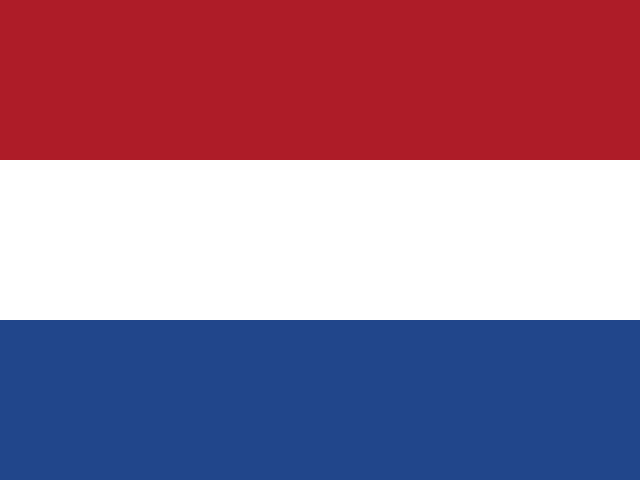
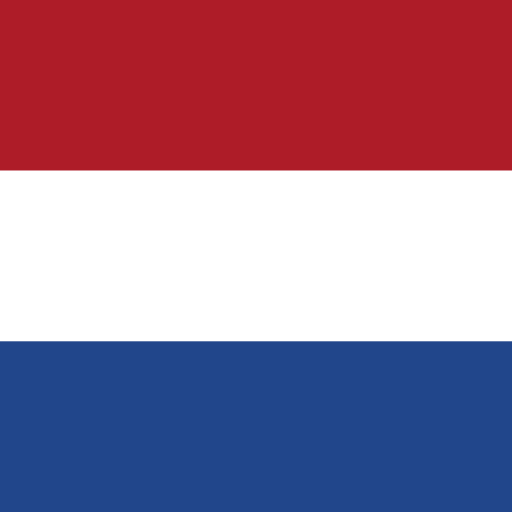
Netherlands
Capital: Amsterdam
Three horizontal stripes: red, white, blue.
Adopted: 1937
Fun Facts
- The Dutch flag is the oldest tricolor in the world, dating to 1572
- It originally was orange-white-blue, but orange dye faded to red over time
- The Dutch flag inspired the French tricolor and many others worldwide
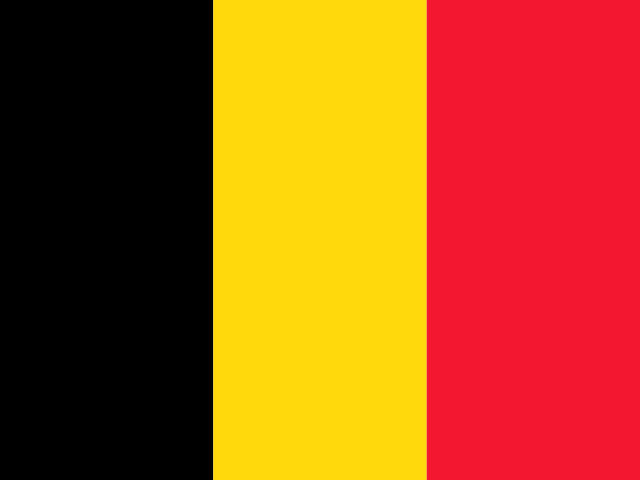
Belgium
Capital: Brussels
Three vertical stripes: black, yellow, red.
Adopted: 1831
Fun Facts
- The colors come from the coat of arms of the Duchy of Brabant (a gold lion on black)
- Belgium's flag is almost square in ratio (13:15), unusual for European flags
- The vertical stripes were inspired by the French tricolor during Belgium's 1830 revolution
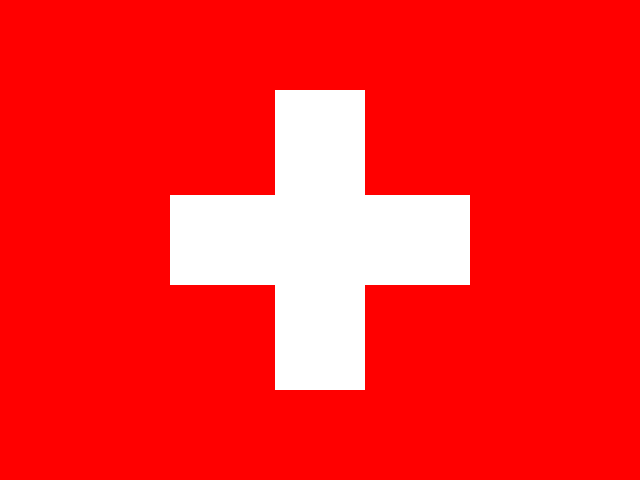
Switzerland
Capital: Bern
Red square field with a bold white cross in the center (arms of equal length).
Adopted: 1841
Fun Facts
- Switzerland's flag is one of only two square sovereign-state flags (Vatican City is the other)
- The white cross has been a Swiss symbol since the 14th century Battle of Laupen
- The Red Cross organization reversed Switzerland's flag colors as a tribute to its founder's homeland
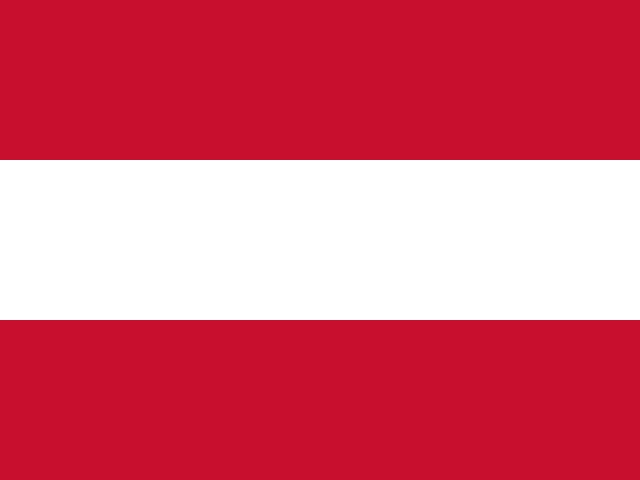
Austria
Capital: Vienna
Three horizontal stripes: red, white, red.
Adopted: 1230
Fun Facts
- Legend says Duke Leopold V's white tunic was blood-soaked in battle except under his belt
- Austria's flag is one of the oldest in the world, dating to 1230
- The flag is often confused with Latvia's, which has a darker red (maroon)
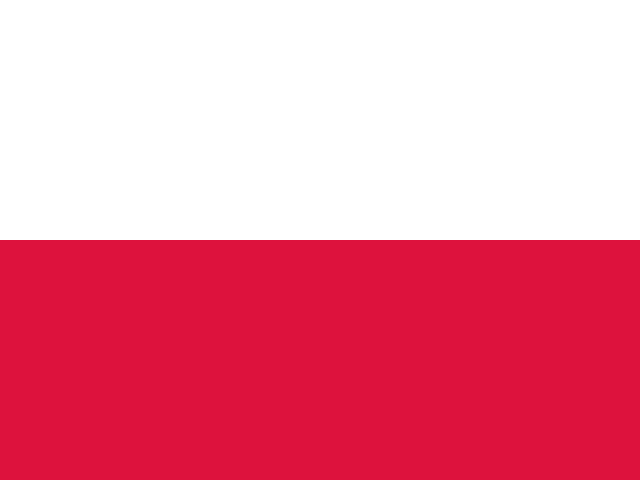
Poland
Capital: Warsaw
Two horizontal stripes: white (top), red (bottom).
Adopted: 1919
Fun Facts
- White represents the white eagle (Poland's national symbol), red the sunset glow
- Poland's flag is often confused with Indonesia's and Monaco's (which are red over white)
- The flag colors come from the Polish coat of arms dating back to the 13th century
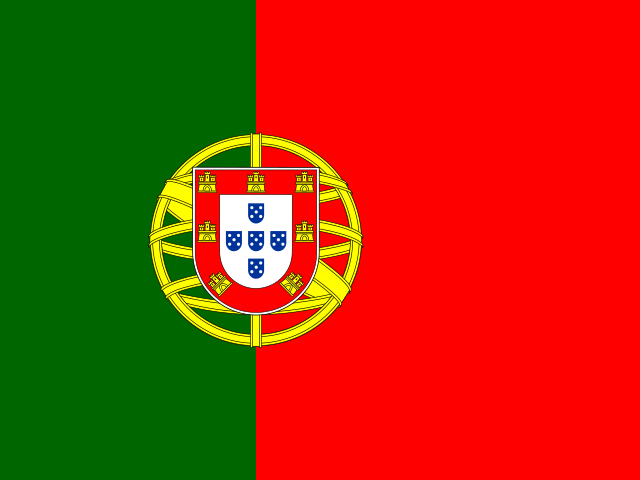
Portugal
Capital: Lisbon
Vertically divided: green (hoist) and red (fly, larger). The coat of arms centered on the division line.
Adopted: 1911
Fun Facts
- The armillary sphere represents Portugal's Age of Discoveries and maritime exploration
- Green represents hope, red the blood of those who died for the nation
- The five blue shields in the coat of arms represent the five Moorish kings defeated in 1139
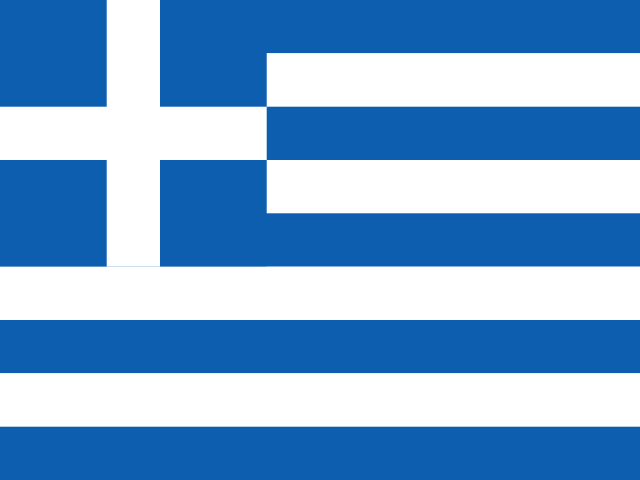
Greece
Capital: Athens
Nine alternating blue and white horizontal stripes. A blue square with a white cross in the upper-left corner.
Adopted: 1978
Fun Facts
- The 9 stripes may represent the 9 syllables of "Freedom or Death" in Greek
- Blue represents the sea and sky, white the purity of the independence struggle
- The cross represents Greek Orthodox Christianity, central to Greek identity
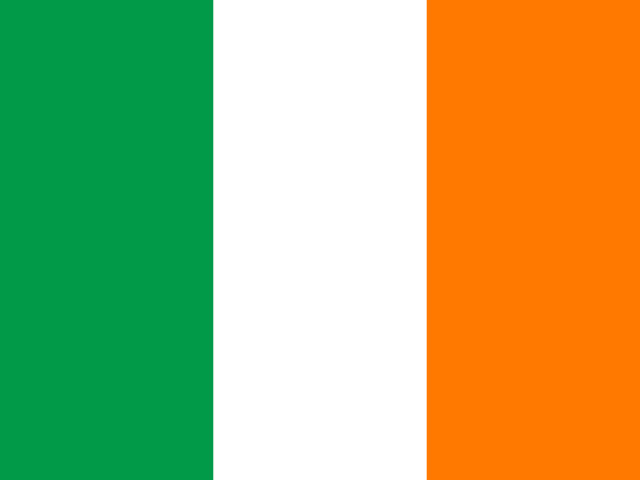
Ireland
Capital: Dublin
Three vertical stripes: green, white, orange.
Adopted: 1919
Fun Facts
- Green represents Catholics, orange represents Protestants, white represents peace between them
- The flag was first flown during the 1848 Young Irelander Rebellion
- Ireland's flag is sometimes confused with Ivory Coast's (which is orange-white-green)
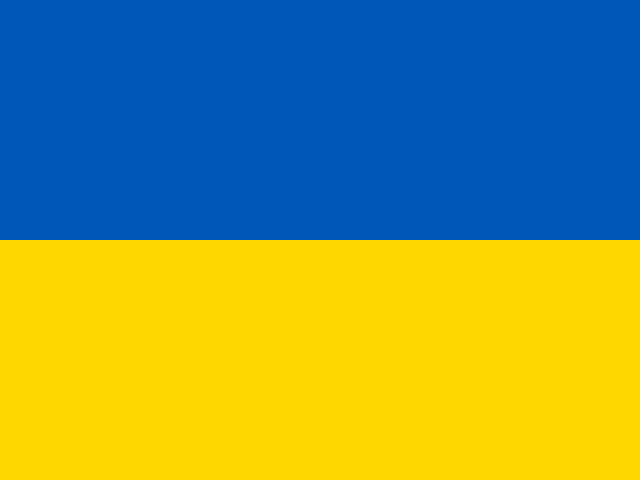
Ukraine
Capital: Kyiv
Two horizontal stripes: blue (top), yellow (bottom).
Adopted: 1992
Fun Facts
- Blue represents the sky above and yellow the wheat fields below - Ukraine's iconic landscape
- Ukraine is one of the world's largest grain exporters, earning it the name "breadbasket of Europe"
- The flag was first used in 1848 and readopted when Ukraine gained independence in 1991
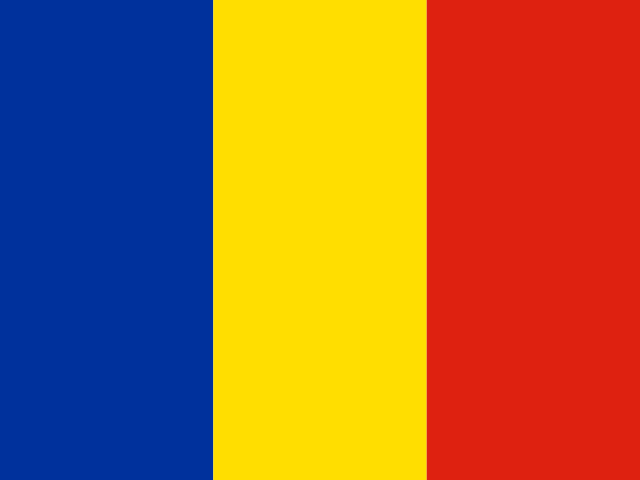
Romania
Capital: Bucharest
Three vertical stripes: blue, yellow, red.
Adopted: 1989
Fun Facts
- Blue represents liberty, yellow justice, red fraternity
- Romania's flag is nearly identical to Chad's - the difference is a slightly darker blue
- The tricolor was first used in the Wallachian uprising of 1821
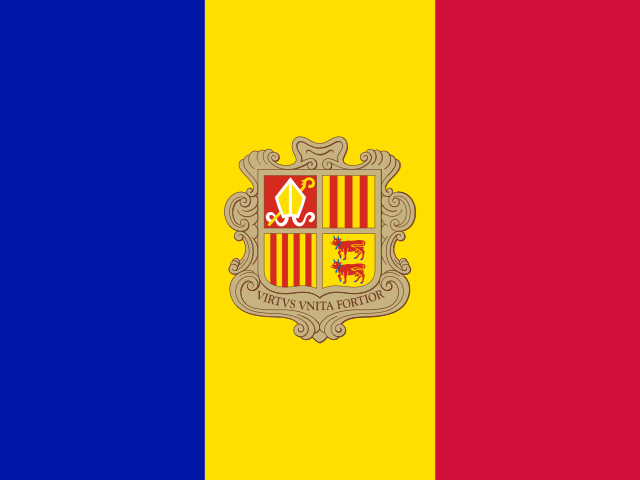
Andorra
Capital: Andorra la Vella
Vertical stripes blue, yellow, red with the national coat of arms centered.
Adopted: 1993
Fun Facts
- One of Europe's microstates high in the eastern Pyrenees
- Yellow recalls heraldic links between Catalan and Aragonese traditions
- Co-princes traditionally include the Bishop of Urgell and French head of state
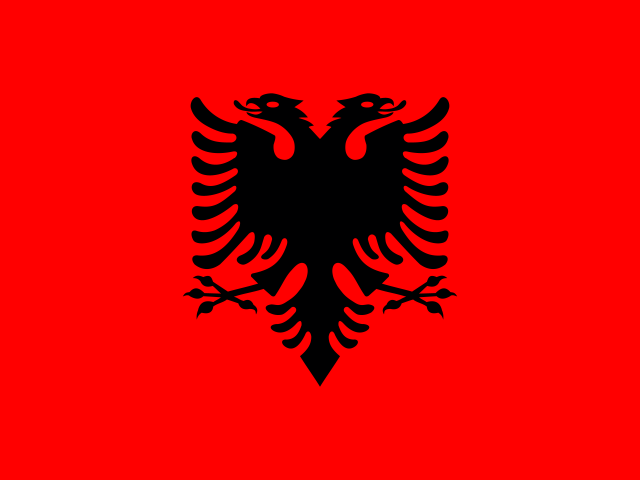
Albania
Capital: Tirana
Red field with a black double-headed eagle centered.
Adopted: 2002
Fun Facts
- The eagle echoes medieval banners linked to national hero Skanderbeg
- Red stands for bravery and blood shed defending independence
- Albanian is its own branch of Indo-European unrelated to neighbors' tongues
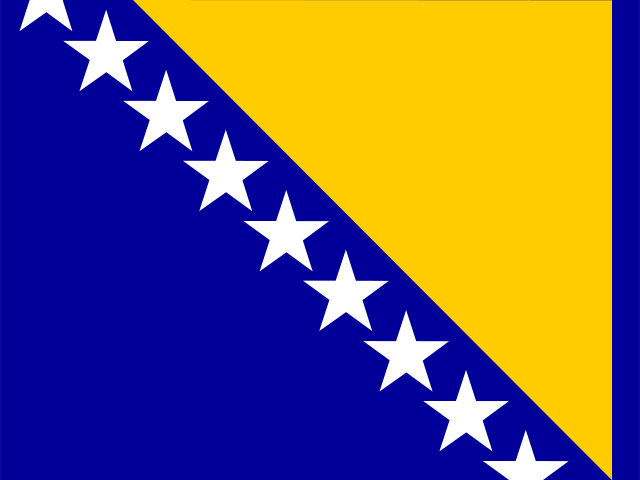
Bosnia and Herzegovina
Capital: Sarajevo
Blue field with yellow triangle along hoist bearing white stars flowing toward fly.
Adopted: 1998
Fun Facts
- Stars suggest Europe and continuity; blue recalls UN colors during peace talks
- Yellow triangle evokes geography opening toward peace and future
- Complex federation bridging Bosniak, Serb, and Croat communities
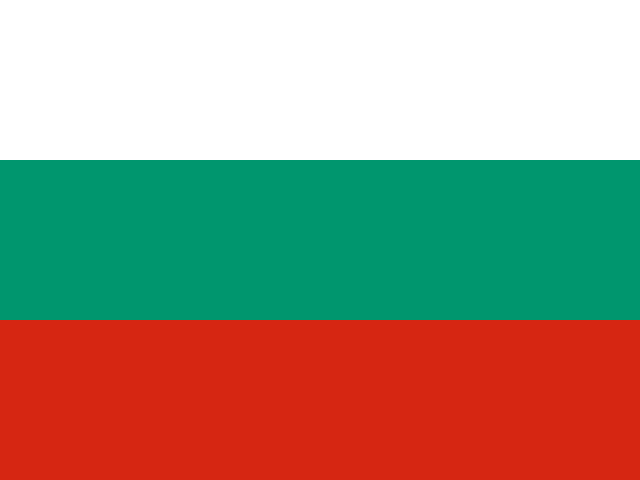
Bulgaria
Capital: Sofia
Three horizontal stripes: white, green, red.
Adopted: 1991
Fun Facts
- White freedom; green fertility; red valor or independence struggles
- Revived after communist-era emblem version ended
- Bulgarian Cyrillic script links it to Slavic South Slavic neighbors
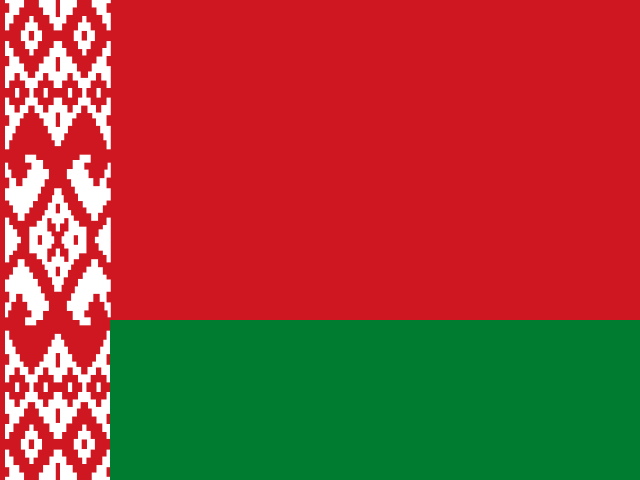
Belarus
Capital: Minsk
Two horizontal stripes red and green with ornamental vertical pattern at hoist.
Adopted: 2012
Fun Facts
- Design echoes legacy Soviet-era ornamental motifs reinterpreted today
- Green recalls forests and hope; red recalls courage
- Landlocked between Poland, Ukraine, Russia, and Baltic neighbors
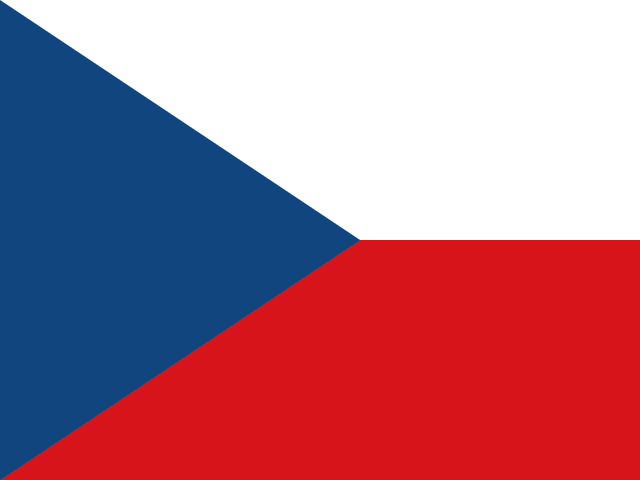
Czech Republic
Capital: Prague
Blue triangle at the hoist, with white on top and red on the bottom.
Adopted: 1920
Fun Facts
- Blue and white recall Bohemian heraldry; red Moravian tradition often cited
- Former Czechoslovakia split peacefully with Slovakia in 1993
- Prague Castle quarter hosts one of Europe's oldest surviving royal complexes
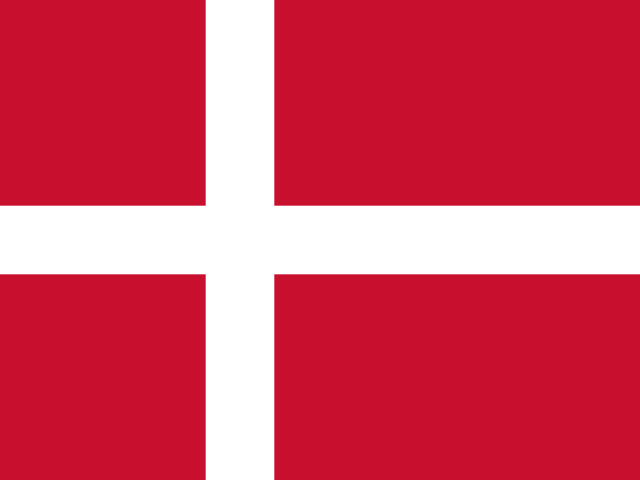
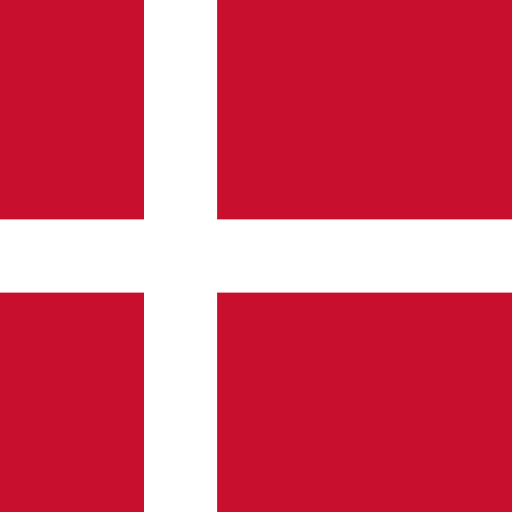
Denmark
Capital: Copenhagen
Red field with white Scandinavian cross shifted toward hoist.
Adopted: 1748
Fun Facts
- Among the world's oldest continuous national flags still in use
- Legend ties the Dannebrog to a battle vision in Estonia during crusades
- Cross pattern influenced other Nordic flags taught in the Nordic lesson
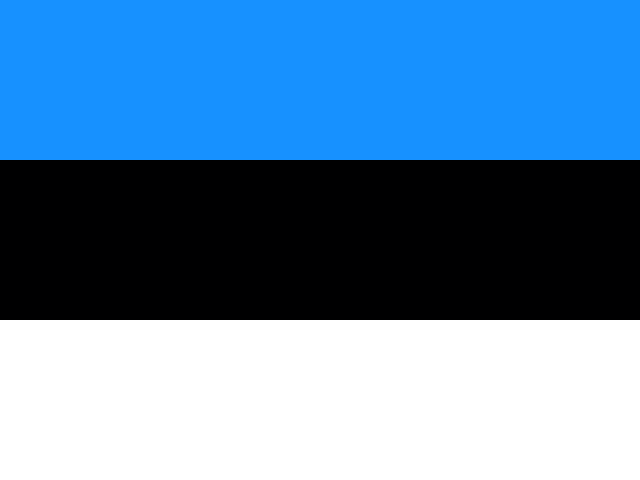
Estonia
Capital: Tallinn
Three horizontal stripes: blue, black, white.
Adopted: 1990
Fun Facts
- Blue sky; black soil and past trials; white purity and snowfields
- First Baltic republic to restore independence during USSR collapse wave
- Digital governance pioneer within the EU
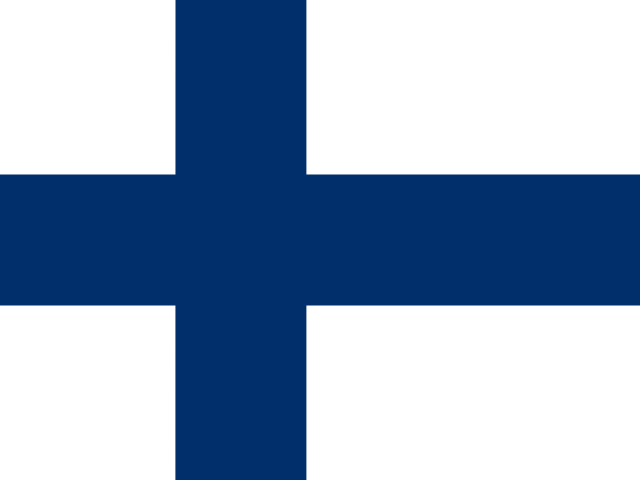
Finland
Capital: Helsinki
White field with blue Nordic cross.
Adopted: 1918
Fun Facts
- Blue lakes and skies on winter snowfields inspire the palette
- Independence-era adoption separates symbolism from Swedish union era
- Border runs hundreds of lakes deep into boreal forest
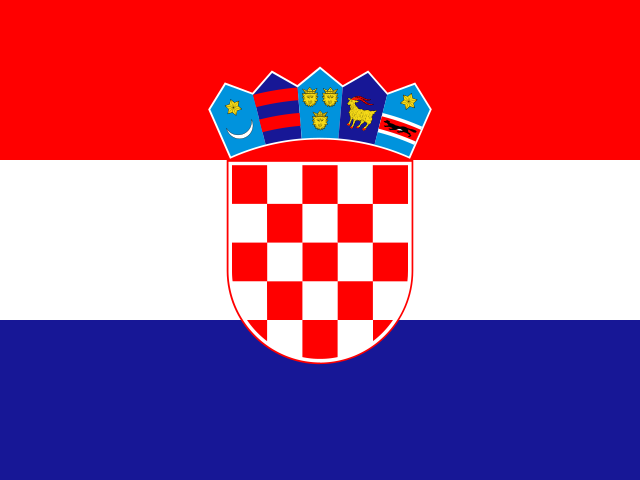
Croatia
Capital: Zagreb
Horizontal red, white, blue with coat of arms checkerboard shield centered.
Adopted: 1990
Fun Facts
- Šahovnica checkerboard is medieval Croatian emblem DNA
- Five regional shields ring the main coat on current arms
- Adriatic coastline with hundreds of islands shapes culture and tourism
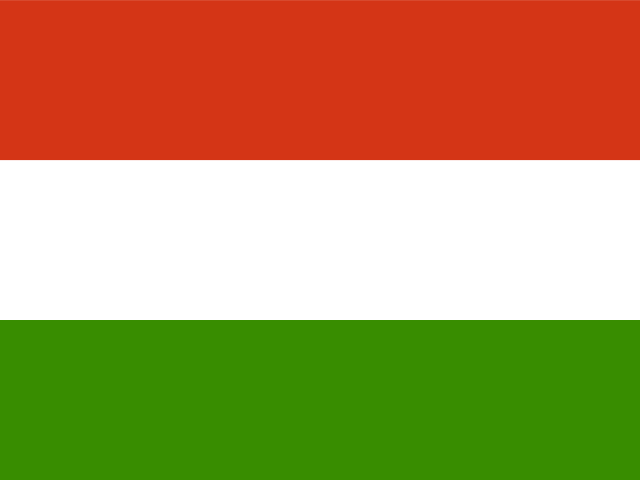
Hungary
Capital: Budapest
Three horizontal stripes: red, white, green.
Adopted: 1957
Fun Facts
- Green hope; white fidelity; red strength or blood defending nation
- Tricolor rooted in 1848 revolutionary banners
- Magyar language unrelated to Slavic neighbors east and north
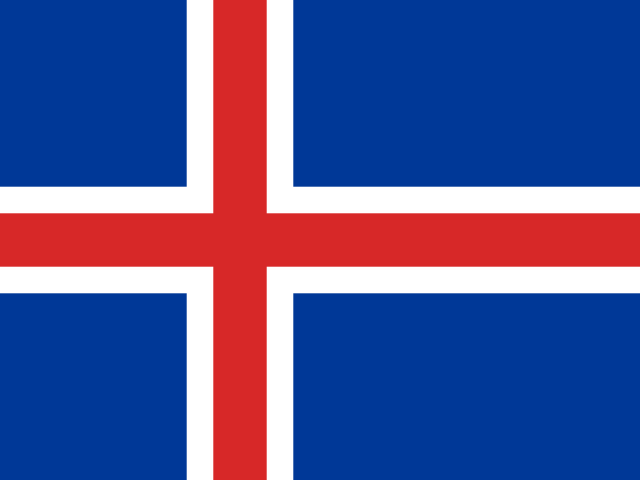
Iceland
Capital: Reykjavik
Blue field with red-bordered white Nordic cross.
Adopted: 1944
Fun Facts
- Red recalls volcanic fire; white ice and snow; blue Atlantic waters
- Parliament Althing traces Norse assemblies back over a millennium
- First NATO state without standing army focus
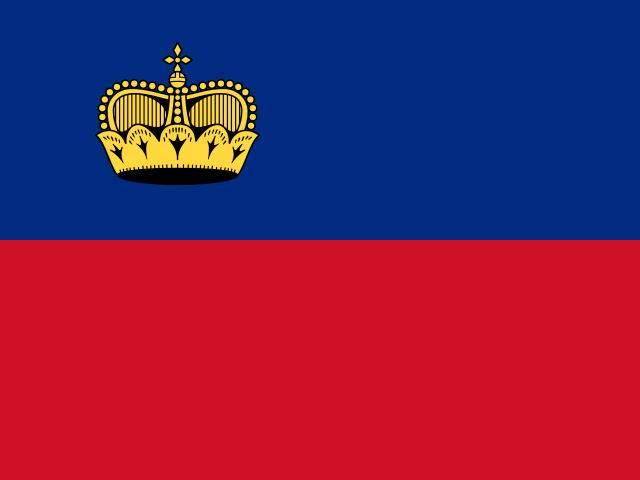
Liechtenstein
Capital: Vaduz
Horizontal blue over red with golden crown at hoist upper canton.
Adopted: 1982
Fun Facts
- Crown recalls sovereign prince tied to medieval Holy Roman traditions
- Tiny Rhine valley Alpine constitutional monarchy between Austria and Switzerland
- Dual customs union historically shaped its economy
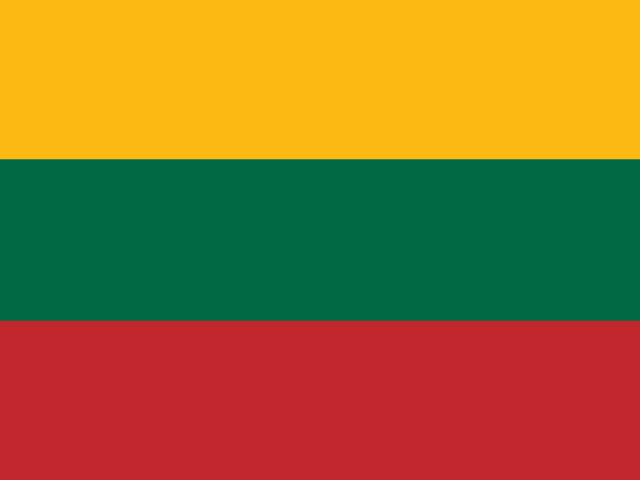
Lithuania
Capital: Vilnius
Horizontal stripes yellow, green, red.
Adopted: 1989
Fun Facts
- Yellow sunlit fields; green forests; red courage and dawn sky hues
- Among first Soviet republics declaring renewed sovereignty
- Was Europe's last pagan-majority grand duchy before Christianization
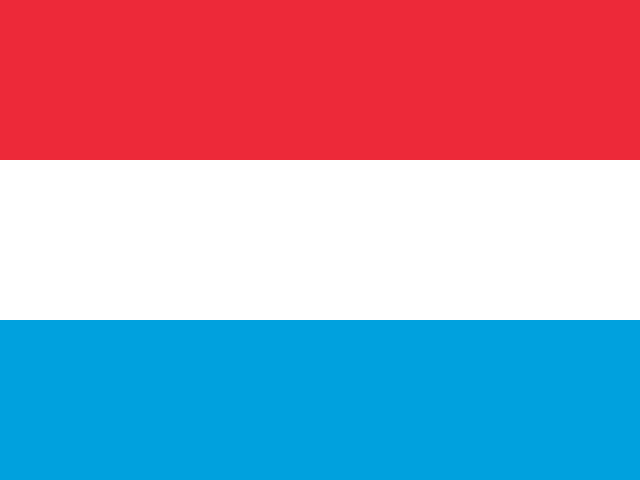
Luxembourg
Capital: Luxembourg City
Three horizontal stripes red, white, light blue.
Adopted: 1993
Fun Facts
- Often confused with Netherlands' darker cobalt stripe variant layouts
- Grand Duchy punches above weight in EU institutional origins
- Luxembourgish blends Moselle Franconian with neighbor influences
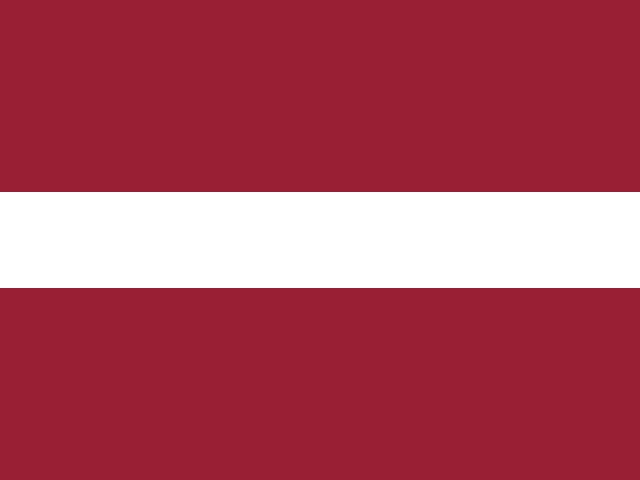
Latvia
Capital: Riga
Carmine red field with narrow white stripe through center.
Adopted: 1990
Fun Facts
- Distinct maroon shade separates it visually from Austria's brighter reds
- Revived after Soviet occupation alongside Baltic neighbors
- Song festivals UNESCO-listed nurture choral identity
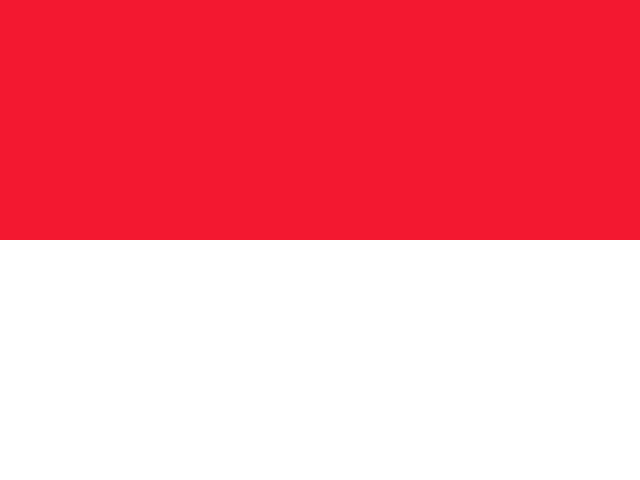
Monaco
Capital: Monaco
Horizontal red over white.
Adopted: 1881
Fun Facts
- Same layout as Indonesia though proportions differ sharply
- Tiny Mediterranean cliff city-state famed for Grand Prix circuit
- Ruling Grimaldi dynasty traces to medieval Genoese exile legend
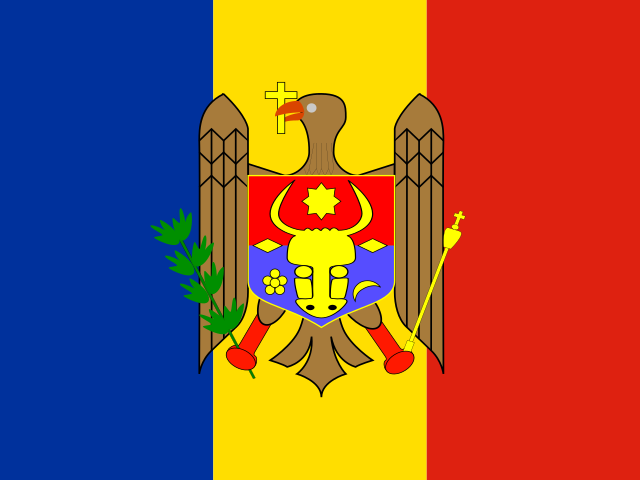
Moldova
Capital: Chisinau
Vertical blue, yellow, red with national eagle bearing shield on yellow stripe.
Adopted: 1990
Fun Facts
- Romanian-related tongue links cultural debates east of Prut River
- Yellow recalls wheat fields; blue sky watchfulness
- Among Europe's lower-income states yet rich in vineyards
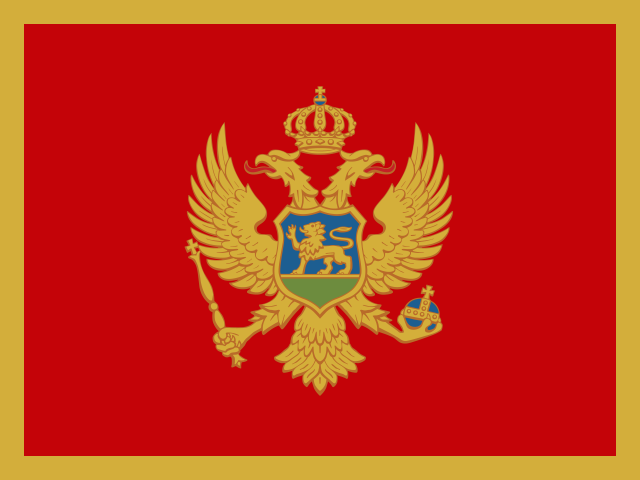
Montenegro
Capital: Podgorica
Red field bordered gold with golden double-headed eagle centered.
Adopted: 2004
Fun Facts
- Eagle recalls medieval Nemanjić-era symbolism reworked today
- Gold border emphasizes sovereignty mountain republic motif
- Adriatic riviera pocket rivals larger neighbors for scenic bays
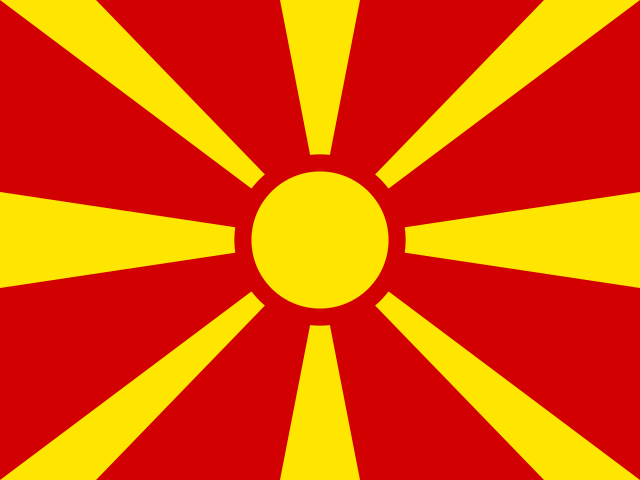
North Macedonia
Capital: Skopje
Red stylized sun disk with rays emerging from horizontal gold horizon band.
Adopted: 1995
Fun Facts
- Sun recalls Vergina-era debates settled toward neutral geometric starburst form
- Landlocked Balkan crossroads toward Aegean commerce historically
- Deep Ottoman-era urban layers visible in Old Bazaar quarters
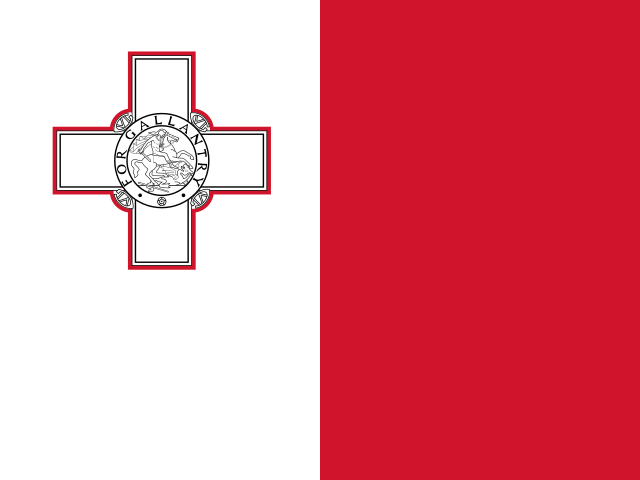
Malta
Capital: Valletta
Vertical white hoist beside red fly with George Cross outlined red canton upper hoist.
Adopted: 1964
Fun Facts
- George Cross recalls WWII civilian bravery citation
- Knights Hospitaller legacy etched across fortress harbors
- EU's smallest member state by land area
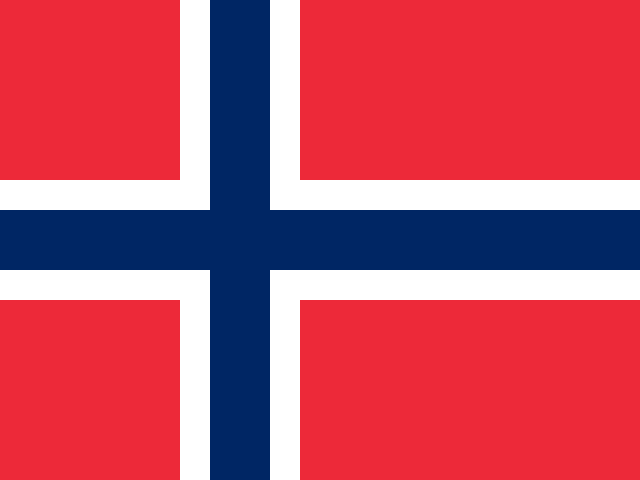
Norway
Capital: Oslo
Red field with blue-bordered white Scandinavian cross.
Adopted: 1821
Fun Facts
- Independence-era differentiation from Swedish union predecessors
- Oil-funded sovereign wealth model globally studied
- Fjords and Arctic islands define rugged geography
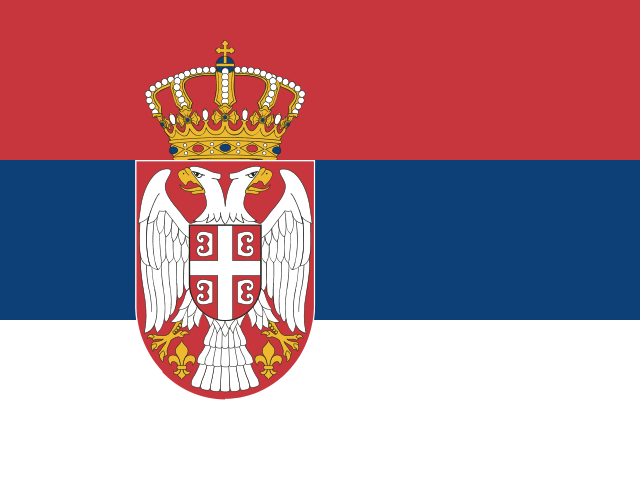
Serbia
Capital: Belgrade
Horizontal red, blue, white with coat of arms toward hoist side.
Adopted: 2010
Fun Facts
- Pan-Slavic stripe order echoes Russia upside-down orientation mnemonic
- National lesser coat reworked in modern specs sits nearer hoist
- Danube meets Sava at fortress Kalemegdan overlooking confluence parks
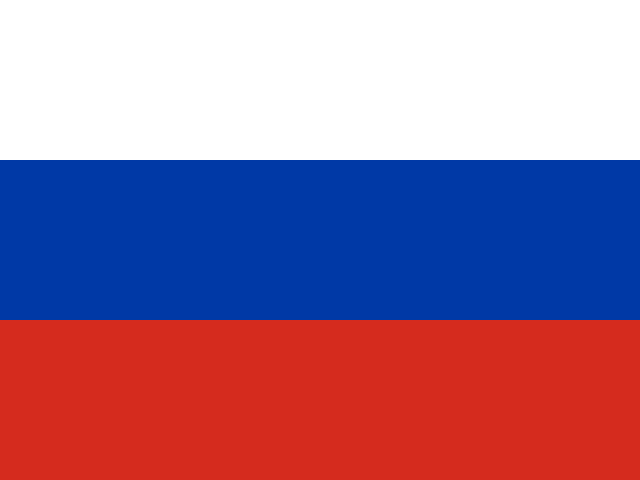
Russia
Capital: Moscow
Three horizontal stripes: white, blue, red.
Adopted: 1993
Fun Facts
- Pan-Slavic palette links multiple eastern Slavic heraldic experiments
- White noble candor; blue faithfulness; red courage interpretations persist
- Largest country globally spanning eleven time zones eastward
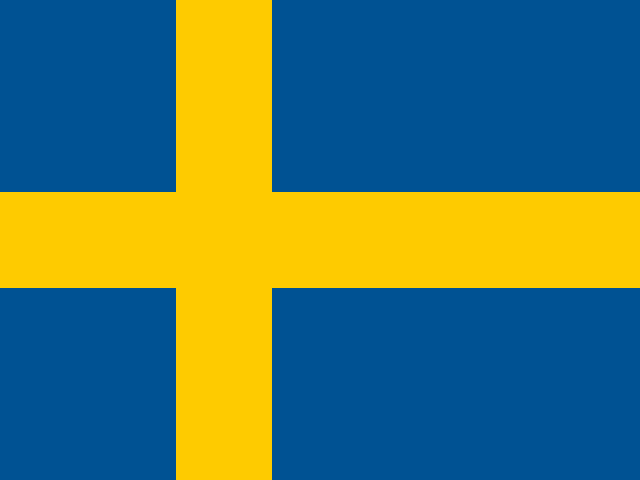
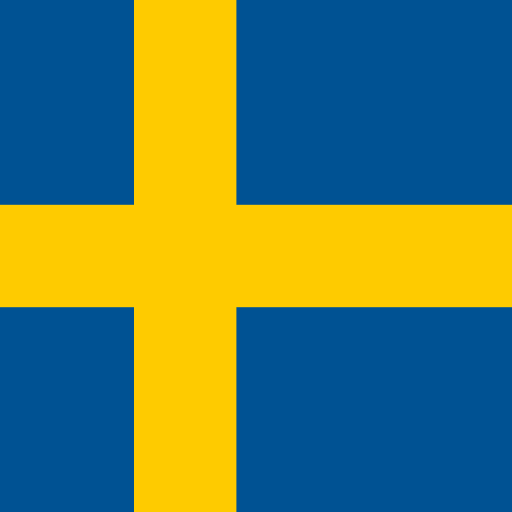
Sweden
Capital: Stockholm
Blue field with yellow Scandinavian cross.
Adopted: 1906
Fun Facts
- Golden cross on blue recalls medieval dynasty shields later standardized
- Neutral industrial innovation heritage from timber to telecom ventures
- Thousands of Baltic islands dot glaciated east coast archipelago
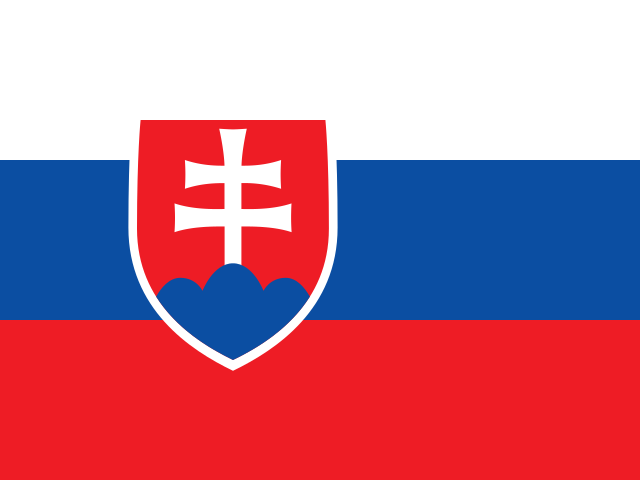
Slovakia
Capital: Bratislava
Horizontal white, blue, red with coat of arms shield left of center.
Adopted: 1992
Fun Facts
- Double-cross atop triple hill emblem distinguishes Slovakia from Slovenia hues
- Capital sits meters from Austrian border bridging Danube plain
- Carpathian peaks shelter boreal wildlife corridors
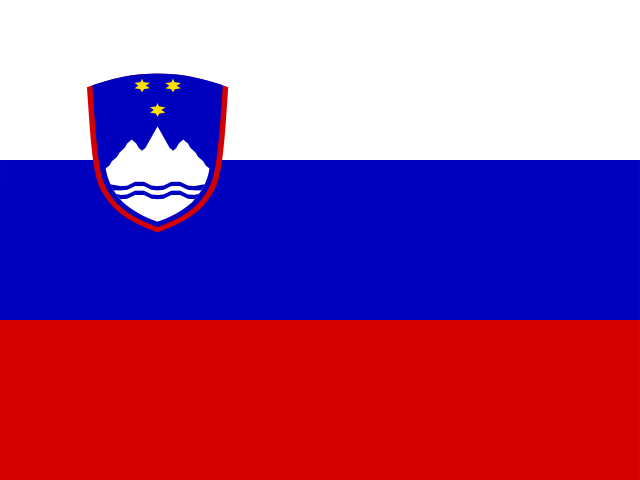
Slovenia
Capital: Ljubljana
Horizontal white, blue, red with coat showing mountains and waves.
Adopted: 1991
Fun Facts
- Triglav mountain silhouette evokes alpine backbone symbolism
- Tiny Adriatic outlet contrasts mountainous interior karst caves
- Former Yugoslav republic first wave joining euro zone among peers
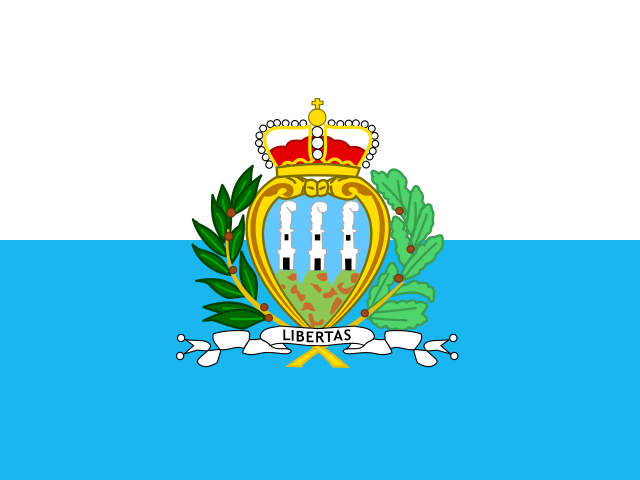
San Marino
Capital: San Marino
Horizontal white over light blue with national coats centered.
Adopted: 2011
Fun Facts
- Claims continuity from monastery-founded commune AD 301 tradition
- Twin towers castle skyline perch atop Mount Titano cliffs
- Euro user though not EU member state
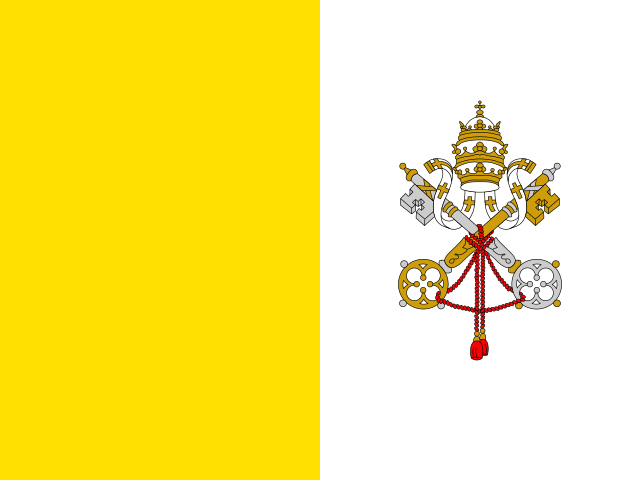
Vatican City
Capital: Vatican City
Vertical yellow hoist beside white fly with crossed keys and papal tiara emblem.
Adopted: 1929
Fun Facts
- Smallest internationally recognized independent state by area
- Yellow and white evoke papal keys heraldry centuries deep
- Spiritual center for over a billion Catholics globally
Quick Reference
France Germany Italy Spain United Kingdom Netherlands Belgium Switzerland Austria Poland Portugal Greece Ireland Ukraine Romania Andorra Albania Bosnia and Herzegovina Bulgaria Belarus Czech Republic Denmark Estonia Finland Croatia Hungary Iceland Liechtenstein Lithuania Luxembourg Latvia Monaco Moldova Montenegro North Macedonia Malta Norway Serbia Russia Sweden Slovakia Slovenia San Marino Vatican City Test Your Knowledge
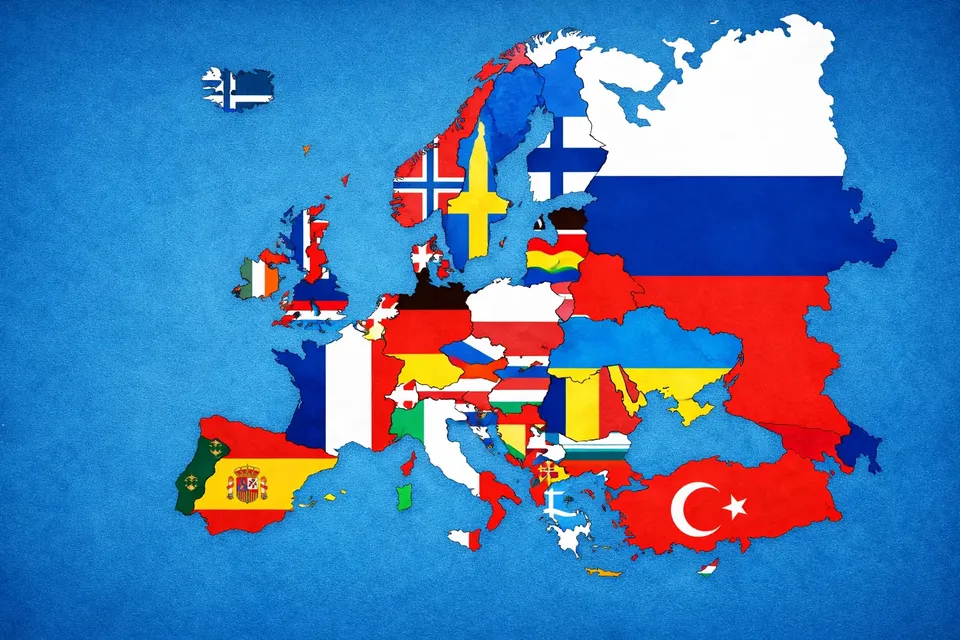
Europe has many similar-looking flags. Can you tell them apart?
Practice with Games
Ready to test what you learned? Jump into a game and put it into practice.
About European Flags
European flags showcase the continent's rich history through several distinct design traditions. The tricolor format (three vertical or horizontal stripes) dominates, inspired by the French Revolution's ideals of liberty, equality, and fraternity. You'll find vertical tricolors (France, Italy, Ireland, Belgium, Romania) and horizontal tricolors (Germany, Netherlands, Austria, Hungary). The Nordic countries use the Scandinavian cross pattern. Eastern European flags often incorporate coats of arms, while some flags like the UK's Union Jack and Switzerland's square flag are truly unique. Many European flags have influenced designs worldwide through colonial history.
Frequently Asked Questions
Why do so many European flags use three stripes?
The tricolor design was popularized by the French Revolution (1789). The French flag symbolized liberty, equality, and fraternity, and this simple three-stripe format was adopted by many other nations seeking independence or democratic ideals throughout the 19th and 20th centuries.
Which European flags are most often confused with each other?
Common mix-ups include: France vs Netherlands vs Luxembourg (all red-white-blue but horizontal/vertical), Ireland vs Italy (green-white-orange vs green-white-red), Romania vs Chad (nearly identical blue-yellow-red), and Austria vs Latvia (red-white-red in different shades).
How many European countries have tricolor flags?
Over 20 European nations use some form of tricolor. Notable examples include France, Germany, Italy, Ireland, Belgium, Netherlands, Romania, Hungary, Bulgaria, and many others. The design remains popular because it is simple, distinctive, and carries democratic symbolism.