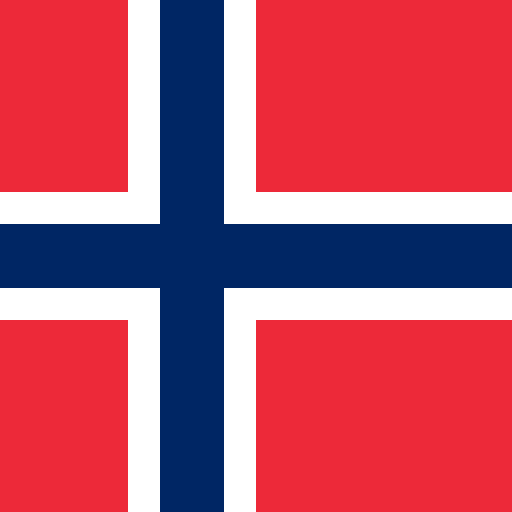
Flags of Oceania
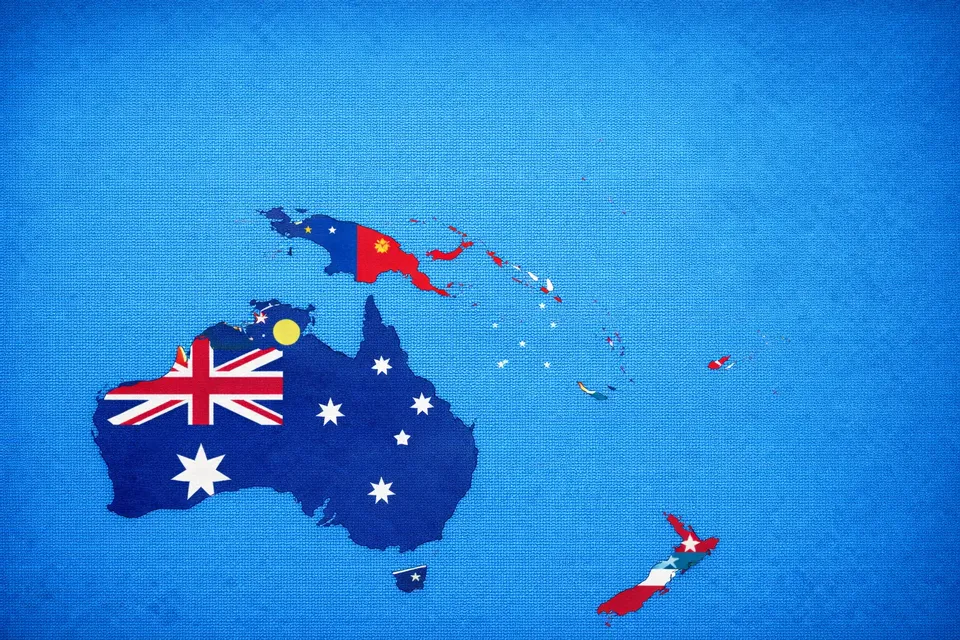
Oceania spans the vast Pacific Ocean and includes Australia, New Zealand, and numerous island nations. Many flags feature the Southern Cross constellation and the Union Jack (reflecting British colonial heritage), while Pacific Island nations often showcase unique symbols drawn from local culture, nature, and maritime traditions.
Study the Flags
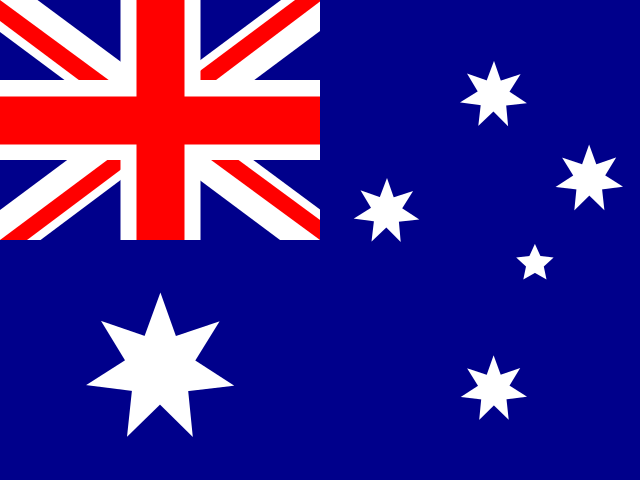
Australia
Capital: Canberra
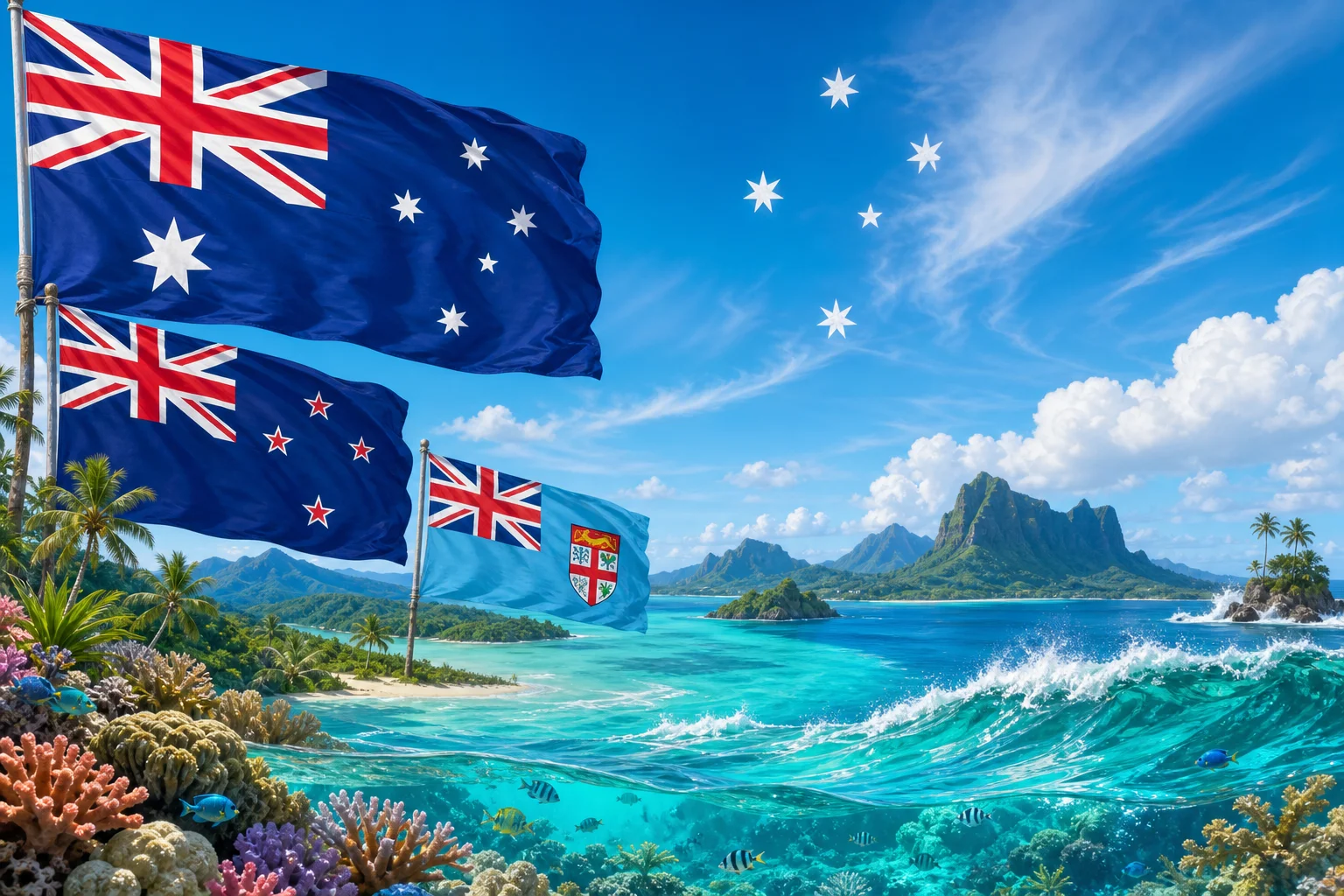
Blue field with the Union Jack in the upper-left, a large white Commonwealth Star below it, and five stars of the Southern Cross on the right.
Adopted: 1954
Fun Facts
- The Commonwealth Star below the Union Jack has 7 points - 6 for the states and 1 for the territories
- The Southern Cross is only visible from the Southern Hemisphere
- Australia's flag was chosen from a public design competition in 1901 with over 32,000 entries
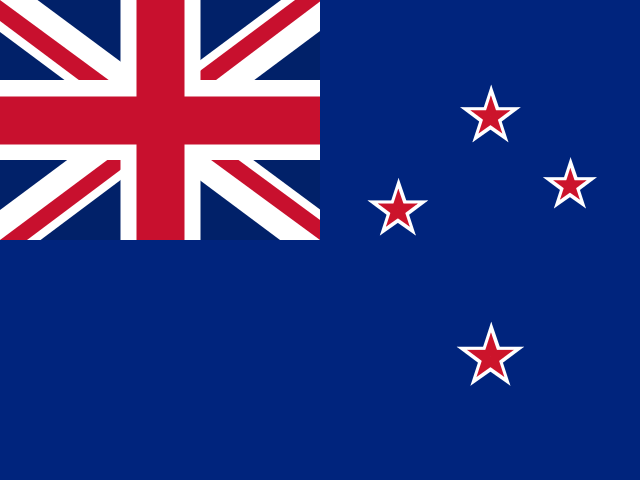
New Zealand
Capital: Wellington
Blue field with the Union Jack in the upper-left and four red stars with white borders (Southern Cross) on the right.
Adopted: 1902
Fun Facts
- New Zealand's four Southern Cross stars are red with white borders (Australia's are white)
- A 2016 referendum voted to keep the current flag over a new silver fern design
- The flag was officially adopted in 1902 but used unofficially since 1869
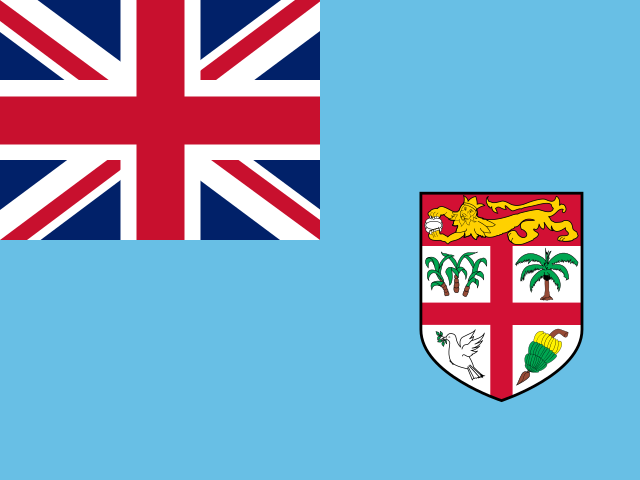
Fiji
Capital: Suva
Light blue field with the Union Jack in the upper-left and Fiji's coat of arms shield on the right.
Adopted: 1970
Fun Facts
- Fiji's lighter blue background distinguishes it from Australian and New Zealand flags
- The shield shows a golden lion holding a cocoa pod, plus sugarcane, coconut palm, and bananas
- Fiji gained independence from Britain in 1970
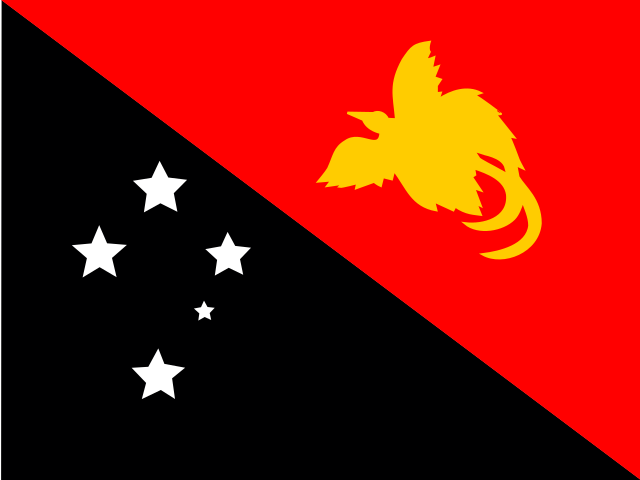
Papua New Guinea
Capital: Port Moresby
Diagonally divided: red (upper-right) with a golden bird of paradise, black (lower-left) with five white stars of the Southern Cross.
Adopted: 1971
Fun Facts
- The bird of paradise is the national symbol and is found only in this region
- The flag was designed by a 15-year-old schoolgirl, Susan Karike, in a nationwide competition
- Red and black are traditional colors used in many Papua New Guinean art forms
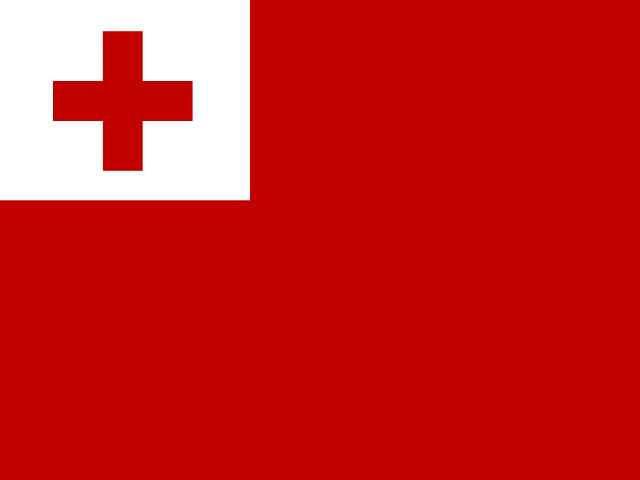
Tonga
Capital: Nuku'alofa
Red field with a white rectangle in the upper-left containing a red cross.
Adopted: 1875
Fun Facts
- Tonga was never colonized - it's one of few Pacific nations to maintain sovereignty
- The red cross represents Christianity, deeply important to Tongan culture
- The flag design is protected in Tonga's constitution and can never be changed
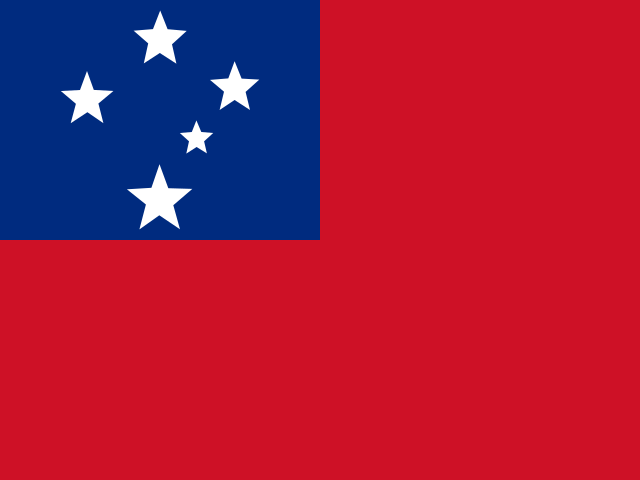
Samoa
Capital: Apia
Red field with a blue rectangle in the upper-left containing five white stars of the Southern Cross.
Adopted: 1949
Fun Facts
- The Southern Cross on Samoa's flag has only 5 stars (not 4 like New Zealand)
- Samoa was the first Pacific Island nation to gain independence in the 20th century (1962)
- Red represents courage, white purity, blue freedom and the Pacific Ocean
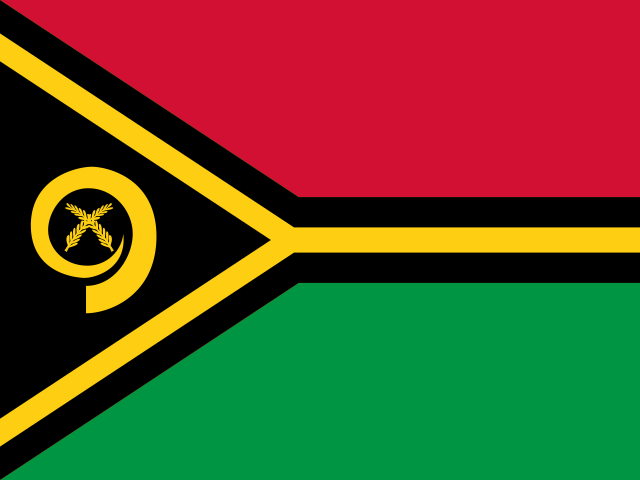
Vanuatu
Capital: Port Vila
Red (top) and green (bottom) separated by a black triangle at the hoist and a yellow Y-shape. A boar's tusk emblem with fern leaves on the black triangle.
Adopted: 1980
Fun Facts
- The boar's tusk represents prosperity - tusked pigs are a symbol of wealth in Vanuatu
- The yellow Y-shape represents the chain of islands' geographic formation
- The namele leaf (fern) inside the tusk is a symbol of peace
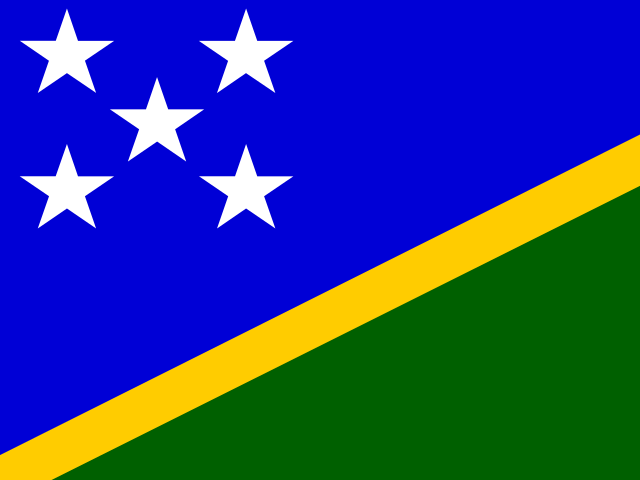
Solomon Islands
Capital: Honiara
Diagonally divided: blue (upper-left) and green (lower-right) separated by a thin yellow diagonal stripe. Five white stars in the upper-left.
Adopted: 1977
Fun Facts
- The five stars originally represented the five main island groups
- Blue represents the ocean, green the land, yellow the sunshine
- The diagonal stripe represents the islands emerging between sea and vegetation
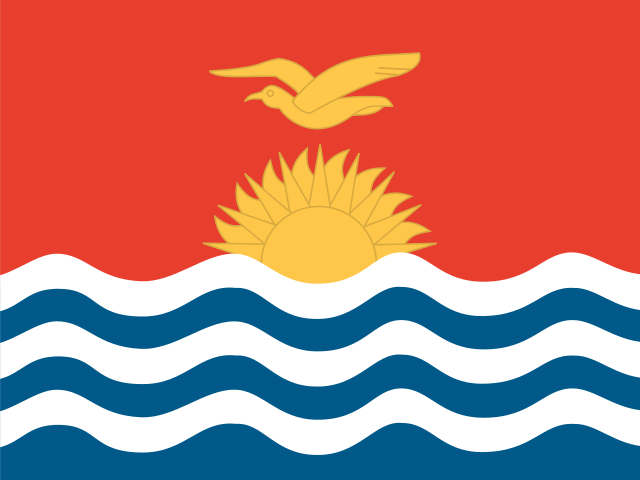
Kiribati
Capital: Tarawa
Upper half: red with a golden frigate bird flying over a golden rising sun. Lower half: blue and white wavy stripes representing the ocean.
Adopted: 1979
Fun Facts
- The frigate bird flying over the rising sun represents command of the sea
- The blue and white waves represent the Pacific Ocean
- Kiribati is one of the first countries to see each new day (near the International Date Line)
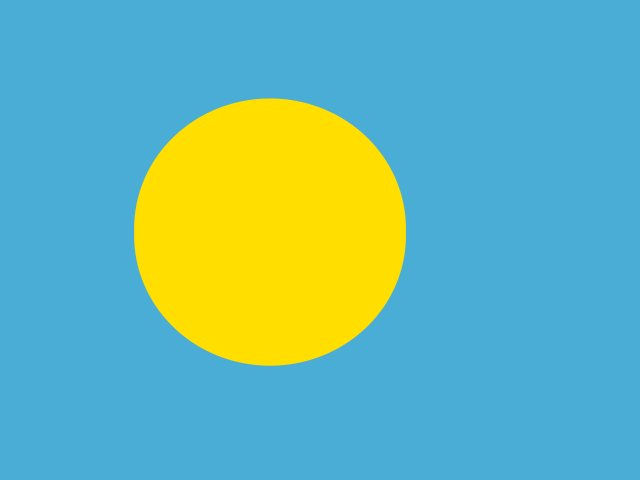
Palau
Capital: Ngerulmud
Light blue field with a large golden-yellow circle slightly offset toward the hoist.
Adopted: 1981
Fun Facts
- The golden circle represents the full moon, which is culturally important for activities and celebrations
- The blue background represents the ocean and Palau's transition to self-governance
- Palau's flag is one of the simplest in the world - just a circle on a field
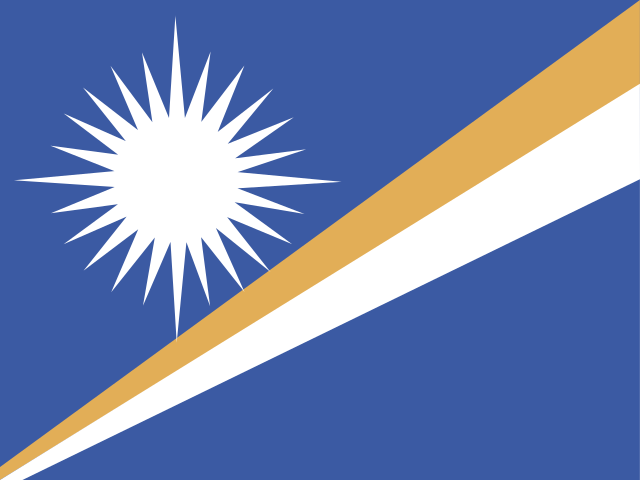
Marshall Islands
Capital: Majuro
Blue field with diagonal bands widening toward the fly (orange over white) from lower hoist to upper fly; white star near hoist.
Adopted: 1979
Fun Facts
- Orange and white stripes radiate like latitude lines across the Pacific
- The star represents the archipelago's 24 electoral districts
- Former UN Trust Territory administered by the United States before independence
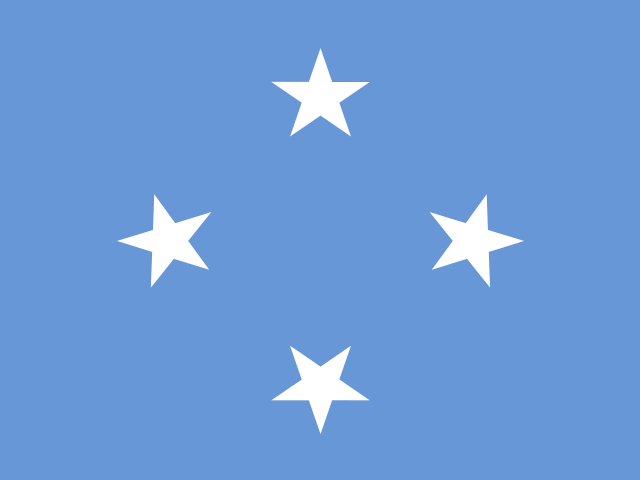
Micronesia
Capital: Palikir
Light blue field with four white five-pointed stars arranged in a diamond.
Adopted: 1978
Fun Facts
- Four stars represent Chuuk, Kosrae, Pohnpei, and Yap states in the federation
- Light blue recalls Pacific waters surrounding scattered low islands
- Compact of Free Association ties defense and aid traditions with the United States
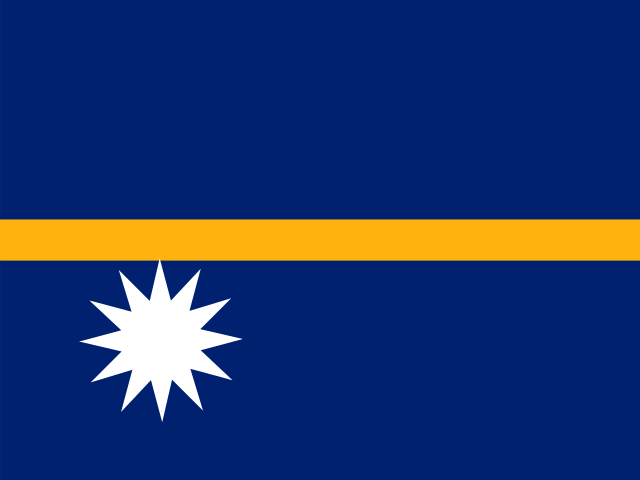
Nauru
Capital: Yaren
Blue field with narrow horizontal yellow stripe centered and white twelve-pointed star beneath stripe toward hoist.
Adopted: 1968
Fun Facts
- Yellow stripe represents the Equator running near the island
- Twelve-point star stands for the twelve original tribes of Nauru
- Once wealthy from phosphate mining; among the world's smallest republics by land area
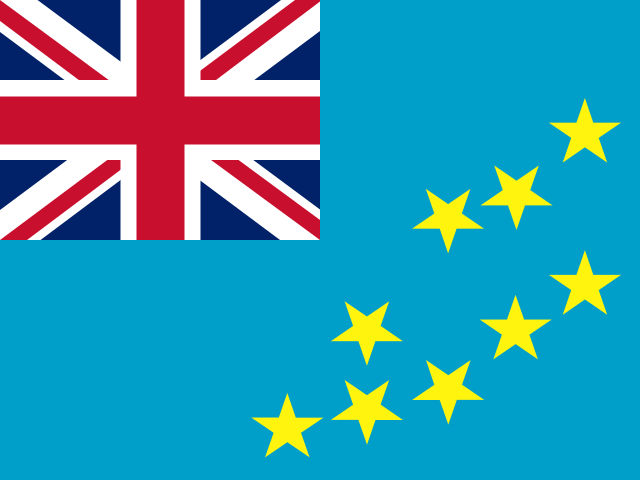
Tuvalu
Capital: Funafuti
Light blue field with Union Jack canton and nine yellow stars arranged to represent island groups.
Adopted: 1997
Fun Facts
- Nine stars match nine inhabited islands (arrangement updated when islands merged politically)
- Union Jack recalls Commonwealth ties similar to Fiji
- Among the first nations threatened by rising seas - geography shapes national discourse
Quick Reference
Test Your Knowledge
Can you distinguish the flags of Oceania? Take this quiz.
Practice with Games
Ready to test what you learned? Jump into a game and put it into practice.
About Oceanian Flags
The flags of Oceania reflect two major influences: British colonial heritage and indigenous Pacific culture. Australia, New Zealand, Fiji, and Tuvalu all feature the Union Jack, reflecting their historical ties to the British Empire. The Southern Cross constellation appears on multiple flags, serving as a navigational and cultural symbol of the Southern Hemisphere. Pacific Island nations like Papua New Guinea, Vanuatu, and Kiribati incorporate unique local symbols - birds of paradise, boar tusks, and frigate birds - representing their distinct cultures and environments. Many of these island nations gained independence in the 1970s and designed flags that celebrate both their geography and their heritage.
Frequently Asked Questions
How can I tell Australia's flag from New Zealand's?
Australia's flag has a large 7-pointed Commonwealth Star below the Union Jack and five white stars (Southern Cross). New Zealand's flag has only four red stars with white borders and no Commonwealth Star. The colors of the Southern Cross stars are the key difference: white for Australia, red for New Zealand.
Why do many Oceanian flags have the Union Jack?
Several Oceanian nations were British colonies and retained the Union Jack on their flags after independence to acknowledge their historical connection to Britain. This includes Australia, New Zealand, Fiji, and Tuvalu.
How many countries are in Oceania?
There are 14 independent countries in Oceania: Australia, Fiji, Kiribati, Marshall Islands, Micronesia, Nauru, New Zealand, Palau, Papua New Guinea, Samoa, Solomon Islands, Tonga, Tuvalu, and Vanuatu.