
Flags of Southeast Asia: All 11, With Names
The Southeast Asia flags in this lesson stretch from Myanmar and Thailand through Indochina and the Malay Peninsula to thousands of Indonesian islands and the Pacific edge at Timor-Leste. These South East Asia flags blend Buddhist and Islamic symbolism, revolutionary heritage, and maritime identity-often with bold stripes and distinctive national emblems that reward focused study.
Study the Flags
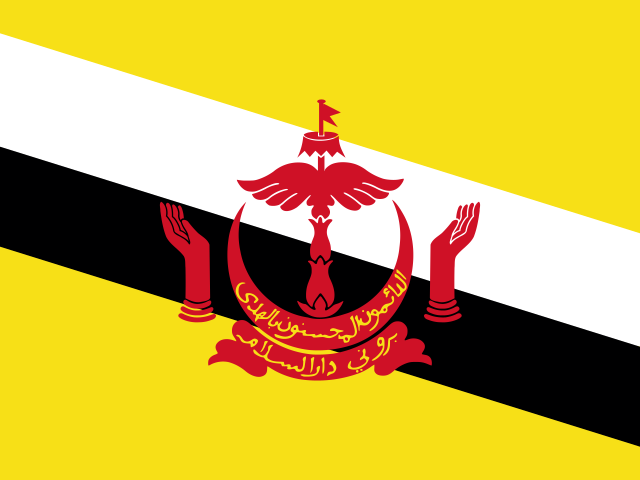
Brunei
Capital: Bandar Seri Begawan
Yellow field with diagonal black and white stripes and the national emblem in red (crest, crescent, and motto).
Adopted: 1959
Fun Facts
- Yellow recalls the Sultan; black and white stripes are traditional ministerial emblems
- The crest pairs wings, hands, and a parasol with Arabic motto on a crescent
- Tiny oil-rich monarchy on the north coast of Borneo
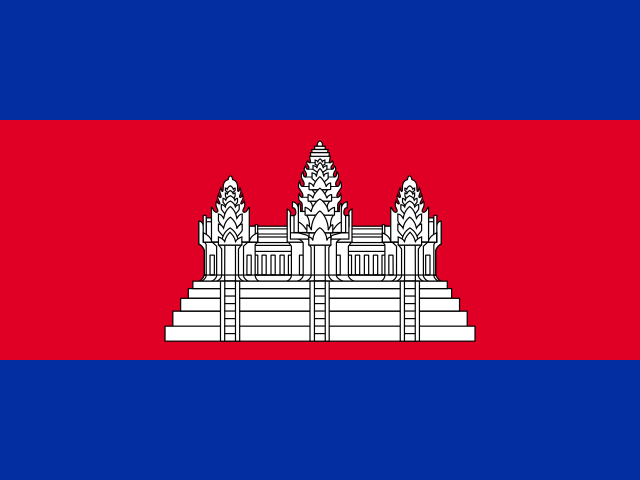
Cambodia
Capital: Phnom Penh
Three horizontal stripes: blue (narrow), red (wide), blue (narrow), with Angkor Wat in white centered on the red stripe.
Adopted: 1993
Fun Facts
- Angkor Wat appears in white silhouette at the center of the red band
- Blue stripes reference royalty and major waterways like the Mekong and Tonlé Sap
- Design reconnects the nation with Khmer heritage after decades of conflict
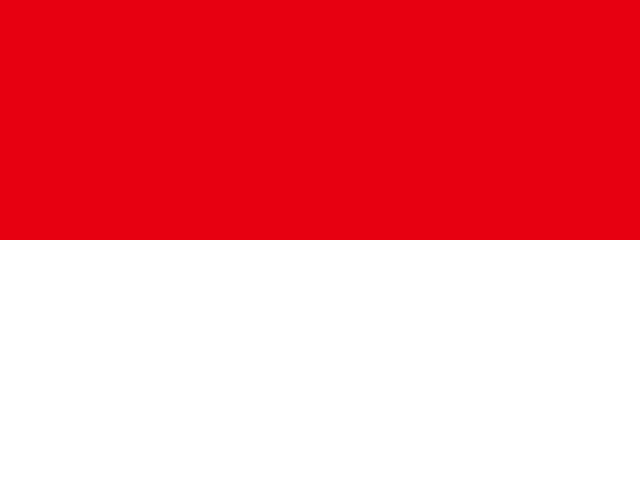
Indonesia
Capital: Jakarta
Two horizontal stripes: red (top), white (bottom).
Adopted: 1945
Fun Facts
- Called Sang Merah Putih-the Red and White
- Red represents courage and the physical world; white purity and the spiritual world
- Uses the same colors as Monaco's flag; proportions help tell them apart
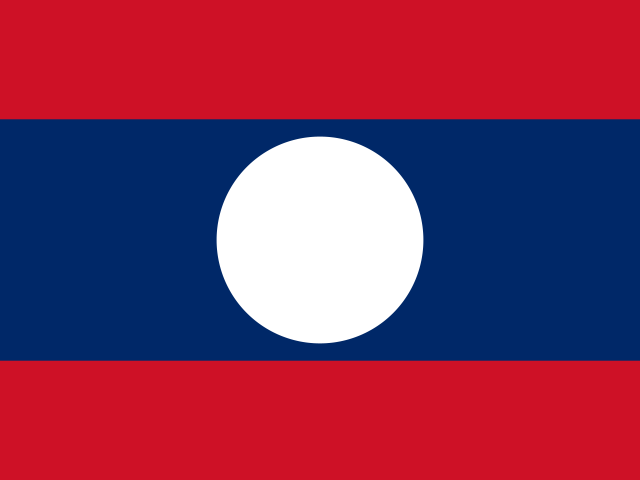
Laos
Capital: Vientiane
Horizontal stripes red, blue (double width), red, with a white circle centered on the blue stripe.
Adopted: 1975
Fun Facts
- The white disc stands for unity above the Mekong-evoking blue band
- The only landlocked country in Southeast Asia
- Historically known as Lan Xang-the kingdom of a million elephants
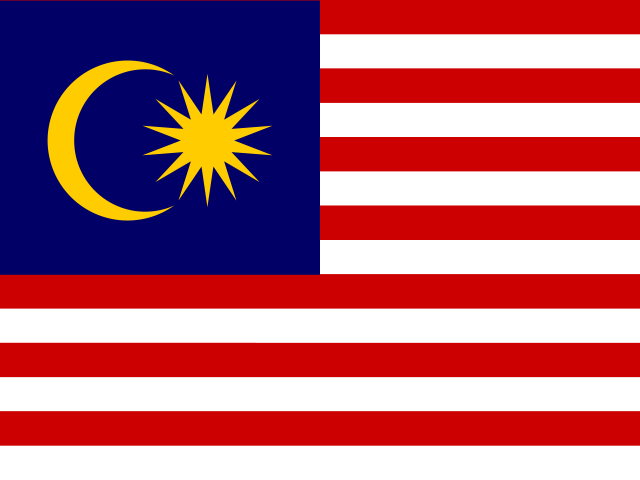
Malaysia
Capital: Kuala Lumpur
Fourteen alternating red and white horizontal stripes with a blue canton bearing a yellow crescent and fourteen-point star.
Adopted: 1963
Fun Facts
- Fourteen stripes represent Malaysia's states and federal territories as counted when the flag was adopted
- The crescent and fourteen-point star emphasize Islam and unity
- The federation spans Peninsular Malaysia and Borneo states
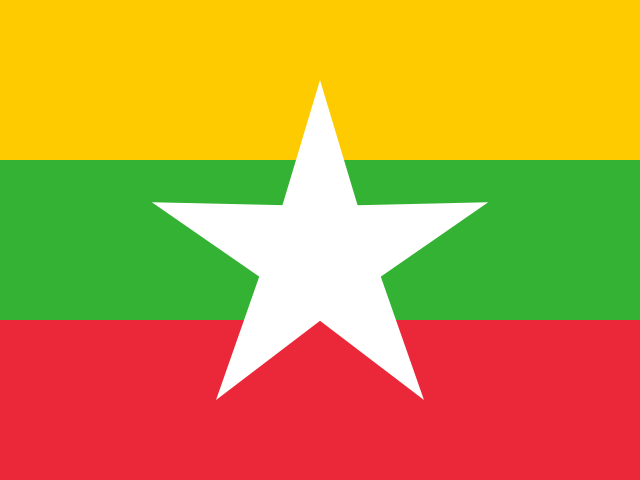
Myanmar
Capital: Naypyidaw
Three horizontal stripes: yellow, green, red, with a large white five-pointed star centered.
Adopted: 2010
Fun Facts
- Yellow stands for unity; green for peace and fertility; red for courage
- The large white star signals the union of the country's peoples
- Situated between South Asia and mainland Southeast Asia
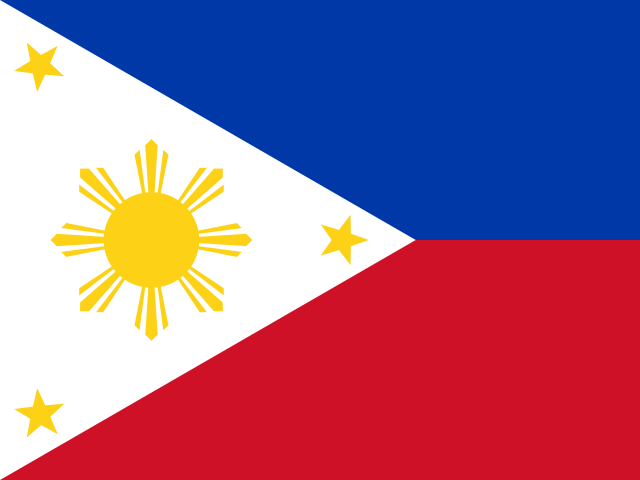
Philippines
Capital: Manila
Horizontal blue (top) and red bands with a white equilateral triangle at the hoist containing a golden sun and three stars.
Adopted: 1898
Fun Facts
- The Philippines is famous for war-time display rules-red field up signals a state of war
- Three stars mark the main island groups: Luzon, Visayas, and Mindanao
- The sun's eight rays recall provinces that rose against Spanish rule
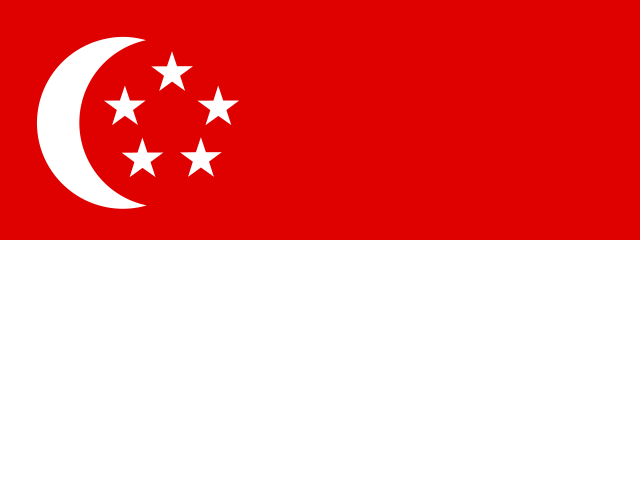
Singapore
Capital: Singapore
Two horizontal stripes: red (top), white (bottom). A white crescent and five stars arranged in a circle rest in the canton on the red stripe.
Adopted: 1959
Fun Facts
- Five stars represent democracy, peace, progress, justice, and equality
- The crescent suggests a young nation on the rise
- Red signals universal brotherhood; white purity and virtue
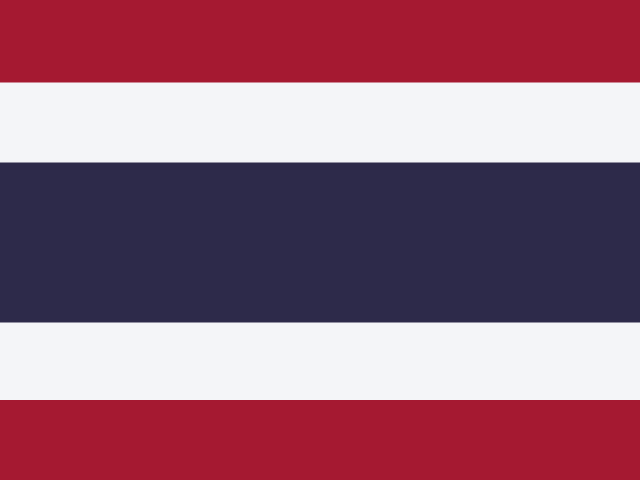
Thailand
Capital: Bangkok
Five horizontal stripes: red, white, blue (double width), white, red.
Adopted: 1917
Fun Facts
- Known as the Trirong-meaning tricolor
- The central blue stripe was added in 1917; red is nation, white religion, blue monarchy
- The only Southeast Asian nation never colonized by a European power
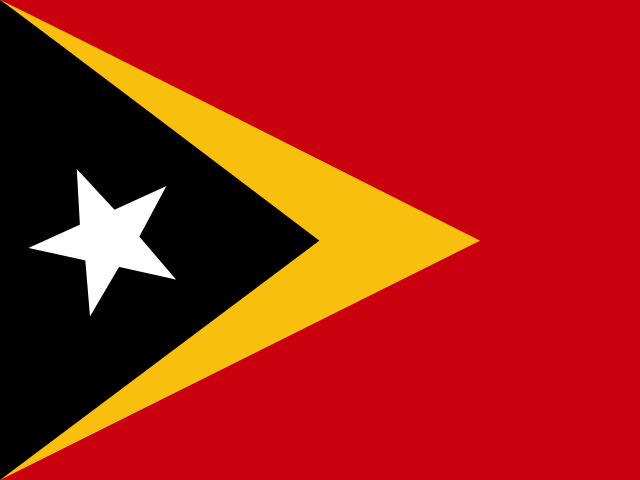
Timor-Leste
Capital: Dili
Red field with a black isosceles triangle based on the hoist, bordered yellow, bearing a white five-pointed star.
Adopted: 2002
Fun Facts
- Black recalls colonial struggles; yellow traces of colonial history; red independence
- The white star stands for peace and light as the nation rebuilt
- Sits on the eastern edge of the Indonesian archipelago north of Australia
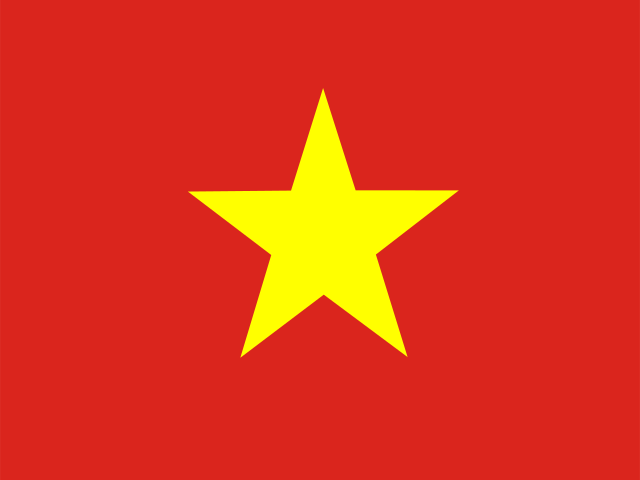
Vietnam
Capital: Hanoi
Red field with a large yellow five-pointed star centered.
Adopted: 1955
Fun Facts
- The gold star's five points honor workers, peasants, soldiers, intellectuals, and youth
- Red evokes revolution and sacrifice for independence
- Rooted in banners used during uprisings against French colonial rule
Quick Reference
Test Your Knowledge
From Indonesia's red-and-white to Timor-Leste's triangle-see how well you know Southeast Asian flags.
Practice with Games
Ready to test what you learned? Jump into a game and put it into practice.
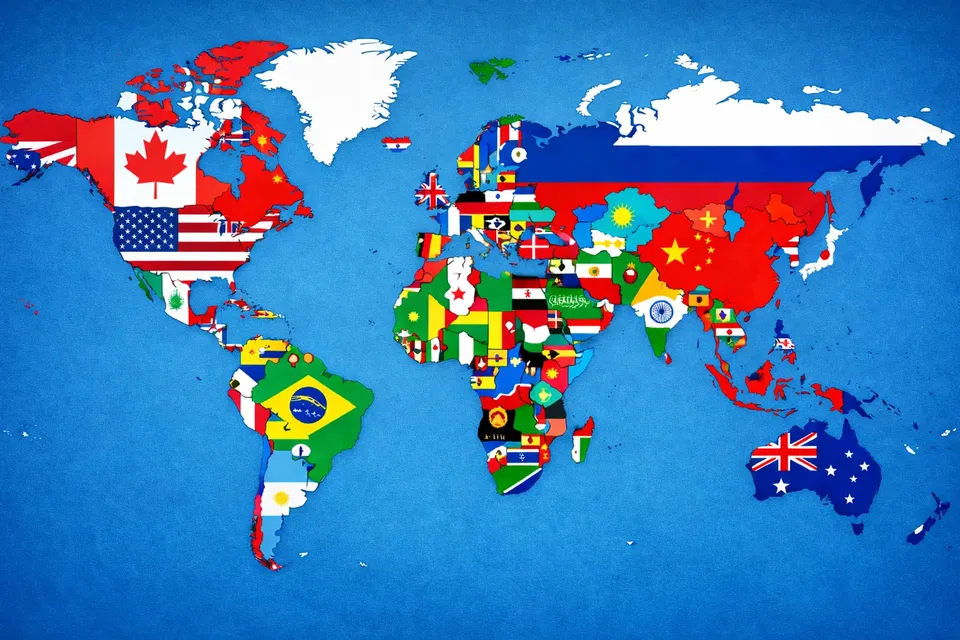

About Southeast Asian Flags
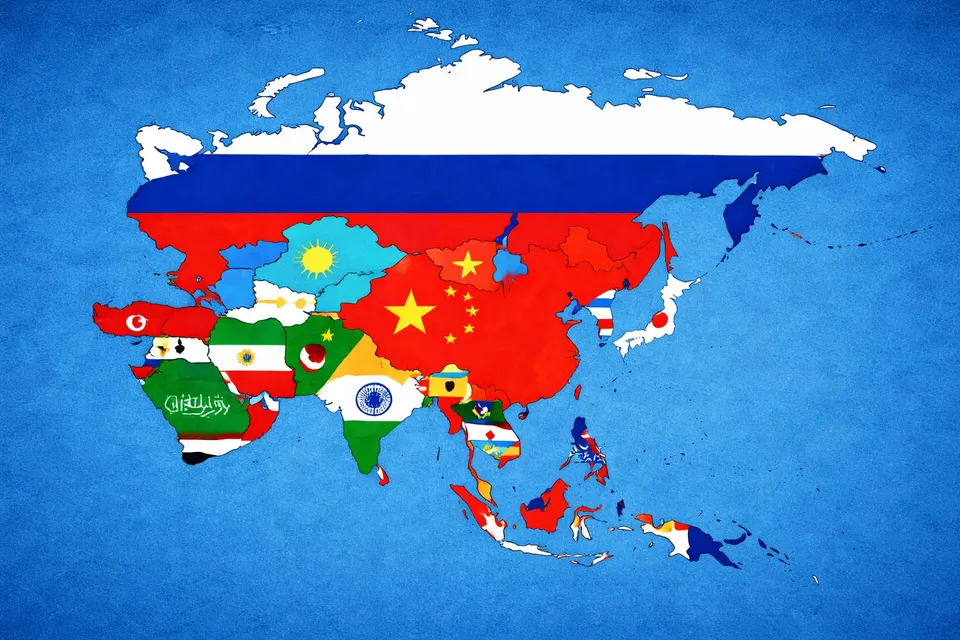
The Southeast Asia flags gathered here reflect layered histories: Buddhist kingdoms, Islamic sultanates, European colonial borders, and independence movements. Striped designs echo neighbors-Thailand's tricolor banding contrasts with Indonesia's stark Merah Putih. Maritime states like the Philippines and Timor-Leste foreground revolutionary symbolism. Malaysia's canton groups stripes with Islamic emblems, while tiny Brunei centers royal insignia on gold. Studying them together clarifies patterns students often confuse when jumping straight into the full Asia lesson.

Frequently Asked Questions
Which countries are included in this Southeast Asia lesson?
Brunei, Cambodia, Indonesia, Laos, Malaysia, Myanmar, the Philippines, Singapore, Thailand, Timor-Leste, and Vietnam-the eleven sovereign states widely mapped as Southeast Asia for geography learning.
How does this relate to ASEAN?
Ten Southeast Asian countries belong to ASEAN. Timor-Leste is included here as the independent state on Timor and nearby islands-often studied with maritime Southeast Asia regardless of formal bloc timelines.
Why do Indonesia and Monaco look related?
Both use a red-over-white horizontal bicolor. Indonesia's flag is wider proportionally; context (Asia lesson vs Europe) and pairing with neighbors usually resolves confusion.
How many flags are there in Southeast Asia?
There are eleven Southeast Asia flags covered in this lesson: Brunei, Cambodia, Indonesia, Laos, Malaysia, Myanmar, the Philippines, Singapore, Thailand, Timor-Leste, and Vietnam. Ten of these belong to ASEAN, with Timor-Leste added as the independent state on Timor and nearby islands.
What do the South East Asia flags look like?
Most South East Asia flags favor bold horizontal stripes in red, white, blue, and yellow, often paired with a national emblem. You will find stars on Vietnam, Myanmar, Timor-Leste, and Singapore; a crescent on Malaysia, Singapore, and Brunei; Angkor Wat on Cambodia; and a sun with three stars on the Philippines. Indonesia keeps it simplest with plain red over white.