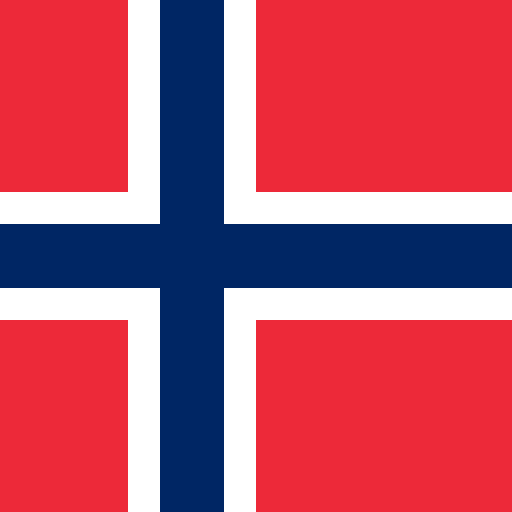
Flags of South America
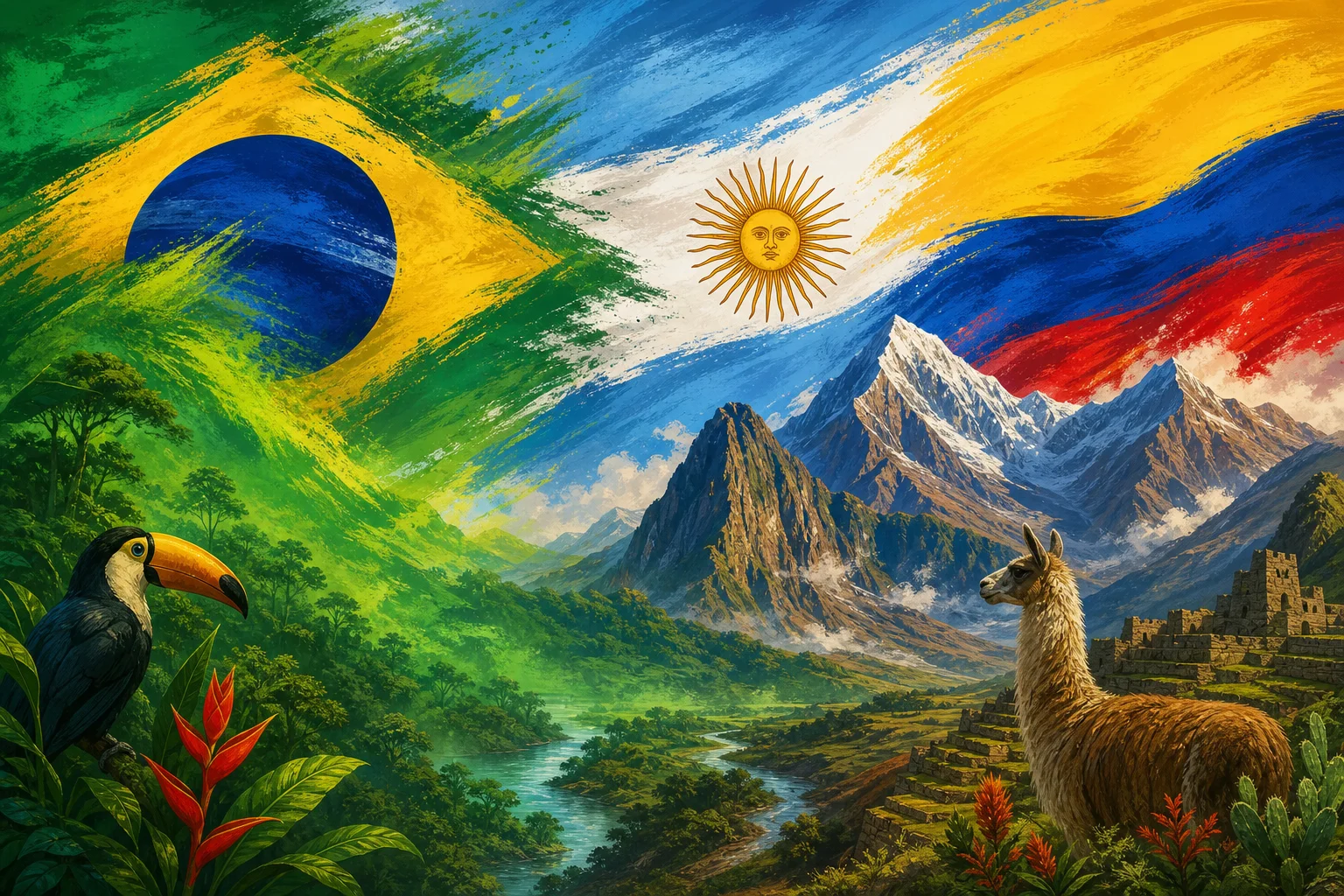
South America is home to 12 independent nations, each with a flag that tells a story of revolution, natural beauty, and cultural pride. From the green forests of Brazil to the Andes mountains of Chile, these flags capture the spirit of a diverse continent.
Study the Flags
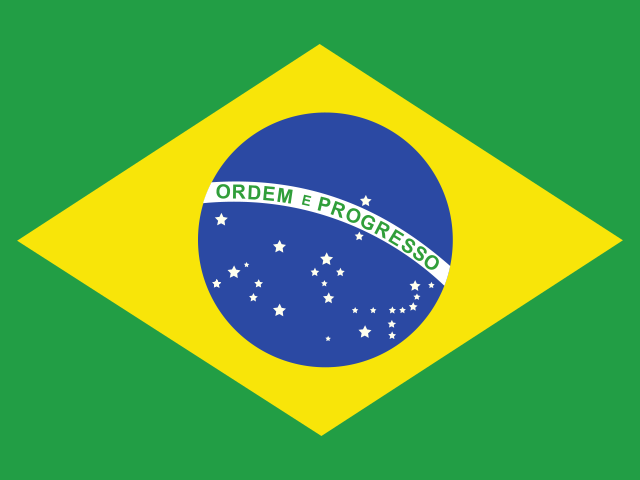
Brazil
Capital: Brasilia
Green field with a large yellow diamond, containing a dark blue globe with 27 white stars and a curved white band with the national motto.
Adopted: 1889
Fun Facts
- The green represents the forests, and the yellow diamond represents gold
- The 27 stars on the globe represent the 26 states and the Federal District
- The motto "Ordem e Progresso" means "Order and Progress"
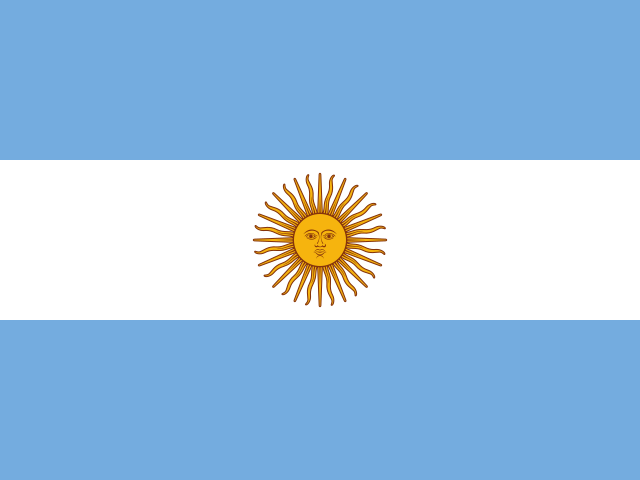
Argentina
Capital: Buenos Aires
Three horizontal stripes: light blue, white, light blue. The Sun of May centered on the white stripe.
Adopted: 1812
Fun Facts
- The Sun of May represents the Inca sun god Inti and the May Revolution of 1810
- The light blue stripes represent the sky and the Rio de la Plata
- Argentina's flag was designed by Manuel Belgrano during the independence war
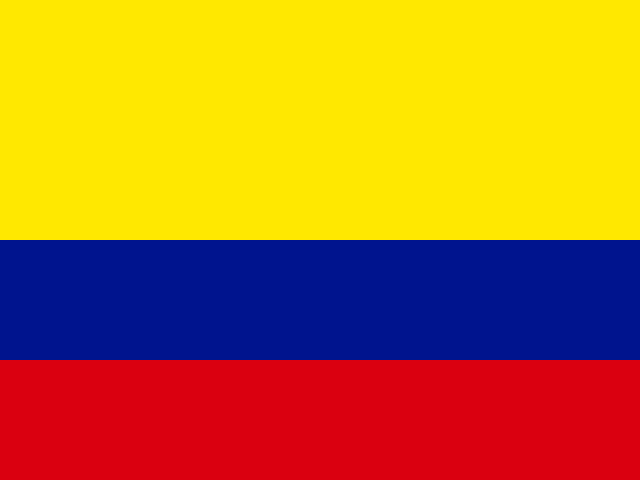
Colombia
Capital: Bogota
Three horizontal stripes: yellow (double width), blue, red.
Adopted: 1861
Fun Facts
- The yellow stripe is double the width of the blue and red stripes
- Yellow represents gold and natural resources, blue the seas, red the blood of patriots
- Colombia shares similar colors with Ecuador and Venezuela - all former Gran Colombia
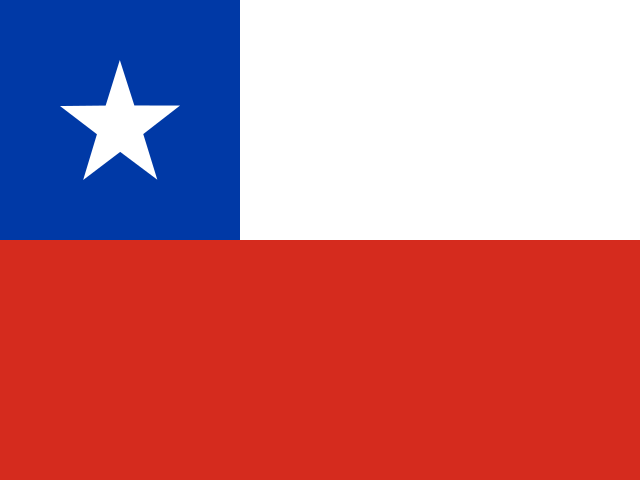
Chile
Capital: Santiago
Two horizontal bands: white (top) and red (bottom). A blue square in the upper-left corner with a white five-pointed star.
Adopted: 1817
Fun Facts
- The star is called the "lone star" and guides progress and honor
- White represents the snow of the Andes, blue the sky, red the blood of heroes
- Chile's flag is often confused with the US state of Texas flag
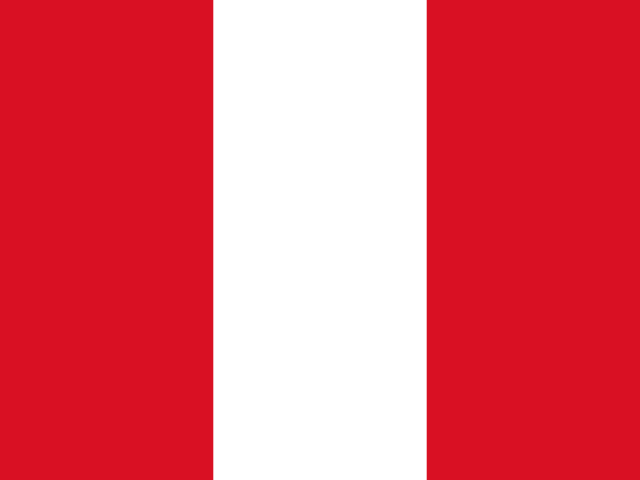
Peru
Capital: Lima
Three vertical stripes: red, white, red. The national coat of arms is centered on the white stripe.
Adopted: 1825
Fun Facts
- Legend says General San Martin saw flamingos and was inspired by their red and white colors
- The coat of arms features a vicuna, a cinchona tree, and a cornucopia
- Red symbolizes blood shed for independence, white represents peace
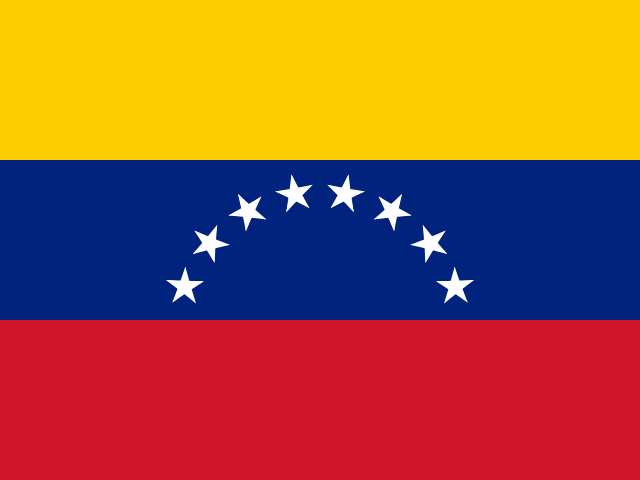
Venezuela
Capital: Caracas
Three horizontal stripes: yellow, blue, red. An arc of 8 white stars centered on the blue stripe.
Adopted: 2006
Fun Facts
- The 8 stars represent the 8 provinces that supported independence
- Venezuela's flag was designed by Francisco de Miranda, a revolutionary hero
- The colors are shared with Colombia and Ecuador from their Gran Colombia days
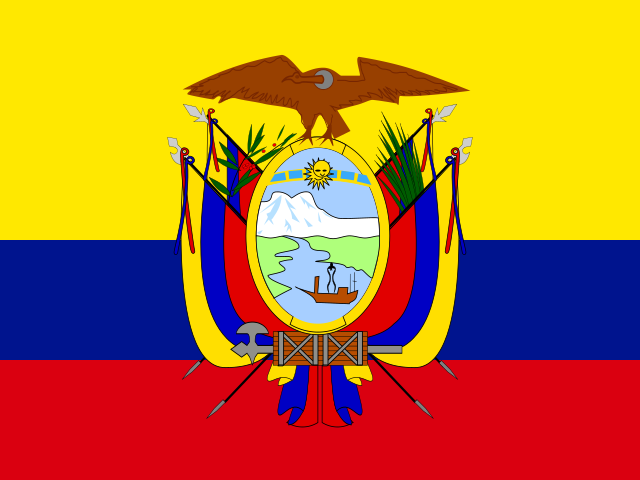
Ecuador
Capital: Quito
Three horizontal stripes: yellow (double width), blue, red. The national coat of arms centered on the flag.
Adopted: 1860
Fun Facts
- The condor on the coat of arms represents power, greatness, and valor
- Ecuador's flag is nearly identical to Colombia's but includes a coat of arms
- Mount Chimborazo on the coat of arms is the highest peak in Ecuador
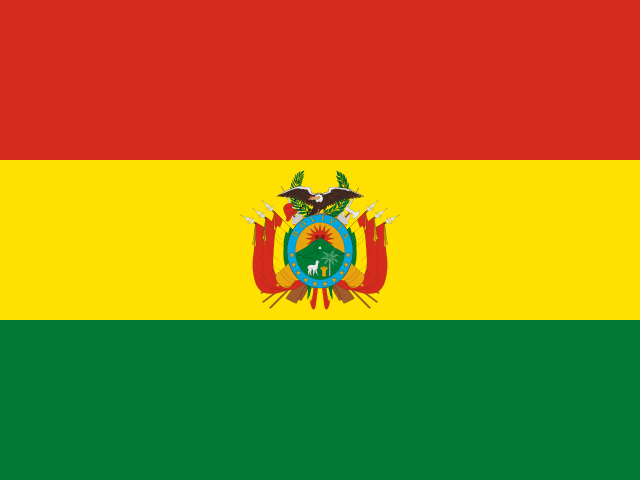
Bolivia
Capital: Sucre
Three horizontal stripes: red, yellow, green. The national coat of arms centered on the yellow stripe.
Adopted: 1851
Fun Facts
- Bolivia has two capitals: Sucre (constitutional) and La Paz (administrative)
- Red represents valor, yellow mineral resources, green fertility of the land
- The Wiphala, a rainbow-checkered flag, is Bolivia's second official flag
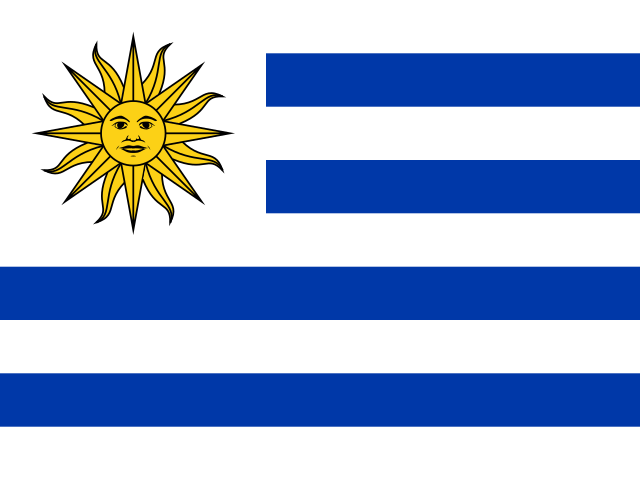
Uruguay
Capital: Montevideo
Nine alternating white and blue horizontal stripes. A white square in the upper-left with the Sun of May.
Adopted: 1830
Fun Facts
- The Sun of May on Uruguay's flag is the same symbol as Argentina's
- The 9 stripes represent the 9 original departments of Uruguay
- Uruguay's flag was inspired by the US flag's stripe pattern
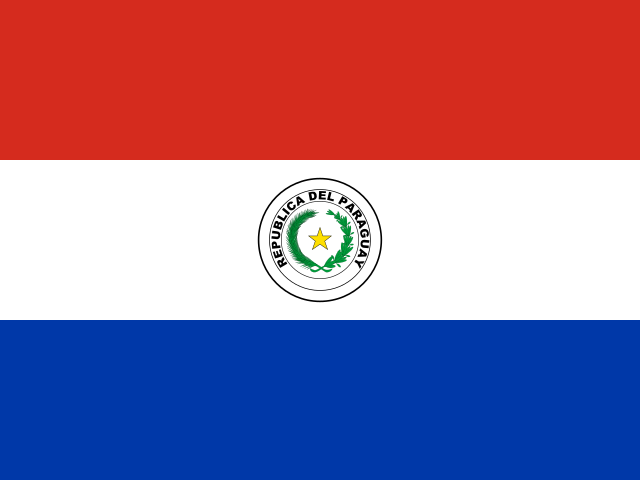
Paraguay
Capital: Asuncion
Three horizontal stripes: red, white, blue. Different emblems on front and back of the white stripe.
Adopted: 1842
Fun Facts
- Paraguay is the only country with a flag that has different emblems on each side
- The front shows the national coat of arms, the back shows the treasury seal
- The colors represent patriotism (red), peace (white), and liberty (blue)
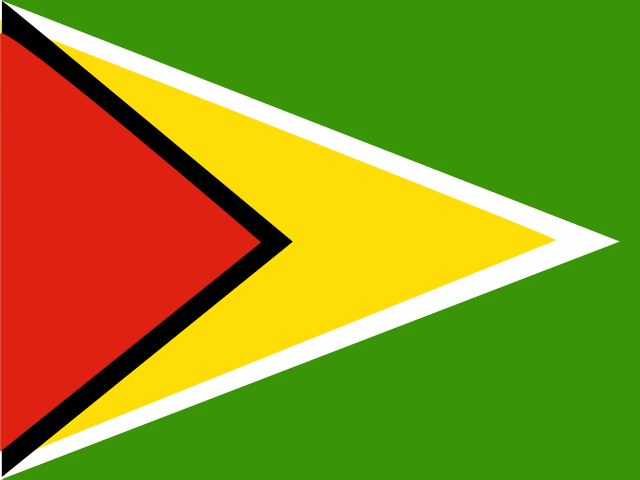
Guyana
Capital: Georgetown
Green field with a golden triangle pointing right, bordered by a white edge, and a red triangle within bordered by black.
Adopted: 1966
Fun Facts
- Known as "The Golden Arrowhead" for the yellow triangle shape
- Green represents agriculture, white water resources, gold mineral wealth
- The red triangle symbolizes zeal and dynamism of nation-building
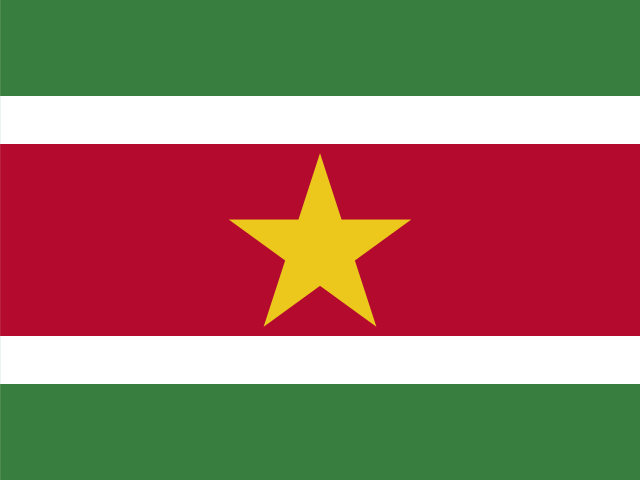
Suriname
Capital: Paramaribo
Five horizontal stripes: green, white, red (wider), white, green. A large yellow star centered on the red stripe.
Adopted: 1975
Fun Facts
- The star represents unity of all ethnic groups and a golden future
- Suriname is the smallest country in South America
- Green represents fertile land, white justice and freedom, red love and progress
Quick Reference
Test Your Knowledge
Think you can identify these South American flags? Take this quick quiz.
Practice with Games
Ready to test what you learned? Jump into a game and put it into practice.
About South American Flags
The flags of South America reflect the continent's turbulent history of colonial rule and independence movements. Many feature colors from the independence era - yellow, blue, and red were popularized by Francisco de Miranda, the Venezuelan revolutionary, and adopted by Gran Colombia (modern-day Colombia, Ecuador, and Venezuela). Other flags, like Argentina's and Uruguay's, share the Sun of May symbol representing the Inca sun god and the beginning of independence. Brazil's green and gold stand apart, reflecting its unique Portuguese colonial heritage rather than the Spanish influence seen elsewhere.
Frequently Asked Questions
Why do Colombia, Ecuador, and Venezuela have similar flags?
These three countries were once united as Gran Colombia (1819-1831). Their shared yellow-blue-red color scheme was designed by Francisco de Miranda and adopted by Simon Bolivar's republic. After Gran Colombia dissolved, each country kept variations of the original flag.
How many countries are in South America?
There are 12 independent countries in South America: Argentina, Bolivia, Brazil, Chile, Colombia, Ecuador, Guyana, Paraguay, Peru, Suriname, Uruguay, and Venezuela.
Which South American flag is the most unique?
Brazil's flag is the most distinctive with its green field, yellow diamond, and blue globe with stars. Paraguay's flag is also unique as it is the only national flag in the world with different designs on each side.