Map of Asia: All 35 Countries and Capitals
Asia is the largest and most populous continent, stretching from the Mediterranean Sea to the Pacific Ocean and from the Arctic to the Indian Ocean. It encompasses an extraordinary diversity of landscapes including the world's highest mountains, longest rivers, and largest deserts. This lesson covers 35 major Asian countries across all subregions of the continent. Below the interactive map you will find a complete list of all 35 countries with their capitals, plus study cards to help you learn each one.
Hover a country to see its name. Click to jump to its study card.
The 35 Countries of Asia and Their Capitals
Complete list of all countries in Asia with capital, population and area. Click a country to jump to its study card with map and facts.
| Country | Capital | Population | Area |
|---|---|---|---|
 China China | Beijing | 1,410M | 9,596,961 km² |
 India India | New Delhi | 1,417M | 3,287,263 km² |
 Japan Japan | Tokyo | 124M | 377,975 km² |
 South Korea South Korea | Seoul | 51.7M | 100,210 km² |
 North Korea North Korea | Pyongyang | 26.2M | 120,538 km² |
 Mongolia Mongolia | Ulaanbaatar | 3.5M | 1,564,116 km² |
 Indonesia Indonesia | Jakarta | 281M | 1,904,569 km² |
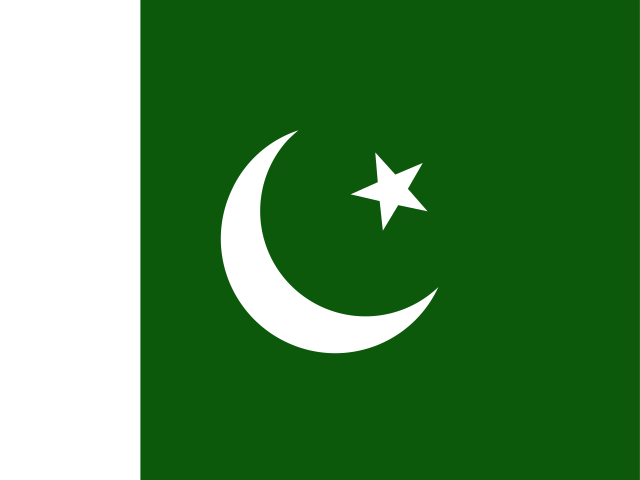 Pakistan Pakistan | Islamabad | 241M | 881,913 km² |
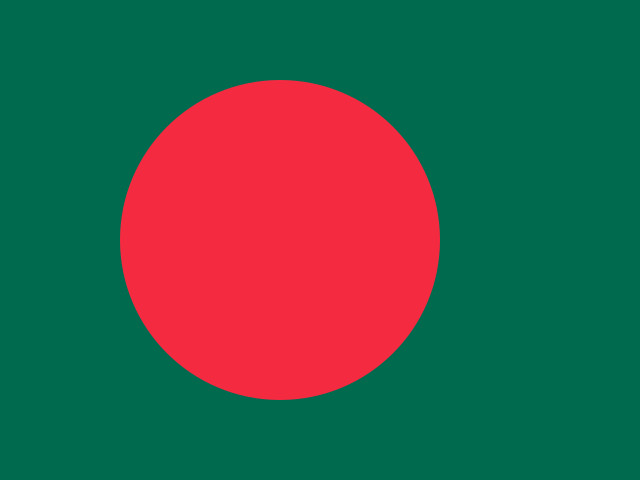 Bangladesh Bangladesh | Dhaka | 173M | 147,570 km² |
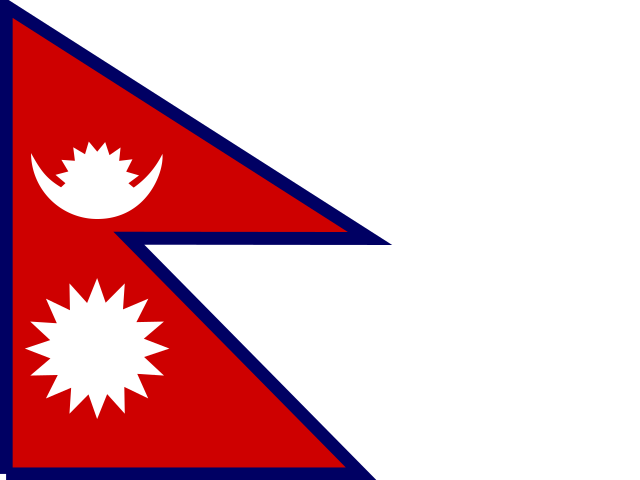 Nepal Nepal | Kathmandu | 29.7M | 147,516 km² |
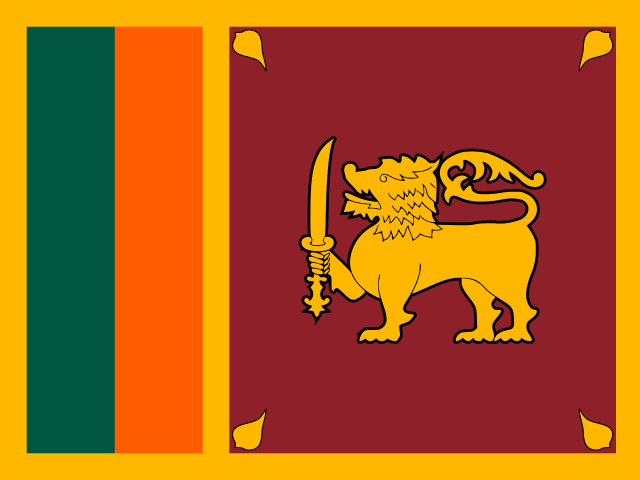 Sri Lanka Sri Lanka | Sri Jayawardenepura Kotte / Colombo | 22.0M | 65,610 km² |
 Afghanistan Afghanistan | Kabul | 42.6M | 652,230 km² |
 Kazakhstan Kazakhstan | Astana | 20.1M | 2,724,900 km² |
 Uzbekistan Uzbekistan | Tashkent | 36.4M | 448,978 km² |
 Saudi Arabia Saudi Arabia | Riyadh | 33.5M | 2,149,690 km² |
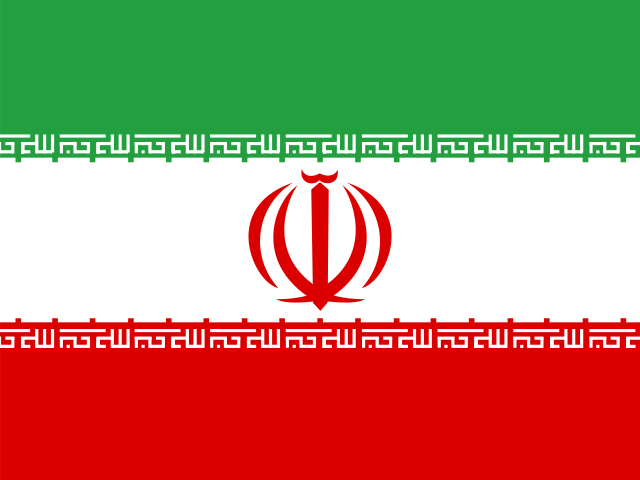 Iran Iran | Tehran | 89.8M | 1,648,195 km² |
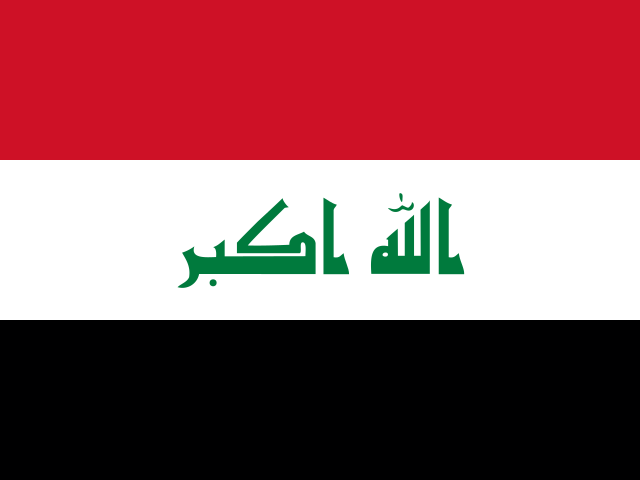 Iraq Iraq | Baghdad | 45.5M | 438,317 km² |
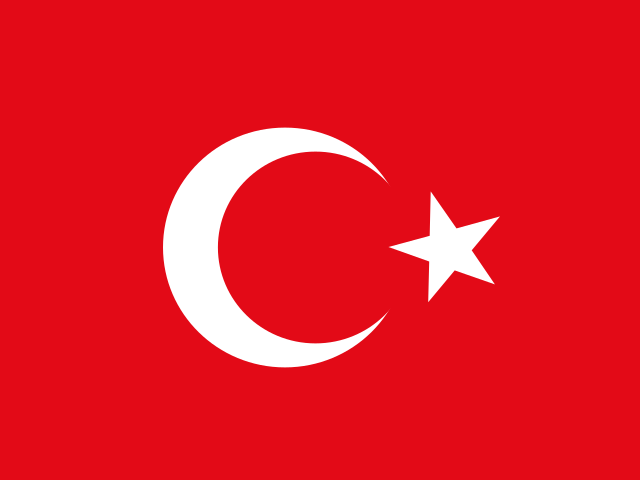 Turkey Turkey | Ankara | 85.3M | 783,562 km² |
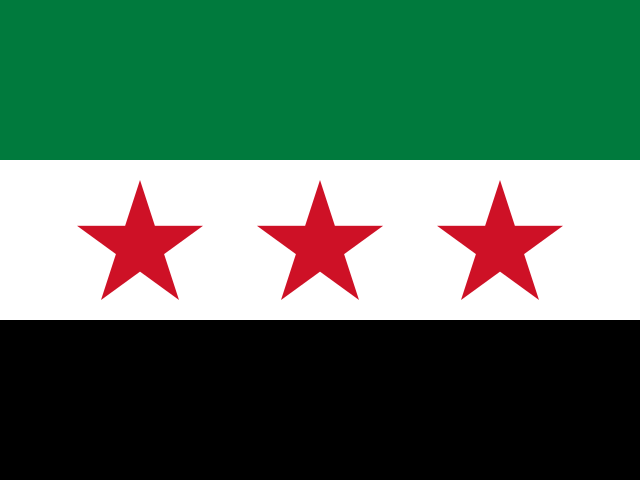 Syria Syria | Damascus | 23.2M | 185,180 km² |
 Jordan Jordan | Amman | 11.5M | 89,342 km² |
 Israel Israel | Jerusalem | 9.8M | 22,145 km² |
 Lebanon Lebanon | Beirut | 5.5M | 10,400 km² |
 Thailand Thailand | Bangkok | 71.9M | 513,120 km² |
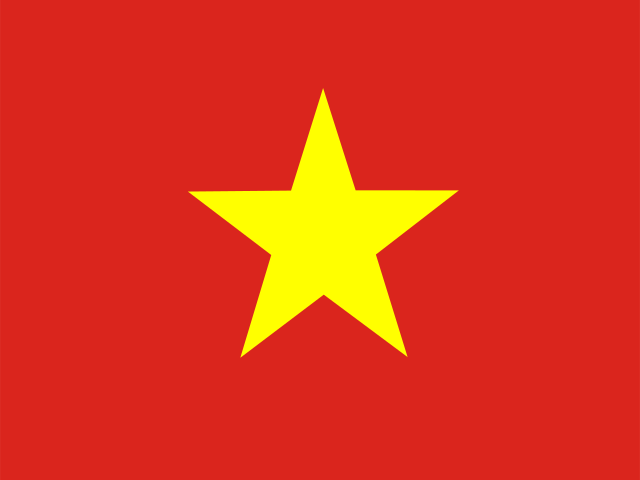 Vietnam Vietnam | Hanoi | 100M | 331,212 km² |
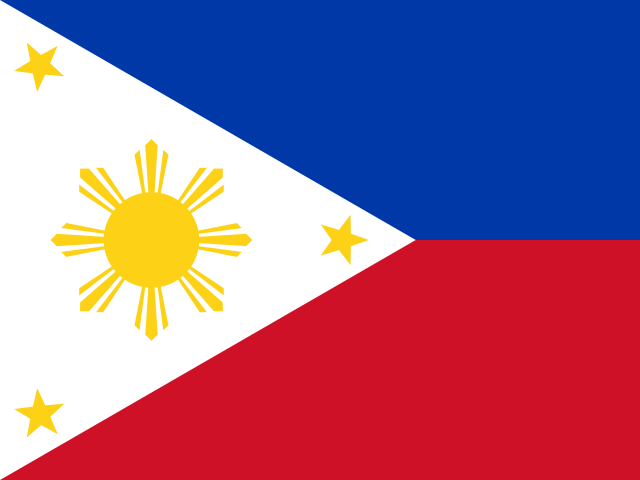 Philippines Philippines | Manila | 114M | 300,000 km² |
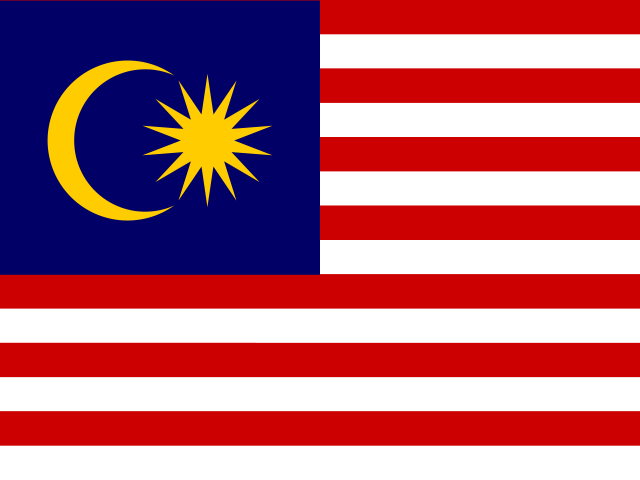 Malaysia Malaysia | Kuala Lumpur | 34.1M | 330,803 km² |
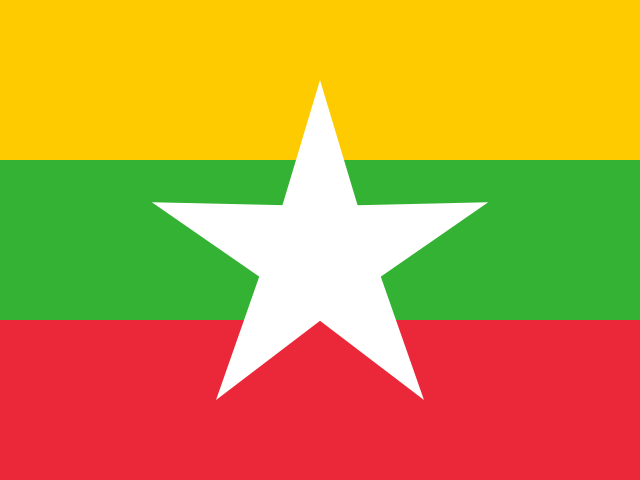 Myanmar Myanmar | Naypyidaw | 54.5M | 676,578 km² |
 Cambodia Cambodia | Phnom Penh | 17.2M | 181,035 km² |
 Laos Laos | Vientiane | 7.7M | 236,800 km² |
 Taiwan Taiwan | Taipei | 23.4M | 36,193 km² |
 Georgia Georgia | Tbilisi | 3.7M | 69,700 km² |
 Armenia Armenia | Yerevan | 3.0M | 29,743 km² |
 Azerbaijan Azerbaijan | Baku | 10.2M | 86,600 km² |
 United Arab Emirates United Arab Emirates | Abu Dhabi | 10.7M | 83,600 km² |
 Kyrgyzstan Kyrgyzstan | Bishkek | 7.1M | 199,951 km² |
Indonesia: Nusantara is planned as the future capital; Sri Lanka: Sri Jayawardenepura Kotte is the legislative capital; Colombo is the commercial capital; Israel: Jerusalem is the declared capital; most foreign embassies are in Tel Aviv; Malaysia: Putrajaya is the administrative capital; Myanmar: Yangon is the largest city and former capital.
Study the Countries
China
Borders: Mongolia, Russia, North Korea, Vietnam, Laos, Myanmar, India, Bhutan, Nepal, Pakistan, Afghanistan, Tajikistan, Kyrgyzstan, Kazakhstan
Area: 9,596,961 km² · Coastline: 14,500 km
China is the third-largest country in the world by area, occupying much of East Asia. It borders 14 countries, more than any other nation except Russia. The terrain ranges from the Tibetan Plateau in the west to the Pacific coast in the east, with deserts in the north and tropical forests in the south.
Shape: A massive country in eastern Asia shaped somewhat like a rooster, with its head facing east toward the Pacific Ocean.
Fun Facts
- China borders 14 countries, tied with Russia for the most land borders in the world.
- China has the third-largest land area of any country after Russia and Canada.
- The Yangtze River in China is the longest river in Asia at 6,300 km.
India
Borders: Pakistan, China, Nepal, Bhutan, Bangladesh, Myanmar
Area: 3,287,263 km² · Coastline: 7,516 km
India is a large triangular peninsula in South Asia, bordered by Pakistan to the west, China, Nepal, and Bhutan to the north, and Bangladesh and Myanmar to the east. The Indian Ocean lies to the south, with the Arabian Sea to the west and the Bay of Bengal to the east. The Himalayas form a natural northern boundary.
Shape: A large inverted triangle pointing south into the Indian Ocean, with the Himalayas forming a curved northern wall.
Fun Facts
- India is the seventh-largest country in the world by area.
- The Himalayan mountain range forms India's entire northern border.
- India has coastlines on three bodies of water: the Arabian Sea, the Indian Ocean, and the Bay of Bengal.
Japan
Area: 377,975 km² · Coastline: 29,751 km
Japan is an island nation in East Asia, consisting of four main islands (Honshu, Hokkaido, Kyushu, and Shikoku) and thousands of smaller islands. It lies east of the Korean Peninsula across the Sea of Japan. The terrain is predominantly mountainous and volcanic, with coastal plains where most of the population lives.
Shape: An arc of islands off the east coast of mainland Asia, stretching from northeast to southwest like a curved sword.
Fun Facts
- Japan consists of 6,852 islands stretching over 3,000 km.
- About 73% of Japan is mountainous, making it one of the most mountainous countries in the world.
- Japan sits on the Pacific Ring of Fire and has over 100 active volcanoes.
South Korea
Borders: North Korea
Area: 100,210 km² · Coastline: 2,413 km
South Korea occupies the southern half of the Korean Peninsula in East Asia, bordered by North Korea to the north along the Demilitarized Zone (DMZ). It is surrounded by water on three sides: the Yellow Sea to the west, the East Sea (Sea of Japan) to the east, and the Korea Strait to the south. The terrain is mostly mountainous in the east with plains in the west.
Shape: The southern portion of a peninsula hanging down from northeastern China, roughly oval-shaped.
Fun Facts
- South Korea shares only one land border, with North Korea, along the 250 km DMZ.
- About 70% of South Korea is mountainous.
- South Korea is separated from Japan by only 200 km across the Korea Strait.
North Korea
Borders: South Korea, China, Russia
Area: 120,538 km² · Coastline: 2,495 km
North Korea occupies the northern half of the Korean Peninsula, bordered by China and a small stretch of Russia to the north, and South Korea to the south. The terrain is mostly mountainous with deep, narrow valleys. The highest peak, Paektu Mountain, sits on the border with China.
Shape: The northern portion of the Korean Peninsula, wider and more mountainous than the south, sharing a long border with China.
Fun Facts
- North Korea shares a tiny 17 km border with Russia in the northeast.
- Mount Paektu on the China-North Korea border is the highest peak on the Korean Peninsula at 2,744 m.
- The Demilitarized Zone (DMZ) separating North and South Korea is 4 km wide and 250 km long.
Mongolia
Borders: Russia, China
Area: 1,564,116 km² · Landlocked
Mongolia is a large landlocked country in East Asia, sandwiched between Russia to the north and China to the south. It is one of the most sparsely populated countries on Earth. The terrain includes vast semi-arid steppes, the Gobi Desert in the south, and mountain ranges in the west and north.
Shape: A large, roughly oval country wedged between Russia to the north and China to the south, wider east to west.
Fun Facts
- Mongolia is the most sparsely populated sovereign country in the world.
- The Gobi Desert spans southern Mongolia and northern China.
- Mongolia is the second-largest landlocked country in the world after Kazakhstan.
Indonesia
Borders: Malaysia, Timor-Leste, Papua New Guinea
Area: 1,904,569 km² · Coastline: 54,716 km
Indonesia is the world's largest archipelago, stretching over 5,000 km along the equator between the Indian and Pacific Oceans. It comprises over 17,000 islands including Sumatra, Java, Borneo, Sulawesi, and Papua. Located on the Ring of Fire, it has more active volcanoes than any other country.
Shape: A vast chain of islands stretching east-west along the equator south of mainland Southeast Asia, like a string of beads between Asia and Australia.
Fun Facts
- Indonesia spans over 17,000 islands and three time zones.
- It has the second-longest coastline in the world after Canada.
- Indonesia is the fourth-most populous country in the world.
Pakistan
Borders: Iran, Afghanistan, China, India
Area: 881,913 km² · Coastline: 1,046 km
Pakistan is located in South Asia, bordered by Iran to the west, Afghanistan to the northwest, China to the northeast, and India to the east. It has a coastline on the Arabian Sea to the south. The terrain includes the Karakoram and Hindu Kush mountains in the north, the Indus River plain in the center, and the Balochistan Plateau in the west.
Shape: A roughly rectangular country west of India, with the Indus River running through its center from north to south.
Fun Facts
- Pakistan has five of the world's 14 peaks over 8,000 meters, including K2, the second-highest.
- The Indus River runs nearly the entire length of Pakistan.
- Pakistan shares its longest border with India at over 3,300 km.
Bangladesh
Borders: India, Myanmar
Area: 147,570 km² · Coastline: 580 km
Bangladesh is a small, densely populated country in South Asia, almost entirely surrounded by India with Myanmar to the southeast and the Bay of Bengal to the south. The country is dominated by the Ganges-Brahmaputra Delta, the world's largest river delta, making it extremely flat and flood-prone.
Shape: A small, roughly triangular country almost entirely enclosed by India, with its base along the Bay of Bengal.
Fun Facts
- Bangladesh is one of the most densely populated countries in the world.
- The Ganges-Brahmaputra Delta is the largest river delta on Earth.
- About one-third of Bangladesh floods annually during the monsoon season.
Nepal
Borders: China, India
Area: 147,516 km² · Landlocked
Nepal is a landlocked country in South Asia, nestled in the Himalayas between China (Tibet) to the north and India to the south, east, and west. The terrain rises dramatically from subtropical plains in the south to the world's highest peaks in the north, including Mount Everest at 8,849 meters.
Shape: A narrow, rectangular country running east-west along the southern face of the Himalayas, between China and India.
Fun Facts
- Nepal is home to Mount Everest, the world's highest peak at 8,849 meters.
- Eight of the world's 14 peaks over 8,000 meters are in Nepal.
- Nepal is the only country in the world with a non-rectangular flag.
Sri Lanka
Area: 65,610 km² · Coastline: 1,340 km
Sri Lanka is an island nation in the Indian Ocean, located southeast of India and separated from it by the Palk Strait, only 35 km wide at its narrowest. The terrain features a central mountainous region surrounded by coastal plains. The island has a teardrop shape and sits at the crossroads of major shipping lanes.
Shape: A teardrop-shaped island hanging off the southeastern tip of India.
Fun Facts
- Sri Lanka is separated from India by only 35 km across the Palk Strait.
- The island was historically known as Ceylon.
- Sri Lanka is the largest island in the Indian Ocean south of the Indian subcontinent.
Afghanistan
Borders: Iran, Turkmenistan, Uzbekistan, Tajikistan, China, Pakistan
Area: 652,230 km² · Landlocked
Afghanistan is a landlocked country in Central-South Asia, bordered by Pakistan to the east and south, Iran to the west, Turkmenistan, Uzbekistan, and Tajikistan to the north, and China via a narrow corridor (Wakhan Corridor) to the northeast. The Hindu Kush mountain range dominates the central and northeastern landscape.
Shape: A roughly leaf-shaped country with an elongated panhandle (Wakhan Corridor) extending northeast to touch China.
Fun Facts
- Afghanistan's Wakhan Corridor is a narrow strip of land extending to China, only 13 km wide at its narrowest.
- The Hindu Kush mountains bisect the country from northeast to southwest.
- Afghanistan borders six countries, sitting at the crossroads of Central and South Asia.
Kazakhstan
Borders: Russia, China, Kyrgyzstan, Uzbekistan, Turkmenistan
Area: 2,724,900 km² · Landlocked
Kazakhstan is the largest landlocked country in the world, stretching from the Caspian Sea to China. It borders Russia to the north, China to the east, and Kyrgyzstan, Uzbekistan, and Turkmenistan to the south. The terrain includes vast steppes, deserts, and mountain ranges along its southern and eastern edges.
Shape: A massive country in northern Central Asia, roughly rectangular with an irregular Caspian Sea coastline to the west.
Fun Facts
- Kazakhstan is the ninth-largest country in the world and the largest landlocked one.
- The Baikonur Cosmodrome, the world's first and largest space launch facility, is in Kazakhstan.
- Kazakhstan borders the Caspian Sea, the world's largest inland body of water.
Uzbekistan
Borders: Kazakhstan, Kyrgyzstan, Tajikistan, Afghanistan, Turkmenistan
Area: 448,978 km² · Landlocked
Uzbekistan is centrally located in Central Asia, bordered by all four other Central Asian countries and Afghanistan. It is one of only two doubly landlocked countries in the world. The landscape includes desert in the west, the fertile Fergana Valley in the east, and the dried remnants of the Aral Sea in the north.
Shape: A centrally located country in the heart of Central Asia, with a long eastern arm reaching into the Fergana Valley.
Fun Facts
- Uzbekistan is one of only two doubly landlocked countries in the world.
- The ancient Silk Road cities of Samarkand and Bukhara are in Uzbekistan.
- Uzbekistan borders all four other Central Asian countries.
Saudi Arabia
Borders: Jordan, Iraq, Kuwait, Qatar, United Arab Emirates, Oman, Yemen
Area: 2,149,690 km² · Coastline: 2,640 km
Saudi Arabia occupies most of the Arabian Peninsula, the largest peninsula in the world. It is bordered by seven countries and has coastlines on both the Red Sea to the west and the Persian Gulf to the east. The interior is dominated by the Rub' al Khali, the largest contiguous sand desert in the world.
Shape: A massive country dominating the Arabian Peninsula, roughly rectangular with coastlines on two sides.
Fun Facts
- Saudi Arabia is the largest country without a permanent river.
- The Rub' al Khali (Empty Quarter) covers about 650,000 km² of southern Saudi Arabia.
- Saudi Arabia has coastlines on both the Red Sea and the Persian Gulf.
Iran
Borders: Turkey, Iraq, Turkmenistan, Afghanistan, Pakistan, Armenia, Azerbaijan
Area: 1,648,195 km² · Coastline: 2,440 km
Iran occupies the eastern portion of the Middle East, with coastlines on both the Persian Gulf to the south and the Caspian Sea to the north. The country is bordered by seven nations and features a rugged interior plateau surrounded by the Zagros and Alborz mountain ranges.
Shape: A large, roughly diamond-shaped country between Iraq and Afghanistan, with coasts on both the Persian Gulf and the Caspian Sea.
Fun Facts
- Iran borders both the Persian Gulf and the Caspian Sea, making it one of few countries with both southern and northern coastlines.
- The Zagros Mountains run for over 1,500 km along Iran's western border.
- Iran is the 17th-largest country in the world by area.
Iraq
Borders: Turkey, Iran, Kuwait, Saudi Arabia, Jordan, Syria
Area: 438,317 km² · Coastline: 58 km
Iraq is situated in the northern Middle East, defined by the Tigris and Euphrates rivers which flow through its center. It borders six countries and has a tiny 58 km coastline on the Persian Gulf. Northern Iraq features the Kurdish mountains, while the south is flat alluvial plain.
Shape: A roughly rectangular country between Iran and Syria, tapering to a very narrow outlet at the Persian Gulf.
Fun Facts
- Iraq has only 58 km of coastline, one of the shortest in the region.
- Ancient Mesopotamia, between the Tigris and Euphrates, is considered the cradle of civilization.
- Iraq borders six countries: Turkey, Iran, Kuwait, Saudi Arabia, Jordan, and Syria.
Turkey
Borders: Georgia, Armenia, Azerbaijan, Iran, Iraq, Syria
Area: 783,562 km² · Coastline: 7,200 km
Turkey is a transcontinental country, with the majority (Anatolia) in Western Asia and a smaller portion (Thrace) in Southeastern Europe. It is bordered by eight countries and surrounded by seas on three sides: the Black Sea to the north, the Aegean Sea to the west, and the Mediterranean to the south. The terrain features a high central plateau rimmed by mountains.
Shape: A roughly rectangular peninsula between the Black Sea and the Mediterranean, bridging Europe and Asia.
Fun Facts
- Turkey straddles two continents, with about 3% of its area in Europe and 97% in Asia.
- The Bosphorus Strait divides Istanbul between Europe and Asia.
- Turkey is surrounded by sea on three sides: the Black Sea, Aegean Sea, and Mediterranean Sea.
Syria
Borders: Turkey, Iraq, Jordan, Israel, Lebanon
Area: 185,180 km² · Coastline: 193 km
Syria is located in the eastern Mediterranean region of the Middle East, bordered by Turkey to the north, Iraq to the east, Jordan to the south, and Israel and Lebanon to the southwest. It has a short Mediterranean coastline in the west. The terrain includes coastal mountains, a central plateau, and the Syrian Desert in the southeast.
Shape: A roughly square country in the northeastern Mediterranean region, between Turkey and Jordan.
Fun Facts
- Syria has a relatively short Mediterranean coastline of only 193 km.
- Damascus is one of the oldest continuously inhabited cities in the world.
- Syria borders five countries and sits at the crossroads of three continents.
Jordan
Borders: Syria, Iraq, Saudi Arabia, Israel
Area: 89,342 km² · Coastline: 26 km
Jordan is a small country in the northwestern Middle East, bordered by Syria, Iraq, Saudi Arabia, and Israel. The Jordan Rift Valley runs along its western border, containing the Dead Sea at 430 meters below sea level. The eastern portion is largely arid desert plateau.
Shape: A compact country east of Israel with a boot-like shape and a pointed southern tip reaching to the Gulf of Aqaba.
Fun Facts
- The Dead Sea on Jordan's border is the lowest point on Earth's surface.
- Jordan has only 26 km of coastline on the Gulf of Aqaba.
- About 80% of Jordan is covered by desert.
Israel
Borders: Lebanon, Syria, Jordan
Area: 22,145 km² · Coastline: 273 km
Israel is a narrow country on the eastern Mediterranean coast, bordered by Lebanon to the north, Syria to the northeast, and Jordan to the east. The landscape varies from Mediterranean coastline in the west to the Jordan Rift Valley in the east and the Negev Desert in the south.
Shape: A narrow, elongated country on the eastern Mediterranean, widening into a triangular desert region in the south.
Fun Facts
- Israel is only about 470 km long and 135 km at its widest.
- The Sea of Galilee is the lowest freshwater lake on Earth.
- Israel has two coastlines: the Mediterranean Sea and the Gulf of Aqaba (Red Sea).
Lebanon
Borders: Syria, Israel
Area: 10,400 km² · Coastline: 225 km
Lebanon is a small country on the eastern Mediterranean coast, bordered by Syria to the north and east and Israel to the south. Despite its tiny size, it has significant topographic variation with a coastal strip, the Lebanon Mountains, the Beqaa Valley, and the Anti-Lebanon Mountains.
Shape: A tiny, narrow rectangle on the Mediterranean coast north of Israel.
Fun Facts
- Lebanon is one of the smallest countries in Asia.
- The Lebanon Mountains receive enough snowfall for skiing despite the Mediterranean climate.
- Beirut, the capital, was rebuilt multiple times throughout history due to its strategic coastal location.
Thailand
Borders: Myanmar, Laos, Cambodia, Malaysia
Area: 513,120 km² · Coastline: 3,219 km
Thailand sits at the center of mainland Southeast Asia, with coastlines on both the Andaman Sea and the Gulf of Thailand. It is bordered by Myanmar, Laos, Cambodia, and Malaysia. The northern region is mountainous, the center is a fertile plain, and the south extends as a long peninsula.
Shape: Often compared to an elephant's head, with a long trunk-like southern peninsula extending toward Malaysia.
Fun Facts
- Thailand is the only Southeast Asian country never colonized by Europeans.
- The country has coastlines on both the Andaman Sea and the Gulf of Thailand.
- Thailand means "Land of the Free" in Thai.
Vietnam
Borders: China, Laos, Cambodia
Area: 331,212 km² · Coastline: 3,444 km
Vietnam is a long, narrow S-shaped country on the eastern edge of mainland Southeast Asia. It stretches over 1,600 km from China in the north to the Mekong Delta in the south, bordered by Laos and Cambodia to the west and the South China Sea to the east.
Shape: A very long, narrow S-shaped country along the eastern coast, wider at both ends (Red River Delta in the north and Mekong Delta in the south).
Fun Facts
- Vietnam is only 50 km wide at its narrowest point.
- The Mekong Delta produces over half of Vietnam's rice.
- Vietnam's coastline stretches over 3,400 km along the South China Sea.
Philippines
Area: 300,000 km² · Coastline: 36,289 km
The Philippines is an archipelago of over 7,600 islands in the western Pacific Ocean, east of Vietnam and north of Indonesia. The two largest islands are Luzon in the north and Mindanao in the south. The terrain is mostly mountainous with coastal lowlands and numerous volcanoes.
Shape: A scattered archipelago east of Vietnam, with two large islands (Luzon and Mindanao) and thousands of smaller ones between them.
Fun Facts
- The Philippines has over 7,600 islands but only about 2,000 are inhabited.
- It has the fifth-longest coastline in the world.
- The Philippines is named after King Philip II of Spain.
Malaysia
Borders: Thailand, Indonesia, Brunei
Area: 330,803 km² · Coastline: 4,675 km
Malaysia is split into two regions: Peninsular Malaysia south of Thailand, and East Malaysia on northern Borneo. The two parts are separated by about 640 km of the South China Sea. Both regions feature dense tropical rainforest and coastal plains.
Shape: Two separate parts: a peninsula south of Thailand and the northern coast of Borneo, separated by the South China Sea.
Fun Facts
- Malaysia is split into two non-contiguous parts separated by 640 km of sea.
- The country shares the island of Borneo with Indonesia and Brunei.
- Peninsular Malaysia is connected to mainland Asia via Thailand.
Myanmar
Borders: Bangladesh, India, China, Laos, Thailand
Area: 676,578 km² · Coastline: 1,930 km
Myanmar is the largest country in mainland Southeast Asia, located in the western part of the region. It borders five countries and has a long coastline along the Bay of Bengal and the Andaman Sea. The Irrawaddy River flows through the center of the country from north to south.
Shape: A large, kite-shaped country on the western edge of Southeast Asia with a long thin tail extending south.
Fun Facts
- Myanmar is the largest mainland Southeast Asian country by area.
- It borders five countries: Bangladesh, India, China, Laos, and Thailand.
- The Irrawaddy River is the country's lifeline, flowing nearly 2,200 km.
Cambodia
Borders: Thailand, Laos, Vietnam
Area: 181,035 km² · Coastline: 443 km
Cambodia occupies the southwestern portion of mainland Southeast Asia, bordered by Thailand, Laos, and Vietnam. The country is dominated by the central lowland plain around Tonle Sap lake, with mountains along the borders and a coastline on the Gulf of Thailand.
Shape: A roughly square country in southern mainland Southeast Asia, between Thailand and Vietnam.
Fun Facts
- Tonle Sap lake reverses its flow seasonally, expanding up to six times its dry-season size.
- Cambodia is home to Angkor Wat, the world's largest religious monument.
- The Mekong River flows through eastern Cambodia.
Laos
Borders: Myanmar, China, Vietnam, Cambodia, Thailand
Area: 236,800 km² · Landlocked
Laos is the only landlocked country in Southeast Asia, positioned in the heart of the mainland region. It is bordered by five countries with the Mekong River forming most of its western border with Thailand. The terrain is predominantly mountainous and heavily forested.
Shape: A long, narrow landlocked country between Thailand and Vietnam, wider in the south.
Fun Facts
- Laos is the only landlocked country in Southeast Asia.
- The Mekong River forms most of Laos's border with Thailand.
- Laos is one of the most heavily bombed countries in history per capita.
Taiwan
Area: 36,193 km² · Coastline: 1,566 km
Taiwan is an island in the western Pacific Ocean, about 180 km off the southeastern coast of China across the Taiwan Strait. The eastern two-thirds of the island is rugged mountains, while the western third is gently rolling plains where most of the population lives.
Shape: A leaf-shaped island off the southeastern coast of China, oriented north-south.
Fun Facts
- Taiwan is separated from mainland China by the 180 km wide Taiwan Strait.
- The island has over 200 peaks above 3,000 meters.
- Taiwan sits at the junction of the Eurasian and Philippine Sea tectonic plates.
Georgia
Borders: Russia, Turkey, Armenia, Azerbaijan
Area: 69,700 km² · Coastline: 310 km
Georgia is located in the South Caucasus region at the crossroads of Western Asia and Eastern Europe. It is bordered by Russia to the north, Turkey and Armenia to the south, Azerbaijan to the southeast, and the Black Sea to the west. The Greater Caucasus Mountains form its northern border.
Shape: A small country south of the Caucasus Mountains with a Black Sea coast to the west, positioned between Russia and Turkey.
Fun Facts
- Georgia sits at the crossroads of Europe and Asia in the Caucasus region.
- The Greater Caucasus Mountains along Georgia's northern border include peaks over 5,000 meters.
- Georgia's Black Sea coastline is about 310 km long.
Armenia
Borders: Georgia, Azerbaijan, Iran, Turkey
Area: 29,743 km² · Landlocked
Armenia is a small, landlocked country in the South Caucasus, bordered by Georgia to the north, Azerbaijan to the east, Iran to the south, and Turkey to the west. The terrain is dominated by the Armenian Highlands, a volcanic plateau with an average elevation of about 1,800 meters.
Shape: A small, compact landlocked country south of Georgia, positioned between Turkey and Azerbaijan.
Fun Facts
- Armenia is one of the most mountainous countries in the world with an average elevation of 1,800 meters.
- Mount Ararat, visible from Armenia's capital Yerevan, is actually located in Turkey.
- Armenia has no coastline and is completely surrounded by other countries.
Azerbaijan
Borders: Russia, Georgia, Armenia, Iran, Turkey
Area: 86,600 km² · Coastline: 713 km
Azerbaijan is located in the South Caucasus with a coastline on the Caspian Sea to the east. It borders Russia to the north, Georgia to the northwest, Armenia to the west, Iran to the south, and Turkey via the Nakhchivan exclave. The country includes the Nakhchivan Autonomous Republic, an exclave separated from the main territory.
Shape: An irregularly shaped country on the western Caspian Sea coast, with a detached exclave (Nakhchivan) to the southwest.
Fun Facts
- Azerbaijan has an exclave (Nakhchivan) separated from the main territory by Armenia.
- The country has a long Caspian Sea coastline of over 700 km.
- Azerbaijan is known as the "Land of Fire" due to natural gas vents that have burned for millennia.
United Arab Emirates
Borders: Saudi Arabia, Oman
Area: 83,600 km² · Coastline: 1,318 km
The United Arab Emirates is located on the eastern coast of the Arabian Peninsula, with coastlines on both the Persian Gulf and the Gulf of Oman. It is bordered by Saudi Arabia to the south and west, and Oman to the east. The terrain is predominantly flat desert with sand dunes and salt flats.
Shape: A relatively small country on the Persian Gulf coast, shaped like a rough triangle between Qatar and Oman.
Fun Facts
- The UAE is a federation of seven emirates, each with its own ruling family.
- It has coastlines on both the Persian Gulf and the Gulf of Oman.
- The UAE transformed from a desert territory to a global hub in just 50 years.
Kyrgyzstan
Borders: Kazakhstan, Uzbekistan, Tajikistan, China
Area: 199,951 km² · Landlocked
Kyrgyzstan is a mountainous landlocked country in eastern Central Asia, bordered by Kazakhstan to the north, Uzbekistan to the west, Tajikistan to the south, and China to the east. Over 80% of the country is covered by the Tian Shan mountain range, with peaks reaching over 7,000 meters.
Shape: A small, roughly oval country nestled in mountains between Kazakhstan and Tajikistan in eastern Central Asia.
Fun Facts
- Over 80% of Kyrgyzstan is covered by mountains.
- Lake Issyk-Kul is the second-largest alpine lake in the world and never freezes.
- Kyrgyzstan's terrain is so rugged that only about 7% of the land is arable.
Quick Reference
China India Japan South Korea North Korea Mongolia Indonesia Pakistan Bangladesh Nepal Sri Lanka Afghanistan Kazakhstan Uzbekistan Saudi Arabia Iran Iraq Turkey Syria Jordan Israel Lebanon Thailand Vietnam Philippines Malaysia Myanmar Cambodia Laos Taiwan Georgia Armenia Azerbaijan United Arab Emirates Kyrgyzstan Test Your Knowledge
Can you identify these countries on the map?
Practice with Games
Ready to test what you learned? Jump into a game and put it into practice.
About Asia Geography
Asia is the world's largest continent, covering about 44.6 million square kilometers and home to over 4.7 billion people. It stretches from the Ural Mountains in the west to the Pacific Ocean in the east, and from the Arctic Ocean in the north to the Indian Ocean in the south. The continent includes the world's highest point (Mount Everest), the lowest point (Dead Sea), and some of the longest rivers.
Frequently Asked Questions
How many countries are in Asia?
Asia has approximately 49 countries, making it the continent with the most nations. This lesson covers 35 of the most significant countries across all subregions.
Which is the largest country in Asia?
China is the largest country entirely within Asia, covering approximately 9.6 million km². Russia has more total area but spans both Europe and Asia.
What are the main regions of Asia?
Asia is typically divided into six subregions: East Asia, Southeast Asia, South Asia, Central Asia, Western Asia (Middle East), and North Asia (Siberia, part of Russia).
Which countries and capitals are in Asia?
The 35 countries of Asia and their capitals are: China (Beijing), India (New Delhi), Japan (Tokyo), South Korea (Seoul), North Korea (Pyongyang), Mongolia (Ulaanbaatar), Indonesia (Jakarta), Pakistan (Islamabad), Bangladesh (Dhaka), Nepal (Kathmandu), Sri Lanka (Sri Jayawardenepura Kotte / Colombo), Afghanistan (Kabul), Kazakhstan (Astana), Uzbekistan (Tashkent), Saudi Arabia (Riyadh), Iran (Tehran), Iraq (Baghdad), Turkey (Ankara), Syria (Damascus), Jordan (Amman), Israel (Jerusalem), Lebanon (Beirut), Thailand (Bangkok), Vietnam (Hanoi), Philippines (Manila), Malaysia (Kuala Lumpur), Myanmar (Naypyidaw), Cambodia (Phnom Penh), Laos (Vientiane), Taiwan (Taipei), Georgia (Tbilisi), Armenia (Yerevan), Azerbaijan (Baku), United Arab Emirates (Abu Dhabi), Kyrgyzstan (Bishkek).
Is Russia part of Asia?
Russia is transcontinental: most of its land lies in northern Asia, but the majority of its population lives in the European part, so it is usually studied as a European country. You will find it in our Europe map lesson.