Map of the Caribbean: All 13 Countries and Capitals
The Caribbean is a region of island nations scattered across the Caribbean Sea, stretching from the Bahamas near Florida to Trinidad and Tobago off the coast of Venezuela. These 13 sovereign island states range from large islands like Cuba to tiny nations like Saint Kitts and Nevis. Below the interactive map you will find a complete list of all 13 countries with their capitals, plus study cards to help you learn each one.
Hover a country to see its name. Click to jump to its study card.
The 13 Countries of the Caribbean and Their Capitals
Complete list of all countries in the Caribbean with capital, population and area. Click a country to jump to its study card with map and facts.
| Country | Capital | Population | Area |
|---|---|---|---|
 Cuba Cuba | Havana | 11.0M | 109,884 km² |
 Jamaica Jamaica | Kingston | 2.8M | 10,991 km² |
 Haiti Haiti | Port-au-Prince | 11.7M | 27,750 km² |
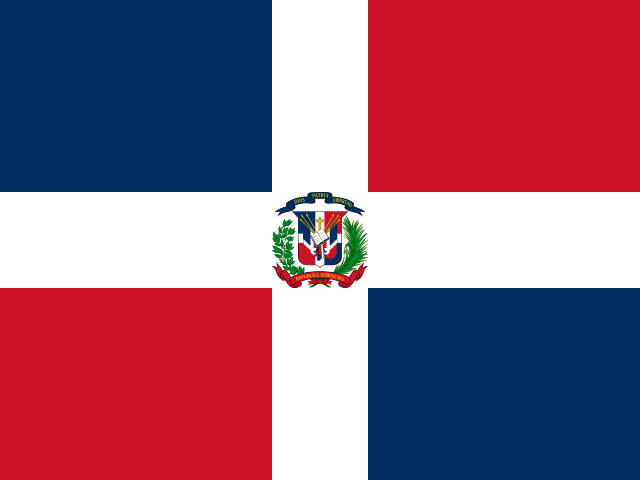 Dominican Republic Dominican Republic | Santo Domingo | 11.3M | 48,671 km² |
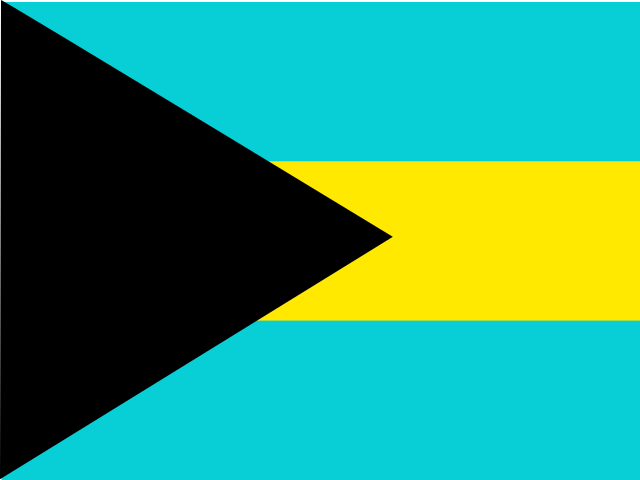 Bahamas Bahamas | Nassau | 0.41M | 13,943 km² |
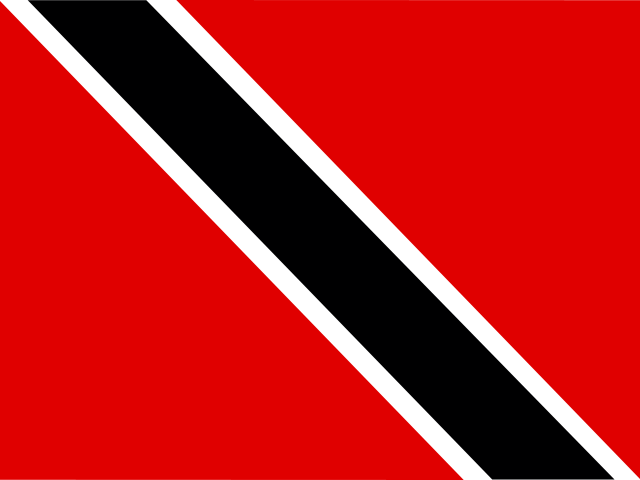 Trinidad and Tobago Trinidad and Tobago | Port of Spain | 1.5M | 5,131 km² |
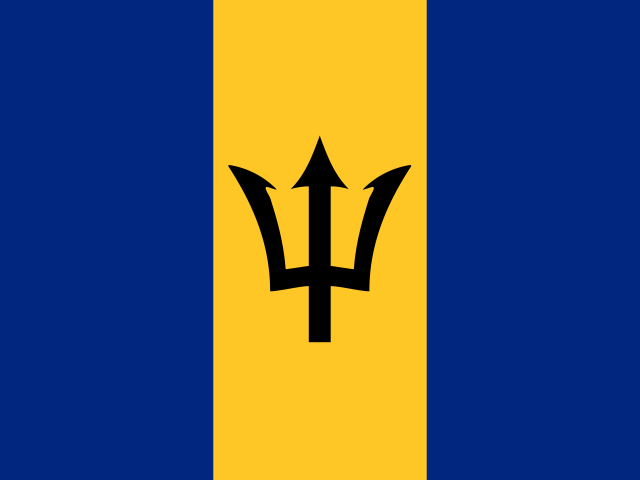 Barbados Barbados | Bridgetown | 0.28M | 430 km² |
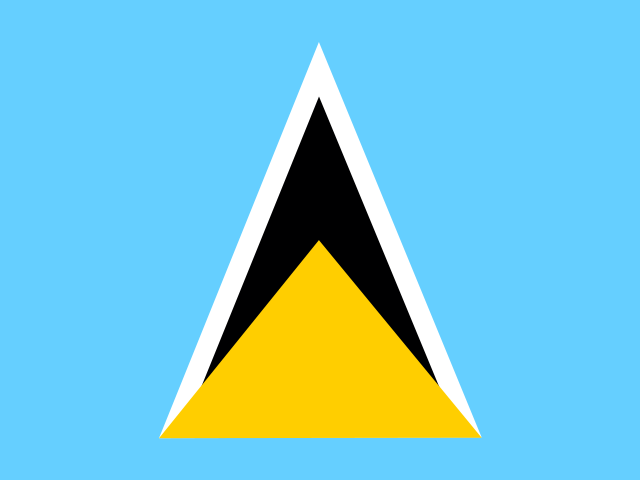 Saint Lucia Saint Lucia | Castries | 0.18M | 617 km² |
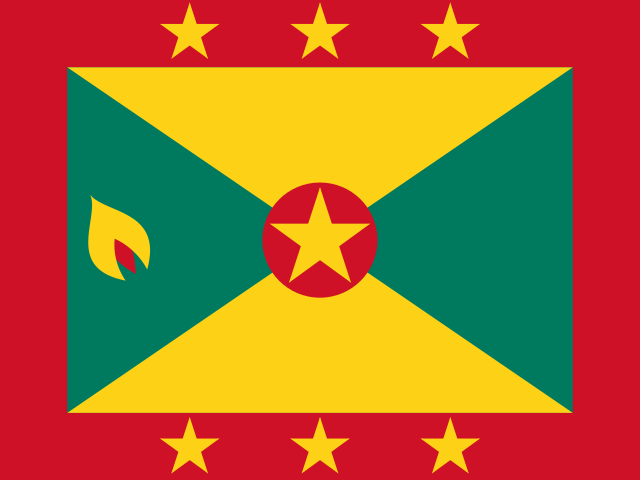 Grenada Grenada | St. George's | 0.11M | 344 km² |
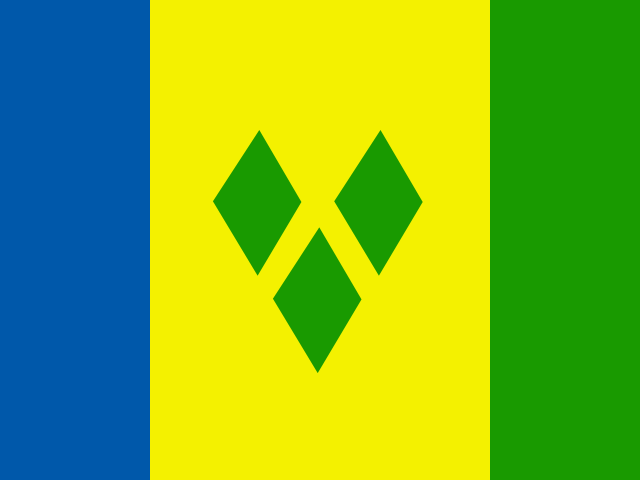 Saint Vincent and the Grenadines Saint Vincent and the Grenadines | Kingstown | 0.10M | 389 km² |
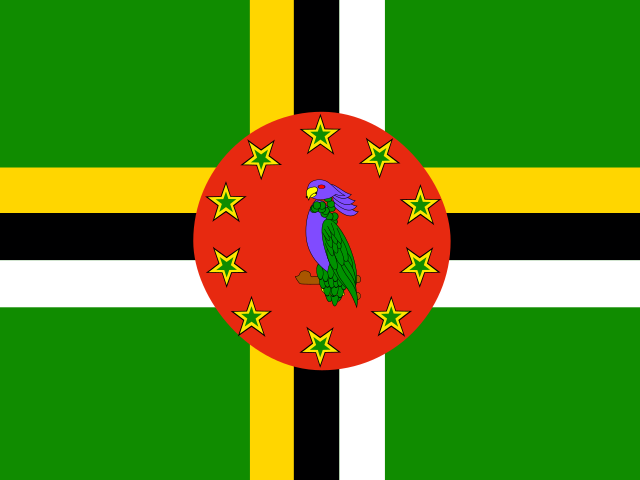 Dominica Dominica | Roseau | 0.07M | 751 km² |
 Antigua and Barbuda Antigua and Barbuda | St. John's | 0.10M | 442 km² |
 Saint Kitts and Nevis Saint Kitts and Nevis | Basseterre | 0.05M | 261 km² |
Study the Countries
Cuba
Borders: Jamaica, Haiti, Bahamas
Area: 109,884 km² · Coastline: 3,735 km
Cuba is the largest island in the Caribbean, located at the entrance to the Gulf of Mexico. It lies south of Florida (USA) and the Bahamas, west of Haiti, and north of Jamaica. The island is long and narrow, stretching about 1,250 km from east to west, with mostly flat terrain and some mountain ranges in the southeast.
Shape: The largest Caribbean island, long and narrow like a crocodile, stretching east to west at the top of the Caribbean Sea.
Fun Facts
- Cuba is the largest island in the Caribbean at nearly 110,000 km².
- Cuba is only 150 km south of Key West, Florida.
- The island stretches 1,250 km from east to west but is only 191 km at its widest point.
Jamaica
Borders: Cuba, Haiti
Area: 10,991 km² · Coastline: 1,022 km
Jamaica is the third-largest island in the Caribbean, located south of Cuba and west of Haiti. The island is mountainous, with the Blue Mountains in the east rising to 2,256 m. Coastal plains surround the central highlands, and the island is known for its lush tropical vegetation.
Shape: A medium-sized oval island south of Cuba, roughly resembling a turtle swimming westward.
Fun Facts
- Jamaica is the third-largest island in the Caribbean after Cuba and Hispaniola.
- Blue Mountain Peak at 2,256 m is the highest point in Jamaica.
- Jamaica is about 235 km long and 82 km wide at its widest point.
Haiti
Borders: Dominican Republic, Cuba, Jamaica
Area: 27,750 km² · Coastline: 1,771 km
Haiti occupies the western third of the island of Hispaniola, the second-largest island in the Caribbean. It shares the island with the Dominican Republic to the east. The terrain is mostly mountainous, with the name Haiti meaning "land of mountains" in the indigenous Taíno language. It lies southeast of Cuba and east of Jamaica.
Shape: Occupies the western third of Hispaniola, with two distinctive peninsulas extending westward like a crab's claw.
Fun Facts
- Haiti and the Dominican Republic share the island of Hispaniola, the only Caribbean island divided between two nations.
- Haiti was the first independent nation in the Caribbean and the first Black republic in the world (1804).
- The country's name means "land of mountains" in the Taíno language.
Dominican Republic
Borders: Haiti
Area: 48,671 km² · Coastline: 1,288 km
The Dominican Republic occupies the eastern two-thirds of Hispaniola, the second-largest Caribbean island. It shares the island with Haiti to the west. The country has diverse terrain including Pico Duarte (3,098 m), the highest peak in the Caribbean, as well as coastal plains, river valleys, and Lake Enriquillo, the lowest point in the Caribbean.
Shape: Occupies the eastern two-thirds of Hispaniola, larger than its neighbor Haiti to the west.
Fun Facts
- The Dominican Republic has the highest peak in the Caribbean, Pico Duarte at 3,098 m.
- Lake Enriquillo is the lowest point in the Caribbean at 46 m below sea level.
- The Dominican Republic is the second-largest Caribbean nation by area and population.
Bahamas
Borders: Cuba, United States
Area: 13,943 km² · Coastline: 3,542 km
The Bahamas is an archipelago of about 700 islands and cays stretching southeast from Florida toward Cuba and Hispaniola. The islands are low-lying coral formations, with the highest point reaching only 63 m. The Bahamas sit in the Atlantic Ocean rather than the Caribbean Sea, though they are culturally Caribbean.
Shape: A chain of low-lying islands stretching southeast from Florida, scattered across a large area of the Atlantic.
Fun Facts
- The Bahamas consists of about 700 islands but only around 30 are inhabited.
- The Bahamas are technically in the Atlantic Ocean, not the Caribbean Sea.
- The islands are very flat, with the highest point being only 63 m above sea level.
Trinidad and Tobago
Borders: Venezuela
Area: 5,131 km² · Coastline: 362 km
Trinidad and Tobago is a twin-island nation located at the southern end of the Caribbean island chain, just 11 km off the northeastern coast of Venezuela. Trinidad is the larger and more southerly island, while Tobago lies 30 km to the northeast. The islands were once part of the South American mainland.
Shape: Two islands at the very bottom of the Caribbean chain, very close to the Venezuelan coast.
Fun Facts
- Trinidad is only 11 km from the Venezuelan coast, the closest Caribbean island to South America.
- Trinidad and Tobago has the largest natural asphalt lake in the world, Pitch Lake.
- The islands were geologically part of South America and separated about 10,000 years ago.
Barbados
Borders: Saint Vincent and the Grenadines, Saint Lucia
Area: 430 km² · Coastline: 97 km
Barbados is a small coral island located in the eastern Caribbean, east of Saint Vincent and the Grenadines. Unlike most Caribbean islands, it is not volcanic but rather formed from coral limestone. It is the easternmost Caribbean island, sitting in the Atlantic Ocean about 160 km east of the main island arc.
Shape: A small, pear-shaped island isolated to the east of the main Caribbean island chain.
Fun Facts
- Barbados is the easternmost island in the Caribbean.
- Unlike most Caribbean islands, Barbados is made of coral limestone rather than volcanic rock.
- Barbados is one of the most densely populated countries in the world.
Saint Lucia
Borders: Martinique, Saint Vincent and the Grenadines
Area: 617 km² · Coastline: 158 km
Saint Lucia is a volcanic island in the eastern Caribbean, part of the Lesser Antilles chain. It lies between Martinique to the north and Saint Vincent to the south. The island is famous for the twin volcanic peaks known as the Pitons, which rise dramatically from the sea on the southwestern coast.
Shape: A small, mango-shaped volcanic island in the middle of the Windward Islands chain.
Fun Facts
- The Pitons, twin volcanic peaks on Saint Lucia, are a UNESCO World Heritage Site.
- Saint Lucia is the only country in the world named after a woman (Saint Lucy of Syracuse).
- The island has the world's only drive-in volcano, the Sulphur Springs.
Grenada
Borders: Saint Vincent and the Grenadines, Trinidad and Tobago
Area: 344 km² · Coastline: 121 km
Grenada is a volcanic island nation at the southern end of the Windward Islands in the eastern Caribbean. The country includes the main island of Grenada and several smaller islands of the southern Grenadines. It lies north of Trinidad and Tobago and south of Saint Vincent and the Grenadines.
Shape: A small, oval volcanic island at the southern end of the Windward Islands, just north of Trinidad.
Fun Facts
- Grenada is known as the "Spice Isle" as it is one of the world's largest producers of nutmeg.
- Grand Anse Beach in Grenada is frequently ranked among the best beaches in the world.
- Grenada has an underwater sculpture park, the first of its kind in the world.
Saint Vincent and the Grenadines
Borders: Saint Lucia, Grenada, Barbados
Area: 389 km² · Coastline: 84 km
Saint Vincent and the Grenadines is a multi-island nation in the eastern Caribbean, consisting of the main island of Saint Vincent and a chain of 32 smaller islands and cays (the Grenadines) stretching southward toward Grenada. Saint Vincent is volcanic, with the active La Soufrière volcano at its northern end.
Shape: A main volcanic island with a chain of small islands trailing southward like stepping stones toward Grenada.
Fun Facts
- La Soufrière volcano on Saint Vincent last erupted in 2021, forcing evacuations of the northern part of the island.
- The Grenadines chain includes 32 islands but only 9 are inhabited.
- Several Pirates of the Caribbean movies were filmed in the Grenadines.
Dominica
Borders: Guadeloupe, Martinique
Area: 751 km² · Coastline: 148 km
Dominica is a volcanic island in the eastern Caribbean, located between the French islands of Guadeloupe to the north and Martinique to the south. It is the most mountainous of the Lesser Antilles, with dense tropical rainforest covering much of its rugged terrain. The island has numerous rivers, waterfalls, and hot springs.
Shape: A small, oval volcanic island in the middle of the Lesser Antilles, between Guadeloupe and Martinique.
Fun Facts
- Dominica has 365 rivers, one for every day of the year according to local tradition.
- Dominica's Boiling Lake is the second-largest hot spring in the world.
- The island is called the "Nature Isle of the Caribbean" due to its unspoiled natural environment.
Antigua and Barbuda
Borders: Saint Kitts and Nevis, Guadeloupe
Area: 442 km² · Coastline: 153 km
Antigua and Barbuda is a twin-island nation in the eastern Caribbean, located in the Leeward Islands of the Lesser Antilles. Antigua is the larger and more populated island, while Barbuda lies 40 km to the north. Unlike most Eastern Caribbean islands, Antigua is mostly low-lying coral limestone rather than volcanic.
Shape: Two islands in the northern part of the Lesser Antilles, with the larger Antigua being irregular in shape with many harbors.
Fun Facts
- Antigua is said to have 365 beaches, one for every day of the year.
- Barbuda's Frigate Bird Sanctuary is one of the largest in the Western Hemisphere.
- English Harbour in Antigua was once the headquarters of the British Royal Navy in the Caribbean.
Saint Kitts and Nevis
Borders: Antigua and Barbuda, Sint Eustatius
Area: 261 km² · Coastline: 135 km
Saint Kitts and Nevis is a twin-island nation in the northern part of the Leeward Islands in the eastern Caribbean. It is the smallest sovereign state in the Western Hemisphere by both area and population. Saint Kitts is the larger island with the volcanic Mount Liamuiga, while Nevis is a nearly circular island dominated by Nevis Peak.
Shape: Two small volcanic islands close together in the northern Leeward Islands, with Saint Kitts resembling a cricket bat or oval.
Fun Facts
- Saint Kitts and Nevis is the smallest sovereign state in the Western Hemisphere.
- The islands were among the first in the Caribbean to be colonized by Europeans.
- Mount Liamuiga on Saint Kitts is a dormant volcano with a crater lake at 1,156 m elevation.
Quick Reference
Test Your Knowledge
Can you identify these countries on the map?
Practice with Games
Ready to test what you learned? Jump into a game and put it into practice.
About Caribbean Geography
The Caribbean region contains 13 sovereign island nations spread across the Caribbean Sea and western Atlantic Ocean. The islands form an arc from the Bahamas near Florida southward to Trinidad and Tobago off the coast of Venezuela. Most islands are volcanic in origin, though some like the Bahamas and Barbados are coral limestone formations.
Frequently Asked Questions
How many countries are in the Caribbean?
There are 13 sovereign island nations in the Caribbean: Cuba, Jamaica, Haiti, Dominican Republic, Bahamas, Trinidad and Tobago, Barbados, Saint Lucia, Grenada, Saint Vincent and the Grenadines, Dominica, Antigua and Barbuda, and Saint Kitts and Nevis.
Which is the largest Caribbean island?
Cuba is the largest Caribbean island at approximately 109,884 km². The second-largest is Hispaniola, which is shared between Haiti and the Dominican Republic.
Which Caribbean country is closest to South America?
Trinidad and Tobago is the closest Caribbean country to South America, lying just 11 km off the northeastern coast of Venezuela.
Which countries and capitals are in the Caribbean?
The 13 countries of the Caribbean and their capitals are: Cuba (Havana), Jamaica (Kingston), Haiti (Port-au-Prince), Dominican Republic (Santo Domingo), Bahamas (Nassau), Trinidad and Tobago (Port of Spain), Barbados (Bridgetown), Saint Lucia (Castries), Grenada (St. George's), Saint Vincent and the Grenadines (Kingstown), Dominica (Roseau), Antigua and Barbuda (St. John's), Saint Kitts and Nevis (Basseterre).
Are islands like Puerto Rico countries?
No. Puerto Rico is a territory of the United States, and many other Caribbean islands are overseas territories of the UK, France or the Netherlands. This lesson lists only the sovereign island nations of the Caribbean.