Map of South America: All 12 Countries and Capitals
South America is the fourth-largest continent, home to 12 sovereign nations spanning from the tropical Caribbean coast to the sub-Antarctic tip of Tierra del Fuego. The continent features the world's largest rainforest, longest mountain range, and highest waterfall. Below the interactive map you will find a complete list of all 12 countries with their capitals, plus study cards to help you learn each one.
Hover a country to see its name. Click to jump to its study card.
The 12 Countries of South America and Their Capitals
Complete list of all countries in South America with capital, population and area. Click a country to jump to its study card with map and facts.
| Country | Capital | Population | Area |
|---|---|---|---|
 Argentina Argentina | Buenos Aires | 46.6M | 2,780,400 km² |
 Bolivia Bolivia | Sucre / La Paz | 12.4M | 1,098,581 km² |
 Brazil Brazil | Brasília | 212M | 8,515,767 km² |
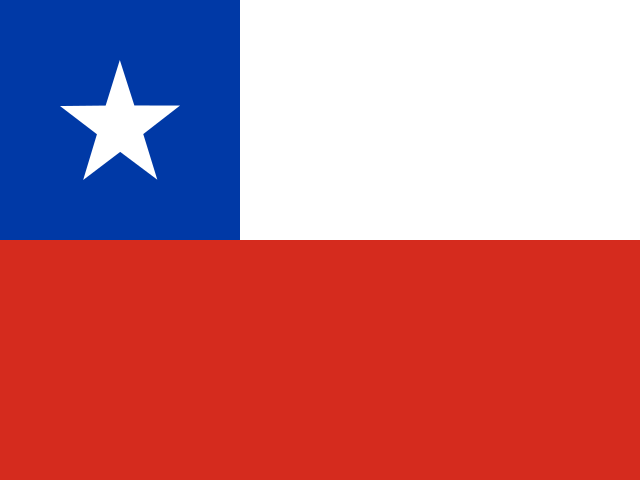 Chile Chile | Santiago | 19.7M | 756,102 km² |
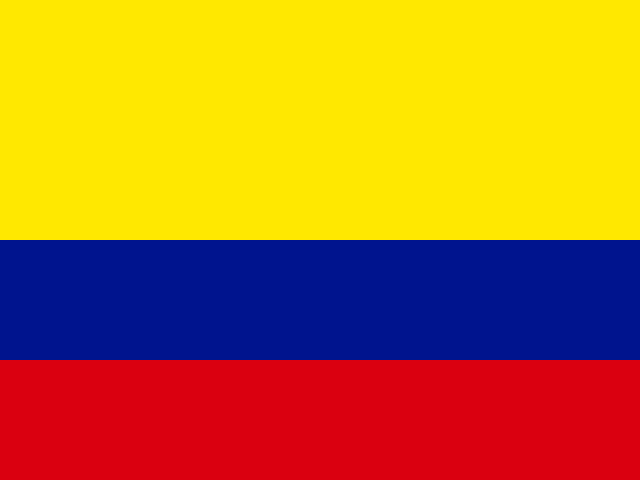 Colombia Colombia | Bogotá | 52.3M | 1,141,748 km² |
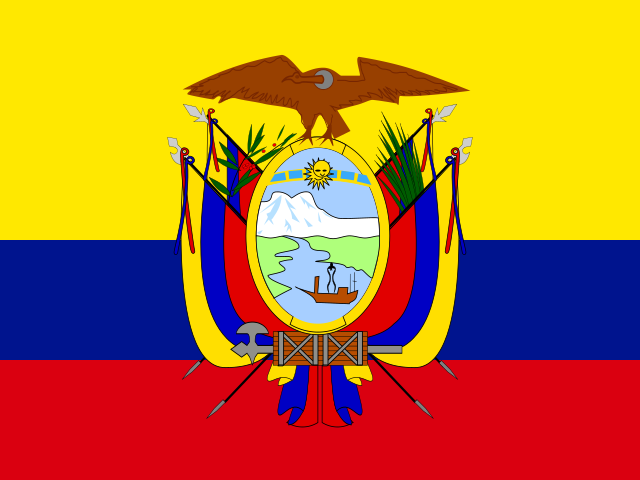 Ecuador Ecuador | Quito | 18.1M | 283,561 km² |
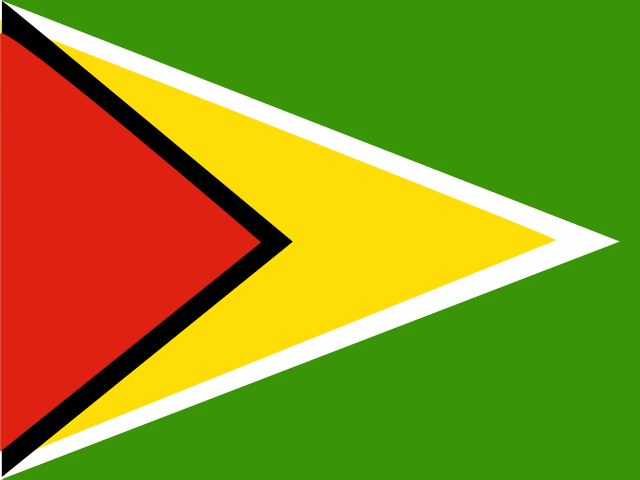 Guyana Guyana | Georgetown | 0.83M | 214,969 km² |
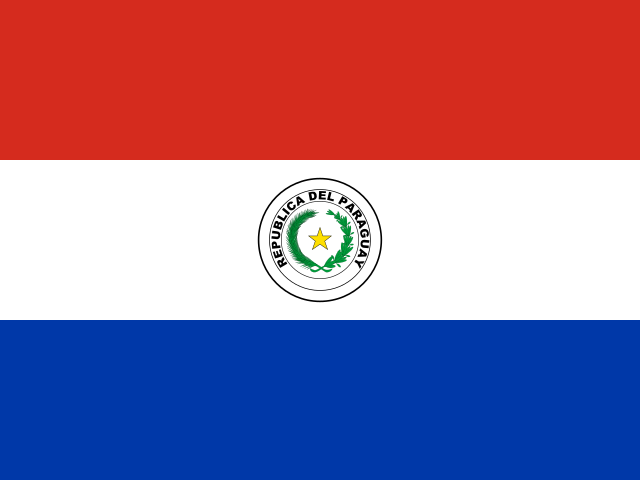 Paraguay Paraguay | Asunción | 6.2M | 406,752 km² |
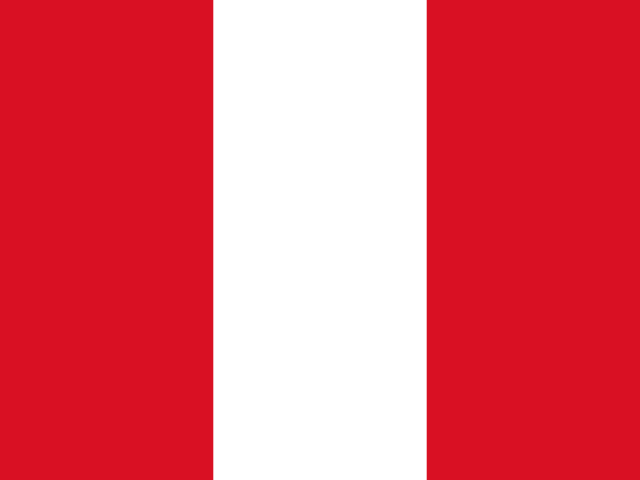 Peru Peru | Lima | 34.0M | 1,285,216 km² |
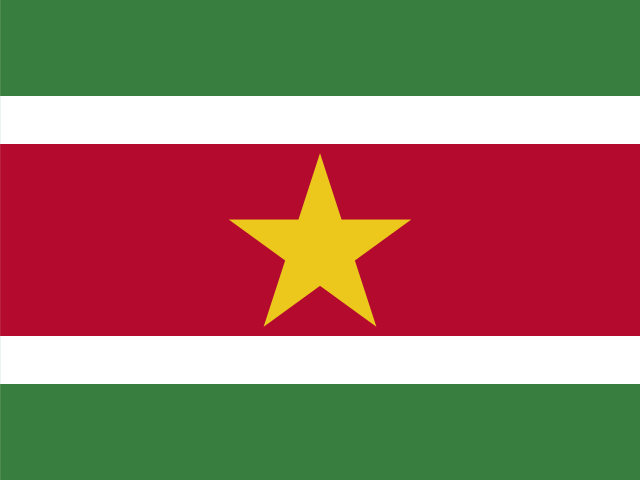 Suriname Suriname | Paramaribo | 0.62M | 163,820 km² |
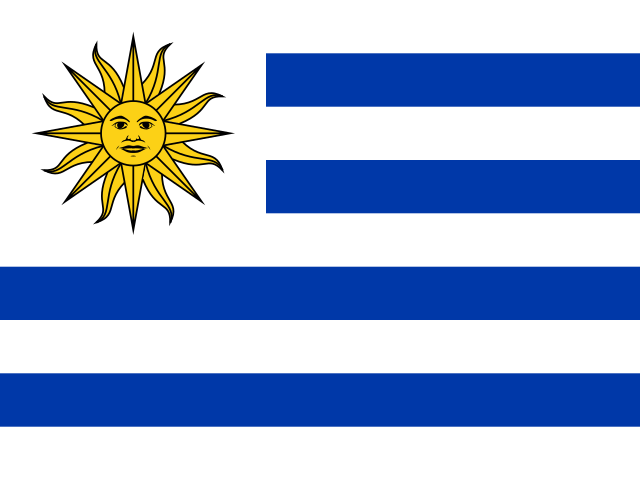 Uruguay Uruguay | Montevideo | 3.4M | 176,215 km² |
 Venezuela Venezuela | Caracas | 28.3M | 916,445 km² |
Bolivia: Sucre is the constitutional capital; La Paz is the seat of government. French Guiana is also on the continent but is a French overseas department, not an independent country.
Study the Countries
Argentina
Borders: Chile, Bolivia, Paraguay, Brazil, Uruguay
Area: 2,780,400 km² · Coastline: 4,989 km
Argentina is the second-largest country in South America, stretching from the subtropical north to the sub-Antarctic south. It is bordered by Chile along the entire western edge via the Andes Mountains, and by Bolivia, Paraguay, Brazil, and Uruguay to the north and east. The landscape includes the fertile Pampas grasslands, the Patagonian steppe, and the Andes peaks.
Shape: A long, narrow country stretching north to south along the southeastern portion of the continent, tapering to a point at its southern tip.
Fun Facts
- Argentina and Chile share one of the longest borders in the world at over 5,300 km.
- Aconcagua in Argentina is the highest peak in both the Western and Southern Hemispheres at 6,961 m.
- Argentina spans over 3,400 km from north to south, covering a wide range of climates.
Bolivia
Borders: Peru, Brazil, Paraguay, Argentina, Chile
Area: 1,098,581 km² · Landlocked
Bolivia is a landlocked country in central-western South America, bordered by five countries: Peru, Brazil, Paraguay, Argentina, and Chile. The western part of the country is dominated by the Andes and the Altiplano high plateau, while the eastern regions descend into tropical lowlands and the Amazon basin.
Shape: A compact, roughly hexagonal landlocked country in the center-west of the continent.
Fun Facts
- Bolivia is one of only two landlocked countries in South America, having lost its coastline to Chile in the War of the Pacific.
- The Salar de Uyuni in Bolivia is the world's largest salt flat at over 10,000 km².
- Bolivia has five neighboring countries, tying it with Brazil and Argentina for most borders in South America.
Brazil
Borders: Uruguay, Argentina, Paraguay, Bolivia, Peru, Colombia, Venezuela, Guyana, Suriname
Area: 8,515,767 km² · Coastline: 7,491 km
Brazil is the largest country in South America and the fifth-largest in the world, occupying nearly half of the continent. It borders every South American country except Chile and Ecuador. The Amazon River basin covers much of the northern region with the world's largest tropical rainforest, while the south features highlands, wetlands, and coastal plains.
Shape: A massive country dominating the eastern portion of the continent, with a distinctive bulge on the northeastern coast.
Fun Facts
- Brazil borders 9 other South American countries, more than any other country on the continent.
- The Amazon River in Brazil is the largest river by volume in the world.
- Brazil is the only Portuguese-speaking country in South America.
Chile
Borders: Peru, Bolivia, Argentina
Area: 756,102 km² · Coastline: 6,435 km
Chile is an extremely long and narrow country running along the western coast of South America, bordered by Peru to the north, Bolivia to the northeast, and Argentina to the east. The Andes Mountains form its eastern border. Chile stretches over 4,300 km from north to south but averages only 177 km wide.
Shape: An extremely long, thin ribbon of a country running along the entire western coast of South America.
Fun Facts
- Chile is over 4,300 km long but averages only 177 km wide, making it one of the world's most unusually shaped countries.
- The Atacama Desert in northern Chile is the driest non-polar desert on Earth.
- Chile's coastline of 6,435 km is one of the longest in South America.
Colombia
Borders: Venezuela, Brazil, Peru, Ecuador, Panama
Area: 1,141,748 km² · Coastline: 3,208 km
Colombia is located in the northwestern corner of South America, the only South American country with coastlines on both the Caribbean Sea and the Pacific Ocean. It is bordered by Venezuela, Brazil, Peru, Ecuador, and Panama. The Andes split into three ranges within Colombia, creating diverse landscapes from tropical coasts to high-altitude plateaus.
Shape: A large country in the northwest corner of the continent with a distinctive shape, wider in the west and narrowing where it meets Panama.
Fun Facts
- Colombia is the only South American country with coastlines on both the Pacific Ocean and the Caribbean Sea.
- Colombia borders Panama, making it the only South American country directly connected to Central America.
- The Andes Mountains split into three separate chains (cordilleras) within Colombia.
Ecuador
Borders: Colombia, Peru
Area: 283,561 km² · Coastline: 2,237 km
Ecuador is a small country on the equator in northwestern South America, bordered by Colombia to the north and Peru to the east and south. Despite its small size, it has extraordinary geographic diversity: Pacific coastal lowlands, Andean highlands with active volcanoes, and Amazon rainforest in the east.
Shape: A small, roughly square country on the Pacific coast, wedged between Colombia and Peru.
Fun Facts
- Ecuador is named after the equator, which runs through the country.
- Chimborazo in Ecuador is the point on Earth's surface farthest from the center due to the equatorial bulge.
- The Galápagos Islands, 1,000 km off the coast, belong to Ecuador.
Guyana
Borders: Venezuela, Brazil, Suriname
Area: 214,969 km² · Coastline: 459 km
Guyana is located on the northern coast of South America, bordered by Venezuela to the west, Brazil to the south, and Suriname to the east. The country is mostly covered by dense tropical rainforest, with a narrow coastal plain where most of the population lives. The interior features the Pakaraima Mountains and vast savannahs.
Shape: A medium-sized country on the northern coast of South America, roughly shield-shaped.
Fun Facts
- Guyana is the only English-speaking country in South America.
- Kaieteur Falls in Guyana is one of the most powerful waterfalls in the world.
- About 80% of Guyana is covered by tropical rainforest.
Paraguay
Borders: Bolivia, Brazil, Argentina
Area: 406,752 km² · Landlocked
Paraguay is a landlocked country in central South America, bordered by Bolivia to the north, Brazil to the east, and Argentina to the south and west. The Paraguay River divides the country into two distinct regions: the eastern region with subtropical forests and the western Chaco region of dry plains and scrubland.
Shape: A landlocked, roughly rectangular country in the center of the continent, between Argentina, Brazil, and Bolivia.
Fun Facts
- Paraguay is one of only two landlocked countries in South America, along with Bolivia.
- The Paraguay River divides the country into two very different geographic regions.
- The Itaipu Dam on the Paraguay-Brazil border was the world's largest hydroelectric dam until 2012.
Peru
Borders: Ecuador, Colombia, Brazil, Bolivia, Chile
Area: 1,285,216 km² · Coastline: 2,414 km
Peru is located on the western coast of South America, bordered by Ecuador and Colombia to the north, Brazil and Bolivia to the east, and Chile to the south. The country has three distinct geographic zones: the narrow coastal desert, the Andean highlands with peaks above 6,000 m, and the vast Amazon rainforest lowlands in the east.
Shape: A large country on the central-western coast, roughly trapezoidal with its wider edge facing east.
Fun Facts
- The Amazon River originates in Peru before flowing east through Brazil.
- Peru has 5 neighboring countries and a long Pacific coastline.
- Lake Titicaca, on the Peru-Bolivia border, is the highest navigable lake in the world at 3,812 m.
Suriname
Borders: Guyana, Brazil
Area: 163,820 km² · Coastline: 386 km
Suriname is the smallest country in South America, located on the northeastern coast between Guyana to the west and the French territory of French Guiana to the east, with Brazil to the south. Most of the country is covered by dense tropical rainforest, with the population concentrated along the narrow coastal plain.
Shape: The smallest country in South America, a small rectangle on the northeastern coast between Guyana and French Guiana.
Fun Facts
- Suriname is the smallest sovereign nation in South America.
- Over 90% of Suriname is covered by tropical rainforest.
- Dutch is the official language of Suriname, making it the only Dutch-speaking country in South America.
Uruguay
Borders: Argentina, Brazil
Area: 176,215 km² · Coastline: 660 km
Uruguay is a small country on the southeastern coast of South America, bordered by Argentina to the west and Brazil to the north. It has a coastline on the Atlantic Ocean to the southeast and the Río de la Plata estuary to the south. The terrain consists mostly of gently rolling plains and low hill ranges.
Shape: A small, roughly wedge-shaped country tucked between Argentina and Brazil on the southeastern coast.
Fun Facts
- Uruguay is the second-smallest country in South America by area.
- The Río de la Plata, between Uruguay and Argentina, is the widest river in the world.
- Uruguay is one of the few South American countries with no extreme terrain like high mountains or deserts.
Venezuela
Borders: Colombia, Brazil, Guyana
Area: 916,445 km² · Coastline: 2,800 km
Venezuela is located on the northern coast of South America, with an extensive Caribbean coastline. It is bordered by Colombia to the west, Brazil to the south, and Guyana to the east. The country features the Andes Mountains in the west, the Orinoco River plains (Llanos) in the center, and the ancient Guiana Highlands with table-top mountains (tepuis) in the southeast.
Shape: A large country on the northern coast of the continent, roughly resembling an inverted triangle with a long Caribbean coastline.
Fun Facts
- Angel Falls in Venezuela is the world's highest uninterrupted waterfall at 979 m.
- Lake Maracaibo in Venezuela is one of the oldest lakes in the world and South America's largest lake.
- Venezuela has the largest proven oil reserves of any country in the world.
Quick Reference
Test Your Knowledge
Can you identify these countries on the map?
Practice with Games
Ready to test what you learned? Jump into a game and put it into practice.
About South America Geography
South America is the fourth-largest continent, stretching from the tropical Caribbean coast to the frigid waters near Antarctica. The continent is defined by the Andes Mountains along its western edge, the Amazon Basin in the north, and the vast grasslands of the Pampas and Patagonia in the south. Its 12 sovereign nations exhibit remarkable geographic and cultural diversity.
Frequently Asked Questions
How many countries are in South America?
South America has 12 sovereign nations: Argentina, Bolivia, Brazil, Chile, Colombia, Ecuador, Guyana, Paraguay, Peru, Suriname, Uruguay, and Venezuela.
Which is the largest country in South America?
Brazil is the largest country in South America, covering approximately 8.5 million km², which is nearly half of the continent's total area.
Which South American countries are landlocked?
Bolivia and Paraguay are the only two landlocked countries in South America. Bolivia lost its coastal territory to Chile in the War of the Pacific (1879-1884).
Which countries and capitals are in South America?
The 12 countries of South America and their capitals are: Argentina (Buenos Aires), Bolivia (Sucre / La Paz), Brazil (Brasília), Chile (Santiago), Colombia (Bogotá), Ecuador (Quito), Guyana (Georgetown), Paraguay (Asunción), Peru (Lima), Suriname (Paramaribo), Uruguay (Montevideo), Venezuela (Caracas).
Does French Guiana belong to South America?
French Guiana lies on the South American continent, but it is not an independent country - it is an overseas department of France. That is why South America is counted as having 12 sovereign countries.