Map of East Africa: All 18 Countries and Capitals
East Africa stretches from the Horn of Africa to the southeastern coast, encompassing 18 countries shaped by the Great Rift Valley, vast highland plateaus, and island nations in the Indian Ocean. This region is home to Africa's highest peak, largest lake, and some of the world's most iconic landscapes. Below the interactive map you will find a complete list of all 18 countries with their capitals, plus study cards to help you learn each one.
Hover a country to see its name. Click to jump to its study card.
The 18 Countries of East Africa and Their Capitals
Complete list of all countries in East Africa with capital, population and area. Click a country to jump to its study card with map and facts.
| Country | Capital | Population | Area |
|---|---|---|---|
 Ethiopia Ethiopia | Addis Ababa | 128M | 1,104,300 km² |
 Kenya Kenya | Nairobi | 55.1M | 580,367 km² |
 Tanzania Tanzania | Dodoma | 65.5M | 947,303 km² |
 Uganda Uganda | Kampala | 48.6M | 241,038 km² |
 Somalia Somalia | Mogadishu | 18.1M | 637,657 km² |
 Sudan Sudan | Khartoum | 48.1M | 1,861,484 km² |
 South Sudan South Sudan | Juba | 11.1M | 619,745 km² |
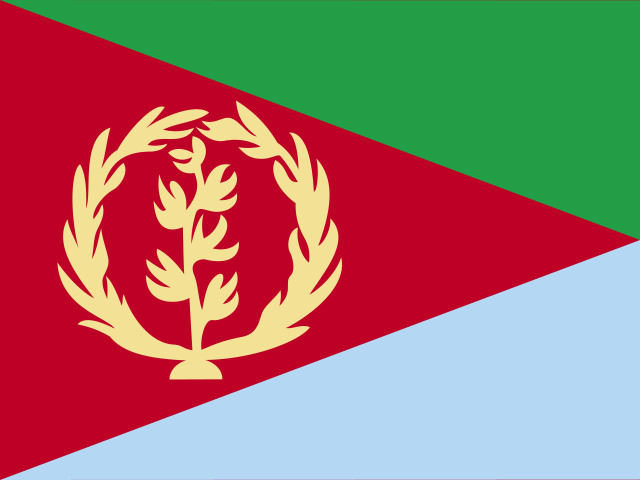 Eritrea Eritrea | Asmara | 3.5M | 117,600 km² |
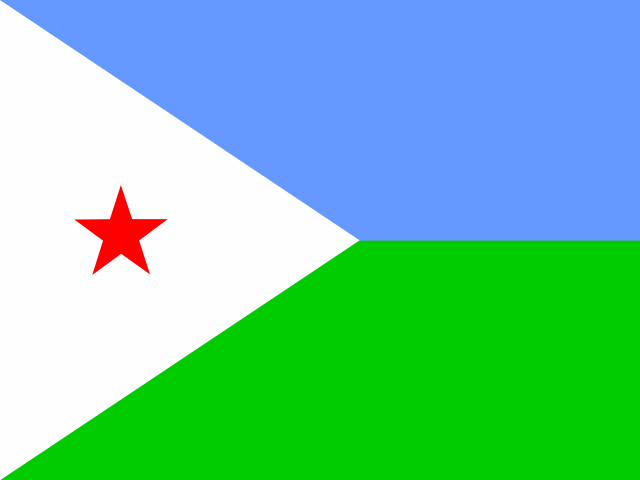 Djibouti Djibouti | Djibouti City | 1.1M | 23,200 km² |
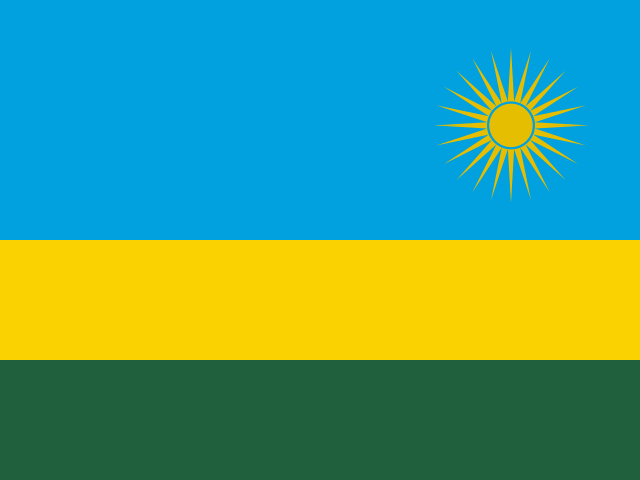 Rwanda Rwanda | Kigali | 14.1M | 26,338 km² |
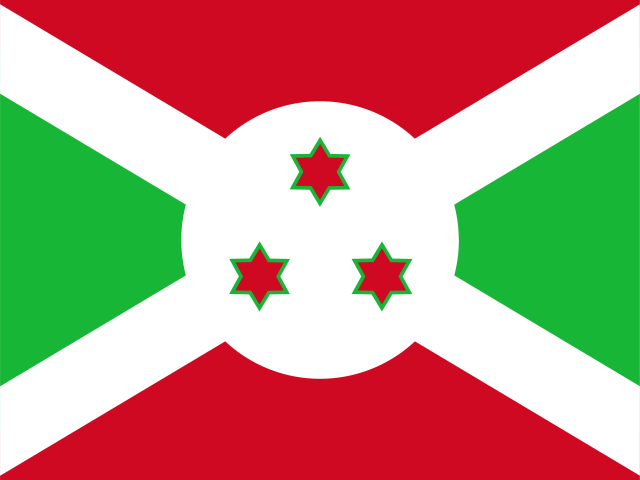 Burundi Burundi | Gitega | 13.7M | 27,834 km² |
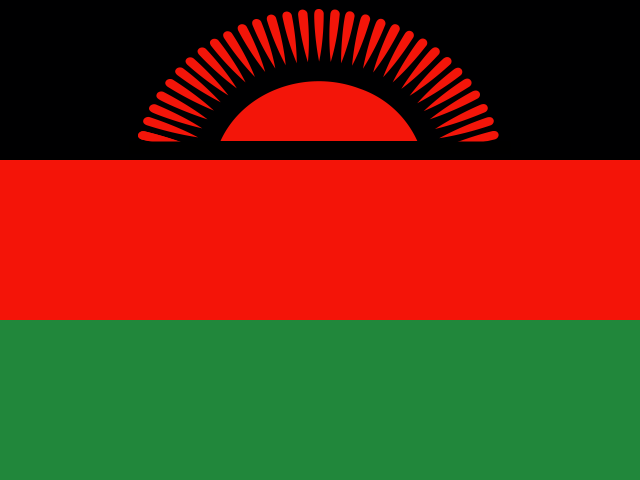 Malawi Malawi | Lilongwe | 21.1M | 118,484 km² |
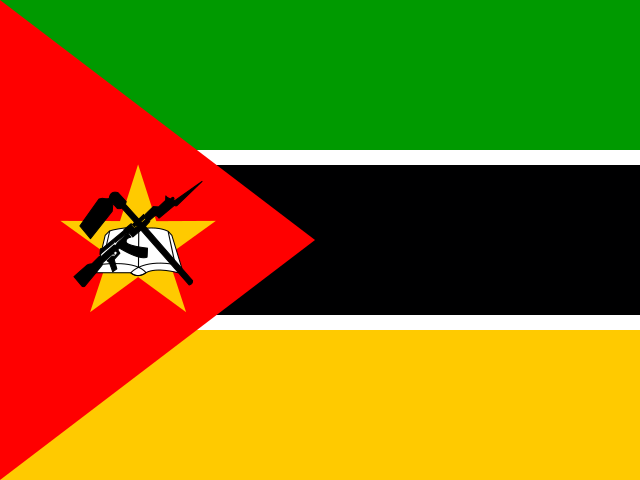 Mozambique Mozambique | Maputo | 34.0M | 801,590 km² |
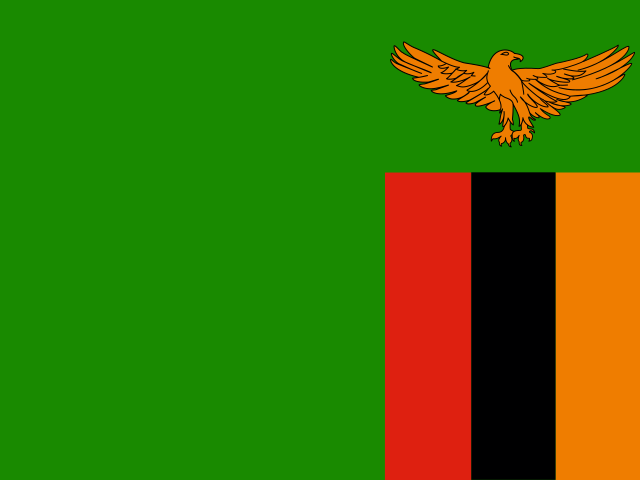 Zambia Zambia | Lusaka | 20.6M | 752,618 km² |
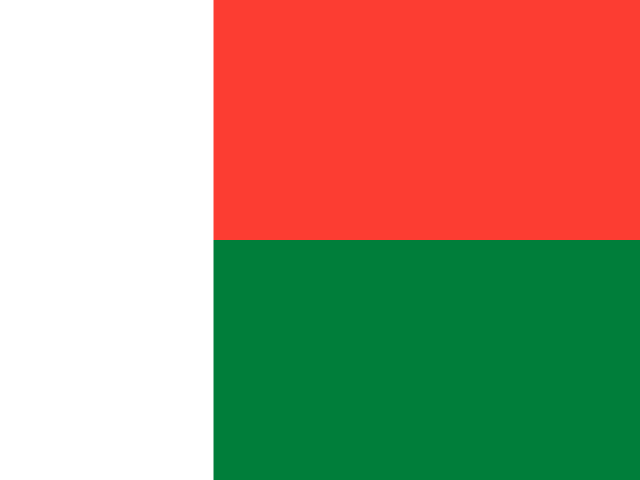 Madagascar Madagascar | Antananarivo | 30.3M | 587,041 km² |
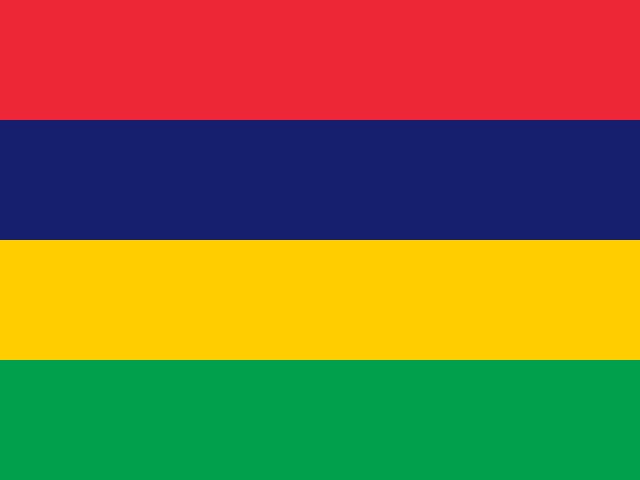 Mauritius Mauritius | Port Louis | 1.3M | 2,040 km² |
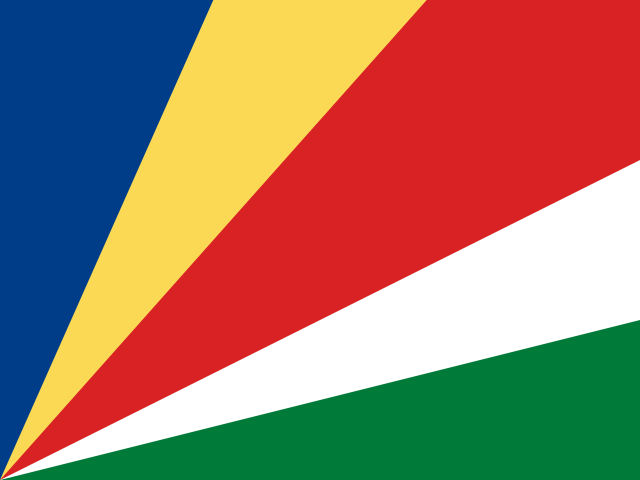 Seychelles Seychelles | Victoria | 0.10M | 459 km² |
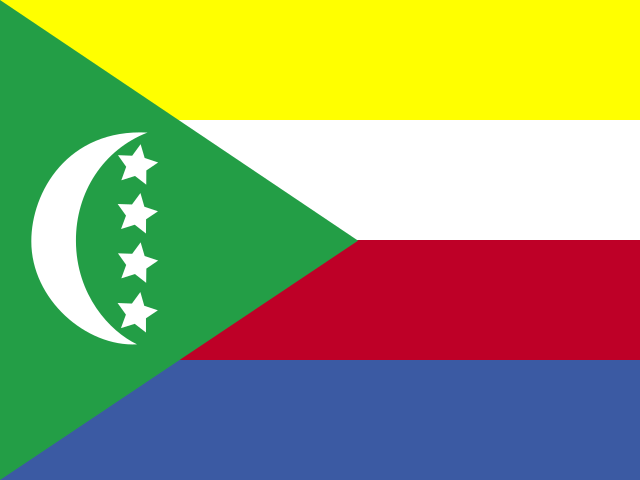 Comoros Comoros | Moroni | 0.87M | 2,235 km² |
Tanzania: Dar es Salaam is the largest city and former capital; Burundi: Bujumbura is the largest city and former capital.
Study the Countries
Ethiopia
Borders: Eritrea, Djibouti, Somalia, Kenya, South Sudan, Sudan
Area: 1,104,300 km² · Landlocked
Ethiopia is a large, landlocked country in the Horn of Africa, dominated by the Ethiopian Highlands, one of the most extensive highland regions in Africa. The Great Rift Valley splits the highlands into the northwestern and southeastern plateaus. The Danakil Depression in the northeast is one of the lowest and hottest places on Earth.
Shape: A large, roughly triangular country in the Horn of Africa, with the pointed Ogaden region extending eastward toward Somalia.
Fun Facts
- Ethiopia is the most populous landlocked country in the world with over 120 million people.
- The Blue Nile originates from Lake Tana in the Ethiopian Highlands and provides most of the Nile's water.
- The Danakil Depression in Ethiopia reaches 125 meters below sea level and is one of the hottest places on Earth.
Kenya
Borders: Ethiopia, Somalia, Tanzania, Uganda, South Sudan
Area: 580,367 km² · Coastline: 536 km
Kenya straddles the equator on the east coast of Africa, with the Indian Ocean to the southeast. The Great Rift Valley runs through the western part of the country, flanked by highland regions. Mount Kenya, at 5,199 meters, is Africa's second-highest peak. The northern regions are semi-arid, while the southwest features fertile highlands.
Shape: A roughly rectangular country on the east coast of Africa, bisected by the equator, with an Indian Ocean coastline in the southeast.
Fun Facts
- Mount Kenya is the second-highest mountain in Africa at 5,199 meters.
- The Great Rift Valley runs through western Kenya, creating a chain of lakes including Lake Nakuru and Lake Turkana.
- Kenya shares Lake Victoria, the largest lake in Africa, with Tanzania and Uganda.
Tanzania
Borders: Kenya, Uganda, Rwanda, Burundi, DR Congo, Zambia, Malawi, Mozambique
Area: 947,303 km² · Coastline: 1,424 km
Tanzania is the largest country in East Africa, located on the Indian Ocean coast. It is home to Mount Kilimanjaro, Africa's highest peak at 5,895 meters. The country borders three of Africa's Great Lakes: Victoria in the northwest, Tanganyika in the west, and Malawi in the southwest. The terrain ranges from coastal lowlands to the central plateau and highland regions.
Shape: A large country on the east coast of Africa, roughly rectangular with an eastern coastline on the Indian Ocean and Kilimanjaro in the northeast corner.
Fun Facts
- Mount Kilimanjaro in Tanzania is the highest peak in Africa at 5,895 meters.
- Tanzania borders three of Africa's Great Lakes: Victoria, Tanganyika, and Malawi.
- The Serengeti ecosystem in Tanzania hosts the largest terrestrial animal migration in the world.
Uganda
Borders: South Sudan, Kenya, Tanzania, Rwanda, DR Congo
Area: 241,038 km² · Landlocked
Uganda is a landlocked country in the African Great Lakes region. Lake Victoria, the largest lake in Africa, forms much of its southern border. The Rwenzori Mountains (Mountains of the Moon) on the western border reach 5,109 meters. The White Nile begins its journey at Jinja where it flows out of Lake Victoria.
Shape: A compact, roughly square landlocked country with Lake Victoria forming much of its southern border and the Rwenzori Mountains on its western edge.
Fun Facts
- The source of the White Nile is at Jinja, Uganda, where it flows out of Lake Victoria.
- The Rwenzori Mountains (Mountains of the Moon) on the western border contain glaciers near the equator.
- Uganda is often called the "Pearl of Africa" for its diverse and lush landscapes.
Somalia
Borders: Djibouti, Ethiopia, Kenya
Area: 637,657 km² · Coastline: 3,025 km
Somalia occupies the Horn of Africa, the easternmost point of the African continent. The country has the longest coastline in mainland Africa, stretching along the Gulf of Aden to the north and the Indian Ocean to the east. The terrain is mostly flat plateaus and plains, with highlands in the north near the Gulf of Aden.
Shape: A distinctive horn-shaped country forming the easternmost point of Africa, with coastlines along the Gulf of Aden and the Indian Ocean.
Fun Facts
- Somalia has the longest coastline of any country in mainland Africa at over 3,000 km.
- Cape Guardafui (Ras Asir) is the easternmost point of the African continent.
- Somalia occupies most of the "Horn of Africa," the peninsula that juts into the Indian Ocean.
Sudan
Borders: Egypt, Libya, Chad, Central African Republic, South Sudan, Ethiopia, Eritrea
Area: 1,861,484 km² · Coastline: 853 km
Sudan is the third-largest country in Africa, located in northeastern Africa where the Blue and White Nile converge at Khartoum. The northern region is dominated by the Sahara and Nubian deserts, while the south transitions to savanna. The Red Sea coastline runs along the northeastern border.
Shape: A very large country in northeastern Africa with a flat-topped northern border with Egypt and a jagged southern border with South Sudan.
Fun Facts
- The Blue Nile and White Nile converge at Khartoum, Sudan's capital, to form the Nile.
- Sudan is the third-largest country in Africa after Algeria and the DR Congo.
- Sudan has more ancient pyramids than Egypt, primarily in the ancient Nubian city of Meroë.
South Sudan
Borders: Sudan, Ethiopia, Kenya, Uganda, DR Congo, Central African Republic
Area: 619,745 km² · Landlocked
South Sudan is a landlocked country in east-central Africa, the world's newest nation (independent since 2011). The White Nile flows through the country, feeding the vast Sudd wetland, one of the largest swamps in the world. The terrain is mostly flat with some highlands along the southern and western borders.
Shape: A large, roughly oval landlocked country south of Sudan, with an irregular border shared with six neighboring nations.
Fun Facts
- South Sudan became the world's newest country on July 9, 2011.
- The Sudd is one of the largest wetlands in the world, expanding to over 30,000 km² during the wet season.
- South Sudan borders six countries and is entirely landlocked.
Eritrea
Borders: Sudan, Ethiopia, Djibouti
Area: 117,600 km² · Coastline: 2,234 km
Eritrea is located along the Red Sea coast in the Horn of Africa. The country has a long, narrow shape stretching along the southwestern coast of the Red Sea, with the Dahlak Archipelago offshore. The terrain rises from a narrow coastal plain to the central highlands and then descends to the western lowlands.
Shape: A narrow, elongated country stretching along the Red Sea coast, widening toward its western border with Sudan.
Fun Facts
- Eritrea has over 350 islands in the Dahlak Archipelago in the Red Sea.
- The country's coastline along the Red Sea stretches over 2,200 km including islands.
- Eritrea sits at the northern end of the Great Rift Valley where it meets the Red Sea.
Djibouti
Borders: Eritrea, Ethiopia, Somalia
Area: 23,200 km² · Coastline: 314 km
Djibouti is a small country at the southern entrance to the Red Sea, where it meets the Gulf of Aden. Located at the strategic Bab-el-Mandeb strait, it controls one of the world's busiest shipping lanes. The terrain is mostly barren, with the Afar Depression creating one of the lowest points on Earth at Lake Assal.
Shape: A very small, roughly triangular country wedged between Eritrea, Ethiopia, and Somalia at the southern tip of the Red Sea.
Fun Facts
- Lake Assal in Djibouti is the lowest point in Africa at 155 meters below sea level.
- Djibouti sits at the strategic Bab-el-Mandeb strait, one of the world's busiest shipping lanes.
- Djibouti is one of the smallest countries in Africa at just 23,200 km².
Rwanda
Borders: Uganda, Tanzania, Burundi, DR Congo
Area: 26,338 km² · Landlocked
Rwanda is a small, landlocked country in the African Great Lakes region, known as the "Land of a Thousand Hills" for its hilly terrain. The country lies on the crest of the Congo-Nile watershed divide, with rivers flowing west to the Congo Basin and east to the Nile. Lake Kivu forms much of its western border.
Shape: A very small, compact country shaped like a rough rectangle, located just south of Uganda between Lake Kivu and Tanzania.
Fun Facts
- Rwanda is known as the "Land of a Thousand Hills" due to its continuously hilly landscape.
- Rwanda is one of the most densely populated countries in Africa.
- The Virunga Mountains in northwest Rwanda are home to the endangered mountain gorilla.
Burundi
Borders: Rwanda, Tanzania, DR Congo
Area: 27,834 km² · Landlocked
Burundi is a small, landlocked country in the African Great Lakes region, located just south of Rwanda. The terrain is hilly and mountainous, descending from the western highlands to the eastern plateau. Lake Tanganyika, the world's second-deepest lake, forms much of the southwestern border.
Shape: A very small, roughly triangular country just south of Rwanda, with Lake Tanganyika along its southwestern border.
Fun Facts
- Burundi is one of the smallest countries in Africa, slightly smaller than Belgium.
- Lake Tanganyika on Burundi's western border is the second-deepest lake in the world at 1,470 meters.
- A source of the White Nile is located in Burundi's Rutovu hills, making it the most distant source of the Nile.
Malawi
Borders: Tanzania, Mozambique, Zambia
Area: 118,484 km² · Landlocked
Malawi is a narrow, landlocked country in southeastern Africa, dominated by Lake Malawi which occupies about a fifth of the country's total area. The lake stretches along nearly the entire eastern border. The terrain is mostly a narrow plateau with rolling plains, and the Shire River flows south from the lake to the Zambezi.
Shape: A narrow, elongated country with Lake Malawi running along its entire eastern border, shaped somewhat like a long leaf.
Fun Facts
- Lake Malawi is the third-largest lake in Africa and the ninth-largest in the world.
- Lake Malawi contains more species of fish than any other lake on Earth, with over 1,000 cichlid species.
- Malawi is known as the "Warm Heart of Africa" for the friendliness of its people.
Mozambique
Borders: Tanzania, Malawi, Zambia, Zimbabwe, South Africa, Eswatini
Area: 801,590 km² · Coastline: 2,470 km
Mozambique stretches along the southeastern coast of Africa on the Indian Ocean. The country has a long coastline and is bisected by the Zambezi River. The northern interior is mountainous, while the south and coast are low-lying plains. The Mozambique Channel separates the mainland from Madagascar.
Shape: A long, narrow country stretching along the southeastern African coast, wider in the north and tapering in the south.
Fun Facts
- Mozambique has one of the longest coastlines in Africa at 2,470 km on the Indian Ocean.
- The Zambezi River bisects the country, with the Cahora Bassa Dam creating one of Africa's largest reservoirs.
- The Mozambique Channel between the mainland and Madagascar is one of the richest marine ecosystems in the world.
Zambia
Borders: DR Congo, Tanzania, Malawi, Mozambique, Zimbabwe, Botswana, Namibia, Angola
Area: 752,618 km² · Landlocked
Zambia is a large, landlocked country on a high plateau in south-central Africa. The Zambezi River, which gives the country its name, flows along the southern and western borders, plunging over Victoria Falls on the border with Zimbabwe. The country is mostly savanna with some highlands and is bordered by eight nations.
Shape: A large, roughly butterfly-shaped landlocked country with an irregular outline, surrounded by eight neighboring countries.
Fun Facts
- Victoria Falls on the Zambia-Zimbabwe border is one of the largest waterfalls in the world, known locally as "Mosi-oa-Tunya" (The Smoke that Thunders).
- Zambia borders eight countries, one of the highest numbers for any African nation.
- The Zambezi River, the fourth-longest in Africa, gives Zambia its name.
Madagascar
Area: 587,041 km² · Coastline: 4,828 km
Madagascar is the world's fourth-largest island, located in the Indian Ocean off the southeastern coast of Africa, separated by the Mozambique Channel. A central highland plateau runs the length of the island, with tropical rainforest on the eastern slopes and dry deciduous forest in the west. The island's long isolation has created extraordinary biodiversity.
Shape: A large, elongated island off the southeast coast of Africa, roughly shaped like a left footprint.
Fun Facts
- Madagascar is the fourth-largest island in the world after Greenland, New Guinea, and Borneo.
- About 90% of Madagascar's wildlife is found nowhere else on Earth due to 88 million years of isolation.
- Madagascar separated from the Indian subcontinent about 88 million years ago.
Mauritius
Area: 2,040 km² · Coastline: 177 km
Mauritius is a volcanic island nation in the Indian Ocean, about 2,000 km off the southeastern coast of Africa. The main island features a central plateau ringed by mountain peaks, remnants of the original volcanic crater. Coral reefs surround nearly the entire island, creating calm lagoons along the coast.
Shape: A small, roughly oval volcanic island in the Indian Ocean, far east of Madagascar.
Fun Facts
- Mauritius is home to the now-extinct dodo bird, which became a symbol of extinction.
- The island is surrounded by the world's third-largest coral reef system.
- Mauritius was uninhabited until 1598, when the Dutch established the first settlement.
Seychelles
Area: 459 km² · Coastline: 491 km
Seychelles is an archipelago of 115 islands in the Indian Ocean, northeast of Madagascar. The inner islands are granitic, among the oldest ocean islands in the world, while the outer islands are low-lying coral atolls. The country is the smallest in Africa by both area and population.
Shape: A scattered group of tiny islands in the Indian Ocean, northeast of Madagascar and far from the African mainland.
Fun Facts
- Seychelles is the smallest country in Africa by population with fewer than 100,000 people.
- The Vallée de Mai on Praslin Island is home to the coco de mer palm, which produces the world's largest seed.
- The granitic inner islands of Seychelles are among the oldest oceanic islands in the world.
Comoros
Area: 2,235 km² · Coastline: 340 km
Comoros is a volcanic archipelago in the Indian Ocean, located at the northern end of the Mozambique Channel between Madagascar and the African mainland. The country consists of three main islands: Grande Comore, Mohéli, and Anjouan. Mount Karthala on Grande Comore is one of the world's most active volcanoes.
Shape: A group of small volcanic islands in the northern Mozambique Channel, roughly between Madagascar and the African coast.
Fun Facts
- Mount Karthala on Grande Comore is one of the most active volcanoes in the world.
- Comoros is one of only a few places where the coelacanth, a "living fossil" fish, has been found.
- The Comoros Islands sit at a strategic location between Madagascar and the African mainland.
Quick Reference
Test Your Knowledge
Can you identify these countries on the map?
Practice with Games
Ready to test what you learned? Jump into a game and put it into practice.
About East Africa Geography
East Africa is one of the most geographically dramatic regions on Earth, shaped by the Great Rift Valley that runs from the Red Sea to Mozambique. The region contains Africa's highest mountain (Kilimanjaro), largest lake (Victoria), and deepest lake (Tanganyika). From the arid Horn of Africa to the tropical Indian Ocean islands, East Africa's landscapes are remarkably diverse.
Frequently Asked Questions
How many countries are in East Africa?
East Africa has 18 countries: Burundi, Comoros, Djibouti, Eritrea, Ethiopia, Kenya, Madagascar, Malawi, Mauritius, Mozambique, Rwanda, Seychelles, Somalia, South Sudan, Sudan, Tanzania, Uganda, and Zambia.
Which is the largest country in East Africa?
Sudan is the largest East African country by area at approximately 1.86 million km², followed by Ethiopia at 1.1 million km² and Tanzania at 947,303 km².
What is the Great Rift Valley?
The Great Rift Valley is a massive geological fault system stretching over 6,000 km from the Red Sea through East Africa to Mozambique. It has created a chain of deep lakes, volcanoes, and dramatic escarpments that define much of East Africa's landscape.
Which countries and capitals are in East Africa?
The 18 countries of East Africa and their capitals are: Ethiopia (Addis Ababa), Kenya (Nairobi), Tanzania (Dodoma), Uganda (Kampala), Somalia (Mogadishu), Sudan (Khartoum), South Sudan (Juba), Eritrea (Asmara), Djibouti (Djibouti City), Rwanda (Kigali), Burundi (Gitega), Malawi (Lilongwe), Mozambique (Maputo), Zambia (Lusaka), Madagascar (Antananarivo), Mauritius (Port Louis), Seychelles (Victoria), Comoros (Moroni).
Which countries form the Horn of Africa?
The Horn of Africa is the easternmost peninsula of the continent and consists of Djibouti, Eritrea, Ethiopia and Somalia.