Map of Africa: Countries and Capitals
Africa is the world's second-largest continent, home to 54 sovereign nations spanning from the Mediterranean coast to the Cape of Good Hope. The continent features extraordinary geographic diversity: the Sahara Desert, the Congo Basin rainforest, the Great Rift Valley, and vast savannas teeming with wildlife. Master the entire African map by studying each country's location, shape, and borders. Below the interactive map you will find a list of African countries with their capitals, plus study cards to help you learn each one.
Hover a country to see its name. Click to jump to its study card.
Countries of Africa and Their Capitals
List of the 37 African countries covered in this lesson, with capital, population and area - Africa has 54 sovereign states in total. Click a country to jump to its study card with map and facts.
| Country | Capital | Population | Area |
|---|---|---|---|
 Algeria Algeria | Algiers | 46.3M | 2,381,741 km² |
 Egypt Egypt | Cairo | 114M | 1,001,450 km² |
 Libya Libya | Tripoli | 6.9M | 1,759,540 km² |
 Morocco Morocco | Rabat | 37.5M | 446,550 km² |
 Tunisia Tunisia | Tunis | 12.3M | 163,610 km² |
 Mauritania Mauritania | Nouakchott | 4.9M | 1,030,700 km² |
 Nigeria Nigeria | Abuja | 227M | 923,768 km² |
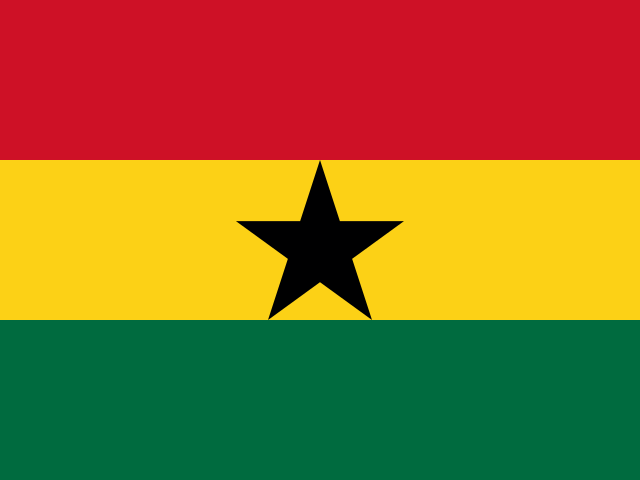 Ghana Ghana | Accra | 34.4M | 238,533 km² |
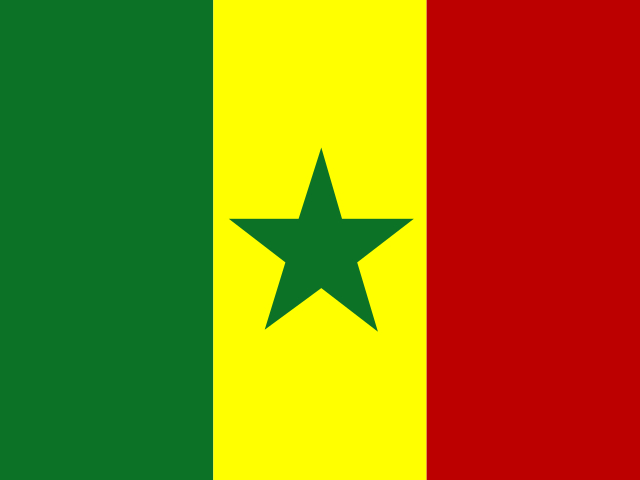 Senegal Senegal | Dakar | 18.1M | 196,722 km² |
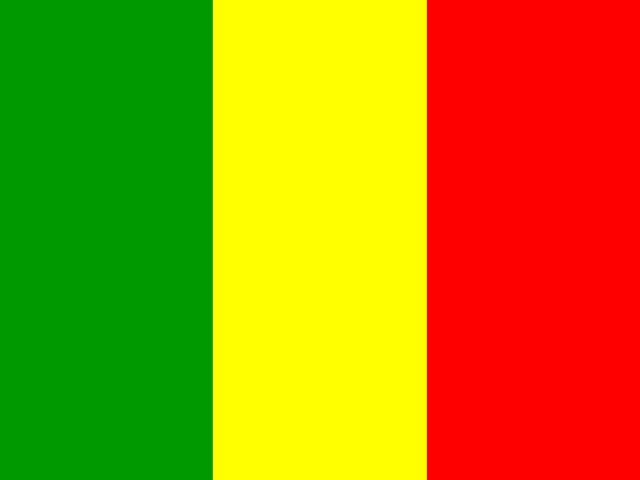 Mali Mali | Bamako | 23.3M | 1,240,192 km² |
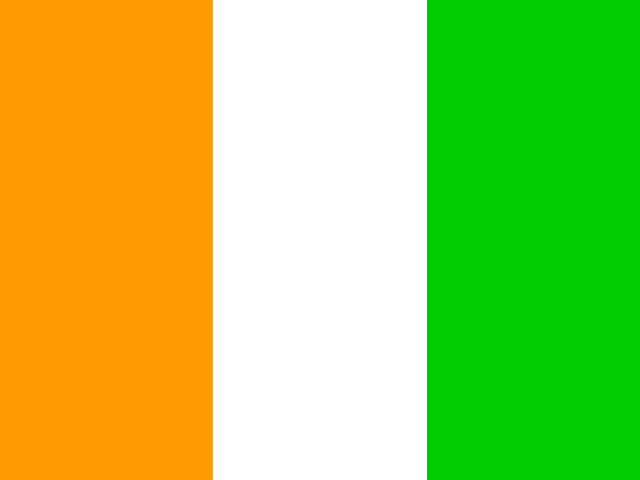 Côte d'Ivoire Côte d'Ivoire | Yamoussoukro | 31.2M | 322,463 km² |
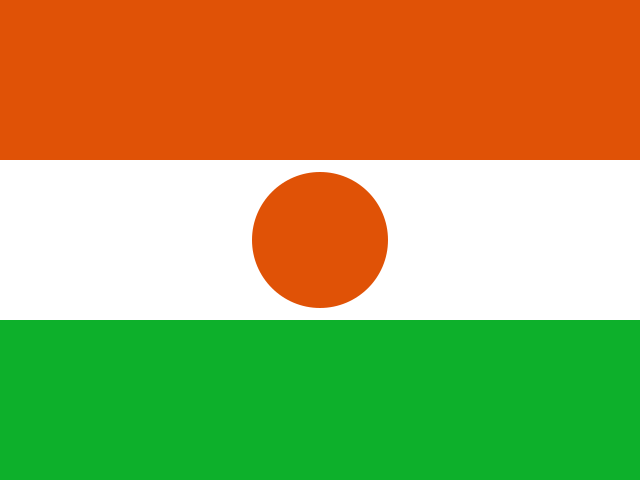 Niger Niger | Niamey | 27.2M | 1,267,000 km² |
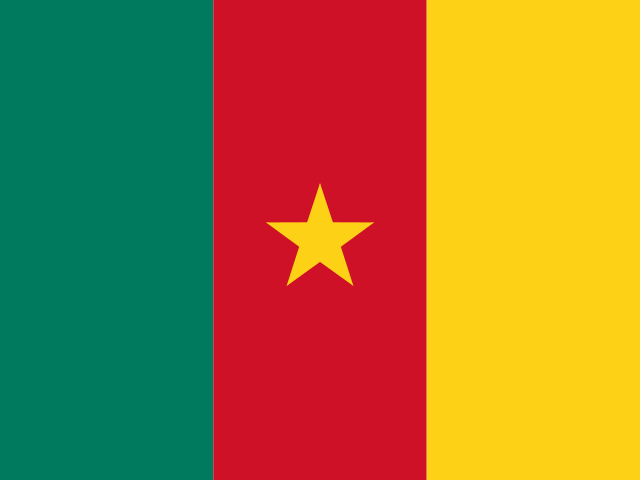 Cameroon Cameroon | Yaoundé | 28.6M | 475,442 km² |
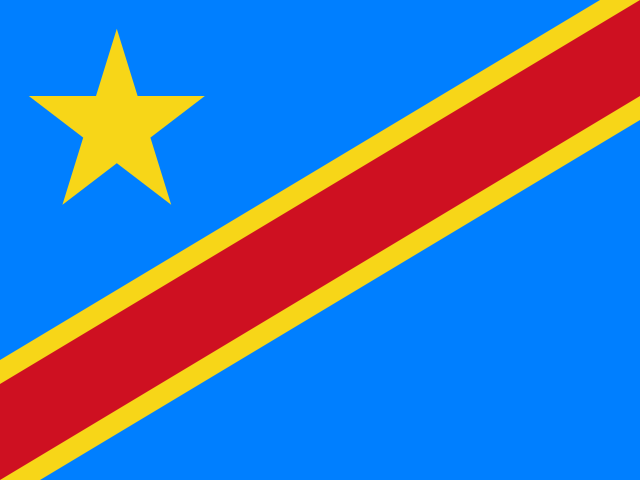 Democratic Republic of the Congo Democratic Republic of the Congo | Kinshasa | 105M | 2,344,858 km² |
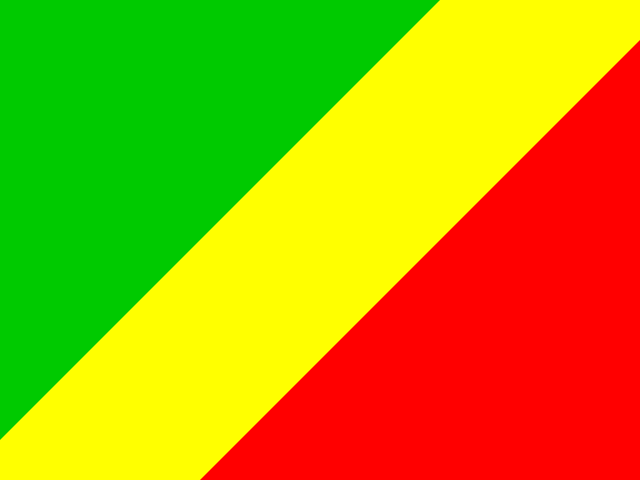 Republic of the Congo Republic of the Congo | Brazzaville | 6.3M | 342,000 km² |
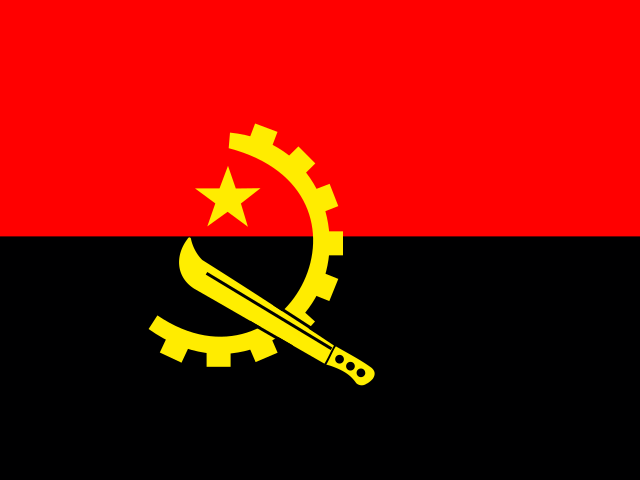 Angola Angola | Luanda | 37.2M | 1,246,700 km² |
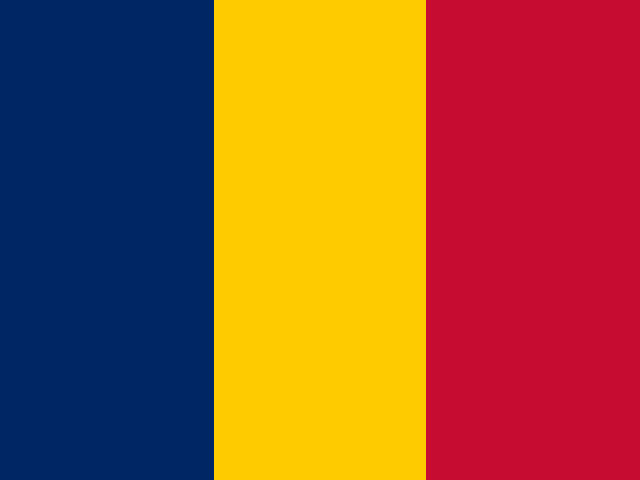 Chad Chad | N'Djamena | 18.3M | 1,284,000 km² |
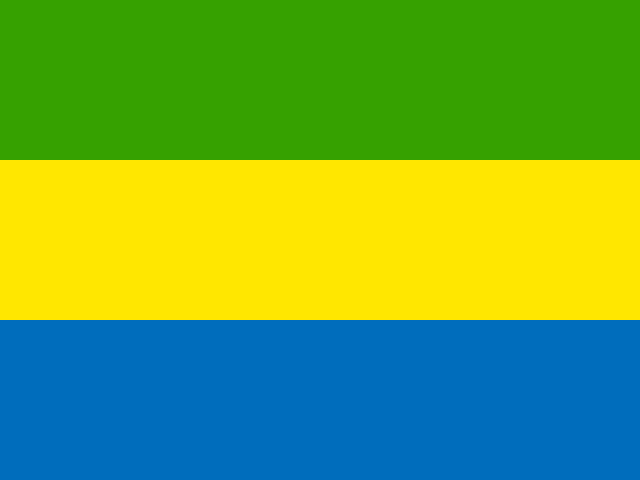 Gabon Gabon | Libreville | 2.5M | 267,668 km² |
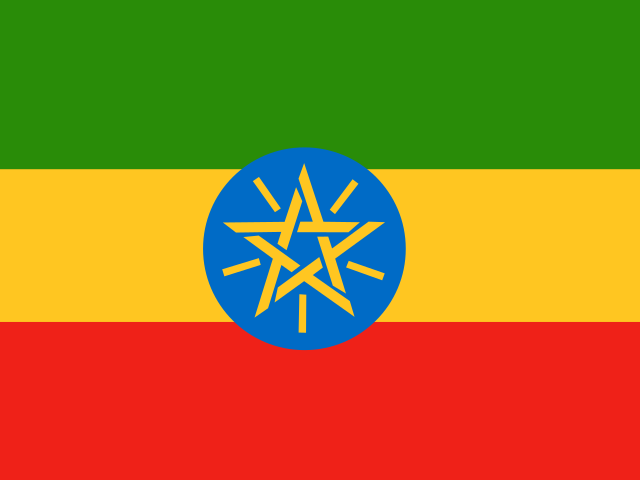 Ethiopia Ethiopia | Addis Ababa | 128M | 1,104,300 km² |
 Kenya Kenya | Nairobi | 55.1M | 580,367 km² |
 Tanzania Tanzania | Dodoma | 65.5M | 947,303 km² |
 Sudan Sudan | Khartoum | 48.1M | 1,861,484 km² |
 South Sudan South Sudan | Juba | 11.1M | 619,745 km² |
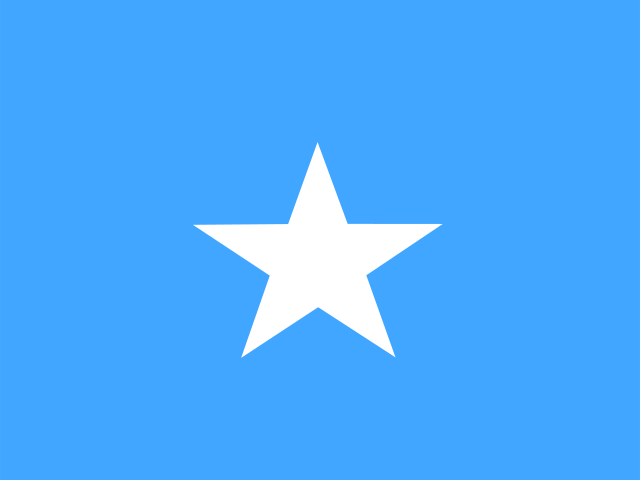 Somalia Somalia | Mogadishu | 18.1M | 637,657 km² |
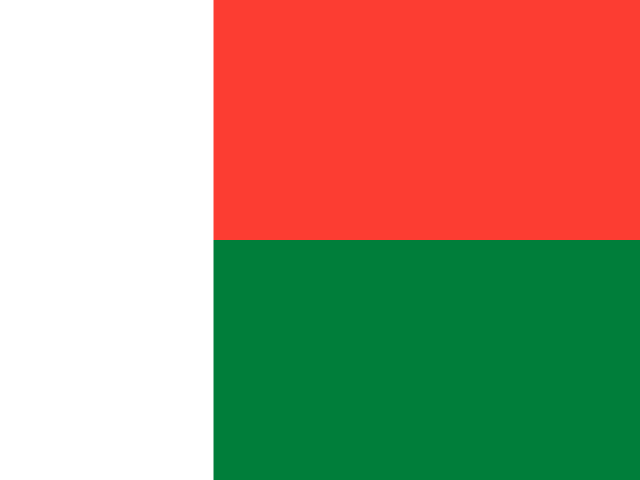 Madagascar Madagascar | Antananarivo | 30.3M | 587,041 km² |
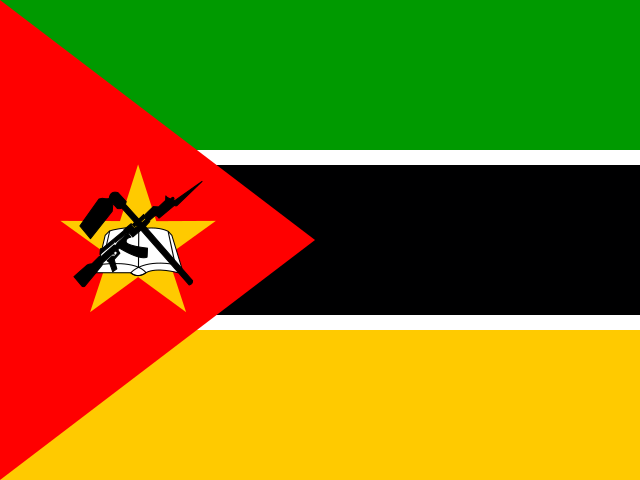 Mozambique Mozambique | Maputo | 34.0M | 801,590 km² |
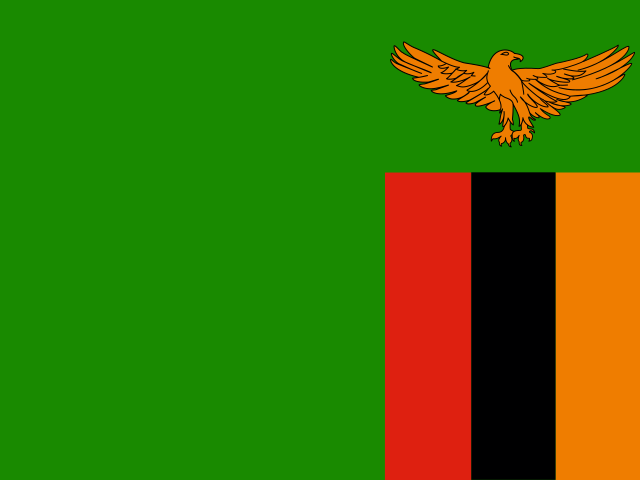 Zambia Zambia | Lusaka | 20.6M | 752,618 km² |
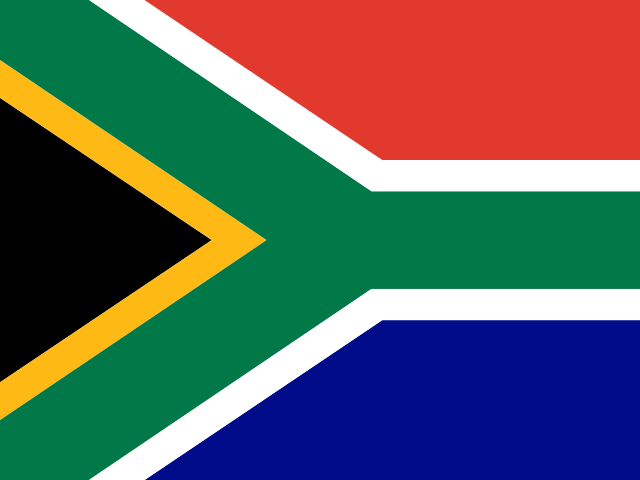 South Africa South Africa | Pretoria | 62.0M | 1,221,037 km² |
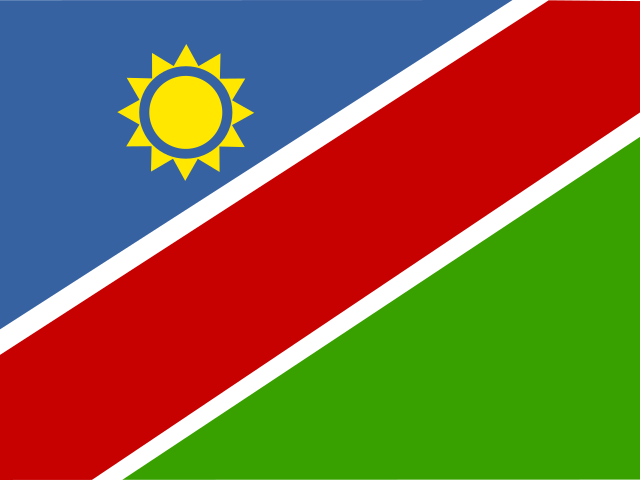 Namibia Namibia | Windhoek | 2.6M | 824,292 km² |
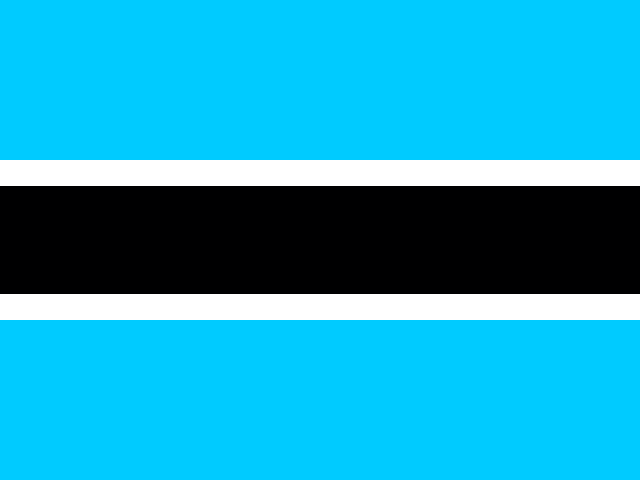 Botswana Botswana | Gaborone | 2.5M | 581,730 km² |
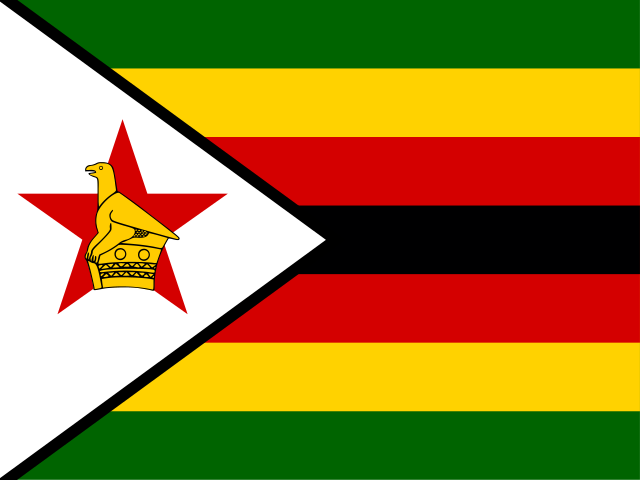 Zimbabwe Zimbabwe | Harare | 16.6M | 390,757 km² |
 Eswatini Eswatini | Mbabane | 1.2M | 17,364 km² |
 Lesotho Lesotho | Maseru | 2.3M | 30,355 km² |
 Eritrea Eritrea | Asmara | 3.5M | 117,600 km² |
 Uganda Uganda | Kampala | 48.6M | 241,038 km² |
 Rwanda Rwanda | Kigali | 14.1M | 26,338 km² |
 Malawi Malawi | Lilongwe | 21.1M | 118,484 km² |
Nigeria: Lagos is the largest city and former capital; Côte d'Ivoire: Abidjan is the economic capital and largest city; Tanzania: Dar es Salaam is the largest city and former capital; South Africa: Pretoria (executive), Cape Town (legislative), Bloemfontein (judicial); Eswatini: Mbabane is the administrative capital; Lobamba is the royal and legislative capital.
Study the Countries
Algeria
Borders: Morocco, Tunisia, Libya, Niger, Mali, Mauritania
Area: 2,381,741 km² · Coastline: 998 km
Algeria is the largest country in Africa, occupying the central portion of North Africa. It has a Mediterranean coastline to the north and extends deep into the Sahara Desert to the south. The Atlas Mountains separate the fertile coastal plains from the vast desert interior.
Shape: A very large, roughly rectangular country dominating the central-western portion of North Africa.
Fun Facts
- Algeria is the largest country in Africa by area, covering over 2.3 million km².
- About 80% of Algeria's territory is covered by the Sahara Desert.
- Algeria shares borders with six countries, more than any other North African nation.
Egypt
Borders: Libya, Sudan
Area: 1,001,450 km² · Coastline: 2,450 km
Egypt is located in the northeastern corner of Africa, with the Sinai Peninsula extending into Asia. The Nile River valley and delta dominate the country, while the vast majority of the land is arid desert.
Shape: A roughly square-shaped country in the northeast corner of Africa, with a small triangular peninsula (Sinai) extending east.
Fun Facts
- Egypt is the only African country that extends into Asia via the Sinai Peninsula.
- The Nile River flows through Egypt for about 1,500 km.
- Only about 5% of Egypt's land is inhabited, concentrated along the Nile Valley and Delta.
Libya
Borders: Tunisia, Algeria, Niger, Chad, Sudan, Egypt
Area: 1,759,540 km² · Coastline: 1,770 km
Libya is located in central North Africa along the Mediterranean coast. The fourth-largest country in Africa, it is mostly covered by the Sahara Desert with a long Mediterranean coastline featuring the distinctive Gulf of Sidra.
Shape: A large country in central North Africa with a wide Mediterranean coastline that has a distinctive indentation (Gulf of Sidra).
Fun Facts
- Libya is about 90% desert, making it one of the most arid countries in the world.
- The Gulf of Sidra creates a distinctive notch in Libya's Mediterranean coastline.
- Libya shares borders with six countries and has the longest Mediterranean coastline in Africa.
Morocco
Borders: Algeria, Mauritania
Area: 446,550 km² · Coastline: 1,835 km
Morocco is located in the far northwest corner of Africa, with coastlines on both the Atlantic Ocean and the Mediterranean Sea. The Atlas Mountains run through the center, while southern Morocco transitions into the Sahara Desert.
Shape: A country in the northwest corner of Africa bordered by the Atlantic to the west and Mediterranean to the north.
Fun Facts
- Morocco is the only African country with coastlines on both the Atlantic and Mediterranean.
- The Strait of Gibraltar separates Morocco from Spain by only 14 km.
- The Atlas Mountains in Morocco reach heights of over 4,000 meters.
Tunisia
Borders: Algeria, Libya
Area: 163,610 km² · Coastline: 1,148 km
Tunisia is the smallest country in North Africa, tucked between Algeria and Libya along the Mediterranean coast. The north has the Atlas Mountains, while the south extends into the Sahara Desert.
Shape: A small, wedge-shaped country at the northernmost point of Africa, narrowing southward.
Fun Facts
- Tunisia contains the northernmost point of Africa, Cape Angela.
- Tunisia is the smallest country in North Africa at just 163,610 km².
- The Sahara Desert covers about 40% of Tunisia's southern territory.
Mauritania
Borders: Morocco, Algeria, Mali, Senegal
Area: 1,030,700 km² · Coastline: 754 km
Mauritania bridges North Africa and West Africa, stretching from the Atlantic coast inland across the Sahara Desert. About 90% of its territory is desert, with agriculture limited to a narrow strip along the Senegal River.
Shape: A large country on the Atlantic coast of northwest Africa, forming the bridge between North and West Africa.
Fun Facts
- About 90% of Mauritania lies within the Sahara Desert.
- The Richat Structure ("Eye of the Sahara") is a prominent geological feature visible from space.
- Mauritania bridges North and West Africa, sharing cultural ties with both regions.
Nigeria
Borders: Benin, Niger, Chad, Cameroon
Area: 923,768 km² · Coastline: 853 km
Nigeria is the most populous country in Africa, located on the Gulf of Guinea. The Niger and Benue rivers divide the country into three geographic regions: tropical south, savanna center, and the Sahel-bordering north.
Shape: A large, roughly square country on the Gulf of Guinea, with a southeastern protrusion toward Cameroon.
Fun Facts
- Nigeria is the most populous country in Africa with over 220 million people.
- The Niger River forms a large delta on Nigeria's coast, one of the largest in the world.
- Nigeria is Africa's largest economy by GDP.
Ghana
Borders: Côte d'Ivoire, Burkina Faso, Togo
Area: 238,533 km² · Coastline: 539 km
Ghana is located on the Gulf of Guinea between Côte d'Ivoire and Togo. Lake Volta, one of the world's largest artificial lakes, dominates the eastern interior.
Shape: A roughly rectangular country on the southern coast of West Africa, slightly taller than wide.
Fun Facts
- Lake Volta in Ghana is one of the largest artificial lakes in the world by surface area.
- Ghana was the first sub-Saharan African country to gain independence in 1957.
- The Prime Meridian (0° longitude) passes through Ghana.
Senegal
Borders: Mauritania, Mali, Guinea, Guinea-Bissau, Gambia
Area: 196,722 km² · Coastline: 531 km
Senegal is at the westernmost point of continental Africa. The country almost completely surrounds Gambia, a narrow country along the Gambia River. The terrain is mostly flat with rolling plains.
Shape: A country at the westernmost tip of Africa with a distinctive hole where Gambia cuts inland.
Fun Facts
- Senegal almost completely surrounds The Gambia.
- Cap Vert in Senegal is the westernmost point of continental Africa.
- The Senegal River forms the northern border with Mauritania.
Mali
Borders: Algeria, Niger, Burkina Faso, Côte d'Ivoire, Guinea, Senegal, Mauritania
Area: 1,240,192 km² · Landlocked
Mali is a large, landlocked country in the interior of West Africa. The northern half lies within the Sahara, while the south is watered by the Niger River, which makes a dramatic bend through the country creating the fertile Inner Niger Delta.
Shape: A large, landlocked country shaped like a bowtie, with a wider north and south connected by a narrower middle.
Fun Facts
- Mali is the largest country in West Africa by area.
- The Niger River makes a dramatic bend through Mali, creating the Inner Niger Delta.
- Mali shares borders with seven countries, tied for the most in West Africa.
Côte d'Ivoire
Borders: Liberia, Guinea, Mali, Burkina Faso, Ghana
Area: 322,463 km² · Coastline: 515 km
Côte d'Ivoire is on the Gulf of Guinea coast between Liberia and Ghana. The south has tropical rainforest transitioning to savanna in the north.
Shape: A roughly square country on the southern coast of West Africa, between Liberia and Ghana.
Fun Facts
- Côte d'Ivoire is the world's largest producer of cocoa beans.
- The country's name means "Ivory Coast" in French.
- Yamoussoukro houses the Basilica of Our Lady of Peace, the world's largest church building.
Niger
Borders: Algeria, Libya, Chad, Nigeria, Benin, Burkina Faso, Mali
Area: 1,267,000 km² · Landlocked
Niger is a large, landlocked country in the Sahel region with most territory in the Sahara Desert. Only the southwestern corner along the Niger River and southern border receive enough rainfall for agriculture.
Shape: A large landlocked country with a wide northern section and a narrower southern portion bordering Nigeria.
Fun Facts
- Niger is one of the hottest countries in the world, nicknamed "the Frying Pan of the World."
- Over 80% of Niger's territory lies within the Sahara Desert.
- Niger shares borders with seven countries, tied with Mali for the most in West Africa.
Cameroon
Borders: Nigeria, Chad, Central African Republic, Republic of the Congo, Gabon, Equatorial Guinea
Area: 475,442 km² · Coastline: 402 km
Cameroon sits at the junction of West and Central Africa on the Gulf of Guinea. Called "Africa in miniature," it features coastal plains, mountains, savanna, rainforest, and semi-arid regions. Mount Cameroon at 4,095 meters is the highest peak in the region.
Shape: A triangular country that narrows northward toward Lake Chad, with a wider southern base along the Gulf of Guinea.
Fun Facts
- Cameroon is called "Africa in miniature" for its diverse landscapes.
- Mount Cameroon at 4,095 meters is the highest peak in West-Central Africa and an active volcano.
- Cameroon borders six countries, bridging West and Central Africa.
DR Congo
Borders: Republic of the Congo, Central African Republic, South Sudan, Uganda, Rwanda, Burundi, Tanzania, Zambia, Angola
Area: 2,344,858 km² · Coastline: 37 km
The DR Congo is the second-largest country in Africa, dominating the center of the continent. The vast Congo Basin holds the world's second-largest tropical rainforest. The Congo River arcs through the country, and the Great Rift Valley forms the eastern border with its chain of great lakes.
Shape: A massive country in the heart of Africa with an irregular shape, a tiny coastline in the far west, and the Great Rift Valley lakes along the east.
Fun Facts
- The DR Congo is the second-largest country in Africa and 11th-largest in the world.
- The Congo River is the deepest river in the world, exceeding 220 meters.
- The country borders nine nations, more than any other in Africa.
Republic of the Congo
Borders: Gabon, Cameroon, Central African Republic, DR Congo, Angola
Area: 342,000 km² · Coastline: 169 km
The Republic of the Congo straddles the equator in western Central Africa. The Congo and Ubangi rivers form much of the eastern border. Dense tropical rainforest covers the northern region, while the south has savanna.
Shape: An elongated country oriented northwest-southeast, with the Congo River as its eastern border and a small coastline in the southwest.
Fun Facts
- Brazzaville and Kinshasa, capitals of the two Congos, face each other across the Congo River.
- About 65% of the country is covered by tropical rainforest.
- The Republic of the Congo straddles the equator, spanning both hemispheres.
Angola
Borders: Republic of the Congo, DR Congo, Zambia, Namibia
Area: 1,246,700 km² · Coastline: 1,600 km
Angola is a large country on the southwestern Atlantic coast of Africa. The Cabinda exclave is separated from the main territory by a narrow strip of the DR Congo. The terrain rises from a coastal plain to a vast interior plateau.
Shape: A large, roughly square country on the southwest coast with a small detached exclave (Cabinda) to the north.
Fun Facts
- Angola's Cabinda province is an exclave separated by a strip of the DR Congo.
- Angola is the second-largest Portuguese-speaking country by area.
- The Kalandula Falls are among the largest waterfalls in Africa by volume.
Chad
Borders: Libya, Sudan, Central African Republic, Cameroon, Nigeria, Niger
Area: 1,284,000 km² · Landlocked
Chad is a large, landlocked country in north-central Africa. The landscape transitions from the Sahara in the north through the Sahel to tropical savanna in the south. Lake Chad on the western border has shrunk dramatically over recent decades.
Shape: A large, roughly rectangular landlocked country oriented north-south, with Lake Chad at the western border.
Fun Facts
- Lake Chad has shrunk by about 90% since the 1960s.
- Chad spans three climate zones: Sahara, Sahel, and tropical savanna.
- The Tibesti Mountains contain the highest peak in the Sahara at 3,445 meters.
Gabon
Borders: Equatorial Guinea, Cameroon, Republic of the Congo
Area: 267,668 km² · Coastline: 885 km
Gabon is on the Atlantic coast of Central Africa, straddling the equator. About 85% of the country is covered in dense tropical rainforest. The Ogooué River flows westward across the country to the Atlantic.
Shape: A compact, roughly rectangular country on the equator with a long Atlantic coastline.
Fun Facts
- About 85% of Gabon is covered by tropical rainforest.
- Gabon straddles the equator with territory in both hemispheres.
- Lopé National Park is a UNESCO World Heritage Site combining rainforest and savanna.
Ethiopia
Borders: Eritrea, Djibouti, Somalia, Kenya, South Sudan, Sudan
Area: 1,104,300 km² · Landlocked
Ethiopia is a large, landlocked country in the Horn of Africa, dominated by the Ethiopian Highlands. The Great Rift Valley splits the highlands into northwestern and southeastern plateaus. The Danakil Depression is one of the lowest and hottest places on Earth.
Shape: A large, roughly triangular country in the Horn of Africa, with the Ogaden region extending eastward.
Fun Facts
- Ethiopia is the most populous landlocked country in the world.
- The Blue Nile originates from Lake Tana in the Ethiopian Highlands.
- The Danakil Depression reaches 125 meters below sea level.
Kenya
Borders: Ethiopia, Somalia, Tanzania, Uganda, South Sudan
Area: 580,367 km² · Coastline: 536 km
Kenya straddles the equator on Africa's east coast. The Great Rift Valley runs through the west, flanked by highlands. Mount Kenya at 5,199 meters is Africa's second-highest peak.
Shape: A roughly rectangular country on the east coast, bisected by the equator, with an Indian Ocean coastline.
Fun Facts
- Mount Kenya is the second-highest mountain in Africa at 5,199 meters.
- The Great Rift Valley creates a chain of lakes through western Kenya.
- Kenya shares Lake Victoria with Tanzania and Uganda.
Tanzania
Borders: Kenya, Uganda, Rwanda, Burundi, DR Congo, Zambia, Malawi, Mozambique
Area: 947,303 km² · Coastline: 1,424 km
Tanzania is the largest country in East Africa, home to Mount Kilimanjaro at 5,895 meters, Africa's highest peak. It borders three Great Lakes: Victoria, Tanganyika, and Malawi.
Shape: A large country on the east coast, roughly rectangular, with Kilimanjaro in the northeast corner.
Fun Facts
- Mount Kilimanjaro is the highest peak in Africa at 5,895 meters.
- Tanzania borders three of Africa's Great Lakes.
- The Serengeti hosts the largest terrestrial animal migration in the world.
Sudan
Borders: Egypt, Libya, Chad, Central African Republic, South Sudan, Ethiopia, Eritrea
Area: 1,861,484 km² · Coastline: 853 km
Sudan is the third-largest country in Africa, located where the Blue and White Nile converge at Khartoum. The north is dominated by the Sahara and Nubian deserts, the south transitions to savanna, and the Red Sea coastline runs along the northeast.
Shape: A very large country in northeastern Africa with a flat northern border with Egypt.
Fun Facts
- The Blue and White Nile converge at Khartoum to form the Nile.
- Sudan is the third-largest country in Africa.
- Sudan has more ancient pyramids than Egypt.
South Sudan
Borders: Sudan, Ethiopia, Kenya, Uganda, DR Congo, Central African Republic
Area: 619,745 km² · Landlocked
South Sudan is the world's newest nation (2011), a landlocked country in east-central Africa. The White Nile flows through the country, feeding the vast Sudd wetland, one of the largest swamps in the world.
Shape: A large, roughly oval landlocked country south of Sudan with an irregular border.
Fun Facts
- South Sudan became the world's newest country on July 9, 2011.
- The Sudd is one of the largest wetlands in the world.
- South Sudan borders six countries and is entirely landlocked.
Somalia
Borders: Djibouti, Ethiopia, Kenya
Area: 637,657 km² · Coastline: 3,025 km
Somalia occupies the Horn of Africa, the easternmost point of the continent. It has the longest coastline in mainland Africa, along both the Gulf of Aden and the Indian Ocean.
Shape: A distinctive horn-shaped country forming the easternmost point of Africa.
Fun Facts
- Somalia has the longest coastline in mainland Africa at over 3,000 km.
- Cape Guardafui is the easternmost point of the African continent.
- Somalia occupies most of the Horn of Africa peninsula.
Madagascar
Area: 587,041 km² · Coastline: 4,828 km
Madagascar is the world's fourth-largest island, located in the Indian Ocean off Africa's southeast coast. A central highland plateau runs the length of the island, with rainforest on the east and dry forest in the west. Its long isolation created extraordinary biodiversity.
Shape: A large, elongated island off the southeast coast of Africa, shaped like a left footprint.
Fun Facts
- Madagascar is the fourth-largest island in the world.
- About 90% of its wildlife is found nowhere else on Earth.
- Madagascar separated from the Indian subcontinent about 88 million years ago.
Mozambique
Borders: Tanzania, Malawi, Zambia, Zimbabwe, South Africa, Eswatini
Area: 801,590 km² · Coastline: 2,470 km
Mozambique stretches along the southeastern coast on the Indian Ocean. The Zambezi River bisects the country, with mountainous terrain in the north and low-lying plains in the south.
Shape: A long, narrow country along the southeastern coast, wider in the north and tapering southward.
Fun Facts
- Mozambique has one of the longest coastlines in Africa at 2,470 km.
- The Zambezi River bisects the country, with the Cahora Bassa Dam creating a massive reservoir.
- The Mozambique Channel separates the mainland from Madagascar.
Zambia
Borders: DR Congo, Tanzania, Malawi, Mozambique, Zimbabwe, Botswana, Namibia, Angola
Area: 752,618 km² · Landlocked
Zambia is a large, landlocked country on a high plateau in south-central Africa. The Zambezi River flows along the southern and western borders, plunging over Victoria Falls on the Zimbabwe border. It is bordered by eight nations.
Shape: A large, roughly butterfly-shaped landlocked country surrounded by eight neighbors.
Fun Facts
- Victoria Falls on the Zambia-Zimbabwe border is one of the largest waterfalls in the world.
- Zambia borders eight countries, one of the highest totals in Africa.
- The Zambezi River gives Zambia its name.
South Africa
Borders: Namibia, Botswana, Zimbabwe, Mozambique, Eswatini, Lesotho
Area: 1,221,037 km² · Coastline: 2,798 km
South Africa occupies the southern tip of Africa with coastlines on both the Atlantic and Indian Oceans. It completely surrounds Lesotho and nearly surrounds Eswatini. The terrain includes the high central plateau, the Drakensberg Mountains, and the semi-arid Karoo.
Shape: A large country at the bottom of Africa with a flat southern coastline and a notch (Lesotho) in the east.
Fun Facts
- South Africa completely surrounds Lesotho, one of few countries that enclave another.
- The Cape of Good Hope is where the Atlantic and Indian Oceans meet.
- South Africa has three capital cities: Pretoria, Cape Town, and Bloemfontein.
Namibia
Borders: Angola, Zambia, Botswana, South Africa
Area: 824,292 km² · Coastline: 1,572 km
Namibia is on the southwestern coast, bordered by the Atlantic Ocean. The Namib Desert runs along the entire coastline, while the Kalahari occupies the east. The Caprivi Strip, a narrow panhandle, extends northeast toward Zambia.
Shape: A large country on the southwest coast with a distinctive narrow panhandle (Caprivi Strip) extending northeast.
Fun Facts
- The Caprivi Strip is about 450 km long, created by colonial agreements for Zambezi River access.
- The Namib Desert is considered the oldest desert in the world at about 55 million years.
- Namibia was the first African country to put environmental protection in its constitution.
Botswana
Borders: Namibia, South Africa, Zimbabwe, Zambia
Area: 581,730 km² · Landlocked
Botswana is a landlocked country in the center of Southern Africa. The Kalahari Desert covers about 70% of its territory, while the Okavango Delta in the northwest is the world's largest inland delta.
Shape: A roughly circular landlocked country north of South Africa with relatively straight borders.
Fun Facts
- The Okavango Delta is the world's largest inland delta, never reaching the sea.
- The Kalahari Desert covers approximately 70% of Botswana.
- Botswana has a quadripoint border where it meets Zambia, Zimbabwe, and Namibia.
Zimbabwe
Borders: Zambia, Mozambique, South Africa, Botswana
Area: 390,757 km² · Landlocked
Zimbabwe is a landlocked country in southern Africa, situated on a high plateau between the Zambezi and Limpopo rivers. Victoria Falls on the Zambia border is one of the world's largest waterfalls. The central high veld forms the country's backbone.
Shape: A roughly rectangular landlocked country between the Zambezi River (north) and Limpopo River (south).
Fun Facts
- Victoria Falls, shared with Zambia, is one of the Seven Natural Wonders of the World.
- The Great Zimbabwe ruins are the largest stone structures in sub-Saharan Africa.
- Zimbabwe is situated entirely on a high plateau, mostly above 1,000 meters.
Eswatini
Borders: South Africa, Mozambique
Area: 17,364 km² · Landlocked
Eswatini (formerly Swaziland) is a small landlocked country in southeastern Africa, almost entirely surrounded by South Africa with a short eastern border with Mozambique. The terrain descends from western mountains to eastern lowland savanna.
Shape: A very small, roughly oval country tucked into northeastern South Africa, near Mozambique.
Fun Facts
- Eswatini is one of the smallest countries in Africa.
- The country was renamed from Swaziland to Eswatini in 2018.
- Eswatini is one of the few remaining absolute monarchies in the world.
Lesotho
Borders: South Africa
Area: 30,355 km² · Landlocked
Lesotho is completely surrounded by South Africa, making it one of the world's few enclaved countries. It is the only country that lies entirely above 1,000 meters in elevation, dominated by the Drakensberg and Maluti mountains.
Shape: A small, roughly oval country completely enclosed within the eastern part of South Africa.
Fun Facts
- Lesotho is the only country entirely above 1,000 meters elevation.
- Lesotho is completely surrounded by South Africa.
- It is called the "Kingdom in the Sky" due to its high elevation.
Eritrea
Borders: Sudan, Ethiopia, Djibouti
Area: 117,600 km² · Coastline: 2,234 km
Eritrea stretches along the Red Sea coast in the Horn of Africa. The terrain rises from a narrow coastal plain to central highlands and then descends to western lowlands. The Dahlak Archipelago lies offshore.
Shape: A narrow, elongated country along the Red Sea coast, widening toward Sudan in the west.
Fun Facts
- Eritrea has over 350 islands in the Dahlak Archipelago.
- The coastline along the Red Sea stretches over 2,200 km including islands.
- Eritrea sits where the Great Rift Valley meets the Red Sea.
Uganda
Borders: South Sudan, Kenya, Tanzania, Rwanda, DR Congo
Area: 241,038 km² · Landlocked
Uganda is a landlocked country in the Great Lakes region. Lake Victoria forms much of its southern border, and the Rwenzori Mountains on the western border reach 5,109 meters. The White Nile begins at Jinja where it flows out of Lake Victoria.
Shape: A compact, roughly square landlocked country with Lake Victoria on its southern border.
Fun Facts
- The White Nile begins at Jinja, Uganda, flowing out of Lake Victoria.
- The Rwenzori Mountains contain glaciers near the equator.
- Uganda is called the "Pearl of Africa" for its lush landscapes.
Rwanda
Borders: Uganda, Tanzania, Burundi, DR Congo
Area: 26,338 km² · Landlocked
Rwanda is a small, landlocked country known as the "Land of a Thousand Hills." It lies on the crest of the Congo-Nile watershed divide. Lake Kivu forms much of the western border.
Shape: A very small, compact rectangle south of Uganda, between Lake Kivu and Tanzania.
Fun Facts
- Rwanda is called the "Land of a Thousand Hills."
- Rwanda is one of the most densely populated countries in Africa.
- The Virunga Mountains are home to endangered mountain gorillas.
Malawi
Borders: Tanzania, Mozambique, Zambia
Area: 118,484 km² · Landlocked
Malawi is a narrow, landlocked country dominated by Lake Malawi, which occupies about a fifth of the country. The lake stretches along nearly the entire eastern border.
Shape: A narrow, elongated country with Lake Malawi running along its entire eastern border.
Fun Facts
- Lake Malawi is the third-largest lake in Africa.
- Lake Malawi contains more fish species than any other lake on Earth.
- Malawi is called the "Warm Heart of Africa."
Quick Reference
Algeria Egypt Libya Morocco Tunisia Mauritania Nigeria Ghana Senegal Mali Côte d'Ivoire Niger Cameroon DR Congo Republic of the Congo Angola Chad Gabon Ethiopia Kenya Tanzania Sudan South Sudan Somalia Madagascar Mozambique Zambia South Africa Namibia Botswana Zimbabwe Eswatini Lesotho Eritrea Uganda Rwanda Malawi Test Your Knowledge
Can you identify these countries on the map?
Practice with Games
Ready to test what you learned? Jump into a game and put it into practice.
About Africa Geography
Africa is the world's second-largest and second-most-populous continent, covering about 30.3 million km² with 54 sovereign nations. The continent's geography spans from the Sahara Desert in the north to the temperate Cape region in the south, with the Great Rift Valley, the Congo Basin rainforest, and iconic savannas in between. Africa is home to the Nile, the longest river in the world, and Lake Victoria, the continent's largest lake.
Frequently Asked Questions
How many countries are in Africa?
Africa has 54 recognized sovereign nations, making it the continent with the most countries. They range from Algeria, the largest by area, to Seychelles, the smallest.
What is the largest country in Africa?
Algeria is the largest African country by area at approximately 2.38 million km². The Democratic Republic of the Congo is the second-largest at 2.34 million km², and Sudan is third at 1.86 million km².
What are the main geographic regions of Africa?
Africa is commonly divided into five regions: North Africa (6 countries along the Mediterranean), West Africa (16 countries), Central Africa (9 countries), East Africa (18 countries), and Southern Africa (5 countries). Each region has distinct geographic and climatic characteristics.
Which countries and capitals are in Africa?
Africa has 54 sovereign countries in total. The 37 covered in this lesson and their capitals are: Algeria (Algiers), Egypt (Cairo), Libya (Tripoli), Morocco (Rabat), Tunisia (Tunis), Mauritania (Nouakchott), Nigeria (Abuja), Ghana (Accra), Senegal (Dakar), Mali (Bamako), Côte d'Ivoire (Yamoussoukro), Niger (Niamey), Cameroon (Yaoundé), Democratic Republic of the Congo (Kinshasa), Republic of the Congo (Brazzaville), Angola (Luanda), Chad (N'Djamena), Gabon (Libreville), Ethiopia (Addis Ababa), Kenya (Nairobi), Tanzania (Dodoma), Sudan (Khartoum), South Sudan (Juba), Somalia (Mogadishu), Madagascar (Antananarivo), Mozambique (Maputo), Zambia (Lusaka), South Africa (Pretoria), Namibia (Windhoek), Botswana (Gaborone), Zimbabwe (Harare), Eswatini (Mbabane), Lesotho (Maseru), Eritrea (Asmara), Uganda (Kampala), Rwanda (Kigali), Malawi (Lilongwe).
Is Western Sahara a country in Africa?
Western Sahara is a disputed territory in North Africa, largely administered by Morocco. It is not a UN member state, so it is not counted among Africa's 54 sovereign countries in this lesson.