Map of West Africa: Countries and Capitals
West Africa is a diverse region of 16 countries along the Atlantic coast and the southern edge of the Sahara. From the densely populated Nigeria to the tiny island nation of Cape Verde, this region features a patchwork of nations shaped by rivers, coastlines, and colonial borders. Below the interactive map you will find a complete list of the 17 countries in this lesson with their capitals, plus study cards to help you learn each one.
Hover a country to see its name. Click to jump to its study card.
The Countries of West Africa and Their Capitals
List of the 17 countries covered in this West Africa lesson (the 16 UN-geoscheme countries plus Sao Tome and Principe) with capital, population and area. Click a country to jump to its study card with map and facts.
| Country | Capital | Population | Area |
|---|---|---|---|
 Nigeria Nigeria | Abuja | 227M | 923,768 km² |
 Ghana Ghana | Accra | 34.4M | 238,533 km² |
 Senegal Senegal | Dakar | 18.1M | 196,722 km² |
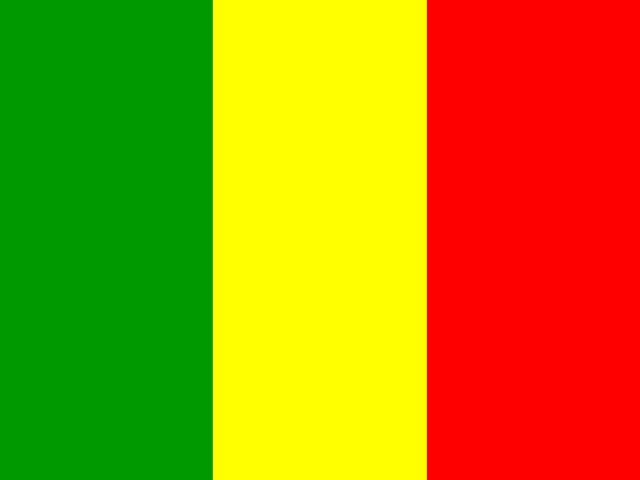 Mali Mali | Bamako | 23.3M | 1,240,192 km² |
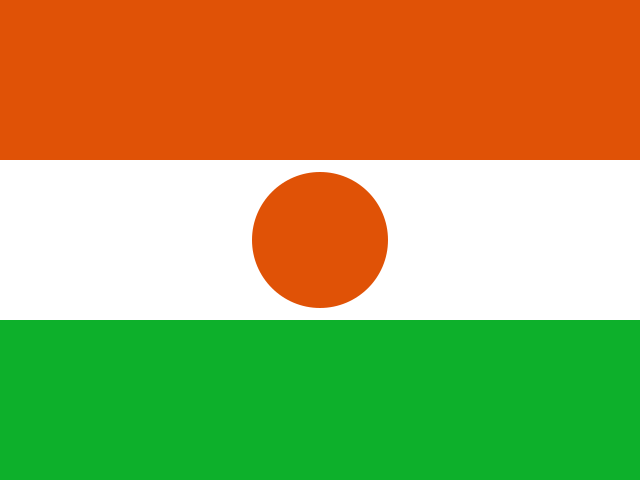 Niger Niger | Niamey | 27.2M | 1,267,000 km² |
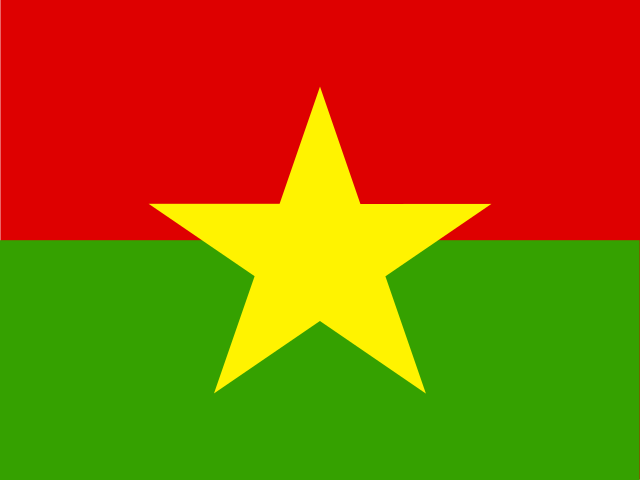 Burkina Faso Burkina Faso | Ouagadougou | 23.5M | 274,200 km² |
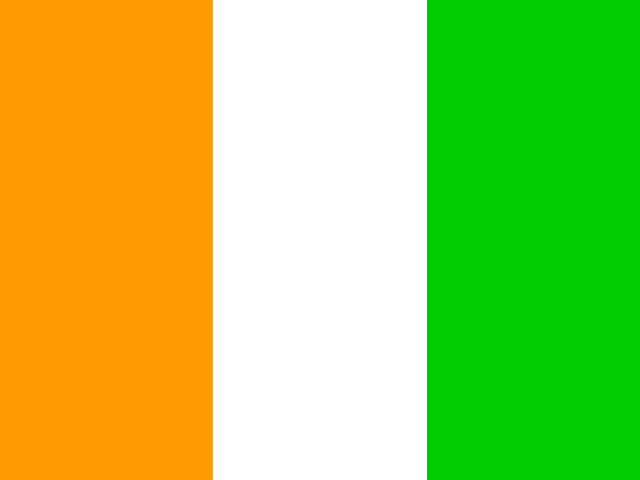 Côte d'Ivoire Côte d'Ivoire | Yamoussoukro | 31.2M | 322,463 km² |
 Guinea Guinea | Conakry | 14.5M | 245,857 km² |
 Gambia Gambia | Banjul | 2.8M | 11,295 km² |
 Liberia Liberia | Monrovia | 5.5M | 111,369 km² |
 Sierra Leone Sierra Leone | Freetown | 8.6M | 71,740 km² |
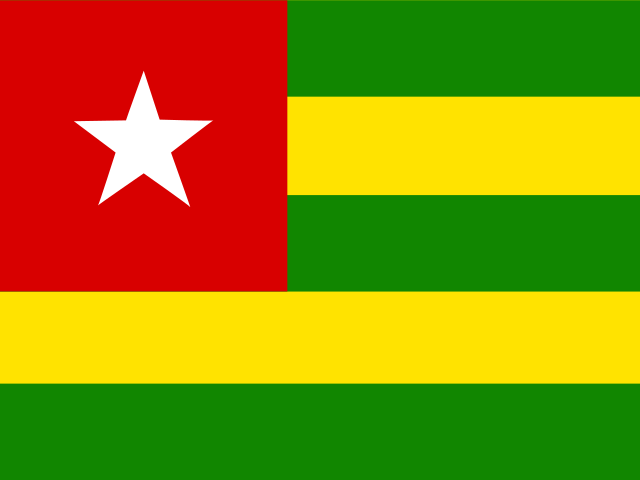 Togo Togo | Lomé | 9.0M | 56,785 km² |
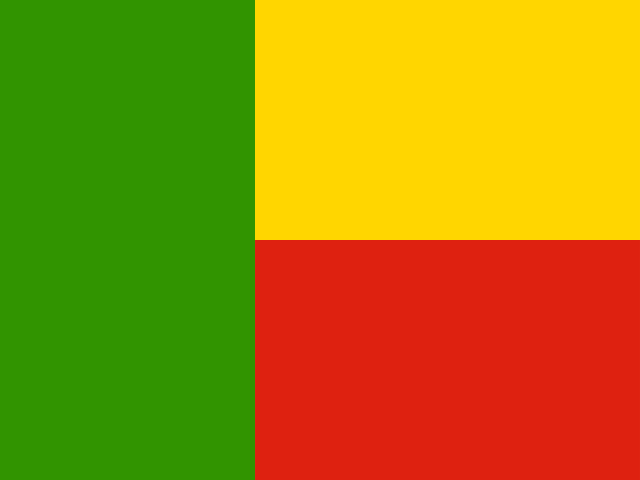 Benin Benin | Porto-Novo | 14.1M | 112,622 km² |
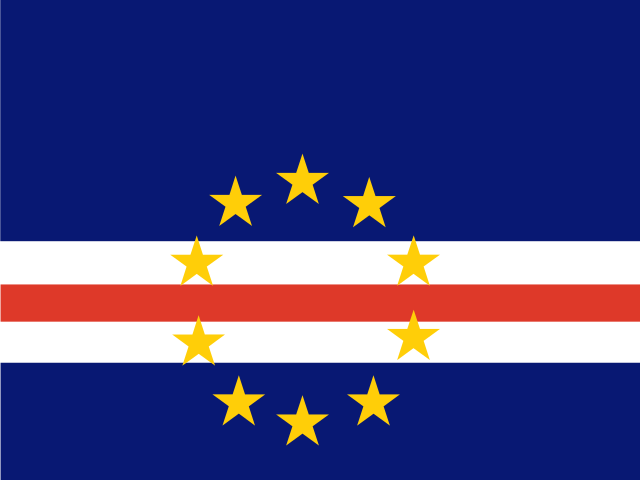 Cape Verde Cape Verde | Praia | 0.60M | 4,033 km² |
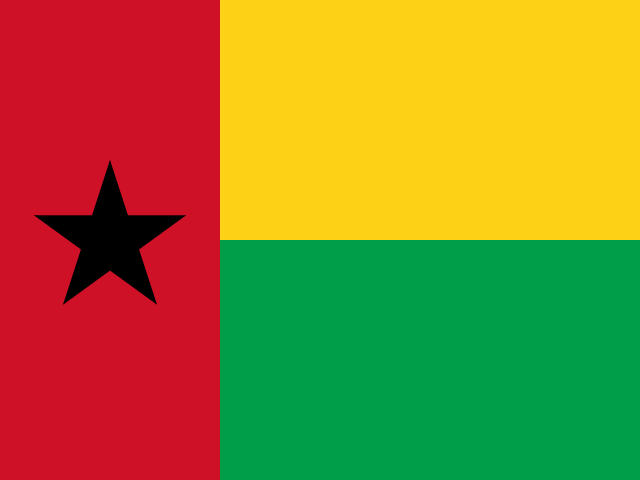 Guinea-Bissau Guinea-Bissau | Bissau | 2.2M | 36,125 km² |
 Mauritania Mauritania | Nouakchott | 4.9M | 1,030,700 km² |
 São Tomé and Príncipe São Tomé and Príncipe | São Tomé | 0.23M | 964 km² |
Nigeria: Lagos is the largest city and former capital; Côte d'Ivoire: Abidjan is the economic capital and largest city; Benin: Cotonou is the seat of government and largest city.
Study the Countries
Nigeria
Borders: Benin, Niger, Chad, Cameroon
Area: 923,768 km² · Coastline: 853 km
Nigeria is the most populous country in Africa, located on the Gulf of Guinea in West Africa. The Niger River and its tributary the Benue River divide the country into three distinct geographic regions. The south has tropical rainforests and mangrove swamps, the center has savanna, and the north borders the Sahel.
Shape: A large, roughly square country on the Gulf of Guinea, with a distinctive southeastern protrusion toward Cameroon.
Fun Facts
- Nigeria is the most populous country in Africa with over 220 million people.
- The Niger River, Africa's third-longest river, forms a large delta on Nigeria's coast.
- Nigeria shares its name with the Niger River, which flows through the western part of the country.
Ghana
Borders: Côte d'Ivoire, Burkina Faso, Togo
Area: 238,533 km² · Coastline: 539 km
Ghana is located on the Gulf of Guinea, between Côte d'Ivoire and Togo. Lake Volta, one of the world's largest artificial lakes, dominates the country's eastern interior. The terrain is mostly low plains, with a dissected plateau in the south-central region.
Shape: A roughly rectangular country on the southern coast of West Africa, slightly taller than it is wide.
Fun Facts
- Lake Volta in Ghana is one of the largest artificial lakes in the world by surface area.
- Ghana was the first sub-Saharan African country to gain independence from colonial rule in 1957.
- The Prime Meridian (0° longitude) passes through the port city of Tema in Ghana.
Senegal
Borders: Mauritania, Mali, Guinea, Guinea-Bissau, Gambia
Area: 196,722 km² · Coastline: 531 km
Senegal is located at the westernmost point of continental Africa, with a long Atlantic coastline. The country almost completely surrounds Gambia, a narrow country along the Gambia River. Senegal's terrain is mostly flat, with rolling plains and foothills in the southeast.
Shape: A country at the westernmost tip of Africa with a distinctive hole in the middle where Gambia cuts inland along a river.
Fun Facts
- Senegal almost completely surrounds The Gambia, which cuts into Senegal along the Gambia River.
- Cap Vert in Senegal is the westernmost point of continental Africa.
- The Senegal River forms the country's northern border with Mauritania.
Mali
Borders: Algeria, Niger, Burkina Faso, Côte d'Ivoire, Guinea, Senegal, Mauritania
Area: 1,240,192 km² · Landlocked
Mali is a large, landlocked country in the interior of West Africa. The northern half lies within the Sahara Desert, while the south is watered by the Niger River, which makes a dramatic bend through the country. The Niger Inland Delta creates a vast seasonal wetland in central Mali.
Shape: A large, landlocked country shaped somewhat like a bowtie or hourglass, with a wider northern desert region and a wider southern area connected by a narrower middle.
Fun Facts
- Mali is the largest country in West Africa by area.
- The Niger River makes a dramatic bend through Mali, creating the fertile Inner Niger Delta.
- Mali shares borders with seven countries, more than any other West African nation.
Niger
Borders: Algeria, Libya, Chad, Nigeria, Benin, Burkina Faso, Mali
Area: 1,267,000 km² · Landlocked
Niger is a large, landlocked country in the Sahel region, with most of its territory in the Sahara Desert. Only the southwestern corner along the Niger River and the southern border region receive enough rainfall for agriculture. The Aïr Mountains in the north provide some elevation in an otherwise flat landscape.
Shape: A large landlocked country with a wide northern section and a narrower southern portion, sharing its southern border with Nigeria.
Fun Facts
- Niger is one of the hottest countries in the world, nicknamed "the Frying Pan of the World."
- Over 80% of Niger's territory lies within the Sahara Desert.
- Niger shares borders with seven countries, tying with Mali for the most in West Africa.
Burkina Faso
Borders: Mali, Niger, Benin, Togo, Ghana, Côte d'Ivoire
Area: 274,200 km² · Landlocked
Burkina Faso is a landlocked country in the center of West Africa, surrounded by six nations. The terrain is mostly flat savanna with a gradual slope to the south. The country is drained by three main rivers: the Black Volta, White Volta, and Red Volta.
Shape: A compact, roughly circular landlocked country surrounded by six neighbors in the heart of West Africa.
Fun Facts
- Burkina Faso means "Land of Incorruptible People" in the local Mooré and Dioula languages.
- Burkina Faso borders six countries, making it one of the most connected nations in West Africa.
- The three branches of the Volta River (Black, White, and Red) all flow through Burkina Faso.
Côte d'Ivoire
Borders: Liberia, Guinea, Mali, Burkina Faso, Ghana
Area: 322,463 km² · Coastline: 515 km
Côte d'Ivoire is located on the southern coast of West Africa along the Gulf of Guinea. The south is covered in tropical rainforest, transitioning to savanna in the north. The terrain is mostly flat with some mountainous areas in the northwest near the border with Guinea.
Shape: A roughly square-shaped country on the southern coast of West Africa, between Liberia/Guinea and Ghana.
Fun Facts
- Côte d'Ivoire is the world's largest producer of cocoa beans.
- The country's name means "Ivory Coast" in French, named by early European traders.
- Yamoussoukro, the official capital, houses the world's largest church building, the Basilica of Our Lady of Peace.
Guinea
Borders: Guinea-Bissau, Senegal, Mali, Côte d'Ivoire, Liberia, Sierra Leone
Area: 245,857 km² · Coastline: 320 km
Guinea is located on the Atlantic coast of West Africa. The Fouta Djallon highlands in the center of the country are the source of many of West Africa's major rivers, including the Niger, Senegal, and Gambia rivers. The terrain varies from coastal plains to highland plateaus to forested mountains.
Shape: A crescent-shaped country on the coast of West Africa, curving around Sierra Leone and into the interior.
Fun Facts
- Guinea's Fouta Djallon highlands are the source of the Niger, Senegal, and Gambia rivers.
- Guinea has some of the world's largest reserves of bauxite (aluminum ore).
- Guinea borders six countries and has been called the "water tower of West Africa."
Gambia
Borders: Senegal
Area: 11,295 km² · Coastline: 80 km
Gambia is the smallest country in mainland Africa, shaped as a narrow strip of land along both banks of the Gambia River. The country is entirely surrounded by Senegal except for its short Atlantic coastline. It is less than 50 km wide at its broadest point and stretches about 350 km inland.
Shape: An extremely narrow, finger-like country following a river eastward from the Atlantic coast, completely enclosed by Senegal.
Fun Facts
- Gambia is the smallest country on mainland Africa.
- The country is essentially a narrow strip of land on either side of the Gambia River, never more than 50 km wide.
- Gambia is entirely surrounded by Senegal except for its small Atlantic coastline.
Liberia
Borders: Sierra Leone, Guinea, Côte d'Ivoire
Area: 111,369 km² · Coastline: 579 km
Liberia is located on the Atlantic coast of West Africa between Sierra Leone and Côte d'Ivoire. The country has a flat to rolling coastal plain that rises to a rolling plateau and low mountains in the northeast. Dense tropical rainforest covers much of the interior.
Shape: A small, roughly triangular country on the West African coast, south of Guinea.
Fun Facts
- Liberia is the oldest republic in Africa, founded by freed American slaves in 1847.
- Liberia and Ethiopia are the only two African countries never colonized by European powers.
- The country's capital, Monrovia, is named after US President James Monroe.
Sierra Leone
Borders: Guinea, Liberia
Area: 71,740 km² · Coastline: 402 km
Sierra Leone is located on the Atlantic coast of West Africa, between Guinea and Liberia. The country has a diverse terrain ranging from mangrove swamps along the coast to wooded hills and a plateau in the interior, with mountains in the east reaching up to 1,948 meters.
Shape: A compact, roughly circular country on the coast between Guinea and Liberia, with a rounded western coastline.
Fun Facts
- Sierra Leone means "Lion Mountains," named by Portuguese explorers for the shape of hills near the coast.
- The country has one of the largest natural harbors in the world at Freetown.
- Sierra Leone has some of the world's richest diamond deposits.
Togo
Borders: Ghana, Burkina Faso, Benin
Area: 56,785 km² · Coastline: 56 km
Togo is a narrow, elongated country in West Africa, stretching from the Gulf of Guinea northward between Ghana and Benin. Despite its small size, the terrain is diverse, with a short southern coastline, central hills and plateaus, and a flat savanna in the north.
Shape: A very narrow, elongated country oriented north-south, squeezed between Ghana and Benin with only a tiny coastline.
Fun Facts
- Togo is one of the narrowest countries in the world, only about 100-150 km wide.
- The country stretches about 550 km from south to north but has only 56 km of coastline.
- Togo is sandwiched between Ghana to the west and Benin to the east.
Benin
Borders: Togo, Burkina Faso, Niger, Nigeria
Area: 112,622 km² · Coastline: 121 km
Benin is a narrow country in West Africa, oriented north-south between Togo and Nigeria. Like Togo, it stretches from a short southern coastline on the Gulf of Guinea northward to the Niger River. The Atakora Mountains run through the northwestern region.
Shape: A narrow, north-south oriented country similar to Togo but slightly wider, located between Togo and Nigeria.
Fun Facts
- Benin was formerly known as Dahomey, named after the powerful Kingdom of Dahomey.
- Benin is considered the birthplace of the Vodun (Voodoo) religion.
- The country has a short coastline of only 121 km but stretches over 600 km inland.
Cape Verde
Area: 4,033 km² · Coastline: 965 km
Cape Verde is an archipelago of 10 volcanic islands in the central Atlantic Ocean, located about 570 km off the coast of West Africa. The islands are divided into the windward (Barlavento) and leeward (Sotavento) groups. The terrain is rugged and volcanic, with the highest point being Mount Fogo at 2,829 meters.
Shape: A group of small islands in the Atlantic Ocean off the coast of Senegal, arranged in a rough horseshoe shape.
Fun Facts
- Cape Verde is an island nation located about 570 km off the western coast of Africa.
- Mount Fogo is an active volcano that last erupted in 2014.
- Cape Verde has no land borders with any country, being entirely surrounded by the Atlantic Ocean.
Guinea-Bissau
Borders: Senegal, Guinea
Area: 36,125 km² · Coastline: 350 km
Guinea-Bissau is a small country on the Atlantic coast of West Africa, between Senegal and Guinea. The country includes the Bijagós Archipelago and a mainland portion that consists mostly of low-lying coastal plains and swamps. The terrain is mostly flat, rising slightly in the east.
Shape: A small, compact country on the coast south of Senegal, with many offshore islands.
Fun Facts
- Guinea-Bissau includes the Bijagós Archipelago of about 88 islands off its coast.
- The country is one of the smallest in West Africa, roughly the size of Switzerland.
- Guinea-Bissau was a Portuguese colony, unlike most of its French-colonized neighbors.
Mauritania
Borders: Morocco, Algeria, Mali, Senegal
Area: 1,030,700 km² · Coastline: 754 km
Mauritania is located in western North Africa and West Africa, stretching from the Atlantic coast inland across the Sahara Desert. Most of its territory is covered by the Sahara, making it one of the most sparsely populated countries in the world. Only a narrow strip along the Senegal River supports significant agriculture.
Shape: A large country on the Atlantic coast of northwest Africa, mostly desert, forming the bridge between North and West Africa.
Fun Facts
- About 90% of Mauritania lies within the Sahara Desert.
- Mauritania bridges North Africa and West Africa, being included in both regional groupings.
- The Richat Structure (Eye of the Sahara) is a prominent circular geological formation in Mauritania.
São Tomé and Príncipe
Area: 964 km² · Coastline: 209 km
São Tomé and Príncipe is a small island nation in the Gulf of Guinea, located off the western coast of Central Africa near the equator. The two main islands are volcanic in origin with mountainous interiors covered in tropical rainforest. São Tomé is the larger island, with Príncipe located about 140 km to the northeast.
Shape: Two small volcanic islands in the Gulf of Guinea, positioned near the equator off the coast of Gabon.
Fun Facts
- São Tomé and Príncipe is the second-smallest African country by area.
- The islands sit almost exactly on the equator in the Gulf of Guinea.
- São Tomé and Príncipe has no land borders, being an island nation in the Atlantic.
Quick Reference
Test Your Knowledge
Can you identify these countries on the map?
Practice with Games
Ready to test what you learned? Jump into a game and put it into practice.
About West Africa Geography
West Africa is one of the most diverse regions on the continent, encompassing 16 countries that range from vast Saharan nations like Mali and Niger to tiny coastal states like Gambia and Togo. The region is shaped by the Niger River, the Atlantic coastline, and the gradual transition from Sahara Desert in the north to tropical rainforest in the south.
Frequently Asked Questions
How many countries are in West Africa?
West Africa has 16 countries according to the UN geoscheme: Benin, Burkina Faso, Cape Verde, Côte d'Ivoire, Gambia, Ghana, Guinea, Guinea-Bissau, Liberia, Mali, Mauritania, Niger, Nigeria, Senegal, Sierra Leone, and Togo.
Which is the largest country in West Africa?
Niger is the largest West African country by area at approximately 1.27 million km², followed closely by Mali at 1.24 million km². Both are largely covered by the Sahara Desert.
Which West African country is an island nation?
Cape Verde is the only island nation in West Africa, an archipelago of 10 volcanic islands located about 570 km off the coast of Senegal in the Atlantic Ocean.
Which countries and capitals are in West Africa?
The 17 countries covered in this lesson and their capitals are: Nigeria (Abuja), Ghana (Accra), Senegal (Dakar), Mali (Bamako), Niger (Niamey), Burkina Faso (Ouagadougou), Côte d'Ivoire (Yamoussoukro), Guinea (Conakry), Gambia (Banjul), Liberia (Monrovia), Sierra Leone (Freetown), Togo (Lomé), Benin (Porto-Novo), Cape Verde (Praia), Guinea-Bissau (Bissau), Mauritania (Nouakchott), São Tomé and Príncipe (São Tomé).
What is the most populous country in West Africa?
Nigeria is by far the most populous country in West Africa - and in all of Africa - with more than 220 million people, roughly half of the region's population.