Flags of Africa
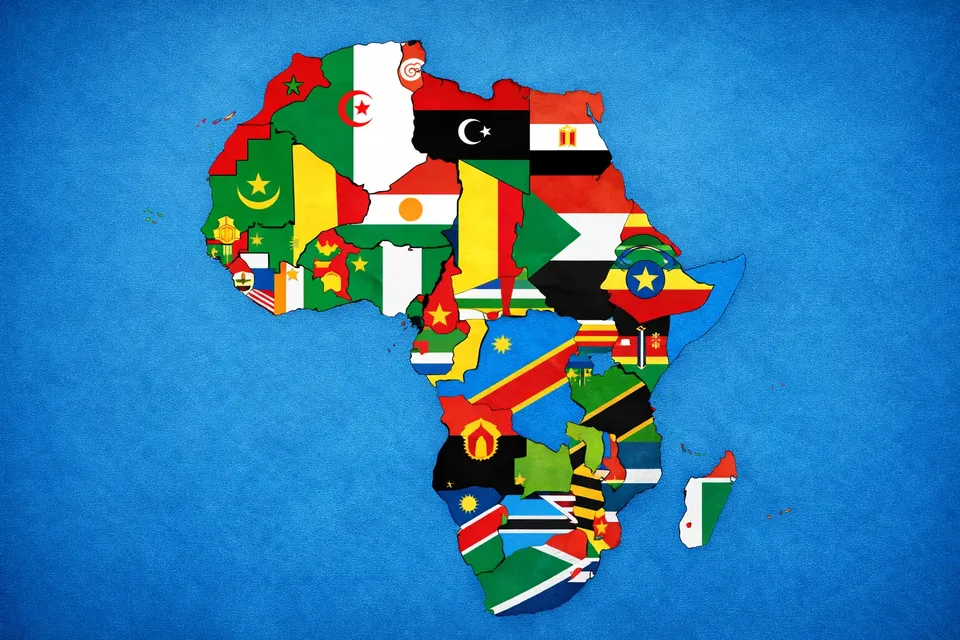
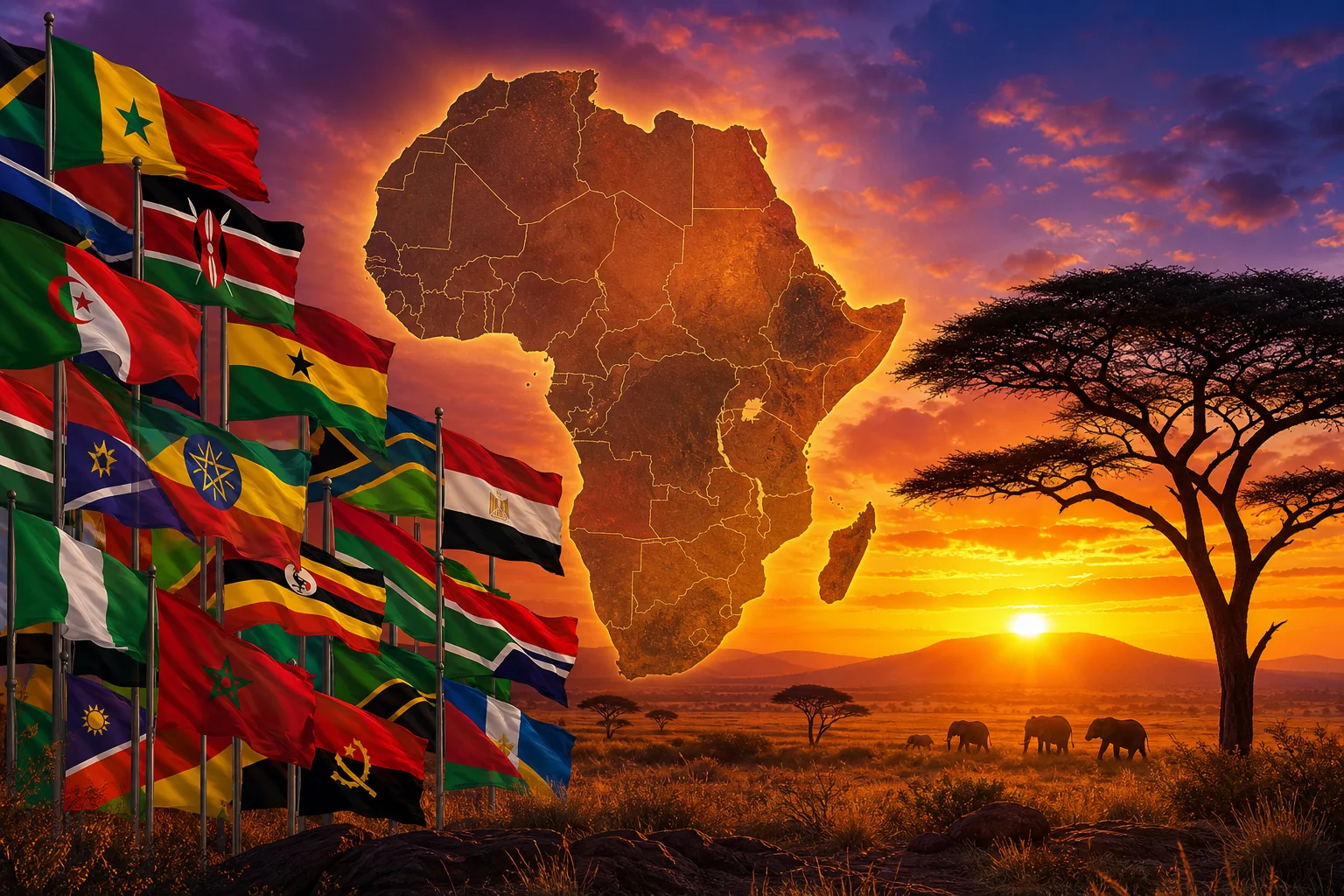
Africa is home to 54 nations, each with a flag that reflects its journey from colonialism to independence. Many African flags feature Pan-African colors (red, gold, green) symbolizing unity, wealth, and the continent's lush landscapes. Others incorporate unique symbols representing cultural heritage, natural resources, and national aspirations.
Study the Flags
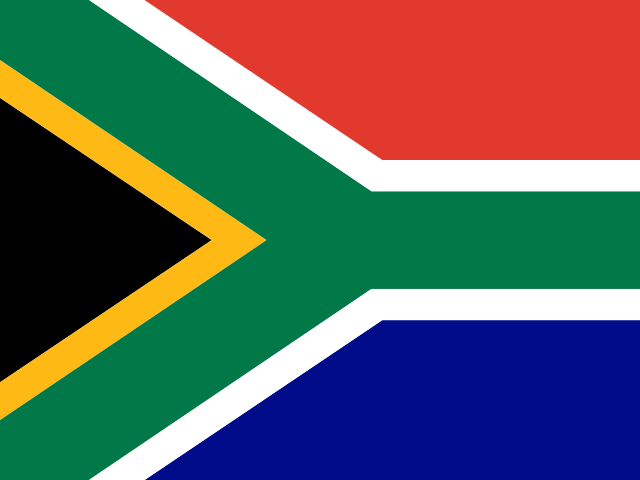
South Africa
Capital: Pretoria
Horizontal bands of red and blue separated by a green Y-shape bordered in white and gold, with a black triangle at the hoist.
Adopted: 1994
Fun Facts
- The flag uses 6 colors - more than almost any other national flag
- The Y-shape represents different groups converging and moving forward together
- Adopted in 1994 when Nelson Mandela became president, ending apartheid
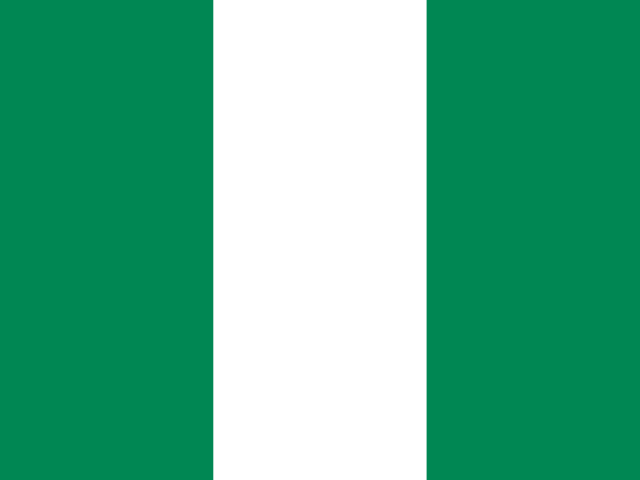
Nigeria
Capital: Abuja
Three vertical stripes: green, white, green.
Adopted: 1960
Fun Facts
- The green stripes represent Nigeria's abundant natural wealth and agriculture
- The white stripe represents peace and unity between the diverse ethnic groups
- Nigeria is Africa's most populous country with over 220 million people
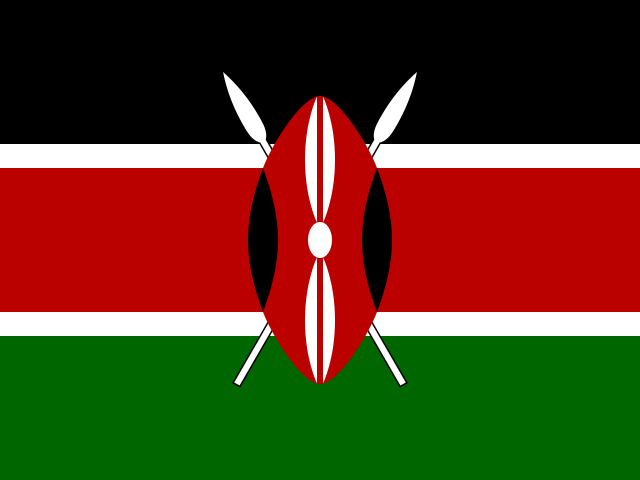
Kenya
Capital: Nairobi
Three horizontal stripes: black, red, green, separated by thin white bands. A Maasai shield and two spears centered.
Adopted: 1963
Fun Facts
- The Maasai shield and spears represent the defense of freedom
- Black represents the people, red the blood shed for independence, green the landscape
- Kenya's flag is based on the flag of KANU, the independence movement party
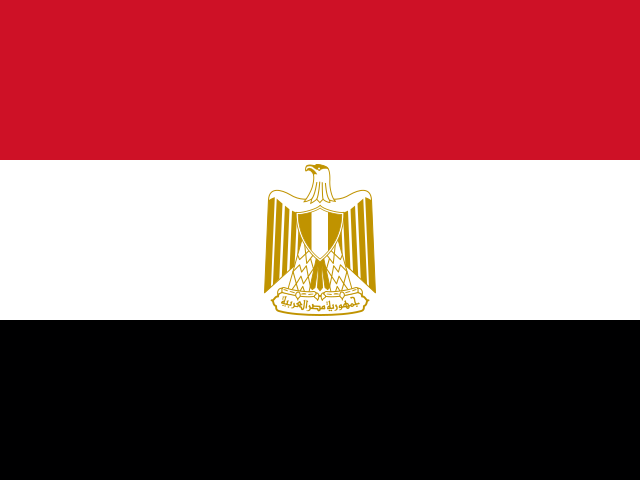
Egypt
Capital: Cairo
Three horizontal stripes: red, white, black. The golden Eagle of Saladin centered on the white stripe.
Adopted: 1984
Fun Facts
- The Eagle of Saladin on the flag represents power and strength
- Red represents the 1952 revolution, white the future, black the end of oppression
- Egypt's colors are shared with Iraq, Syria, and Yemen - all pan-Arab colors
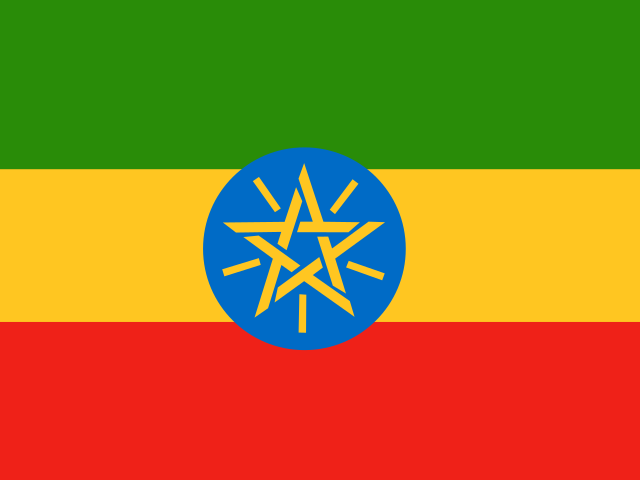
Ethiopia
Capital: Addis Ababa
Three horizontal stripes: green, yellow, red. A blue circle with a gold pentagram centered on the flag.
Adopted: 1996
Fun Facts
- Ethiopia's green, yellow, and red inspired the Pan-African color scheme used by many nations
- Ethiopia was never colonized, making its flag one of Africa's oldest
- The blue circle and star were added in 1996 to represent diversity and prosperity
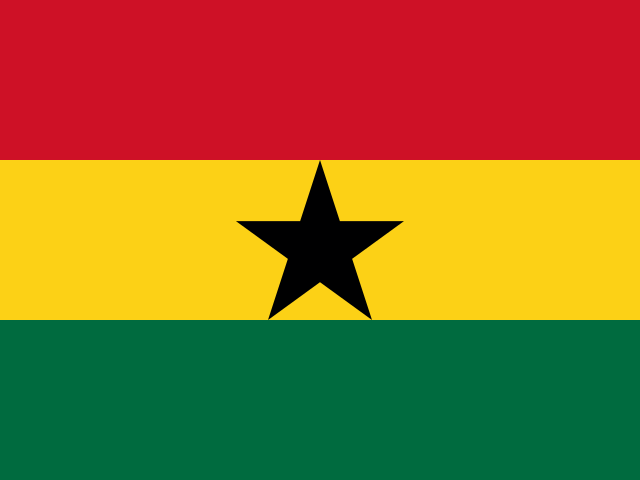
Ghana
Capital: Accra
Three horizontal stripes: red, gold, green. A black five-pointed star centered on the gold stripe.
Adopted: 1957
Fun Facts
- Ghana was the first sub-Saharan African country to gain independence (1957)
- The black star represents African freedom and is on Ghana's coat of arms
- Red represents the blood of independence fighters, gold mineral wealth, green forests
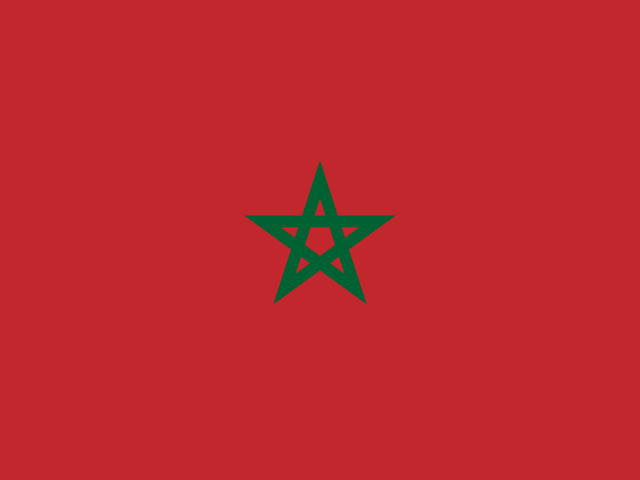
Morocco
Capital: Rabat
Red field with a green five-pointed star (pentagram) outlined in the center.
Adopted: 1915
Fun Facts
- The green pentagram (pentacle) is called the Seal of Solomon
- Red has been the color of Moroccan rulers (the Alaouite dynasty) since the 17th century
- Morocco's flag is one of the few African flags without Pan-African colors
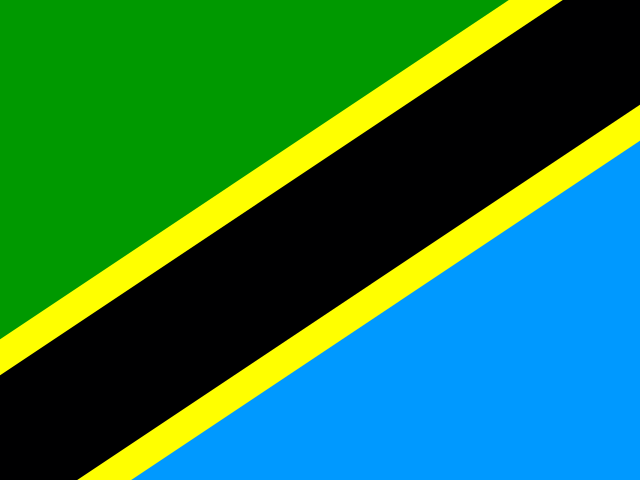
Tanzania
Capital: Dodoma
A black diagonal stripe bordered by yellow running from bottom-left to top-right, with green (upper-left) and blue (lower-right) sections.
Adopted: 1964
Fun Facts
- The flag combines elements from the former flags of Tanganyika and Zanzibar
- Green represents vegetation, blue the Indian Ocean, black the people, yellow mineral wealth
- Tanzania is home to Mount Kilimanjaro, Africa's highest peak
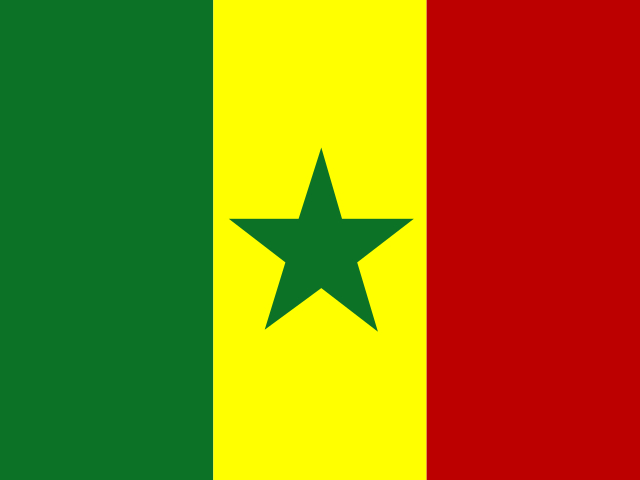
Senegal
Capital: Dakar
Three vertical stripes: green, yellow (with a green star), red.
Adopted: 1960
Fun Facts
- The green star represents hope and Africa's green landscapes
- Senegal's layout resembles Mali's plain vertical stripes plus a green star on the yellow band
- Green represents Islam, yellow the wealth of Africa, red the sacrifices for independence
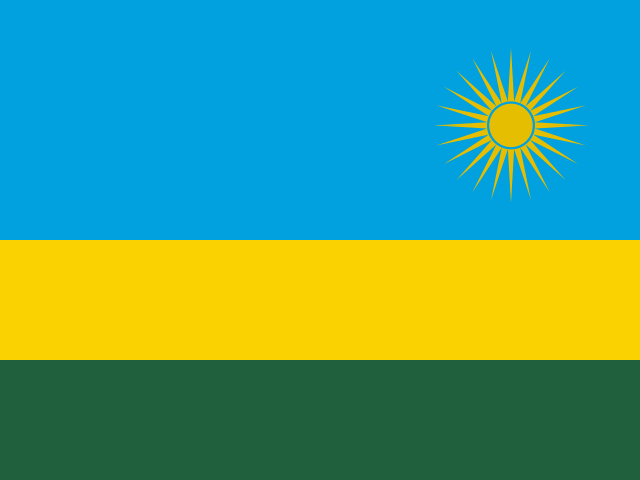
Rwanda
Capital: Kigali
Three horizontal stripes: blue (large), yellow, green. A golden sun with 24 rays in the upper-right corner of the blue stripe.
Adopted: 2001
Fun Facts
- Rwanda changed its flag in 2001 to move away from the painful symbolism of the old flag after the 1994 genocide
- The sun represents enlightenment and the fight against ignorance
- Blue represents happiness, yellow economic development, green hope and prosperity
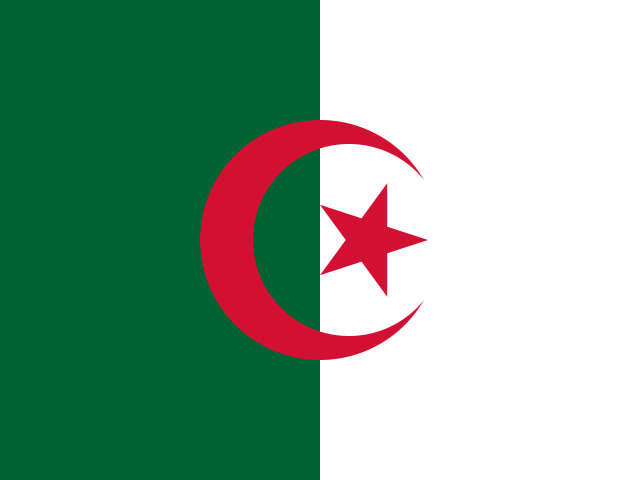
Algeria
Capital: Algiers
Vertical halves: green at the hoist, white at the fly. A red crescent and star centered on the division.
Adopted: 1962
Fun Facts
- Green and white are traditional colors of Islam; the crescent and star are widely used Islamic symbols
- The flag was adopted in 1962 when Algeria won independence from France after a long war
- Algeria is Africa's largest country by land area
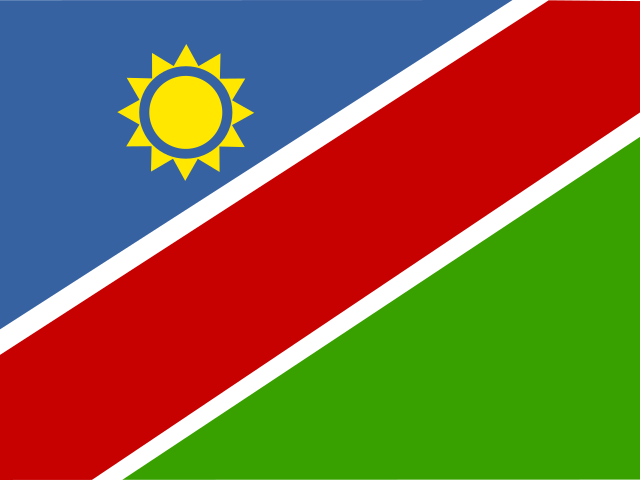
Namibia
Capital: Windhoek
A diagonal red stripe bordered in white separates an upper hoist triangle of blue with a gold sun from a lower fly triangle of green.
Adopted: 1990
Fun Facts
- The flag was adopted at independence in 1990, replacing South African-era symbols
- The golden sun represents life and energy; red recalls the struggle for freedom
- Namibia is one of the world's most sparsely populated countries
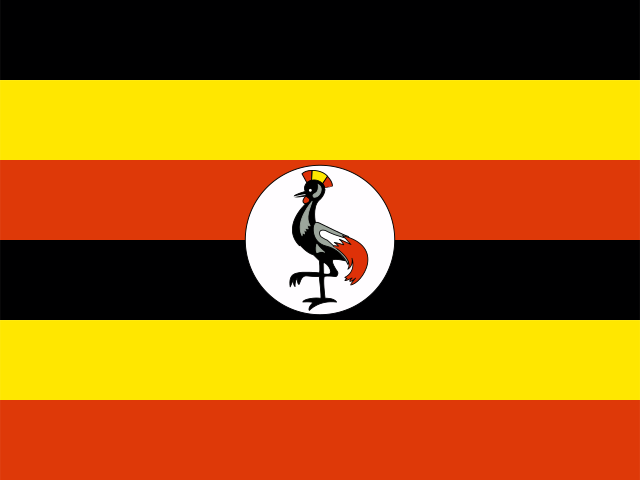
Uganda
Capital: Kampala
Six horizontal stripes: black, yellow, red, repeated. A white disc centered with the grey crowned crane standing on one leg.
Adopted: 1962
Fun Facts
- The grey crowned crane has been a Ugandan symbol for decades and appears facing the hoist
- The black-yellow-red stripes echo traditional colors of African kingdoms in the region
- Uganda means “land of the Baganda”-the largest ethnic group in the country
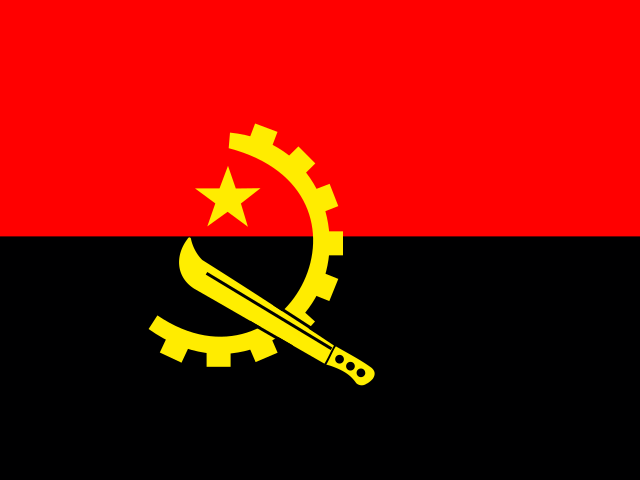
Angola
Capital: Luanda
Horizontal halves: red over black. A yellow emblem centered showing a gear, machete, and star.
Adopted: 1975
Fun Facts
- The emblem combines a gear (industry), machete (peasants), and star (progress)
- Red remembers colonial oppression; black and yellow recall Africa's richness
- Angola became independent from Portugal in 1975
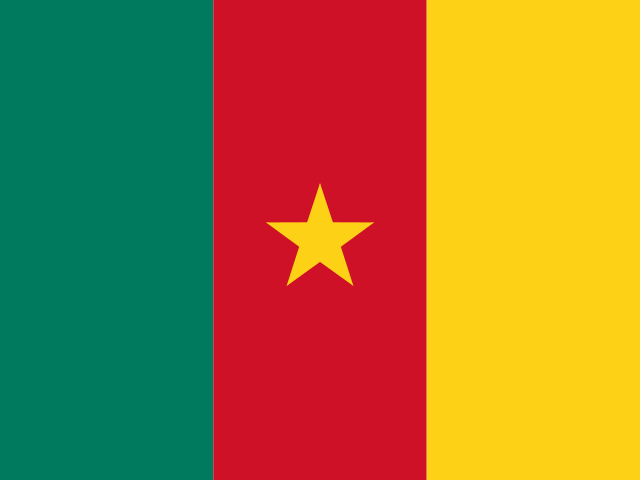
Cameroon
Capital: Yaoundé
Three vertical stripes: green, red, yellow. A yellow five-pointed star centered on the red stripe.
Adopted: 1975
Fun Facts
- Green stands for forests, red unity, yellow sun and savannahs
- The central star is sometimes called the star of unity
- Cameroon's flag dates from unification of French and British Cameroons
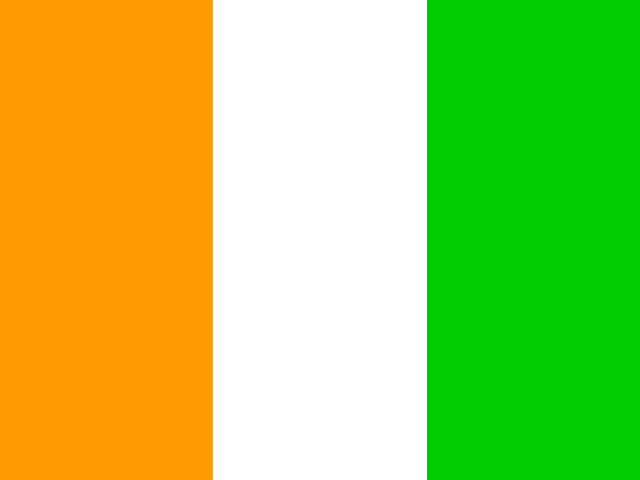
Ivory Coast
Capital: Yamoussoukro
Three vertical stripes: orange, white, green.
Adopted: 1959
Fun Facts
- Orange represents the northern savannah, green the southern forests, white peace
- It resembles Ireland's tricolor but with orange on the hoist instead of green
- The country's official French name is Côte d'Ivoire
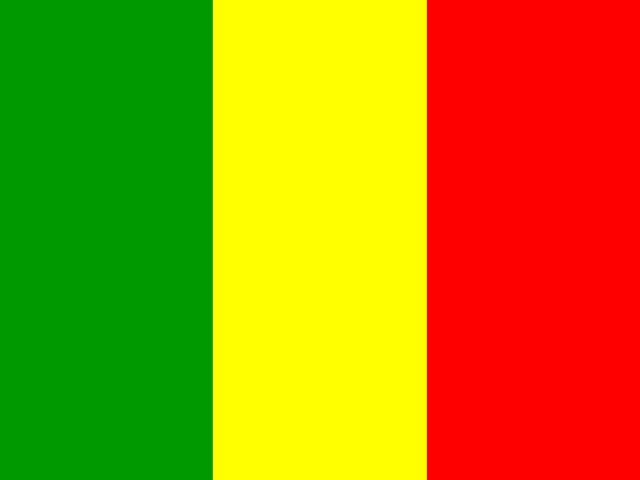
Mali
Capital: Bamako
Three vertical stripes: green, yellow, red.
Adopted: 1961
Fun Facts
- Pan-African vertical stripes echo Guinea's flag but Mali uses green-yellow-red
- Senegal's flag adds a green star on the yellow band; Mali's is plain
- Mali was home to powerful medieval empires including Mali and Songhai
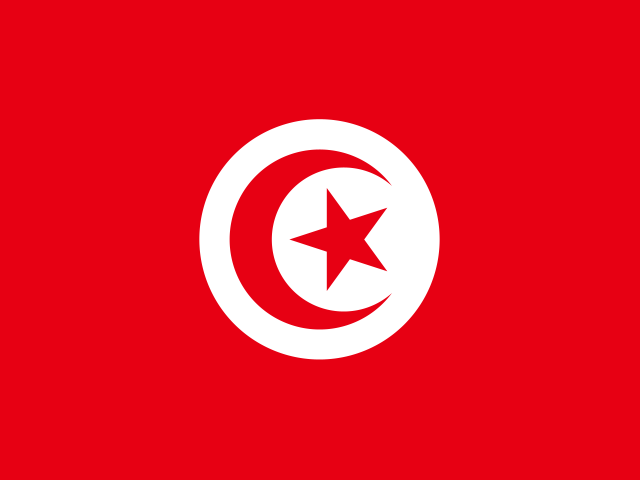
Tunisia
Capital: Tunis
Red field with a white disk bearing a red crescent and five-pointed star.
Adopted: 1959
Fun Facts
- The red and crescent-star recall historical Ottoman-era symbolism
- It is one of several flags influenced by Turkey's design tradition
- The white disk represents peace as well as contrast with the red field
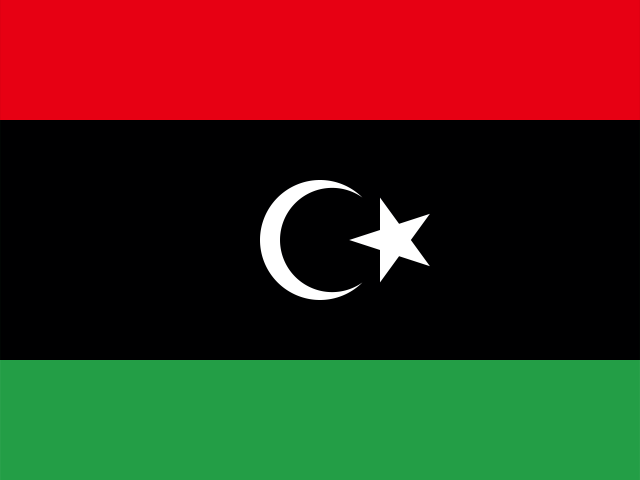
Libya
Capital: Tripoli
Three horizontal stripes: black, red, green. A white crescent and star centered on the red stripe.
Adopted: 2011
Fun Facts
- Black, red, and green reflect the flag of the Kingdom of Libya and pan-Arab themes
- This design returned after 2011; it replaced the plain green flag used from 1977 to 2011
- The crescent and star are widely used symbols across North Africa
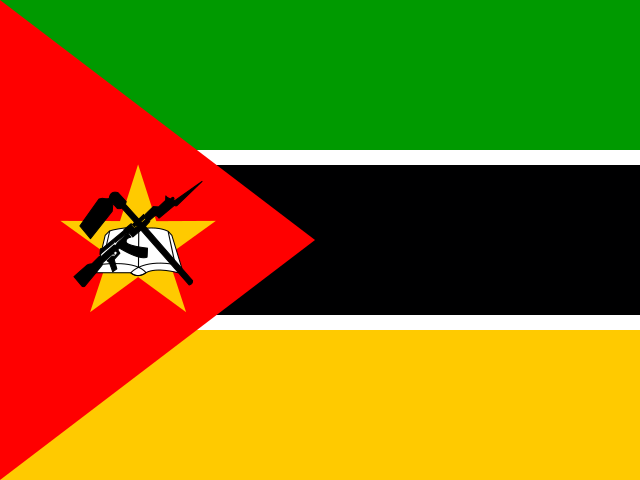
Mozambique
Capital: Maputo
Horizontal stripes green, black, yellow (fimbriated white); red triangle at the hoist with yellow star above crossed hoe and rifle over an open book.
Adopted: 1983
Fun Facts
- The open book, hoe, and rifle recall education, farming, and the independence struggle
- Green is agriculture, black the continent, yellow minerals, white peace, red revolution
- It is one of the few national flags to depict a modern firearm
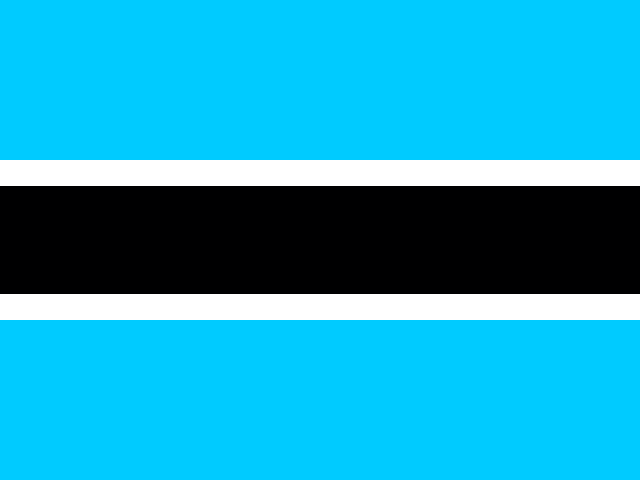
Botswana
Capital: Gaborone
Light blue field with a black horizontal stripe bordered in white through the center.
Adopted: 1966
Fun Facts
- Light blue represents rain and water-precious in this largely arid country
- The black and white bands symbolize racial harmony
- Botswana has been one of Africa's most stable democracies since independence
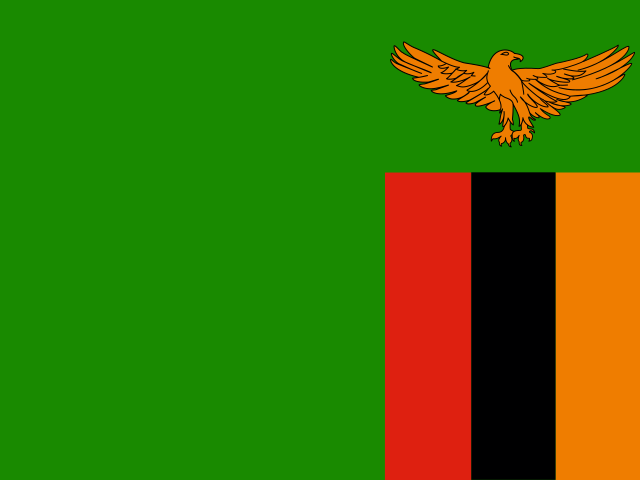
Zambia
Capital: Lusaka
Green field with an orange African fish eagle in flight above a vertical block of red, black, and orange stripes at the fly.
Adopted: 1964
Fun Facts
- The eagle recalls the fish eagle and the nation's ability to rise above challenges
- Green is flora, red the struggle for freedom, black the people, orange mineral wealth
- Zambia takes its name from the Zambezi River
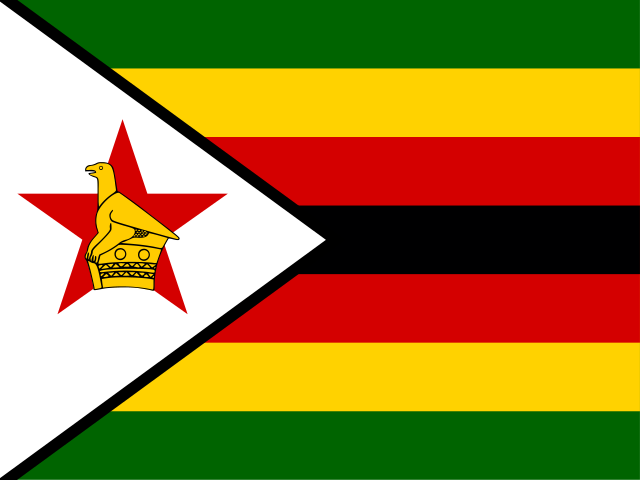
Zimbabwe
Capital: Harare
Seven horizontal stripes (green, gold, red, black, red, gold, green); a white triangle at the hoist charged with a red star and the Zimbabwe bird.
Adopted: 1980
Fun Facts
- The Zimbabwe bird comes from stone ruins at Great Zimbabwe
- Red stars symbolize aspirations of the nation; stripes echo Pan-African colors
- The flag was adopted when Zimbabwe gained independence in 1980
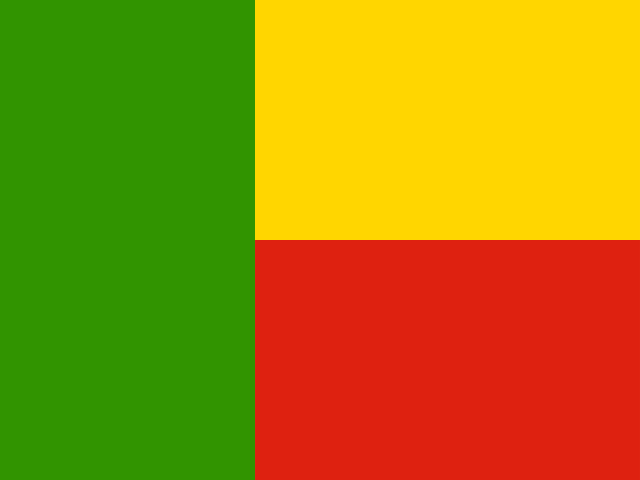
Benin
Capital: Porto-Novo
A vertical green band at the hoist beside horizontal yellow over red.
Adopted: 1959
Fun Facts
- Green recalls hope for democracy; yellow wealth; red courage of ancestors
- The flag echoes pan-African colors used across former French West Africa
- Benin sits on the Gulf of Guinea near Nigeria
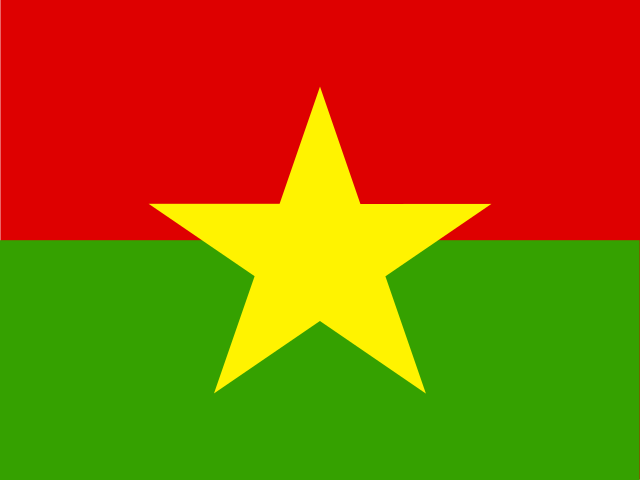
Burkina Faso
Capital: Ouagadougou
Horizontal halves: red over green. A yellow five-pointed star centered.
Adopted: 1984
Fun Facts
- The name means land of upright people in Moore and Dioula
- Red and green echo pan-African themes; the star is the guiding light of revolution
- Gold mining and agriculture shape much of the economy
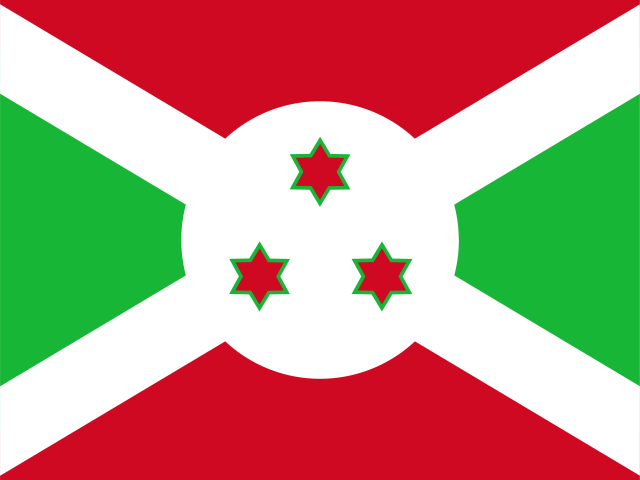
Burundi
Capital: Gitega
White saltire dividing green (above and below) and red (sides); white disk at center with three green stars edged red.
Adopted: 1967
Fun Facts
- Three stars stand for the three main ethnic groups united in national motto
- White diagonal lines suggest peace crossing divisions between fields
- Burundi is compact but densely populated around the African Great Lakes
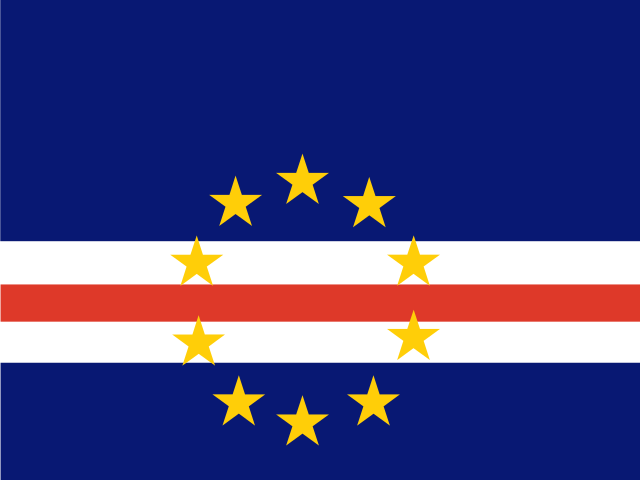
Cabo Verde
Capital: Praia
Blue field with three horizontal stripes (white, red, white) toward the fly and a ring of ten yellow five-pointed stars.
Adopted: 1992
Fun Facts
- The ten stars represent the main islands of the volcanic archipelago
- Blue is the Atlantic Ocean and sky
- Once a Portuguese colony, it became independent in 1975
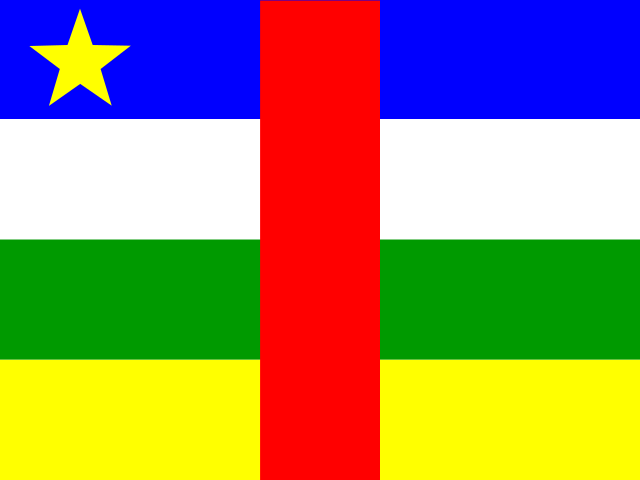
Central African Republic
Capital: Bangui
Four horizontal stripes (blue, white, green, yellow) split by a vertical red stripe bearing a yellow star.
Adopted: 1958
Fun Facts
- Red, white, and blue acknowledge France; green, yellow, and red pan-African ideals
- The vertical stripe and star resemble a beacon through the horizontal bands
- The country lies near the geographic heart of the continent
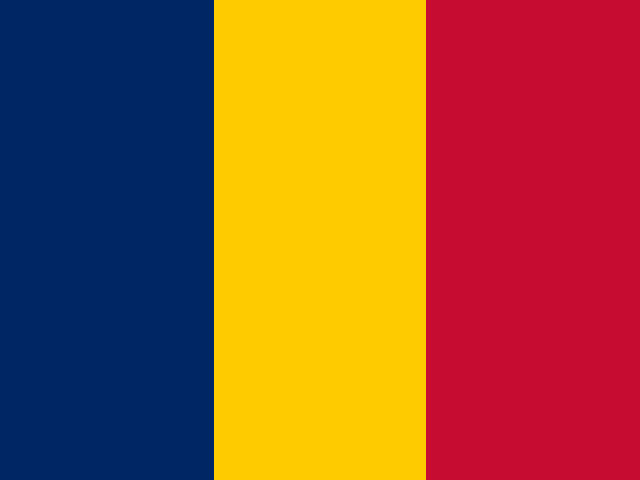
Chad
Capital: N'Djamena
Three vertical stripes: blue, yellow, red.
Adopted: 1959
Fun Facts
- Its vertical blue-yellow-red layout matches Romania except Chad's blue is darker
- Blue is sky and hope; yellow desert; red progress
- Lake Chad, though shrinking, historically anchored regional trade
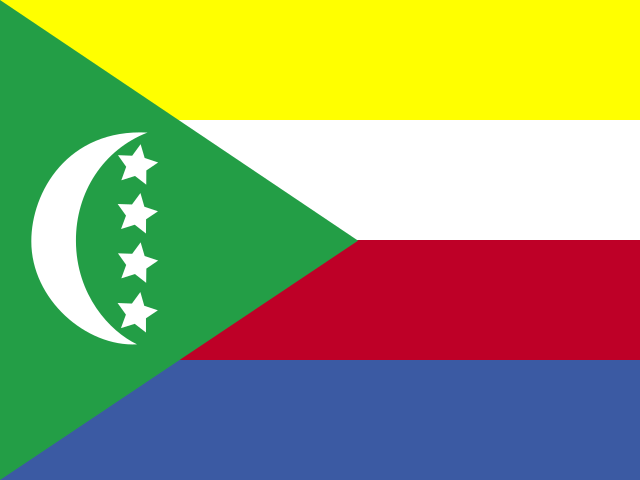
Comoros
Capital: Moroni
Green field with white crescent and four white stars beside four horizontal stripes (yellow, white, red, blue).
Adopted: 2002
Fun Facts
- The four stripes recall the nation's islands in the Indian Ocean archipelago
- Green is Islam; crescent and stars are prominent Islamic symbols
- Comoros lies at the northern entrance to the Mozambique Channel
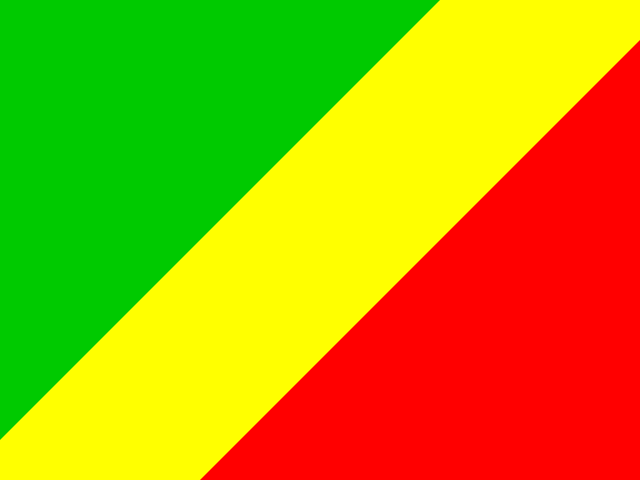
Republic of the Congo
Capital: Brazzaville
A diagonal yellow band divides green (upper hoist) from red (lower fly).
Adopted: 1991
Fun Facts
- Often called Congo-Brazzaville to distinguish it from DR Congo (Kinshasa)
- Green is agriculture and forests; yellow friendship and nobility; red independence struggles
- The Congo River separates it from Kinshasa across the water
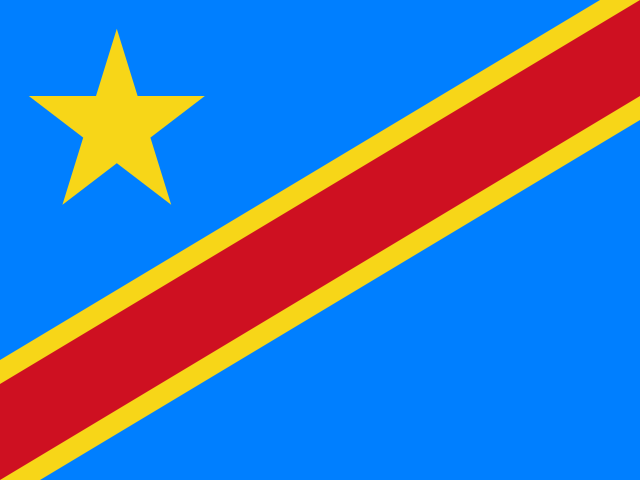
DR Congo
Capital: Kinshasa
Sky-blue field with a yellow star in the upper hoist and a diagonal red stripe with yellow edges.
Adopted: 2006
Fun Facts
- Sky blue stands for peace; the yellow star promises a radiant future
- The diagonal stripe recalls blood shed for independence, bordered in yellow
- DR Congo is among the world's largest countries by area
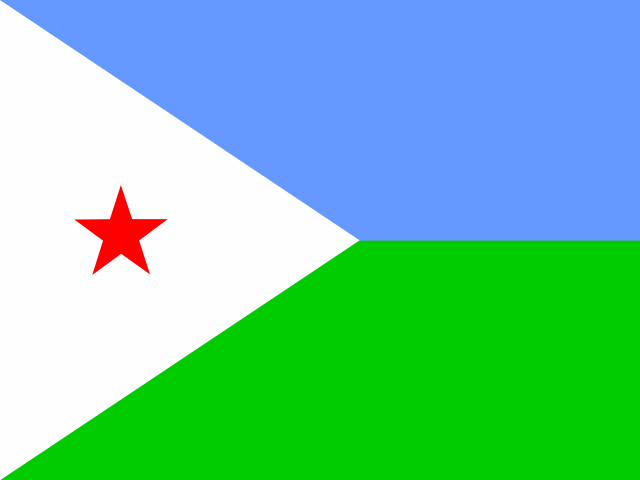
Djibouti
Capital: Djibouti
Horizontal light blue over green with a white triangle at the hoist bearing a red five-pointed star.
Adopted: 1977
Fun Facts
- Light blue is Issas (Somali lineage); green Afars; white peace
- The red star stands for unity and independence
- Djibouti commands the strategic Bab-el-Mandeb strait
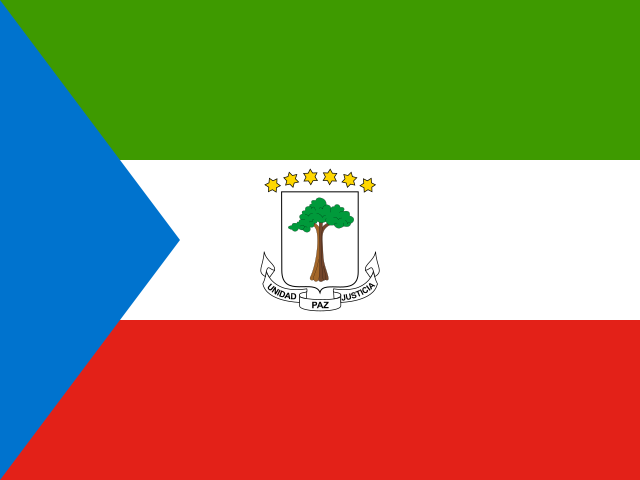
Equatorial Guinea
Capital: Ciudad de la Paz
Horizontal green, white, red with a blue triangle at the hoist charged with the national coat of arms.
Adopted: 1979
Fun Facts
- Green is natural resources; white peace; red independence
- The silk-cotton tree on the coat of arms recalls the historic treaty tree
- Spanish is an official language alongside French and Portuguese
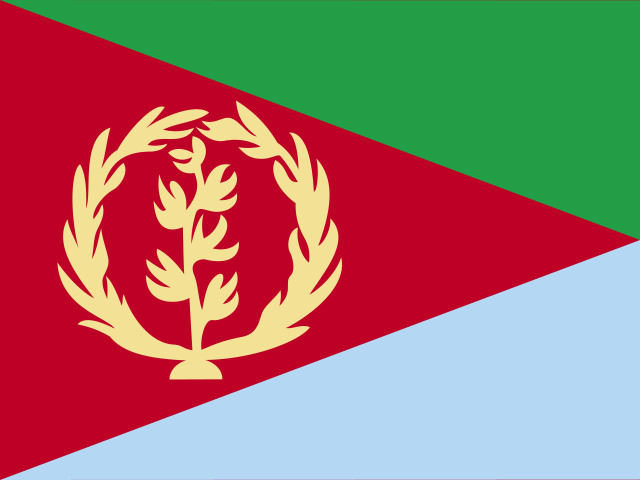
Eritrea
Capital: Asmara
Green (upper hoist triangle), blue (lower triangle), and red (large triangle from hoist); yellow olive branch emblem in red triangle.
Adopted: 1995
Fun Facts
- The olive branch with wreath stands for peace earned after the long independence war
- Green, red, and blue fields echo liberation-movement colors
- Eritrea has an extensive Red Sea coastline
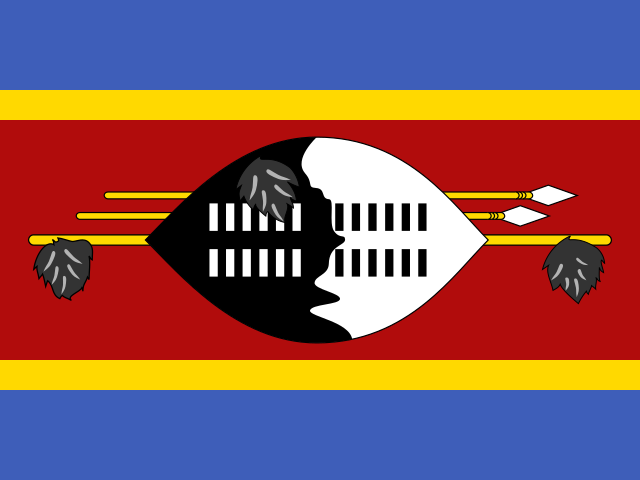
Eswatini
Capital: Mbabane
Horizontal blue-yellow-blue stripes with a central black-and-white Nguni shield and spears.
Adopted: 1968
Fun Facts
- Formerly known internationally as Swaziland; renamed Eswatini in 2018
- The shield and spears reflect defense of tradition
- One of Africa's smallest countries and landlocked inside southern Africa
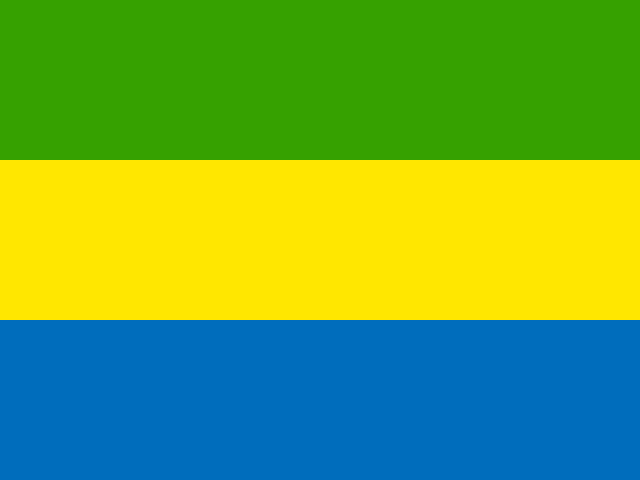
Gabon
Capital: Libreville
Three horizontal stripes: green, yellow, blue.
Adopted: 1960
Fun Facts
- Yellow is the Equator crossing Gabon; green forests; blue Atlantic
- Gabon is heavily forested with relatively low population density
- Oil and manganese exports dominate foreign earnings
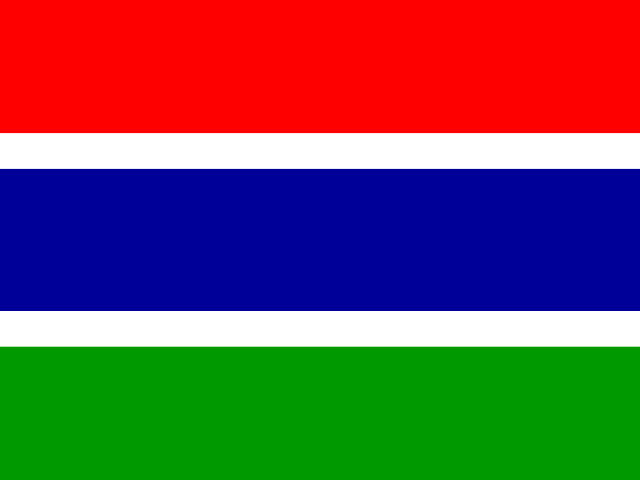
Gambia
Capital: Banjul
Wide red stripe edged in white between narrower blue stripes on a green field.
Adopted: 1965
Fun Facts
- The flag mirrors the Gambia River flowing between wooded plains
- One of continental Africa's smallest mainland states
- Surrounded by Senegal except for a short Atlantic coast
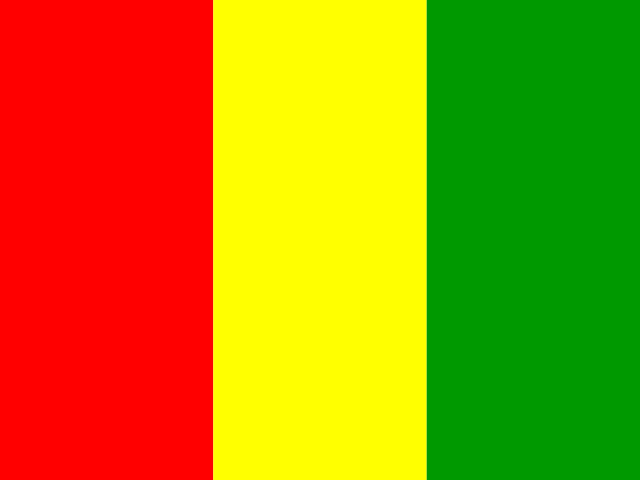
Guinea
Capital: Conakry
Three vertical stripes: red, yellow, green.
Adopted: 1958
Fun Facts
- Uses vertical pan-African colors red-yellow-green like Mali but starting with red
- Guinea was among the first French colonies in Africa to vote for independence
- Rich in bauxite for aluminum production
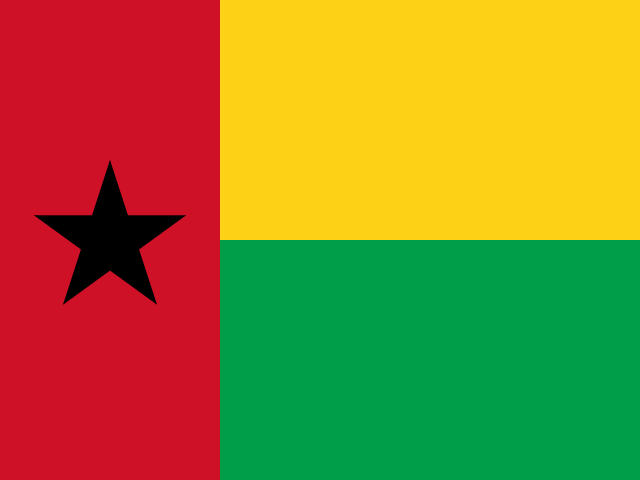
Guinea-Bissau
Capital: Bissau
Horizontal yellow over green with a vertical red stripe at the hoist bearing a black five-pointed star.
Adopted: 1973
Fun Facts
- Black star recalls PAIGC leadership in the independence struggle
- Vertical red band recalls sacrifice linked with pan-African red
- Portuguese is an official language
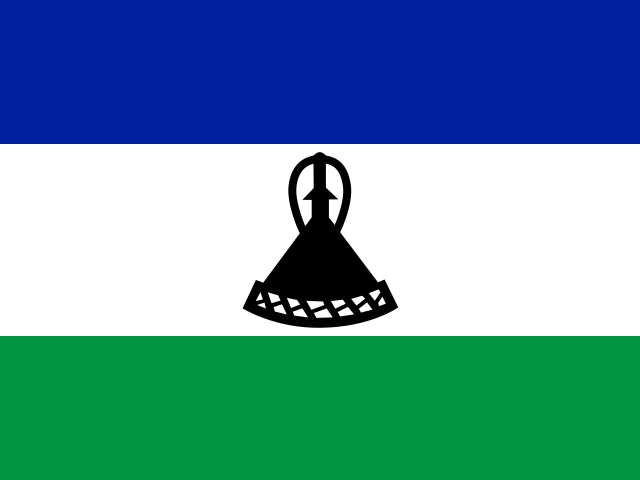
Lesotho
Capital: Maseru
White field with horizontal blue and green bands and a black mokorotlo hat centered.
Adopted: 2006
Fun Facts
- The mokorotlo hat is a national symbol of Basotho culture
- Entirely surrounded by South Africa as a mountain kingdom
- White stands for peace; blue rain and sky; green land
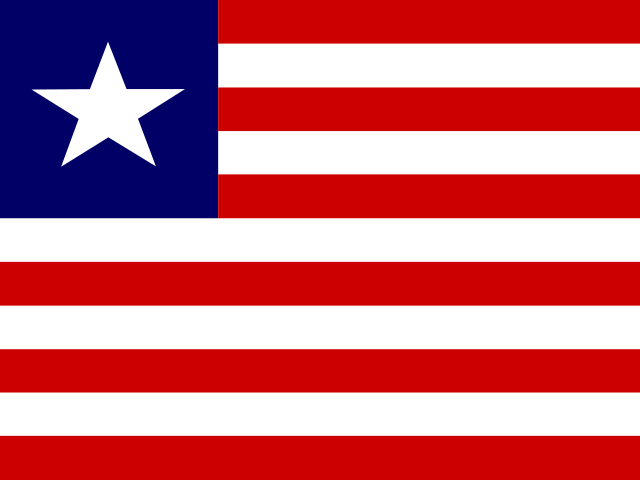
Liberia
Capital: Monrovia
Eleven horizontal red and white stripes with a blue canton bearing a single white star.
Adopted: 1847
Fun Facts
- Founded by freed African Americans; flag echoes U.S. symbolism with one star
- Eleven stripes recall signatories of the Liberian declaration of independence
- English is the official language
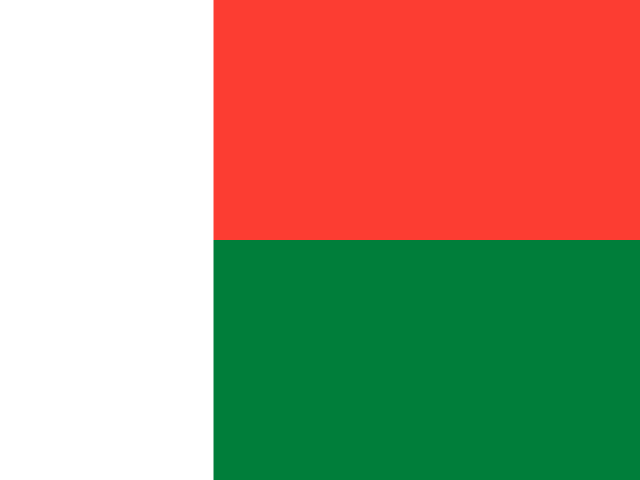
Madagascar
Capital: Antananarivo
White vertical band at the hoist beside horizontal red over green.
Adopted: 1958
Fun Facts
- White and red recall the Merina kingdom; green coastal peoples united in independence
- Madagascar's wildlife evolved in isolation with famous lemurs
- Fourth-largest island in the world
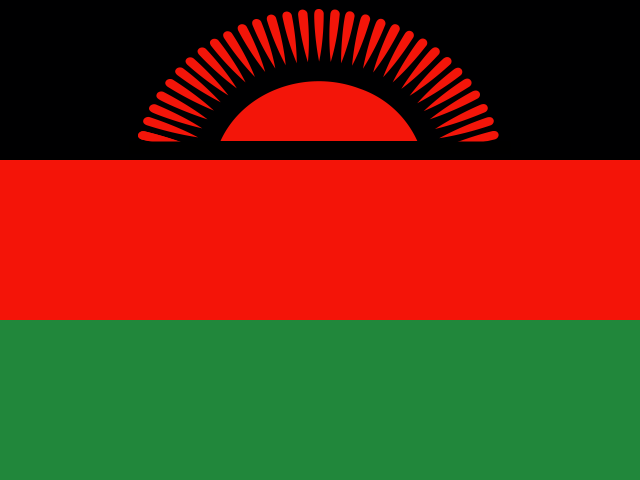
Malawi
Capital: Lilongwe
Horizontal black, red, green with a red rising sun centered on the black stripe.
Adopted: 2012
Fun Facts
- The rising sun represents dawn of freedom for Africa
- Black is the people; red blood of martyrs; green nature
- Lake Malawi runs much of the country's eastern border
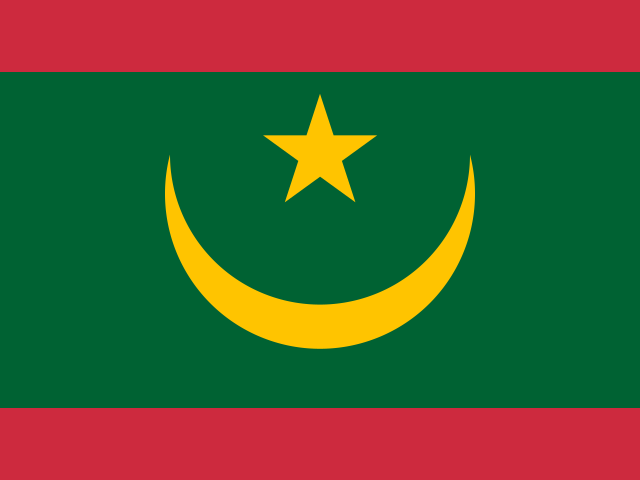
Mauritania
Capital: Nouakchott
Green field with gold crescent and star between narrow red stripes top and bottom.
Adopted: 2017
Fun Facts
- Red stripes added in 2017 to honor defenders of territory and sacrifice
- Green and gold crescent-star emphasize Islamic heritage
- Much of Mauritania lies in the Sahara
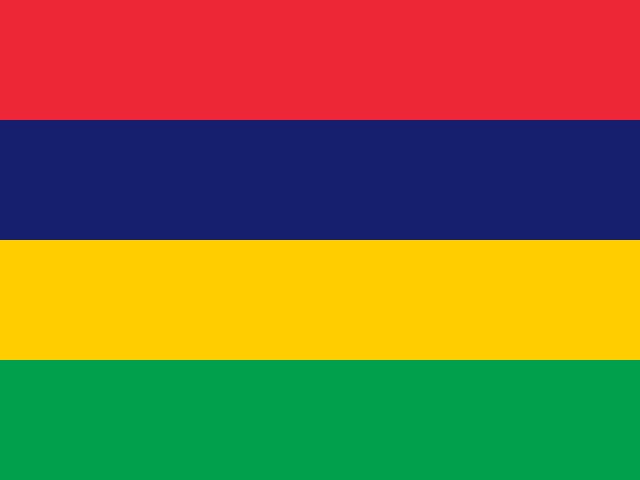
Mauritius
Capital: Port Louis
Four horizontal stripes: red, blue, yellow, green.
Adopted: 1968
Fun Facts
- Red independence; blue Indian Ocean; yellow sunlight; green agriculture
- The only habitat of the extinct dodo before European arrival
- A volcanic island nation east of Madagascar
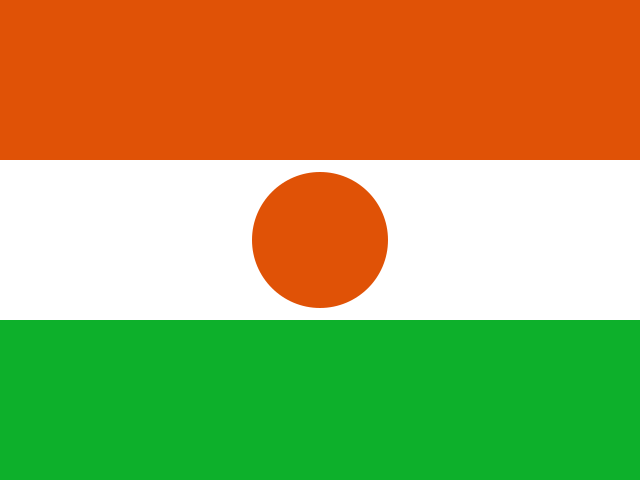
Niger
Capital: Niamey
Horizontal orange over white over green with an orange disk slightly toward the hoist.
Adopted: 1959
Fun Facts
- Orange recalls savannah; white purity; green hope and fertile south
- The orange circle stands for unity or sun depending on tradition
- Named after the Niger River arch through West Africa
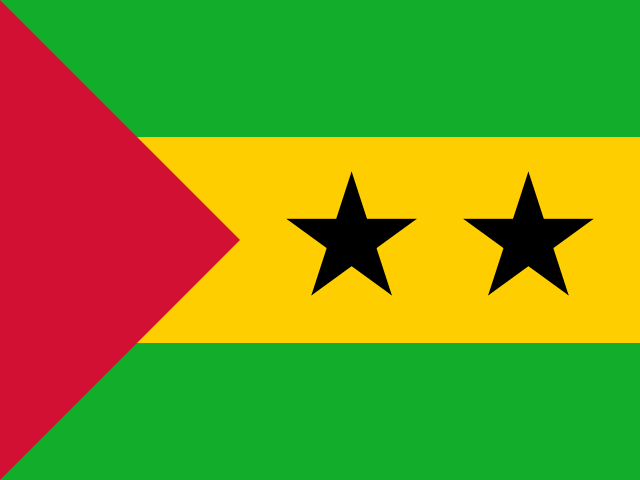
São Tomé and Príncipe
Capital: São Tomé
Horizontal green, yellow, green with a black-red triangle at the hoist bearing two black stars.
Adopted: 1975
Fun Facts
- Two stars represent São Tomé and Príncipe islands
- Green is vegetation; yellow cocoa and other crops; red independence struggle
- Portuguese-speaking island nation on the Equator
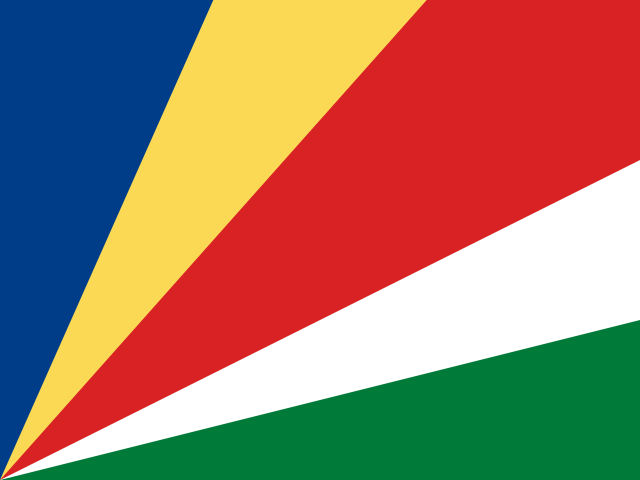
Seychelles
Capital: Victoria
Five oblique bands radiating from the lower hoist: blue, yellow, red, white, green.
Adopted: 1996
Fun Facts
- Expanding colored bands symbolize a dynamic nation growing toward future
- The Indian Ocean archipelago is famed for beaches and biodiversity
- Creole, English, and French are widely used
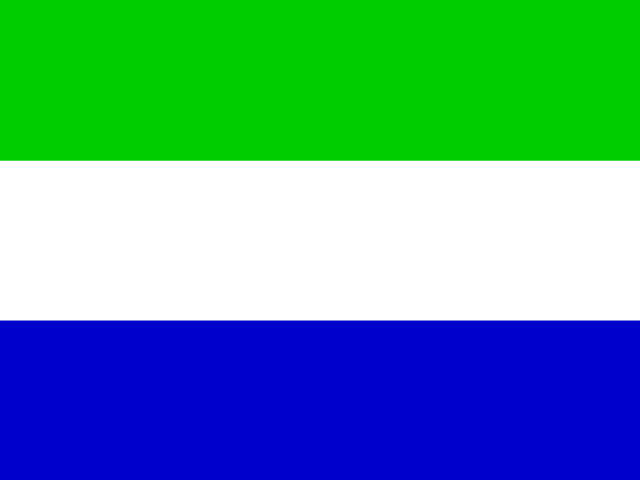
Sierra Leone
Capital: Freetown
Three horizontal stripes: green, white, blue.
Adopted: 1961
Fun Facts
- Green natural resources; white unity and justice; blue harbor and Atlantic
- Freetown was founded for freed slaves from Britain and North America
- Known historically for diamonds and minerals
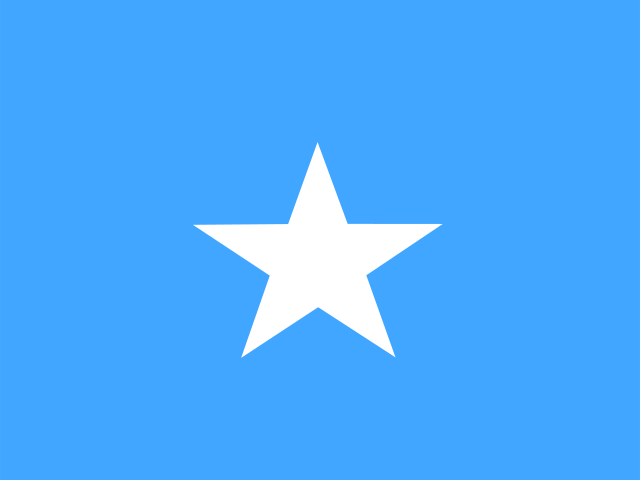
Somalia
Capital: Mogadishu
Light blue field with a large white five-pointed star centered.
Adopted: 1954
Fun Facts
- Light blue recalls the UN flag under which independence was approached
- The star symbolizes unity of the Somali nation in the Horn
- Longest coastline on mainland Africa
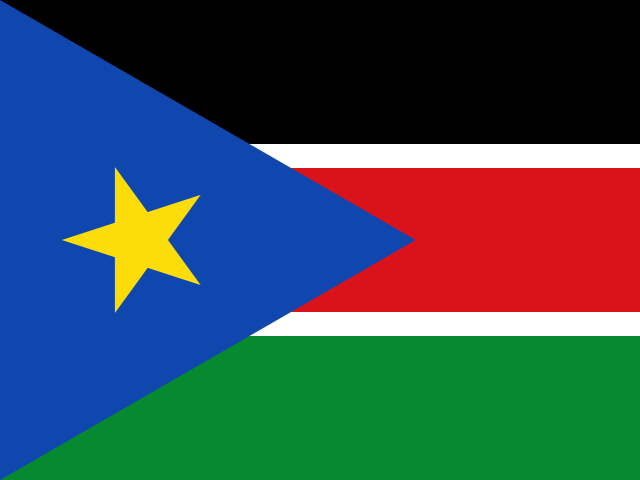
South Sudan
Capital: Juba
Horizontal black, red, green with blue triangle at hoist bearing yellow star and white stripes edging the triangle.
Adopted: 2011
Fun Facts
- Africa's newest widely recognized sovereign state (2011)
- Black people; red blood; green land; blue Nile; star guiding unity
- Gained independence from Sudan after decades of conflict
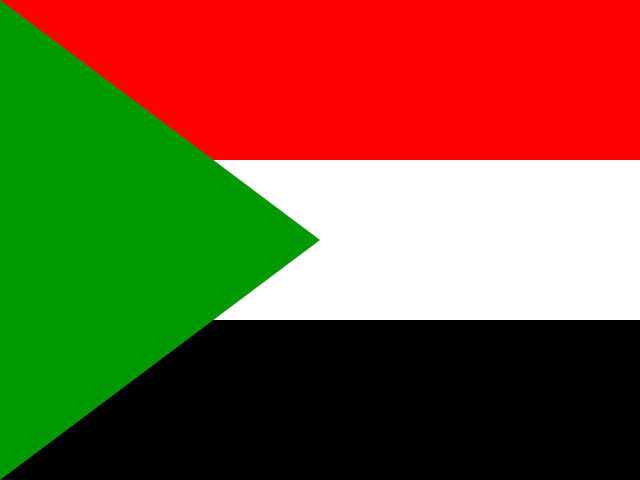
Sudan
Capital: Khartoum
Horizontal red, white, black with a green triangle at the hoist.
Adopted: 1970
Fun Facts
- Red white black echo pan-Arab colors; green triangle recalls Islam and prosperity
- The Nile rivers meet at Khartoum
- Prior to South Sudan's secession, Sudan was Africa's largest country
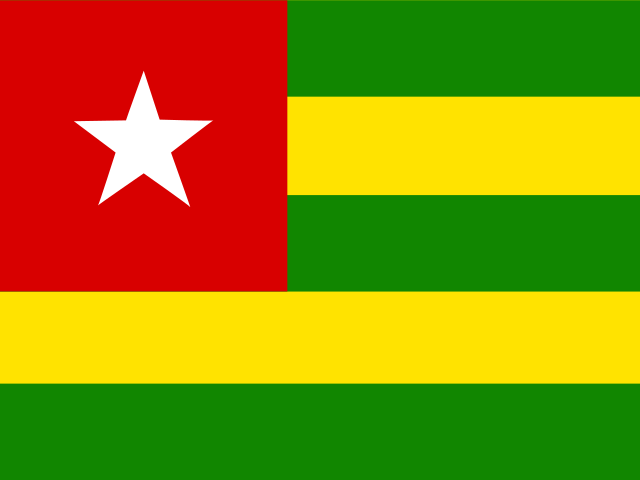
Togo
Capital: Lomé
Five horizontal stripes alternating green and yellow with red canton bearing white star.
Adopted: 1960
Fun Facts
- Five stripes represent Togo's regions (traditionally)
- Green and yellow recall agriculture; red canton sacrifice for independence
- Narrow Gulf of Guinea country east of Ghana
Quick Reference
South Africa Nigeria Kenya Egypt Ethiopia Ghana Morocco Tanzania Senegal Rwanda Algeria Namibia Uganda Angola Cameroon Ivory Coast Mali Tunisia Libya Mozambique Botswana Zambia Zimbabwe Benin Burkina Faso Burundi Cabo Verde Central African Republic Chad Comoros Republic of the Congo DR Congo Djibouti Equatorial Guinea Eritrea Eswatini Gabon Gambia Guinea Guinea-Bissau Lesotho Liberia Madagascar Malawi Mauritania Mauritius Niger São Tomé and Príncipe Seychelles Sierra Leone Somalia South Sudan Sudan Togo Test Your Knowledge
African flags are vibrant and diverse. How many can you identify?
Practice with Games
Ready to test what you learned? Jump into a game and put it into practice.
About African Flags
African flags tell the story of a continent's journey from colonialism to self-determination. Most African nations gained independence in the 1960s, and their flags often incorporate Pan-African colors: green (representing the land), gold/yellow (mineral wealth and sunshine), and red (the blood of independence struggles). These colors were inspired by Ethiopia's ancient flag - as one of only two African nations never colonized, Ethiopia became a symbol of African independence. Some countries like South Africa and Rwanda adopted new flags after national tragedies to symbolize fresh starts and unity.
Frequently Asked Questions
What are the Pan-African colors and why are they so common?
The Pan-African colors are red, gold/yellow, and green. They were inspired by Ethiopia's flag (one of Africa's oldest independent nations) and represent unity, wealth, and the land. The colors were adopted by Marcus Garvey's movement and then by many newly independent African nations in the 1950s-60s.
How many countries are in Africa?
There are 54 recognized sovereign countries in Africa, making it the continent with the most countries. The newest is South Sudan, which gained independence in 2011.
Which African country has the most colorful flag?
South Africa's flag uses 6 colors (black, yellow, green, white, red, blue) - one of the most colorful national flags in the world. It was designed in 1994 to represent the new unified nation after the end of apartheid.