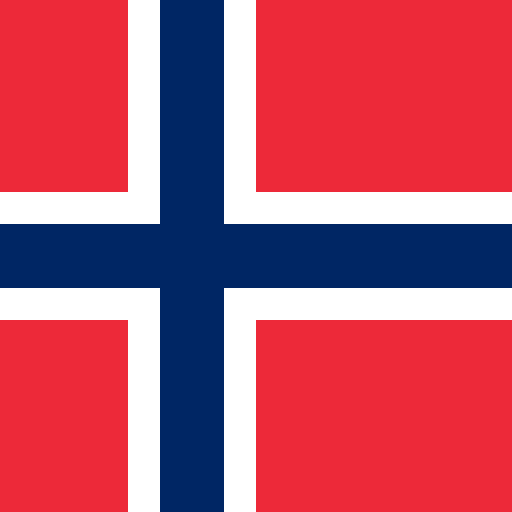
Flags of North Africa
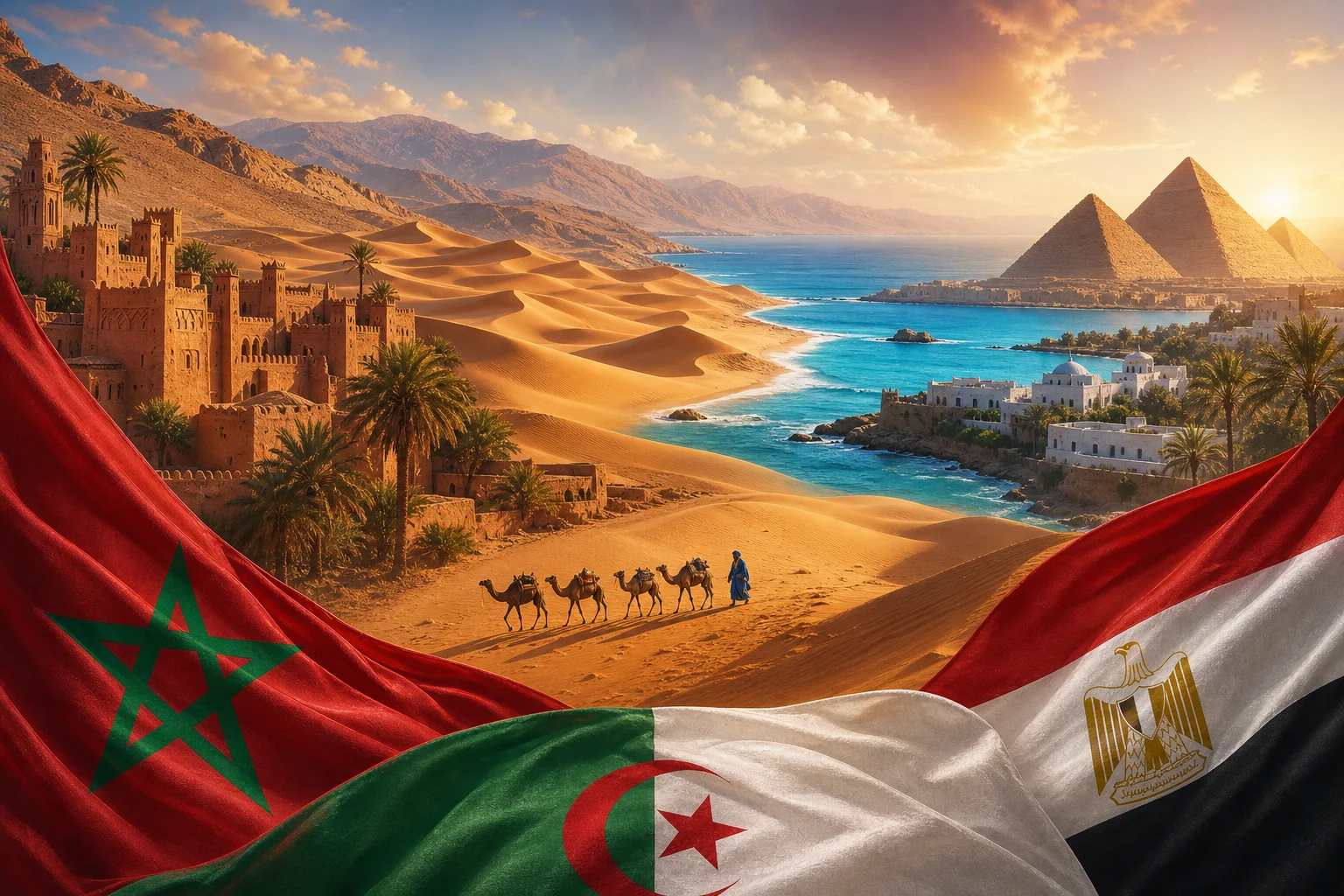
From the Atlantic Maghreb to the Nile corridor, these six UN Northern Africa members blend Islamic palettes, pan-Arab stripes, and distinctive national emblems.
Study the Flags
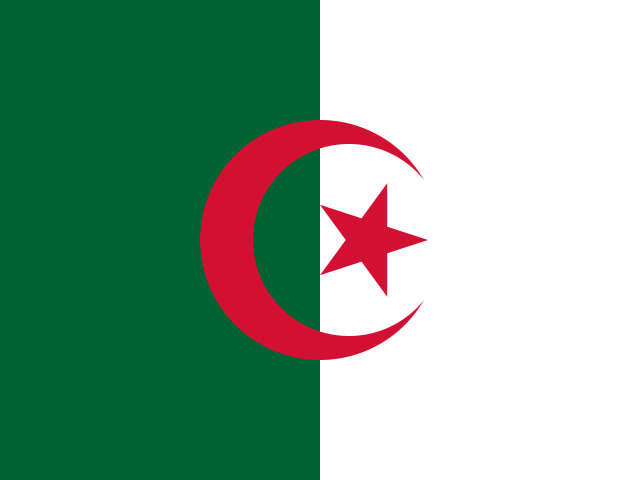
Algeria
Capital: Algiers
Vertical halves: green at the hoist, white at the fly. A red crescent and star centered on the division.
Adopted: 1962
Fun Facts
- Green and white are traditional colors of Islam; the crescent and star are widely used Islamic symbols
- The flag was adopted in 1962 when Algeria won independence from France after a long war
- Algeria is Africa's largest country by land area
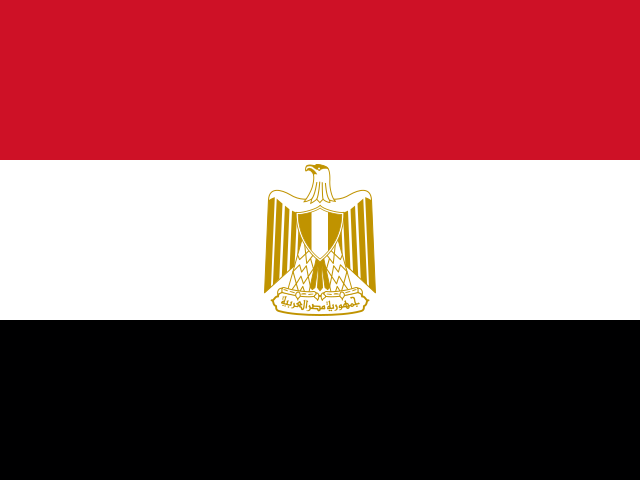
Egypt
Capital: Cairo
Three horizontal stripes: red, white, black. The golden Eagle of Saladin centered on the white stripe.
Adopted: 1984
Fun Facts
- The Eagle of Saladin on the flag represents power and strength
- Red represents the 1952 revolution, white the future, black the end of oppression
- Egypt's colors are shared with Iraq, Syria, and Yemen - all pan-Arab colors
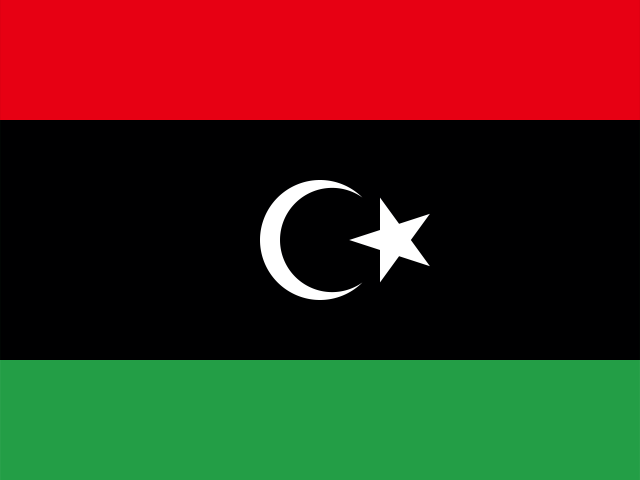
Libya
Capital: Tripoli
Three horizontal stripes: black, red, green. A white crescent and star centered on the red stripe.
Adopted: 2011
Fun Facts
- Black, red, and green reflect the flag of the Kingdom of Libya and pan-Arab themes
- This design returned after 2011; it replaced the plain green flag used from 1977 to 2011
- The crescent and star are widely used symbols across North Africa
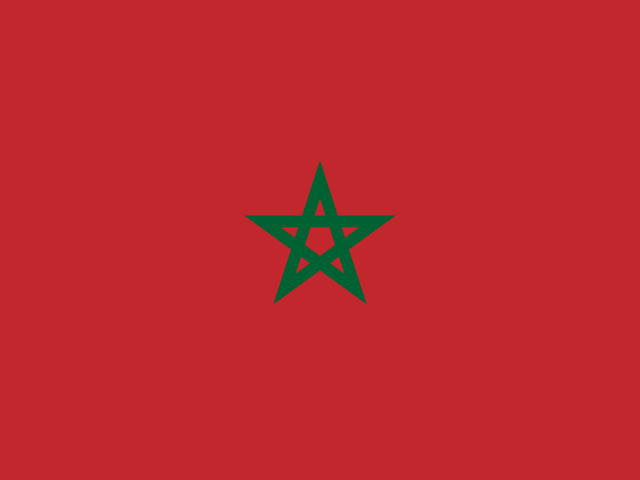
Morocco
Capital: Rabat
Red field with a green five-pointed star (pentagram) outlined in the center.
Adopted: 1915
Fun Facts
- The green pentagram (pentacle) is called the Seal of Solomon
- Red has been the color of Moroccan rulers (the Alaouite dynasty) since the 17th century
- Morocco's flag is one of the few African flags without Pan-African colors
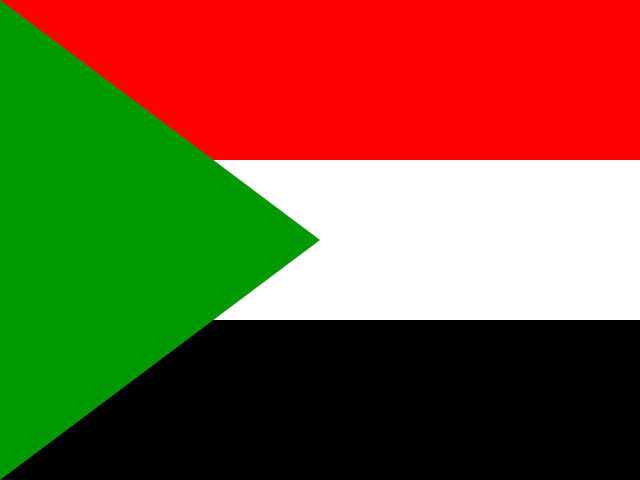
Sudan
Capital: Khartoum
Horizontal red, white, black with a green triangle at the hoist.
Adopted: 1970
Fun Facts
- Red white black echo pan-Arab colors; green triangle recalls Islam and prosperity
- The Nile rivers meet at Khartoum
- Prior to South Sudan's secession, Sudan was Africa's largest country
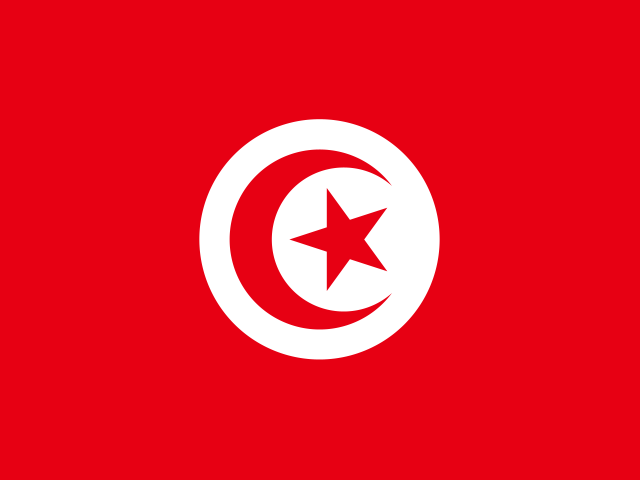
Tunisia
Capital: Tunis
Red field with a white disk bearing a red crescent and five-pointed star.
Adopted: 1959
Fun Facts
- The red and crescent-star recall historical Ottoman-era symbolism
- It is one of several flags influenced by Turkey's design tradition
- The white disk represents peace as well as contrast with the red field
Quick Reference
Test Your Knowledge
Recognize Maghreb stars and Nile-region tricolors.
Practice with Games
Ready to test what you learned? Jump into a game and put it into practice.
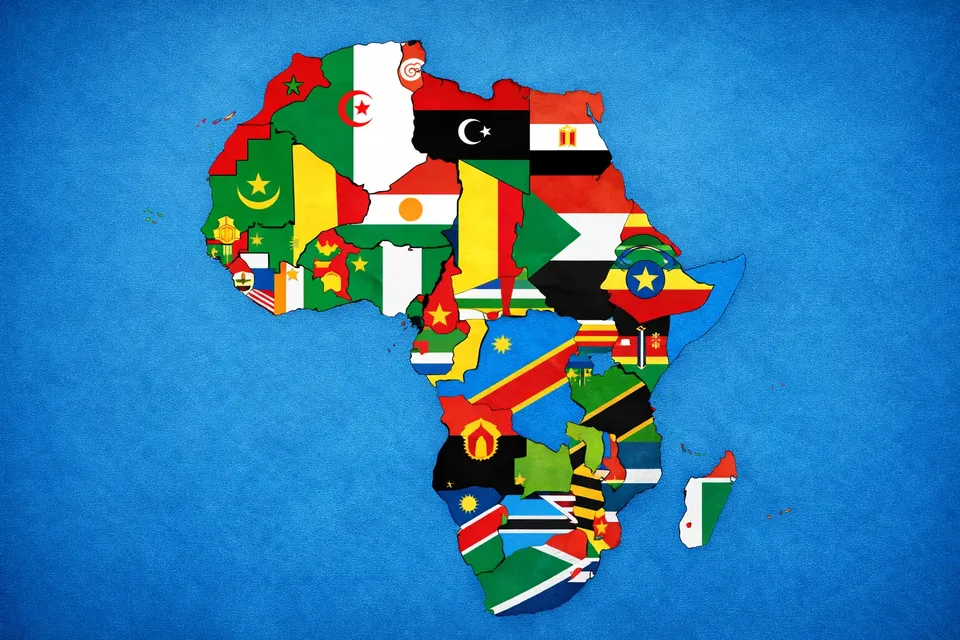
About North Africa Flags
Morocco fields a forest-green star on deep red; Algeria and Tunisia carry liberation-era symbolism; Libya historically simplified to bold bands; Egypt centers Saladin eagle pan-Arab colors; Sudan anchors the Sahara rim with a green hoist triangle.
Frequently Asked Questions
Why is Egypt here instead of only the Middle East?
Geographically Egypt spans Africa and Asia; we place it with Northern Africa for continental lessons while Middle East overlap elsewhere is normal.
Does this replace the full Africa lesson?
No-it is a regional slice using the same cards for focused study. Open the full Africa lesson when you want all 54 flags together.
How were countries grouped?
We follow UN M49 macro regions so totals align with the continental lesson.