Learn the Currencies of Central Asia
The five countries of Central Asia, often called the "Stans," each introduced their own national currency after gaining independence from the Soviet Union in 1991. From the Kazakhstani tenge to the Uzbekistani som, these currencies replaced the Soviet ruble in the early to mid 1990s. This lesson covers the currency of all 5 Central Asian countries, with each currency code, symbol and the year it came into use.
Study the Currencies
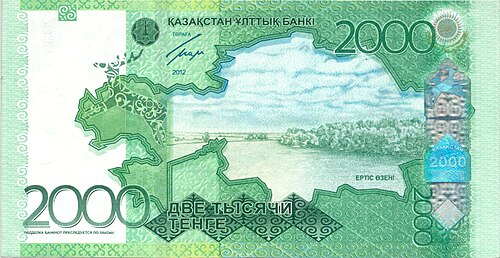 KZT
KZT Kazakhstan
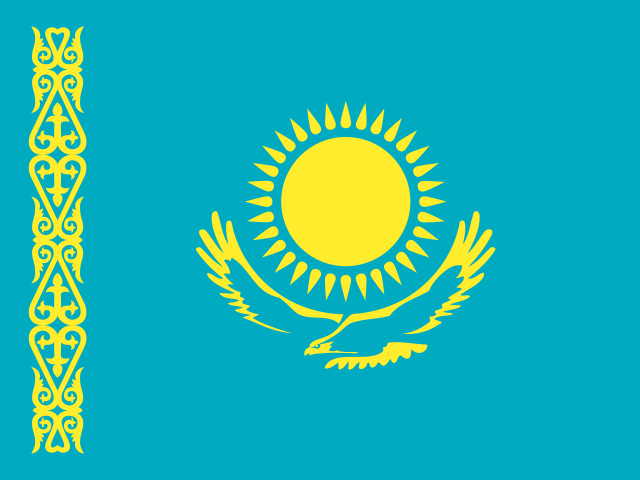
Kazakhstani tenge
Kazakhstan introduced the tenge in November 1993 to replace the Soviet ruble after independence.
Fun Facts
- The word tenge comes from a medieval Turkic term for a set of scales or weights used in trade.
- The tenge symbol ₸ was chosen through a public competition and adopted in 2007.
- A tenge is divided into 100 tiyin, though tiyin coins are no longer in everyday use.
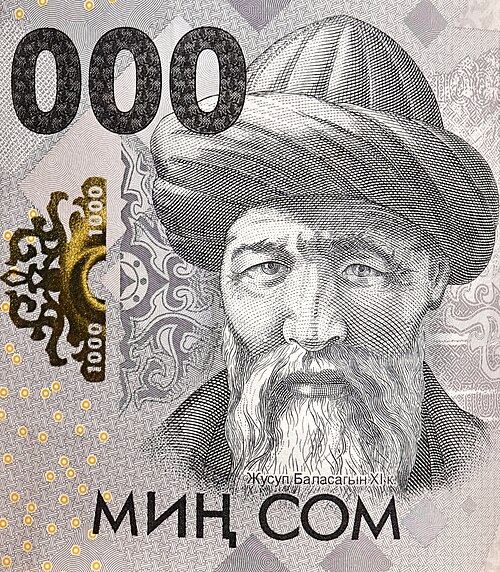 KGS
KGS Kyrgyzstan
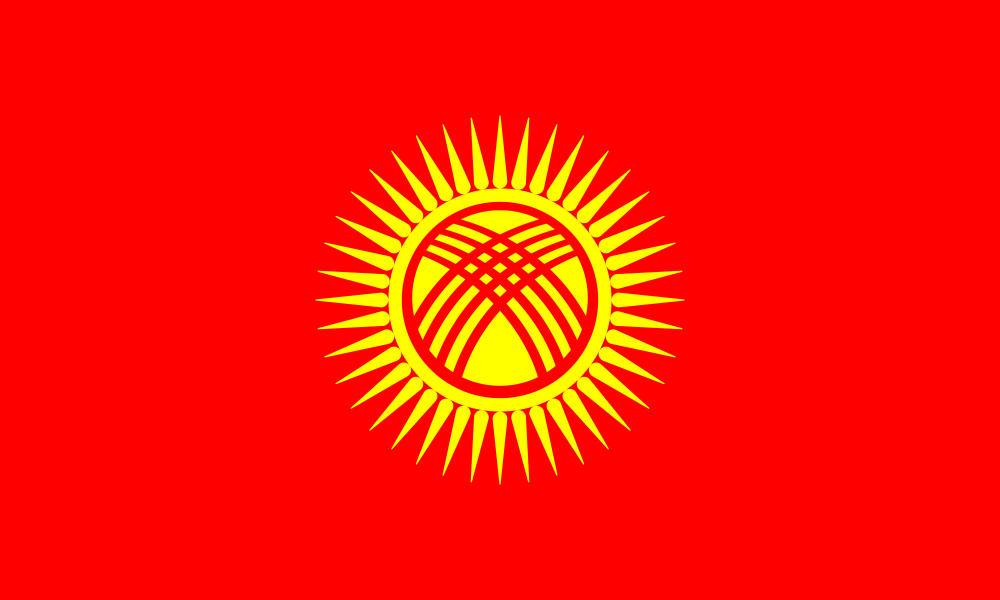
Kyrgyzstani som
Kyrgyzstan was the first Central Asian country to leave the ruble zone, launching the som in May 1993.
Fun Facts
- Kyrgyzstan was the first former Soviet republic in Central Asia to introduce its own currency.
- The word som means pure in several Turkic languages, a reference to pure gold.
- A som is divided into 100 tyiyn.
 TJS
TJS Tajikistan
Tajikistani somoni
Tajikistan introduced the somoni in 2000, replacing the short-lived Tajikistani ruble.
Fun Facts
- The somoni is named after Ismoil Somoni, the founder of the medieval Samanid dynasty and a national hero.
- It replaced the Tajikistani ruble at a rate of 1,000 rubles to 1 somoni.
- A somoni is divided into 100 diram.
 TMT
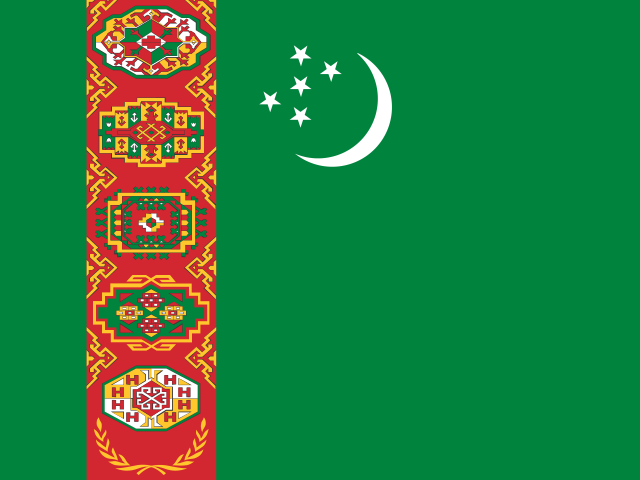
TMT Turkmenistan
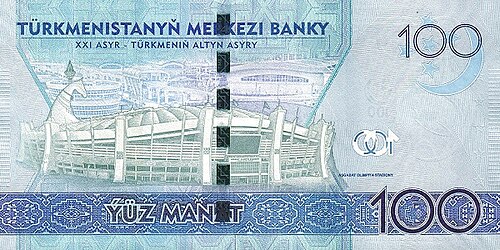
Turkmenistani manat
Turkmenistan first introduced the manat in 1993, then redenominated it with the new code TMT in 2009.
Fun Facts
- In the 2009 reform Turkmenistan removed three zeros, so 5,000 old manat became 1 new manat.
- The word manat comes from the Russian moneta, meaning coin.
- A manat is divided into 100 tenge, sharing a name with the Kazakhstani currency.
 UZS
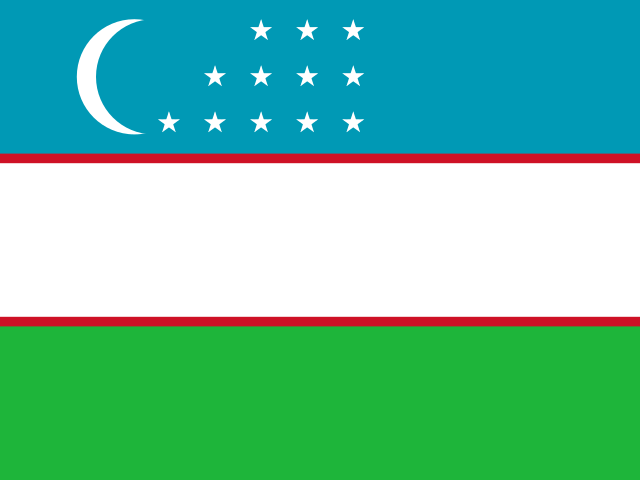
UZS Uzbekistan
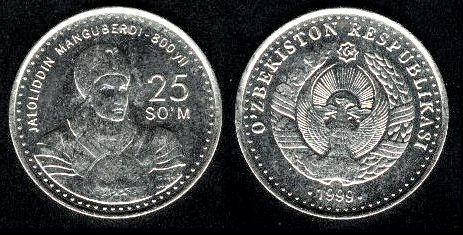
Uzbekistani som
Uzbekistan introduced the modern som in 1994, replacing a transitional coupon-som used the year before.
Fun Facts
- Like the Kyrgyzstani som, the name means pure, from the Turkic word for pure gold.
- A first temporary som-coupon circulated in 1993 before the permanent som arrived in 1994.
- A som is divided into 100 tiyin, though tiyin are no longer used in practice.
Quick Reference
Test Your Knowledge
Can you match each country to its currency?
Practice with Games
Ready to test what you learned? Jump into a game and put it into practice.
About Central Asian Currencies
Each of the five Central Asian countries created its own currency after the collapse of the Soviet Union, breaking away from the shared ruble. Kazakhstan uses the tenge, Tajikistan the somoni, and Turkmenistan the manat, while both Kyrgyzstan and Uzbekistan use a currency called the som, a Turkic word meaning pure that refers to pure gold. Several names carry rich history: the somoni honours Ismoil Somoni, founder of the medieval Samanid dynasty, and the tenge takes its name from an old Turkic word for scales used in trade. Learning these currencies, their ISO codes and their symbols makes travel, shopping and reading the news across Central Asia far easier.
Frequently Asked Questions
How many currencies are used in Central Asia?
There are five national currencies in Central Asia, one for each country: the Kazakhstani tenge, the Kyrgyzstani som, the Tajikistani somoni, the Turkmenistani manat and the Uzbekistani som.
What is the currency of Kazakhstan?
Kazakhstan uses the Kazakhstani tenge (code KZT, symbol ₸), introduced in November 1993 to replace the Soviet ruble.
Why do Kyrgyzstan and Uzbekistan both use the som?
Both Kyrgyzstan (KGS) and Uzbekistan (UZS) named their currency the som, a Turkic word meaning pure that refers to pure gold. They are separate currencies with different values, despite sharing a name.
When did the Central Asian countries adopt their currencies?
Most arrived in the early to mid 1990s after independence: Kyrgyzstan in 1993, Kazakhstan in 1993, Uzbekistan in 1994, and Tajikistan in 2000. Turkmenistan first issued the manat in 1993 and redenominated it under the code TMT in 2009.
Banknote images via Wikimedia Commons: KZT (National Bank of Kazakhstan, Public domain) · KGS (Maraschino Cherry, CC0) · TMT (Central Bank of Turkmenistan, Public domain) · UZS (Don Norris, http://worldcoingallery.com, Public domain)