Learn the Currencies of the Middle East
The Middle East uses a striking mix of currencies. Several Gulf states keep dinars and riyals pegged to the US dollar, while the Kuwaiti dinar is the highest-valued currency unit in the world. Others, like the Israeli new shekel and the Turkish lira, float freely on global markets. This lesson covers the currency of 13 Middle Eastern countries, with each currency code, symbol and the year it came into use.
Study the Currencies
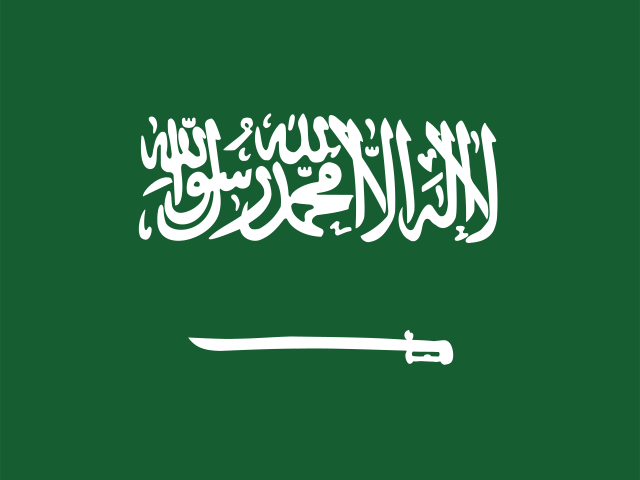
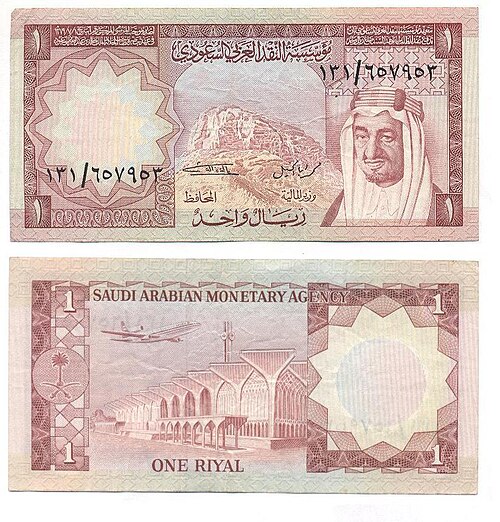 SAR
SAR Saudi Arabia
Saudi riyal
Saudi Arabia uses the riyal, which has been pegged to the US dollar at a fixed rate since 1986.
Fun Facts
- The riyal is divided into 100 halalas.
- The Saudi riyal has been pegged to the US dollar at about 3.75 riyals to the dollar since 1986.
- The name riyal comes from the Spanish real, a coin once traded widely across the region.
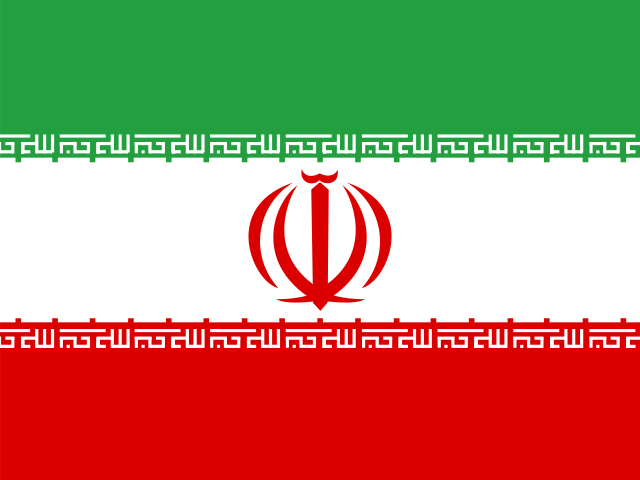
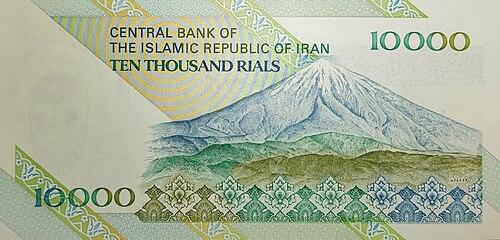 IRR
IRR Iran
Iranian rial
Iran uses the rial, though prices are often quoted in toman, an informal unit worth ten rials.
Fun Facts
- In everyday life Iranians often quote prices in toman, where one toman equals ten rials.
- The rial is one of the lowest-valued currency units in the world.
- The rial replaced the qiran in 1932.
 IQD
IQD Iraq
Iraqi dinar
Iraq uses the dinar, introduced in 1932 to replace the Indian rupee that had circulated under British administration.
Fun Facts
- The dinar is theoretically divided into 1,000 fils, though fils are no longer used.
- The Iraqi dinar replaced the Indian rupee, which had circulated in the region.
- The name dinar derives from the ancient Roman denarius.
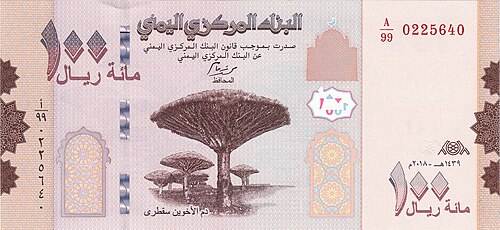 YER
YER Yemen
Yemeni rial
Yemen adopted a single rial in 1990 when North and South Yemen unified into one country.
Fun Facts
- The unified Yemeni rial dates from the 1990 merger of North and South Yemen.
- The rial is subdivided into 100 fils, though fils are no longer in practical use.
- Before unification, the two Yemens used separate currencies.
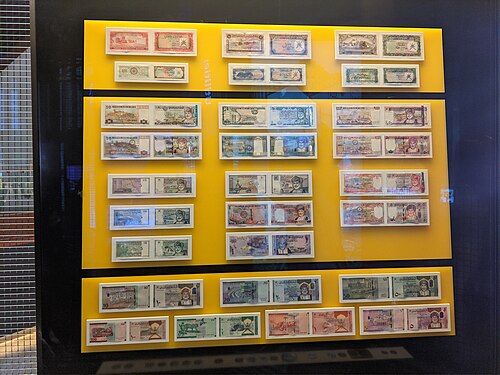 OMR
OMR Oman
Omani rial
Oman uses the rial, one of the highest-valued currency units in the world, pegged to the US dollar.
Fun Facts
- The Omani rial is one of the highest-valued currency units on Earth, behind only the Kuwaiti and Bahraini dinars.
- The rial is divided into 1,000 baisa, an unusually fine subunit.
- It has been pegged to the US dollar since the 1970s.
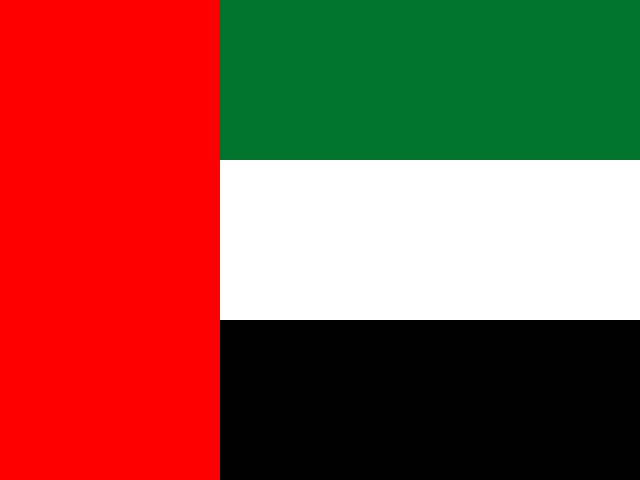 AED
AED United Arab Emirates
UAE dirham
The United Arab Emirates introduced the dirham in 1973, two years after the federation was formed, and pegs it to the US dollar.
Fun Facts
- The dirham is divided into 100 fils.
- The name dirham comes from the ancient Greek drachma.
- The UAE dirham has been pegged to the US dollar at about 3.67 to the dollar since 1997.
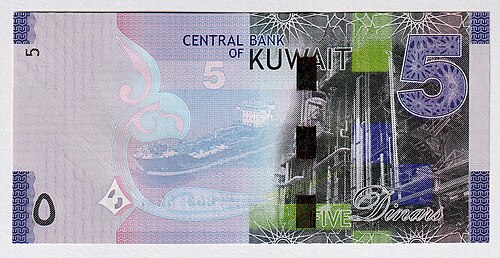 KWD
KWD Kuwait
Kuwaiti dinar
Kuwait uses the dinar, the highest-valued currency unit in the world, introduced in 1961 around independence.
Fun Facts
- The Kuwaiti dinar is the highest-valued currency unit in the world.
- The dinar is divided into 1,000 fils.
- It is pegged to a weighted basket of international currencies rather than to a single currency.
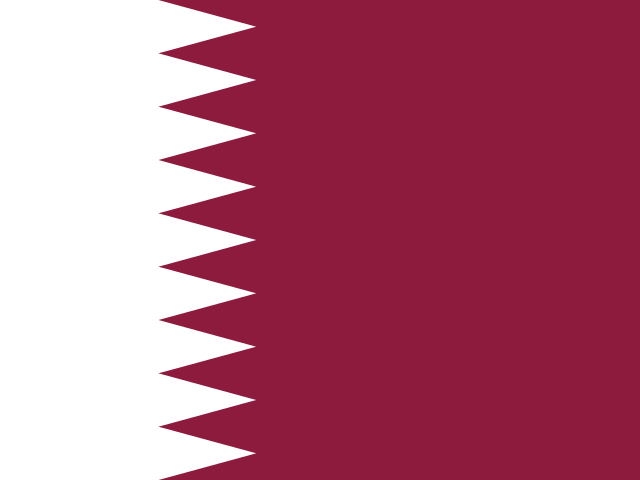 QAR
QAR Qatar
Qatari riyal
Qatar introduced its own riyal in 1973 and pegs it firmly to the US dollar.
Fun Facts
- The riyal is divided into 100 dirhams.
- The Qatari riyal has been pegged to the US dollar at about 3.64 to the dollar.
- Qatar and Dubai shared a joint riyal before Qatar issued its own.
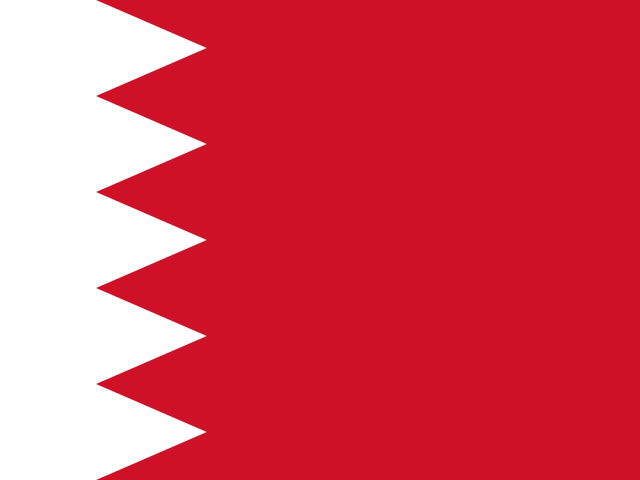 BHD
BHD Bahrain
Bahraini dinar
Bahrain uses the dinar, the second highest-valued currency unit in the world, pegged to the US dollar.
Fun Facts
- The Bahraini dinar is the second highest-valued currency unit in the world, after the Kuwaiti dinar.
- The dinar is divided into 1,000 fils.
- It is widely accepted alongside the Saudi riyal in eastern Saudi Arabia.
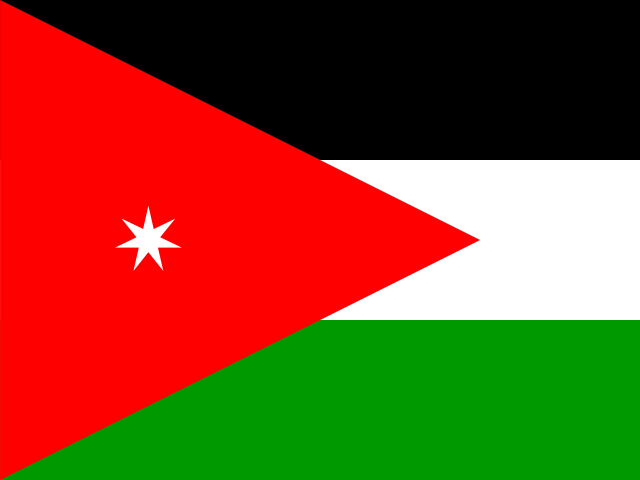 JOD
JOD Jordan
Jordanian dinar
Jordan introduced the dinar in 1950 to replace the Palestine pound, and pegs it to the US dollar.
Fun Facts
- The dinar is divided into 1,000 fils, and also into 100 piastres.
- The Jordanian dinar is also widely used in the West Bank.
- It has been pegged to the US dollar since the 1990s.
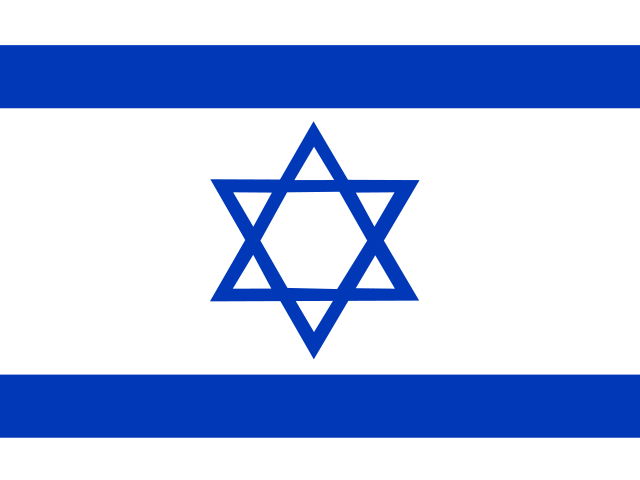 ILS
ILS Israel
Israeli new shekel
Israel introduced the new shekel in 1986 after high inflation, replacing the old shekel at 1,000 to 1.
Fun Facts
- The new shekel replaced the old shekel in 1986, with 1,000 old shekels becoming 1 new shekel.
- Its symbol ₪ combines the first Hebrew letters of the words for new shekel.
- The shekel is one of the oldest units of weight and money, mentioned in ancient texts.
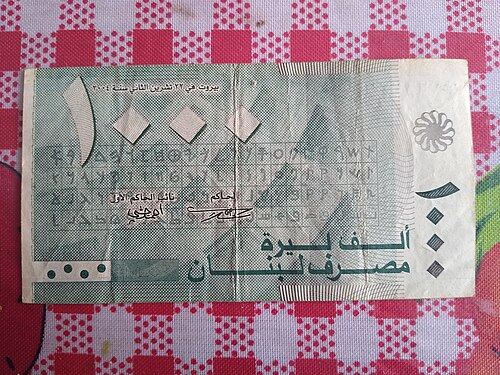 LBP
LBP Lebanon
Lebanese pound
Lebanon uses the pound, also called the livre, which lost most of its value during the recent financial crisis.
Fun Facts
- The Lebanese pound is also known by its French name, the livre.
- The pound is nominally divided into 100 piastres, long made obsolete by inflation.
- After decades pegged near 1,500 to the US dollar, the pound collapsed during Lebanon's financial crisis.
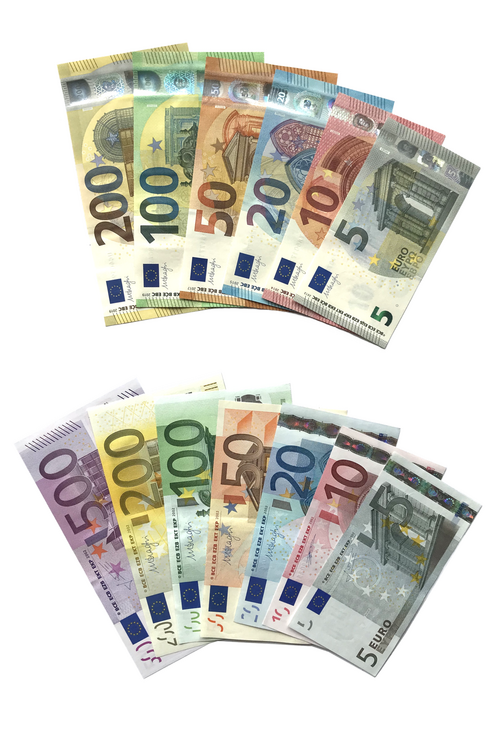 EUR
EUR Cyprus
Euro
Cyprus adopted the euro in 2008, replacing the Cypriot pound, and is the only country in this lesson to use the euro.
Fun Facts
- Cyprus is the only Middle Eastern country in this lesson that uses the euro.
- It replaced the Cypriot pound when it joined the eurozone in 2008.
- Cyprus joined the European Union in 2004, four years before adopting the euro.
Quick Reference
Test Your Knowledge
Can you match each country to its currency?
Practice with Games
Ready to test what you learned? Jump into a game and put it into practice.
About Middle Eastern Currencies
The Middle East is home to some of the strongest and weakest currency units in the world. The Kuwaiti dinar is the highest-valued currency unit anywhere, followed closely by the Bahraini and Omani rials, all subdivided into 1,000 fils or baisa. Many Gulf currencies - the Saudi riyal, UAE dirham, Qatari riyal and Jordanian dinar - are pegged to the US dollar for stability, while the Israeli new shekel and the Turkish lira float on global markets. Several names carry deep history: dinar comes from the Roman denarius, dirham from the Greek drachma, and riyal from the Spanish real. Cyprus stands apart as the one country in this region using the euro. Learning these currencies, their ISO codes and symbols makes travel, trade and reading the news across the Middle East far easier.
Frequently Asked Questions
What is the most valuable currency in the Middle East?
The Kuwaiti dinar (KWD) is the most valuable currency unit in the Middle East and the highest-valued currency unit in the world. The Bahraini dinar (BHD) and the Omani rial (OMR) rank close behind.
Which Middle Eastern currencies are pegged to the US dollar?
Many Middle Eastern currencies are pegged to the US dollar for stability, including the Saudi riyal, the UAE dirham, the Qatari riyal, the Bahraini dinar, the Omani rial and the Jordanian dinar.
Does any Middle Eastern country use the euro?
Cyprus is the only country in this lesson that uses the euro, having adopted it in 2008 when it replaced the Cypriot pound. Every other country in the region keeps its own national currency.
What is the currency of Israel and what is its symbol?
Israel uses the Israeli new shekel (ILS), written with the symbol ₪. It was introduced in 1986, when 1,000 old shekels were replaced by 1 new shekel after a period of high inflation.
Banknote images via Wikimedia Commons: SAR (Attila2000 Emilio Nardelli, Public domain) · IRR (Parsa 2au, Public domain) · YER (@hex7ech, CC BY-SA 4.0) · OMR (Taha Al-Hayali, CC BY-SA 4.0) · KWD (Mohamed0189, CC BY-SA 4.0) · LBP (Grachifan, CC BY-SA 4.0) · EUR (Bericht, CC0)