Learn the Currencies of Central Europe
Central Europe is a study in monetary contrasts. The four Visegrad countries - Czechia, Hungary, Poland and Slovakia - share centuries of history, yet only Slovakia uses the euro. The other three keep their own national money: the Czech koruna, the Hungarian forint and the Polish zloty. This lesson covers the currency of all 4 Central European countries, with each currency code, symbol and the year it came into use.
Study the Currencies
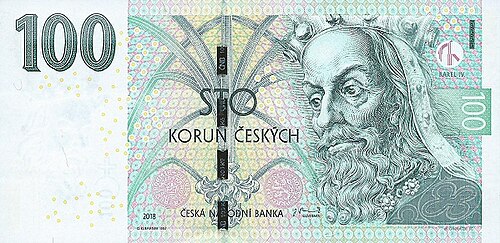 CZK
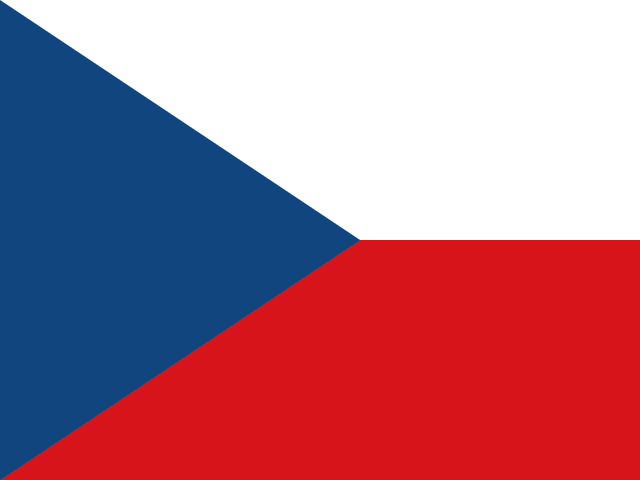
CZK Czechia
Czech koruna
Czechia (Czech Republic) kept the koruna after splitting from Czechoslovakia in 1993 and has not adopted the euro.
Fun Facts
- Koruna means crown, a currency name shared across central and northern Europe.
- The Czech koruna was introduced in 1993 when Czechoslovakia split into two countries.
- A koruna is divided into 100 haleru, though the small coins are no longer in circulation.
 HUF
HUF Hungary
Hungarian forint
Hungary uses the forint, introduced in 1946 to end one of history's worst hyperinflations.
Fun Facts
- The forint is named after the gold florin of Florence.
- It replaced the pengo after the worst hyperinflation ever recorded.
- In practice the forint has no subunit in everyday use, as the filler was withdrawn long ago.
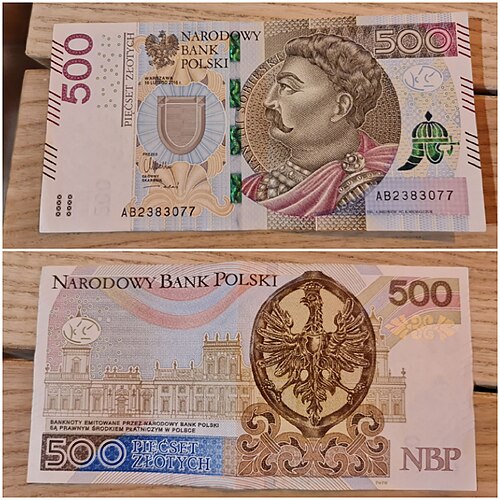 PLN
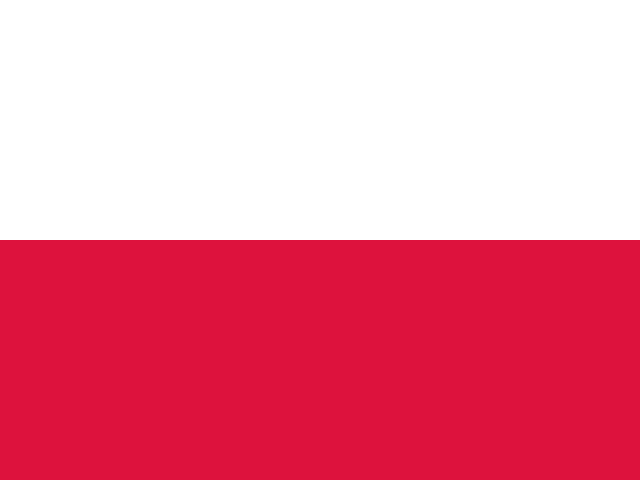
PLN Poland
Polish zloty
Poland is in the EU but keeps the zloty; the name means golden.
Fun Facts
- Zloty literally means golden in Polish.
- Poland redenominated the zloty in 1995, with 10,000 old zloty becoming 1 new zloty.
- A zloty is divided into 100 groszy.
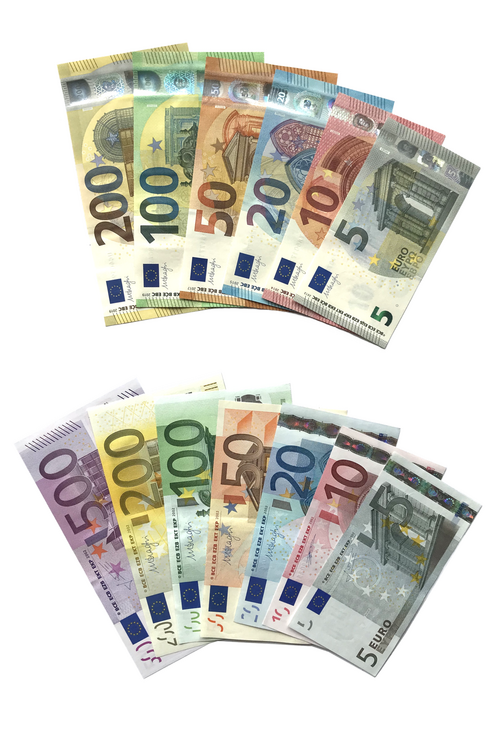 EUR
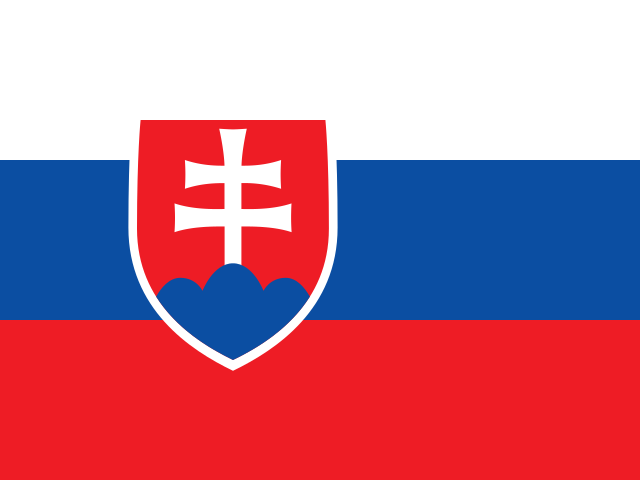
EUR Slovakia
Euro
Slovakia adopted the euro in 2009, replacing the Slovak koruna.
Fun Facts
- Slovakia is the only Visegrad country to use the euro.
- Its former koruna split from the Czechoslovak koruna in 1993.
- Slovakia switched to the euro just sixteen years after gaining independence.
Quick Reference
Test Your Knowledge
Can you match each country to its currency?
Practice with Games
Ready to test what you learned? Jump into a game and put it into practice.
About Central European Currencies
Central Europe shows how a tightly knit region can still be split over money. The four Visegrad countries - Czechia, Hungary, Poland and Slovakia - all belong to the European Union, but only Slovakia has adopted the euro, which it did in 2009. The other three keep national currencies that are deeply tied to their history: the Czech koruna (CZK) and the Polish zloty (PLN), whose name means golden, along with the Hungarian forint (HUF), named after the gold florin of Florence and introduced in 1946 to end a record-breaking hyperinflation. Both koruna and the euro's neighbours share roots with the wider European family of crown currencies. Learning these currencies, their ISO codes and symbols makes travel, shopping and reading the news across Central Europe far easier.
Frequently Asked Questions
How many currencies are used in Central Europe?
The four Visegrad countries use three national currencies plus the euro: the Czech koruna in Czechia, the Hungarian forint in Hungary, the Polish zloty in Poland, and the euro in Slovakia.
Which Central European country uses the euro?
Slovakia is the only Visegrad country to use the euro, having adopted it in 2009. Czechia, Hungary and Poland are EU members but keep their own currencies.
What is the currency of Poland?
Poland uses the zloty (PLN), whose name means golden. It is divided into 100 groszy and was redenominated in 1995, when 10,000 old zloty became 1 new zloty.
Why do Czechia, Hungary and Poland not use the euro?
All three are EU members and are formally committed to joining the euro one day, but they have chosen to keep their national currencies for now, citing economic readiness and public opinion. None has set a firm adoption date.
Banknote images via Wikimedia Commons: CZK (ТамараГончарук, Public domain) · PLN (MichalPL, CC BY-SA 4.0) · EUR (Bericht, CC0)