Learn the Currencies of Europe
Europe uses more than a dozen different currencies. Twenty countries share the euro, while others keep their own money - from the British pound, one of the oldest currencies still in use, to the Swiss franc, the Polish zloty and the Scandinavian kronor. This lesson covers the currency of 44 European countries, with each currency code, symbol and the year it came into use.
Study the Currencies
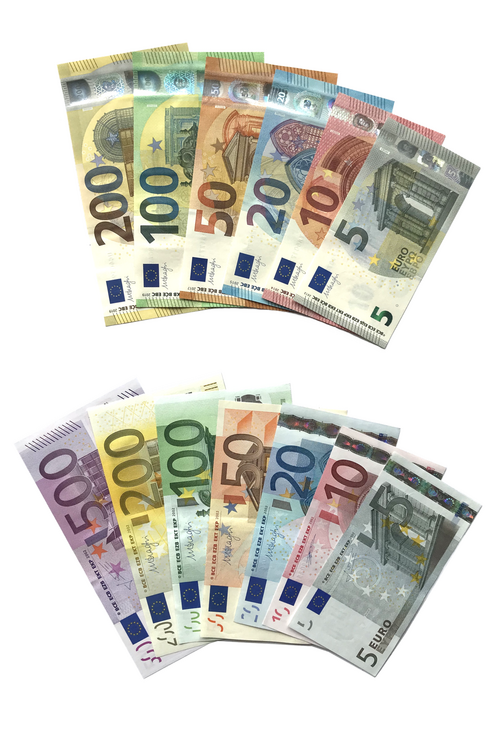 EUR
EUR France
Euro
France was a founding member of the eurozone and replaced the French franc with euro cash in 2002.
Fun Facts
- The euro is the official currency of 20 of the 27 EU countries, a group known as the eurozone.
- The euro is the second most traded currency in the world after the US dollar.
- France helped launch the euro for electronic payments in 1999, three years before the coins and notes arrived.
EUR Germany
Euro
Germany gave up the much-loved Deutsche Mark for the euro in 2002 and is the eurozone's largest economy.
Fun Facts
- The Deutsche Mark was seen as a symbol of post-war stability, so the switch to the euro was emotional for many Germans.
- Germany is the biggest economy using the euro.
- You can still exchange old Deutsche Mark notes and coins for euros at the German central bank with no deadline.
EUR Italy
Euro
Italy replaced the lira, a currency dating back to 1861, with the euro in 2002.
Fun Facts
- At conversion, one euro was worth about 1,936 Italian lira.
- The word lira comes from the Latin libra, a unit of weight.
- Italy was a founding member of the eurozone.
EUR Spain
Euro
Spain swapped the peseta for the euro in 2002 as a founding eurozone member.
Fun Facts
- The peseta had been Spain's currency since 1868.
- One euro was fixed at about 166 pesetas.
- Spain is the fourth-largest economy in the eurozone.
 GBP
GBP United Kingdom
Pound sterling
The UK kept the pound sterling and never adopted the euro; it decimalised the pound into 100 pence in 1971.
Fun Facts
- Sterling is the oldest currency still in use today, with roots over 1,200 years old.
- Before 1971 one pound was divided into 20 shillings of 12 pence each.
- The pound symbol comes from the Latin libra, the same root as the lira.
EUR Netherlands
Euro
The Netherlands replaced the guilder with the euro in 2002.
Fun Facts
- The Dutch guilder had been in use in some form for centuries.
- The guilder's symbol was a florin sign, written as fl.
- The Netherlands was a founding member of the eurozone.
EUR Belgium
Euro
Belgium replaced the Belgian franc with the euro in 2002.
Fun Facts
- Brussels hosts the main institutions of the European Union.
- The Belgian franc dated back to 1832.
- Belgium was a founding member of the eurozone.
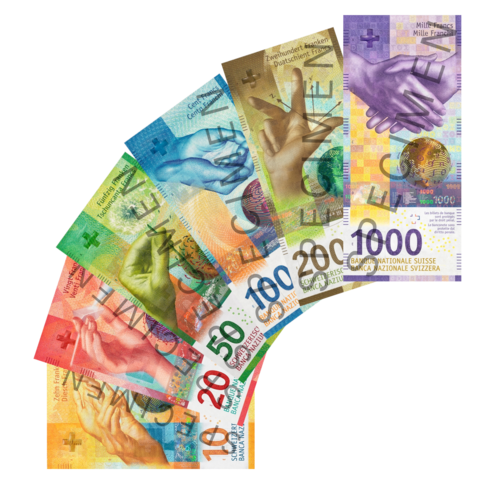 CHF
CHF Switzerland
Swiss franc
Switzerland is not in the EU and keeps the Swiss franc, one of the world's favourite safe-haven currencies.
Fun Facts
- The code CHF stands for Confoederatio Helvetica Franc, the Latin name for Switzerland.
- The Swiss franc is seen as a safe haven that investors buy in uncertain times.
- Liechtenstein also uses the Swiss franc as its official money.
EUR Austria
Euro
Austria replaced the schilling with the euro in 2002.
Fun Facts
- The Austrian schilling was sometimes nicknamed the Alpine dollar for its stability.
- One euro was fixed at about 13.76 schillings.
- Austria was a founding member of the eurozone.
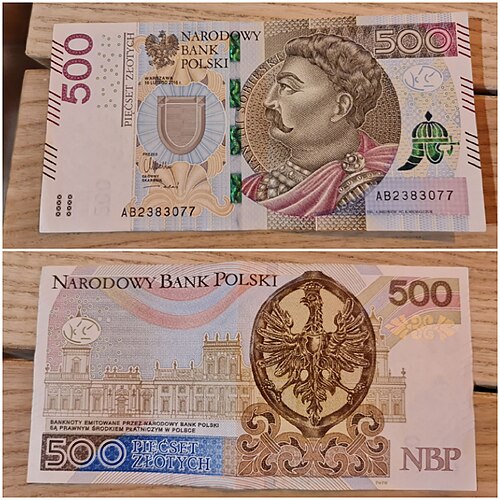 PLN
PLN Poland
Polish zloty
Poland is in the EU but keeps the zloty; the name means golden.
Fun Facts
- Zloty literally means golden in Polish.
- Poland redenominated the zloty in 1995, with 10,000 old zloty becoming 1 new zloty.
- A zloty is divided into 100 groszy.
EUR Portugal
Euro
Portugal replaced the escudo with the euro in 2002.
Fun Facts
- The escudo featured an unusual symbol, the cifrao, written like a dollar sign with two strokes.
- One euro was fixed at about 200 escudos.
- Portugal was a founding member of the eurozone.
EUR Greece
Euro
Greece adopted the euro in 2002, retiring the drachma, one of the oldest currency names in the world.
Fun Facts
- The drachma was used in ancient Greece and is one of the oldest currency names known.
- Greece joined the eurozone in 2001, just before notes and coins launched.
- One euro was fixed at about 340 drachmas.
EUR Ireland
Euro
Ireland replaced the Irish pound, known as the punt, with the euro in 2002.
Fun Facts
- The Irish pound was called the punt in Irish.
- Ireland is the only euro country that shares a land border with a non-euro country, the UK.
- Ireland was a founding member of the eurozone.
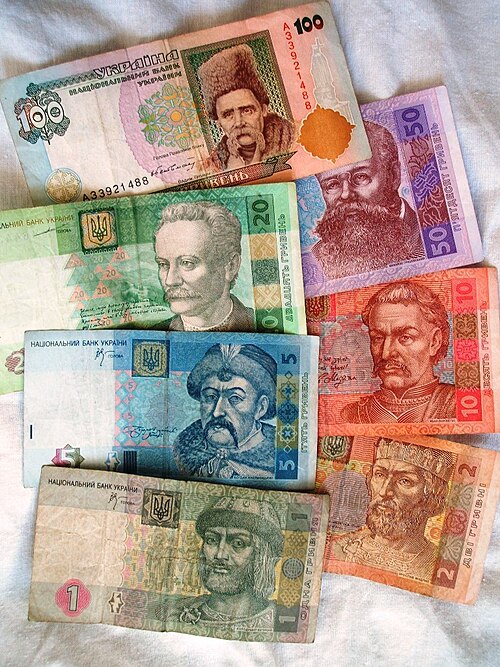 UAH
UAH Ukraine
Ukrainian hryvnia
Ukraine introduced the hryvnia in 1996 to replace the temporary karbovanets.
Fun Facts
- The hryvnia takes its name from a medieval unit of weight and value.
- Its symbol ₴ was officially adopted in 2004.
- A hryvnia is divided into 100 kopiyok.
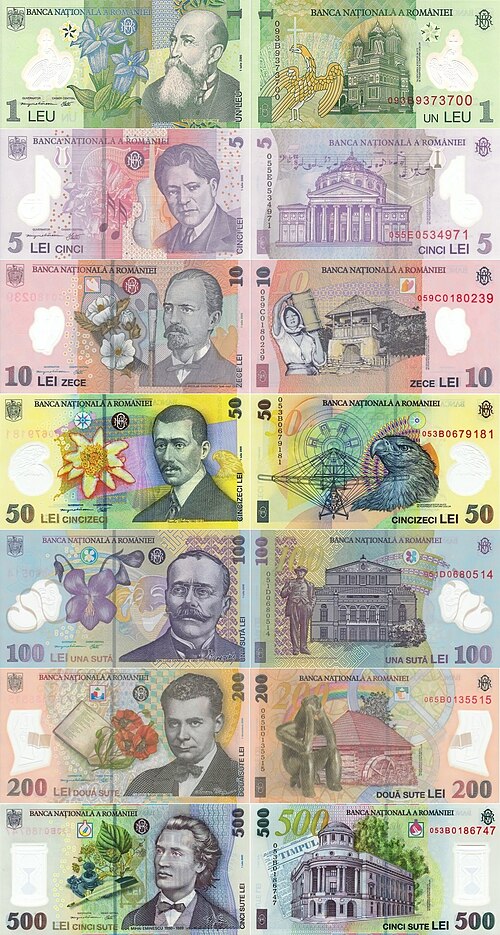 RON
RON Romania
Romanian leu
Romania uses the leu, which means lion; it redenominated the currency in 2005.
Fun Facts
- Leu means lion in Romanian, and the plural is lei.
- In 2005 Romania knocked four zeros off the leu, so 10,000 old lei became 1 new leu.
- A leu is divided into 100 bani.
EUR Andorra
Euro
Andorra is not in the EU but uses the euro by agreement; it never had a currency of its own.
Fun Facts
- Before the euro, Andorra used both the French franc and the Spanish peseta.
- Andorra signed a monetary agreement letting it mint its own euro coins.
- It is one of several European microstates that use the euro without being in the EU.
 ALL
ALL Albania
Albanian lek
Albania has used the lek since 1926.
Fun Facts
- The lek is said to be named after Alexander the Great, known locally as Leka.
- The lek was first introduced in 1926.
- Prices are often still quoted in old lek, worth one tenth of the modern lek.
 BAM
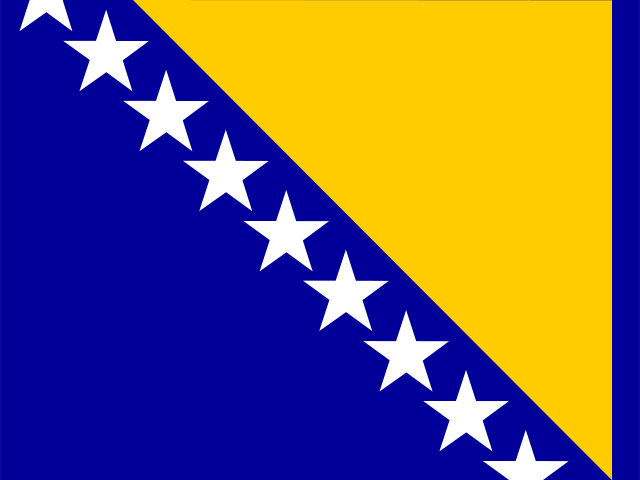
BAM Bosnia and Herzegovina
Convertible mark
Bosnia and Herzegovina uses the convertible mark, which is pegged firmly to the euro.
Fun Facts
- The convertible mark was originally pegged to the German Deutsche Mark, hence its name.
- It is now pegged to the euro at a fixed rate.
- KM stands for Konvertibilna Marka.
EUR Bulgaria
Euro
Bulgaria adopted the euro on 1 January 2026, becoming the eurozone's newest member and retiring the lev.
Fun Facts
- Bulgaria is the most recent country to join the euro, in 2026.
- Its former currency, the lev, means lion in old Bulgarian.
- The lev had been pegged to the euro for years before the switch.
 BYN
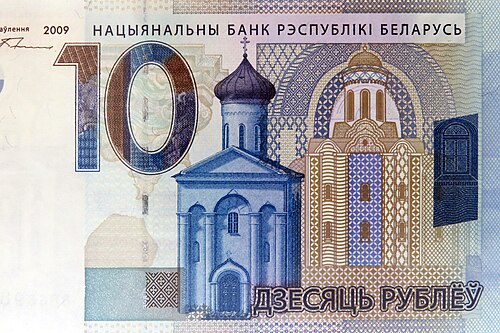
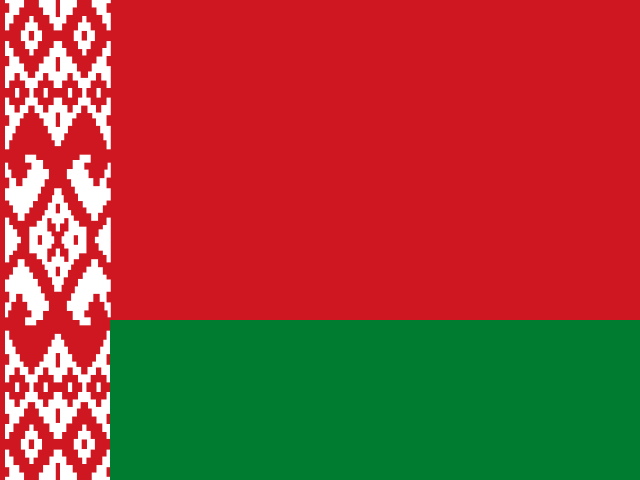
BYN Belarus
Belarusian ruble
Belarus uses the Belarusian ruble, which was redenominated in 2016.
Fun Facts
- In 2016 Belarus removed four zeros, so 10,000 old rubles became 1 new ruble.
- The currency code changed from BYR to BYN with that reform.
- Coins returned to Belarus in 2016 after years of notes only.
 CZK
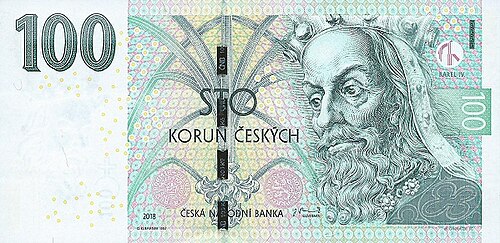
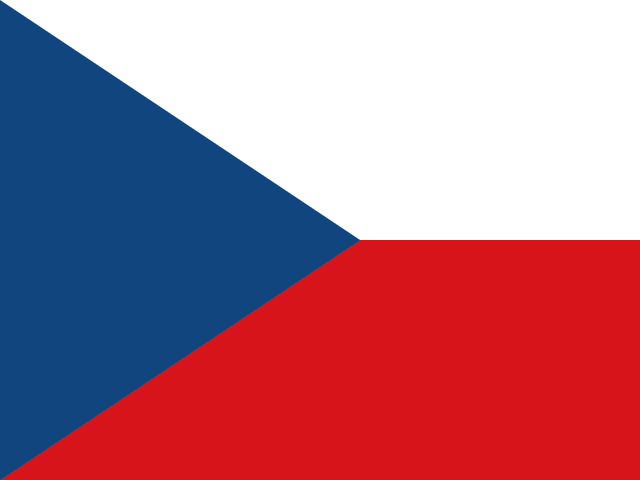
CZK Czech Republic
Czech koruna
The Czech Republic kept the koruna after splitting from Czechoslovakia in 1993.
Fun Facts
- Koruna means crown, a common currency name across central and northern Europe.
- It was introduced in 1993 when Czechoslovakia split into two countries.
- The Czech Republic is in the EU but has not adopted the euro.
 DKK
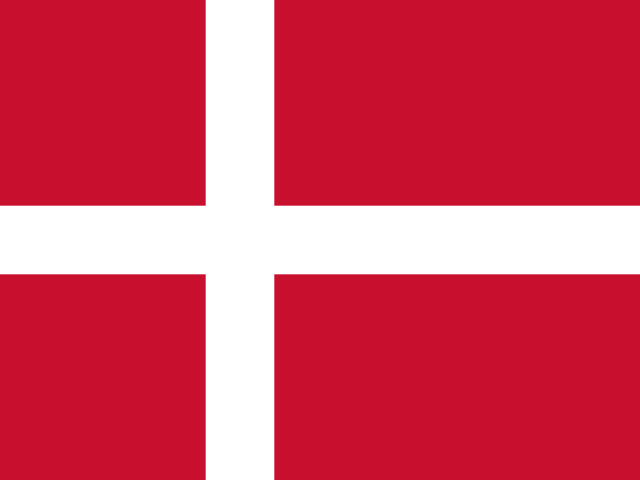
DKK Denmark
Danish krone
Denmark uses the krone and has a formal opt-out from joining the euro.
Fun Facts
- Krone means crown in Danish.
- The krone is pegged to the euro within a narrow band.
- Denmark negotiated an opt-out from the euro, so it can keep the krone.
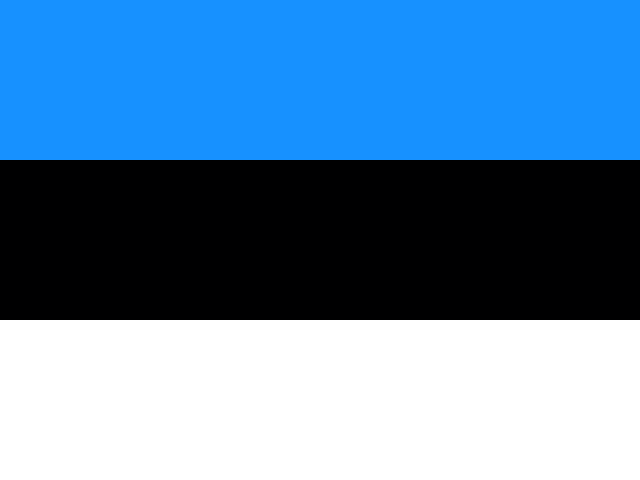
EUR Estonia
Euro
Estonia adopted the euro in 2011, the first Baltic state to do so.
Fun Facts
- Estonia was the first of the three Baltic states to adopt the euro.
- It replaced the kroon, which had been pegged to the euro.
- Estonia is known for its highly digital, paperless government.
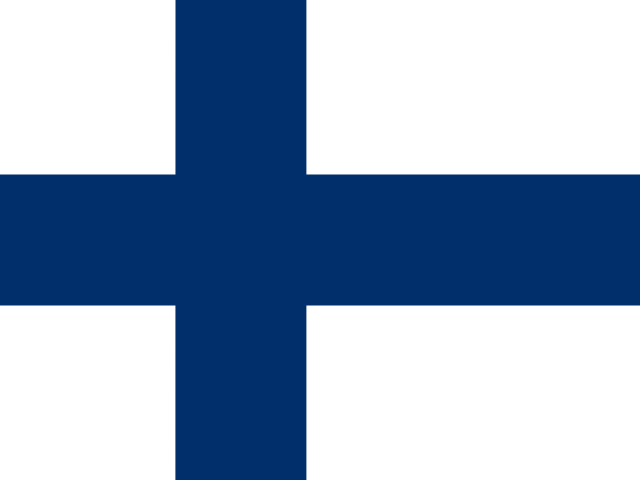
EUR Finland
Euro
Finland is the only Nordic country in the eurozone, having replaced the markka in 2002.
Fun Facts
- Finland is the only Nordic country that uses the euro.
- It replaced the markka, in use since 1860.
- Finland rounds cash payments to the nearest five cents.
EUR Croatia
Euro
Croatia adopted the euro on 1 January 2023 as the 20th eurozone member, replacing the kuna.
Fun Facts
- Croatia became the 20th country to join the euro, in 2023.
- The kuna was named after the marten, an animal whose fur was once used in trade.
- Croatia joined the EU in 2013, ten years before adopting the euro.
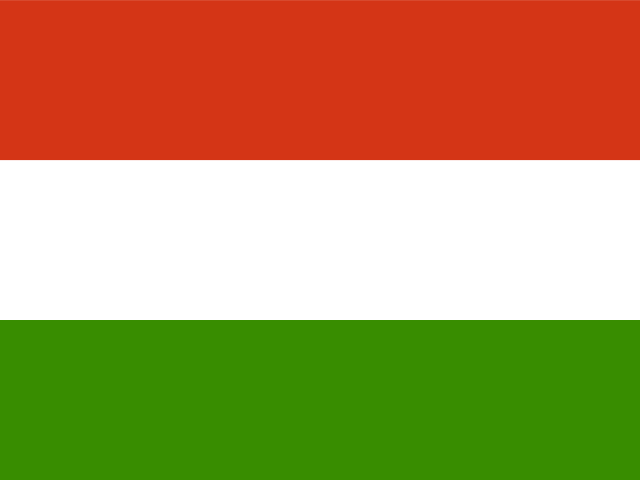 HUF
HUF Hungary
Hungarian forint
Hungary uses the forint, introduced in 1946 to end one of history's worst hyperinflations.
Fun Facts
- The forint is named after the gold florin of Florence.
- It replaced the pengo after the worst hyperinflation ever recorded.
- In practice the forint has no subunit in everyday use.
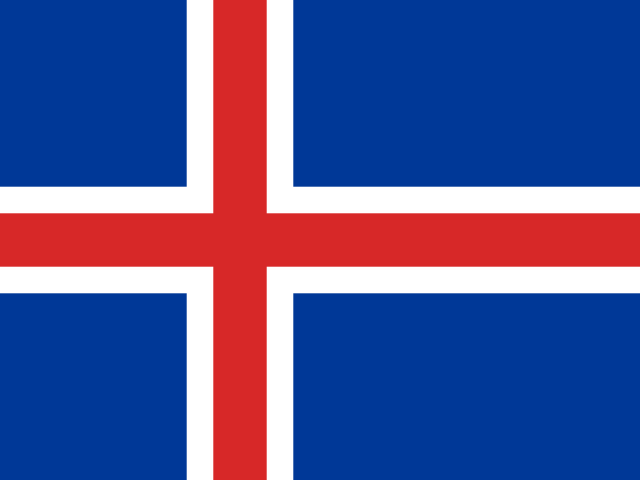 ISK
ISK Iceland
Icelandic krona
Iceland uses the krona, a small and historically volatile currency.
Fun Facts
- Krona means crown, like the other Nordic currencies.
- Iceland no longer uses any coins or notes worth less than 1 krona.
- The krona is one of the world's smallest independent currencies by total value.
CHF Liechtenstein
Swiss franc
Liechtenstein uses the Swiss franc under a treaty with Switzerland.
Fun Facts
- Liechtenstein has used the Swiss franc since 1920.
- It is one of the world's smallest countries and has no currency of its own.
- The country sits between Switzerland and Austria.
EUR Lithuania
Euro
Lithuania adopted the euro in 2015, the last Baltic state to do so.
Fun Facts
- Lithuania was the last of the three Baltic states to adopt the euro.
- It replaced the litas.
- Joining completed the euro across all three Baltic countries.
EUR Luxembourg
Euro
Luxembourg replaced the Luxembourg franc with the euro in 2002.
Fun Facts
- The Luxembourg franc was tied one to one with the Belgian franc.
- Luxembourg is one of the world's biggest financial centres.
- It was a founding member of the eurozone.
EUR Latvia
Euro
Latvia adopted the euro in 2014, replacing the lats.
Fun Facts
- Latvia adopted the euro in 2014, between Estonia and Lithuania.
- The lats was one of the highest-valued currency units in Europe before the switch.
- Latvia joined the EU in 2004.
EUR Monaco
Euro
Monaco uses the euro by agreement with the EU and mints its own euro coins prized by collectors.
Fun Facts
- Monaco mints its own euro coins, which collectors seek out.
- It used the French franc before the euro.
- Monaco is not an EU member but uses the euro through a special agreement.
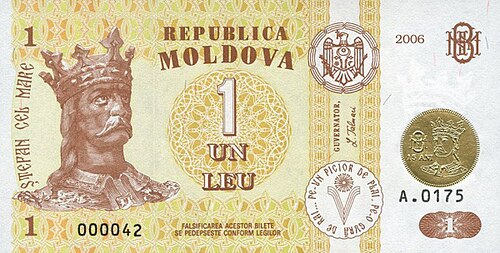 MDL
MDL Moldova
Moldovan leu
Moldova introduced the leu in 1993 after independence.
Fun Facts
- Like the Romanian leu, the name means lion.
- It was introduced in 1993, two years after independence.
- A leu is divided into 100 bani.
EUR Montenegro
Euro
Montenegro uses the euro unilaterally, without being in the EU or having an agreement to issue it.
Fun Facts
- Montenegro adopted the Deutsche Mark in 1999, then switched to the euro in 2002.
- It uses the euro unilaterally, so it cannot mint its own euro coins.
- It is not a member of the EU or the eurozone.
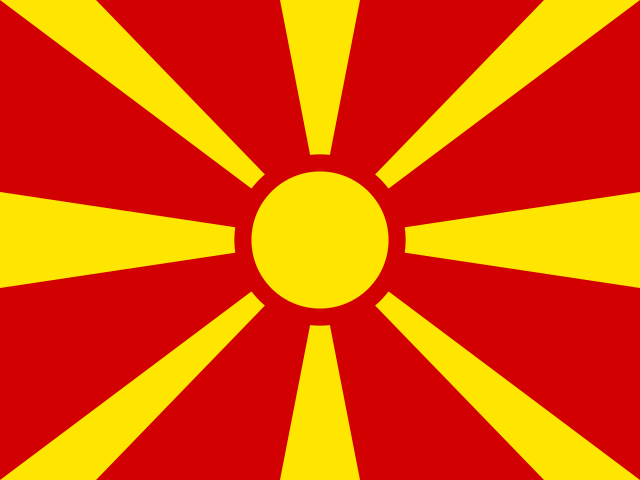
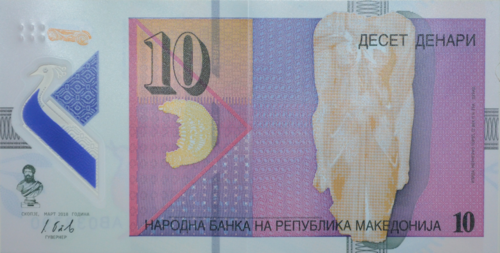 MKD
MKD North Macedonia
Macedonian denar
North Macedonia uses the denar, introduced in 1992 after independence.
Fun Facts
- The denar takes its name from the ancient Roman denarius.
- It was introduced in 1992.
- A denar is divided into 100 deni.
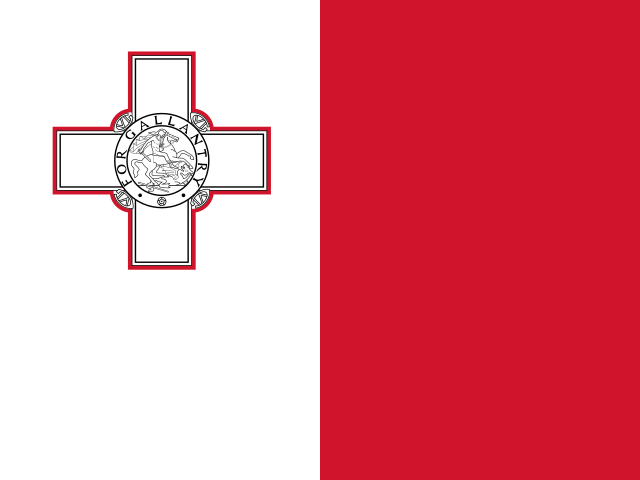
EUR Malta
Euro
Malta adopted the euro in 2008, replacing the Maltese lira.
Fun Facts
- Malta is the smallest EU country by area to use the euro.
- The Maltese lira was one of the strongest currencies in the world before the switch.
- Malta joined the EU in 2004.
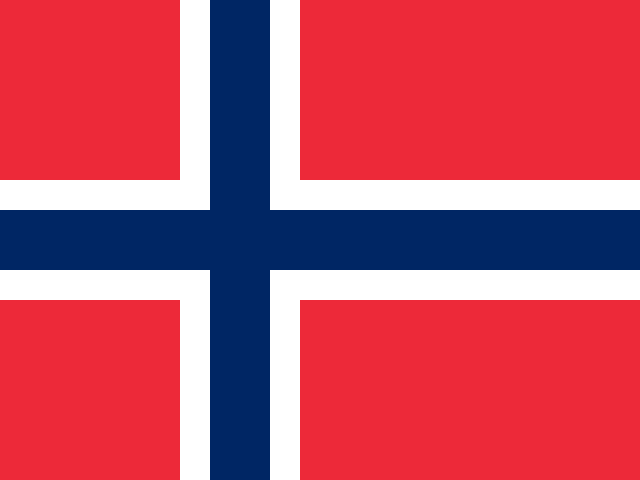 NOK
NOK Norway
Norwegian krone
Norway is not in the EU and keeps the krone, backed by a strong, oil-rich economy.
Fun Facts
- Krone means crown.
- Norway is not a member of the EU, so it never considered the euro.
- Norway runs the world's largest sovereign wealth fund, built on oil revenue.
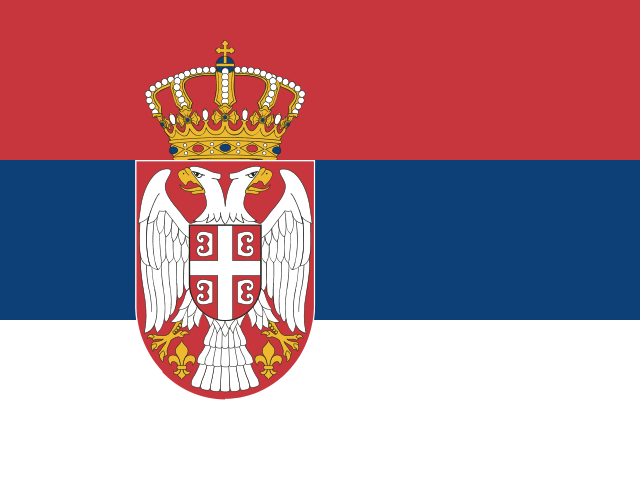 RSD
RSD Serbia
Serbian dinar
Serbia uses the dinar, one of the oldest currency names in Europe.
Fun Facts
- The dinar takes its name from the Roman denarius.
- The modern Serbian dinar dates from 2003.
- A dinar is divided into 100 para.
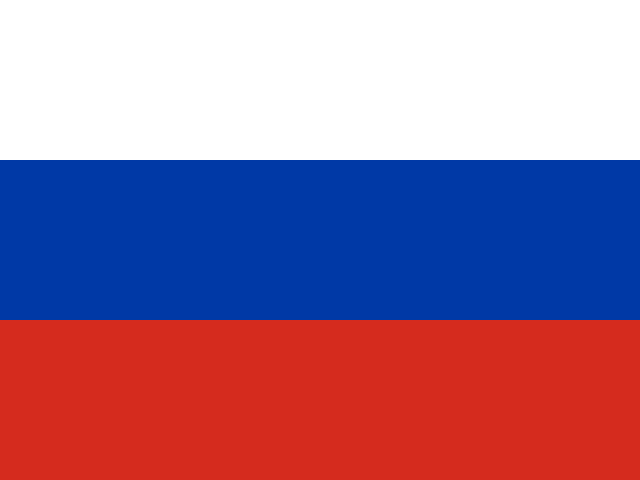
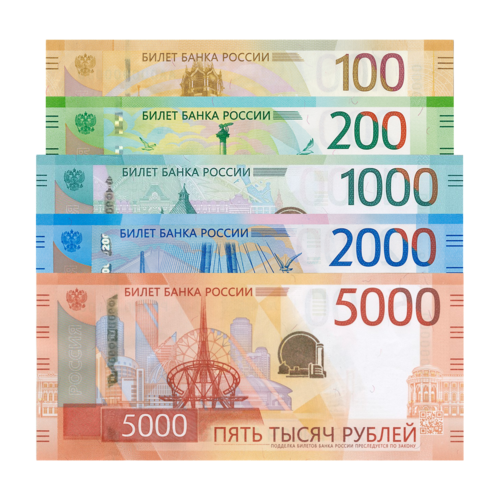 RUB
RUB Russia
Russian ruble
Russia uses the ruble, one of the world's oldest currency names, redenominated in 1998.
Fun Facts
- The word ruble comes from an old verb meaning to chop, from cut pieces of silver.
- The ruble symbol ₽ was officially adopted in 2013.
- In 1998 Russia removed three zeros, so 1,000 old rubles became 1 new ruble.
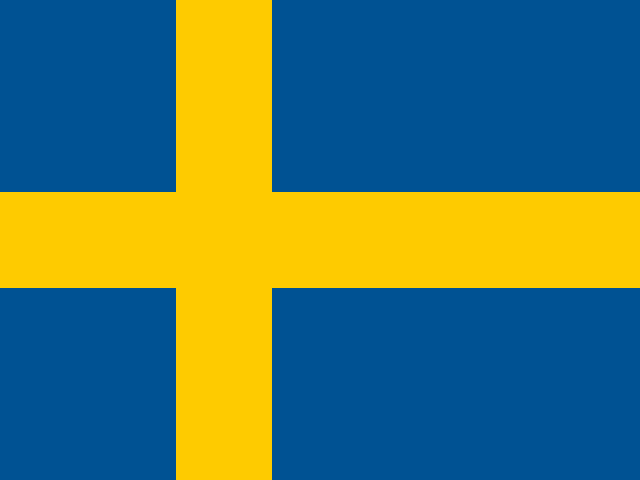 SEK
SEK Sweden
Swedish krona
Sweden is in the EU but has not adopted the euro and keeps the krona.
Fun Facts
- Krona means crown; the plural is kronor.
- Sweden's Riksbank is the oldest central bank in the world.
- Sweden is one of the most cashless societies on Earth.
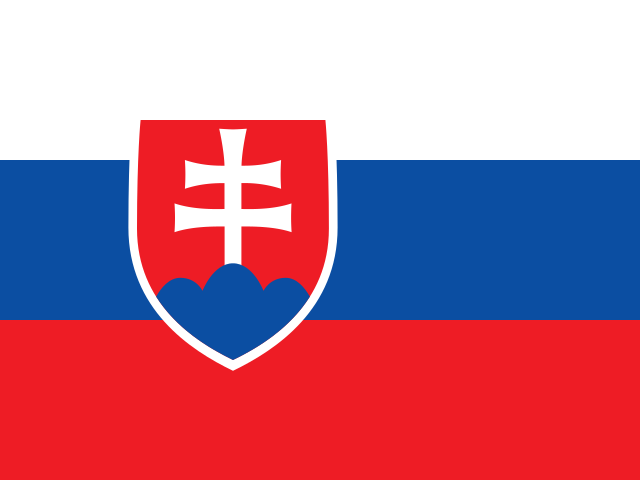
EUR Slovakia
Euro
Slovakia adopted the euro in 2009, replacing the Slovak koruna.
Fun Facts
- Slovakia switched to the euro in 2009.
- Its former koruna split from the Czechoslovak koruna in 1993.
- Slovakia is the only Visegrad country to use the euro.
EUR Slovenia
Euro
Slovenia adopted the euro in 2007, the first of the 2004 EU newcomers to do so.
Fun Facts
- Slovenia was the first 2004-wave EU member to adopt the euro.
- It replaced the tolar.
- Slovenia joined both the EU and NATO in 2004.
EUR San Marino
Euro
San Marino uses the euro by agreement and mints its own euro coins sought by collectors.
Fun Facts
- San Marino mints its own euro coins, popular with collectors.
- It used the Italian lira before the euro.
- San Marino is one of the world's oldest republics and is surrounded by Italy.
EUR Vatican City
Euro
Vatican City uses the euro by agreement and issues its own euro coins featuring the Pope.
Fun Facts
- Vatican euro coins show the reigning Pope and are highly collectible.
- The Vatican is the smallest country in the world.
- It used the Italian lira before adopting the euro.
Quick Reference
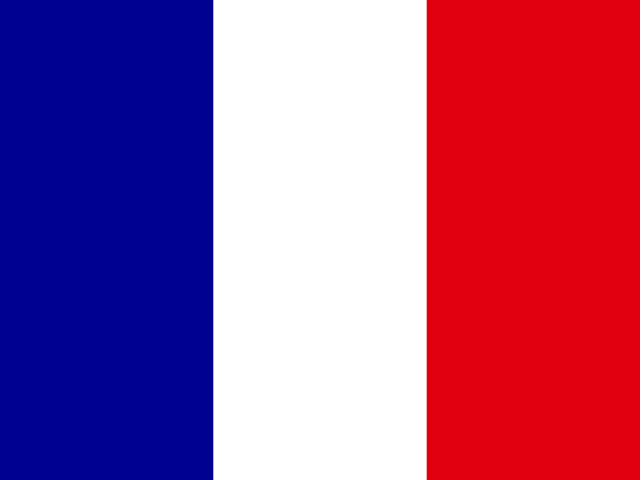 France
 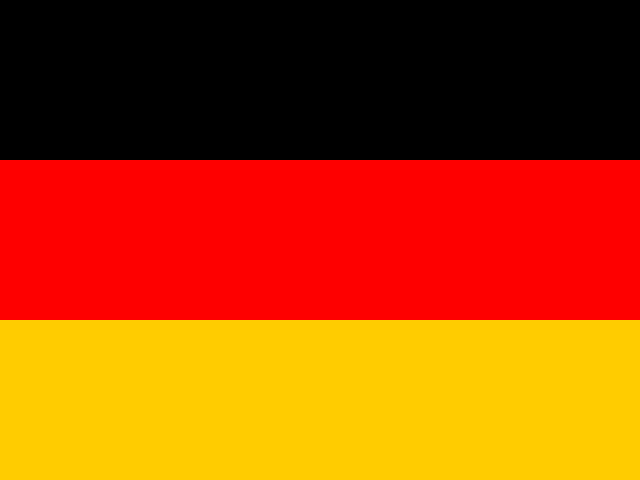 Germany
 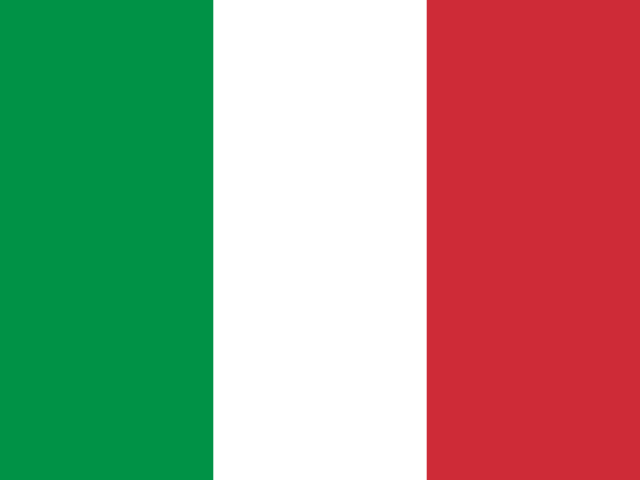 Italy
Italy 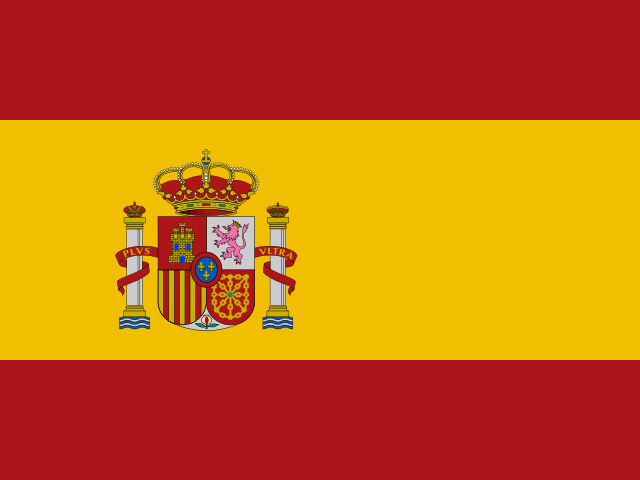 Spain United Kingdom
  Netherlands
  Belgium
  Switzerland
  Austria
 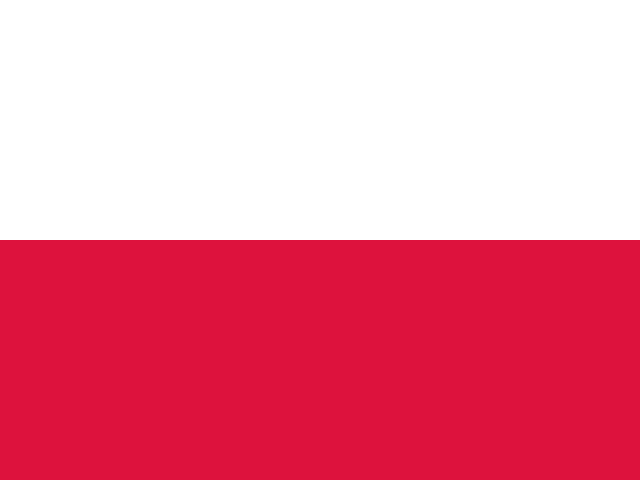 Poland
 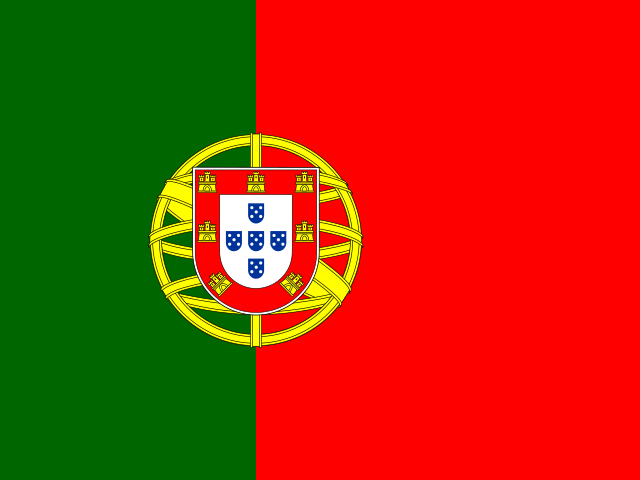 Portugal
 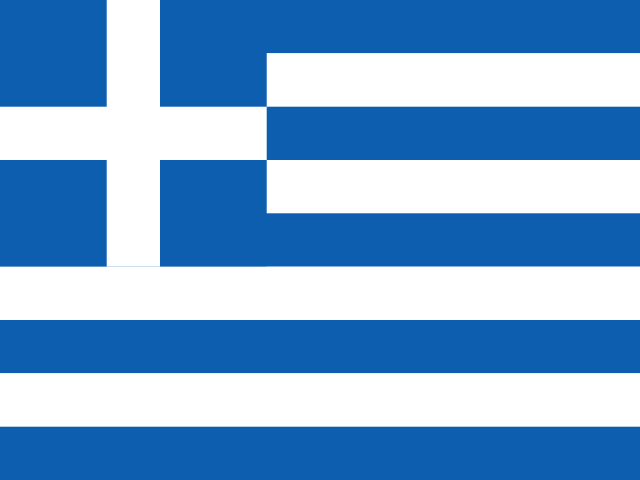 Greece
 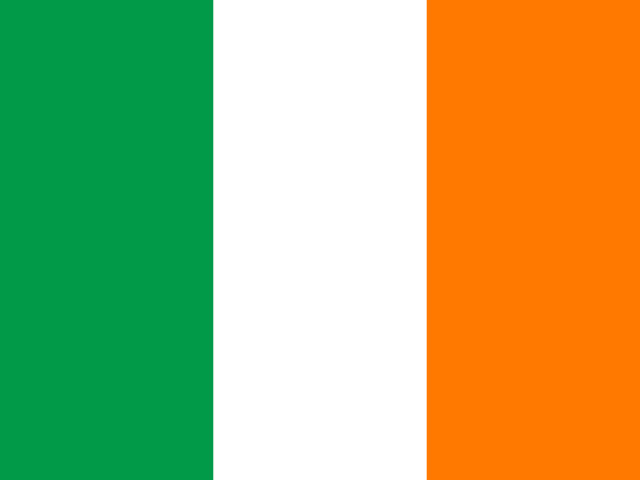 Ireland
 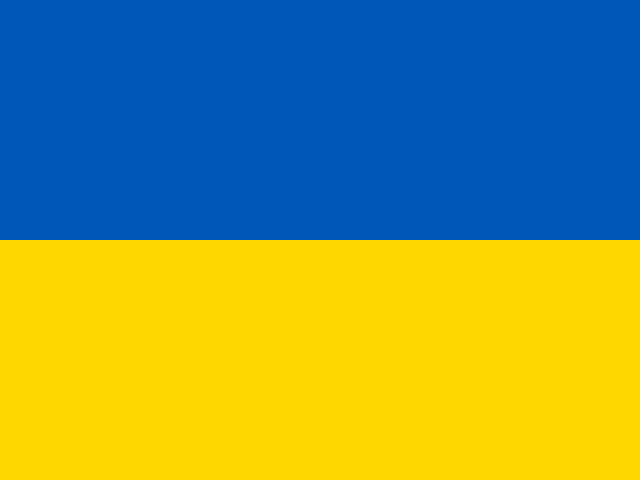 Ukraine
 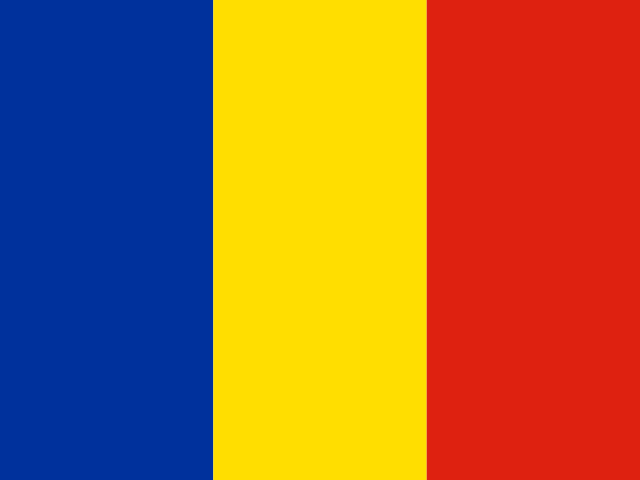 Romania
 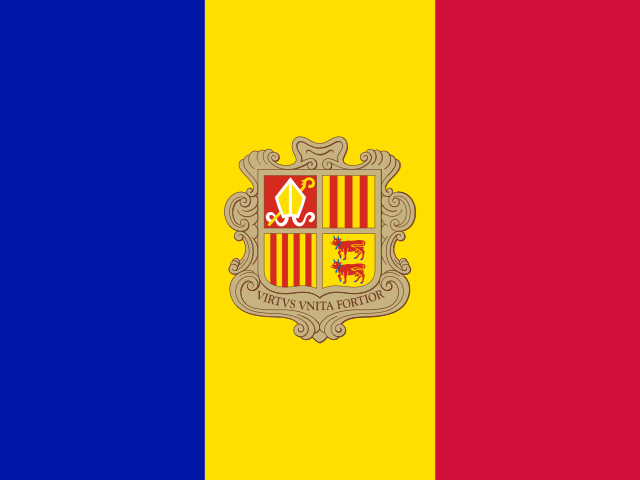 Andorra Albania Bosnia and Herzegovina
 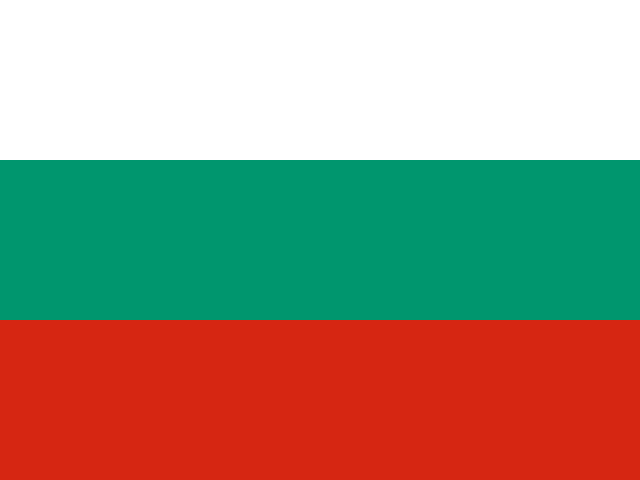 Bulgaria
  Belarus
  Czech Republic Denmark
  Estonia
  Finland
 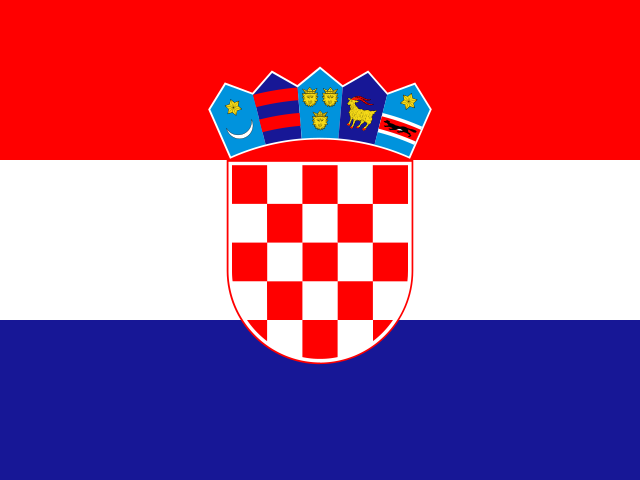 Croatia Hungary Iceland
 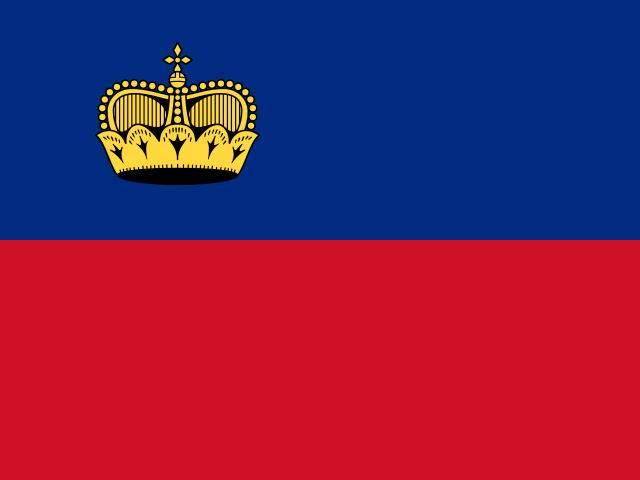 Liechtenstein
 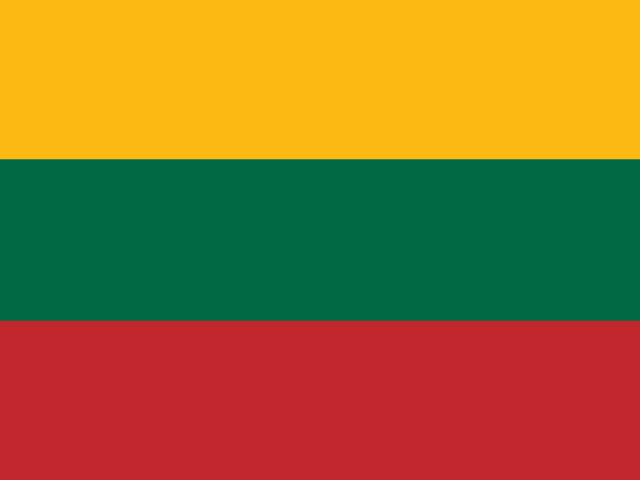 Lithuania
 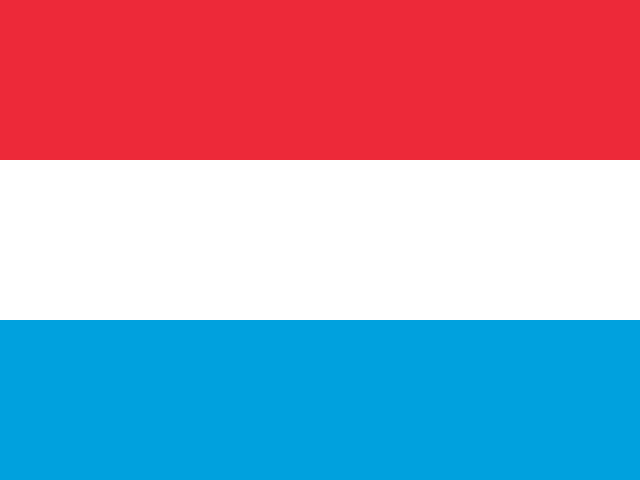 Luxembourg
 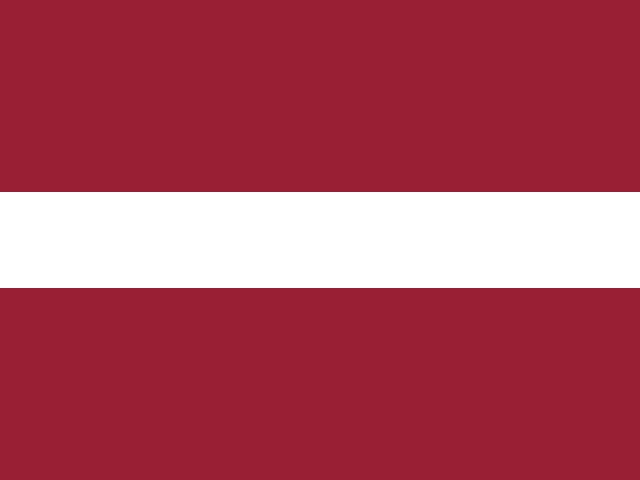 Latvia
 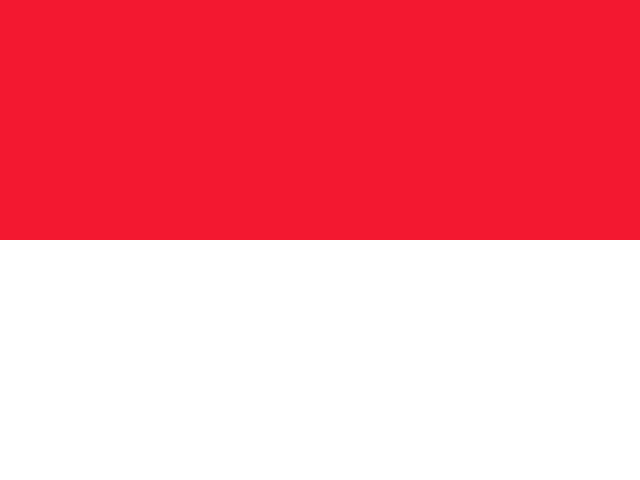 Monaco
 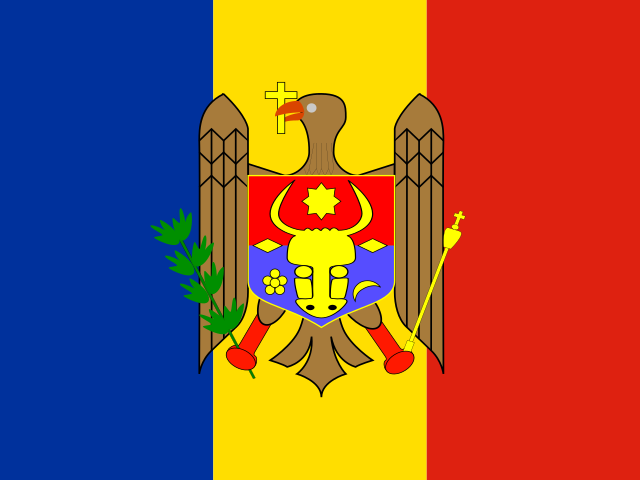 Moldova
 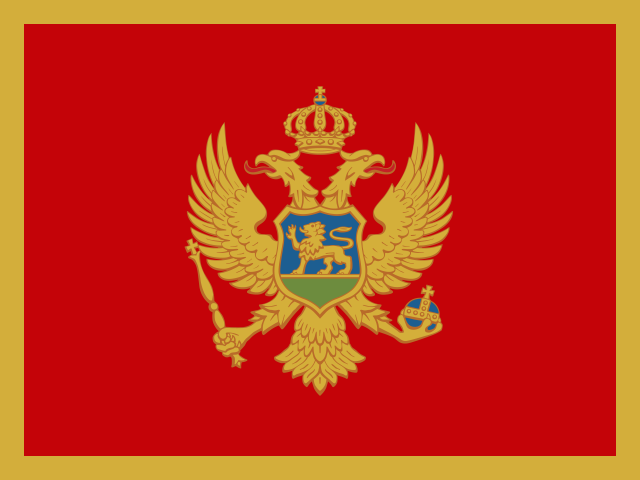 Montenegro
  North Macedonia
  Malta Norway Serbia
  Russia Sweden
  Slovakia
 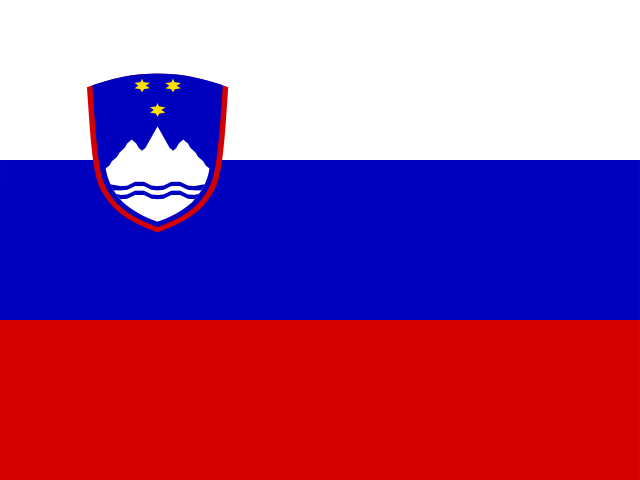 Slovenia
 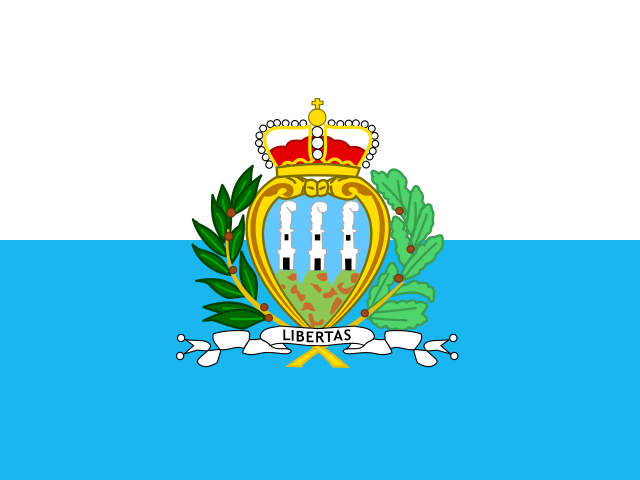 San Marino
 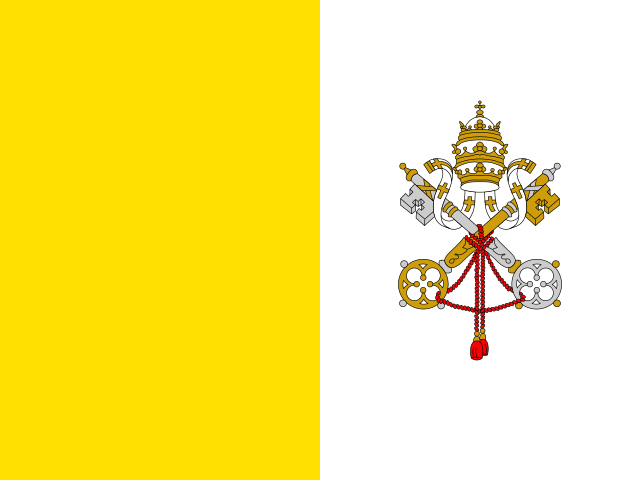 Vatican City
 Test Your Knowledge
Can you match each country to its currency?
Practice with Games
Ready to test what you learned? Jump into a game and put it into practice.
About European Currencies
Europe is split between the euro and a range of national currencies. Twenty European Union countries have adopted the euro, forming the eurozone, and a handful of non-EU states and microstates - Andorra, Monaco, San Marino, Vatican City, Montenegro and Kosovo - use it as well. Outside the euro, large economies such as the United Kingdom (pound sterling), Switzerland (Swiss franc), Poland (zloty), Sweden (krona) and Norway (krone) keep their own money. Many currency names share a meaning: krona, krone and koruna all mean crown, while leu and lev both mean lion. Learning these currencies, their ISO codes and symbols makes travel, shopping and reading the news across Europe far easier.
Frequently Asked Questions
How many currencies are used in Europe?
There is no single European currency. The euro is shared by 20 EU countries plus several non-EU states, while around a dozen other national currencies are in use, including the pound sterling, Swiss franc, Polish zloty, Swedish krona and Norwegian krone.
Which countries use the euro?
Twenty EU members use the euro: Austria, Belgium, Bulgaria, Croatia, Cyprus, Estonia, Finland, France, Germany, Greece, Ireland, Italy, Latvia, Lithuania, Luxembourg, Malta, the Netherlands, Portugal, Slovakia, Slovenia and Spain. Andorra, Monaco, San Marino, Vatican City, Montenegro and Kosovo also use it.
Which European countries do not use the euro?
Major European countries that keep their own currency include the United Kingdom (pound sterling), Switzerland (Swiss franc), Sweden (krona), Norway (krone), Denmark (krone), Poland (zloty), the Czech Republic (koruna), Hungary (forint), Romania (leu) and Russia (ruble).
What is the most recent country to adopt the euro?
Bulgaria adopted the euro on 1 January 2026, becoming the 21st country in the eurozone. Croatia was the previous newcomer, joining in 2023.
Banknote images via Wikimedia Commons: EUR (Bericht, CC0) · CHF (Allain22, Public domain) · PLN (MichalPL, CC BY-SA 4.0) · UAH (Mark from Bristol, UK, Public domain) · RON (Wikimedia Commons, Public domain) · BYN (Chi Ho Chan from Hong Kong, CC BY 2.0) · CZK (ТамараГончарук, Public domain) · MDL (National Bank of Moldova, Public domain) · MKD (Идеолист, CC BY-SA 4.0) · RUB (Bank of Russia, CC0)