Learn the Currencies of North Africa
North Africa uses a varied mix of currencies, with no shared money across the region. Three countries use a dinar, two use a pound and one uses a dirham, while Mauritania keeps the ouguiya. This lesson covers the currency of all 6 North African countries, with each currency code, symbol and the year it came into use.
Study the Currencies
 DZD
DZD Algeria
Algerian dinar
Algeria introduced the dinar in 1964, two years after independence, replacing the Algerian franc.
Fun Facts
- The dinar takes its name from the ancient Roman denarius, a name shared by many currencies across the Arab world.
- A dinar is divided into 100 centimes, though centimes are rarely used today.
- The dinar replaced the Algerian franc in 1964, shortly after independence from France.
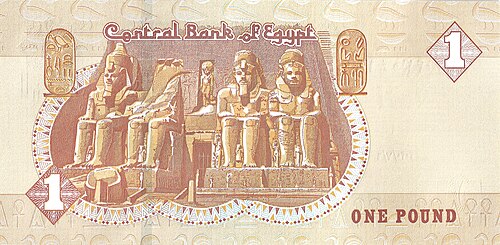 EGP
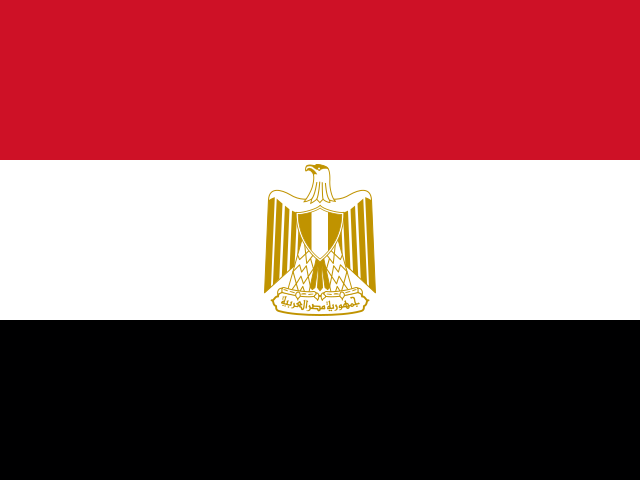
EGP Egypt
Egyptian pound
Egypt has used the pound since 1834; it is one of the oldest currencies still in use in Africa.
Fun Facts
- The Egyptian pound is one of the oldest currencies still in circulation in Africa, dating back to 1834.
- A pound is divided into 100 piastres, locally called qirsh.
- In Arabic the currency is known as the gineih, from the English word guinea.
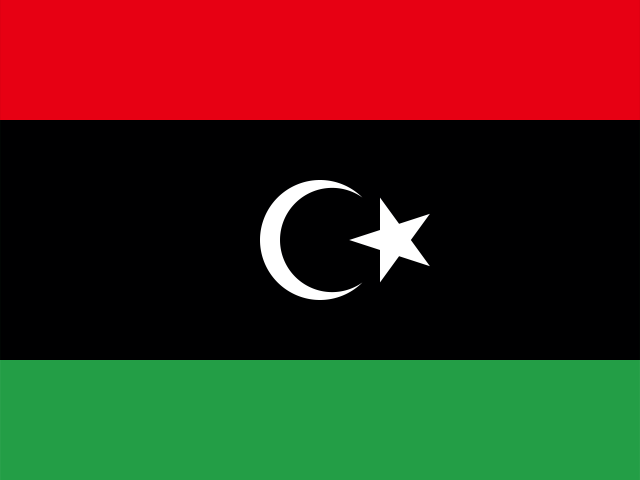
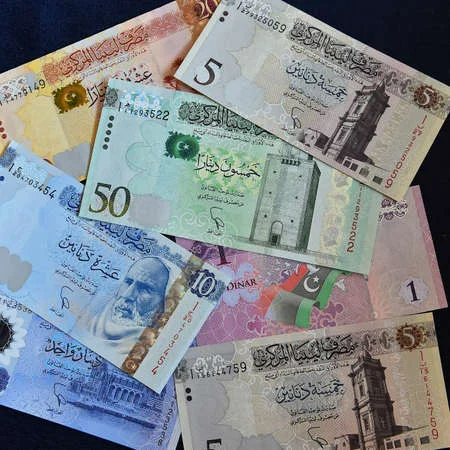 LYD
LYD Libya
Libyan dinar
Libya introduced the dinar in 1971, replacing the Libyan pound at par.
Fun Facts
- The Libyan dinar replaced the Libyan pound in 1971 on a one-to-one basis.
- A dinar is divided into 1,000 dirhams, an unusually large subdivision.
- Like other regional dinars, the name traces back to the Roman denarius.
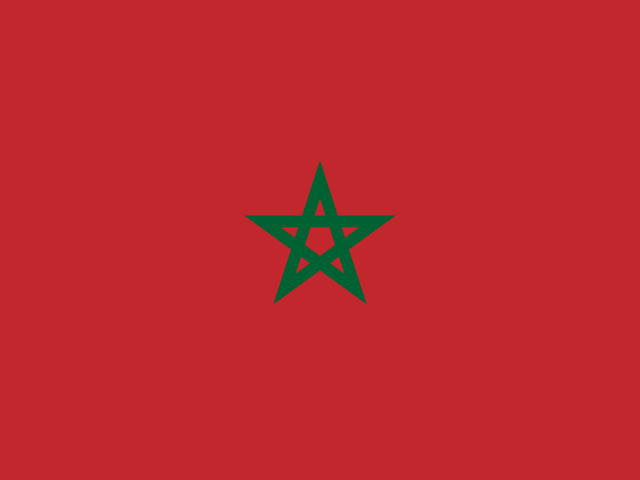
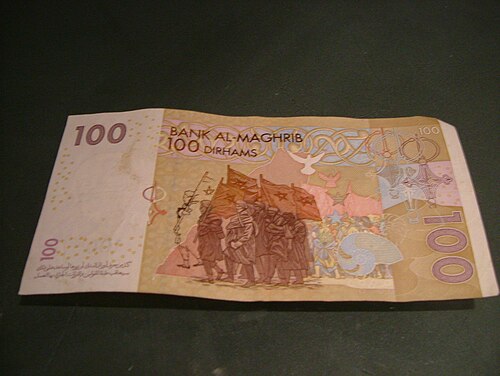 MAD
MAD Morocco
Moroccan dirham
Morocco introduced the dirham in 1960, replacing the Moroccan franc.
Fun Facts
- The dirham takes its name from the ancient Greek drachma.
- A dirham is divided into 100 santimat.
- Taking Moroccan dirham out of the country is restricted, so it is mainly used inside Morocco.
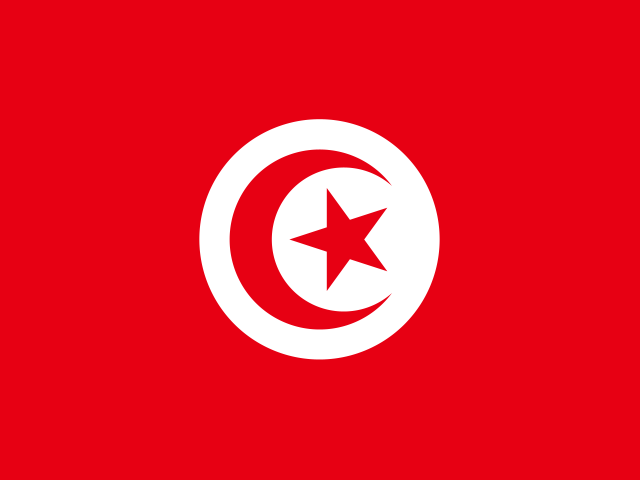
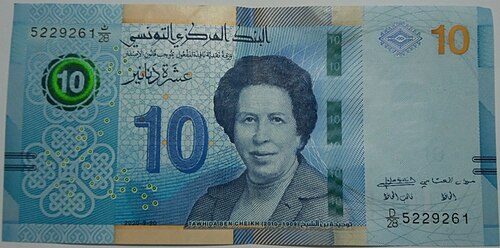 TND
TND Tunisia
Tunisian dinar
Tunisia introduced the dinar in 1960, replacing the Tunisian franc.
Fun Facts
- The Tunisian dinar is divided into 1,000 millimes.
- It is one of the higher-valued currencies in Africa.
- Importing or exporting the dinar is restricted, so it is rarely traded outside Tunisia.
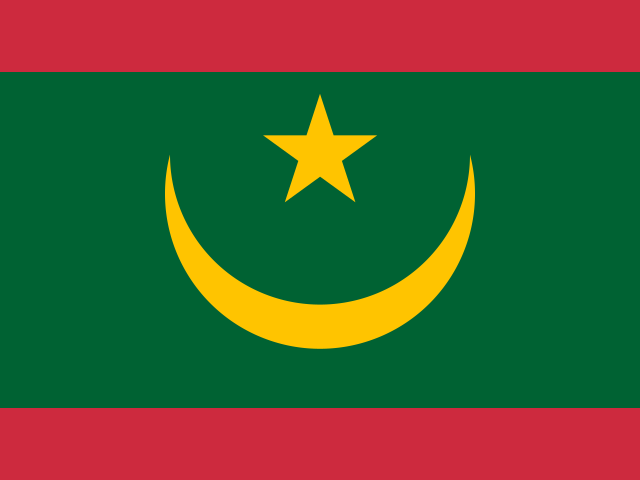
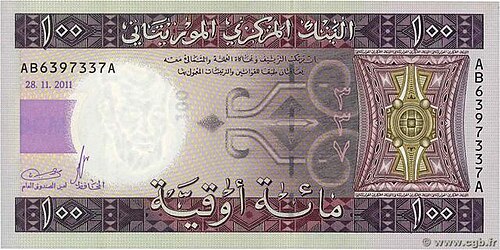 MRU
MRU Mauritania
Mauritanian ouguiya
Mauritania uses the ouguiya, introduced in 1973 and redenominated in 2017.
Fun Facts
- The ouguiya is one of only two circulating currencies in the world not divided into a power of ten; it splits into 5 khoums.
- In 2017 Mauritania removed a zero, so 10 old ouguiya became 1 new ouguiya, and the code changed from MRO to MRU.
- The name ouguiya comes from an Arabic word for a unit of weight.
Quick Reference
Test Your Knowledge
Can you match each country to its currency?
Practice with Games
Ready to test what you learned? Jump into a game and put it into practice.
About North African Currencies
North Africa has no shared currency; each of the six countries keeps its own money. Algeria, Libya and Tunisia all use a dinar, a name that traces back to the ancient Roman denarius, while Egypt and Sudan both use a pound. Morocco uses the dirham, named after the Greek drachma, and Mauritania keeps the ouguiya, one of the world's few currencies that is not divided into a power of ten. Several of these currencies, including the Moroccan dirham and the Tunisian dinar, are restricted and rarely traded outside their home countries. Learning these currencies, their ISO codes and symbols makes travel, shopping and reading the news across North Africa far easier.
Frequently Asked Questions
How many currencies are used in North Africa?
North Africa uses six different currencies, one per country: the Algerian dinar, the Egyptian pound, the Libyan dinar, the Moroccan dirham, the Tunisian dinar and the Mauritanian ouguiya. There is no shared regional currency.
What is the currency of Egypt?
Egypt uses the Egyptian pound, ISO code EGP. It is one of the oldest currencies still in use in Africa, dating back to 1834, and is divided into 100 piastres.
Why do several North African countries use a dinar?
Algeria, Libya and Tunisia all use a currency called the dinar. The name comes from the ancient Roman denarius and spread across the Arab world, which is why it is so common in North Africa and the Middle East.
What is unusual about the Mauritanian ouguiya?
The Mauritanian ouguiya is one of only two circulating currencies in the world that is not divided into a power of ten. It splits into 5 khoums rather than 100 subunits.
Banknote images via Wikimedia Commons: EGP (AmrAmin, CC BY-SA 4.0) · LYD (Waves of Editing, CC BY-SA 4.0) · MAD (Michelle Ward, CC BY 2.0) · TND (DrRachT, CC BY-SA 4.0) · MRU (Nippon 725, CC BY-SA 4.0)