Learn the Currencies of the Caribbean
The Caribbean is a region of island nations, and its money is just as varied as its geography. Some larger states keep their own currency, from the Cuban peso to the Jamaican dollar and the Haitian gourde, while several smaller eastern islands share a single currency, the Eastern Caribbean dollar. A few currencies, like those of the Bahamas and Barbados, are pegged one to one with the US dollar. This lesson covers the currency of 13 Caribbean countries, with each currency code, symbol and the year it came into use.
Study the Currencies
 CUP
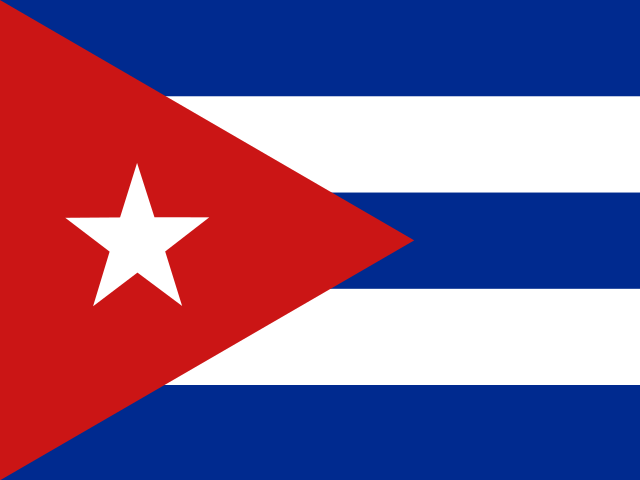
CUP Cuba
Cuban peso
Cuba uses the Cuban peso, which became the country's sole official currency after the convertible peso was withdrawn in 2021.
Fun Facts
- For years Cuba ran two currencies side by side, the peso and the convertible peso (CUC), until the CUC was scrapped in 2021.
- The peso is divided into 100 centavos.
- Locals often write the peso with the dollar sign, sometimes shown as MN for moneda nacional.
 JMD
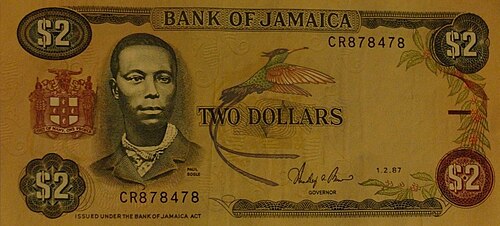
JMD Jamaica
Jamaican dollar
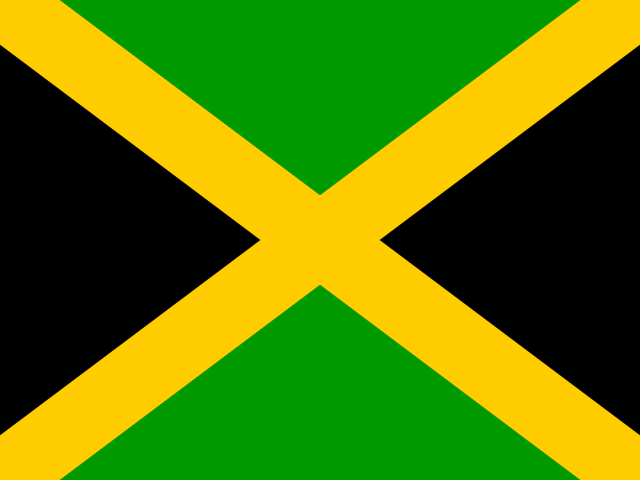
Jamaica adopted the Jamaican dollar in 1969, replacing the Jamaican pound.
Fun Facts
- The Jamaican dollar replaced the pound in 1969, when the country switched to a decimal system.
- It is often written J$ to tell it apart from other dollars.
- A Jamaican dollar is divided into 100 cents.
 HTG
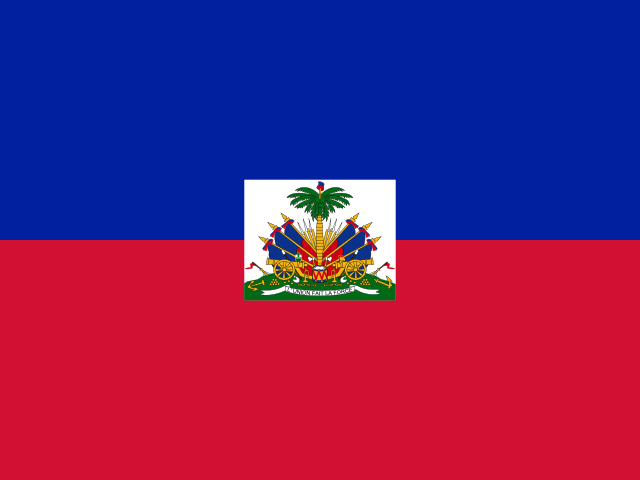
HTG Haiti
Haitian gourde
Haiti uses the gourde, one of the oldest currencies in the Americas, in use since 1813.
Fun Facts
- The gourde is named after the gourd, which was once used as a unit of value on the island.
- Prices are sometimes still quoted in Haitian dollars, an informal unit worth five gourdes.
- A gourde is divided into 100 centimes.
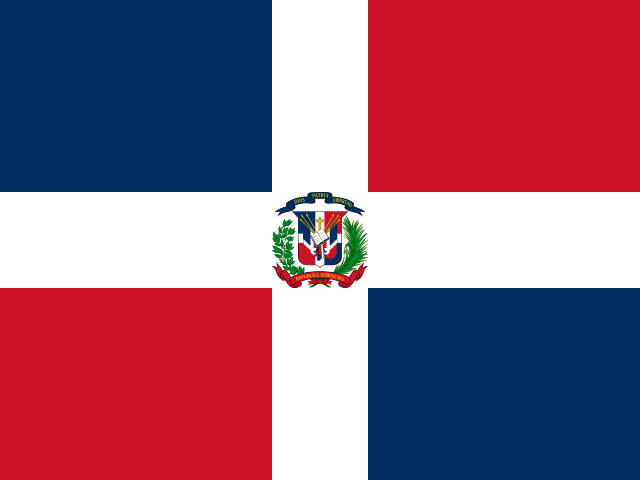 DOP
DOP Dominican Republic
Dominican peso
The Dominican Republic uses the Dominican peso, introduced in 1844 after independence from Haiti.
Fun Facts
- The peso is written RD$, short for Republica Dominicana.
- It was first issued in 1844, the year the country gained independence.
- A peso is divided into 100 centavos.
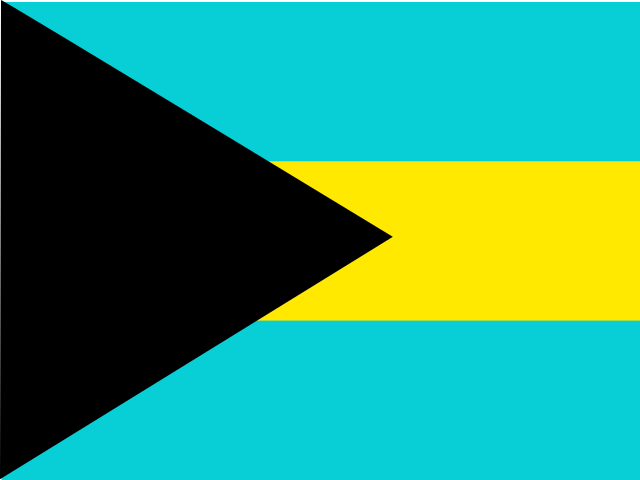 BSD
BSD Bahamas
Bahamian dollar
The Bahamas uses the Bahamian dollar, which is pegged one to one with the US dollar.
Fun Facts
- The Bahamian dollar is fixed at exactly one US dollar, so both are accepted on the islands.
- In 2020 the Bahamas launched the Sand Dollar, one of the world's first central bank digital currencies.
- A Bahamian dollar is divided into 100 cents.
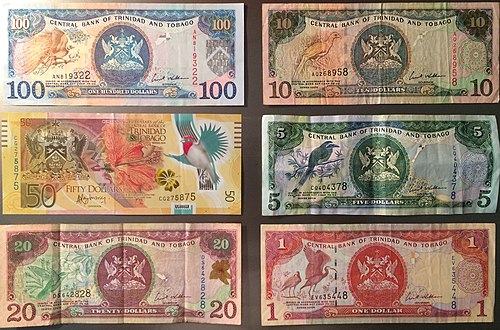 TTD
TTD Trinidad and Tobago
Trinidad and Tobago dollar
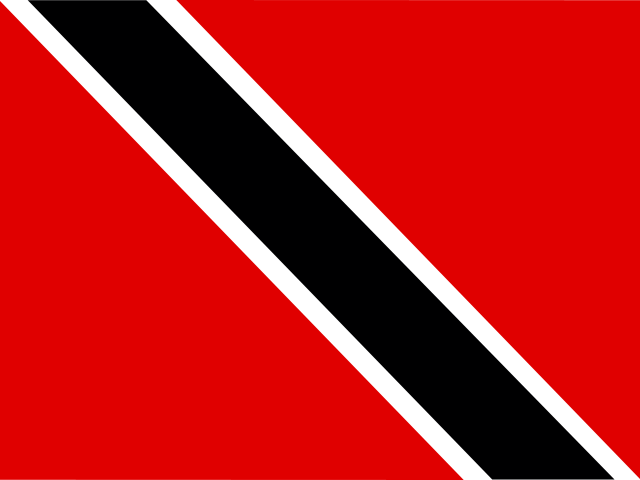
Trinidad and Tobago uses its own dollar, introduced in 1964, backed by the country's oil and gas economy.
Fun Facts
- The Trinidad and Tobago dollar is written TT$ to set it apart from other dollars.
- It replaced the British West Indies dollar in 1964.
- A dollar is divided into 100 cents.
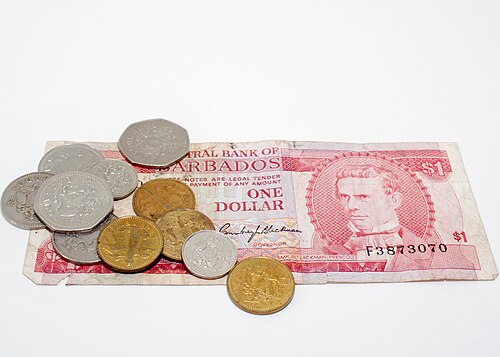 BBD
BBD Barbados
Barbadian dollar
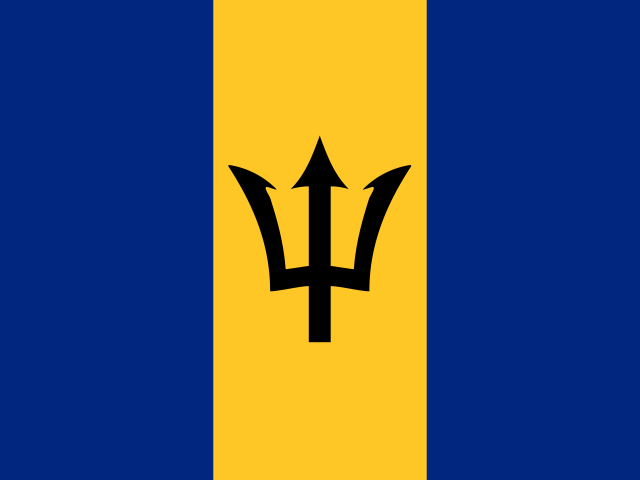
Barbados uses the Barbadian dollar, pegged at two to one with the US dollar.
Fun Facts
- The Barbadian dollar is fixed at two dollars to one US dollar.
- It is sometimes called the Bajan dollar, after the local name for Barbados.
- A dollar is divided into 100 cents.
 XCD
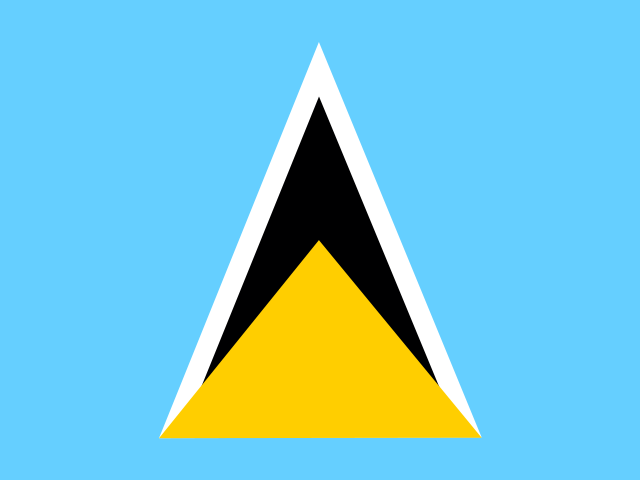
XCD Saint Lucia
Eastern Caribbean dollar
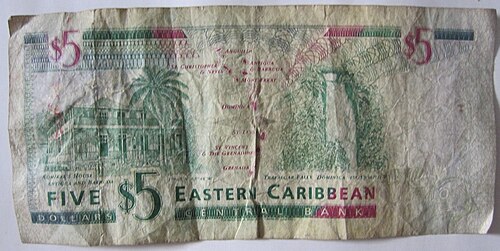
Saint Lucia uses the Eastern Caribbean dollar, a shared currency used across eight Caribbean states and territories.
Fun Facts
- The Eastern Caribbean dollar is shared by several islands, so the same notes and coins are used across them.
- It is pegged at a fixed rate of about 2.7 to one US dollar.
- A single central bank, based in Saint Kitts, issues the currency for all its members.
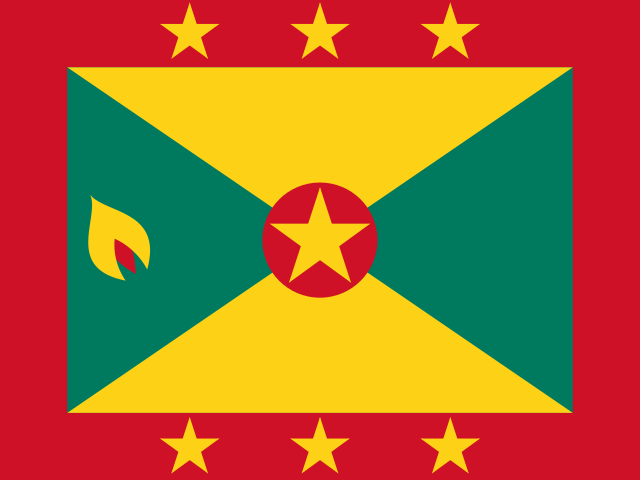
XCD Grenada
Eastern Caribbean dollar
Grenada uses the shared Eastern Caribbean dollar rather than a currency of its own.
Fun Facts
- Grenada is one of several islands that share the Eastern Caribbean dollar.
- The shared currency is pegged firmly to the US dollar, giving members stable prices.
- A dollar is divided into 100 cents.
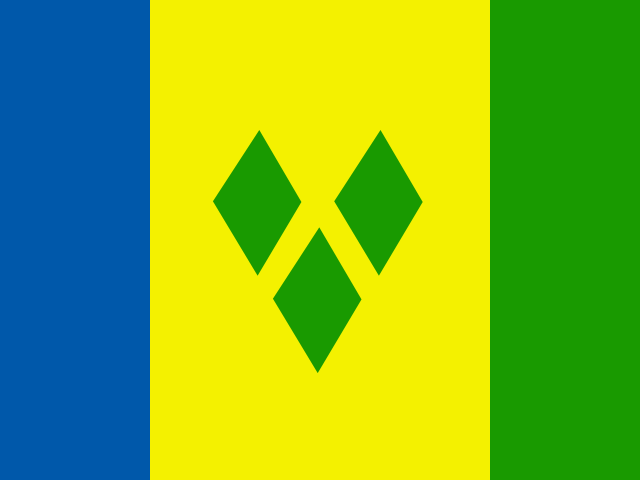
XCD Saint Vincent and the Grenadines
Eastern Caribbean dollar
Saint Vincent and the Grenadines uses the shared Eastern Caribbean dollar.
Fun Facts
- Saint Vincent and the Grenadines shares the Eastern Caribbean dollar with seven other members.
- The currency is managed by the Eastern Caribbean Central Bank.
- A dollar is divided into 100 cents.
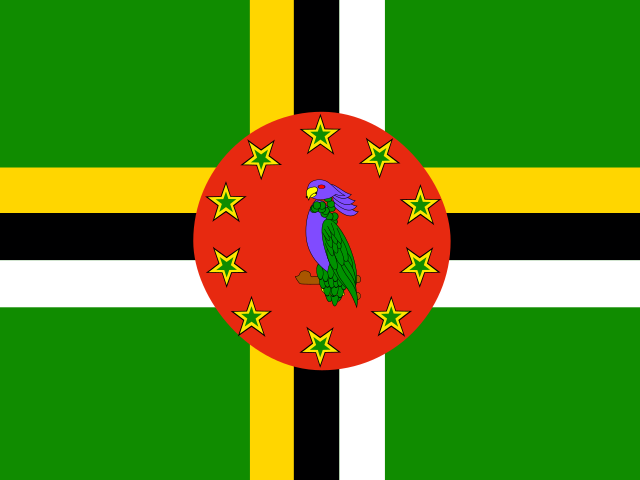
XCD Dominica
Eastern Caribbean dollar
Dominica uses the shared Eastern Caribbean dollar, common across the eastern islands.
Fun Facts
- Dominica is one of the islands that share the Eastern Caribbean dollar.
- The shared currency has been pegged to the US dollar since 1976.
- A dollar is divided into 100 cents.
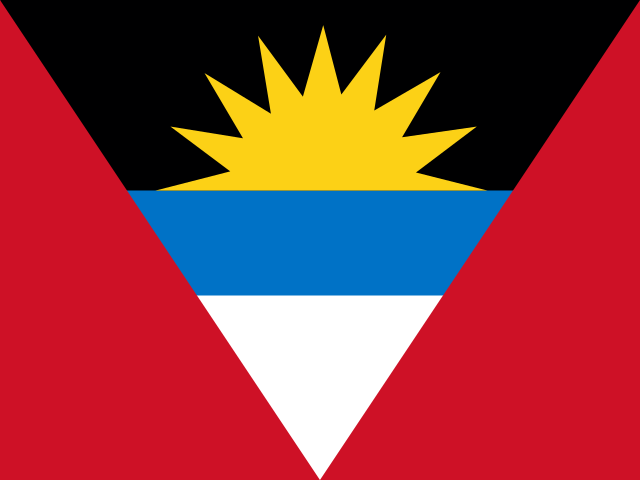
XCD Antigua and Barbuda
Eastern Caribbean dollar
Antigua and Barbuda uses the shared Eastern Caribbean dollar.
Fun Facts
- Antigua and Barbuda shares the Eastern Caribbean dollar with several neighbouring islands.
- The same notes and coins circulate freely across all the member states.
- A dollar is divided into 100 cents.
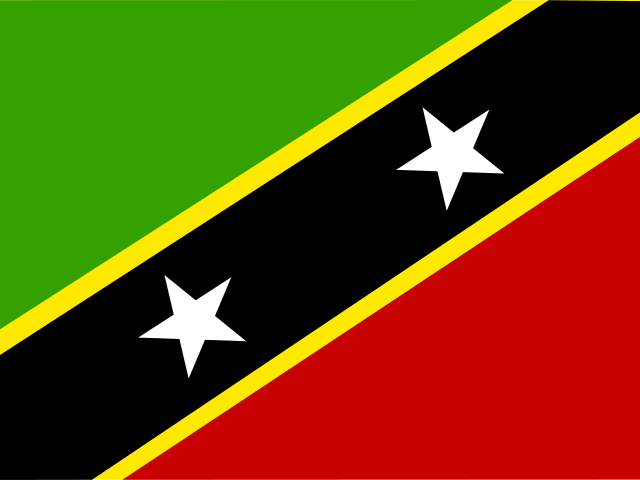
XCD Saint Kitts and Nevis
Eastern Caribbean dollar
Saint Kitts and Nevis uses the shared Eastern Caribbean dollar and hosts the central bank that issues it.
Fun Facts
- The Eastern Caribbean Central Bank, which issues the shared dollar, is based in Saint Kitts.
- Saint Kitts and Nevis is one of eight members that share the currency.
- A dollar is divided into 100 cents.
Quick Reference
Test Your Knowledge
Can you match each country to its currency?
Practice with Games
Ready to test what you learned? Jump into a game and put it into practice.
About Caribbean Currencies
The Caribbean uses a mix of national currencies and one shared regional currency. Larger independent states keep their own money: the Cuban peso, the Jamaican dollar, the Haitian gourde, the Dominican peso and the Trinidad and Tobago dollar. The Bahamas and Barbados issue their own dollars too, but both are pegged to the US dollar, at one to one and two to one respectively. Six of the islands in this lesson - Saint Lucia, Grenada, Saint Vincent and the Grenadines, Dominica, Antigua and Barbuda, and Saint Kitts and Nevis - share the Eastern Caribbean dollar, issued by a single central bank and pegged to the US dollar. Learning these currencies, their ISO codes and symbols makes travel, shopping and reading the news across the Caribbean far easier.
Frequently Asked Questions
How many currencies are used in the Caribbean?
There is no single Caribbean currency. The 13 countries in this lesson use seven different currencies: the Cuban peso, the Jamaican dollar, the Haitian gourde, the Dominican peso, the Bahamian dollar, the Trinidad and Tobago dollar and the Barbadian dollar, plus the shared Eastern Caribbean dollar used by six of the eastern islands.
Which countries use the Eastern Caribbean dollar?
Among the countries in this lesson, the Eastern Caribbean dollar (XCD) is used by Saint Lucia, Grenada, Saint Vincent and the Grenadines, Dominica, Antigua and Barbuda, and Saint Kitts and Nevis. It is issued by the Eastern Caribbean Central Bank, which also serves Anguilla and Montserrat, and is pegged to the US dollar.
Which Caribbean currencies are pegged to the US dollar?
The Bahamian dollar is pegged one to one with the US dollar, the Barbadian dollar is pegged at two to one, and the Eastern Caribbean dollar is pegged at about 2.7 to one. These fixed rates help keep prices stable for tourism and trade.
What is the currency of Cuba?
Cuba uses the Cuban peso (CUP). After years of running two currencies side by side, Cuba withdrew the convertible peso (CUC) in 2021, leaving the Cuban peso as the country's sole official currency.
Banknote images via Wikimedia Commons: JMD (Paasikivi, CC BY-SA 4.0) · TTD (Central Bank of Trinidad and Tobago, Public domain) · BBD (Barry haynes, CC BY-SA 3.0) · XCD (Tonton Bernardo, CC BY-SA 3.0)