Learn the Currencies of Central America
Central America uses a colourful mix of currencies. Five countries keep their own money - from the Guatemalan quetzal, named after a bird, to the Costa Rican colon and the Honduran lempira - while El Salvador and Panama rely on the US dollar. This lesson covers the currency of all 7 Central American countries, with each currency code, symbol and the year it came into use.
Study the Currencies
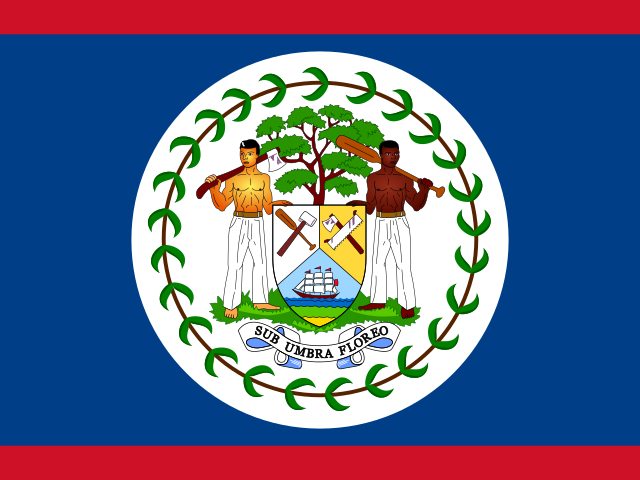 BZD
BZD Belize
Belize dollar
Belize uses the Belize dollar, which is pegged at a fixed rate of two dollars to one US dollar.
Fun Facts
- The Belize dollar has been pegged at 2 BZD to 1 USD since 1978.
- It replaced the British Honduras dollar when the colony was renamed Belize.
- A Belize dollar is divided into 100 cents.
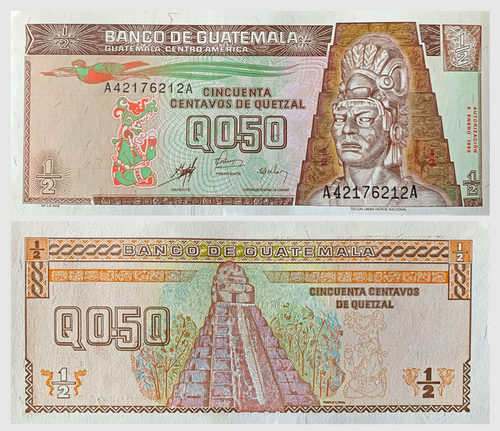 GTQ
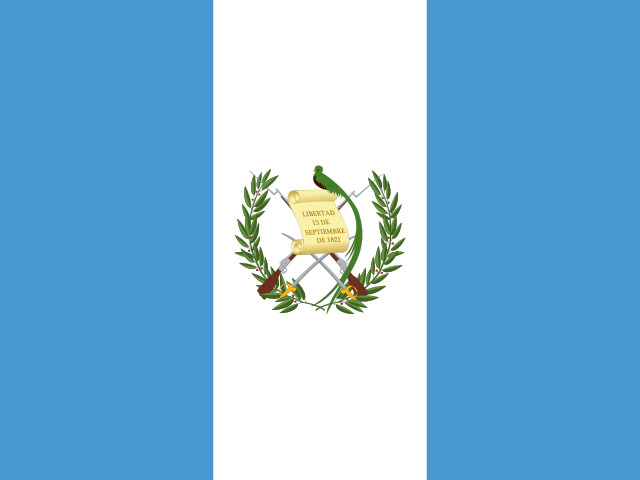
GTQ Guatemala
Guatemalan quetzal
Guatemala uses the quetzal, named after the country's national bird, introduced in 1925.
Fun Facts
- The quetzal is named after the resplendent quetzal, Guatemala's national bird.
- In ancient Maya times, quetzal tail feathers were used as money.
- A quetzal is divided into 100 centavos.
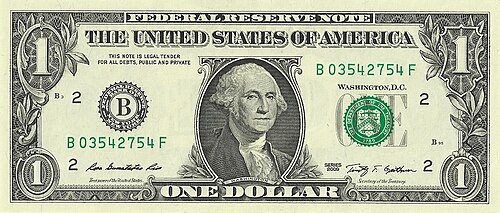 USD
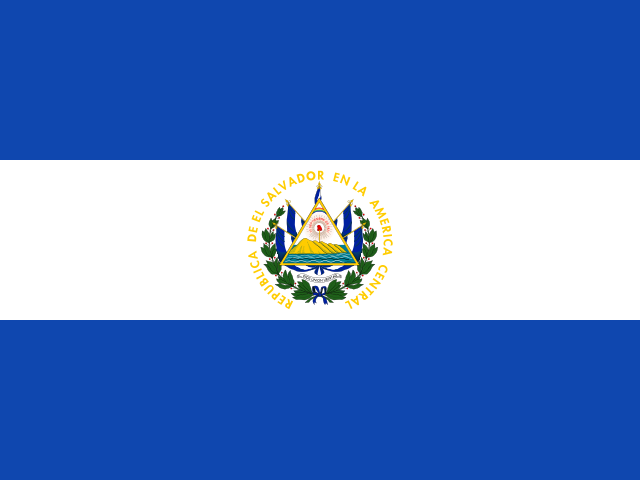
USD El Salvador
US dollar
El Salvador adopted the US dollar as its currency in 2001, retiring the Salvadoran colon.
Fun Facts
- El Salvador made bitcoin legal tender in 2021, then removed that status in 2025, but the US dollar remains its everyday currency.
- The former Salvadoran colon was named after Christopher Columbus, Cristobal Colon in Spanish.
- El Salvador is one of two Central American countries that use the US dollar.
 HNL
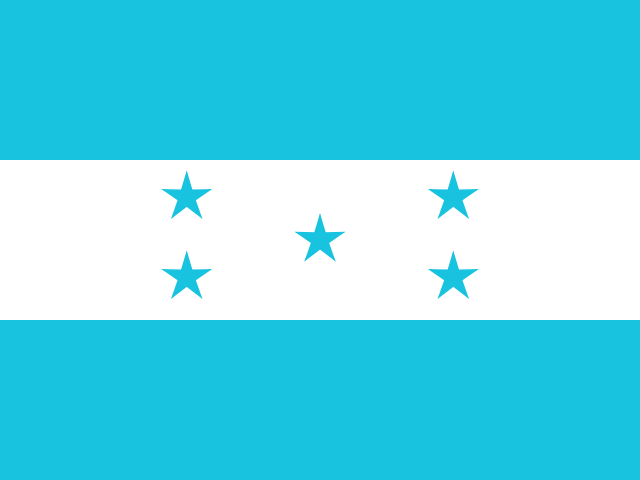
HNL Honduras
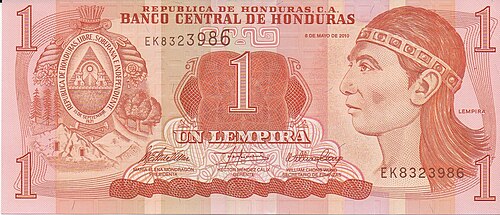
Honduran lempira
Honduras uses the lempira, named after a 16th-century indigenous chief who resisted Spanish rule.
Fun Facts
- The lempira is named after Lempira, a Lenca chief who fought the Spanish conquistadors.
- It was introduced in 1931, replacing the Honduran peso.
- A lempira is divided into 100 centavos.
 NIO
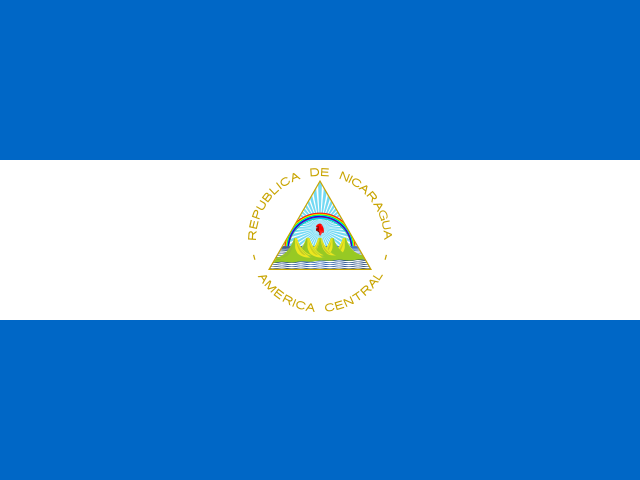
NIO Nicaragua
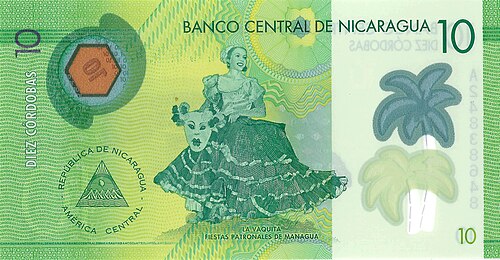
Nicaraguan cordoba
Nicaragua uses the cordoba, named after the Spanish explorer who founded the country's first cities.
Fun Facts
- The cordoba is named after Francisco Hernandez de Cordoba, founder of Granada and Leon.
- Its symbol C$ stands for cordoba and is distinct from the plain dollar sign.
- A cordoba is divided into 100 centavos.
 CRC
CRC Costa Rica
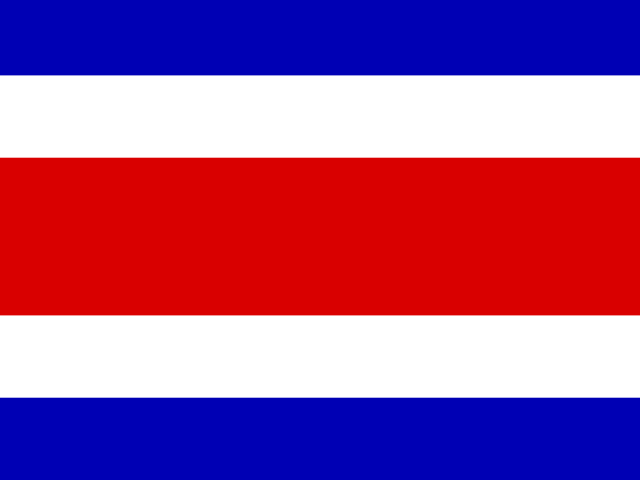
Costa Rican colon
Costa Rica uses the colon, named after Christopher Columbus and introduced in 1896.
Fun Facts
- The colon is named after Christopher Columbus, known in Spanish as Cristobal Colon.
- The plural of colon is colones.
- A colon is divided into 100 centimos.
 PAB
PAB Panama
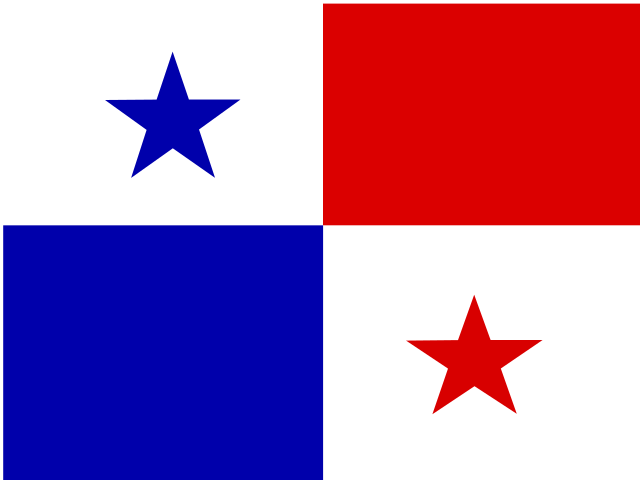
Panamanian balboa
Panama uses the balboa, pegged one to one with the US dollar, which also circulates freely as legal tender.
Fun Facts
- The balboa is pegged 1:1 to the US dollar, and US dollar notes circulate alongside it.
- The balboa is named after the explorer Vasco Nunez de Balboa, the first European to reach the Pacific from the Americas.
- Panama issues balboa coins but has no balboa banknotes of its own, relying on US dollar bills.
Quick Reference
Test Your Knowledge
Can you match each country to its currency?
Practice with Games
Ready to test what you learned? Jump into a game and put it into practice.
About Central American Currencies
Central America is split between countries that keep their own currency and those that use the US dollar. Five nations issue their own money: Guatemala (quetzal), Honduras (lempira), Nicaragua (cordoba), Costa Rica (colon) and Belize, whose Belize dollar is pegged at two to one against the US dollar. El Salvador adopted the US dollar in 2001, and Panama uses the balboa, which is fixed one to one with the dollar so that US notes circulate freely. Many of these currencies carry historic names: the colon honours Christopher Columbus, the lempira an indigenous chief, the cordoba a Spanish explorer and the quetzal the national bird of Guatemala. Learning these currencies, their ISO codes and symbols makes travel, shopping and reading the news across Central America far easier.
Frequently Asked Questions
How many currencies are used in Central America?
Central America's 7 countries use six currencies: the Guatemalan quetzal, Honduran lempira, Nicaraguan cordoba, Costa Rican colon, Belize dollar and the US dollar, which is the everyday currency of El Salvador and Panama. Panama also has its own balboa, pegged one to one with the US dollar.
Which Central American countries use the US dollar?
El Salvador adopted the US dollar in 2001, and Panama uses the US dollar alongside its own balboa, which is pegged one to one with the dollar. The Belize dollar is also pegged to the US dollar, at a rate of two to one.
What is the currency of Costa Rica?
Costa Rica uses the Costa Rican colon (ISO code CRC, symbol ₡), introduced in 1896 and named after Christopher Columbus. The plural is colones.
What is the currency of Guatemala?
Guatemala uses the quetzal (ISO code GTQ, symbol Q), introduced in 1925 and named after the resplendent quetzal, the country's national bird whose tail feathers were once used as money by the ancient Maya.
Banknote images via Wikimedia Commons: GTQ (Mariordo (Mario Roberto Durán Ortiz), CC BY-SA 4.0) · USD (ESEMES, Public domain) · HNL (Помор 2000, CC BY-SA 4.0) · NIO (NagerLB, CC BY-SA 4.0)