Learn the Currencies of South America
South America uses a colourful mix of currencies, and the peso is the most common name on the continent. Brazil has its real, Argentina, Colombia, Chile and Uruguay each have a peso, while Peru uses the sol and Bolivia the boliviano. Some countries skip a currency of their own: Ecuador has used the US dollar since 2000. This lesson covers the currency of all 12 South American countries, with each currency code, symbol and the year it came into use.
Study the Currencies
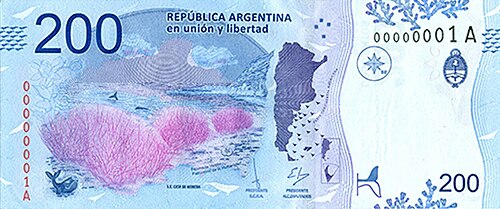 ARS
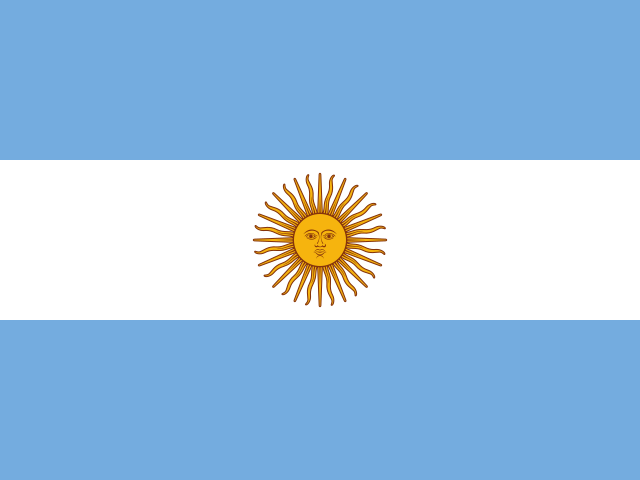
ARS Argentina
Argentine peso
Argentina uses the peso, which has been redenominated several times to cope with repeated bouts of high inflation.
Fun Facts
- The current peso, the peso convertible, was introduced in 1992 after several earlier currencies were scrapped.
- Like many countries, Argentina marks its peso with the dollar sign, so prices use the $ symbol.
- A peso is divided into 100 centavos, though inflation has made centavo coins all but disappear.
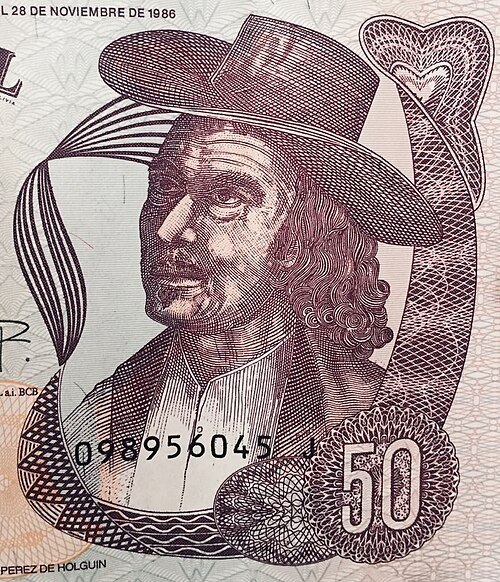 BOB
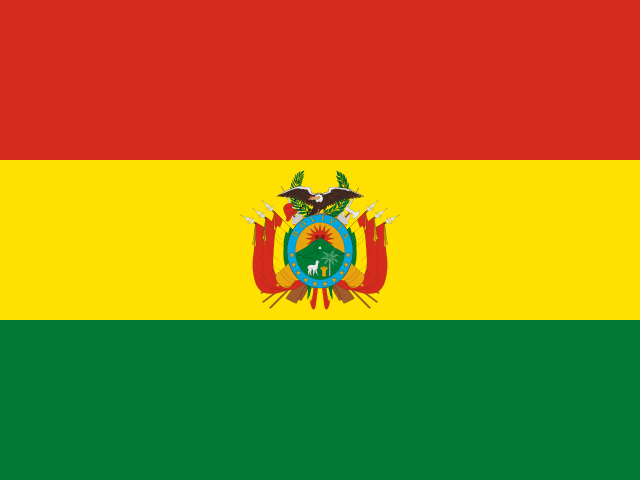
BOB Bolivia
Boliviano
Bolivia uses the boliviano, reintroduced in 1987 to replace the peso boliviano after a period of hyperinflation.
Fun Facts
- The boliviano is named after Simon Bolivar, the independence leader the country itself is named for.
- It replaced the peso boliviano in 1987, with 1 boliviano worth 1 million old pesos.
- A boliviano is divided into 100 centavos.
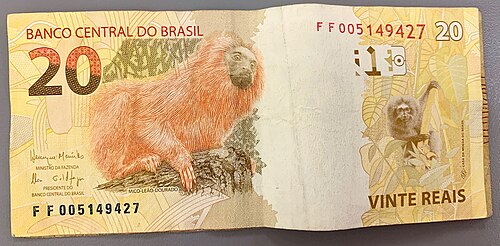 BRL
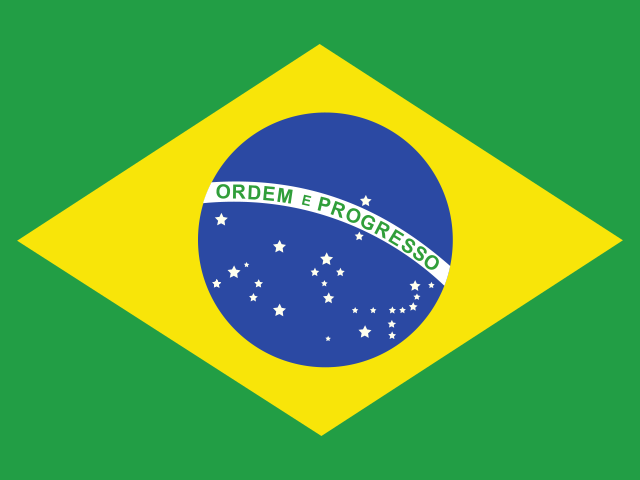
BRL Brazil
Brazilian real
Brazil introduced the real in 1994 as part of a plan that finally tamed years of runaway inflation.
Fun Facts
- The plural of real is reais, and the currency is written with the R$ symbol.
- The Plano Real of 1994 ended one of the worst inflation crises in modern history.
- A real is divided into 100 centavos.
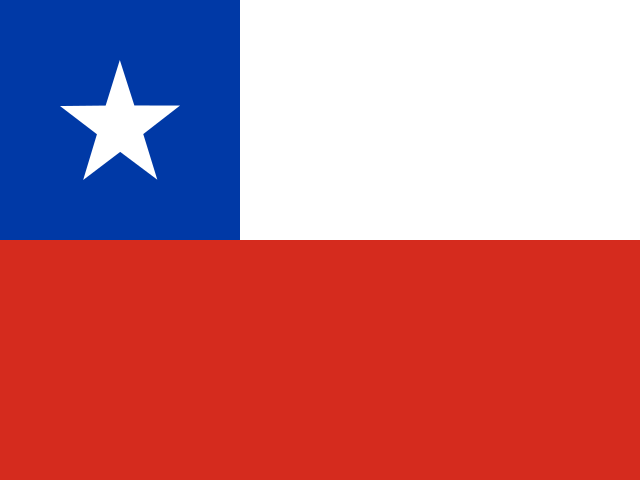 CLP
CLP Chile
Chilean peso
Chile uses the peso, reintroduced in 1975 to replace the short-lived escudo.
Fun Facts
- The Chilean peso uses the dollar sign $, common across Latin America.
- It replaced the escudo in 1975, restoring the peso name Chile had used before.
- The peso has no everyday subunit, as centavo coins are no longer in use.
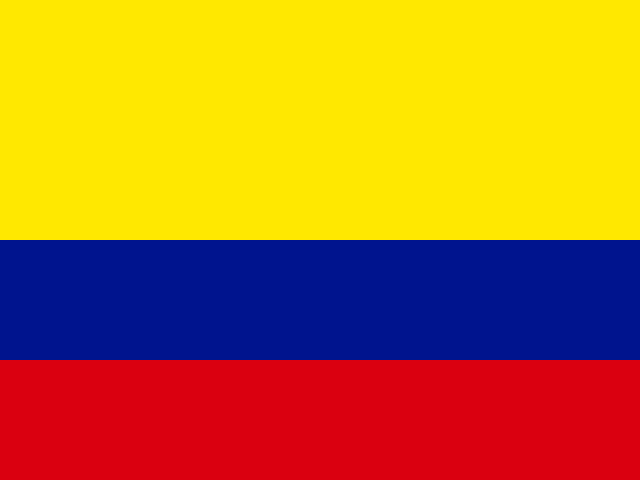 COP
COP Colombia
Colombian peso
Colombia has used the peso since 1837, one of the longest-running currency names in South America.
Fun Facts
- The Colombian peso is one of the oldest continuously used currencies on the continent.
- It is marked with the dollar sign $, sometimes written as Col$ to avoid confusion.
- A peso is officially divided into 100 centavos, though they are no longer used.
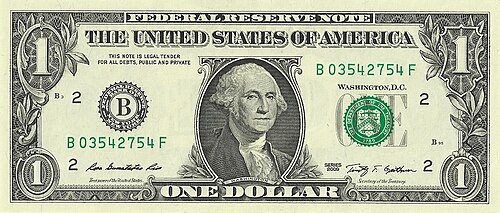 USD
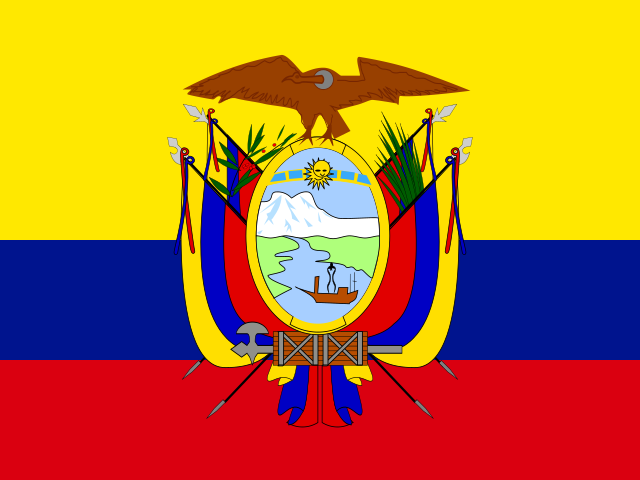
USD Ecuador
United States dollar
Ecuador abandoned its own currency and officially adopted the US dollar in 2000 after a severe financial crisis.
Fun Facts
- Ecuador replaced the sucre with the US dollar in 2000, a process called dollarisation.
- It mints its own centavo coins that circulate alongside US coins.
- Ecuador is one of the few countries outside the United States to use the dollar as its official money.
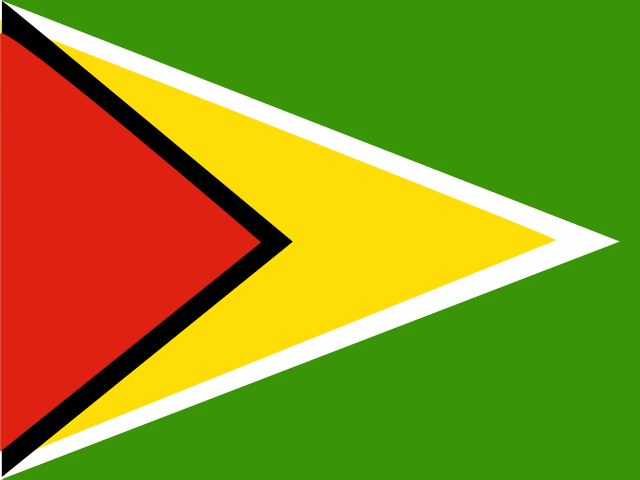 GYD
GYD Guyana
Guyanese dollar
Guyana uses the Guyanese dollar, introduced in 1965 as the country moved towards independence.
Fun Facts
- Guyana is the only English-speaking country in South America, and its dollar reflects its British colonial past.
- The Guyanese dollar replaced the British West Indies dollar in 1965.
- It is written as $ or G$ to set it apart from other dollars.
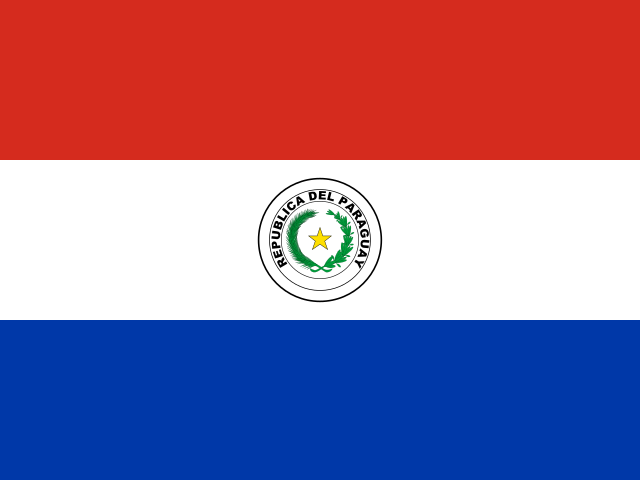 PYG
PYG Paraguay
Paraguayan guarani
Paraguay uses the guarani, introduced in 1943 and named after the indigenous Guarani people.
Fun Facts
- The guarani is named after the Guarani people and language native to the region.
- It is one of the few currencies in the Americas with no everyday subunit in use.
- The guarani has been in continuous use since 1943, without a redenomination.
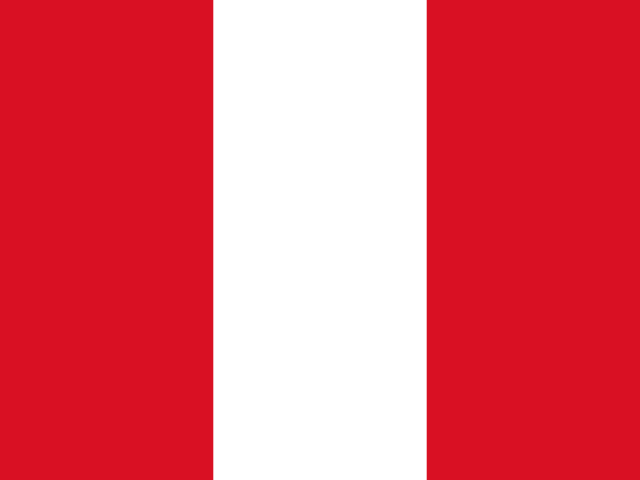 PEN
PEN Peru
Sol
Peru uses the sol, introduced in 1991 to replace the inti after a spell of hyperinflation.
Fun Facts
- Sol means sun in Spanish, a nod to the Inca reverence for the sun.
- It was first called the nuevo sol and replaced the inti in 1991, with 1 sol worth 1 million intis.
- A sol is divided into 100 centimos.
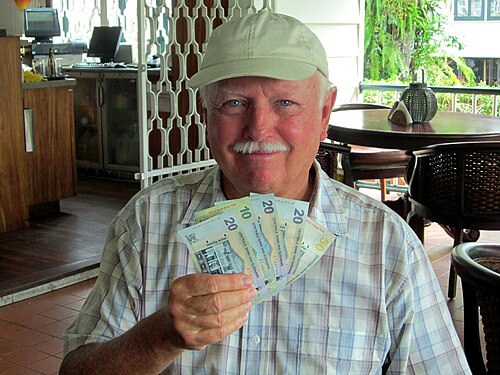 SRD
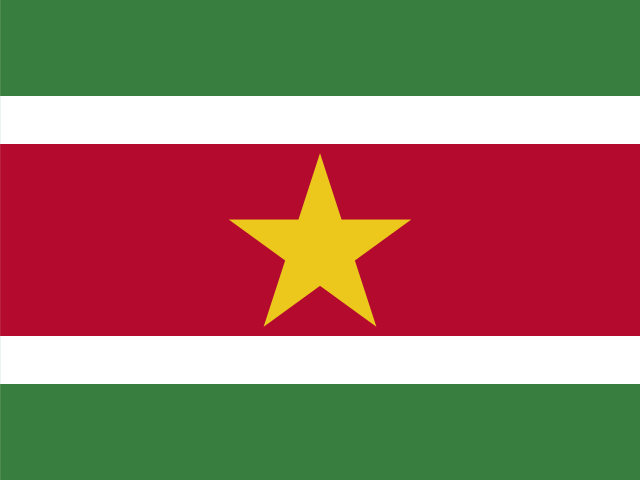
SRD Suriname
Surinamese dollar
Suriname introduced the Surinamese dollar in 2004 to replace the Surinamese guilder.
Fun Facts
- Suriname switched from the guilder to the dollar in 2004, dropping three zeros in the process.
- It is the only Dutch-speaking country in South America, reflected in its former guilder currency.
- A Surinamese dollar is divided into 100 cents.
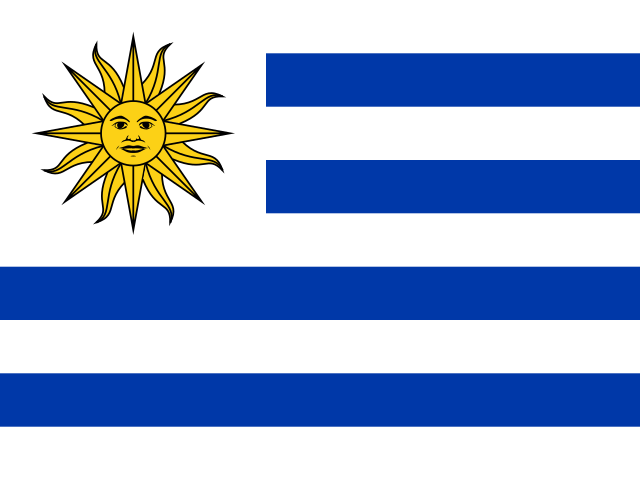 UYU
UYU Uruguay
Uruguayan peso
Uruguay uses the peso, with the current peso uruguayo introduced in 1993.
Fun Facts
- The current peso uruguayo replaced an earlier peso in 1993, removing three zeros.
- It is marked with the dollar sign $, often written as $U.
- A peso is divided into 100 centesimos.
 VES
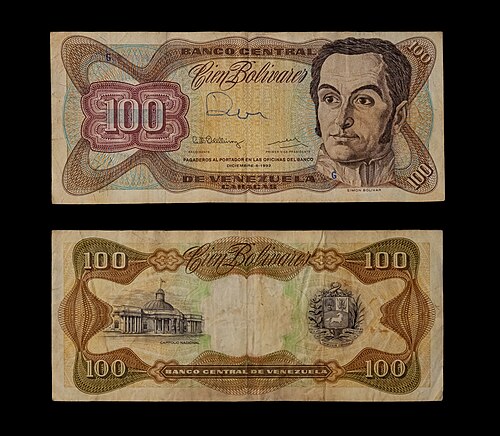
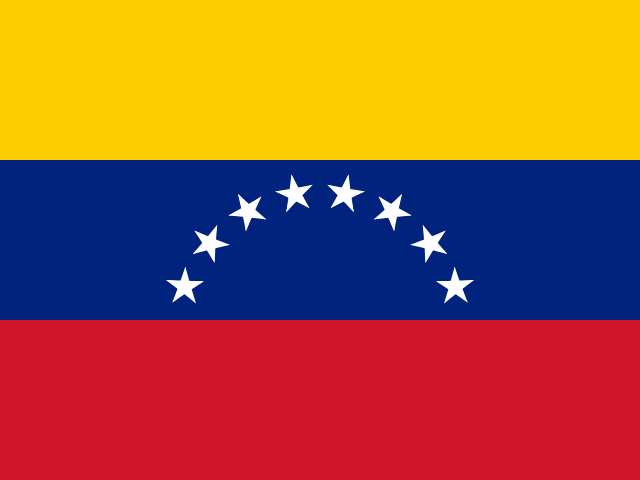
VES Venezuela
Bolivar
Venezuela uses the bolivar, which has been redenominated repeatedly to cope with extreme hyperinflation.
Fun Facts
- The bolivar is named after Simon Bolivar, the liberator of much of South America.
- The latest version, the bolivar digital, launched in 2021 and removed six zeros.
- Across recent reforms Venezuela has erased a total of fourteen zeros from its currency.
Quick Reference
Test Your Knowledge
Can you match each country to its currency?
Practice with Games
Ready to test what you learned? Jump into a game and put it into practice.
About South American Currencies
South America has no shared currency, and instead each country keeps its own money - with one exception. The peso is by far the most common name, used in Argentina, Chile, Colombia and Uruguay, while Brazil has the real, Peru the sol, Bolivia the boliviano, Paraguay the guarani and Venezuela the bolivar. Guyana and Suriname, with their British and Dutch histories, each use a dollar. Ecuador stands apart, having adopted the US dollar in 2000 after abandoning its sucre. Many of these currencies, including the Argentine peso and the Venezuelan bolivar, have been redenominated to cope with high inflation. Learning these currencies, their ISO codes and symbols makes travel, shopping and reading the news across South America far easier.
Frequently Asked Questions
How many currencies are used in South America?
There is no single South American currency. The 12 countries use 11 different currencies between them, since Ecuador uses the US dollar rather than a currency of its own. The most common name is the peso, used by Argentina, Chile, Colombia and Uruguay.
What is the currency of Brazil?
Brazil uses the Brazilian real (code BRL, symbol R$), introduced in 1994 as part of the Plano Real that ended years of runaway inflation. One real is divided into 100 centavos, and the plural is reais.
Which South American country uses the US dollar?
Ecuador adopted the US dollar (USD) as its official currency in 2000, replacing the sucre during a severe financial crisis. Ecuador still mints its own centavo coins, which circulate alongside US coins.
Why has the Venezuelan bolivar been redenominated so many times?
Venezuela has suffered extreme hyperinflation, so it has repeatedly cut zeros from the bolivar to keep prices manageable. The latest version, the bolivar digital launched in 2021, removed six zeros, and across recent reforms a total of fourteen zeros have been erased.
Banknote images via Wikimedia Commons: ARS (Casa de Moneda, CC BY-SA 2.0) · BOB (Paulo Fabre Ruiz, CC BY-SA 4.0) · BRL (Oleg Yunakov, CC BY-SA 4.0) · USD (ESEMES, Public domain) · SRD (David Stanley from Nanaimo, Canada, CC BY 2.0) · VES (Rjcastillo, CC BY-SA 4.0)