Learn the Currencies of Central Africa
Central Africa uses only a handful of currencies. Six countries share the Central African CFA franc, a single currency pegged to the euro, while the rest keep their own money - the Congolese franc, the Angolan kwanza and the dobra of São Tomé and Príncipe. This lesson covers the currency of all 9 Central African countries, with each currency code, symbol and the year it came into use.
Study the Currencies
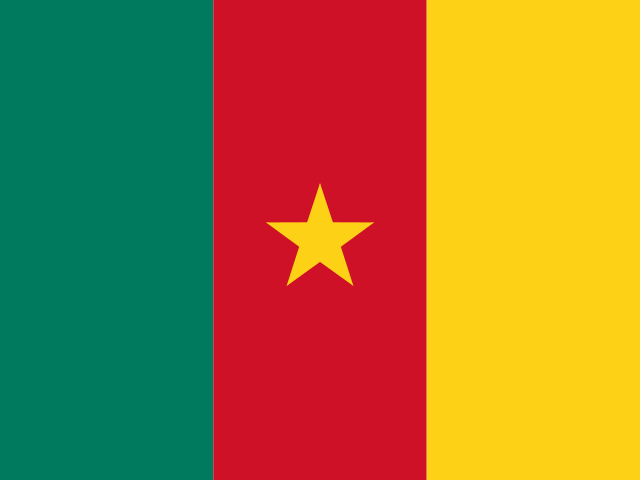 XAF
XAF Cameroon
Central African CFA franc
Cameroon uses the Central African CFA franc, a currency shared by six countries and pegged to the euro at a fixed rate.
Fun Facts
- The Central African CFA franc is shared by six countries and is issued by the Bank of Central African States.
- It is pegged to the euro at a fixed rate of 655.957 francs to one euro.
- Cameroon is the largest economy among the six countries that use the currency.
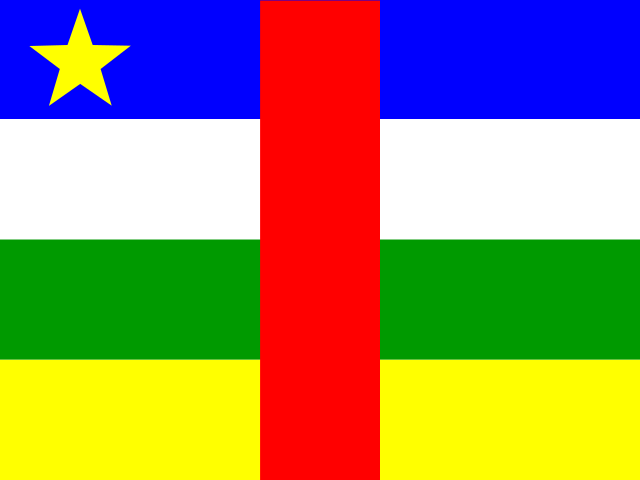 XAF
XAF Central African Republic
Central African CFA franc
The Central African Republic uses the Central African CFA franc, the shared currency of six Central African states, pegged to the euro.
Fun Facts
- The CFA franc is used across all six member states of the Economic and Monetary Community of Central Africa.
- The same notes and coins are valid in every country that uses the currency.
- CFA originally stood for the French Colonies of Africa.
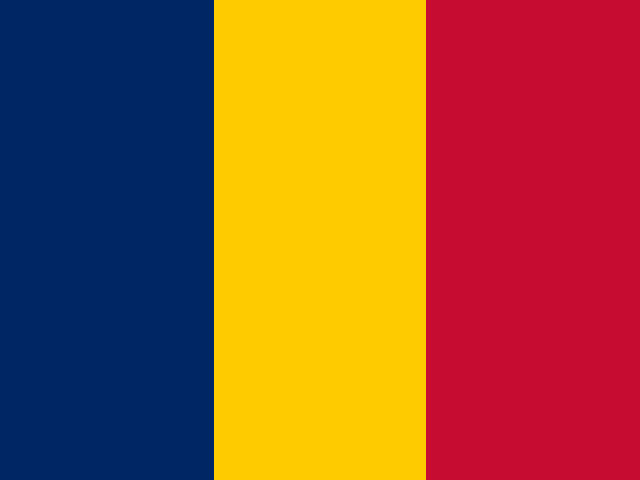 XAF
XAF Chad
Central African CFA franc
Chad uses the Central African CFA franc, shared with five neighbours and pegged firmly to the euro.
Fun Facts
- Chad shares the CFA franc with Cameroon, the Central African Republic, the Republic of the Congo, Equatorial Guinea and Gabon.
- The euro peg gives the currency a stability that floating local currencies often lack.
- A CFA franc is in theory divided into 100 centimes, though centime coins are no longer used.
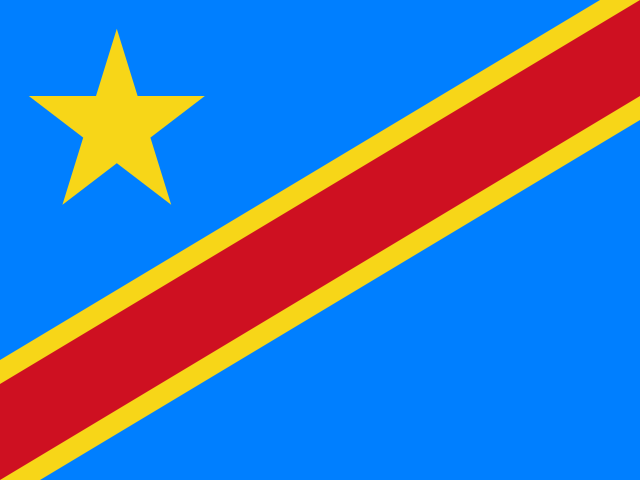
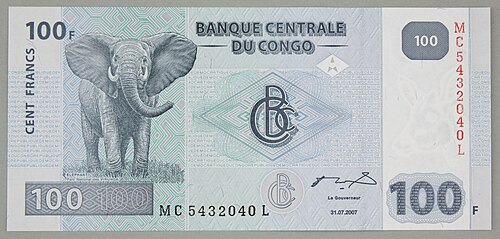 CDF
CDF DR Congo
Congolese franc
The Democratic Republic of the Congo uses the Congolese franc, reintroduced in 1998 to replace the new zaire.
Fun Facts
- The Congolese franc replaced the new zaire in 1998.
- Despite the similar name, the DR Congo does not use the CFA franc of its neighbours.
- A Congolese franc is divided into 100 centimes, though these are no longer in circulation.
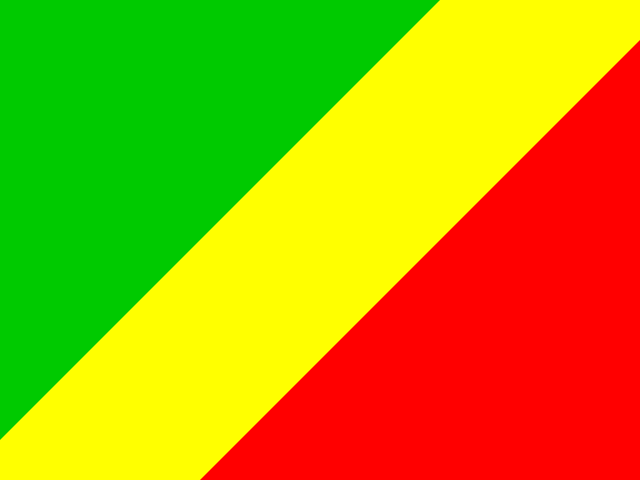 XAF
XAF Republic of the Congo
Central African CFA franc
The Republic of the Congo uses the Central African CFA franc, the shared currency of six states, pegged to the euro.
Fun Facts
- The two Congos use different currencies: the Republic of the Congo uses the CFA franc, while the DR Congo uses the Congolese franc.
- The CFA franc is guaranteed by the French treasury, which helps keep the euro peg stable.
- Brazzaville, the capital, sits across the river from Kinshasa, where a completely different currency is used.
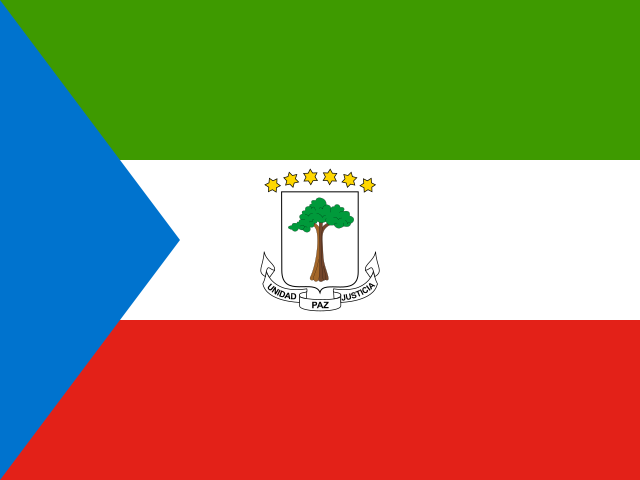 XAF
XAF Equatorial Guinea
Central African CFA franc
Equatorial Guinea adopted the Central African CFA franc in 1985, replacing the ekwele, and shares it with five neighbours.
Fun Facts
- Equatorial Guinea joined the CFA franc zone in 1985, later than the other members.
- It replaced the ekwele, its own short-lived national currency.
- It is the only Spanish-speaking country in the CFA franc zone.
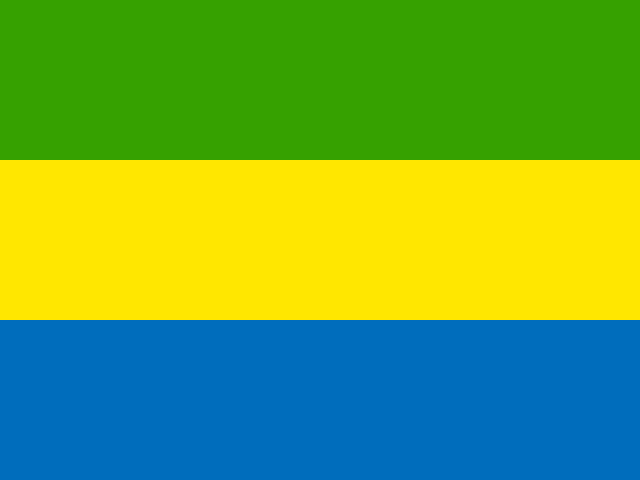 XAF
XAF Gabon
Central African CFA franc
Gabon uses the Central African CFA franc, the shared currency of six Central African countries, pegged to the euro.
Fun Facts
- Gabon is one of the wealthier members of the CFA franc zone thanks to its oil exports.
- The currency is issued by the Bank of Central African States, based in Yaounde, Cameroon.
- Each member country's coins and notes carry a letter showing where they were issued.
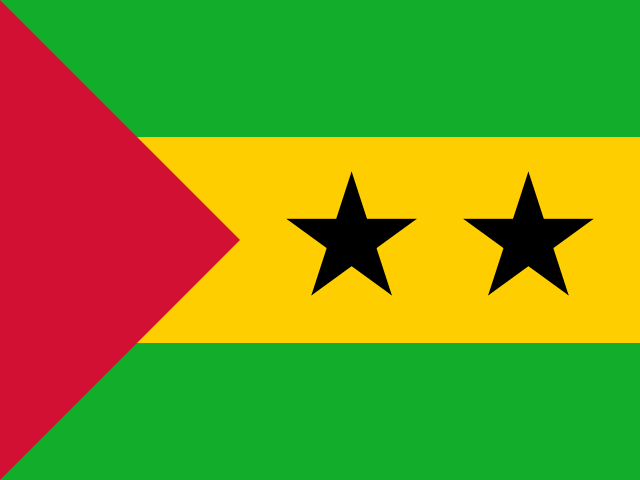 STN
STN São Tomé and Príncipe
Dobra
São Tomé and Príncipe uses the dobra, which was redenominated in 2018 and is pegged to the euro.
Fun Facts
- The dobra is named after an old Portuguese gold coin.
- In 2018 the country knocked three zeros off the dobra, so 1,000 old dobra became 1 new dobra.
- The dobra has been pegged to the euro since 2010.
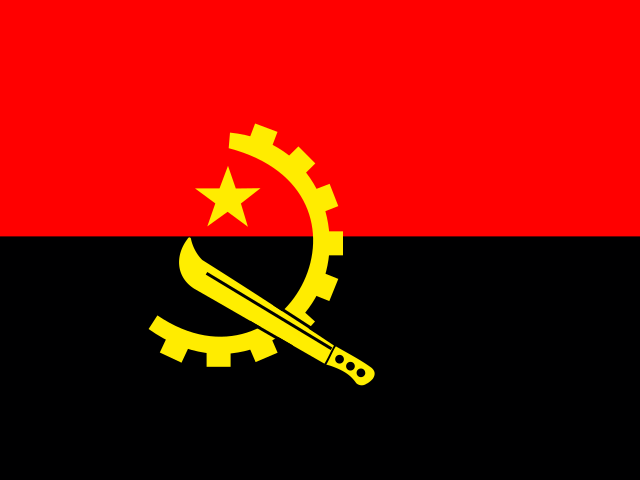
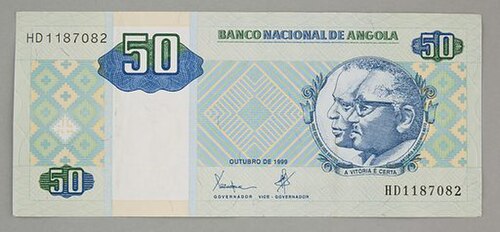 AOA
AOA Angola
Kwanza
Angola uses the kwanza, named after the Kwanza River; the current version dates from 1999.
Fun Facts
- The kwanza is named after the Kwanza River, the longest river entirely within Angola.
- Angola has redenominated the kwanza several times after periods of high inflation.
- A kwanza is divided into 100 centimos.
Quick Reference
Test Your Knowledge
Can you match each country to its currency?
Practice with Games
Ready to test what you learned? Jump into a game and put it into practice.
About Central African Currencies
Central Africa is unusual because most of its countries share a single currency. Six of the nine - Cameroon, the Central African Republic, Chad, the Republic of the Congo, Equatorial Guinea and Gabon - use the Central African CFA franc (XAF), issued by the Bank of Central African States and pegged to the euro at a fixed rate of 655.957 francs to one euro. The remaining three keep their own money: the Democratic Republic of the Congo uses the Congolese franc (CDF), Angola uses the kwanza (AOA), and São Tomé and Príncipe uses the dobra (STN), which is also pegged to the euro. A common point of confusion is the two Congos: the Republic of the Congo uses the CFA franc, while the much larger Democratic Republic of the Congo uses the Congolese franc. Learning these currencies, their ISO codes and symbols makes travel, trade and reading the news across Central Africa far easier.
Frequently Asked Questions
How many currencies are used in Central Africa?
Central Africa uses four currencies. Six countries share the Central African CFA franc (XAF), while the Democratic Republic of the Congo uses the Congolese franc (CDF), Angola uses the kwanza (AOA), and São Tomé and Príncipe uses the dobra (STN).
Which countries use the Central African CFA franc?
Six countries use the Central African CFA franc: Cameroon, the Central African Republic, Chad, the Republic of the Congo, Equatorial Guinea and Gabon. It is issued by the Bank of Central African States and pegged to the euro.
Do the two Congos use the same currency?
No. The Republic of the Congo uses the Central African CFA franc, while the Democratic Republic of the Congo uses the Congolese franc. Despite their similar names, they have separate currencies.
Is the Central African CFA franc pegged to the euro?
Yes. The Central African CFA franc is pegged to the euro at a fixed rate of 655.957 francs to one euro, which gives it a stability that many independent African currencies lack.
Banknote images via Wikimedia Commons: CDF (Unknown authorUnknown author, CC0) · AOA (Unknown authorUnknown author, CC0)