Learn the Currencies of East Africa
East Africa uses a colourful mix of currencies. The East African Community is built around national shillings - the Kenyan, Tanzanian and Ugandan shillings - while the Horn of Africa adds the Ethiopian birr and the Eritrean nakfa. Several countries keep francs rooted in their colonial past, and South Sudan, the world's newest nation, has its own pound. This lesson covers the currency of 18 East African countries, with each currency code, symbol and a little of its story.
Study the Currencies
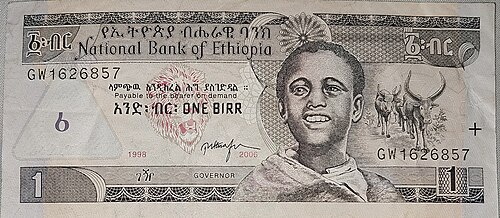 ETB
ETB Ethiopia
Ethiopian birr
Ethiopia uses the birr, one of the oldest currency names in Africa, issued by the National Bank of Ethiopia.
Fun Facts
- The word birr means silver in Amharic, recalling the old silver coins it replaced.
- A birr is divided into 100 santim.
- Ethiopia is one of the few African countries that was never formally colonised, so it kept its own money throughout.
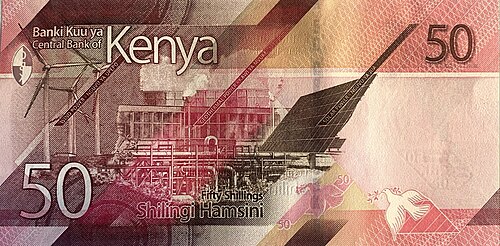 KES
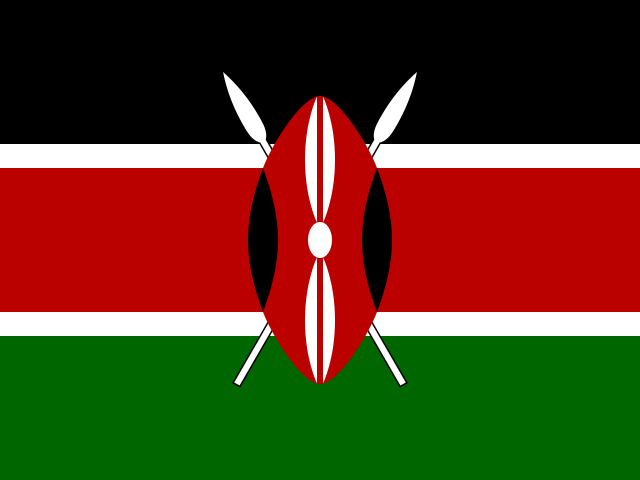
KES Kenya
Kenyan shilling
Kenya introduced the shilling in 1966 to replace the East African shilling after independence.
Fun Facts
- A Kenyan shilling is divided into 100 cents.
- Kenya is a pioneer of mobile money, with M-Pesa letting people send shillings by phone.
- It replaced the shared East African shilling once Kenya issued its own currency.
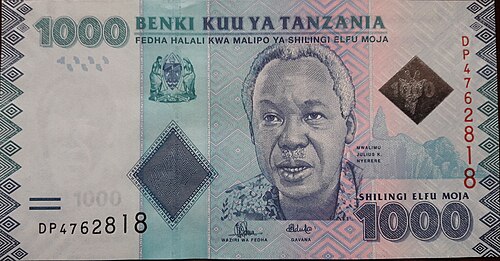 TZS
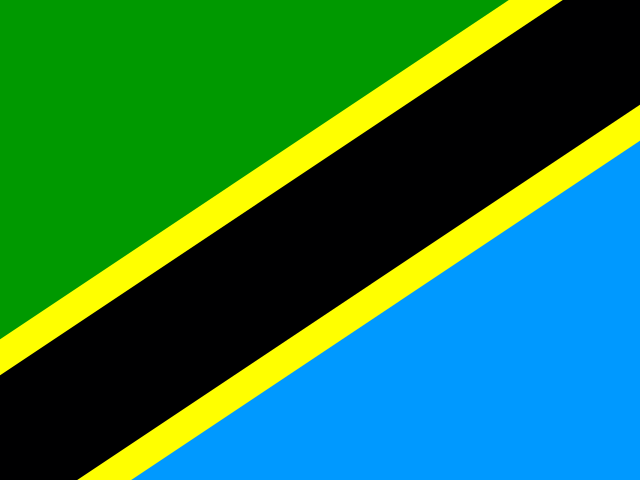
TZS Tanzania
Tanzanian shilling
Tanzania adopted its own shilling in 1966, replacing the East African shilling.
Fun Facts
- A Tanzanian shilling is divided into 100 cents, though coins below one shilling are no longer used.
- Tanzania, Kenya and Uganda all kept the shilling name from the shared colonial-era currency.
- Tanzanian banknotes feature local wildlife such as elephants and rhinos.
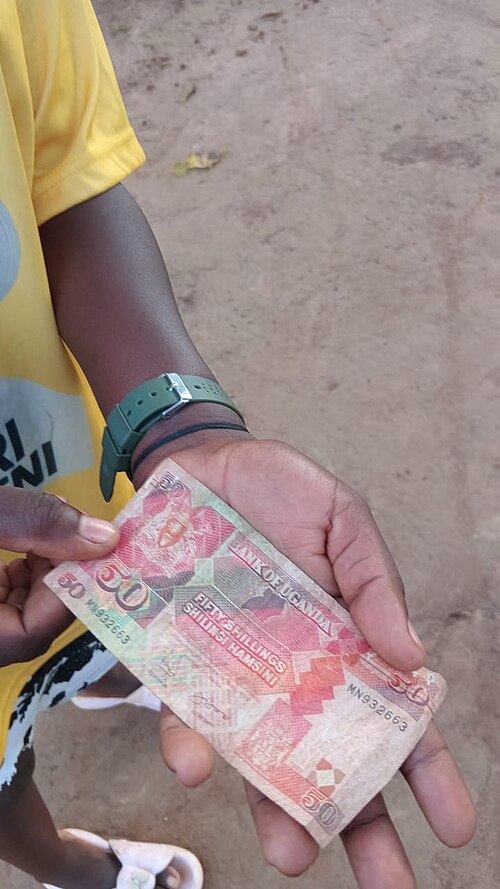 UGX
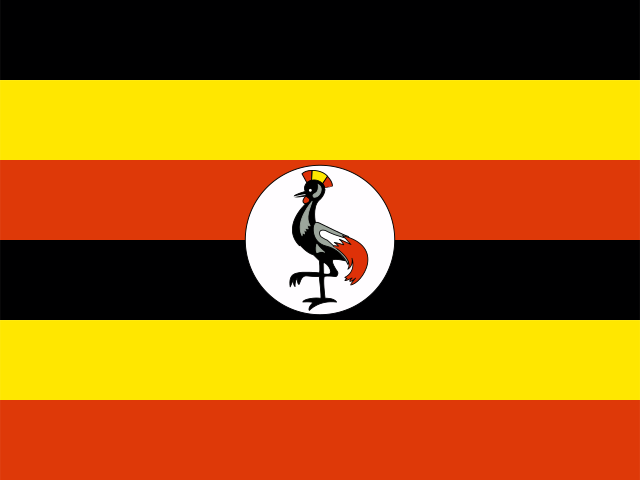
UGX Uganda
Ugandan shilling
Uganda introduced its own shilling in 1966, later redenominated to tame high inflation.
Fun Facts
- In 1987 Uganda removed two zeros from the shilling to rebuild confidence in the currency.
- The Ugandan shilling has no subunit in everyday use today.
- Like its neighbours, Uganda took the shilling name from the former East African shilling.
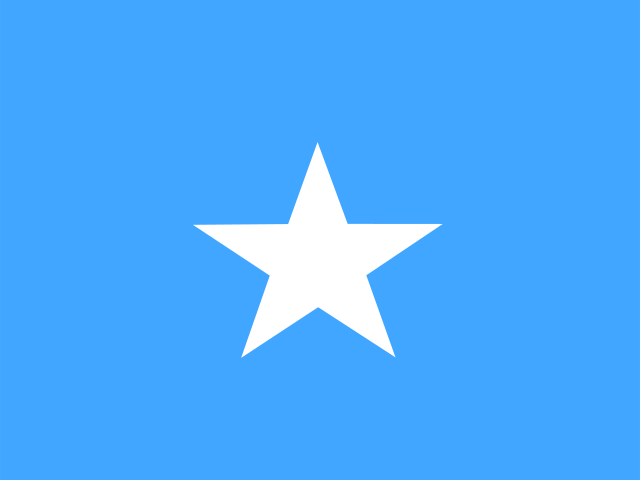 SOS
SOS Somalia
Somali shilling
Somalia uses the Somali shilling, introduced in 1962 shortly after independence.
Fun Facts
- A Somali shilling is divided into 100 senti.
- For years after the central government collapsed, privately printed shilling notes kept circulating.
- The breakaway region of Somaliland issues its own separate shilling.
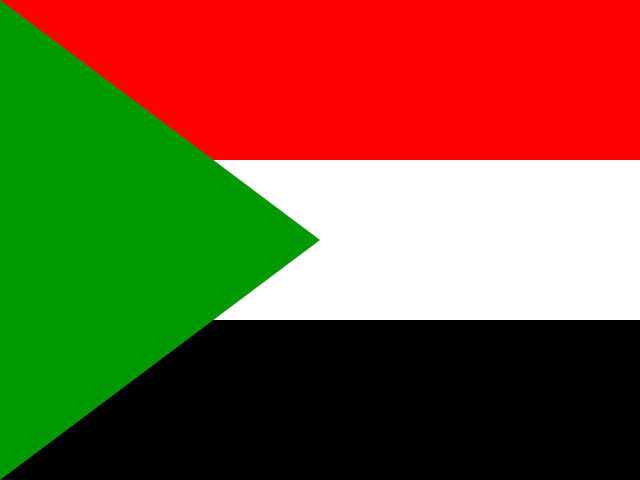 SDG
SDG Sudan
Sudanese pound
Sudan uses the Sudanese pound, reintroduced in 2007 after a period of using the dinar.
Fun Facts
- Sudan has switched between the pound and the dinar more than once in its history.
- A Sudanese pound is divided into 100 piastres.
- The pound was reintroduced in 2007 as part of a peace settlement before South Sudan split away.
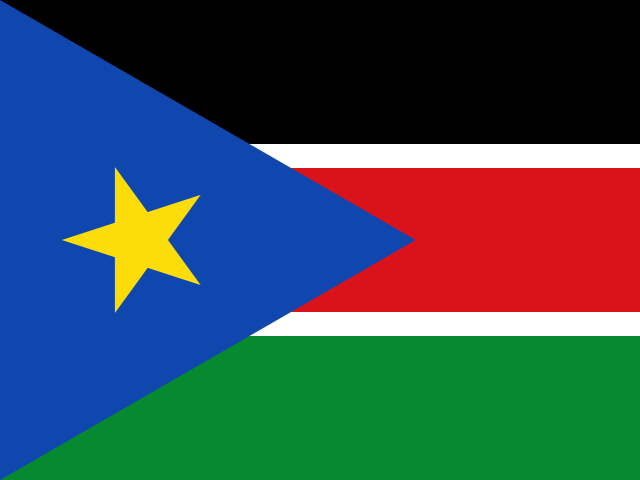 SSP
SSP South Sudan
South Sudanese pound
South Sudan launched its own pound in 2011, the same year it became the world's newest country.
Fun Facts
- The South Sudanese pound is one of the youngest currencies in the world, introduced in 2011.
- It replaced the Sudanese pound after independence.
- A South Sudanese pound is divided into 100 piastres.
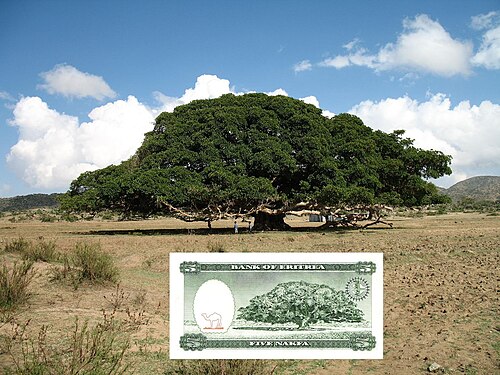 ERN
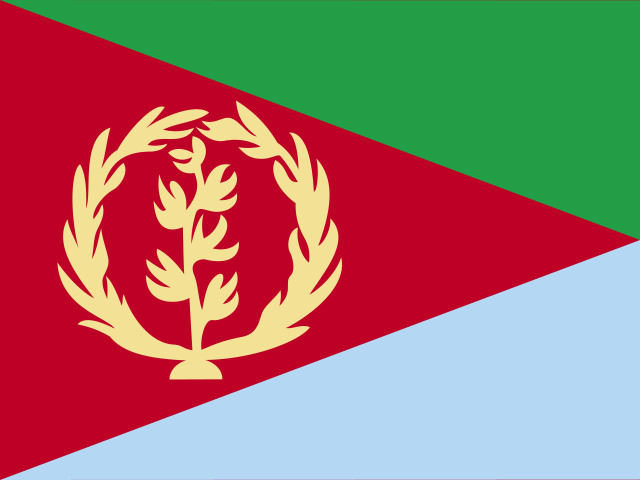
ERN Eritrea
Eritrean nakfa
Eritrea introduced the nakfa in 1997, named after the town that was central to its independence struggle.
Fun Facts
- The nakfa is named after the town of Nakfa, a stronghold during Eritrea's war of independence.
- A nakfa is divided into 100 cents.
- It replaced the Ethiopian birr that had been used before independence.
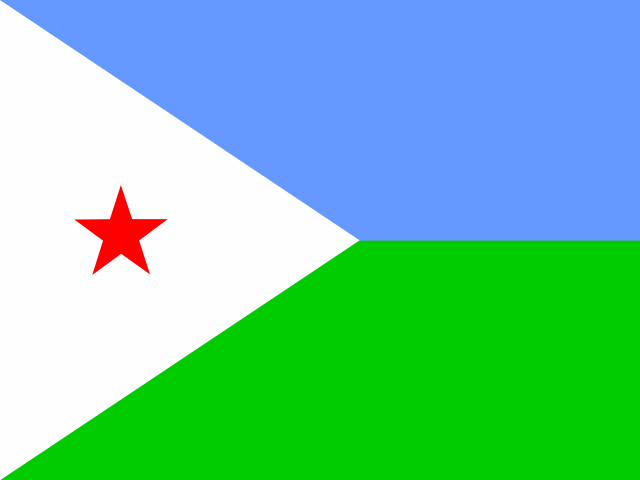 DJF
DJF Djibouti
Djiboutian franc
Djibouti uses the franc, which has long been pegged to the US dollar to keep it stable.
Fun Facts
- The Djiboutian franc has been pegged to the US dollar for decades.
- It dates back to 1949, when it was tied to the dollar rather than the French franc.
- Djibouti's busy ports make the stable franc useful for international trade.
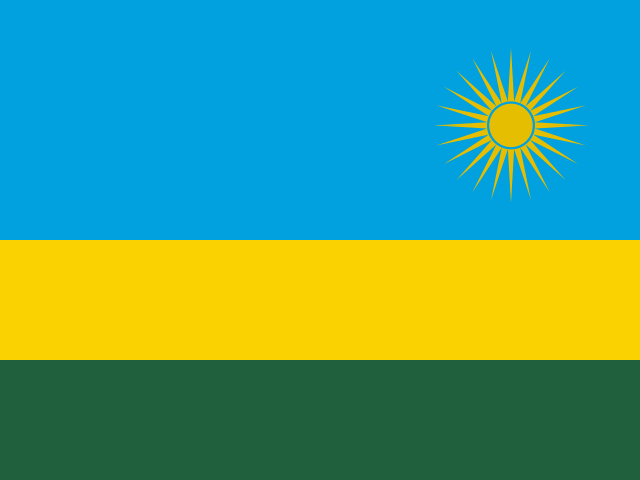 RWF
RWF Rwanda
Rwandan franc
Rwanda uses the franc, issued by the National Bank of Rwanda since 1964.
Fun Facts
- The Rwandan franc replaced the shared Rwanda-Burundi franc after independence.
- A Rwandan franc is divided into 100 centimes, though they are no longer used.
- Rwanda has pushed hard to become a largely cashless, digital economy.
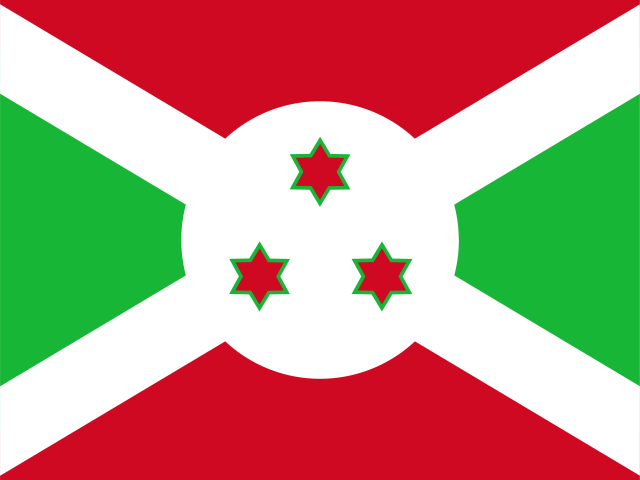 BIF
BIF Burundi
Burundian franc
Burundi uses the franc, which split from the joint Rwanda-Burundi currency in 1964.
Fun Facts
- The Burundian franc and the Rwandan franc share a common origin in the old Belgian Congo franc.
- A Burundian franc is divided into 100 centimes, now only nominal.
- It is issued by the Bank of the Republic of Burundi.
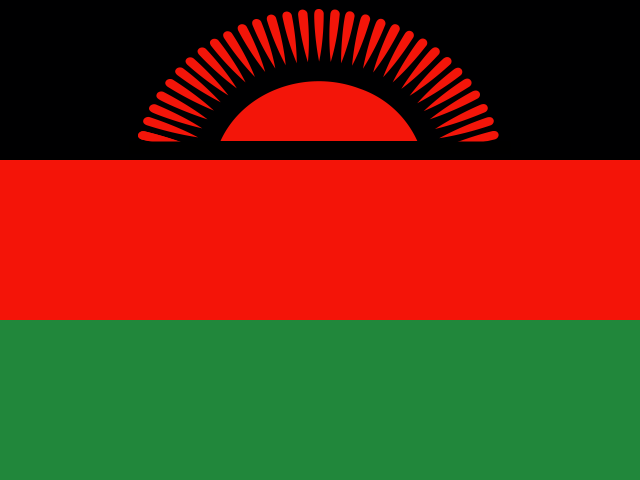
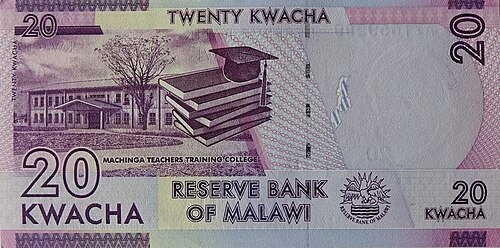 MWK
MWK Malawi
Malawian kwacha
Malawi adopted the kwacha in 1971, replacing the Malawian pound.
Fun Facts
- Kwacha comes from a word meaning dawn in local languages.
- A kwacha is divided into 100 tambala, meaning rooster.
- Zambia uses a separate currency that shares the kwacha name.
 MZN
MZN Mozambique
Mozambican metical
Mozambique uses the metical, redenominated in 2006 to remove three zeros.
Fun Facts
- The name metical comes from an Arabic word for a unit of weight, mithqal.
- In 2006 Mozambique knocked three zeros off the metical, so 1,000 old became 1 new.
- A metical is divided into 100 centavos.
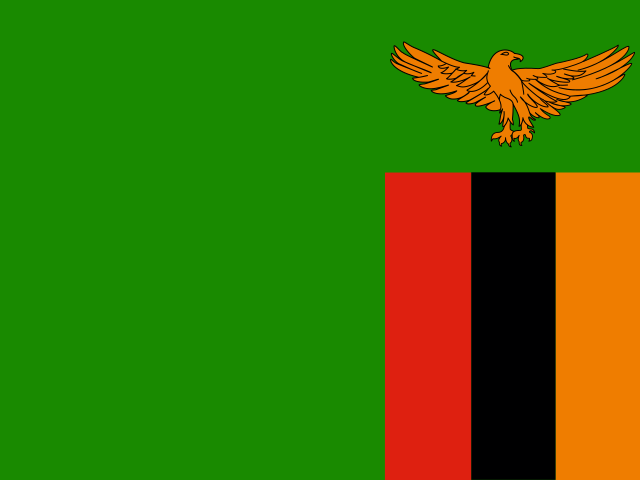
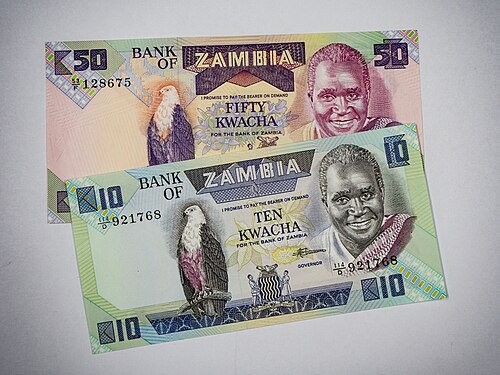 ZMW
ZMW Zambia
Zambian kwacha
Zambia uses the kwacha, redenominated in 2013 to drop three zeros.
Fun Facts
- Kwacha means dawn, a nod to the dawn of independence.
- In 2013 Zambia removed three zeros, so 1,000 old kwacha became 1 new kwacha.
- A kwacha is divided into 100 ngwee.
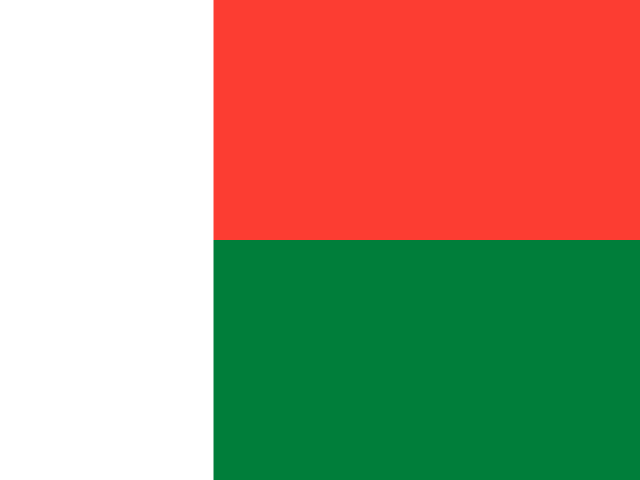
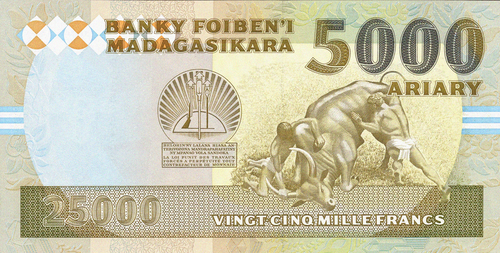 MGA
MGA Madagascar
Malagasy ariary
Madagascar uses the ariary, one of only two currencies in the world not based on a decimal subunit.
Fun Facts
- The ariary is divided into 5 iraimbilanja, making it one of the few non-decimal currencies left.
- The word ariary comes from an old Malagasy term for a silver coin.
- It became the sole currency in 2005, replacing the Malagasy franc.
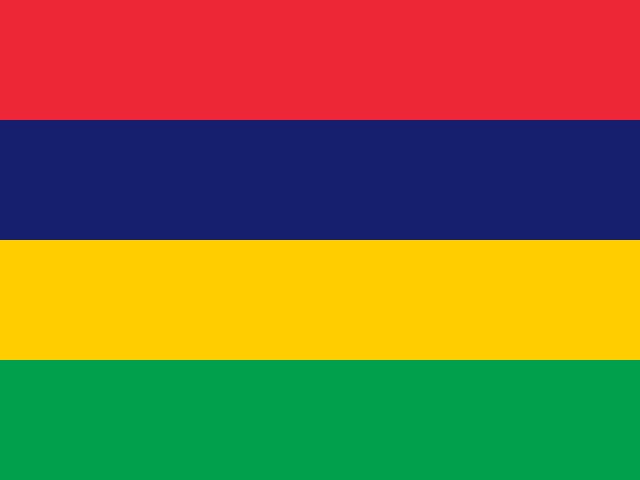
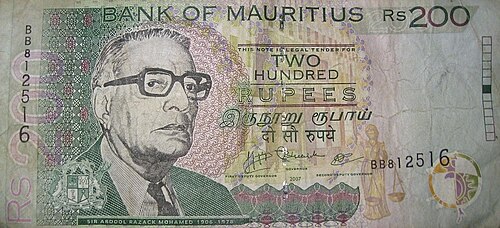 MUR
MUR Mauritius
Mauritian rupee
Mauritius uses the rupee, introduced in 1876 and reflecting the island's historic trade links.
Fun Facts
- The rupee name links Mauritius to South Asia through its trading and settlement history.
- A Mauritian rupee is divided into 100 cents.
- Mauritius is a major financial hub in the Indian Ocean.
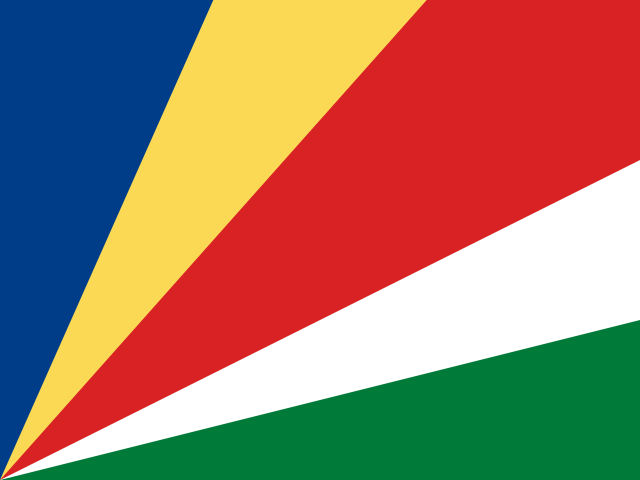 SCR
SCR Seychelles
Seychellois rupee
Seychelles uses the rupee, in use since 1914 when the islands were a British colony.
Fun Facts
- A Seychellois rupee is divided into 100 cents.
- The rupee was floated in 2008, after which its value moved more freely.
- Tourism and fishing are the main sources of foreign currency for the islands.
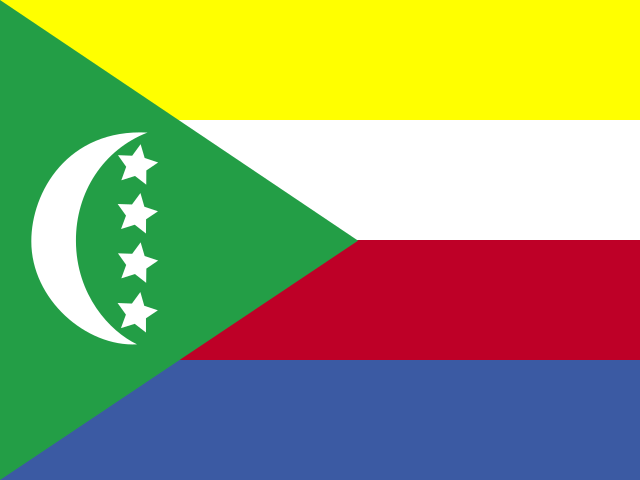 KMF
KMF Comoros
Comorian franc
Comoros uses the franc, which is pegged to the euro through a long-standing arrangement with France.
Fun Facts
- The Comorian franc is pegged to the euro at a fixed rate.
- It was originally tied to the French franc before the euro existed.
- Unusually, the Comorian franc has no subunit in everyday use.
Quick Reference
Test Your Knowledge
Can you match each country to its currency?
Practice with Games
Ready to test what you learned? Jump into a game and put it into practice.
About East African Currencies
East Africa has no single shared currency, but several families of money repeat across the region. The Kenyan, Tanzanian and Ugandan shillings all descend from the old East African shilling, and Somalia uses a shilling of its own. The Horn of Africa adds the Ethiopian birr and the Eritrean nakfa, while Djibouti keeps a franc pegged to the US dollar. Rwanda, Burundi and Comoros each use a franc rooted in their colonial past, with the Comorian franc pegged to the euro. Further south, Malawi and Zambia both use a kwacha, Mozambique uses the metical, and the Indian Ocean islands use rupees in Mauritius and Seychelles and the unusual non-decimal ariary in Madagascar. Sudan and South Sudan each have their own pound. Learning these currencies, their ISO codes and symbols makes travel, trade and reading the news across East Africa much easier.
Frequently Asked Questions
How many currencies are used in East Africa?
There is no single East African currency. The 18 countries of the region use a mix of shillings (Kenya, Tanzania, Uganda and Somalia), the Ethiopian birr, the Eritrean nakfa, several francs (Djibouti, Rwanda, Burundi and Comoros), two pounds (Sudan and South Sudan), the Malawian and Zambian kwacha, the Mozambican metical, the Malagasy ariary and the rupees of Mauritius and Seychelles.
Which countries in East Africa use a shilling?
Kenya (KES), Tanzania (TZS), Uganda (UGX) and Somalia (SOS) all use a shilling. The Kenyan, Tanzanian and Ugandan shillings descend from the East African shilling used during the colonial era.
What is the currency of Ethiopia?
Ethiopia uses the birr (ETB), one of the oldest currency names in Africa. The word birr means silver in Amharic, and a birr is divided into 100 santim.
What is the newest currency in East Africa?
The South Sudanese pound (SSP) is the newest, introduced in 2011 when South Sudan became the world's newest country and split from Sudan.
Banknote images via Wikimedia Commons: ETB (Flosegura, CC0) · KES (Jlewistexas, CC BY-SA 4.0) · TZS (Plouf250, CC BY-SA 4.0) · UGX (Nabunje Leticia, CC BY-SA 4.0) · ERN (NoahHafra, CC BY-SA 3.0) · MWK (Ahandrich, CC0) · ZMW (Forextime.com, CC BY 2.0) · MGA (Zanahary, CC0) · MUR (HallvardLid, CC BY-SA 3.0)