Learn the Currencies of West Africa
West Africa uses a mix of currencies. Eight countries share a single money, the West African CFA franc, which is pegged to the euro, while the rest keep their own - from the Nigerian naira, the currency of the most populous country on the continent, to the Ghanaian cedi, the Gambian dalasi and the Cape Verdean escudo. This lesson covers the currency of 17 West African countries, with each currency code, symbol and the year it came into use.
Study the Currencies
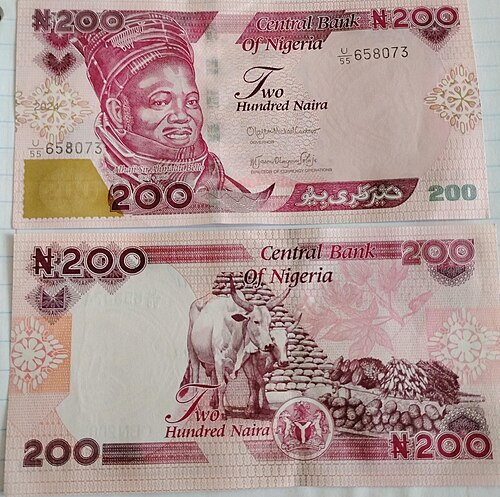 NGN
NGN Nigeria
Nigerian naira
Nigeria uses the naira, introduced in 1973 to replace the Nigerian pound. It is the currency of the most populous country in Africa.
Fun Facts
- The naira replaced the Nigerian pound in 1973, when the country switched to a decimal system.
- A naira is divided into 100 kobo.
- Nigeria has one of the largest economies in Africa, so the naira is among the most widely held West African currencies.
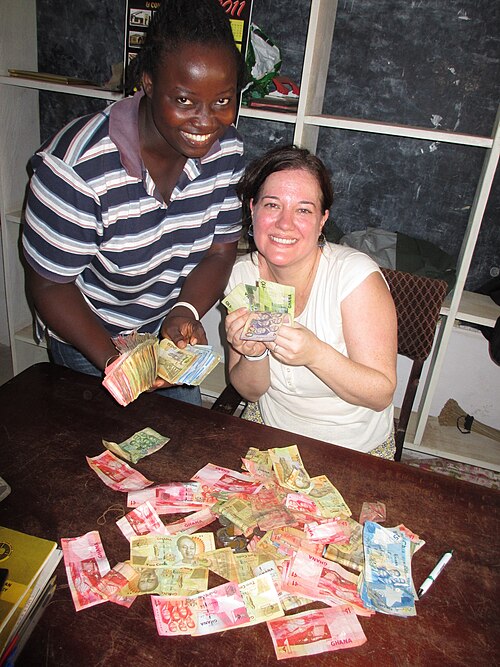 GHS
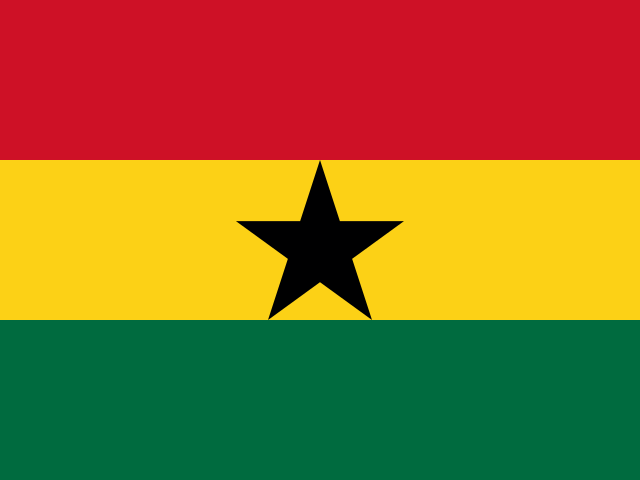
GHS Ghana
Ghanaian cedi
Ghana uses the cedi; the current series, the Ghana cedi, was introduced in 2007 after a redenomination.
Fun Facts
- The word cedi comes from the Akan word for cowrie shell, which was once used as money.
- In 2007 Ghana removed four zeros, so 10,000 old cedis became 1 new Ghana cedi.
- A cedi is divided into 100 pesewas.
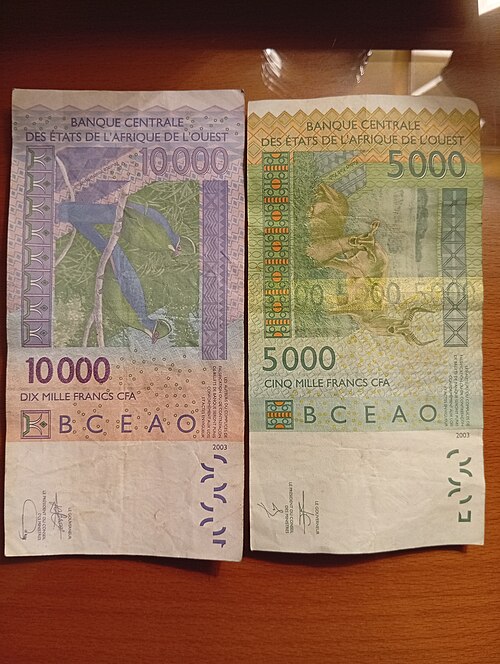 XOF
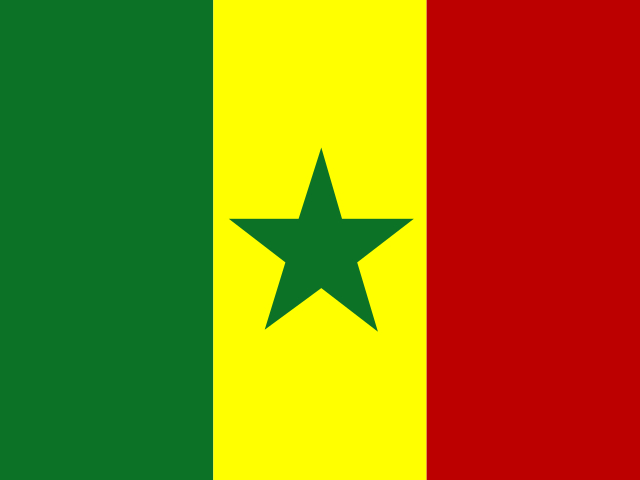
XOF Senegal
West African CFA franc
Senegal uses the West African CFA franc, a shared currency pegged to the euro and used by eight countries in the region.
Fun Facts
- The West African CFA franc is shared by eight countries: Benin, Burkina Faso, Ivory Coast, Guinea-Bissau, Mali, Niger, Senegal and Togo.
- It is pegged to the euro at a fixed rate, which keeps its value stable.
- The currency is issued by the Central Bank of West African States, based in Dakar, Senegal.
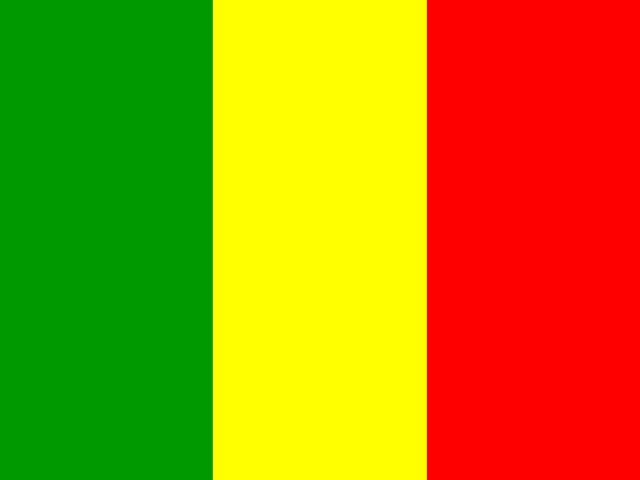
XOF Mali
West African CFA franc
Mali uses the West African CFA franc, the shared currency pegged to the euro; it rejoined the franc zone in 1984.
Fun Facts
- Mali briefly used its own Malian franc before returning to the West African CFA franc in 1984.
- The West African CFA franc is one of two CFA francs in Africa, the other being the Central African CFA franc.
- It is pegged to the euro, so its value moves with the euro.
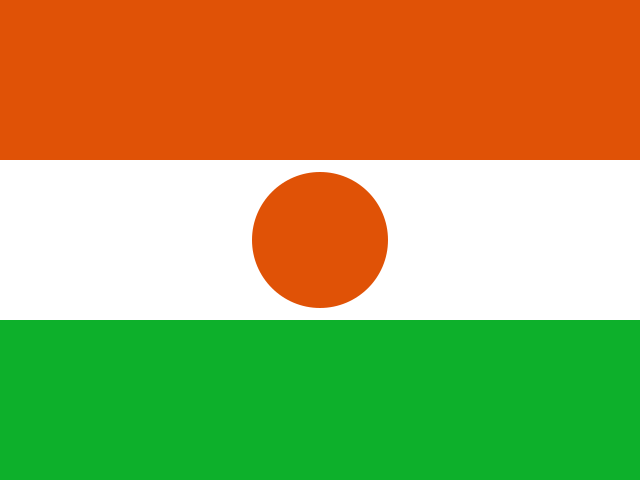
XOF Niger
West African CFA franc
Niger uses the West African CFA franc, the euro-pegged currency shared across eight West African countries.
Fun Facts
- Niger is one of the eight countries that share the West African CFA franc.
- The CFA franc is pegged to the euro at a fixed exchange rate.
- CFA originally stood for the French colonies in Africa and now stands for the Financial Community of Africa.
XOF Burkina Faso
West African CFA franc
Burkina Faso uses the West African CFA franc, the shared, euro-pegged currency of the region.
Fun Facts
- Burkina Faso is a landlocked member of the West African CFA franc zone.
- The currency is pegged to the euro, giving it a stable value.
- All eight CFA franc countries share the same notes and coins.
XOF Côte d'Ivoire
West African CFA franc
Côte d'Ivoire uses the West African CFA franc, the euro-pegged currency shared by eight countries in the region.
Fun Facts
- Côte d'Ivoire is the largest economy in the West African CFA franc zone.
- The CFA franc is pegged to the euro at a fixed rate.
- A future plan would rename the West African CFA franc the eco.
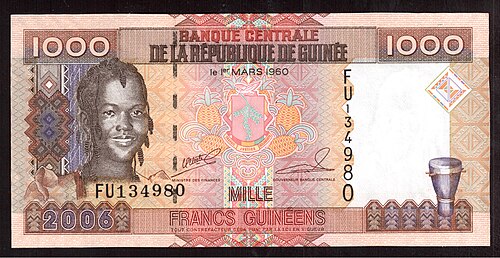 GNF
GNF Guinea
Guinean franc
Guinea uses the Guinean franc and is not part of the CFA franc zone, keeping its own independent currency.
Fun Facts
- Guinea left the CFA franc zone after independence and uses its own Guinean franc.
- The current Guinean franc was reintroduced in 1985.
- The Guinean franc has no subunit in everyday use.
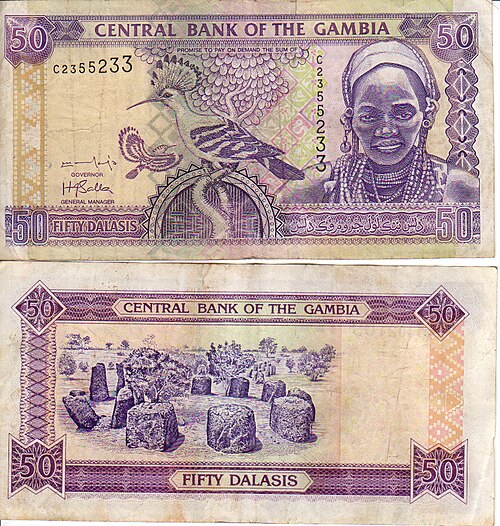 GMD
GMD Gambia
Gambian dalasi
Gambia uses the dalasi, introduced in 1971 to replace the Gambian pound.
Fun Facts
- The dalasi replaced the Gambian pound in 1971.
- A dalasi is divided into 100 bututs.
- The name dalasi is thought to come from a word for a five-franc coin.
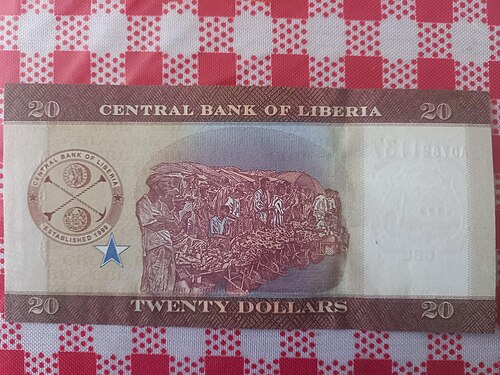 LRD
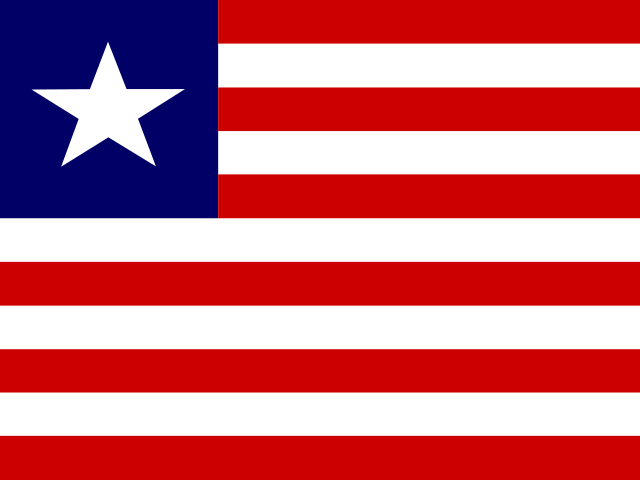
LRD Liberia
Liberian dollar
Liberia uses the Liberian dollar; the US dollar also circulates widely alongside it.
Fun Facts
- Liberia was founded by freed American settlers, which is why its currency is a dollar.
- The US dollar circulates alongside the Liberian dollar in everyday use.
- A Liberian dollar is divided into 100 cents.
 SLE
SLE Sierra Leone
Sierra Leonean leone
Sierra Leone uses the leone; in 2022 it was redenominated and given the new code SLE.
Fun Facts
- In 2022 Sierra Leone removed three zeros from the leone, so 1,000 old leones became 1 new leone.
- The redenomination changed the currency code from SLL to SLE.
- A leone is divided into 100 cents.
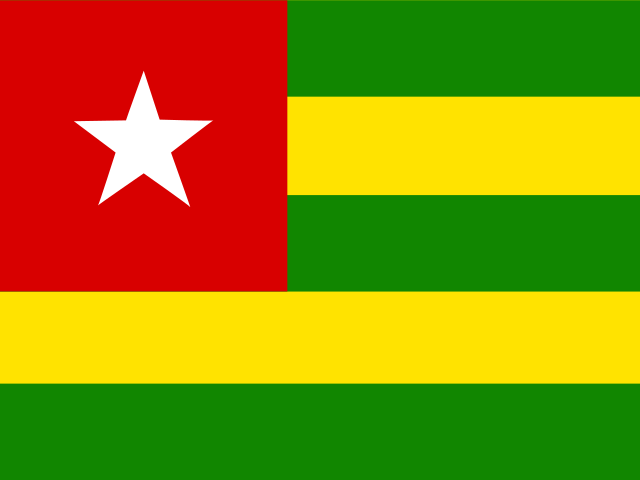
XOF Togo
West African CFA franc
Togo uses the West African CFA franc, the shared currency pegged to the euro across eight West African countries.
Fun Facts
- Togo is one of the eight countries that share the West African CFA franc.
- The CFA franc is pegged to the euro at a fixed exchange rate.
- The same notes and coins are accepted across the whole CFA franc zone.
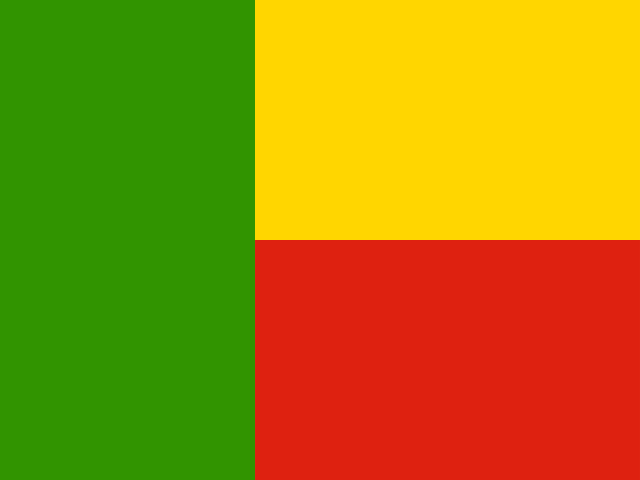
XOF Benin
West African CFA franc
Benin uses the West African CFA franc, the euro-pegged currency shared by eight countries in the region.
Fun Facts
- Benin is a member of the West African CFA franc zone.
- The currency is pegged to the euro, keeping its value stable.
- Benin was formerly known as Dahomey before adopting its current name.
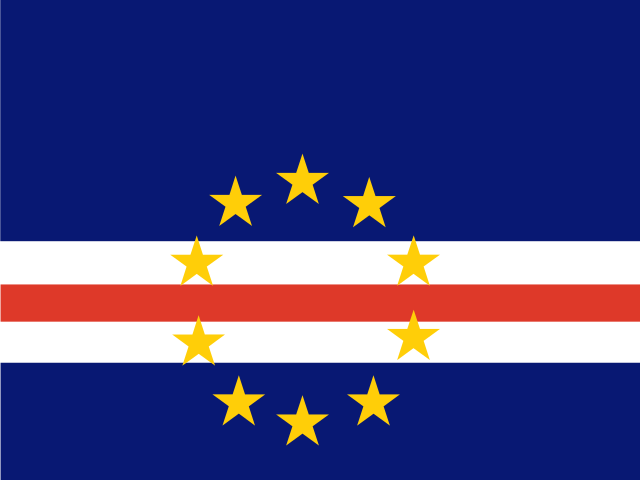 CVE
CVE Cape Verde
Cape Verdean escudo
Cape Verde uses the escudo, which is pegged to the euro at a fixed rate.
Fun Facts
- The Cape Verdean escudo is pegged to the euro, a legacy of close ties with Portugal and the EU.
- The escudo uses the cifrao, written like a dollar sign, placed between the whole and decimal parts.
- An escudo is divided into 100 centavos.
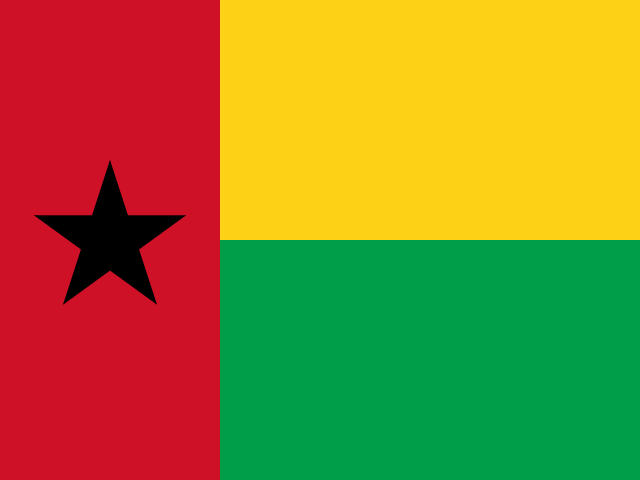
XOF Guinea-Bissau
West African CFA franc
Guinea-Bissau uses the West African CFA franc; it joined the franc zone in 1997, replacing the Guinea-Bissau peso.
Fun Facts
- Guinea-Bissau is the only former Portuguese colony to use the West African CFA franc.
- It joined the CFA franc zone in 1997, replacing its own peso.
- The CFA franc is pegged to the euro at a fixed rate.
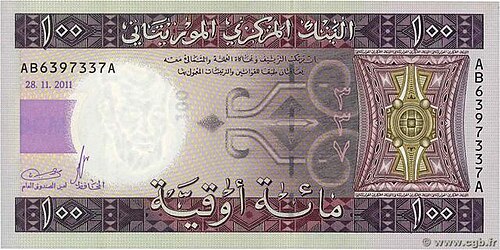 MRU
MRU Mauritania
Mauritanian ouguiya
Mauritania uses the ouguiya; the current series was redenominated in 2018 with the new code MRU.
Fun Facts
- In 2018 Mauritania removed a zero from the ouguiya, so 10 old ouguiya became 1 new ouguiya.
- The ouguiya is one of only two currencies in the world not based on a power of ten, divided into five khoums.
- The redenomination changed the currency code from MRO to MRU.
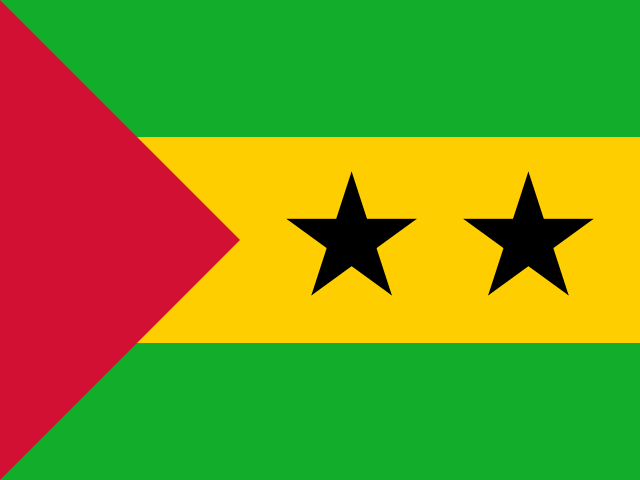 STN
STN São Tomé and Príncipe
São Tomé and Príncipe dobra
São Tomé and Príncipe uses the dobra, which is pegged to the euro; it was redenominated in 2018.
Fun Facts
- The dobra is pegged to the euro at a fixed rate.
- In 2018 the country removed three zeros, so 1,000 old dobras became 1 new dobra.
- The redenomination changed the currency code from STD to STN.
Quick Reference
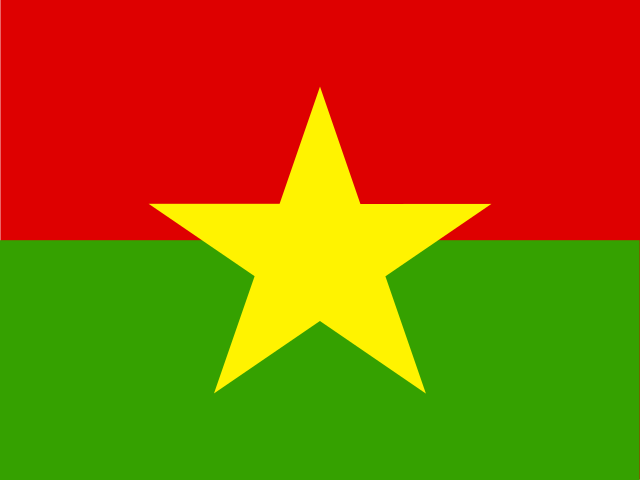
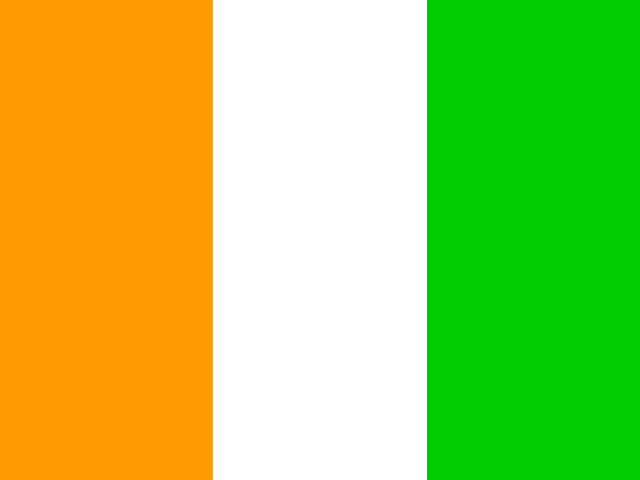
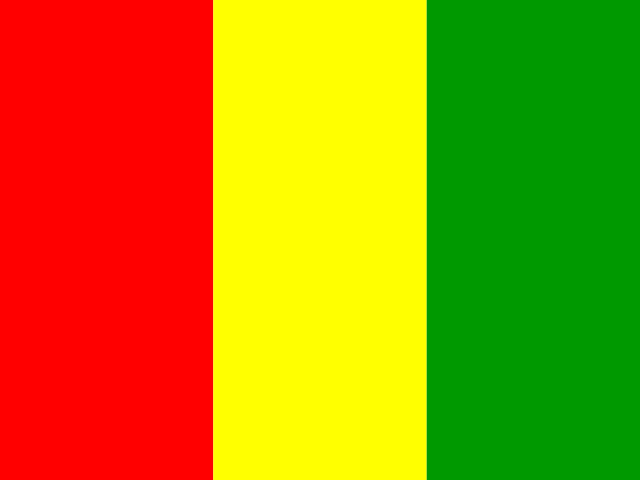
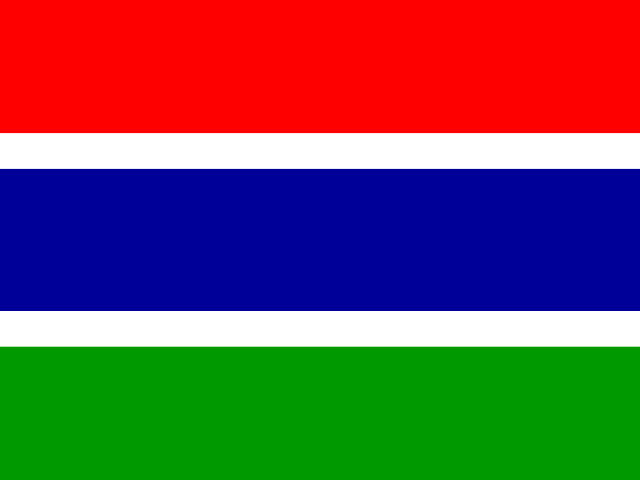
Test Your Knowledge
Can you match each country to its currency?
Practice with Games
Ready to test what you learned? Jump into a game and put it into practice.
About West African Currencies
West Africa is split between a shared currency and a range of national ones. Eight countries - Benin, Burkina Faso, Ivory Coast, Guinea-Bissau, Mali, Niger, Senegal and Togo - use the West African CFA franc (XOF), a single money pegged to the euro and issued by the Central Bank of West African States. Outside the franc zone, the largest economies keep their own currencies: Nigeria uses the naira, Ghana the cedi, and Guinea the Guinean franc. Smaller states have distinct money too, including the Gambian dalasi, the Sierra Leonean leone, the Liberian dollar, the Mauritanian ouguiya and the euro-pegged Cape Verdean escudo. Learning these currencies, their ISO codes and symbols makes travel, trade and reading the news across West Africa far easier.
Frequently Asked Questions
What is the West African CFA franc?
The West African CFA franc (ISO code XOF) is a single currency shared by eight countries: Benin, Burkina Faso, Ivory Coast, Guinea-Bissau, Mali, Niger, Senegal and Togo. It is pegged to the euro at a fixed rate and issued by the Central Bank of West African States.
Which West African countries do not use the CFA franc?
Nine West African countries keep their own currencies: Nigeria (naira), Ghana (cedi), Guinea (Guinean franc), Gambia (dalasi), Liberia (Liberian dollar), Sierra Leone (leone), Cape Verde (escudo), Mauritania (ouguiya) and São Tomé and Príncipe (dobra).
What is the currency of Nigeria?
Nigeria uses the Nigerian naira (NGN), with the symbol ₦. It was introduced in 1973 to replace the Nigerian pound, and one naira is divided into 100 kobo.
Is the West African CFA franc pegged to the euro?
Yes. The West African CFA franc is pegged to the euro at a fixed exchange rate, which keeps its value stable. The euro-pegged Cape Verdean escudo and São Tomé and Príncipe dobra are also tied to the euro, though they are separate national currencies.
Banknote images via Wikimedia Commons: NGN (FAdelabu, CC BY-SA 4.0) · GHS (Nora Morgan, CC BY 2.0) · XOF (Houss 2020, CC0) · GNF (Pol70117, CC BY-SA 4.0) · GMD (No machine-readable author provided. Jolle~commonswiki assum, CC BY-SA 3.0) · LRD (Grachifan, CC BY-SA 4.0) · MRU (Nippon 725, CC BY-SA 4.0)