Learn the Currencies of Southern Africa
Southern Africa is tied together by the South African rand. Three of its five countries - Lesotho, Eswatini and Namibia - accept the rand as legal tender while keeping their own currency pegged one to one with it, through an arrangement called the Common Monetary Area. Only Botswana stands apart with the pula. This lesson covers the currency of all 5 countries, with each currency code, symbol and the year it came into use.
Study the Currencies
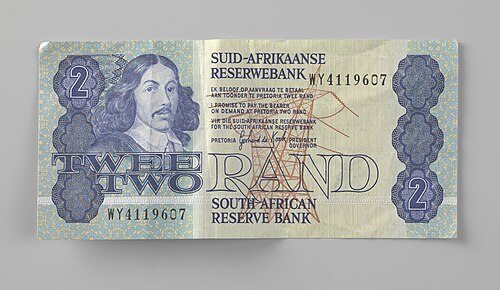 ZAR
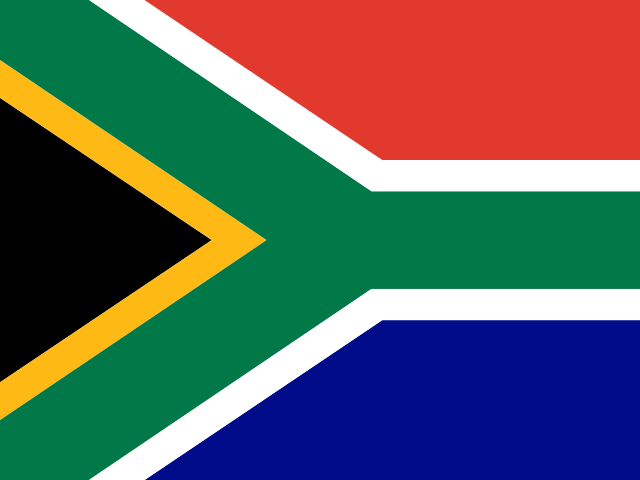
ZAR South Africa
South African rand
South Africa introduced the rand in 1961, replacing the South African pound, and it remains the anchor currency of the whole region.
Fun Facts
- The rand is named after the Witwatersrand, the gold-rich ridge near Johannesburg where much of the country's gold was mined.
- The rand is also legal tender in Lesotho, Eswatini and Namibia, which all peg their own money to it one to one.
- A rand is divided into 100 cents.
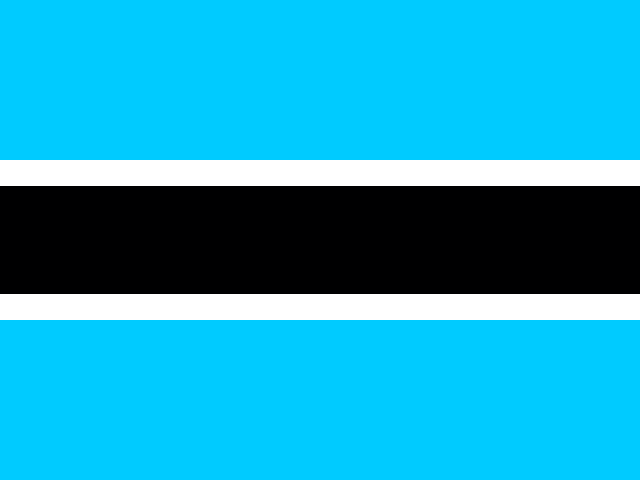 BWP
BWP Botswana
Botswana pula
Botswana introduced the pula in 1976, leaving the rand zone to run its own currency backed by the country's diamond wealth.
Fun Facts
- Pula means rain in Setswana, a precious thing in a country largely covered by the Kalahari Desert.
- A pula is divided into 100 thebe, which means shield in Setswana.
- Botswana is the only one of these five countries that does not use the South African rand.
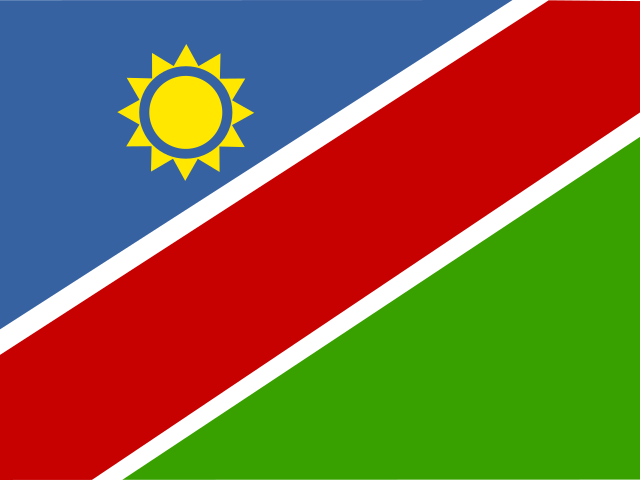 NAD
NAD Namibia
Namibian dollar
Namibia introduced its own dollar in 1993, three years after independence, and pegged it one to one to the South African rand.
Fun Facts
- The Namibian dollar is fixed at exactly one to one with the South African rand.
- The rand also circulates freely in Namibia and is accepted everywhere alongside the local dollar.
- A Namibian dollar is divided into 100 cents.
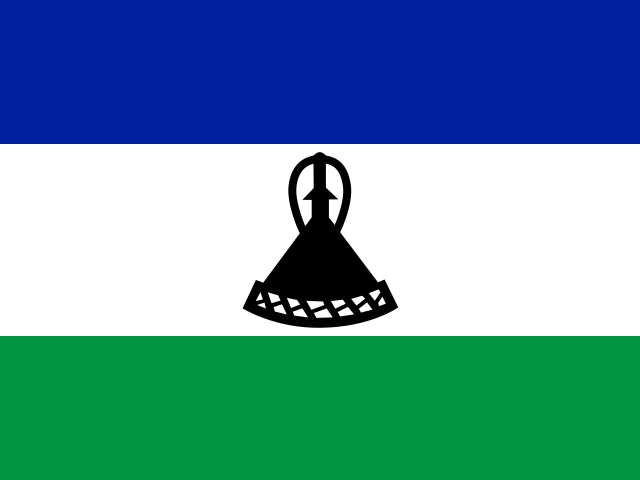 LSL
LSL Lesotho
Lesotho loti
Lesotho introduced the loti in 1980, pegged one to one to the South African rand, which also remains legal tender there.
Fun Facts
- The plural of loti is maloti, so prices are often shown with the symbol M.
- The loti is fixed at exactly one to one with the South African rand.
- A loti is divided into 100 lisente.
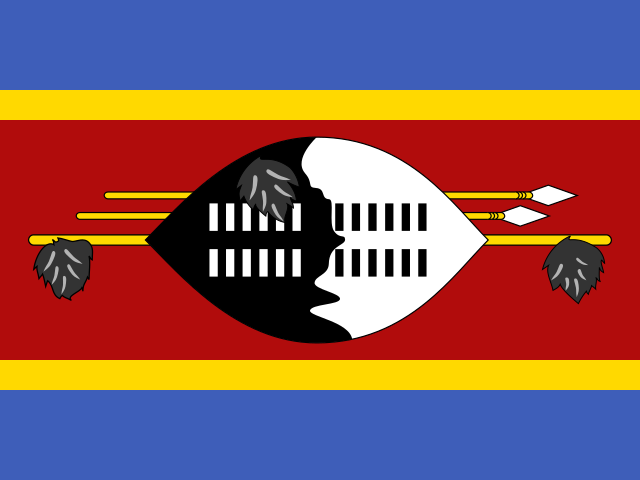 SZL
SZL Eswatini
Swazi lilangeni
Eswatini introduced the lilangeni in 1974, pegged one to one to the South African rand, which also circulates as legal tender.
Fun Facts
- The plural of lilangeni is emalangeni, often written with the symbol E.
- The lilangeni is fixed at exactly one to one with the South African rand.
- A lilangeni is divided into 100 cents.
Quick Reference
Test Your Knowledge
Can you match each country to its currency?
Practice with Games
Ready to test what you learned? Jump into a game and put it into practice.
About Southern African Currencies
Southern Africa has one of the most closely linked currency systems in the world. The South African rand (ZAR) is the anchor, and through the Common Monetary Area it is legal tender in Lesotho, Eswatini and Namibia as well. Each of those three countries also keeps its own currency - the Lesotho loti (LSL), the Swazi lilangeni (SZL) and the Namibian dollar (NAD) - pegged at exactly one to one with the rand, so the values move together. Only Botswana sits outside this arrangement, having launched the pula (BWP) in 1976 and managed it independently against a basket of currencies, backed by the country's diamond and mineral wealth. Learning these currencies, their ISO codes and symbols makes travel and trade across the region far easier.
Frequently Asked Questions
How many currencies are used in Southern Africa?
There are five national currencies in the region: the South African rand, the Botswana pula, the Namibian dollar, the Lesotho loti and the Swazi lilangeni. The rand is also legal tender in Lesotho, Eswatini and Namibia, so in practice it is the dominant currency across four of the five countries.
Why is the South African rand used in so many countries?
Lesotho, Eswatini and Namibia belong to the Common Monetary Area with South Africa. Under that agreement the rand is accepted as legal tender in all three, while each country keeps its own currency pegged one to one to the rand.
Which Southern African country does not use the rand?
Botswana is the only one of the five. It introduced the pula in 1976 and manages it independently, rather than pegging it to the South African rand.
Are the Lesotho loti, Swazi lilangeni and Namibian dollar worth the same as the rand?
Yes. The Lesotho loti (LSL), the Swazi lilangeni (SZL) and the Namibian dollar (NAD) are each fixed at exactly one to one with the South African rand, so one unit of each is always worth one rand.
Banknote images via Wikimedia Commons: ZAR (Rijksmuseum, CC0)