Learn the Currencies of Melanesia
Melanesia is a subregion of Oceania in the southwestern Pacific, and each of its four nations has its own currency. Papua New Guinea uses the kina, Fiji and the Solomon Islands both use a dollar, and Vanuatu uses the vatu. This lesson covers the currency of 4 Melanesian countries, with each currency code, symbol and the year it came into use.
Study the Currencies
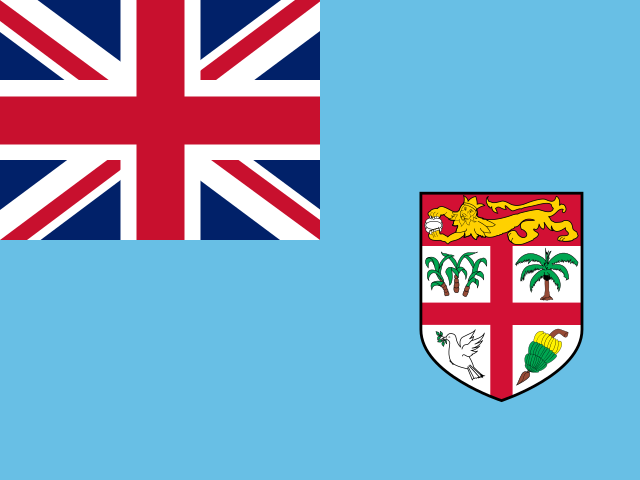
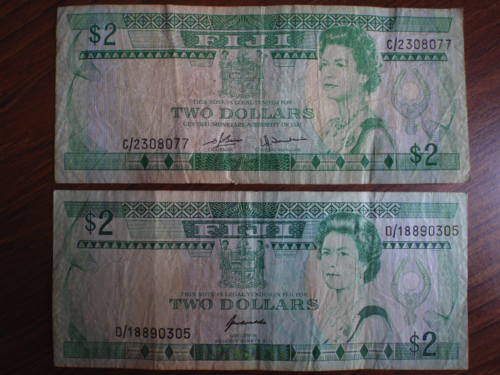 FJD
FJD Fiji
Fijian dollar
Fiji uses the Fijian dollar, introduced in 1969 to replace the Fijian pound.
Fun Facts
- The Fijian dollar replaced the Fijian pound in 1969, switching the country to a decimal system.
- A Fijian dollar is divided into 100 cents.
- Fiji removed the British monarch from its banknotes in 2013, replacing the portrait with local plants and animals.
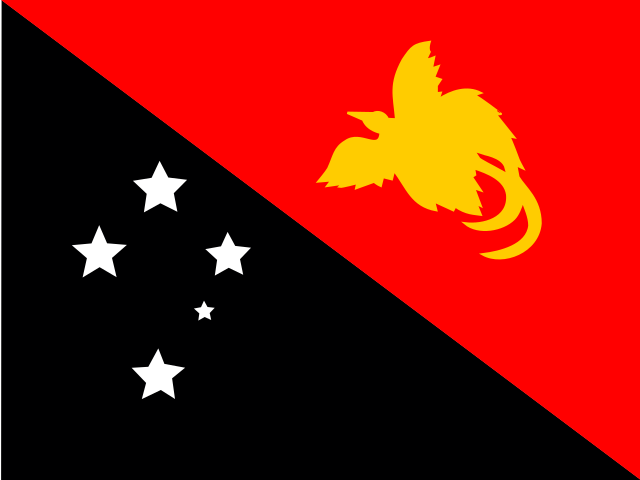
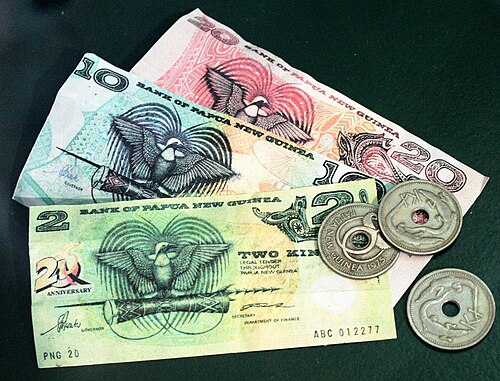 PGK
PGK Papua New Guinea
Papua New Guinean kina
Papua New Guinea introduced the kina in 1975, the year it gained independence, to replace the Australian dollar.
Fun Facts
- The kina is named after a pearl shell that was traditionally used as money in Papua New Guinea.
- A kina is divided into 100 toea, named after a small shell once used in trade.
- The kina was launched in 1975 to mark independence from Australia.
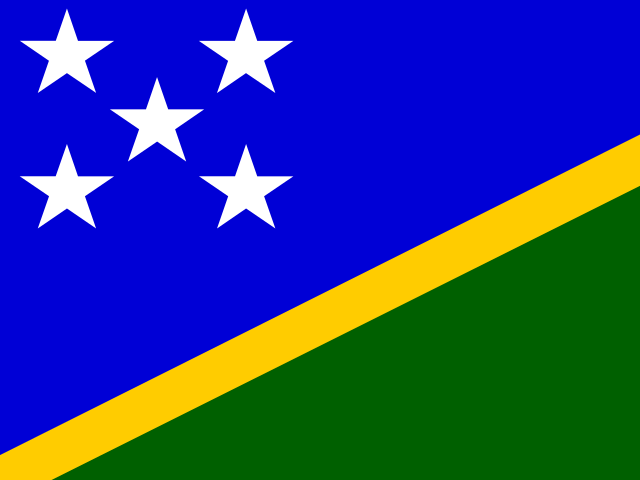
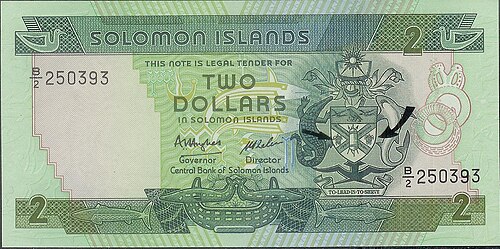 SBD
SBD Solomon Islands
Solomon Islands dollar
The Solomon Islands introduced its own dollar in 1977, replacing the Australian dollar shortly before independence.
Fun Facts
- The Solomon Islands dollar replaced the Australian dollar in 1977.
- A Solomon Islands dollar is divided into 100 cents.
- Traditional shell money is still used for ceremonies and bride price alongside the modern currency.
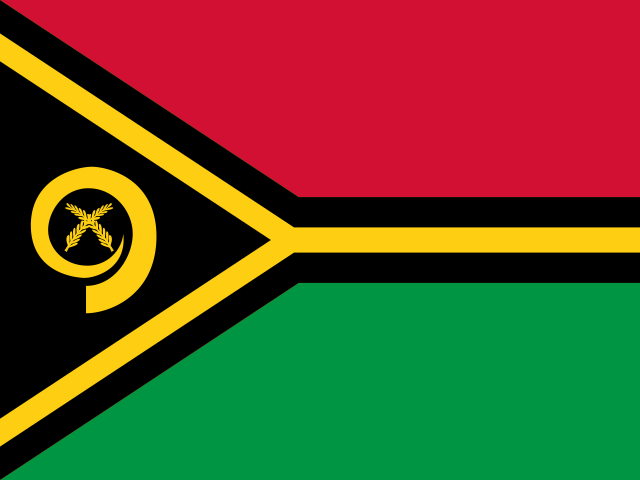 VUV
VUV Vanuatu
Vanuatu vatu
Vanuatu introduced the vatu in 1982, two years after independence, to replace the New Hebrides franc.
Fun Facts
- The vatu is one of the few modern currencies with no subunit, so prices are always whole numbers.
- The word vatu means stone in several local languages, recalling stones once used as money.
- The vatu replaced the New Hebrides franc, used when the islands were jointly ruled by Britain and France.
Quick Reference
Test Your Knowledge
Can you match each country to its currency?
Practice with Games
Ready to test what you learned? Jump into a game and put it into practice.
About Melanesian Currencies
Melanesia is a subregion of Oceania in the southwestern Pacific, and its four sovereign nations each issue their own currency. Papua New Guinea uses the kina (PGK), divided into 100 toea and named after a traditional pearl-shell money. Fiji uses the Fijian dollar (FJD) and the Solomon Islands the Solomon Islands dollar (SBD), both divided into 100 cents and both having replaced earlier colonial money. Vanuatu uses the vatu (VUV), an unusual currency with no subunit at all, so prices are always quoted as whole numbers. Several of these countries replaced the Australian dollar or colonial pounds and francs after independence in the 1970s and 1980s. Learning these currencies, their ISO codes and their symbols makes travel, shopping and reading the news across the Pacific far easier.
Frequently Asked Questions
What currencies are used in Melanesia?
Melanesia uses four national currencies: the Papua New Guinean kina (PGK), the Fijian dollar (FJD), the Solomon Islands dollar (SBD) and the Vanuatu vatu (VUV).
What is the currency of Papua New Guinea?
Papua New Guinea uses the kina (ISO code PGK), introduced in 1975 at independence. It is divided into 100 toea and is named after a pearl shell that was once used as traditional money.
Why does Vanuatu use the vatu with no cents?
The Vanuatu vatu (VUV) is one of the few modern currencies with no subunit. Because each vatu has a relatively low value, there was never a need for a smaller unit, so all prices are quoted as whole numbers.
Do Fiji and the Solomon Islands use the same dollar?
No. Fiji uses the Fijian dollar (FJD) and the Solomon Islands uses the Solomon Islands dollar (SBD). They are separate currencies with different values, even though both are called a dollar and both are divided into 100 cents.
Banknote images via Wikimedia Commons: FJD (Damien Linnane, CC BY-SA 3.0) · PGK (Bin im Garten, CC BY-SA 3.0) · SBD (DJack07, CC BY-SA 3.0)