Learn the Currencies of Southeast Asia
Southeast Asia uses a colourful mix of currencies, from the Thai baht and Vietnamese dong to the Indonesian rupiah and Singapore dollar. Most of the 11 countries keep their own national money, while Timor-Leste uses the US dollar. This lesson covers the currency of all 11 Southeast Asian countries, with each currency code, symbol and a little of its history.
Study the Currencies
 MMK
MMK Myanmar
Burmese kyat
Myanmar uses the kyat, which was reintroduced as the national currency in 1952.
Fun Facts
- The kyat is divided into 100 pya, though the pya is rarely seen in everyday use.
- The word kyat comes from an old Burmese unit of weight once used for silver and gold.
- Myanmar once issued unusual banknotes in denominations of 45 and 90, chosen because they were divisible by nine.
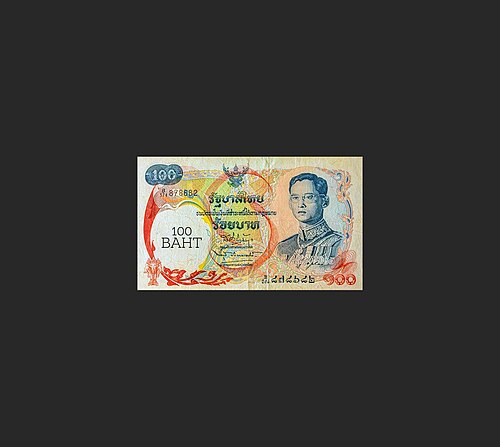 THB
THB Thailand
Thai baht
Thailand uses the baht, which took its modern decimal form in 1897 under King Chulalongkorn.
Fun Facts
- The baht is divided into 100 satang.
- Baht was originally a unit of weight, and it is still used to measure gold in Thailand.
- Every Thai banknote and coin features an image of the reigning monarch.
 LAK
LAK Laos
Lao kip
Laos uses the kip, which has been the national currency since 1955.
Fun Facts
- The kip is divided into 100 att, though the att has no real value today.
- The kip is one of the lowest-valued currency units in the world.
- Laos relies heavily on banknotes, with coins almost never used in daily life.
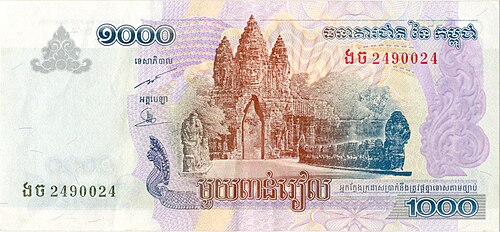 KHR
KHR Cambodia
Cambodian riel
Cambodia uses the riel, reintroduced in 1980 after money was abolished under the Khmer Rouge.
Fun Facts
- The riel may be named after a small freshwater fish found in the Mekong River.
- The Khmer Rouge abolished money entirely in the 1970s, so the riel had to be reintroduced.
- The US dollar is widely used alongside the riel in everyday transactions.
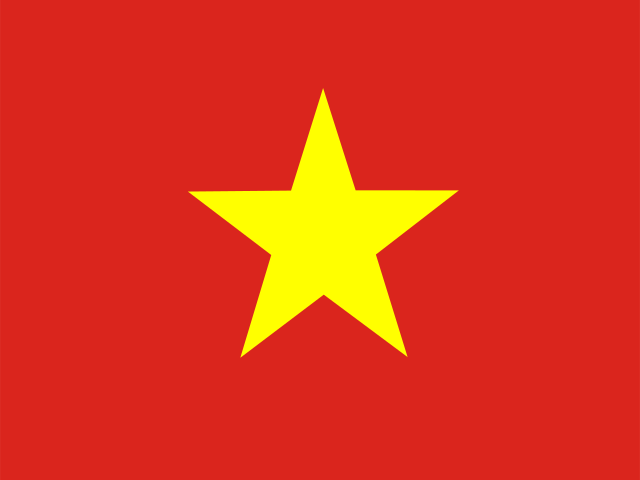 VND
VND Vietnam
Vietnamese dong
Vietnam uses the dong, which became the unified national currency in 1978 after reunification.
Fun Facts
- The word dong comes from a term for bronze, the metal once used in coins.
- The dong has so many zeros that the largest banknote is worth 500,000 dong.
- Vietnam was one of the first countries to print polymer banknotes for everyday use.
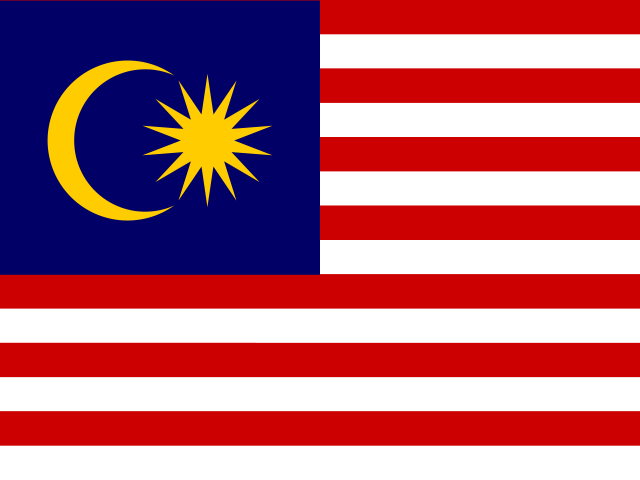 MYR
MYR Malaysia
Malaysian ringgit
Malaysia uses the ringgit, which got its current name officially in 1975.
Fun Facts
- Ringgit means jagged in Malay, referring to the serrated edges of old Spanish silver dollars.
- The ringgit is divided into 100 sen.
- It was once known informally as the Malaysian dollar.
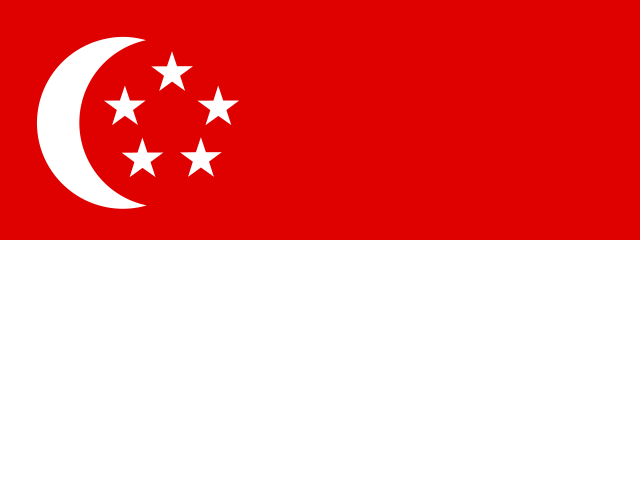 SGD
SGD Singapore
Singapore dollar
Singapore introduced its own dollar in 1967, two years after becoming independent.
Fun Facts
- The Singapore dollar and the Brunei dollar are interchangeable at par under a long-standing agreement.
- The Singapore dollar is divided into 100 cents.
- Singapore once issued the world's largest legal-tender banknote, a 10,000 dollar note.
 BND
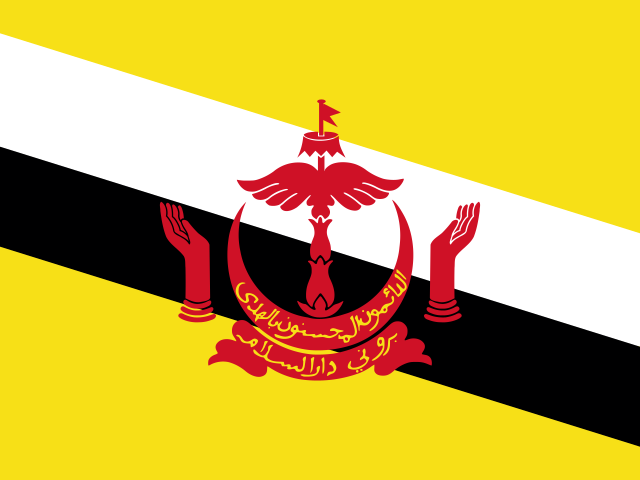
BND Brunei
Brunei dollar
Brunei introduced its own dollar in 1967 and keeps it pegged one to one with the Singapore dollar.
Fun Facts
- The Brunei dollar is accepted at par in Singapore, and vice versa.
- It is divided into 100 sen.
- Brunei issues polymer banknotes featuring its sultans.
 IDR
IDR Indonesia
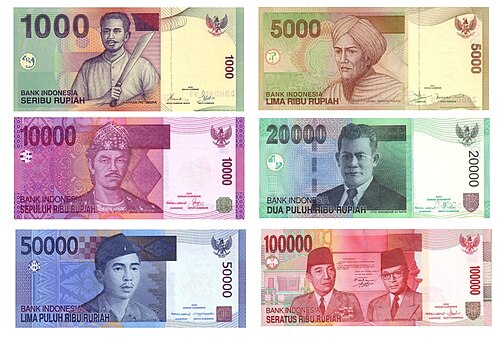
Indonesian rupiah
Indonesia introduced the rupiah in 1946, shortly after declaring independence.
Fun Facts
- The name rupiah comes from the Sanskrit word rupya, meaning silver.
- The rupiah has so many zeros that the largest banknote is worth 100,000 rupiah.
- The rupiah is divided into 100 sen, but the sen is no longer used.
 PHP
PHP Philippines
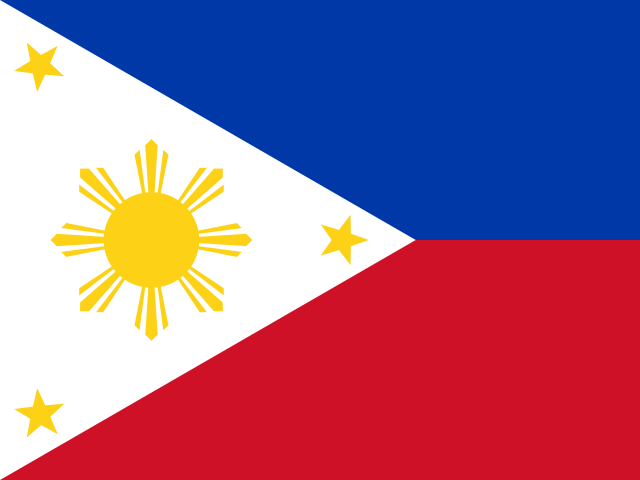
Philippine peso
The Philippines uses the peso, with its central bank established in 1949 to manage the currency.
Fun Facts
- The peso symbol ₱ is a P with two horizontal strokes.
- The peso is divided into 100 centavos, known locally as sentimo.
- The Philippines is the only Southeast Asian country whose currency is called the peso, a legacy of Spanish rule.
 USD
USD Timor-Leste
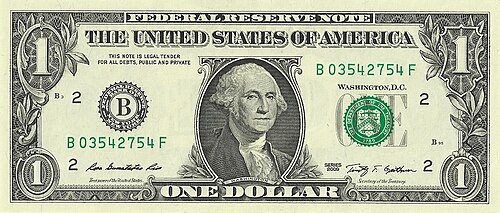
United States dollar
Timor-Leste adopted the US dollar as its official currency in 2000 and does not issue notes of its own.
Fun Facts
- Timor-Leste uses US dollar banknotes but mints its own coins, called centavos.
- It chose the dollar for stability after gaining independence from Indonesia.
- It is the only Southeast Asian country to use the US dollar as its official currency.
Quick Reference
Test Your Knowledge
Can you match each country to its currency?
Practice with Games
Ready to test what you learned? Jump into a game and put it into practice.
About Southeast Asian Currencies
Southeast Asia is home to a rich variety of currencies, most of which are issued by the region's own central banks. The Thai baht, Vietnamese dong, Indonesian rupiah, Malaysian ringgit and Philippine peso are among the most widely traded. Singapore and Brunei both use a dollar, and the two are interchangeable at par thanks to a long-standing agreement. Cambodia keeps the riel but relies heavily on the US dollar in daily life, while Timor-Leste has adopted the US dollar outright. Several of these currencies, such as the dong, kip and rupiah, carry large numbers of zeros, so a single meal can cost tens of thousands of units. Learning these currencies, their ISO codes and symbols makes travel, shopping and reading the news across Southeast Asia far easier.
Frequently Asked Questions
How many currencies are used in Southeast Asia?
The 11 Southeast Asian countries use ten national currencies plus the US dollar. These include the Thai baht, Vietnamese dong, Indonesian rupiah, Malaysian ringgit, Philippine peso, Singapore dollar, Brunei dollar, Burmese kyat, Cambodian riel and Lao kip, while Timor-Leste uses the US dollar.
What is the currency of Thailand?
Thailand uses the Thai baht, with the ISO code THB and the symbol ฿. The baht is divided into 100 satang and took its modern decimal form in 1897.
Which Southeast Asian country uses the US dollar?
Timor-Leste uses the US dollar as its official currency, which it adopted in 2000. It uses US dollar banknotes but mints its own coins called centavos. Cambodia also uses the US dollar widely alongside its own riel.
Why do some Southeast Asian banknotes have so many zeros?
Currencies such as the Vietnamese dong, Indonesian rupiah and Lao kip have very low individual values, so prices are quoted in large numbers. For example, the largest Indonesian banknote is worth 100,000 rupiah and the largest Vietnamese note is worth 500,000 dong.
Banknote images via Wikimedia Commons: THB (Bank of Thailand, CC BY-SA 4.0) · KHR (Kontrollstellekundl, Copyrighted free use) · IDR (EvanC0912, Public domain) · USD (ESEMES, Public domain)