







Mexican flag meaning: the eagle, the snake and the colors
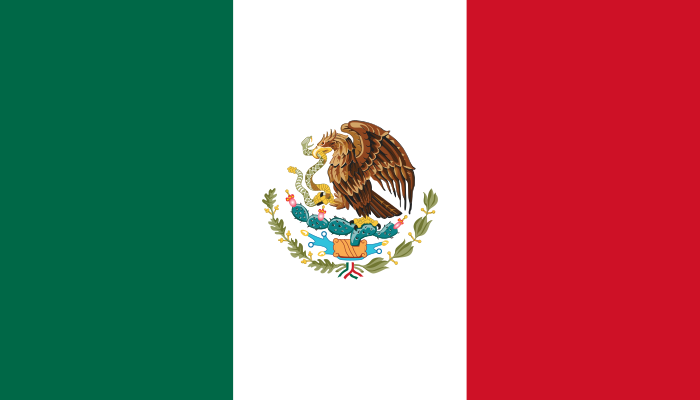
The eagle on a cactus eating a snake comes from the Aztec legend of how Tenochtitlan, today Mexico City, was founded in 1325. Green is usually said to stand for hope, white for unity and red for the blood of the nation's heroes.
Watch: the flag explained in about a minute
What each part of the flag means
-
The eagle and the snake
According to Aztec (Mexica) legend, the god Huitzilopochtli told his people to build their city where they found an eagle perched on a cactus, devouring a snake. The scene is the heart of Mexico's coat of arms.
-
The cactus on a rock
The prickly pear cactus grows from a rock in a lake. The Mexica found the sign on an island in Lake Texcoco and founded Tenochtitlan there in 1325. The lake was later drained, and the city became Mexico City.
-
The oak and laurel wreath
Below the eagle, a branch of oak stands for strength and a branch of laurel for victory, tied together with a ribbon in the national colors.
-
Green
Today usually said to stand for hope. When the colors were first chosen in 1821, green stood for independence.
-
White
Today usually said to stand for unity. In 1821 it stood for religion, the Catholic faith.
-
Red
Today usually said to stand for the blood of the nation's heroes. In 1821 it stood for union between the people of Mexico.
Quick facts
- Current design adopted
- September 16, 1968
- Colors first used
- 1821, by the Army of the Three Guarantees
- Proportions
- 4:7
- Flag Day
- February 24
- Coat of arms
- An eagle on a cactus devouring a snake
Practice what you just learned
Frequently asked questions
What do the colors of the Mexican flag mean?
Today green is usually said to stand for hope, white for unity and red for the blood of the nation's heroes. When the colors were first used in 1821, they stood for independence, religion and union, the three guarantees of the army that won independence.
What does the eagle on the Mexican flag mean?
It comes from the Aztec legend of Tenochtitlan: the god Huitzilopochtli told the Mexica to settle where they saw an eagle on a cactus eating a snake. They saw it on an island in Lake Texcoco, where Mexico City stands today.
What is the difference between the Mexican and Italian flags?
Both are green, white and red vertical tricolors. Mexico's flag is longer (4:7 against Italy's 2:3), uses darker shades, and has the coat of arms in the center. Without the coat of arms the two would be very hard to tell apart.
When is Flag Day in Mexico?
February 24, the Día de la Bandera. The current design of the flag was adopted on September 16, 1968.
Video transcript
What does the flag of Mexico mean? Every part of it tells a story.
In the center, an eagle perches on a cactus, eating a snake.
It comes from an Aztec legend. Their god, Huitzilopochtli, told them to build their city wherever they found this exact sight.
They found it on an island in Lake Texcoco, and founded Tenochtitlan there in 1325. Today, that city is Mexico City.
Below them, a wreath of oak and laurel stands for strength and victory.
When the colors were chosen in 1821, they stood for independence, religion and union.
Today, green is usually said to stand for hope, white for unity, and red for the blood of the nation's heroes.
Italy uses the same three colors, but Mexico's flag is longer, and of course, it has the eagle.