







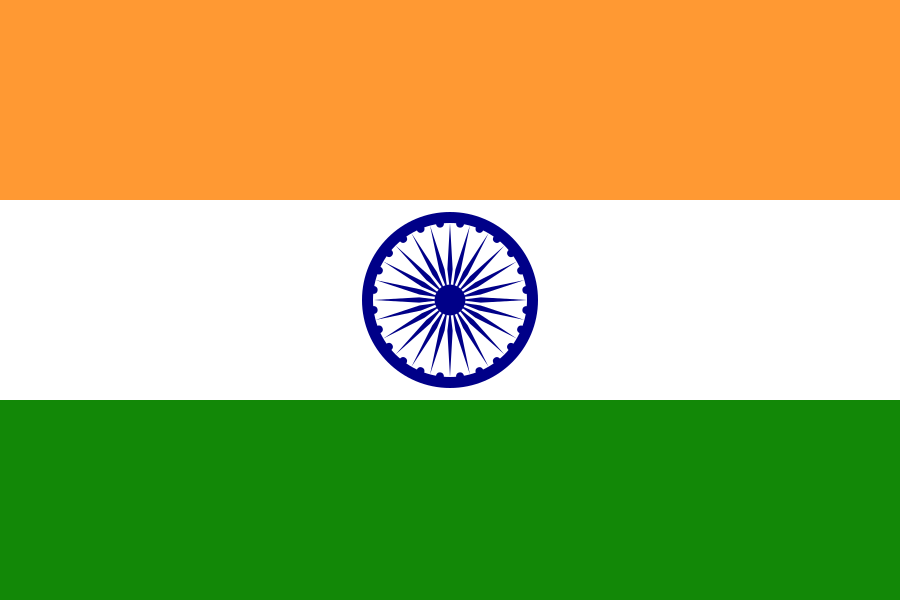
Indian flag meaning: saffron, white, green and the Ashoka Chakra
On India's flag, saffron stands for the strength and courage of the country, white for peace and truth, and green for the fertility, growth and auspiciousness of the land. The navy blue Ashoka Chakra in the center, a wheel with 24 spokes, stands for the wheel of law, dharma.
Watch: the flag explained in about a minute
What each part of the flag means
-
Saffron
The top band stands for the strength and courage of the country.
-
White
The middle band stands for peace and truth, and carries the Ashoka Chakra.
-
Green
The bottom band shows the fertility, growth and auspiciousness of the land.
-
The Ashoka Chakra
A navy blue wheel with 24 spokes, taken from the Lion Capital of Ashoka, carved at Sarnath in the 3rd century BC under Emperor Ashoka. It replaced the spinning wheel (charkha) of the earlier independence-movement flag.
-
The wheel of law
The chakra stands for dharma, the wheel of law, and for movement: a nation that keeps moving forward. Its 24 spokes are often said to stand for the 24 hours of the day.
Quick facts
- Adopted
- July 22, 1947, weeks before independence
- Name
- Tiranga ("tricolor")
- Based on a design by
- Pingali Venkayya
- Proportions
- 2:3
- Center emblem
- Ashoka Chakra, 24 spokes
Practice what you just learned
Frequently asked questions
What do the three colors of the Indian flag mean?
Saffron stands for the strength and courage of the country, white for peace and truth, and green for the fertility, growth and auspiciousness of the land.
What does the Ashoka Chakra on the Indian flag mean?
The Ashoka Chakra is the wheel of law (dharma). It comes from the Lion Capital of Ashoka at Sarnath and stands for righteousness and for a nation always moving forward.
How many spokes does the Ashoka Chakra have?
24. They are often said to stand for the 24 hours of the day.
When was the Indian flag adopted?
On July 22, 1947, by the Constituent Assembly, a few weeks before India became independent on August 15, 1947. It is based on a design by Pingali Venkayya.
Video transcript
What does the flag of India mean? It's called the Tiranga, which means tricolor.
The saffron band on top stands for the strength and courage of the country.
The white band in the middle stands for peace and truth.
The green band at the bottom shows the fertility, growth and auspiciousness of the land.
And in the center is the Ashoka Chakra, a navy blue wheel with twenty-four spokes.
It comes from the Lion Capital of Ashoka, carved more than two thousand years ago, and stands for the wheel of law, and a nation always moving forward.
The flag was adopted on July 22, 1947, just weeks before independence, from a design by Pingali Venkayya.